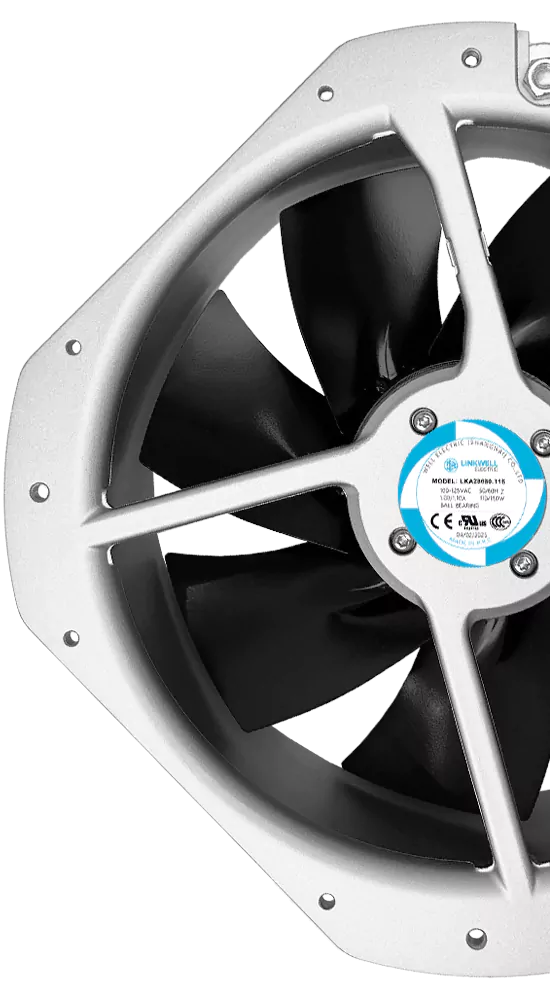
You might wonder what is static pressure when you look at your cooling system. Static pressure means the pressure of air at rest, pressing against the inside of ducts or enclosures. It plays a big role in how your fan works, especially with AC, DC, EC, and centrifugal fans from fanacdc. What is static pressure? It decides how much air flows through your hvac system and affects fan performance. What is static pressure in your setup? If you want better airflow and system efficiency, you need to understand what is static pressure. Check out these real-world facts:
- High static pressure fans help control airflow in labs and cleanrooms.
- Large factories use them to move air long distances.
- Medium fans balance airflow and pressure for many workplaces.
| Fan Type | Optimal Use Case | Static Pressure Range | Efficiency Focus |
|---|---|---|---|
| Axial Fans | Low-resistance, high-flow ventilation | 100–500 Pa | Airflow capacity |
| Centrifugal Fans | High-resistance ducted systems | 500–2000+ Pa | Pressure stability |
Key Takeaways
- Static pressure is the resistance air faces in HVAC systems. Understanding it helps improve airflow and efficiency.
- High static pressure can lead to noisy fans, uneven cooling, and increased energy bills. Monitor your system to avoid these issues.
- Choose the right fan type for your needs: AC fans for open spaces, DC fans for precise control, EC fans for efficiency, and centrifugal fans for high resistance.
- Regular maintenance, like cleaning filters and checking ducts, keeps static pressure in check and ensures optimal fan performance.
- Use simple tools to measure static pressure. This helps identify problems early and maintain a comfortable environment.
What is Static Pressure in Fan Systems
Static Pressure Definition
Static pressure is the force that air exerts when it sits still inside your hvac system, ductwork, or enclosure. You can think of it as the pressure that pushes against the walls of your ducts or the inside of your fan housing. This pressure is measured in units like inches of water column (inWC) or Pascals (Pa). When you run a fan, static pressure helps you understand how much resistance the air faces as it moves through the system.
You might hear about external static pressure when you look at fan specifications. External static pressure is the total resistance your fan must overcome from the ductwork, filters, and other components outside the fan itself. If you want your fan to deliver the right airflow, you need to match the static pressure specifications to your system’s needs.
In hvac systems, static pressure tells you how hard your fan works to push air through vents, filters, and ducts. If you have a pc fan, static pressure matters when you need to move air through tight spaces or over components like heat sinks. High static pressure fans work best in these situations because they can push air through obstacles and keep your equipment cool.
Here are the main factors that determine static pressure in fan systems:
- Resistance to air movement within the system
- Load factor
- Fluid density
- Airflow
- Impedance from components and barriers
Tip: If you want ideal static pressure, you need to balance resistance and airflow. Too much resistance means your fan struggles, and too little means air escapes without cooling your space.
Measuring Static Pressure
You can measure static pressure with a few simple tools. The most common way is to use a static pressure sensor or a precision manometer. These devices help you check the pressure inside your hvac system or fan enclosure. You might also use static pressure probes or pitot tubes, which measure both static and velocity pressure.
Here’s a quick static pressure test you can try:
- Locate test ports on the supply and return sides of your system.
- Drill test ports carefully to avoid damaging your equipment.
- Connect tubing to your static pressure gauge or sensor.
- Measure and record supply static pressure.
- Measure and record return static pressure.
- Add both readings to find your total external static pressure.
If you want accurate results, make sure you zero out your gauge before you start. You can use these readings to check if your fan is working within the ideal static pressure range. If your readings are too high, your fan may not deliver maximum airflow. If they’re too low, you might not get enough cooling.
Here’s a table showing common instruments for measuring static pressure:
| Instrument | Use Case |
|---|---|
| Precision Manometer | Duct and envelope leakage, small Pascal scale |
| Static Pressure Probe | Measures static pressure, faces against airflow |
| Pitot Tube | Measures static and velocity pressure |
Static Pressure and Air Flow Relationship
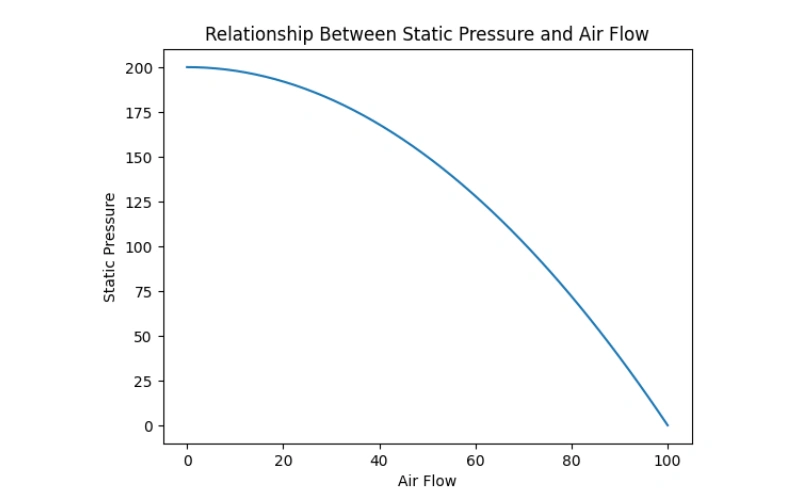
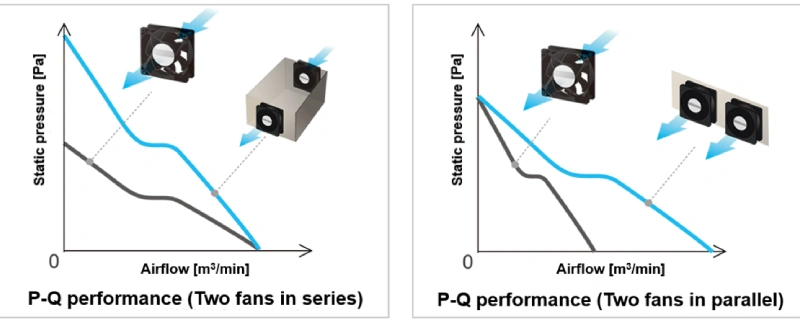
Static pressure and air flow have a close relationship. When you increase static pressure, air flow usually drops. When you lower static pressure, air flow goes up. This is because your fan has to work harder to push air through obstacles, so less air gets through.
You can see this relationship on a system curve. The curve shows how static pressure changes as you adjust the airflow rate. If you want maximum airflow, you need to keep static pressure low. If you need to push air through filters or tight ducts, you need a fan that can handle higher static pressure.
Here’s how the relationship works:
- The airflow rate and static pressure follow an exponential curve. As you increase airflow, static pressure drops quickly.
- Fan laws help you predict how changes in your system will affect static pressure and airflow.
- If you know one point (like airflow and static pressure), you can use fan laws to estimate other points.
Note: For AC, DC, EC, and centrifugal fans, the relationship between airflow and static pressure is always inversely proportional. As airflow increases, static pressure decreases. The structure of your enclosure or ductwork can also change this balance, so always check your system’s needs.
If you want ideal static pressure for your application, look at your fan’s maximum static pressure and maximum airflow ratings. Match these to your system’s resistance and cooling needs. This way, you get the best performance from your fan and keep your hvac system running smoothly.
Static Pressure Performance: AC, DC, EC, and Centrifugal Fans
AC Fans and Static Pressure
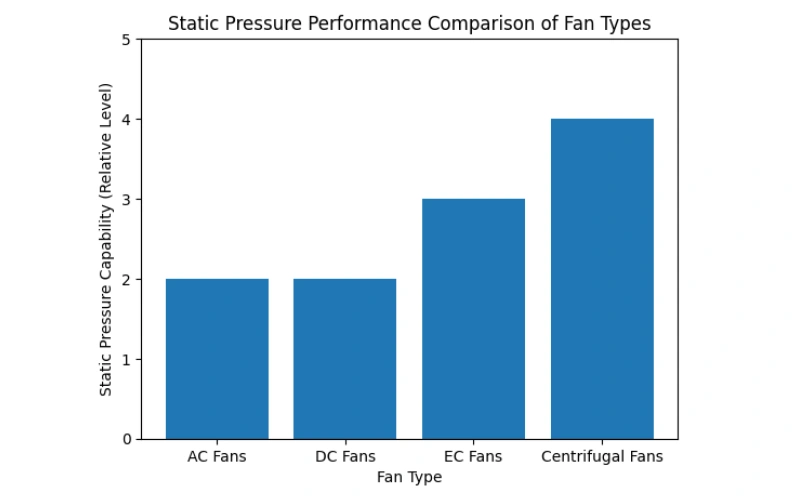
When you use AC fans in your hvac system, you get reliable air flow for cooling and ventilation. AC fans from fanacdc work best in setups with low to moderate static pressure. You can count on them for strong airflow in open spaces or simple ductwork. If your system has higher resistance, AC fans may need to work harder, which can affect energy use. These fans offer simple operation and long service life, making them a great choice for general cooling tasks.
| Fan Type | Unique Features | Static Pressure Capability |
|---|---|---|
| AC Fans | Simple, robust operation | Moderate |
DC Fans and Static Pressure
DC fans give you precise control over air flow and speed. You can adjust them easily to match your hvac needs. DC fans from fanacdc use brushless motors, which means you get quiet operation and less maintenance. These fans handle moderate static pressure well, so they fit perfectly in electronics cooling or automation systems. If you need to balance airflow and resistance, DC fans help you fine-tune your system for better performance.
| Fan Type | Unique Features | Static Pressure Capability |
|---|---|---|
| DC Fans | Precise speed control | Moderate |
EC Fans and Static Pressure
EC fans combine the best of AC and DC technology. You get efficient air flow and smart speed control. EC fans from fanacdc use advanced electronics to adjust airflow based on your hvac system’s needs. These fans perform well in high static pressure environments, like compact refrigeration or advanced ventilation systems. EC fans also save energy, using up to 30% less power than traditional AC fans. You can rely on them for adjustable airflow and top efficiency.
| Fan Type | Unique Features | Static Pressure Capability |
|---|---|---|
| EC Fans | Efficient with intelligent control | High |
Tip: EC fans support variable-speed control, so you can optimize airflow and energy use in real time.
Centrifugal Fans and High Static Pressure
Centrifugal fans stand out when you need high static pressure. These fans use a rotating impeller to push air against resistance in your hvac system. Fanacdc centrifugal fans deliver stable airflow even in tough ducted setups. You can use them for industrial processes, filtration, or any application where you need reliable air movement through obstacles. Centrifugal fans provide very high static pressure and keep your system running smoothly.
| Fan Type | Unique Features | Static Pressure Capability |
|---|---|---|
| Centrifugal Fans | High static pressure generation | Very High |
- Centrifugal fans create high-pressure airflow for demanding hvac systems.
- They work best in environments with lots of resistance, like long ducts or filters.
- You get improved efficiency and stable airflow compared to axial fans.
| Device | Pressure Ratio | Typical Efficiency Range | Power Consumption | Suitable Applications |
|---|---|---|---|---|
| Fan | Up to 1.11 | 60% – 80% | Lower | Low-pressure, high-volume air movement |
| Centrifugal Blower | 1.11 – 1.2 | 40% – 70% | Higher | High-pressure industrial applications |
Note: If you want the best performance, match your fan type to your hvac system’s static pressure needs. AC fans excel in open spaces, DC fans shine in electronics, EC fans offer smart efficiency, and centrifugal fans handle high static pressure like a pro.
Why Static Pressure Matters for Air Flow and Efficiency
Impact on Fan Performance
Static pressure plays a huge role in how your fan works inside hvac systems. When static pressure rises, your fan has to work harder to push air through ducts and filters. You might notice louder noises or uneven cooling in your space. If you see spikes in your energy bills, your hvac system could be struggling with high static pressure. The fan performance curve helps you see how air flow drops as static pressure increases. If you want optimal performance, you need to balance static pressure and air flow for proper cooling.
Here’s what can happen when static pressure isn’t managed:
- Noisy hvac units make it hard to ignore the effects of high static pressure.
- Uneven cooling and heating leave some rooms too hot or cold.
- Higher energy bills show your hvac system is working overtime.
- Reduced motor efficiency means your fan uses more power.
- Decreased air flow causes poor ventilation and cold or hot spots.
System Efficiency and Common Issues
If you want your hvac systems to run smoothly, you need to watch for static pressure problems. Poor duct design or air leaks can cause low static pressure or high static pressure, both of which hurt cooling and air flow. The fan performance curve shows how these issues affect your system. When static pressure gets too high, your fan may overheat or wear out faster. If you see uneven cooling or hear loud noises, check your hvac system for blockages or leaks.
| Evidence Description | Impact on Efficiency and Costs |
|---|---|
| Air leaks in the air distribution system lead to duct static pressure drops | Poor energy efficiency and higher energy bills |
| Improper ductwork design affects overall system static pressure | Causes inefficiencies and incorrect calculations |
| Increases in static pressure indicate more restrictive ductwork | Decreased total air flow, longer AC run times |
| Higher static pressure requires increased fan blower motor RPMs | Higher power consumption and possible motor overheating |
| Higher power bills may indicate the hvac system is working harder | Energy waste and increased operational costs |
Optimizing Static Pressure in Industrial Cooling
You can boost cooling and air flow in your hvac systems by optimizing static pressure. Start by sizing your fan correctly for your hvac system. Reduce barriers in your ductwork to help air flow move smoothly. Invest in high-quality fans designed for high static pressure applications. Schedule regular maintenance to clean filters and check for blockages. Use sensors to monitor air flow and temperature in real time. These steps help you achieve optimal performance and keep your ventilation systems running efficiently.
Tip: If you want proper airflow and cooling, always match your fan to your hvac system’s static pressure needs. Check the fan performance curve to make sure you get the best results.
- Proper sizing of fans for your hvac system.
- Reduce barriers and restrictions in ductwork.
- Use quality fans for high static pressure needs.
- Regular maintenance for filters and blockages.
- Monitor air flow and temperature with sensors.
Identifying and Solving Static Pressure Problems
Signs of Static Pressure Issues
You might notice your hvac system acting up, but how do you know if static pressure is the culprit? Look for signs of hvac static pressure problems like uneven air flow, hot spots, or loud noises. If your fan struggles to keep rooms cool or you hear whistling sounds, you could have high static pressure. Sometimes, the fan motor overheats or fails under heavy strain. Low static pressure can also cause trouble, leading to excessive noise or poor air quality.
Here’s a quick table to help you spot common symptoms:
| Static Pressure Condition | Symptoms |
|---|---|
| High static pressure | System not cooling, hot spots, overheating, whistling, loud noises, fan failure |
| Low static pressure | Excessive noise, high current draw, poor air quality, early motor failure |
Measuring and Diagnosing Problems
You can diagnose static pressure issues with a few simple steps. Start by installing test ports on your hvac equipment. Use a sensor or a precision manometer to measure static pressure entering and leaving the system. Check the pressure drop across the air filter to see if restrictions are choking air flow. Combine these readings with fan airflow testing to get a clear picture.
Here’s a table of effective diagnostic methods:
| Diagnostic Method | Description |
|---|---|
| Total External Static Pressure (TESP) | Measures overall system pressure to identify airflow problems. High TESP indicates potential issues. |
| Filter Pressure Drop | Assesses pressure drop across the air filter to identify restrictions that may choke airflow. |
| Fan Airflow Testing | Combines static pressure measurements with fan airflow calculations to diagnose airflow issues. |
Follow these steps for a thorough check:
- Interpret the nameplate to know your required air flow.
- Inspect the blower wheel for dirt or damage.
- Set the correct fan speed.
- Compare your results with the fan table.
Maintenance and Optimization Tips
You can prevent static pressure problems with regular hvac maintenance. Make sure air flow stays unobstructed by cleaning filters and checking for blockages. Evaluate duct size and design to minimize resistance. Use a sensor to monitor air flow and temperature in real time. If you have incorrectly sized hvac equipment, consider upgrading to match your system’s needs.
Here are some tips for keeping your fanacdc AC, DC, EC, and centrifugal fans running smoothly:
- Clean or replace air filters often.
- Check for loose or damaged ductwork.
- Schedule regular inspections for fan motors and blades.
- Optimize air flow by removing obstacles near vents.
- Use advanced monitoring systems for large buildings.
Take a look at how commercial buildings solved their static pressure challenges:
| Case Study | Challenge | Solution | Results |
|---|---|---|---|
| Office Tower (NYC) | High maintenance costs, tenant complaints | Static pressure monitoring with 200+ sensors | 40% fewer repairs, 25% lower energy costs, 98% tenant satisfaction |
| Manufacturing Facility (Chicago) | Clean room pressure, FDA compliance | Redundant sensors, real-time alerts | Zero violations, 45% lower validation costs, 99.99% pressure control accuracy |
| Office Tower (Singapore) | High humidity, comfort issues | Pressure monitoring with humidity control | 35% fewer humidity problems, 42% fewer complaints |
| Mixed-Use (Amsterdam) | Historic building, preservation | Wireless sensors, non-invasive monitoring | 38% lower heating/cooling costs, 90% occupant satisfaction |
| Global Portfolio (Europe) | Standardizing operations | Centralized monitoring, local control | 32% energy reduction, 85% fewer complaints |

If you keep up with maintenance and use the right tools, you can avoid most static pressure headaches. Your hvac system will deliver steady air flow, and your fan will last longer.
Conclusion
You’ve learned how static pressure shapes the way your AC, DC, EC, and centrifugal fans perform. When you understand static pressure, you unlock better airflow, lower energy bills, and longer-lasting equipment. You can spot trouble early and keep your HVAC system running smoothly.
Here’s what you should remember:
- Static pressure is the resistance air faces as it moves through ducts and components.
- If you ignore static pressure, you might see higher energy costs, uneven temperatures, and noisy fans.
- The balance between airflow and static pressure decides how well your system works.
Want to keep your system in top shape? Try these steps:
- Measure total and dynamic pressure in your system.
- Use smooth ductwork and larger pipes to help air move easily.
- Install dampers and size your fans correctly.
- Clean or replace filters often.
Tip: Regular maintenance and smart design choices make a big difference in efficiency and comfort.
Industry standards, like those from ASHRAE, recommend keeping Total External Static Pressure (TESP) within the manufacturer’s range. This helps your system deliver the right amount of air everywhere.
Here’s a quick look at how static pressure needs change by application:
| Application Type | Static Pressure Range (in.WC) | Ductwork Size | Noise Level |
|---|---|---|---|
| Residential | Below 2 | Larger | Quieter |
| Commercial | Above 2 | Smaller | Noisier |
| Industrial/Healthcare | Above 2 | Smaller | Noisier |
When you face complex airflow challenges, talking to fanacdc experts can help. They know how to read fan performance curves and optimize your system for efficiency. You get advice tailored to your setup, so you can make smart decisions.
Maintaining proper static pressure brings you:
- Improved efficiency
- Lower energy use
- Longer system life
If you want reliable cooling and comfort, pay attention to static pressure. You’ll see the benefits in every part of your building.
You now know why static pressure matters for your cooling system. When you understand static pressure, you get better airflow and longer fan life. You can spot problems early and fix them fast.
- Check your system for airflow issues.
- Measure static pressure with simple tools.
- Clean filters and inspect ducts often.
Tip: If you want expert advice or custom solutions, reach out to fanacdc. Their team can help you optimize your setup for top performance.
FAQ
What is external static pressure?
External static pressure means the resistance your fan faces from things outside the fan, like ducts, filters, or vents. You measure it to see how hard your fan must work to push air through your system.
What is static pressure in HVAC?
Static pressure in HVAC shows how much force the air uses to move through your heating or cooling system. If you keep it balanced, you get better airflow and comfort in every room.
What is static pressure in PC fans?
Static pressure in PC fans tells you how well the fan can push air through tight spaces, like heatsinks or dust filters. High static pressure fans work best when you need to cool parts inside a crowded case.
How do you measure static pressure?
You use a tool called a manometer or a static pressure gauge. Place the probe in your duct or near the fan. Read the value on the display. This number helps you check if your system works right.
Why does static pressure matter for fan performance?
Static pressure affects how much air your fan can move. If pressure gets too high, airflow drops. If you match your fan to your system’s needs, you get better cooling, lower noise, and longer fan life.