Choosing between fans can feel confusing, but you don’t have to guess. In most industrial settings for 2026, centrifugal fans handle high-pressure jobs like HVAC systems or dust control, while axial fans shine in open spaces where you want lots of airflow. If you work with fans every day, you know how important the right fit is. With fanacdc’s experience in both types, you get reliable advice and top products. The Centrifugal Fan vs Axial Fan debate comes down to matching your needs with the right fans for the job.
Key Takeaways
- Centrifugal fans excel in high-pressure environments, making them ideal for HVAC systems and dust control.
- Axial fans provide high airflow in open spaces, perfect for cooling electronics and ventilating large areas.
- Consider airflow needs, pressure requirements, and space constraints when choosing between fan types.
- Energy efficiency is crucial; axial fans use less power in low-pressure situations, while centrifugal fans are built for tough jobs.
- Always match your fan choice to your specific application to ensure optimal performance and cost savings.
Centrifugal Fan vs Axial Fan: Quick Comparison
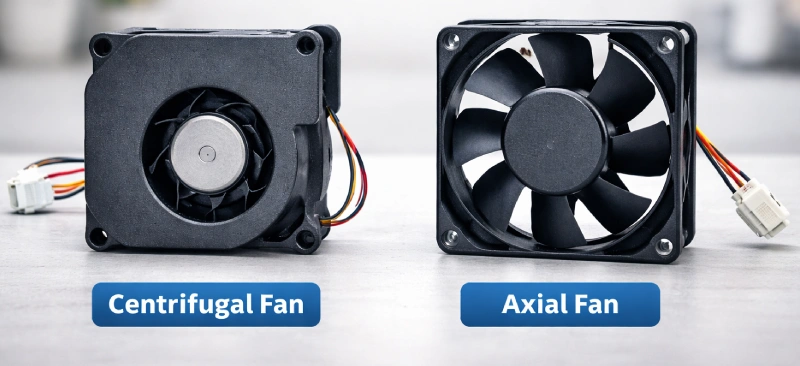
Key Features Compared
When you look at the centrifugal fan vs axial fan debate, it helps to see the differences side by side. Here’s a quick table to make your choice easier:
| Feature | Axial Fans | Centrifugal Fans |
|---|---|---|
| Airflow Direction | Parallel to axis | Perpendicular to axis |
| Pressure & Volume | High volume, low pressure | High pressure, lower volume |
| Operating Speed | Higher | Lower |
| Design | Compact, lightweight | Bulkier, robust |
| Power Usage | Lower | Typically higher |
| Noise Level | Quieter in open air | Quieter under pressure |
| Cost | Usually less expensive | More durable, higher upfront cost |
| Typical Applications | Cooling towers, HVAC, electronics | Industrial ventilation, dust control, HVAC systems |
You’ll notice that axial fans work best when you need lots of airflow in open spaces. Centrifugal fans shine when you need to push air through ducts or against resistance. With fanacdc’s range, you get both options built for reliability and long life.
Performance Overview
Let’s break down the centrifugal fan vs axial fan performance in real-world terms:
- Axial fans move a lot of air fast. They’re perfect for cooling electronics or ventilating large rooms.
- Centrifugal fans handle tough jobs. If you need to move air through filters or long ducts, they keep the airflow steady even when pressure builds up.
- Axial fans usually run at higher speeds and use less power, making them energy-efficient for low-pressure needs.
- Centrifugal fans can reach higher efficiency in pressure-heavy situations, especially in industrial settings.
- Noise matters. Axial fans tend to be quieter in open air, but centrifugal fans stay quieter when working under pressure, thanks to their design.
- Both types play a big role in industrial performance. You’ll often see axial fans in server racks and control panels, while centrifugal fans are common in HVAC and dust collection systems.
Choosing between centrifugal fans and axial fans comes down to your airflow needs, the pressure in your system, and the environment where you’ll use the fans.
How Centrifugal Fans and Axial Fans Work
Centrifugal Fans: Design and Operation
When you look at a centrifugal fan, you see a smart design built for tough jobs. The fan pulls air into the center and pushes it out at a right angle. This action uses radial force, which means the impeller spins and throws air outward, building up pressure. You get steady airflow, even when your system has filters or long ducts.
Here’s a quick look at what makes centrifugal fans tick:
| Principle/Factor | Description |
|---|---|
| Radial Force | The impeller draws air in and pushes it out sideways, boosting pressure. |
| Fan Casing Design | The spiral-shaped case turns fast-moving air into useful pressure. |
| Blade Design | Special blade shapes help move more air and handle higher resistance. |
| Rotational Speed | Faster spinning means more airflow and better performance. |
| Housing Configuration | The way the fan is built affects how well it works in your system. |
| Backward Inclined Blowers | These designs give you even higher pressure and better results. |
With fanacdc’s engineering, you get fans that use these features to deliver reliable performance. The strong casing and smart blade design mean you can count on steady airflow, even in demanding environments.
Tip: If you need to move air through filters or long ducts, a centrifugal fan from fanacdc can handle the job with ease.
Axial Fans: Design and Operation
Axial fans work in a different way. Picture a propeller on an airplane. The blades spin and pull air straight through the fan, moving it in line with the shaft. This design gives you lots of airflow with less pressure. It’s perfect for open spaces or when you just need to keep things cool without pushing against much resistance.
Here’s how axial fans compare to centrifugal fans:
| Fan Type | Airflow Direction | Pressure Generation |
|---|---|---|
| Axial Fan | Moves air parallel to axis | Lower pressure capabilities |
| Centrifugal Fan | Expels air perpendicularly | Higher pressure capabilities |
With fanacdc’s innovation, you get axial fans that are lightweight, energy-saving, and easy to install. They’re great for cooling electronics, server racks, or any spot where you want lots of air movement without a lot of noise.
Note: Choose an axial fan when you want strong airflow in open areas and don’t need to push air through obstacles.
Centrifugal Fan vs Axial Fan: Key Differences in 2026
Airflow and Pressure
When you look at airflow and pressure, you’ll see that centrifugal fans and axial fans serve different needs in industrial settings. Centrifugal fans push air out at a right angle to the intake, which means they create high-pressure airflow. This makes them perfect for duct systems, filtration, and any job where you need to move air against resistance. You’ll find these fans in places like HVAC units and dust collection systems.
Axial fans, on the other hand, move air straight through the fan, parallel to the shaft. They deliver high-volume airflow but at lower pressure. If you need to cool a large open area or keep electronics from overheating, axial fans are your go-to. They’re great for low-pressure airflow situations where you want a high flow rate without much resistance.
Here’s a quick comparison to help you see the difference:
| Feature | Centrifugal Fans | Axial Fans |
|---|---|---|
| Airflow Direction | Perpendicular to intake direction | Parallel to intake direction |
| Airflow Output | Low-volume, high-pressure airflow | High-volume, low-pressure airflow |
| Operating Speed | Lower operating speeds | Higher operating speeds |
| Pressure Capabilities | High | Low |
If your industrial process needs strong pressure capabilities, centrifugal fans from fanacdc will keep your system running smoothly. For open spaces or electronics, axial fans from fanacdc deliver the high-volume airflow you need.
Tip: Always match your fan choice to your system’s airflow and pressure requirements for the best performance.
Efficiency and Energy Use
Efficiency matters a lot in 2026, especially with rising energy costs. Centrifugal fans use more power because they work harder to push air through obstacles. They’re built for tough industrial jobs where you need reliable pressure. You get steady performance, but you’ll see higher energy use.
Axial fans stand out for their efficiency in low-pressure environments. They use less power and move a lot of air quickly. If you want to save on energy bills and your application doesn’t need much pressure, axial fans are the smart pick.
fanacdc’s AC fans and centrifugal fans both focus on system efficiency. The AC fans use advanced motors and aerodynamic blades to cut down on wasted energy. Centrifugal fans from fanacdc use brushless motors and smart impeller designs to boost efficiency, even when handling tough jobs.
Note: For industrial users, choosing the right fan can improve system efficiency and lower operating costs.
Noise and Maintenance
Noise can be a big deal in industrial environments. Centrifugal fans usually make more noise because they generate higher pressure. However, when you use them in ducted systems or with filters, they often run quieter than you’d expect. Their design helps reduce vibration and keeps noise levels manageable.
Axial fans are generally quieter, especially in open spaces. They’re a good choice if you need a peaceful work area or want to keep noise down around sensitive electronics.
Maintenance is another key factor. Centrifugal fans from fanacdc come with sealed bearings and flame-retardant housings, so they last longer and need less attention. Axial fans are simple to maintain and easy to install, which saves you time and effort.
If you want less downtime and fewer repairs, look for fans with strong construction and quality parts.
Size and Cost
Size and cost can influence your decision, too. Centrifugal fans are usually larger and more robust. They cost more upfront, but you get durability and long service life. This makes them a solid investment for demanding industrial applications.
Axial fans have a more compact design and usually cost less. They fit easily into tight spaces and offer a budget-friendly solution for many ventilation needs. If you need to cool a control cabinet or ventilate a small room, axial fans from fanacdc are a great choice.
fanacdc offers both types, so you can pick the right size and price for your project. Whether you need a heavy-duty centrifugal fan for high-pressure airflow or a compact AC fan for low-pressure airflow, you’ll find a solution that fits.
Remember: The right fan saves you money in the long run by matching your needs and reducing maintenance.
Applications of Centrifugal Fans and Axial Fans
Industrial Applications
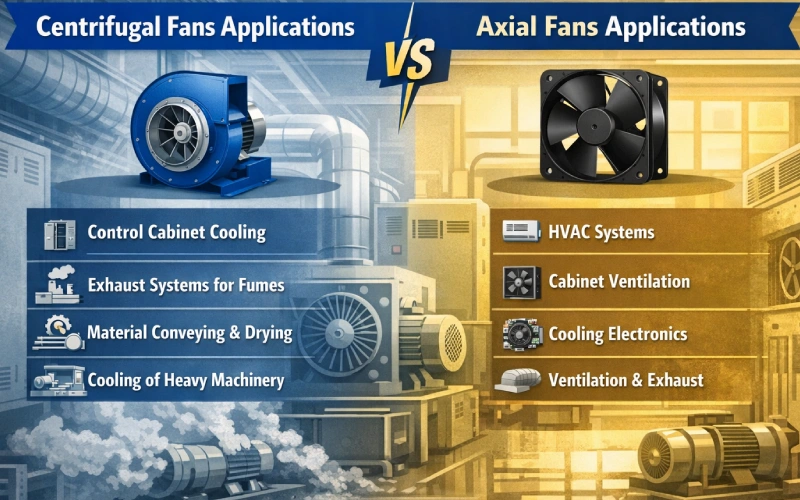
You see centrifugal fans and axial fans everywhere in industrial settings. These fans play a big role in industrial ventilation, keeping air moving in factories, warehouses, and plants. Centrifugal fans handle higher pressure loads, so you often find them in systems with ductwork, filtration, or dust collection. They work well for material handling, drying, and air pollution control. Axial fans shine in large open spaces where you need strong airflow but not much pressure. You might use them for general ventilation, cooling equipment, or improving air quality in manufacturing plants. With fanacdc’s industrial cooling fans, you get reliable performance for all these applications.
- Common industrial applications include:
- Ventilation for large spaces
- HVAC systems
- Cooling heavy machinery
- Exhaust systems for fumes
- Material conveying and drying
Commercial and Residential Uses
In commercial and residential environments, you want fans that keep things comfortable and quiet. Axial fans are popular here because they move a lot of air at low pressure and make less noise. You see them in offices, server rooms, and even in homes for general ventilation and cooling. These fans help maintain consistent temperatures and prevent overheating. Centrifugal fans also have a place in commercial kitchens or laundry rooms, where you need to move air through ducts or filters. Fanacdc’s AC fans offer energy savings and noise reduction, making them a smart choice for these applications.
- Typical uses include:
- General ventilation in offices and homes
- Cooling electronics and appliances
- Exhaust fans in kitchens and bathrooms
- Maintaining airflow in HVAC systems
Emerging Trends
You notice new trends shaping how you use fans in 2026. Energy efficiency leads the way, with more companies choosing fans that save power and meet new regulations. Smart controls and advanced designs help you get better airflow and lower costs. Fanacdc stays ahead by offering cooling fans that fit these trends, giving you reliable solutions for every application.
| Trend | Description |
|---|---|
| Energy Efficiency | Demand for energy-saving systems drives fan adoption in all industries. |
| Regulatory Mandates | New standards push upgrades to high-efficiency fans. |
| Technological Advances | Smart controls and better designs improve airflow and reduce expenses. |
Tip: When you match the right fan to your application, you get better performance, lower energy bills, and a more comfortable environment.
Choosing Between Centrifugal Fans and Axial Fans
Scenario-Based Recommendations
You want to pick the right fans for your industrial project, but the choices can feel overwhelming. Let’s break it down by what matters most in 2026: pressure, space, energy, noise, and budget.
If you need to move air through long ducts, filters, or any system with high resistance, a centrifugal fan is your best bet. This type of fan is built for high-pressure industrial cooling. It pushes air at a 90-degree angle, which helps overcome tough obstacles. You’ll see these fans in industrial cooling systems, dust control, and HVAC setups where strong ventilation is key.
When space is tight, you should look at an axial fan. Its compact design fits easily into control cabinets, server racks, or small rooms. Axial fans work well for general ventilation in open areas, cooling electronics, and keeping air moving in places where you don’t need much pressure.
Energy efficiency matters more than ever. If your industrial application needs lots of airflow but not much pressure, axial fans save power and cut costs. For harsh environments or high-pressure jobs, centrifugal fans deliver reliable performance, even if they use a bit more energy.
Noise can be a concern in many industrial settings. Axial fans run quietly in open spaces, making them perfect for offices or electronics. Centrifugal fans stay quieter when working under pressure, especially inside ducted systems.
Budget always plays a role. Axial fans usually cost less upfront and offer a simple solution for low-pressure ventilation. Centrifugal fans cost more but last longer and handle demanding industrial jobs with ease.
Here’s a quick table to help you match your needs:
| Need | Recommended Fan Type | Why It Works |
|---|---|---|
| High Pressure | Centrifugal Fan | Handles resistance from ducts and filters |
| Tight Spaces | Axial Fan | Compact design fits small areas |
| Energy Efficiency | Axial Fan | Uses less power for high-volume, low-pressure airflow |
| Low Noise | Axial Fan | Quiet operation in open spaces |
| Harsh Environments | Centrifugal Fan | Built for tough industrial conditions |
| Budget-Friendly | Axial Fan | Lower upfront cost for general ventilation |
You should also think about space constraints. Axial fans fit where room is limited. Centrifugal fans need more space and ducting to work well. Engineers often choose axial fans for tight industrial setups and centrifugal fans for larger systems.
Tip: Always match the fan type to your industrial application. The right choice keeps your system running smoothly and saves money over time.
Questions to Ask Before Deciding
Before you make your final decision, ask yourself a few key questions. These will help you avoid common mistakes and get the best fans for your industrial needs.
- What kind of airflow does my system require?
- Do I need to overcome high resistance from ducts or filters?
- How much space do I have for installation?
- Is noise a concern in my industrial environment?
- What is my budget for fans and maintenance?
- Will the fans operate in harsh conditions, like high temperatures or dusty air?
- How important is energy efficiency for my application?
- How much heat does my equipment generate?
- What temperature rise can I allow inside my equipment?
- What air volume do I need for proper ventilation?
- What is the system impedance?
- Can I find a fan with a performance curve that matches my needs?
You should also watch out for these common mistakes:
- Picking the wrong fan type for your pressure and airflow needs.
- Ignoring system resistance when selecting fans.
- Failing to size the fan correctly for your industrial application.
- Overlooking space limitations.
- Forgetting to consider operating conditions like temperature or air quality.
- Focusing only on initial cost instead of total energy use and reliability.
Fanacdc offers customization and support services to help you answer these questions. You can get help with project design, technical support, and choosing the right fans for your industrial setup. Their team can guide you through performance curves, sizing, and installation, so you get the best ventilation for your needs.
Note: Take your time with these questions. The right fans make all the difference in industrial performance, energy savings, and long-term reliability.
Conclusion
You’ve made it to the end of your journey through the world of fans. Now, you know how centrifugal fans and axial fans work, where they fit best, and what makes each one special. You don’t have to guess which fans suit your needs. You can match your requirements to the right fans and feel confident about your choice.
Let’s recap what you learned:
- Centrifugal fans handle high-pressure jobs. You’ll see these fans in HVAC systems, dust control, and places with lots of resistance.
- Axial fans move air fast in open spaces. These fans work well for cooling electronics, ventilating rooms, and keeping things comfortable.
- You should always consider airflow, pressure, space, energy use, noise, and budget before picking fans.
- Fanacdc offers a wide range of fans. You get reliable performance, long life, and expert support for every application.
If you want to future-proof your setup, choose fans that match your system’s needs. Don’t settle for less. The right fans keep your equipment running smoothly and save you money over time.
You can reach out to fanacdc for help with custom projects or technical questions. Their team knows fans inside and out. You get support from start to finish, whether you need fans for industrial, commercial, or residential use.
Fans play a huge role in keeping your environment safe and efficient. When you choose the right fans, you make your job easier and your systems stronger. Take your time, ask questions, and trust your instincts. The perfect fans are out there, ready to power your next project.
You have a lot to consider when choosing fans for your next project. Industry reports show that both centrifugal and axial fans keep growing in popularity, with new smart features and energy-saving designs. Fanacdc’s fans offer smart controls, quiet operation, and long service life, so you can trust them for any job. Here’s what matters most:
- Match fan size, power, and mounting to your needs.
- Check for energy efficiency and regulatory compliance.
- Think about the environment and control options.
| Feature | Why It Matters for You |
|---|---|
| Smart Controls | Adjust fans for changing needs |
| Energy Efficiency | Lower your electricity bills |
| Quiet Operation | Improve your work environment |
| Long Service Life | Cut down on maintenance |
| Safety and Air Quality | Protect your team and equipment |
Fans now adapt to new tech, with axial fans leading in ventilation and centrifugal fans handling tough jobs. Regulations push for energy-efficient fans, so future-proof your setup by picking the right fans for your application. With fanacdc, you get fans that fit every need—today and tomorrow.
FAQ
What is the main difference between centrifugal and axial fans?
You will notice centrifugal fans push air out at a right angle, which creates higher pressure. Axial fans move air straight through, giving you more airflow but less pressure. You should pick the type that matches your system’s needs.
Where should I use centrifugal fans instead of axial fans?
You should use centrifugal fans when you need to move air through ducts, filters, or any system with high resistance. These fans work best in HVAC, dust control, and industrial cooling. Axial fans fit open spaces or electronics cooling.
How do I know which fans are best for my project?
Start by asking yourself about airflow, pressure, space, and noise. If you need high pressure, go with centrifugal fans. For high airflow in open areas, choose axial fans. Fanacdc can help you match the right fans to your needs.
Are fans from fanacdc energy efficient?
Yes! Fanacdc designs fans with advanced motors and smart blades. These fans help you save energy and lower your bills. You get reliable performance and long service life, whether you pick centrifugal or axial fans.
Can I get custom fans for unique applications?
Absolutely. Fanacdc offers custom fans for special projects. You can ask for different sizes, voltages, or features. Their team will help you design fans that fit your exact requirements.