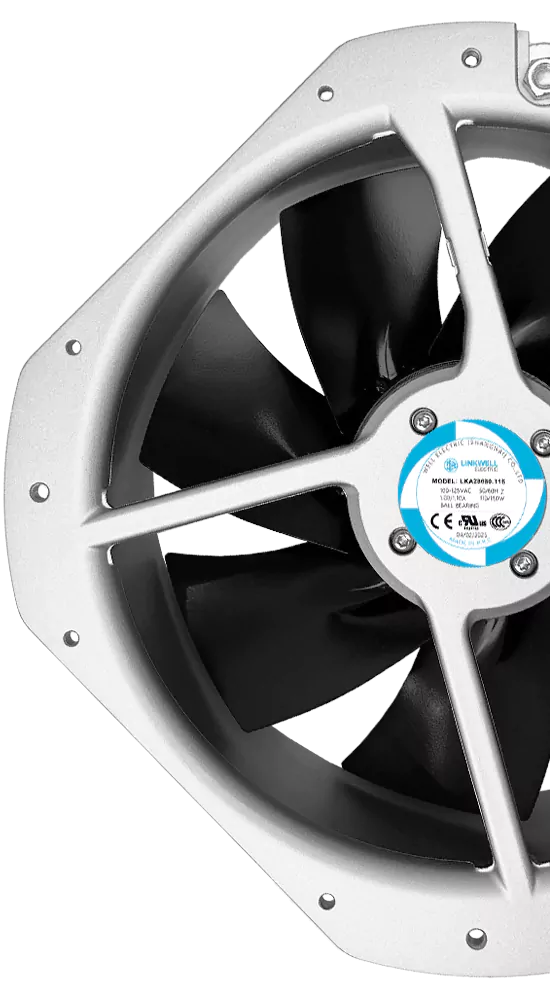
A centrifugal fan plays a key role in moving air or gases in many industrial systems. You need to pick the right centrifugal fan for your application. The right choice helps you boost efficiency, cut costs, and keep your equipment safe. Different centrifugal fan types handle airflow, pressure, and materials in unique ways. Engineers often look at factors like fan type, size, airflow rate, pressure drop, and space constraints when selecting a centrifugal fan. The table below shows what matters most:
| Factor | Why It Matters |
|---|---|
| Fan Type & Size | Matches system needs and saves money |
| Airflow Rate | Handles material and keeps systems running smoothly |
| Pressure Drop | Overcomes resistance from ducts and filters |
| Density | Adjusts for temperature or altitude changes |
| Material Handled | Prevents buildup and keeps airflow efficient |
| Space Constraints | Fits tight spaces and allows easy maintenance |
When you work with fanacdc, you get reliable centrifugal fan solutions backed by years of experience. Their focus on Centrifugal Fan Design means you get high performance and long-lasting value for every project.
Key Takeaways
- Choosing the right centrifugal fan boosts efficiency and reduces costs. Match the fan type to your specific application for optimal performance.
- Understand the four main types of centrifugal fans: forward-curved, backward-curved, radial, and aerofoil. Each type serves unique purposes in various industries.
- Key factors in fan selection include airflow needs, pressure requirements, and space constraints. Always consider these elements to ensure proper fit and function.
- Proper fan design enhances durability and efficiency. Look for features like aerodynamic impellers and high-quality materials to extend service life.
- Consult with experts like fanacdc for tailored solutions. Their support can help you find the best fan for your system’s needs.
What is a Centrifugal Fan?
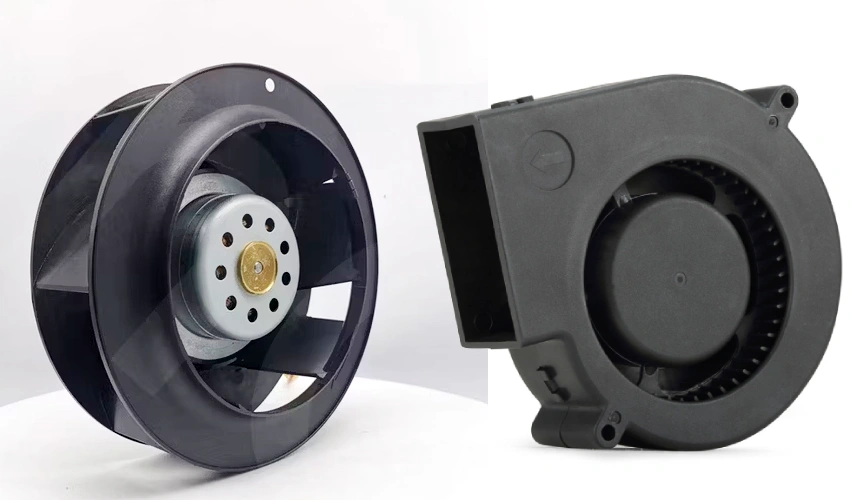
Centrifugal fans are everywhere in modern industry. You see them in HVAC systems, commercial refrigeration, and power plants. These fans move air or gases by spinning an impeller inside a housing. When you need to push air through filters, ducts, or equipment with high resistance, you turn to centrifugal fans. They handle tough jobs that other fans cannot manage.
The Basics of Centrifugal Fan Operation
You might wonder how a centrifugal fan actually works. The answer is simple but powerful. The fan uses a spinning impeller to pull air in and then fling it outward. This action changes the direction of the airflow by 90 degrees. The impeller converts the energy from the motor into kinetic energy, which boosts the pressure of the air. The result is a strong, steady stream of air that can move against resistance in your system.
Here’s what happens inside a centrifugal fan:
- The impeller rotates and draws air into the center.
- Centrifugal force pushes the air outward toward the edge of the impeller.
- The air exits the fan housing at a right angle to the intake, now at a higher pressure.
This process makes centrifugal fans perfect for applications where you need to overcome pressure drops, like in long duct runs or systems with filters.
Let’s compare centrifugal fans with axial fans so you can see the difference:
| Feature | Axial Fans | Centrifugal Fans |
|---|---|---|
| Airflow Direction | Moves air along the fan’s axis | Moves air at a right angle to the intake |
| Pressure and Airflow Needs | Better for low-pressure applications | Excels in high-pressure situations |
| Noise Levels | Generally quieter | Tends to be louder |
| Energy Efficiency | More efficient at lower pressures | More efficient in high-pressure applications |
| Space Requirements | Typically more compact | May require more space due to design |
You can see that centrifugal fans shine in high-pressure environments. That’s why you find them in industrial settings where reliability and performance matter most.
Key Components and Their Functions
Every centrifugal fan has a few key parts that work together to move air efficiently. Let’s break them down:
- Impeller: This is the heart of the fan. It spins rapidly, drawing air in and throwing it outward at high speed. The impeller’s shape and design affect how much air the fan can move and how much pressure it can create.
- Fan Housing: The housing surrounds the impeller. It guides the airflow and helps maintain pressure. A well-designed housing reduces turbulence and noise.
- Inlet and Outlet: The inlet is where air enters the fan. The outlet is where the pressurized air leaves. Their size and shape impact airflow and efficiency.
- Drive System: Usually, an electric motor powers the impeller. The drive system creates a low-pressure zone that pulls air into the fan.
When you choose a fanacdc centrifugal fan, you get advanced features like aerodynamic impeller structures, flame-retardant housings, and sealed bearings. These design choices boost efficiency, reduce vibration, and extend the fan’s service life. You can count on fanacdc for fans that meet strict international standards and deliver reliable performance in demanding environments.
Key Benefits of Proper Centrifugal Fan Design
You get several benefits when you pick the right centrifugal fan design for your application:
- Higher energy efficiency, which lowers your operating costs.
- Stable airflow, even in systems with high resistance.
- Longer service life, thanks to durable materials and smart engineering.
- Lower maintenance needs, which means less downtime.
- Better safety, especially with certified products like those from fanacdc.
Proper design also means you can customize the fan for your exact needs. fanacdc offers a wide range of options, including different impeller shapes, motor types, and housing materials. This flexibility ensures you get the best fit for your system.
The Main Types of Centrifugal Fans
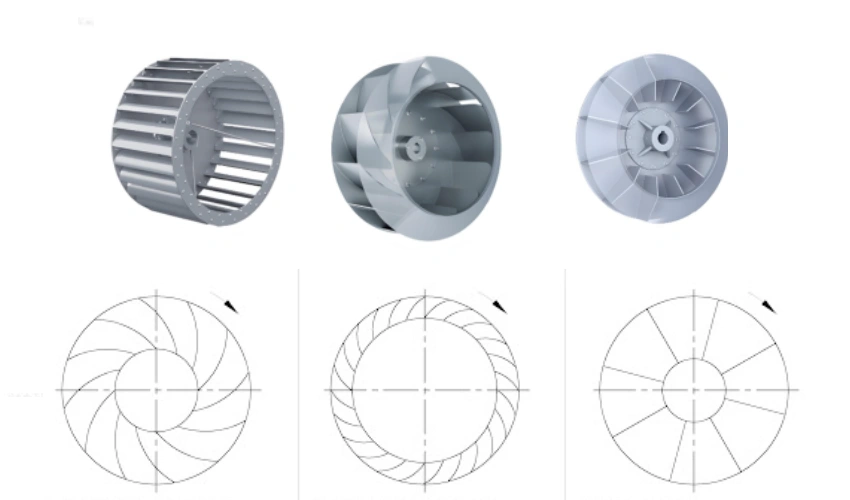
You will find four main types of centrifugal fans in industrial use. Each type has its own strengths and best-fit applications. Let’s look at them one by one:
- Forward-curved centrifugal fan
This fan uses blades that curve in the direction of rotation. You get high airflow at low to medium pressure. These fans run quietly and work well in HVAC systems, air handlers, and clean environments. The forward-curved centrifugal fan is compact, making it a good choice for tight spaces. You see forward-curved centrifugal fans in air conditioners, furnaces, and ventilation units. - Backward-curved centrifugal fan
The blades on this fan curve away from the direction of rotation. You get higher efficiency and can handle higher pressures. These fans are great for industrial ventilation, dust collection, and systems with variable airflow. Backward-curved centrifugal fans resist clogging and need less maintenance. - Radial centrifugal fan
This fan has straight blades that radiate out from the center. It handles dirty, dusty, or moist air with ease. You use radial centrifugal fans in material handling, pneumatic conveying, and exhaust systems. They are rugged and reliable, perfect for harsh environments. - Aerofoil centrifugal fan
The blades on this fan have an airfoil shape, like an airplane wing. You get the highest efficiency and lowest noise. Aerofoil centrifugal fans work best in large HVAC systems, clean rooms, and places where energy savings matter most.
Here’s a quick summary of the main types of centrifugal fans and where you might use them:
| Fan Type | Blade Shape | Best For | Key Benefit |
|---|---|---|---|
| Forward-curved centrifugal fan | Curved forward | HVAC, air handlers, clean air | Quiet, compact, high flow |
| Backward-curved centrifugal fan | Curved backward | Industrial, dust collection | High efficiency, low clog |
| Radial centrifugal fan | Straight radial | Material handling, exhaust | Tough, handles dirty air |
| Aerofoil centrifugal fan | Airfoil-shaped | Large HVAC, clean rooms | Very efficient, low noise |
You can see that each type has a unique role. When you work with fanacdc, you get access to all these main types of centrifugal fans. The company’s engineering team helps you pick the right fan for your system, whether you need a forward-curved centrifugal fan for quiet airflow or a radial centrifugal fan for tough industrial jobs.
Critical Design Factors and Performance Optimization
When you select a centrifugal fan, you need to think about more than just airflow. The design of the impeller, the materials used, and the shape of the housing all affect performance. For example, aerodynamic impeller blades reduce energy loss and noise. Durable materials like flame-retardant plastics or metals extend the fan’s life. Sealed bearings keep dust and moisture out, which is vital in industrial settings.
fanacdc pays close attention to these details. The company’s fans feature innovative impeller designs, high-efficiency motors, and robust housings. You get fans that run smoothly, last longer, and save energy. This focus on performance optimization means you spend less on maintenance and energy over the life of your equipment.
Where You’ll Find These Fans in Action
You see the main types of centrifugal fans in many industries:
- HVAC systems in office buildings and factories
- Commercial refrigeration units in supermarkets
- Power and energy systems in data centers and power plants
- Material handling and dust collection in manufacturing plants
fanacdc’s centrifugal fans power these systems every day. The company’s products meet strict international standards, so you know you’re getting safe, reliable, and efficient fans for your application.
Tip: When you choose the right centrifugal fan type, you boost your system’s efficiency, cut costs, and improve safety. fanacdc’s experts can help you match the perfect fan to your needs.
You might wonder why there are so many types of centrifugal fans. Each design serves a unique purpose. Let’s break down the main types of centrifugal fans, so you can see which one fits your needs best.
Forward-Curved Centrifugal Fan
The forward-curved centrifugal fan stands out for its compact size and quiet operation. You’ll notice the blades curve in the direction of rotation. This design moves large volumes of air at low pressure. You often find forward-curved centrifugal fans in HVAC systems, air purifiers, and dust collectors. These fans work well in clean environments where you need gentle airflow.
Advantages:
- Quiet performance
- Cost-effective
- Fits tight spaces
Limitations:
- Lower energy efficiency
- Can overload if not sized correctly
Typical Applications:
- HVAC units in offices and schools
- Electronics cooling
- Air handling units
fanacdc offers forward-curved centrifugal fans with aerodynamic impeller structures. You get balanced airflow and low vibration, which means less noise and longer service life. The flame-retardant housings and sealed bearings keep your system safe and reliable.
Backward-Curved Centrifugal Fan
You’ll see backward-curved centrifugal fans in places that demand higher pressure and efficiency. The blades curve away from the direction of rotation. This design handles medium to high pressure and resists clogging. You get better energy efficiency and lower noise compared to other high-pressure fans.
Advantages:
- High energy efficiency
- Handles higher pressures
- Lower maintenance needs
Limitations:
- Larger size
- Less compact than forward-curved fans
Typical Applications:
- Industrial ventilation
- Air conditioning systems
- Refrigeration units
fanacdc backward-curved centrifugal fans feature brushless motor options. You save energy and reduce operating costs. The robust construction with IP-rated protection means these fans perform reliably in demanding industrial environments.
Radial Blade Centrifugal Fan
Radial blade centrifugal fans use paddle-style impellers. You’ll find these fans in tough jobs where air is dirty or full of particles. The design excels in handling dust, moisture, and even small debris. Radial fans are louder, but they’re built for heavy-duty work.
Advantages:
- Reliable in harsh conditions
- Handles dirty or particulate-laden air
- Heavy-duty construction
Limitations:
- Louder operation
- Less efficient in clean air settings
Typical Applications:
- Pneumatic conveying
- Industrial exhaust systems
- Material handling
fanacdc radial centrifugal fans come with sealed bearings and corrosion-resistant materials. You get long-lasting performance, even in harsh environments. The company’s rapid prototyping and custom engineering let you match the fan to your exact needs.
Aerofoil Centrifugal Fan
Aerofoil centrifugal fans use blades shaped like airplane wings. You get the highest energy efficiency and very low noise. These fans work best in clean environments where quiet, efficient airflow matters most.
Advantages:
- Highest energy efficiency
- Very quiet operation
Limitations:
- Not suitable for dusty or dirty air
- Requires clean intake air
Typical Applications:
- Large HVAC systems
- Clean rooms
- Industrial exhaust systems
fanacdc’s aerodynamic impeller design ensures smooth airflow and minimal energy loss. You benefit from quiet operation and reduced energy costs.
Quick Comparison Table: Main Types of Centrifugal Fans
Here’s a table to help you compare the main types of centrifugal fans:
| Type of Fan | Design Characteristics | Performance Capabilities | Advantages | Limitations | Common Applications |
|---|---|---|---|---|---|
| Forward-Curved | Short blades curving forward | Moves large air volumes at low pressure | Quiet, compact, cost-effective | Lower efficiency, can overload | HVAC, air purifiers, dust collectors |
| Backward-Curved | Longer blades curving backward | Efficient at medium/high pressure | High efficiency, lower noise | Larger size, less compact | Industrial ventilation, refrigeration |
| Radial | Paddle-style impellers | Handles dirty/particulate-laden air | Heavy-duty, reliable in harsh environments | Louder, less efficient in clean air | Material handling, exhaust systems |
| Aerofoil | Blades shaped like aircraft wings | Quiet, clean airflow, minimal energy use | Highest efficiency, very low noise | Needs clean intake air, not for dusty areas | Large HVAC, clean rooms, exhaust systems |
Centrifugal Fans vs. Axial Fans: Compact Cooling Applications
You might ask, “How do centrifugal fans compare to axial fans for compact cooling?” Axial fans move air straight along the axis. They’re great for low-pressure, high-volume cooling in tight spaces. Centrifugal fans, especially forward-curved types, push air at a right angle and handle higher resistance. You’ll want axial fans for simple cooling in electronics or server racks. Centrifugal fans shine when you need to overcome filters, ducts, or pressure drops.
| Feature | Axial Fans | Centrifugal Fans (Forward-Curved) |
|---|---|---|
| Airflow Direction | Straight through | 90-degree turn |
| Pressure Capability | Low | Medium to high |
| Space Efficiency | Very compact | Compact (forward-curved), larger (others) |
| Noise Levels | Lower | Quiet (forward-curved), louder (others) |
| Best Use | Electronics, server racks | HVAC, air handlers, ducted systems |
Why Proper Design Matters
You want a fan that fits your system and lasts. Proper centrifugal fan design means you get stable airflow, lower energy costs, and less downtime. fanacdc uses aerodynamic impeller blades, high-efficiency motors, and flame-retardant housings. You get fans that run smoothly and stand up to tough conditions.
Tip: Always match the fan type to your application. If you need quiet, compact airflow, go with a forward-curved centrifugal fan. For dirty air or heavy-duty jobs, pick a radial blade fan. fanacdc’s engineering team can help you choose and customize the right solution.
Key Product Features from fanacdc
fanacdc centrifugal fans offer:
- High-efficiency motor design (brushless and shaded-pole options)
- Aerodynamic impeller structure for balanced airflow
- Durable, flame-retardant housings and sealed bearings
- Custom sizing, voltage, and performance options
- IP-rated protection for harsh environments
- Rapid prototyping and full engineering support
You get reliable performance, long service life, and tailored solutions for any industrial challenge.
Power Supply and Drive Technology
| Parameter | AC Centrifugal Fan | DC Centrifugal Fan | EC Centrifugal Fan |
|---|---|---|---|
| Motor Type | AC induction motor (single-phase / three-phase) | Brushless DC motor (BLDC) | Electronically commutated motor (DC motor + EC controller) |
| Power Supply | Direct connection to mains power (110V / 220V / 380V AC) | Low-voltage DC (12V / 24V / 48V), requires external power supply | AC input with internal rectification to DC |
| Speed Control | Limited (requires voltage regulator, VFD, or tapped winding) | Easy (PWM, voltage control, 0–10V signal) | Highly flexible (0–10V, PWM, RS485, etc.) |
| Energy Efficiency | Standard (approx. 30–50%) | Higher (approx. 60–75%) | Highest (up to 70–85%, 30–70% more efficient than AC) |
| Typical Applications | Industrial control cabinets, HVAC, continuous operation systems | Automotive, portable devices, solar systems, battery-powered equipment | Data centers, precision HVAC, green buildings, energy-efficient projects |
| Cost Structure | Low initial cost, higher long-term energy consumption | Moderate initial cost, requires external power, balanced overall cost | Higher initial cost, significant long-term energy savings (ROI in 1–3 years) |
| Lifespan & Reliability | 50,000+ hours, simple structure, low failure rate | 50,000+ hours, bearings are main wear components | 50,000+ hours, electronic components require additional consideration |
Summary Table: Types of Centrifugal Fans and Their Applications
| Type of Centrifugal Fan | Common Industrial Applications |
|---|---|
| Forward Curved Centrifugal Fans | HVAC systems, air purifiers, dust collectors |
| Backward Curved Centrifugal Fans | Industrial ventilation systems, air conditioning, refrigeration |
| Radial Centrifugal Fans | Pneumatic conveying, industrial exhaust systems, material handling |
| Aerofoil Centrifugal Fans | Industrial exhaust systems, HVAC systems |
You now have a clear picture of the main types of centrifugal fans. You know how each design works, where it fits best, and what advantages it brings. fanacdc gives you the flexibility to choose and customize the perfect fan for your industrial needs.
Centrifugal Fan Design and Features
Aerodynamic Impeller Structure
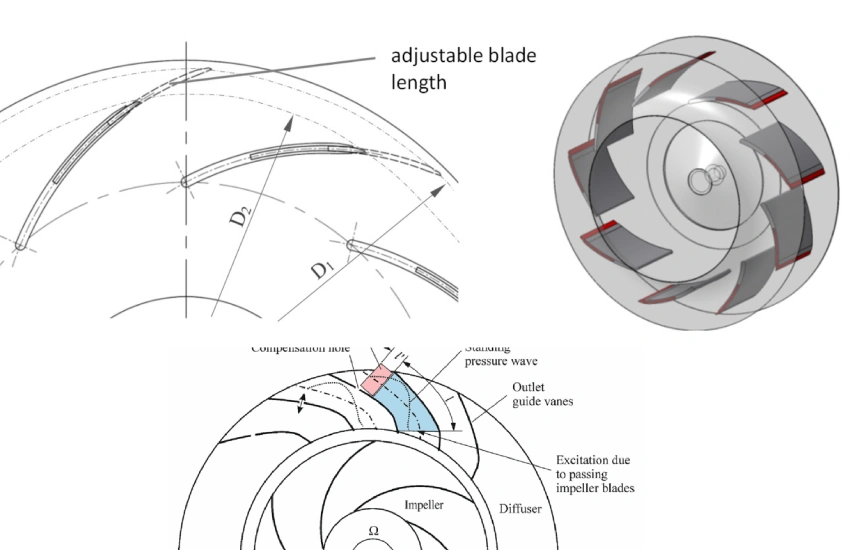
When you look at centrifugal fan design, the impeller is the heart of the system. The blades on the impeller, their angle, and the spacing all shape how air moves through the fan. If you choose a forward curved impeller, you get high airflow at lower pressure, which works well for HVAC and clean air systems. A backward curved impeller gives you higher efficiency and handles more pressure, making it perfect for industrial ventilation.
The impeller shroud plays a big role in boosting aerodynamic efficiency. It keeps airflow contained and reduces tip leakage, which means less energy loss. You can see efficiency jump by up to 20% with smart blade design and shroud improvements. When you pick a centrifugal fan design with a well-balanced impeller, you get steady airflow, less vibration, and longer motor life.
Tip: Always match the impeller type—forward curved or backward curved—to your system’s pressure and airflow needs. This choice helps you optimize performance and energy use.
Motor Options and Efficiency
The motor you choose for your centrifugal fan design affects how much energy you save. You’ll find brushless DC motors, brushed DC motors, and AC motors paired with these fans. Brushless DC motors offer the highest efficiency, reaching up to 90%. They use permanent magnets, which cut down on energy loss. Brushed DC motors have lower efficiency because of friction from the brushes. AC motors are reliable but don’t match the efficiency of DC types.
Here’s a quick look at motor options:
| Motor Type | Efficiency (%) | Notes |
|---|---|---|
| Brushless DC Motors | 85-90 | Best for energy savings |
| Brushed DC Motors | 75-80 | More friction, less efficient |
| AC Motors | N/A | Reliable, lower efficiency |
If you want a forward curved fan for quiet, compact systems, brushless DC motors are a smart choice. For backward curved fans in heavy-duty settings, you might prefer robust AC motors.
Durability and Certifications
You want your centrifugal fan design to last in tough environments. Material selection makes a big difference. Steel works well for standard industrial jobs. Stainless steel resists corrosion, so it’s great for demanding settings. Aluminum gives you a lightweight option with good durability. If you need chemical resistance, fiberglass reinforced plastic (FRP) is the top pick.
| Material Type | Description |
|---|---|
| Steel | Good for moderate exposure |
| Stainless Steel | Handles corrosion, demanding environments |
| Aluminum | Lightweight, resists corrosion |
| Fiberglass Reinforced Plastic | Superior chemical resistance |
Certifications matter for safety and reliability. You’ll see ATEX and IECEx for explosive atmospheres, and UL for hazardous environments. When you choose a centrifugal fan design from fanacdc, you get fans that meet strict standards and deliver reliable performance.
Note: Proper centrifugal fan design means you get a fan that balances static and dynamic pressure, minimizes friction losses, and stands up to harsh conditions. This approach keeps your system running smoothly and saves you money over time.
Applications of Centrifugal Fan Types
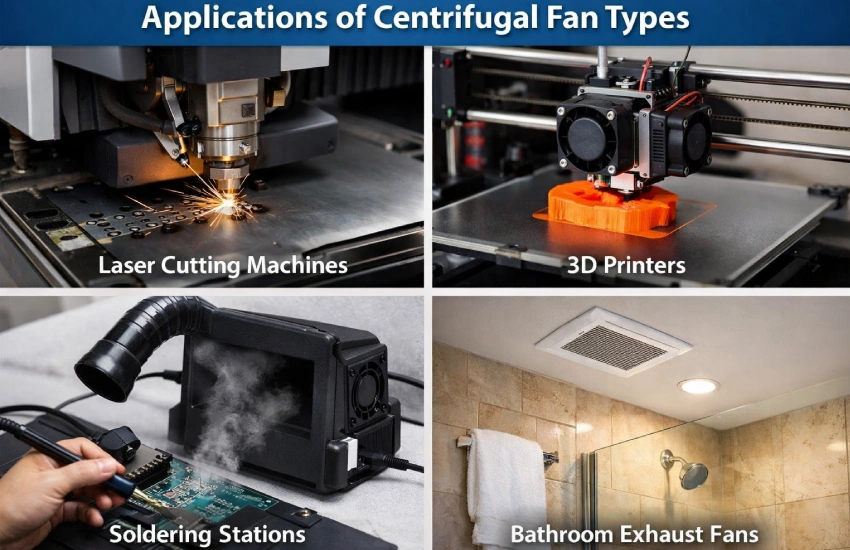
When you look at the real world, you’ll see centrifugal fan types everywhere. Each type brings its own strengths to different applications. Let’s break down where you’ll find them in action.
HVAC and Industrial Systems
You rely on HVAC systems to keep buildings comfortable and air clean. The types of centrifugal fans you choose make a big difference. Forward-curved fans work best for clean air and high airflow, so you’ll see them in air handlers and ventilation units. Backward inclined fans shine in air conditioning and ventilation systems that need both high pressure and high airflow. Radial fans handle shop ventilation and dusty air, making them perfect for industrial exhaust and filtration systems.
Here’s a quick table to help you match centrifugal fan types to HVAC needs:
| Fan Type | Pressure | Airflow | Common Use |
|---|---|---|---|
| Forward Curve | Medium | High | Air handlers, clean air |
| Backward Inclined | High | High | AC systems, ventilation |
| Radial | High | Medium | Shop ventilation, filtration |
| Aerofoil | Highest | Best | Clean air, premium HVAC |
You’ll also find fanacdc fans in automation equipment and cabinet enclosure cooling, where reliable airflow is a must.
Commercial Refrigeration
In commercial refrigeration, you need fans that can move air efficiently through coils and tight spaces. Forward-curved centrifugal fan types fit well here because they’re compact and quiet. Backward inclined fans help when you need to overcome higher resistance, like in large walk-in coolers or freezers. You want stable airflow to keep temperatures even and products fresh.
Tip: Always check the duct layout and pressure needs before picking your fan. This helps you get the best performance and energy savings.
Power and Energy Systems
Power plants and energy systems depend on centrifugal fan types for cooling and airflow management. Backward inclined fans supply combustion air to boilers and help remove exhaust gases. Radial fans handle dusty gases and hot air, making them ideal for induced draft applications. You’ll also see these fans cooling turbine generators and condensers, keeping everything running at the right temperature.
You can count on fanacdc’s backward inclined fans for tough jobs in power generation. Their robust design and certifications mean you get safe, reliable operation, even in demanding environments.
- For material handling applications, radial fans are your go-to choice. They move air with dust, debris, or moisture, supporting everything from industrial machinery to pneumatic conveying.
No matter the application, fanacdc offers centrifugal fan types that deliver efficiency, durability, and performance you can trust.
Choosing the Right Centrifugal Fan
Key Selection Factors
When you start looking for a centrifugal fan, you need to focus on a few key factors. First, figure out your airflow needs in cubic feet per minute (CFM) and the static pressure your system requires. If you size your fan to operate near its best efficiency point, you’ll save energy and keep noise low. Think about the space you have for installation. Some fans fit tight spots, while others need more room. Noise level matters, too—especially in offices or clean rooms. Don’t forget about air quality. If your air has dust, moisture, or chemicals, you’ll want a fan built with the right materials and protective features.
Remember: Oversizing a fan won’t make your system more efficient. It can actually waste energy and create more noise.
Practical Decision Guide
You might wonder how to choose between the types of centrifugal fans for your project. Here’s a simple step-by-step guide:
- Identify your airflow and pressure needs. Check your system specs or measure them directly.
- Review fan performance curves to make sure the fan can handle your requirements.
- Match the fan type to your application:
- Forward-curved for quiet, low-pressure jobs.
- Backward-curved for high pressure and energy savings.
- Radial for dusty or harsh environments.
- Measure your available space and pick a fan that fits.
- Consider temperature, safety, and certifications for your environment.
- Look at efficiency ratings and drive types to keep costs down.
- Choose materials and protection levels based on dust, moisture, or chemicals.
- Explore smart controls and customization for better performance and easier maintenance.
Why Choose fanacdc Centrifugal Fans
fanacdc gives you more than just a fan. You get a partner who understands your needs. You can customize dimensions, mounting, voltage, speed control, and even branding. Here’s a quick look at what you can tailor:
| Customization Aspect | Description |
|---|---|
| Dimensions | Fit any space or system |
| Mounting Structures | Easy installation in any setup |
| Input Voltages | Match your power supply |
| Speed Control Interfaces | Fine-tune airflow and temperature |
| IP Protection | Guard against dust and moisture |
| Branding & Packaging | Make it your own |
You also get technical support, rapid prototyping, and reliable after-sales service. With fanacdc, you know your centrifugal fan will deliver efficiency, safety, and long-term value.
Conclusion
You now know how important it is to pick the right centrifugal fan for your project. Each type—forward-curved, backward-curved, radial, and aerofoil—brings its own strengths. You saw how blade design, aerodynamic structure, and material choice all shape fan performance. When you match the fan type to your system, you get better airflow, higher efficiency, and longer service life.
Let’s recap what you learned:
- Proper design matters: Aerodynamic impellers and smart material selection boost efficiency and cut energy costs.
- Critical factors: Always check airflow, pressure, space, noise, and air quality before you choose.
- Performance optimization: Fans with balanced blades and sealed bearings run smoother and last longer.
- Industry applications: You find centrifugal fans in HVAC, refrigeration, power plants, and manufacturing. Each industry needs a different fan type for best results.
- Comparison with axial fans: Centrifugal fans handle higher pressure and resistance, while axial fans work best for simple, low-pressure cooling.
Tip: If you want a fan that fits your system and lasts, always look for certified products with proven reliability.
fanacdc gives you more than just a fan. You get expert support, custom solutions, and products that meet strict international standards. You can trust fanacdc to help you boost efficiency, cut costs, and keep your equipment safe.
Ready to take the next step?
- Review your system’s needs.
- Check out fanacdc’s centrifugal fan lineup.
- Reach out to fanacdc’s experts for advice or a custom solution.
With the right centrifugal fan, you power up your system’s performance and reliability.
You’ve seen how each centrifugal fan type fits a unique role. Here’s a quick comparison:
| Fan Type | Performance Highlights | Best Applications |
|---|---|---|
| Forward-Curved | High airflow, less efficient at high pressure | HVAC, light industrial ventilation |
| Backward-Curved | Efficient, handles high pressure, quieter | Industrial processes, exhaust |
| Radial | Tough, handles dirty air | Material handling, exhaust systems |
fanacdc fans boost efficiency and reliability with smart features like double-row bearings and optimized blade support. Ready to choose?
- Define your needs and airflow.
- Match the fan type to your application.
- Review specs and certifications.
- Reach out to fanacdc for expert help.
FAQ
What makes centrifugal fans different from axial fans?
You get higher pressure and better airflow control with centrifugal fans. Axial fans move air straight through, but centrifugal fans push air at a right angle. This design helps you handle filters, ducts, and resistance in industrial systems.
How do I pick the right centrifugal fan type?
Start with your airflow and pressure needs. Check if your system handles clean or dirty air. Use a forward-curved fan for quiet, clean jobs. Choose a radial fan for dusty air. Always match the fan to your application.
Why does blade design matter in centrifugal fans?
Blade shape changes how much air you move and how much energy you use. Forward-curved blades give you quiet, high flow. Backward-curved blades boost efficiency. Radial blades handle tough, dirty air. The right blade design saves you money and energy.
What materials work best for centrifugal fans?
You want steel for most jobs. Stainless steel resists rust in harsh places. Aluminum keeps things light. Fiberglass reinforced plastic stands up to chemicals. Pick the material that matches your environment for longer fan life.
Where do you see centrifugal fans used most?
You find them in HVAC systems, commercial refrigeration, power plants, and factories. They keep air moving in clean rooms, handle dust in workshops, and cool equipment in energy systems. You see centrifugal fans wherever you need reliable airflow.