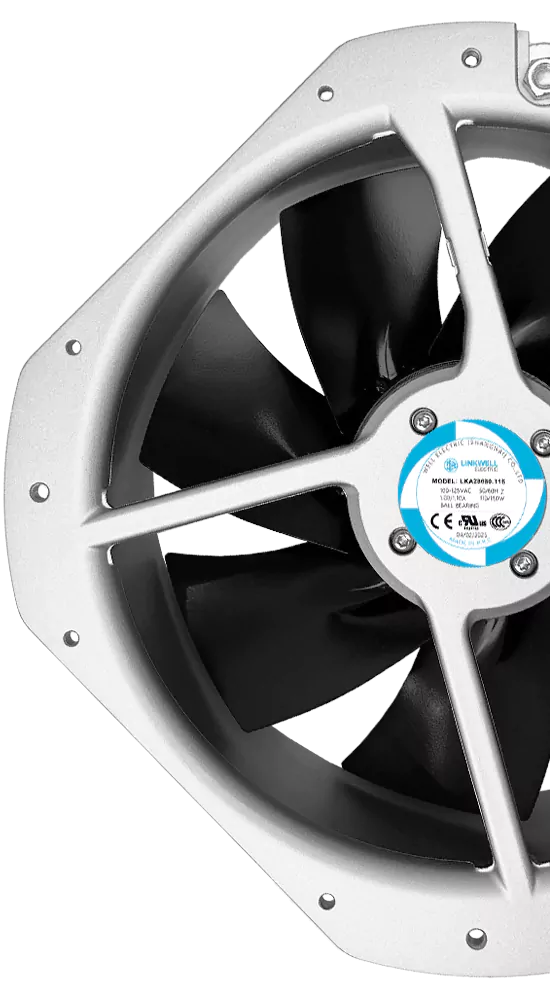
You probably don’t notice the axial fan working behind the scenes, but it keeps your electronics, home, or workspace cool and comfortable. What is an Axial Fan? It’s a type of fan that moves air in a straight line, pushing large volumes through open spaces or across equipment. Industrial cooling systems rely on this fan for more than half of their setups.
You’ll find axial fans everywhere because they deliver strong airflow and help manage heat in places like server rooms or factory floors. Knowing how an axial fan works lets you pick the right cooling solution for your needs.
Key Takeaways
- Axial fans move air in a straight line, making them ideal for cooling large spaces efficiently.
- These fans are energy-efficient, helping to lower electricity bills while providing strong airflow.
- Regular maintenance, like cleaning and lubricating, ensures axial fans operate smoothly and last longer.
- Choosing the right axial fan involves considering airflow needs, noise levels, and energy efficiency.
- Axial fans are versatile and can be used in homes, offices, and industrial settings for effective ventilation.
What is an Axial Fan
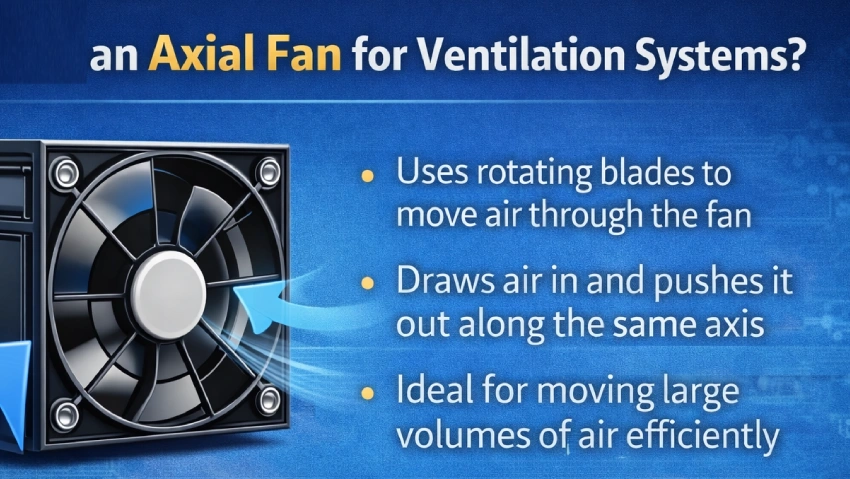
Axial Fan Definition
You might wonder, what is an axial fan? In simple terms, it’s a mechanical device that moves air or gas in a straight line, right along the axis of the fan’s shaft. You’ll see this type of fan in everything from home appliances to massive industrial cooling systems. The main job of an axial fan is to push large volumes of air at low pressure, making it perfect for spaces that need lots of airflow without much resistance.
Here’s a quick look at how industry experts define what is an axial fan:
| Aspect | Description |
|---|---|
| Type | Mechanical device designed to move air or gas parallel to the fan’s shaft. |
| Airflow Direction | Air flows along the axis of the fan’s impeller or blades. |
| Pressure Characteristics | Creates high volume flow at relatively low pressure. |
You’ll find that what is an axial fan comes up a lot when you’re searching for efficient cooling solutions. This fan stands out because it can move a lot of air with minimal energy, which is why it’s so popular in both homes and industries.
When you want a reliable and innovative solution, fanacdc leads the way in axial fan technology. With years of experience and a focus on quality, fanacdc delivers fans that keep your equipment cool and your environment comfortable.
How Axial Fans Work
Let’s break down how an axial fan actually works. Imagine a set of propeller-like blades attached to a central hub. The motor spins the hub, and the blades pull air in from one side and push it out the other, all in a straight line. This movement creates a pressure difference, which is what drives the airflow.
- The blades rotate and draw air in parallel to the shaft.
- The design of the blades and hub accelerates the air, sending it straight through the fan.
- The fan creates a pressure difference, which helps move air efficiently from one place to another.
The number and shape of the blades play a big role in how much air the fan can move. If you need to move more air, you might choose a fan with more blades or a different blade shape.
When you look at fan performance, you’ll often see something called the Airflow-Static Pressure (P-Q) curve. This curve shows how much air the fan can move at different pressure levels. There’s a special area on this curve called the stall region. If you pick a fan that operates in the stall region, you might notice unstable airflow or even noise. That’s why it’s important to choose a fan that matches your system’s needs and stays out of the stall region for smooth, reliable performance.
Tip: Always check the P-Q curve when selecting an axial fan. It helps you avoid performance issues and ensures you get the airflow you need.
Key Components
Every axial fan has a few essential parts that work together to keep air moving:
- Motor: This is the heart of the fan. It powers the blades and keeps everything spinning smoothly.
- Blades: These are the “propellers” that actually move the air. The number and shape of the blades affect how much air the fan can push.
- Impeller: This part holds the blades together and helps direct the airflow efficiently. It’s usually made from materials that resist corrosion.
- Housing (Frame): The housing protects the internal parts and helps guide the airflow in the right direction.
- Ball Bearings: These support the rotation of the motor and blades, reducing friction and noise.
- Accessories: Some fans include extras like silencers or vibration controllers to make them even more efficient and quiet.
When you choose a fan from fanacdc, you get advanced engineering in every component. Each part is designed for durability, efficiency, and quiet operation, so you can trust your cooling system to perform day after day.
If you’re still asking, what is an axial fan, just remember: it’s a simple, powerful tool that keeps air moving where you need it most. Whether you’re cooling electronics, ventilating a workspace, or managing heat in an industrial setting, the right fan makes all the difference.
The Three Common Types of Axial Fans Are
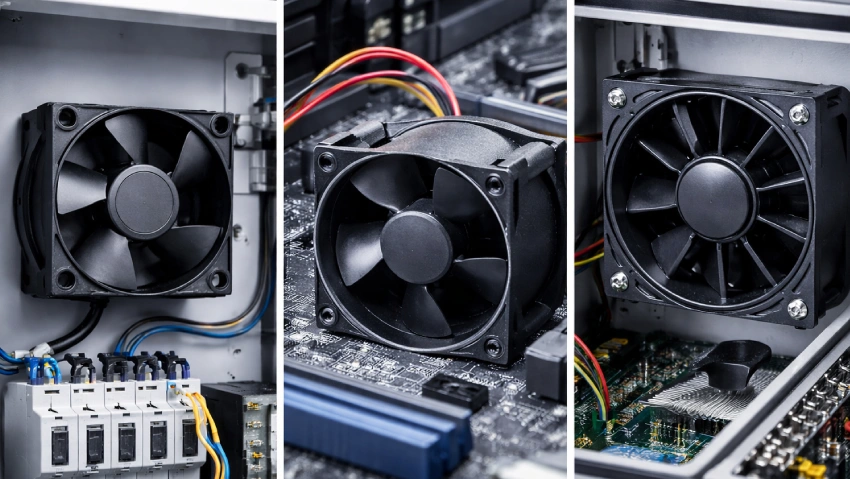
Propeller Fans – Designed for high airflow at low pressure, commonly used for ventilation and cooling in open spaces.
Tube Axial Fans – Propeller fans mounted inside a cylindrical housing, offering more controlled airflow and slightly higher pressure capability.
Vane Axial Fans – Equipped with guide vanes to straighten airflow, providing higher efficiency and pressure, often used in industrial applications.
Axial Flow Fan Features
Design and Efficiency
When you look at the design of axial flow fans, you’ll notice a focus on efficient airflow and durability. The blades have a propeller-like shape that moves air straight through the fan, making it perfect for spaces that need a lot of airflow with minimal resistance. Many models use a ducted design, which helps guide the airflow and boosts overall efficiency. You’ll also find variable speed options, so you can adjust the airflow to match your needs without losing performance.
Here’s a quick table showing how different design features contribute to the efficiency of an axial flow fan:
| Design Feature | Contribution to Efficiency |
|---|---|
| Ducted Design | Guides airflow, improving efficiency |
| Variable Speed | Adjusts airflow without big drops in performance |
| Durable Construction | Uses strong materials for longer life and reliability |
| Quieter Operation | Produces less noise, great for sensitive environments |
| Quick Maintenance | Simple design makes repairs and checks easier |
| Improved Lifespan | Compact, lightweight build extends component life |
Fanacdc’s axial flow fan lineup uses these features to deliver reliable, efficient airflow for your cooling needs.
Performance Factors
You might wonder what affects the performance of an axial flow fan. Blade shape plays a big role. A well-designed blade reduces drag and increases lift, which means better airflow efficiency. The pitch angle of the blade controls how much air the fan moves—higher angles push more air but need more power. The number and size of blades also matter. More blades can increase static pressure, but you need the right balance for the best airflow.
Motor type is another key factor. AC, DC, brushless, and EC motors each offer different levels of efficiency and control. For example, fanacdc’s DC fans use brushless motors for stable, efficient airflow and longer life. The bearings inside the motor also affect how long your fan will last and how quietly it runs.
You’ll also see new advancements in the design of axial flow fans, like airfoil-shaped blades and noise-absorbing materials. These upgrades help reduce turbulence and keep the fan running quietly, even at high speeds.
Comparison with Centrifugal Fan
Choosing between an axial flow fan and a centrifugal fan depends on your needs. Here’s a table to help you compare:
| Feature | Axial Flow Fan | Centrifugal Fan |
|---|---|---|
| Airflow Path | Straight, parallel to shaft | Radial, changes direction |
| Profile | Slim, compact | Bulkier, deeper |
| Ideal Applications | Open spaces, electronics, ventilation | Ducted systems, HVAC, filtration |
| Size | Wide range, fits tight spaces | Usually larger for same output |
| Cost | Generally lower | Often higher |
| Noise | Quieter | Louder |
| Efficiency | High for large airflow, low pressure | High for pressure, lower airflow |
Tip: If you need high airflow in open areas or want a quieter, energy-saving solution, go with an axial flow fan. For high-pressure needs or ducted systems, a centrifugal fan may be better.
Fanacdc offers both types, so you can pick the right fan for your project. Always match the fan to your airflow and pressure needs for the best results.
Applications of Axial Flow Fans
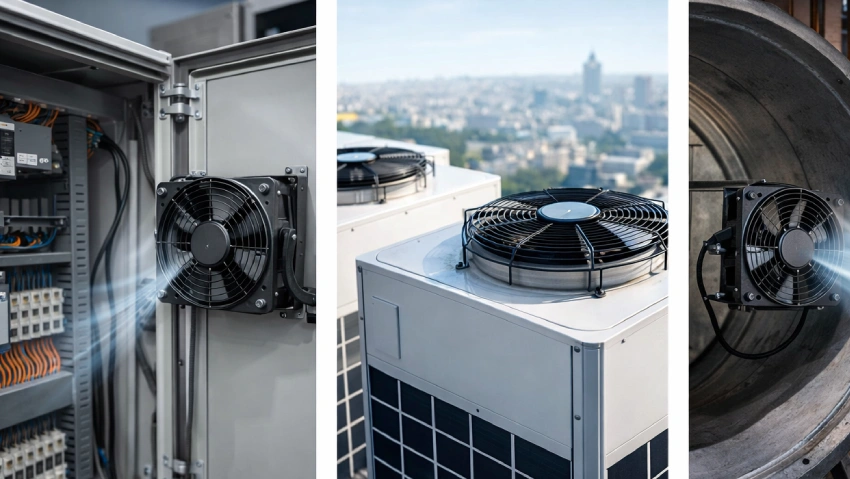
Industrial Applications
You see axial fans everywhere in industrial settings. These fans keep factories, warehouses, and production lines running smoothly. You need strong airflow to control temperature and remove fumes. Axial fans handle cooling applications in server rooms, control cabinets, and telecom equipment. They also help ventilate underground parking garages and paint spray booths, making sure the air stays clean and safe.
When you pick a fan for industrial use, you look for high air volume, the right static pressure, and reliable build quality. You want a fan that works well in tough environments, like high temperatures or dusty spaces. You also care about noise levels, especially if people work nearby. Safety certifications matter, too, so you know your fan meets industry standards.
- Air volume and static pressure help you reach your cooling goals.
- Durable materials like aluminum or steel keep the fan working longer.
- Direct-drive motors and smart mounting options make installation easy.
- Low noise means a better workspace for everyone.
Home and Commercial Uses
Axial fans make your home and business more comfortable. You find these fans in HVAC systems, helping circulate air and keep rooms cool. Their compact design fits into electronics, small appliances, and ventilation systems. You use axial fans in offices, shops, and restaurants to maintain fresh air and steady temperatures.
You also see these fans in commercial buildings and underground garages, where they remove exhaust fumes and improve air quality. In places like welding booths, axial fans help clear out toxic gases. You want a fan that’s lightweight, easy to install, and quiet enough for everyday use.
- High airflow keeps your space cool and fresh.
- Compact size fits tight spots in electronics and appliances.
- Reliable operation means less maintenance for you.
Fanacdc Product Solutions
Fanacdc gives you a full range of fan solutions for every need. Here’s a quick look at which fan works best for each application:
| Product Type | Unique Features |
|---|---|
| AC Fan | Durable, long life, perfect for industrial machinery and general cooling. |
| DC Fan | High-efficiency, up to 8,000 RPM, great for servers and telecom equipment. |
| EC Fan | Saves up to 75% power, smart control, ideal for sustainable cooling. |
| Centrifugal Fan | Up to 300 Pa static pressure, efficient for compact or high-resistance systems. |
You choose AC fans for tough industrial jobs. DC fans give you precise speed control and quiet operation, perfect for sensitive electronics. EC fans help you cut energy costs while keeping your space cool. Centrifugal fans work best when you need strong airflow in ducted or high-resistance systems.
No matter your cooling applications, fanacdc has a fan that fits. You get reliable performance, energy savings, and easy installation. That’s why so many industries and businesses trust fanacdc for their air and cooling needs.
Benefits of Axial Fans
Energy Efficiency
You want a fan that keeps your space cool without wasting energy. Axial fans stand out for their ability to move large volumes of air while using less power. These fans work best in applications with low resistance or low static pressure, making them ideal for open spaces and electronics cooling. You get efficient airflow and lower energy bills because the fan doesn’t have to work as hard to push air through. This means you can run your cooling system longer without worrying about high costs or environmental impact.
- Axial fans generate high airflow with minimal power input.
- They help you achieve sustainability goals by reducing energy consumption and lowering carbon emissions.
- Their efficient design supports eco-friendly practices in homes and industries.
Note: If you need to move air through ducts or high-resistance systems, axial fans may not be as efficient as other types.
Cost-Effectiveness
Saving money matters when you choose a cooling solution. Axial fans usually cost less upfront compared to centrifugal fans. For example, a 10 HP industrial axial fan costs between $1,200 and $2,500, while a similar centrifugal blower can cost up to $4,000. Maintenance is simple and affordable, with annual costs ranging from $150 to $300. You spend less on repairs and replacements because these fans have fewer moving parts and a straightforward design.
| Fan Type | Upfront Cost | Annual Maintenance | Typical Lifespan |
|---|---|---|---|
| Axial Fan | $1,200-$2,500 | $150-$300 | 50,000+ hours |
| Centrifugal | $2,000-$4,000 | $300-$600 | 60,000+ hours |
You get a reliable fan that fits your budget and keeps your cooling system running smoothly.
Versatility and Reliability
Axial fans adapt to many environments. You see them in homes, offices, factories, and server rooms. Their compact design lets you install them in tight spaces, and their quiet operation makes them perfect for places where noise matters. You can count on these fans for continuous cooling, thanks to their durable construction and simple maintenance routine.
- Clean the blades and housing regularly to prevent dust buildup.
- Lubricate bearings every few months to keep the fan running smoothly.
- Inspect for wear or unusual noises to catch problems early.
| Frequency | Task | Why It Matters |
|---|---|---|
| Monthly | Clean components | Prevents imbalance and motor strain |
| Quarterly | Lubricate bearings | Reduces friction and heat, extends fan life |
| Annually | Full inspection | Finds wear before it causes failure |
Axial fans deliver high airflow, low noise, and reliable cooling for many applications. You get a fan that’s easy to maintain and built to last. Just remember, these fans work best in low-pressure settings and may be sensitive to stall if not matched to the right system.
Tip: Choose a fanacdc axial fan for advanced engineering, long service life, and dependable performance in any cooling setup.
Why Axial Fans Matter
Impact on Ventilation and Cooling
You might not realize how much an axial fan does for your space until you see the difference in air quality and temperature control. These fans play a huge role in keeping large areas comfortable and safe. When you use an axial fan in a ventilation system, you get efficient airflow that helps regulate temperature and remove unwanted heat. This means your workspace, home, or industrial site stays cooler and fresher.
Take a look at how axial fans improve air quality and cooling in big systems:
| Feature | Description |
|---|---|
| Application | Boosts general ventilation and process air supply for better indoor air. |
| Mounting Flexibility | Fits many setups, from factories to offices, thanks to flexible mounting. |
| Construction | Built tough with steel or aluminum for long-lasting cooling. |
| Blade Design | Adjustable blades optimize airflow for every situation. |
You get variable speeds, so you can adjust the fan to match your ventilation needs. The durable build means less downtime and fewer replacements. Quick maintenance keeps your fan running smoothly, and the improved lifespan saves you money over time.
Axial fans also help buildings meet energy efficiency standards. By reducing electrical use in HVAC systems, they help cut energy bills and support sustainability goals. You get reliable cooling and better air without wasting power.
Tip: If you want a fan that keeps your air fresh and your cooling costs low, axial fans are a smart choice for any modern system.
Relevance for Buyers
Choosing the right axial fan can make a big difference for you. You need to think about your airflow needs, noise levels, energy efficiency, fan size, and static pressure ratings. Customization options let you pick a fan that fits your exact cooling or ventilation setup.
Here’s what you should consider:
- Airflow requirements for your space
- Noise levels for comfort
- Energy efficiency to save on bills
- Fan size for tight spots
- Static pressure ratings for restricted airflow
- Customization for special applications
If you want to get technical, start by figuring out the total heat output of your equipment in watts. Then, calculate the air movement you need in cubic feet per minute. Aim for about 1 CFM per watt, but adjust for your specific needs.
“Devices with brushless DC motors can save up to 20% on energy, making them a great choice for buyers who want lower costs and better performance.”
Axial fans offer energy efficiency, easy maintenance, and versatility. You can use them for cooling, exhaust, or general ventilation. Their quiet operation and eco-friendly design make them perfect for homes, offices, and industrial sites. When you pick an axial fan, you get reliable air movement and cooling that fits your needs.
Conclusion
You’ve learned what an axial fan is and why it matters for your cooling and ventilation needs. Axial fans move air in a straight line, giving you strong airflow with low energy use. You see them in homes, offices, factories, and electronics. Their simple design makes them easy to install and maintain. You get reliable cooling, quiet operation, and long service life.
Let’s recap the essentials:
- Definition: Axial fans push air parallel to the shaft, delivering high airflow at low pressure.
- How They Work: Blades spin and pull air straight through, keeping spaces cool and fresh.
- Key Features: Efficient design, durable materials, and quiet performance.
- Applications: Use axial fans for electronics, industrial cooling, HVAC, and everyday ventilation.
- Benefits: Save energy, cut costs, and enjoy versatile, dependable operation.
Tip: Always match your fan choice to your airflow and pressure needs. This helps you avoid noise and get the best performance.
If you want a fan that’s easy to use and fits many applications, axial fans are a smart pick. You can trust fanacdc for advanced engineering, quality materials, and solutions that fit your space. Their lineup covers AC, DC, EC, and centrifugal fans, so you always find the right fit.
| Fan Type | Best Use Case | Key Advantage |
|---|---|---|
| AC Fan | Industrial machinery | Long life, durability |
| DC Fan | Electronics, telecom | Quiet, efficient |
| EC Fan | Sustainable cooling | Energy savings |
| Centrifugal | Ducted systems | High pressure |
Ready to upgrade your cooling system? Visit fanacdc’s website to explore solutions for your home, business, or industrial project. You get expert support and products built to last. Stay cool, save energy, and make a smart choice with fanacdc!
You’ve seen how axial fans deliver powerful air movement and keep your space comfortable. Check out the table below to see their essential role:
| Main Point | Description |
|---|---|
| Powerful Air Movement | Moves large volumes of air for better airflow. |
| Directional Airflow | Pushes air exactly where you need it. |
| Elimination of Dead Zones | Clears out stagnant air in hard-to-reach spots. |
| Air Exchange | Brings in fresh air and removes contaminants. |
| Ventilation System Optimization | Boosts efficiency in bigger systems. |
| Heat Dissipation | Removes hot air, keeping equipment and people cool. |
When you understand features like airflow, noise level, and mounting options, you make smarter choices for your cooling needs. Axial fans work great for ventilation, cooling, and air circulation in homes or industries. If you want reliable performance and easy maintenance, fanacdc’s lineup has you covered.
FAQ
What’s the difference between an axial fan and a centrifugal fan?
Axial fans push air straight through, while centrifugal fans move air sideways. You’ll want an axial fan for open spaces and high airflow. Centrifugal fans work better in ducted systems or places that need higher pressure.
How do I pick the right size axial fan for my space?
Check your room’s size and the amount of heat your equipment makes. Look for the airflow rating (CFM) on the fan. You want about 1 CFM per watt of heat. Bigger spaces or hotter equipment need higher airflow.
Can I use an axial fan for electronics cooling?
Yes! Axial fans work great for electronics. You get strong airflow and quiet operation. They fit easily into server racks, control cabinets, and telecom gear. Just make sure you match the fan’s airflow to your cooling needs.
How often should I clean or maintain my axial fan?
You should clean the blades and housing every month. Lubricate bearings every few months. Do a full inspection once a year. Regular care keeps your fan running smoothly and helps it last longer.
Are axial fans energy efficient?
Absolutely! Axial fans move lots of air with less power. You save on energy bills and help the environment. For even better efficiency, look for models with brushless motors or smart speed controls.