You make critical decisions every day as an industrial professional. Understanding the difference in blowers vs fans can directly impact your facility’s efficiency and bottom line. Selecting the wrong equipment often leads to:
- Poor airflow and excessive energy use
- Increased maintenance and premature equipment failure
- Higher noise levels and reduced system reliability
Choosing the right solution means you can achieve better airflow efficiency, lower energy bills, and greater reliability. fanacdc’s expertise helps you avoid costly mistakes and supports your drive for operational excellence.
Key Takeaways
- Blowers generate higher pressure and focused airflow, making them ideal for specialized tasks like fume removal and pneumatic conveying.
- Fans move large volumes of air at lower pressure, perfect for general ventilation and cooling applications in various industries.
- Choosing the right equipment based on airflow and pressure needs can lead to energy savings and improved system reliability.
- Consider energy efficiency and maintenance costs when selecting between blowers and fans to ensure long-term performance and cost-effectiveness.
- Consult with experts like fanacdc to match the right product to your specific industrial application for optimal results.
Technical Differences: Blowers vs Fans
Understanding the technical differences between blowers and fans helps you make the right choice for your industrial system. You need to know how each device works, how they handle pressure, and how they affect airflow and energy efficiency. This section breaks down these differences so you can select the best solution for your needs.
Operation and Design Principles
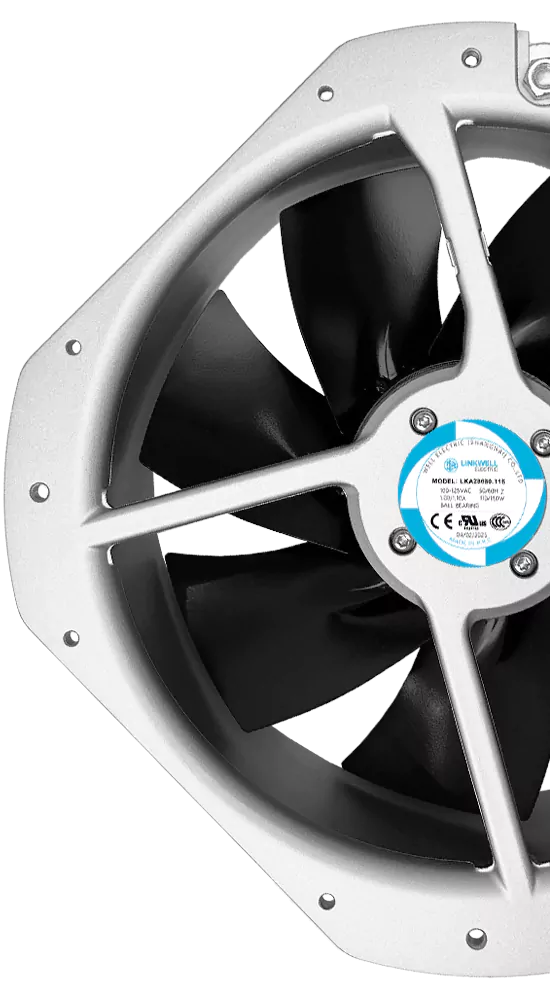
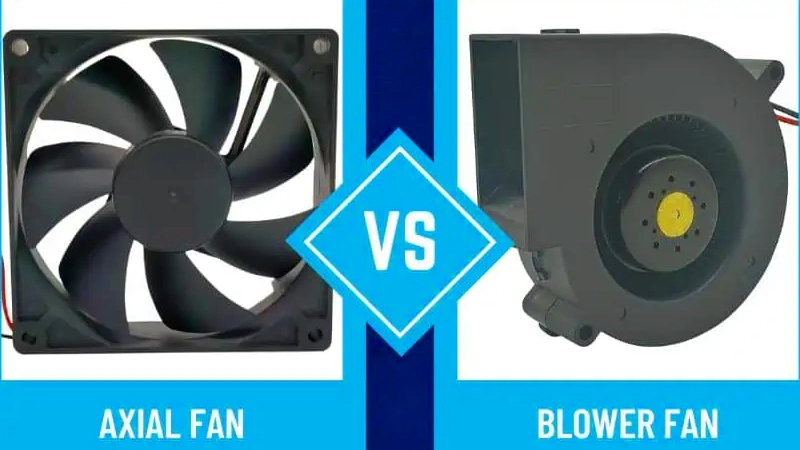
Fans and blowers both move air, but they do so in different ways. Fans use rotating blades to push air in the same direction as the axis of rotation. This design works well for moving large volumes of air at low pressure. Most fans, like the AC and DC fans from fanacdc, use airfoil-shaped blades and open frames. These features make them ideal for cooling electronics, ventilating rooms, and keeping control panels at safe temperatures.
Blowers, on the other hand, use a different approach. They often feature a squirrel cage impeller that draws air in and pushes it out at a 90-degree angle. This design allows blowers to generate higher pressure and direct airflow through ducts or filters. The centrifugal blower from fanacdc uses a volute-shaped casing and a robust impeller to create strong, focused airflow. You will find blowers in HVAC systems, industrial processes, and any application that needs air to move against resistance.
Here is a table that highlights the main design differences:
| Feature | Axial Fans (e.g., AC/DC) | Centrifugal Blowers |
|---|---|---|
| Blade Shape | Airfoil-shaped blades | Squirrel cage impeller |
| Airflow Direction | Parallel to axis | 90-degree angle |
| Housing Structure | Open frame | Volute or scroll casing |
| Pressure Characteristics | Low pressure, high volume | High pressure, lower volume |
You can see that the technical differences in design lead to different strengths for each device.
Pressure Ratios and Airflow
The way fans and blowers handle pressure and airflow sets them apart. Fans are built for low-pressure, high-volume air movement. They achieve pressure ratios up to 1.11, which means they work best when you need to move a lot of air with little resistance. This makes fans perfect for general ventilation and cooling tasks.
Blowers are designed for higher pressure. They operate with pressure ratios between 1.11 and 1.2. This extra force lets blowers push air through filters, ducts, or other obstacles. You need a blower when your system has high resistance or requires focused airflow.
According to the American Society of Mechanical Engineers, fans have a pressure ratio up to 1.11, while blowers reach between 1.11 and 1.2. The table below summarizes these technical differences:
| Device | Pressure Ratio | Typical Efficiency Range | Power Consumption | Suitable Applications |
|---|---|---|---|---|
| Fan | Up to 1.11 | 60% – 80% | Lower | General ventilation, cooling electronics |
| Centrifugal Blower | 1.11 – 1.2 | 40% – 70% | Higher | Industrial processes, pneumatic conveying |
Airflow is measured in cubic feet per minute (CFM) or cubic meters per hour (m³/h). The shape and size of the fan or blower, the speed of the impeller, and the resistance in the system all affect airflow. Industry standards like ISO 5801 guide how manufacturers test airflow, using both inlet and discharge side test rigs.
- Fans achieve compression ratios up to 1.11, suitable for general ventilation tasks.
- High pressure blowers operate within a range of 1.11 to 1.2, designed for focused airflow in industrial applications.
You should choose a fan when you need to move a lot of air with little resistance. You should choose a blower when you need to overcome obstacles or push air through a system.
Energy Efficiency and Cost
Energy efficiency and cost are important factors in the blowers vs fans decision. Fans usually have higher efficiency and lower power consumption. For example, fanacdc’s AC and DC fans deliver strong airflow while keeping energy use low. These fans are cost-effective for continuous operation in control cabinets, telecom equipment, and automation systems.
Blowers, such as centrifugal models, use more power to generate higher pressure. This means they may have higher upfront and maintenance costs, but they provide the force needed for demanding applications. Over a typical industrial lifecycle, a centrifugal blower may cost more to purchase and maintain, but it can deliver reliable performance for 10 to 15 years.
Here is a comparison of cost and efficiency:
| Cost/Maintenance Metric | Industrial Axial Fans | Centrifugal Blowers |
|---|---|---|
| Upfront Cost (10 HP Model) | $1,200 – $2,500 | $2,000 – $4,000 |
| Annual Energy Cost (4,000 hrs) | $990 | $894 |
| Annual Maintenance Cost | $150 – $300 | $300 – $600 |
| Typical Lifespan | 8 – 12 years | 10 – 15 years |
You can see that fans offer lower initial costs and maintenance, while blowers provide higher pressure and longer service life for specialized needs.
When you compare blowers vs fans, focus on the technical differences in operation, pressure, airflow, and energy efficiency. This knowledge helps you select the right equipment for your industrial application, ensuring reliable performance and cost savings.
Applications in Industry
Blowers for Specialized Tasks
You will find blowers in many specialized industrial applications. These devices handle tasks that require high pressure and focused airflow. In factories, blowers remove fumes to keep air quality safe. You use them for pneumatic conveying, which moves powders and grains through pipes. Blowers also power exhaust systems in paint booths, removing flammable fumes. They play a role in filter cleaning and forced draft combustion. Surface preparation before painting or coating often depends on blowers to remove dust and debris. In seafood production, blowers help generate oxygen to maintain water quality. Refineries use blowers to transport petroleum materials during processing. These key applications show how blowers meet strict requirements for cooling, ventilation, and process efficiency.
- Fume removal in manufacturing
- Pneumatic conveying for material handling
- Exhaust systems in confined spaces
- High-pressure filter cleaning
- Surface preparation in production lines
- Oxygen generation in aquaculture
- Petroleum material transportation in refineries
Centrifugal blowers from fanacdc provide high-velocity airflow for these tasks. Their compact design and low noise levels make them ideal for automation and electronics manufacturing. You can rely on them to maintain optimal temperatures and ensure reliable performance.
Fans for General Ventilation
Fans serve as the backbone of general ventilation and cooling in many industries. You use fans to move large volumes of air at low pressure. This makes them perfect for cooling electronics, ventilating workspaces, and keeping control panels at safe temperatures. AC fans from fanacdc deliver long-lasting airflow for industrial machines. DC fans offer quiet operation and precise speed control for electronics and automation. EC fans provide energy-efficient cooling and smart controls for HVAC and refrigeration. You can use fans in HVAC systems, telecom equipment, and energy storage solutions. These applications help you maintain comfort, safety, and equipment performance.
- Cooling for electronics and automation
- General ventilation in factories and offices
- Temperature control in control cabinets
- Airflow management in HVAC systems
- Energy-efficient cooling in refrigeration
fanacdc Solutions for Industrial Needs
fanacdc designs products to meet the unique requirements of HVAC, energy, and electronics sectors. You can see how each fan type fits specific industrial applications in the table below:
| Fan Blade Type | Application in Sector | Key Features |
|---|---|---|
| AC | Industrial machines | Long-lasting airflow, durable |
| DC | Electronics, automation | Quiet operation, precise speed control |
| EC | HVAC, refrigeration | Energy-efficient, smart controls |
| Centrifugal | HVAC systems | High-pressure air movement |
Centrifugal fans from fanacdc stand out for their high-efficiency motor design, aerodynamic impeller structure, and durable, flame-retardant housings. You can request custom sizing and IP-rated protection for harsh environments. Rapid prototyping ensures you get solutions that match your airflow needs and performance requirements quickly.
You can trust fanacdc to deliver reliable cooling and ventilation for all your industrial applications. Their products help you achieve energy savings, maintain system performance, and meet the demands of modern industries.
Selection Criteria for Blowers and Fans
Choosing between blowers and fans for your industrial system requires a clear understanding of your needs. You must consider airflow, pressure, energy efficiency, materials, noise, and compatibility with your cooling systems. This section will help you make the right decision for your application.
Assessing Airflow and Pressure
You need to start by evaluating airflow and pressure requirements. These two factors determine whether you need a fan or a blower. In industrial fan vs blower selection, airflow means the volume of air moved per unit time, while pressure refers to the force needed to move air through your system.
- Estimate airflow using manufacturer-supplied fan curves or performance tables. These resources help when direct measurements are not possible.
- Measure fan speed (RPM) and static pressure rise to determine actual airflow.
- Adjust total external static pressure based on internal pressure drops. This ensures accurate airflow calculations.
- Measure static pressure at the filter and coil. Compare these values to industry budgets, such as those from NCI, to identify excess pressure drops.
- Use manufacturer’s data for filter and coil pressure drops if you do not have initial readings.
- Identify the rated total external static pressure of your packaged unit. Calculate total excess pressure drop and adjust your measurements accordingly.
Industry standards, such as AMCA Standard 208, require you to evaluate fan performance using the Fan Energy Index (FEI). This index compares actual efficiency to a baseline at specific airflow and pressure points. ASHRAE 90.1-2022 also states that each fan must have an FEI of 1.00 or higher at its highest design airflow rate.
Here is a table summarizing key airflow and pressure specifications:
| Specification Type | Description |
|---|---|
| SCFM | Standard Cubic Feet per Minute, defined at standard density of .075 lb/ft³. |
| ACFM | Actual Cubic Feet per Minute, based on the density of the gas handled. |
| Static Pressure | Resistance to airflow, measured in inWG or mmWG. |
| Standard Air Density | .075 lb/ft³ at 70°F and 29.92″ Hg barometric pressure. |
| Performance Corrections | Adjustments for density changes due to temperature and altitude. |
You must match the airflow and pressure needs of your system to the right equipment. Fans work best for low-pressure, high-volume tasks. Blowers excel in high-pressure applications where you need to overcome resistance in ducts or filters. Understanding airflow dynamics helps you avoid common mistakes, such as ignoring system requirements or choosing the wrong type of equipment.
Energy, Material, and Noise Considerations
Energy efficiency plays a major role in the blowers vs fans decision. You want to select equipment that meets your performance goals while minimizing energy costs. Fans usually offer higher efficiency in free-flow systems. Blowers provide better efficiency in confined or ducted systems where pressure is higher.
Material selection affects durability, maintenance, and suitability for your environment. You will find several materials used in industrial fan vs blower construction:
| Material | Characteristics | Best Applications |
|---|---|---|
| Aluminum | Lightweight, spark-resistant, suitable for critical components | Lightweight construction fans, HVAC applications |
| Stainless Steel | Corrosion-resistant, high-temperature tolerance, ductile | Food processing, pharmaceuticals, chemical plants |
| Mild Steel | Strong, cost-effective, often coated for protection | HVAC systems, general ventilation |
| FRP (Fibre-Reinforced Plastic) | Resistant to chemicals, lightweight, non-conductive | Chemical plants, wastewater treatment |
| Specialized Coatings | Extra resistance against abrasion and moisture | Dusty environments, spray booths |
You must select materials based on your specific requirements. For example, stainless steel works best in corrosive or hygienic environments. Aluminum is ideal for lightweight or portable fans. FRP is the top choice for chemical resistance.
Noise is another important factor. Industrial fans and blowers can generate noise levels between 70 dBA and 90 dBA at a distance of 10 feet. OSHA recommends keeping exposure below 90 dBA for an 8-hour workday, while NIOSH suggests staying under 85 dBA. You can reduce noise by installing silencers on outlets or inlets, enclosing the fan or blower in an acoustic box, or using professional earplugs for workers.
Tip: Always consider both the operating environment and the comfort of your team when selecting equipment. Noise mitigation improves safety and productivity.
Matching fanacdc Products to Applications
You need to match the right fanacdc product to your application by considering airflow, pressure, energy, and material needs. Start by identifying the types of blowers and types of fans available. Each product offers unique features for different industrial uses.
| Feature | Description |
|---|---|
| Custom Voltage | Supports both 110V and 220V AC input for diverse operational needs. |
| Diameter & Airflow Curve | Tailored fan designs to match specific thermal loads and space limitations. |
| Smart Control Options | Advanced interfaces for precise speed regulation and energy management. |
| Integration | Seamless compatibility with existing BMS and industrial control systems for optimized performance. |
You can choose from centrifugal blowers, AC fans, DC fans, and EC fans. Centrifugal blowers from fanacdc deliver high pressure and stable airflow for HVAC, energy, and automation. AC fans provide long-lasting, robust cooling for industrial machines. DC fans offer quiet operation and smart speed control for electronics and automation. EC fans combine energy efficiency with advanced controls for HVAC and refrigeration.
Here is a quick guide to matching products to your needs:
| Application Type | Recommended Product | Key Features |
|---|---|---|
| High-pressure applications | Centrifugal Blower | High static pressure, robust construction |
| General ventilation | AC Fan | Durable, long service life |
| Electronics cooling | DC Fan | Quiet, precise speed control |
| Energy-efficient HVAC | EC Fan | Smart controls, low energy consumption |
| Chemical or corrosive environments | Stainless Steel/FRP Fans | Corrosion resistance, hygiene |
You can request custom solutions from fanacdc. Options include custom voltage, diameter, airflow curve, and smart control features. This ensures compatibility and efficiency for your installation. You avoid common mistakes by understanding the types of blowers and fans, evaluating your system’s airflow and pressure, and selecting materials that fit your environment.
When you compare industrial fan vs blower options, always focus on your system’s specific requirements. This approach guarantees reliable performance, energy savings, and long-term value for your cooling systems.
Conclusion
You now understand the basics of blowers and fans. You know how each device works and where each fits best in industry. Blowers push air at higher pressure and in a focused direction. Fans move large volumes of air at lower pressure. This difference shapes their roles in your facility.
Tip: Always match your equipment to your system’s airflow and pressure needs. This step saves you energy and money.
Here’s a quick summary to help you decide:
| Feature | Blowers | Fans |
|---|---|---|
| Pressure Ratio | Higher (1.11–1.2) | Lower (up to 1.11) |
| Airflow Direction | 90-degree, focused | Parallel, widespread |
| Energy Efficiency | Best for high-resistance tasks | Best for open ventilation |
| Cost | Higher upfront, long lifespan | Lower upfront, easy install |
| Key Applications | HVAC, material handling, process | General cooling, ventilation |
You should choose a blower for high-pressure, specialized tasks. You should use a fan for general ventilation and cooling. If you wonder, “May I use blowers instead of fans?”—the answer depends on your system. Blowers work best when you need to overcome resistance, like filters or long ducts. Fans excel in open spaces with low resistance.
When you select equipment, consider airflow, pressure, energy use, materials, and noise. Review your system’s needs before you buy. If you need help, reach out to fanacdc’s experts. They can guide you to the right solution for your application.
Choosing the right blower or fan means you get reliable performance, energy savings, and a safer workplace. Make your decision with confidence. fanacdc stands ready to power cooling innovation for every industry.
You now see the key differences between blowers and fans. Blowers create higher static pressure for focused tasks, while fans move large volumes of air at lower pressure.
| Attribute | Blowers | Fans |
|---|---|---|
| Flow Rate | Small, high force | Large, low force |
| Static Pressure | High | Low |
| Applications | Specialized | General ventilation |
When you evaluate your system, check airflow, pressure, noise, and materials. Smart selection boosts energy savings, reliability, and long-term performance. For complex needs, consult fanacdc experts for tailored solutions that match your application.
FAQ
Can you use a blower instead of a fan in industrial systems?
You can use a blower instead of a fan in some industrial systems. Blowers work best when you need to move air through ducts or filters. Fans suit open spaces. Always check your industrial airflow and pressure needs before choosing.
What is the main difference between a blower and a fan in industrial applications?
A blower creates higher pressure and moves air at a 90-degree angle. A fan moves large volumes of air at low pressure, usually in the same direction as the shaft. You should match your industrial system’s needs to the right device.
How do you select the right fan or blower for industrial use?
You should measure airflow and pressure in your industrial system. Check the space, noise limits, and energy use. Review the materials and controls. Choose a fan for general ventilation. Pick a blower for high-resistance industrial tasks.
Why does material choice matter for industrial fans and blowers?
Material choice affects how long your industrial fan or blower lasts. Stainless steel resists corrosion. Aluminum is light. FRP handles chemicals. You should pick the right material for your industrial environment to avoid damage and downtime.
How can you reduce noise from industrial fans and blowers?
You can lower noise in your industrial setting by using silencers, acoustic boxes, or barriers. Place fans and blowers away from work areas. Regular maintenance also helps. Always follow safety rules for your industrial team’s hearing.