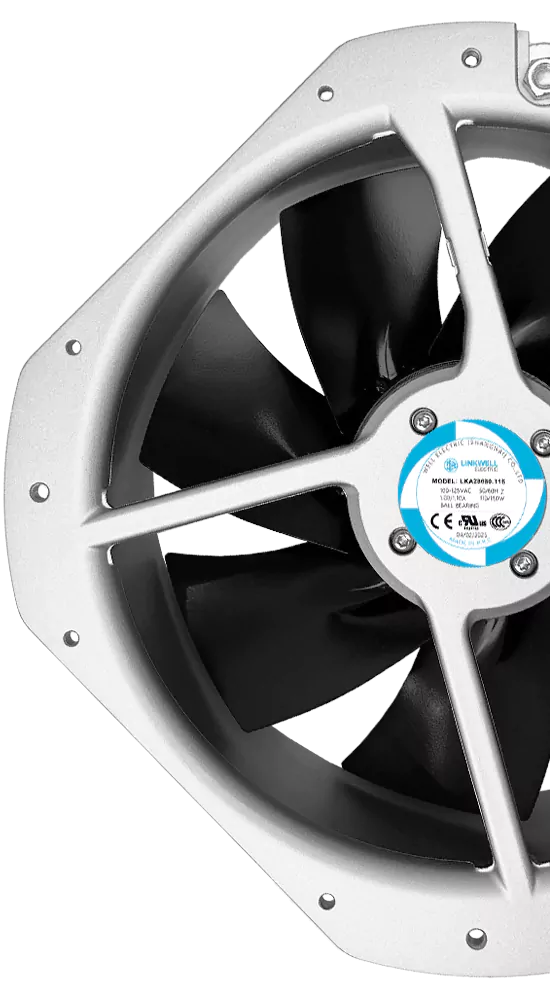
You see cooling fans everywhere in Air Cooling Systems for Industrial Applications. AC, DC, and EC fans each bring unique strengths. EC fans, with brushless DC motors, can cut your energy costs by up to 70% compared to traditional AC fans.
These fans use smart speed control, so you get just the airflow you need. In tough industrial settings, the right fan keeps your equipment cool, improves reliability, and helps you save on maintenance.
When you choose the right technology, you set your operation up for better performance and lower energy bills.
Air Cooling Systems Key Takeaways
- AC fans provide reliable cooling for large spaces, making them ideal for continuous operation in industrial settings.
- DC fans offer quiet operation and precise speed control, perfect for sensitive electronics and automation applications.
- EC fans are the most energy-efficient option, reducing energy costs by up to 75% while providing smart control features.
- Choosing the right fan type can enhance equipment reliability, lower maintenance costs, and improve overall system performance.
- Customizing cooling fans to fit specific needs boosts efficiency and ensures optimal performance in industrial HVAC systems.
Air Cooling Systems for Industrial Applications
System Structure and Components
When you walk into a factory or data center, you see big machines and racks full of electronics. These places get hot fast. That’s where air cooling systems for industrial applications step in. You’ll find two main types: packaged air-cooled chillers and modular air-cooled chillers. Packaged chillers come as one unit. They’re easy to install and work well for small or medium spaces. Modular chillers use several units together. You can add more if your space grows or your cooling needs change. Both types rely on strong airflow to keep everything at the right temperature.
Inside these air cooling systems for industrial applications, you’ll spot key parts like heatsinks, ducts, and, most importantly, cooling fans. Heatsinks pull heat away from hot spots. Ducts guide the air where it’s needed. The real hero is the cooling fan. The Industrial Cooling Fan from fanacdc moves air across components, making sure nothing overheats. You can count on these fans to work in tough environments and keep your equipment safe.
Role of Cooling Fans in Heat Dissipation
You might wonder how cooling fans actually help. They do more than just blow air. They push hot air out and pull cool air in, which keeps your machines running smoothly. Let’s break down what makes a fan effective in air cooling systems for industrial applications:
| Specification | Description |
|---|---|
| CFM (Cubic Feet per Minute) | Shows how much air the fan can move. |
| Static Pressure | Tells you how well the fan pushes air through tight spaces or filters. |
| RPM (Revolutions Per Minute) | Affects how loud and efficient the fan is. |
| Applications | Used in places like data centers and workstations where passive cooling isn’t enough. |
| High Heat Flux | Needed for servers and clusters that get very hot. |
| Rapid Thermal Transients | Lets the fan adjust quickly when workloads change. |
| Constrained Enclosures | Keeps things cool in tight spaces. |
| Temperature Sensitive Electronics | Helps prevent hot spots and extends the life of your devices. |
In air cooling systems for industrial applications, you need fans that can handle high heat and tight spaces. The Industrial Cooling Fan from fanacdc does just that. It keeps your cooling systems reliable, even when the workload spikes. You get peace of mind knowing your equipment stays cool and lasts longer.
AC, DC, and EC Fans: Principles and Features
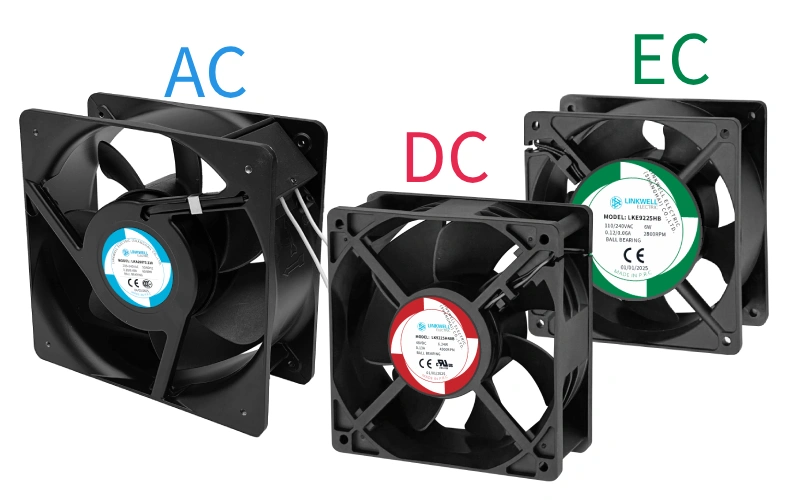
AC Fans by fanacdc
You want a cooling fan that just works—day in and day out. That’s where AC fans from fanacdc shine. These fans use induction motors and run directly on AC power. You get strong airflow and a design that handles tough industrial jobs. You can count on them for over 50,000 hours of continuous operation. That means less downtime and fewer headaches for you.
fanacdc’s AC fans come with a range of certifications, so you know you’re getting quality and safety. Here’s a quick look at what these certifications mean for you:
| Certification/Standard | Description |
|---|---|
| ISO9001 | Quality management system standard |
| RoHS | Restriction of Hazardous Substances compliance |
| CE | European safety and performance certification |
| ISO14001 | Environmental management system standard |
| UL | North American safety certification |
| TÜV | German technical safety certification |
You can use these fans in control cabinets, telecom racks, and industrial HVAC systems. The rugged build resists heat, vibration, and dust. You can even customize the size, voltage, and protection level to fit your project. If you need a fan that’s easy to install and keeps running, AC fans from fanacdc are a solid choice.
Tip: If you want a fan that’s simple to wire up and works with standard AC power, go with an AC fan.
DC Fans for Industrial Use
If you need more control over your cooling, DC fans are your go-to. These fans use brushless motors and run on low-voltage DC power. You get quiet operation, precise speed control, and high energy efficiency. DC fans from fanacdc can run up to 70,000 hours, so you don’t have to worry about frequent replacements.
Let’s break down why DC fans work so well in industrial settings:
| Benefit | Description |
|---|---|
| Energy Efficiency | Lower power use and smoother performance |
| Reliability | Long life and steady operation |
| Versatility | Great for electronics, automation, and HVAC |
| Precise Speed Control | Adjusts speed based on temperature or system needs |
| Compact Design | Fits into tight spaces |
| Enhanced Environmental Control | Helps manage temperature and humidity in sensitive areas |
You can use DC fans in data centers, telecom equipment, and even greenhouses. The smart control options—like PWM and tachometer feedback—let you fine-tune airflow and monitor performance. You can also customize the size, voltage, and control features to match your exact needs.
Note: If you want a fan that’s quiet, efficient, and easy to control, a DC fan is a smart pick.
EC Fans and Energy Efficiency
Want to save on energy bills and get the latest in fan technology? EC fans are the answer. EC stands for Electronically Commutated. These fans combine the best parts of AC and DC fans. You get a brushless DC motor with built-in electronic control, all powered by standard AC input.
Here’s why EC fans stand out in industrial HVAC systems:
- EC fans can cut your energy use by up to 75%.
- They adjust speed automatically, so you only use the power you need.
- The brushless motor means less energy lost as heat.
- Built-in variable speed control leads to big energy savings.
Check out this quick comparison:
| Fan Type | Power Type | Motor Type | Efficiency | Noise Level | Control Flexibility | Typical Applications |
|---|---|---|---|---|---|---|
| AC | AC power | Induction motors | 30-40% | Higher | Simple control | HVAC, industrial ventilation |
| DC | DC power | Brushed/Brushless | Higher | Quieter | Needs controller | Electronics, automation |
| EC | AC input | Brushless DC (EC motor) | >90% | Lowest | Built-in control | Air handling, refrigeration |
You can use EC fans in air handling units, refrigeration, and anywhere you want smart, energy-saving airflow. fanacdc’s EC fans come in sizes from 60mm to 280mm and work in a wide temperature range. You get quiet operation, long service life, and smart features like PWM and analog control. You can also customize them for your project.
Pro Tip: If you want the most efficient and flexible fan for your industrial HVAC system, EC fans are the way to go.
In short, whether you need simple and tough AC fans, smart and efficient DC fans, or cutting-edge EC fans, fanacdc has you covered. You can choose the right fan for your system and enjoy reliable cooling, energy savings, and peace of mind.
Comparing Fan Types for Energy Efficiency
Performance Differences
When you look at industrial hvac systems, you want fans that deliver the best cooling with the least energy wasted. Let’s break down how AC, DC, and EC fans stack up for energy efficiency and overall performance.
| Fan Type | Power Consumption | Dynamic Adjustment | Airflow | Noise Level | Lifespan |
|---|---|---|---|---|---|
| AC | Higher | No | High | Loud | 50,000–100,000 hours |
| DC | Moderate | Yes | High | Quiet | 30,000–50,000 hours |
| EC | Lower | Yes | Adjustable | Near-silent | 50,000–100,000 hours |
You’ll notice EC fans lead the pack in energy efficiency. They use up to 70% less energy than traditional AC fans. That means you get the same cooling power but with much lower electricity bills. DC fans also offer better efficiency than AC fans, cutting energy use by up to 30%. Both DC and EC fans let you adjust speed to match your cooling needs, which boosts efficiency and reduces noise. AC fans run at fixed speeds, so they use more power even when you don’t need maximum airflow.
If you want to cut costs and keep your industrial hvac systems running smoothly, EC fans are a smart choice. Their high efficiency means less heat, less noise, and longer service life.
Application Suitability in Industrial HVAC Systems
Choosing the right fan for your industrial hvac systems depends on your cooling goals and budget. Here’s a quick guide:
- Use AC fans when you need simple, reliable cooling for large spaces with steady airflow needs.
- Pick DC fans for electronics, automation, or places where you want quiet, efficient cooling with speed control.
- Go with EC fans for top energy efficiency, smart control, and the lowest operating costs. These fans shine in air handling units, refrigeration, and any system where energy savings matter.
| Fan Type | Energy Consumption Rate | Efficiency Improvement | Best Use Case |
|---|---|---|---|
| AC | Higher | Baseline | General ventilation in industrial hvac systems |
| DC | Moderate | Up to 30% less | Electronics, automation, precise cooling |
| EC | 40-60% lower | Up to 70% less | Air handling, refrigeration, energy-saving upgrades |
You’ll also help the environment by choosing EC fans. Their high efficiency means less electricity used and a smaller carbon footprint. Many EC fans are made from eco-friendly materials and can be recycled at the end of their life.
In short, if you want to boost energy efficiency, lower costs, and get reliable cooling, fanacdc’s range of fans gives you the flexibility to match any industrial hvac systems need.
Air Cooling Systems for Industrial Applications
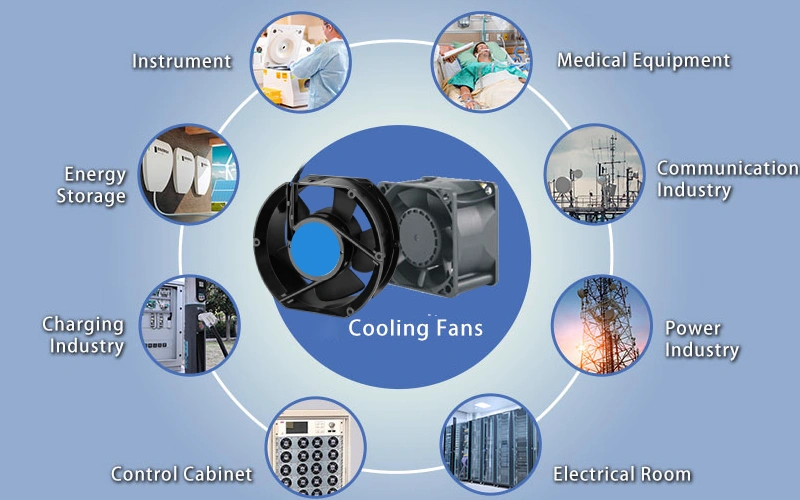
Installation and Control
You want your hvac setup to run smoothly. That starts with picking the right cooling fan and installing it the right way. In industrial hvac systems, you can choose AC, DC, or EC fans. Each fan type fits a different need. AC fans work well for continuous operation and offer high reliability. DC fans give you low noise and precise control, perfect for IT equipment and labs. EC fans help you save energy and support smart systems.
| Fan Type | Recommended Installation Method | Key Considerations |
|---|---|---|
| AC | Economical for continuous operation | High reliability, limited budget |
| DC | Low noise and precise control | Ideal for IT equipment, laboratory instruments |
| EC | Energy savings and intelligent control | Best for long-term cost reduction and smart systems |
You can control and monitor cooling fans in modern hvac systems using Variable Frequency Drives (VFDs) and Pulse Width Modulation (PWM). VFDs let you adjust fan speed based on real-time demand. PWM fans give you precise control over speed, which saves energy and extends equipment life. You can use digital outputs for simple on/off control or analog outputs to modulate speed and other functions.
| Output Type | Function Description |
|---|---|
| Digital | On/off control for motors, fans, pumps, or compressors; open/close for valves or dampers |
| Analog | Modulates device functions such as motor speed, valve actuator positions, and heating coil activation |
- VFDs adjust motor speed and torque by varying frequency and voltage.
- PWM fans enable precise control over fan speeds.
You can customize fanacdc’s cooling fans for your hvac project. Options include product size, voltage, speed, airflow, materials, coatings, branding, and intelligent control solutions like PWM and alarm signals.
| Customization Option | Description |
|---|---|
| Product Customization | Tailoring fan dimensions, voltage, speed, and airflow to meet specific mechanical and electrical requirements. |
| Material & Coating Selection | Offering specialized materials and protective coatings for optimal performance in demanding environments. |
| Aesthetic & Branding Integration | Custom colors, logos, and cable options to align the fan with product branding and design. |
| Intelligent Control Solutions | Integration of speed control, PWM, and alarm signals for energy-efficient system monitoring. |
Customizing your Air Cooling Systems /cooling fan helps you match your hvac system’s exact needs and boosts performance.
Maintenance and Reliability
You want your hvac system to stay reliable. Maintenance matters. AC fans use reactive to predictive maintenance with IoT. You can monitor RPM, vibration, and temperature to spot problems early. DC fans use condition-based monitoring. You can detect bearing issues before they cause trouble. EC fans upgrade your hvac system for energy efficiency. They reduce power use by 30-50% and lower emissions.
| Type of Fan | Maintenance Approach | Reliability Statistics |
|---|---|---|
| AC | Reactive to Predictive via IoT | Monitored RPM, vibration, and temperature to predict failures |
| DC | Condition-based monitoring | Early detection of bearing degradation |
| EC | Upgraded for energy efficiency | Reduces power use by 30-50% and lowers emissions |
fanacdc ensures quality and reliability for industrial hvac systems. You get high-precision motor and rotor balancing for smooth rotation. Laboratory verification checks airflow and noise. Environmental testing proves performance in high-temperature, humidity, and vibration.
| Quality Assurance Measure | Description |
|---|---|
| High-Precision Motor & Rotor Balancing | Ensures smooth, stable rotation with minimal vibration, reducing mechanical stress and improving airflow consistency. |
| Noise & Performance Laboratory Verification | Optimizes airflow while minimizing noise and energy consumption, ensuring consistent performance across production batches. |
| Comprehensive Environmental Testing | Validates performance under high-temperature, humidity, and vibration conditions, ensuring reliability in demanding environments. |
You can trust fanacdc’s cooling fans to keep your hvac and industrial hvac systems running strong. Customization and quality checks make sure you get the best performance for your project.
You have a lot of options when it comes to cooling fans for industrial systems. AC fans give you energy efficiency, cost savings, and quiet operation:
| Benefit | Description |
|---|---|
| Energy Efficiency | Lower energy use and bills |
| Precise Airflow | Accurate cooling for your needs |
| Quieter Operation | Less noise in your workspace |
| Longer Lifespan | Fewer replacements and less maintenance |
DC fans help you save power and boost reliability with smart controls and compact designs. EC fans take things further, offering the best energy savings and intelligent speed control. The market for these fans keeps growing fast, driven by new technology and the push for greener solutions. You can count on these fans to keep your equipment cool and your operation running strong.
FAQ
What makes air cooled chillers ideal for industrial air coolers?
You get reliable cooling with air cooled chillers. These units work well in industrial air coolers because they handle high heat loads. You can use them for ventilation in factories, warehouses, and process cooling systems. They help you manage energy and keep air quality high.
How do industrial air cooled chillers improve ventilation and air quality?
Industrial air cooled chillers push fresh air through ventilation systems. You see better indoor air quality and stable temperatures. These chillers remove heat and humidity, making your workspace safer. You can trust them for commercial hvac systems and industrial applications.
Can air cooled chiller systems help with energy management?
Yes, air cooled chiller systems help you save energy. You control ventilation and cooling system settings to match your needs. These chillers use less energy than water-cooled units. You get efficient temperature management and lower costs in industrial and commercial hvac systems.
Where do you use industrial air coolers and air cooled chillers?
You use industrial air coolers and air cooled chillers in factories, data centers, and process cooling systems. They fit ventilation systems and commercial hvac systems. You see them in applications where air quality and energy savings matter most.
How do ventilation and process cooling systems support indoor air quality?
Ventilation and process cooling systems move air and control temperature. You get cleaner air and fewer contaminants. These systems use industrial air coolers and air cooled chillers to boost air quality and energy efficiency in commercial hvac systems.