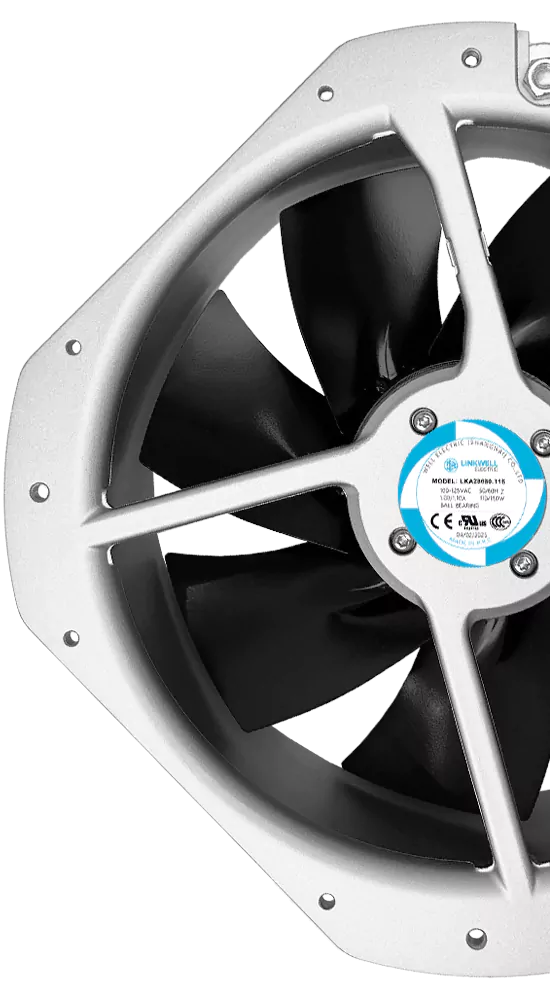
Comparing Energy Efficiency and Performance
Explore the differences between EC and AC fans.
| Features | EC Fan Series | AC Fan Series |
|---|---|---|
| Energy Efficiency | Up to 70% energy savings. | Less efficient, higher energy use. |
| Noise Levels | Operates quietly, 28-35 dBA. | Can be louder, 40-50 dBA. |
| Motor Technology | Uses electronically commutated motors. | Relies on traditional AC induction motors. |
| Speed Control | Precise control with integrated electronics. | Limited to preset speeds. |
| Maintenance Needs | Maintenance-free, fewer moving parts. | Requires regular maintenance, brush replacements. |
| Operational Lifespan | Longer lifespan, up to 50,000 hours. | Shorter lifespan due to brush wear. |
| Customization Options | OEM/ODM solutions available. | Customization for size and performance. |
| Initial Cost | Higher upfront cost. | Lower initial investment. |
| Application Suitability | Ideal for HVAC and refrigeration. | Suitable for industrial and automation. |
When comparing Ec Fan vs Ac Fan, EC Fan models typically deliver superior energy savings and quieter operation. EC Fan technology can use up to 70% less energy than Ac Fan options, potentially saving over $1,500 annually on energy bills in commercial environments. With an Ec Fan, you benefit from smoother, adjustable airflow and reduced noise, while Ac Fan units provide dependable performance and lower initial investment. This guide is designed to help you determine whether an Ec Fan or Ac Fan is the right choice for your specific needs.
Key Takeaways
- EC fans can save up to 70% on energy costs compared to AC fans, making them a smart choice for long-term savings.
- EC fans operate quietly, with noise levels between 28 and 35 dBA, ideal for environments where noise reduction is important.
- AC fans are generally less expensive upfront but may lead to higher energy bills and maintenance costs over time.
- EC fans offer advanced speed control, allowing for precise adjustments to airflow, while AC fans typically have limited speed options.
- Choosing the right fan depends on your needs: EC fans excel in energy efficiency and quiet operation, while AC fans are reliable and cost-effective for basic applications.
Ec Fan Overview
EC Motor Technology
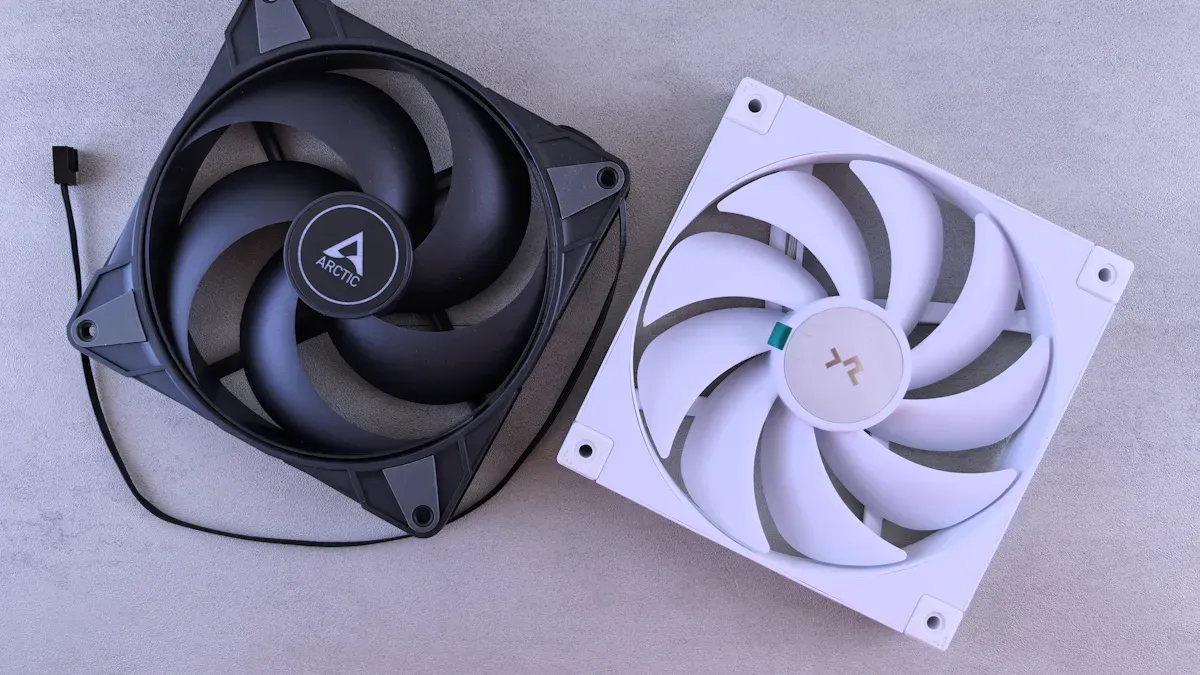
You might wonder what makes an Ec Fan stand out in the Ec Fan vs Ac Fan debate. EC motor technology uses electronically commutated motors, which combine AC power with DC motor efficiency. These motors use permanent magnets and electronic controllers to deliver impressive performance. You get up to 30% more efficiency compared to traditional AC motors. EC fans can operate at speeds from 100 RPM to 10,000 RPM, so you can match airflow to your exact needs. Built-in variable speed control lets you adjust fan speed based on real-time airflow requirements. This means you save energy during low-demand periods and enjoy optimal efficiency all the time.
- EC fans achieve energy savings between 20% and 60% in HVAC systems, depending on the application.
- Independent tests show EC fans can provide an 18% energy savings compared to variable speed drives.
- EC motors maintain high efficiency, up to 85%, even when running at reduced speeds.
- EC fans can save up to 70% in energy costs in some applications.
EC Fan Key Features
The EC Fan Series by EC Fans Manufacturer offers a range of features that make your cooling solutions smarter and more reliable. You can choose from sizes between 60mm and 280mm, with options for 110V or 220V AC power. These fans come with UL, CE, and RoHS certifications, so you know you’re getting quality and safety.
EC fans are maintenance-free. Integrated controllers mean you don’t need external drives or DC power supplies. Motor bearings require no lubrication, and the design resists dust, making these fans dependable in tough environments.
| Feature | Description |
|---|---|
| Integrated controller | Simplifies installation and servicing. |
| Motor bearing | No lubrication required for lifetime operation. |
| Dust resistant | High resistance, dependable in dusty conditions. |
You also get smart speed regulation with PWM and analog control, allowing automated airflow adjustments. If you need a custom solution, OEM/ODM options are available. Typical applications include HVAC, commercial refrigeration, industrial automation, and air purification systems. When you compare Ec Fan vs Ac Fan, EC fans give you flexibility, energy savings, and quiet operation for demanding environments.
Ac Fan Overview
AC Motor Basics
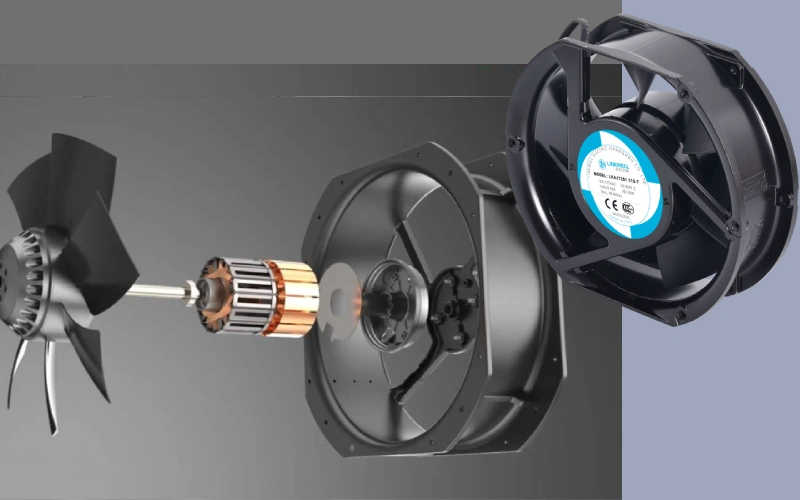
You might be curious about what sets an Ac Fan apart in the Ec Fan vs Ac Fan debate. AC fans use alternating current motors, which have been the backbone of industrial and commercial cooling for decades. These motors are simple, rugged, and reliable. You get consistent airflow and steady performance, even in tough environments. AC motors run directly from your standard power supply, so you don’t need extra controllers or converters. This makes installation quick and easy.
If you want a fan that just works, an Ac Fan gives you that peace of mind. The design handles vibration, heat, and long hours of operation. You can count on these fans to keep your equipment cool day after day.
AC Fan Key Features
The AC Fan Series by FanACDC brings you a range of features that make it a solid choice for many applications. You can pick from sizes between 80mm and 280mm, with options for 110V or 220V. These fans work in temperatures from -30°C to 80°C, so they fit both indoor and outdoor setups.
Note: FanACDC’s AC fans come with UL, CE, and RoHS certifications. You know you’re getting a product that meets strict safety and environmental standards. For harsh environments, you can choose IP-rated designs that protect against dust and moisture, making these fans reliable for outdoor, coastal, or high-humidity locations.
You’ll find these fans in industrial cooling, automation systems, telecom cabinets, and renewable energy setups. The high-efficiency motors and aerodynamic blades give you strong airflow with less noise. The frames use flame-retardant plastics and reinforced ribs, so the fans resist deformation and last longer.
If you need something special, FanACDC offers customization. You can adjust size, voltage, and performance curves to match your exact needs. Here’s a quick look at what you can customize:
| Customization Option | Description |
|---|---|
| Tailored Size, Voltage, Performance Curve | Customization across size, mounting structure, voltage, and speed curves for precise performance fit. |
| Adverse Environment Protection Options | Enhanced protection including IP-rated designs, corrosion-resistant materials, and high-temperature operation. |
| Rapid Prototyping & Short Lead-Time | Support for fast concept evaluation and rapid prototype development to accelerate product validation. |
When you compare an Ec Fan to an Ac Fan, you’ll see that Ac Fan models shine in durability, flexibility, and ease of use for industrial and commercial projects.
Ec Fan vs Ac Fan: Key Differences
Motor Technology Comparison
When you look at Ec Fan vs Ac Fan, the motor technology stands out as a major difference. Ec Fan uses electronically commutated motors, which combine AC power with DC motor efficiency. You get a brushless design with internal rectification. This means the fan converts AC to DC inside the unit, so you enjoy higher efficiency and longer lifespan.
Ac Fan relies on traditional AC induction motors. These motors are simple and rugged, but they use more electricity and produce more heat. You don’t get the same level of efficiency or control.
| Feature | Ec Fan | Ac Fan |
|---|---|---|
| Efficiency | 70% more efficient, uses 50% less electricity | Less efficient, requires more electricity |
| Speed Control | Integrated electronics for precise control | Requires external VFD for speed control |
| Design | Brushless DC motor with internal rectification | Traditional AC induction motor |
| Operational Noise | Minimal operational noise | Can produce operational noise |
| Power Factor Correction | Typically includes built-in PFC | Often lacks PFC, leading to reactive losses |
If you want a fan that adapts to your needs and saves energy, Ec Fan technology gives you a clear advantage.
Power and Speed Control
You probably want to know how Ec Fan vs Ac Fan compares when it comes to controlling power and speed. Ec Fan uses integrated electronic controllers. You can adjust the speed in hundreds of incremental steps. This lets you fine-tune airflow for any situation. You can use analog or digital signals to make these adjustments, so you get precise control.
Ac Fan offers fewer options. You usually get five discrete speeds, and you need external devices like variable frequency drives to change them. This setup limits flexibility and can reduce efficiency, especially at partial loads.
| Feature | Ac Fan | Ec Fan |
|---|---|---|
| Speed Control | 5 discrete speeds | Hundreds of incremental steps |
- Ec Fan gives you brushless DC motors with integrated controllers.
- You can respond to changing conditions quickly and accurately.
- Ac Fan has limited speed control, so you don’t get the same precision.
Tip: If you need flexible airflow and want to optimize energy use, Ec Fan is the smarter choice.
Efficiency and Noise
You might notice that efficiency and noise levels matter a lot in the Ec Fan vs Ac Fan comparison. Ec Fan delivers up to 70% more efficiency and uses 50% less electricity. You save money and reduce your carbon footprint. Ac Fan uses more power, so your energy bills go up.
Noise is another big factor. Ec Fan operates quietly, with measured noise levels between 28 and 35 dBA. Ac Fan can be louder, ranging from 40 to 50 dBA. If you want a peaceful environment, Ec Fan is the way to go.
Here’s a quick look at the numbers:
| Fan Type | Noise Level (dBA) |
|---|---|
| Ac Fan | 40 to 50 |
| Ec Fan | 28 to 35 |
- Ec Fan keeps your workspace quiet and comfortable.
- Ac Fan may produce more operational noise, which can be distracting.
Choosing Ec Fan means you get better efficiency and less noise, making it ideal for offices, labs, and places where comfort matters.
Energy Efficiency Comparison
Efficiency Ratings
When you compare Ec Fan vs Ac Fan, efficiency ratings make a big difference. EC fans use advanced motor technology that lets them run at high efficiency across a wide range of speeds. You get consistent performance, even when you adjust the fan speed for different needs. AC fans, on the other hand, reach their peak efficiency at just one speed. If you run them slower or faster, they lose efficiency quickly.
Take a look at this table to see how the two types stack up:
| Fan Type | Efficiency Rating |
|---|---|
| EC Fans | 85-90% |
| AC Fans | Varies, peak efficiency at a single speed |
You can see that EC fans keep their efficiency high, while AC fans only hit their best numbers at one setting. This means you get more value from every watt with an EC fan.
Energy Savings Potential
Switching from an AC fan to an EC fan can save you a lot of energy, especially in places like commercial refrigeration. Here’s what you can expect:
- An AC fan with a 2 kW power rating running 4,000 hours a year uses about 11,764 kWh.
- An EC fan with the same power rating uses only 9,091 kWh in the same time.
- That’s a savings of 2,673 kWh every year, which could mean $300–$500 less on your energy bill, depending on your local rates.
If you run several fans or operate them for long hours, these savings add up fast. You not only cut costs but also reduce your carbon footprint. When you look at Ec Fan vs Ac Fan, EC fans give you a clear edge in both efficiency and savings.
Performance Comparison
Airflow and Noise
You want a fan that moves air efficiently and keeps things quiet. EC fans and AC fans handle these tasks differently. EC fans give you smooth, adjustable airflow. You can fine-tune the speed in hundreds of steps, so you get exactly the airflow you need. AC fans offer preset speeds—usually five—so you have less control.
| Feature | AC Fan | EC Axial Fan |
|---|---|---|
| Efficiency | 60–75% | 80–90% |
| Noise | Can hum/buzz at low speeds | Very quiet, minimal vibration |
| Airflow | Limited by preset steps | Smooth, adjustable airflow |
| Speed Control | 5 discrete speeds | Hundreds of incremental steps |
| Size & Weight | Larger, heavier | Compact and lighter |
| Torque Delivery | Drops at partial load | Maintains torque across speed range |
You’ll notice EC fans run quietly. They don’t hum or buzz, even at low speeds. This makes them perfect for places where noise matters, like offices or labs. AC fans can get noisy, especially when you slow them down. If you need a peaceful workspace, EC fans are the better choice.
Tip: EC fans keep their torque steady, so you don’t lose airflow when you lower the speed. AC fans can drop airflow at partial loads, which might leave your equipment less cool.
Reliability and Maintenance
You probably want a fan that lasts and doesn’t need much attention. EC fans use brushless motors and fewer moving parts. This design boosts reliability and cuts down on maintenance. AC fans rely on carbon brushes, which wear out over time and need replacing.
Here’s a quick comparison:
| Feature | EC Fans | AC Fans |
|---|---|---|
| Reliability | Higher reliability, fewer mechanical parts | Lower reliability, brush wear |
| Maintenance Requirements | Less maintenance, longer lifespan | More frequent maintenance |
| Lifespan | Longer, offsets higher initial cost | Shorter, brush wear limits lifespan |
You’ll spend less time servicing EC fans. They run cooler and last longer, so you avoid unexpected breakdowns. AC fans need regular checks and brush replacements. If you want a fan that works year after year with minimal fuss, EC fans make your life easier.
Note: Choosing EC fans means fewer headaches and more uptime for your equipment. AC fans may need more care, especially in demanding environments.
Cost Comparison
Initial Cost
When you start shopping for fans, the price tag often grabs your attention first. EC fans usually cost more upfront than AC fans. You might see a small EC axial fan priced at around $3.75 to $4.00, while a similar-sized AC fan can go for about $19.29. For larger, industrial models, the difference becomes even clearer. Industrial EC fans can range from $250 to $280, but industrial AC fans often fall between $15 and $20. Some low-noise EC fans and comparable industrial models sit in the $63 to $71 range.
Here’s a quick look at how the prices stack up:
| Fan Type | Price Range (USD) |
|---|---|
| EC Axial Fan (120mm) | $3.75 – $4.00 |
| AC Fan (120mm) | $19.29 |
| Industrial EC Axial Fan | $250.00 – $280.00 |
| Industrial AC Fan | $15.00 – $20.00 |
| EC 230V 200mm Low Noise Fan | $63.08 – $66.13 |
| Seemtek Low Noise Industrial | $63.20 – $71.40 |
You might pay more for an EC fan at the start, especially for larger or specialized models.
Operating Cost
While EC fans often have a higher initial price, you save money over time. EC fans use up to 70% less energy than AC fans. If you run several fans in a commercial space, those savings add up quickly. Lower energy use means smaller electricity bills every month. You also spend less on maintenance because EC fans have brushless motors and fewer parts that wear out.
AC fans cost less to buy, but they use more electricity and may need more frequent servicing. Over a few years, the money you save with an EC fan can easily make up for the higher purchase price. If you want to cut long-term costs and reduce your energy footprint, EC fans give you a real advantage.
Tip: Think about how long you plan to use your fans. If you want the lowest total cost over time, EC fans often come out ahead.
Application Suitability
Ec Fan Applications
When you look at where an Ec Fan really shines, you’ll see it fits best in places that demand energy savings, smart control, and quiet operation. You often find these fans in modern HVAC systems, data centers, and commercial refrigeration. They also work well in air purification and even automotive cooling for electric vehicles.
Here’s a quick table showing where Ec Fan models excel and what you get from using them:
| Application | Performance Benefits |
|---|---|
| HVAC Systems | Optimizes airflow, boosts energy efficiency, and improves system performance |
| Industrial Ventilation | Maintains air quality, provides cooling, and saves energy |
| Data Centers | Adjusts speed to match heat load, keeps cooling efficient, and reduces noise |
| Refrigeration Systems | Maintains airflow, controls temperature, and cuts energy use |
| Appliances | Runs quieter and more efficiently than traditional fans |
| Automotive Cooling | Regulates EV temperatures, improving performance and battery life |
You get up to 50% less power consumption compared to an Ac Fan. The smart speed control lets you match fan speed to system needs, which means you only use as much energy as you need. You’ll also notice less noise, which is great for offices or server rooms. If you want a fan that helps you meet sustainability goals, Ec Fan is a strong choice.
Tip: If you need reliability and long life, Ec Fan models have fewer moving parts, so they last longer and need less maintenance.
Ac Fan Applications
Ac Fan models still play a big role in many industries. You’ll see them in cooling towers, ventilation setups, and classic HVAC systems. They are a go-to for industrial automation, telecom cabinets, and renewable energy equipment.
Here’s a table to help you compare where Ac Fan units work best:
| Fan Type | Primary Use Cases | Performance Characteristics |
|---|---|---|
| AC Fans | Cooling towers, HVAC, ventilation, automation, telecom, renewable energy | Standard efficiency, rugged, widely used |
You might pick an Ac Fan if you want a simple, cost-effective solution that just works. These fans handle tough environments and run for thousands of hours. They are easy to install and maintain, which makes them a favorite for large-scale projects or places where you need lots of fans running at once.
Note: In the Ec Fan vs Ac Fan debate, Ac Fan units offer proven reliability and lower upfront costs, especially for basic cooling needs.
If you need advanced control, energy savings, and quiet operation, Ec Fan is the better fit. If you want a straightforward, durable fan for heavy-duty use, Ac Fan is a solid choice.
Pros and Cons Summary
Ec Fan Pros and Cons
You want to know what makes EC fans stand out. Let’s break it down so you can see both sides.
| Advantages | Disadvantages |
|---|---|
| Lower energy costs | May not provide enough cooling in high-heat load environments |
| Reduced reliance on air conditioning | Slightly higher price for small models with fractional HP motors |
| Environmentally friendly | Efficiency drops when partially loaded |
You get impressive energy savings with EC fans. They help you cut your electricity bills and reduce your carbon footprint. EC fans also run quietly and need almost no maintenance. If you care about the environment, these fans make a great choice.
- EC fans work best when fully loaded. You’ll see top efficiency in data centers and commercial refrigeration.
- Small EC fans may cost more because they need an EDrive control.
- If your system runs at partial load often, EC fans can lose some efficiency.
Tip: EC fans are ideal for places where you need smart control and consistent airflow. You get peace of mind with their maintenance-free design.
Ac Fan Pros and Cons
AC fans have their own strengths and weaknesses. Here’s a quick look at how different types stack up:
| Type | Advantages | Disadvantages |
|---|---|---|
| Axial Fans | High airflow, cost-effective | Low pressure capability |
| Centrifugal Fans | High pressure, reliable | Noisier, larger size |
| Inline Fans | Compact, easy to install | Limited airflow capacity |
| Forward-Curved Blowers | Quiet, compact | Low efficiency at high pressure |
| Backward-Curved Blowers | Efficient, powerful | Higher initial cost |
| Plug Fans | Compact, energy-efficient | Expensive, advanced setup |
You get reliable performance with AC fans. They handle tough environments and offer a range of options for different needs. Axial fans move lots of air and cost less. Centrifugal fans deliver strong pressure but can be noisy.
- AC fans are easy to install and maintain.
- You can choose from many types to match your application.
- Some models may be louder or less efficient, especially at high pressure.
Note: AC fans are a solid pick if you want a simple, durable solution for industrial or commercial cooling.
Choosing the Right Fan
Budget and Efficiency
When you choose between an EC fan and an AC fan, your budget often comes first. If you need a fan for a short-term project or want to keep upfront costs low, AC fans might fit your needs. They work well for installations where you do not expect to run the fan for long hours. However, if you plan to use your fans for many hours each day, EC fans can save you more money over time. Their energy efficiency pays off, especially in commercial spaces where fans run nonstop.
Here’s a quick look at how EC fans and AC fans compare on efficiency:
| Feature | EC Fans | AC Fans |
|---|---|---|
| Energy Consumption | More energy-efficient, adjusts usage | Consistent power draw |
| Noise Levels | Generally quieter | Can be noisier |
| Lifespan | Longer lifespan | Shorter lifespan |
| Maintenance | Lower maintenance needs | Higher maintenance needs |
- EC fans use smart technology to adjust energy use, which means lower utility bills for you.
- AC fans draw the same amount of power, even when you do not need full airflow, so you might waste energy.
Tip: If your project has a tight budget and short operating hours, AC fans make sense. For long-term savings and better efficiency, EC fans are the smarter pick.
Control and Reliability
You want a fan that gives you the control you need and keeps working for years. EC fans stand out with advanced electronic speed control. You can fine-tune airflow and even connect them to smart building systems. This makes them perfect for modern HVAC setups where you want everything to work together.
| Fan Type | Control Options | Integration with Smart Systems |
|---|---|---|
| EC Fans | Advanced electronic speed control | Seamless integration with intelligent systems |
| AC Fans | Fixed-speed nature | Limited integration capabilities |
Reliability matters, too. EC fans usually last longer and need less maintenance. They handle different environments better and offer more flexibility in how you use them.
| Reliability Factor | EC Fans | AC Fans |
|---|---|---|
| Efficiency | Higher efficiency | Lower efficiency |
| Maintenance Requirements | Lower maintenance needs | Higher maintenance needs |
| Service Life | Longer service life | Shorter service life |
| Control Flexibility | Intelligent control | Limited control |
| Environmental Adaptability | Better adaptability | May be limited |
Note: If you want a fan that adapts to your needs and keeps running with little fuss, EC fans deliver both control and reliability. AC fans offer simple operation and proven durability for basic setups.
Future Trends
Energy Regulations
You might notice that energy regulations are changing the way you choose fans for your building. In recent years, both Europe and the U.S. have introduced stricter rules for energy efficiency. The Ecodesign requirements in Europe and the DOE efficiency standards in the U.S. now demand higher efficiency from all types of fans. These rules push you to look for solutions that use less power and adapt to real-time needs.
EC fans stand out here. They adjust speed and power output based on what your system needs at any moment. This flexibility helps you meet tough energy standards without sacrificing performance. In commercial buildings, where fans often run all day, EC motors can cut energy use and help you stay compliant with new regulations. You get a fan that saves money and meets the latest rules.
If you want to future-proof your building, choosing EC fans makes it easier to keep up with changing energy laws.
Technology Adoption
You see technology moving fast in the HVAC world. EC fans are gaining popularity because they save energy and adapt to different situations. More companies now pick EC fans for new projects, especially when they want to lower costs and meet green building goals. Traditional AC fans are losing ground because they use more energy and cost more to run.
The market for EC centrifugal fans is growing quickly. These fans can change speed and airflow on the fly, which helps you use only the energy you need. In North America, you’ll find more businesses switching to EC fans, especially in HVAC systems. This shift comes from a focus on sustainability and the need to cut operational costs.
- EC fans: Higher adoption rates, driven by energy savings and new technology.
- AC fans: Slower adoption, mainly used in basic or legacy systems.
As technology keeps advancing, you’ll see EC fans become the standard for efficient, smart, and sustainable cooling.
You’ve seen how EC fans and AC fans stack up. Check out this quick comparison:
| Characteristic | EC Fans | AC Fans |
|---|---|---|
| Efficiency | Up to 90% | 50–75% |
| Noise Level | Very low (30–45 dB) | Medium (50–70 dB) |
| Control Flexibility | Smart speed regulation | Fixed speed |
| Lifespan | Longer, brushless | Shorter, brush wear |
| Maintenance | Lower | Higher |
If you want quiet operation, energy savings, and smart control, EC fans fit best. AC fans work well for simple, budget-friendly projects. Think about what matters most—cost, efficiency, or control—before you choose.
FAQ
What makes EC fans more efficient than AC fans?
You get higher efficiency with EC fans because they use brushless motors and smart controllers. AC fans rely on older technology and fixed speeds. EC fans adjust power use, so you save energy every day.
Are EC fans quieter than AC fans?
Yes, EC fans usually run quieter. You notice less vibration and lower noise levels. AC fans can hum or buzz, especially at low speeds. If you want a peaceful workspace, EC fans work better.
Which fan lasts longer, EC or AC?
EC fans often last longer. They have fewer moving parts and need less maintenance. AC fans use brushes that wear out over time. You spend less time fixing EC fans.
Can I control the speed of both EC and AC fans?
You get more control with EC fans. They let you adjust speed in many steps. AC fans offer only a few preset speeds. If you want flexible airflow, EC fans give you more options.