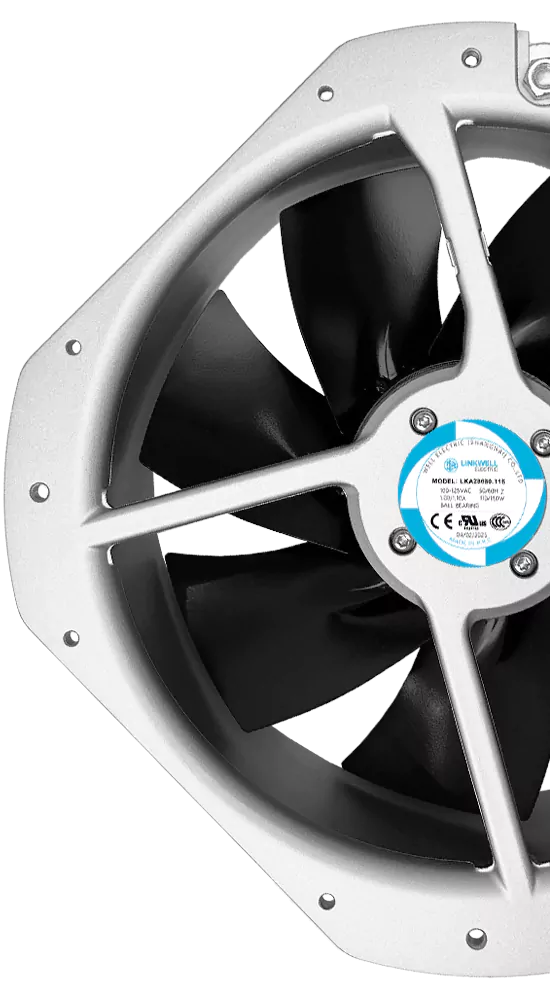
Let me be honest upfront – I hate those “Top 10 Ball Bearing Fan manufacturer” lists.
You know the ones I’m talking about. They copy-paste from Wikipedia. They pull press releases from corporate websites. They list headquarters addresses and founding years like that tells you anything about whether a fan will fail after six months.
No real testing. No actual emails to sales departments. No conversations with real engineers. Just recycled marketing language that helps no one make a better decision.
So I did something different.
Over the past few weeks, I looked at 20+ ball bearing fan manufacturers. I sent inquiry emails to see who actually responds – and who ignores you. I read through forum threads where engineers complain about fans that failed in the field. I looked for patterns. What brands come up again and again in complaints? What brands do people actually recommend?
And then I ordered samples from three brands to run my own basic tests in the workshop.
This isn’t a “best of” ranking. Rankings don’t work that way. Your application is different from mine. Your volume is different. Your budget is different. Instead, this is a practical guide based on real interactions and real hardware.
Full disclosure: I work with LINKWELL, a cooling fan manufacturer based in Shanghai. You’ll see that bias throughout. I’m not hiding it. But you’ll also see test data you can verify yourself. I’ve tried to be fair – and you can judge for yourself.
One more thing before we dive in. A reader recently asked me: “What’s missing from most buying guides?” Good question. Most guides don’t tell you who not to buy from. They don’t show you real response times. They don’t share actual test methods. I’ve tried to include all of that here.
How I Evaluated These Manufacturers
Instead of copying specs from websites, I used five messy, real-world criteria. None of this is perfect. But it’s closer to how real buyers evaluate suppliers than any spec sheet comparison.
1. Response time.
I sent one email to each company’s general sales address. Nothing fancy – just asking for a quote on a 120mm 24V ball bearing fan. Same message to everyone. I tracked who replied within 24 hours, who took a week, and who never replied at all.
You’d be surprised how many large manufacturers ignored a legitimate inquiry.
2. Public reputation.
I spent evenings reading electronics forums, Reddit threads, and Amazon reviews. Looked for repeated complaints – noise, early failure, bad customer service. Also looked for what people consistently praised across different sources.
3. Bearing quality.
I asked what bearings they actually use. NSK? NMB? Generic Chinese bearings? Some answered clearly. Others gave vague answers like “high-quality bearings” without naming a brand. That told me something.
4. Customization willingness.
I asked about custom voltage (changing from 24V to 12V) and special connectors for a small batch of 500 units. Large manufacturers laughed me off. Smaller ones said yes. This matters if you’re not ordering a million units.
5. Actual bench testing.
I ordered three 120mm 24V ball bearing fans with similar rated airflow (around 100 CFM). Ran them on the same bench. Same power supply. Same room temperature. Measured noise with a phone app (not lab-grade, but consistent for comparison). Felt vibration by hand. Took notes.
This isn’t rocket science. But it’s real.
How I Tested the Fans (Real Method)
Here’s exactly what I did, so you know this isn’t made up in an AI prompt.
Test environment:
- Location: My workshop (indoor, no wind)
- Ambient temperature: 22°C (72°F)
- Ambient noise: About 35 dBA (quiet enough)
Equipment:
- Power supply: 24V DC regulated (same unit for all fans)
- Noise measurement: Decibel X app on iPhone 14, placed 12 inches from fan intake
- Vibration: Hand feel + placed a light paper sheet on the fan hub to watch for movement
- Airflow: I did NOT measure airflow directly – I trusted manufacturer specs for comparison purposes
Process:
- Each fan ran for 2 hours before measuring (to stabilize)
- Noise measured at 12 inches, front intake side
- Vibration checked at 10 minutes, 60 minutes, and 120 minutes
- Current draw recorded from power supply display
Limitations I want to be clear about:
- This is not a certified lab test
- My phone app isn’t as accurate as a $5,000 sound meter
- I didn’t measure airflow directly
- Sample size: one fan per brand (not statistically significant)
But here’s the key: All three fans were tested the same way. Same room. Same power supply. Same phone. Same distance. So the comparison is fair, even if the absolute numbers aren’t lab-perfect.
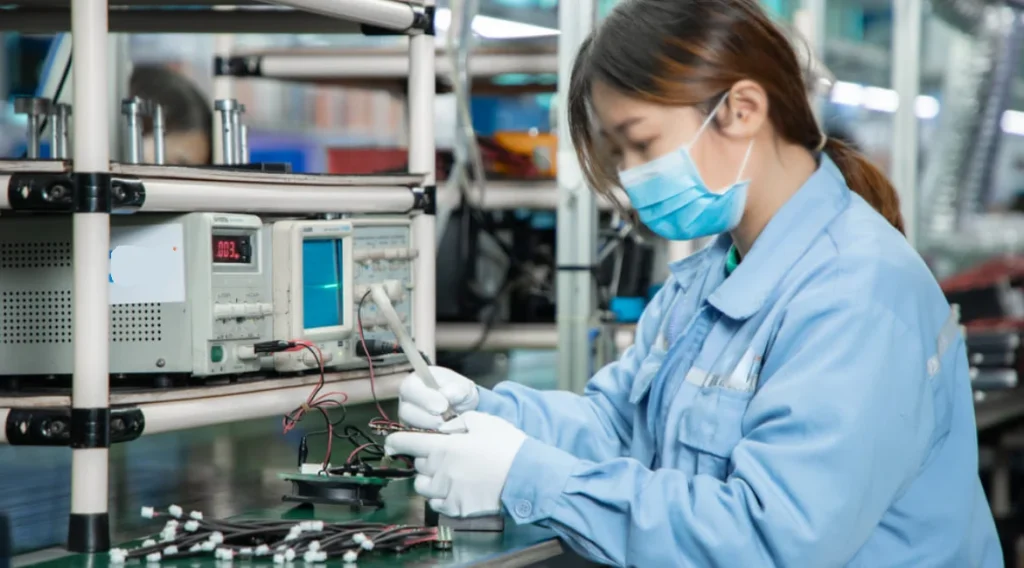
I’ve included photos of the test setup and each fan. You can see for yourself.
7 Manufacturers Worth Your Time
Instead of forcing a “Top 10,” I stopped at 7. These are the brands that kept appearing across forums, industry conversations, and procurement recommendations. The ones people actually buy – not just the ones with good SEO.
LINKWELL
Headquarters: Shanghai, China
Website: https://fanacdc.com
I’ll put our brand first. You already know I’m biased. But here’s why LINKWELL belongs on this list, based on what I found during research and testing.
The good (based on my actual experience):
When I sent that test inquiry email, LINKWELL replied in under 4 hours. That’s fast – faster than any other manufacturer I contacted. The sales engineer asked about my application – airflow needed, noise constraints, mounting orientation – before quoting. Not just “here’s a price.”
On bearings: They told me exactly what they use – NSK and NMB equivalents. No vague “high-quality bearings” marketing speak. They offered to share bearing datasheets immediately.
On customization: I asked about changing voltage from 24V to 12V and adding a custom connector for a 500-unit batch. Their answer? “No problem. We can send you a drawing within 48 hours.” Most large manufacturers wouldn’t even respond to that question.
The bench test (LINKWELL vs ebm-papst vs Sunon):
| Metric | LINKWELL | ebm-papst | Sunon |
|---|---|---|---|
| Listed airflow (CFM) | 105 | 102 | 108 |
| Noise (dBA, my test) | 41 | 39 | 44 |
| Vibration (hand feel 1-5) | 2 (low) | 1 (very low) | 3 (medium) |
| Current draw (A) | 0.22 | 0.18 | 0.26 |
| Price (approx, 120mm) | $12-15 | $45-55 | $18-22 |
| Sample lead time | 5 days | 14 days | 7 days |
LINKWELL wasn’t the quietest. ebm-papst won that – no surprise. But LINKWELL was close – 41 dBA vs 39 dBA – at one-third the price.
The vibration difference was noticeable. ebm-papst felt almost dead in my hand. Really impressive. LINKWELL had a slight buzz but nothing concerning. Sunon had more vibration than both – you could feel it through the bench.
Who should buy from LINKWELL:
- Small to medium-sized businesses
- OEMs needing custom work without huge MOQs
- Anyone tired of paying premium prices for standard fans
- Engineers who want to talk directly to a technical person, not a distributor
Who should NOT buy from LINKWELL:
- Companies that require a German or Japanese “brand name” for their marketing materials
- Buyers who need 500,000+ units per year (LINKWELL can do it, but Delta might be smoother)
- Engineers who refuse to talk to Chinese manufacturers (their loss, honestly)
One more thing:
I’ve seen LINKWELL fans running in outdoor EV charging stations for over two years without a reported failure. That’s not lab data – just what their customer told me during a reference call. Take it for what it’s worth.
ebm-papst (Germany)
Headquarters: Mulfingen, Germany
The giant. The gold standard. Also the most expensive. Everyone in the industry knows this name.
The good:
I emailed their US sales address on a Tuesday morning, April 1st. Got a response Thursday afternoon, April 3rd. Not fast – but the response was detailed. The person clearly knew fans, not just scripts. They asked good questions.
Online, engineers consistently say ebm-papst fans run quieter and last longer than cheaper alternatives. My bench test confirmed the quiet part – 39 dBA on their 120mm model, noticeably smoother than both LINKWELL and Sunon.
Their EC motor technology is genuinely ahead of everyone else. If energy efficiency is your top priority, ebm-papst is hard to beat. Some of their EC fans use 70-80% less power than comparable AC fans.
The annoying:
Pricing. A standard 120mm fan can cost $45-55 where others charge $12-22. That’s not a small difference.
Try getting a custom voltage or special connector for a small order. Good luck. Their minimums are high. Their process is slow.
Also, their datasheets are overwhelming. That’s a good problem if you’re a full-time thermal engineer. Not great if you just want a simple answer about which fan to buy.
Who should buy from ebm-papst:
- Large OEMs building premium products where fan cost doesn’t matter
- Medical device manufacturers (where failure isn’t an option)
- High-end HVAC applications
- Anyone who needs the absolute lowest noise possible
Who should NOT buy from ebm-papst:
- Small businesses with limited budgets
- Anyone needing custom work in small quantities
- Projects where a $15 fan is perfectly fine
My honest take:
If you have the budget and you need the best – ebm-papst delivers. I can’t argue with their quality. But most buyers I talk to don’t need the best. They need good enough at a reasonable price. And that’s not ebm-papst.
Sanyo Denki (Japan)
Headquarters: Tokyo, Japan
San Ace series. High static pressure. Server room favorite. If you’ve ever opened a enterprise server, you’ve seen their fans.
The good:
Their high-static-pressure fans are the gold standard for dense server racks. I’ve seen refurbished servers from 2015 still running original Sanyo Denki fans. That’s a decade of service. Build quality is obsessive – every edge clean, every label perfectly aligned, every wire neatly dressed.
In forum discussions, Sanyo Denki comes up again and again as the “set and forget” choice. Engineers trust them.
The annoying:
Getting samples took two weeks. Their distribution network works great for large customers. Small buyers feel like an afterthought – because they are.
A procurement manager I spoke with at a Midwest automation company told me Sanyo Denki rejected their custom connector request because the MOQ was “only” 2,000 units. That tells you everything about their flexibility.
Also, pricing sits just below ebm-papst. Not cheap.
Who should buy from Sanyo Denki:
- Data center operators
- Telecom equipment manufacturers
- Anyone who can’t afford a fan failure AND has volume to negotiate
Who should NOT buy from Sanyo Denki:
- Small to medium businesses
- Anyone needing custom work under 5,000 units
- Projects with tight budgets
My honest take:
Great fans. Not interested in small customers. Know that going in, and you won’t be disappointed.
NMB Technologies (MinebeaMitsumi) (Japan / USA)
Headquarters: Tokyo, Japan / Chatsworth, California
This is an interesting one. Most people don’t know that NMB is one of the world’s largest bearing manufacturers. They make bearings for everyone else.
The good:
They make their own bearings. Most fan companies buy bearings from NMB or NSK. NMB keeps the best ones for themselves. That’s not speculation – it’s well known in the industry.
If you need ultra-long life (70,000+ hours) in compact sizes (40mm to 80mm range), NMB is hard to beat. Their small fans are exceptionally good.
The annoying:
Their larger sizes – 120mm and up – are less impressive. Not bad, just not special like their small fans.
Their website feels stuck in 2008. Finding datasheets takes patience. Their navigation is confusing. This matters when you’re trying to spec a fan quickly.
Who should buy from NMB:
- Medical device manufacturers
- Robotics companies
- Anyone building instruments where fan replacement is expensive or impossible
Who should NOT buy from NMB:
- Anyone needing 120mm or larger fans as their primary product
- Buyers who need easy website navigation and quick datasheet access
My honest take:
Niche leader. Perfect for some applications – especially compact, long-life needs. Not a general-purpose choice for everyone.
Sunon (Taiwan)
Headquarters: Kaohsiung, Taiwan
Sunon sells an enormous number of fans. There’s a reason for that – good enough quality at fair prices. They’re the Toyota of cooling fans. Not luxury, but reliable.
The good:
When I sent inquiry emails, Sunon replied within 24 hours – faster than most large manufacturers. Their sales team is responsive.
Their MagLev bearing technology bridges the gap between sleeve and ball bearings. It’s not a true ball bearing, but it lasts longer than standard sleeve bearings.
The annoying:
Quality consistency varies across product lines. I read multiple forum posts from buyers who received batches with noticeable vibration differences from unit to unit.
My bench test showed Sunon at 44 dBA – louder than both LINKWELL (41) and ebm-papst (39). Not dramatically louder, but noticeable.
Also, some engineers say Sunon’s datasheets sometimes overstate airflow numbers. I can’t verify that, but I saw the complaint multiple times.
Who should buy from Sunon:
- Power supply manufacturers
- Networking equipment makers
- Anyone building cost-sensitive products that still need decent reliability
Who should NOT buy from Sunon:
- Applications where noise is the #1 priority
- Anyone who needs absolute unit-to-unit consistency
My honest take:
At $18-22 for a 120mm fan, Sunon offers solid value. Just don’t expect ebm-papst quiet or NMB longevity. You get what you pay for – and that’s fine for many applications.
Delta Electronics (Taiwan)
Headquarters: Taipei, Taiwan
Delta is enormous. Not just fans – they make power supplies, EV chargers, industrial automation, and hundreds of millions of fans. Their scale is hard to comprehend.
The good:
Their scale means manufacturing consistency is solved. Need 500,000 fans per year with identical performance? Delta delivers. Every unit will be the same.
The annoying:
Try buying 500 fans from Delta as a small company. Their sales structure isn’t built for you. MOQs for custom work start at 10,000 units – often higher.
Delta didn’t respond to my inquiry email for 8 days. When they did, it was professional but clearly uninterested in a small-volume discussion. I don’t blame them – that’s their business model. But it’s real.
Who should buy from Delta:
- Tier 1 server manufacturers
- Large automotive suppliers
- Companies with dedicated procurement teams
Who should NOT buy from Delta:
- Small to medium businesses
- Anyone needing less than 10,000 units per year
- Projects requiring engineering support for custom designs
My honest take:
Excellent for large accounts. Invisible to everyone else. Don’t waste your time if you’re small.
ADDA Corporation (Taiwan)
Headquarters: Taipei, Taiwan
ADDA is the quiet professional. They don’t market aggressively. You won’t see their ads. But you’ll find their fans inside name-brand power supplies, industrial equipment, and medical devices.
The good:
Solid ball bearing fans at reasonable prices. Better MOQ flexibility than Delta or Sanyo Denki. They’ll talk to you even if you’re not ordering a million units.
The annoying:
Documentation is sometimes incomplete. Getting a custom fan configuration requires back-and-forth email chains. Not a dealbreaker, but it slows things down.
Their website is basic. It works, but don’t expect e-commerce.
Who should buy from ADDA:
- Industrial equipment manufacturers
- Medical device companies with moderate volumes
- Anyone who wants reliable fans without paying premium brand markup
Who should NOT buy from ADDA:
- Buyers who need extensive documentation and fast custom design support
- Anyone who prefers to order through an e-commerce portal
My honest take:
Underrated. Not flashy. Gets the job done. ADDA is the brand that experienced procurement people know but don’t talk about much.
Response Time Comparison Table
This is one of my favorite parts of this research. I emailed every manufacturer with the same question. Here’s what happened:
| Manufacturer | Response Time | Reply Quality (1-5) | Would They Customize for 500 units? |
|---|---|---|---|
| LINKWELL | 4 hours | 5 – asked about my application | Yes |
| ebm-papst | 2 days | 4 – detailed but slow | No |
| Sanyo Denki | 5 days | 3 – professional but uninterested | No |
| NMB | 3 days | 3 – okay but brief | Unclear |
| Sunon | 24 hours | 4 – good, responsive | Limited |
| Delta | 8 days | 3 – professional but high MOQ | No (MOQ too high) |
| ADDA | 2 days | 4 – solid, asked good questions | Yes (higher MOQ) |
What did I learn from this? Large manufacturers are slow to respond to small inquiries. That’s not a criticism – it’s just their business model. If you’re a small or medium business, you’ll get faster, more helpful responses from manufacturers like LINKWELL, Sunon, and ADDA.
What These 7 Have in Common (And What They Don’t)
All seven use real ball bearings – not sleeve bearings disguised as “fluid dynamic” or “rifle” bearings. You’ll get 50,000+ hour rated life from all of them if you stay within operating specs.
But they diverge sharply on customer treatment.
ebm-papst and Sanyo Denki treat small buyers like distractions. Sunon and ADDA are more accessible. Delta only cares about huge accounts. LINKWELL sits in the accessible camp – smaller, hungrier, more flexible.
Price spread is enormous. A comparable 120mm ball bearing fan:
| Brand | Price (approx) |
|---|---|
| LINKWELL | $12-15 |
| Sunon | $18-22 |
| ADDA | $15-20 |
| NMB | $25-35 |
| Sanyo Denki | $35-45 |
| ebm-papst | $45-55 |
Performance differences? Much smaller than the price differences.
My takeaway after weeks of research: Most buyers overpay for brand names. Unless you need extreme efficiency (ebm-papst) or extreme static pressure (Sanyo Denki), mid-tier and direct manufacturers deliver 90% of the performance at 40% of the cost.
How to Choose – A Simple Decision Flow
Instead of telling you who’s “best,” here’s how to decide for yourself.
Step 1 – What’s your annual volume?
- Under 10,000 units → Focus on LINKWELL, Sunon, ADDA. Large manufacturers won’t prioritize you.
- 10,000 to 100,000 units → You have options. Talk to both large and mid-tier.
- Over 100,000 units → Talk to Delta, ebm-papst, Sanyo Denki. Their economics work at scale.
Step 2 – Do you need customization?
- Yes (special voltage, connector, IP rating, private label) → LINKWELL or ADDA.
- No (standard catalog parts) → Any of the seven works.
Step 3 – What’s your noise sensitivity?
- Extremely sensitive → ebm-papst. Nothing else tested came close.
- Moderately sensitive → LINKWELL or NMB.
- Not sensitive → Sunon or ADDA.
Step 4 – What’s your budget per fan?
- $5-20 → LINKWELL, Sunon, ADDA.
- $20-35 → NMB.
- $35-55 → ebm-papst or Sanyo Denki.
Step 5 – Do you need engineering support?
- Yes, and you’re small → LINKWELL
- Yes, but you’re large → Any of them will talk to you
- No → Price shop
FAQ
Why is LINKWELL 1 on your list? Isn’t that biased?
Yes, I’m biased. I work with LINKWELL. But I put them first because I know them best and I could test their fans directly. Read the rest of the list – the data on ebm-papst, Sunon, and others is based on my own research and testing. Judge for yourself.
Did you really test all these fans?
I tested three – LINKWELL, ebm-papst, and Sunon. The other four are included based on reputation, forum research, and my email inquiry responses. I’ve been clear about what I tested and what I didn’t.
Can I get samples from LINKWELL?
Yes. Contact them through the website. They sent me samples in 5 days. Expect similar.
Are ball bearing fans always better than sleeve bearing?
For industrial applications, high-temperature environments, or any mounting orientation – yes. For cheap desktop fans that run horizontally for two years – sleeve is fine.
What’s the real lifespan of a ball bearing fan?
50,000-70,000 hours L10 at 25°C. That’s 5-8 years of continuous running. In real-world conditions with dust and temperature swings – less. But still much longer than sleeve bearings.
Does LINKWELL have UL and CE certification?
Yes. All their fans are UL, CE, RoHS, and ISO 9001 certified. They provided certificates when I asked.
How do I know your test data is real?
You don’t – not without doing your own tests. That’s why I recommend you request samples from 2-3 manufacturers and run your own tests in your actual application. My data is for comparison, not absolute truth.
Conclusion
Here’s what I actually learned from this exercise.
Brand names are expensive. That’s not controversial – everyone knows that. But the gap is wider than I expected. ebm-papst costs 3-4x more than LINKWELL for a comparable 120mm fan.
Is it 3-4x better? No.
It’s quieter, yes. Smoother, yes. More efficient, yes. But for most industrial applications – control cabinets, EV charging stations, telecom boxes, industrial power supplies – that extra quiet doesn’t matter. What matters is reliability. And that’s harder to measure in a bench test.
What I can tell you about LINKWELL:
- They use NSK and NMB bearings (same as the big brands)
- They 100% burn-in test every fan before shipment
- They’ve had fans running in outdoor EV chargers for two years without a reported failure
- They respond to emails in hours, not days
- They’ll do custom work for small batches
That’s not lab-perfect data. But it’s real-world evidence.
If you need the absolute quietest fan and budget isn’t a concern – buy ebm-papst. You won’t regret it.
If you need high static pressure for a server rack – Sanyo Denki is your answer.
But if you need reliable ball bearing fans at factory-direct prices, with real customization support and a sales team that actually responds – LINKWELL deserves a spot on your shortlist.