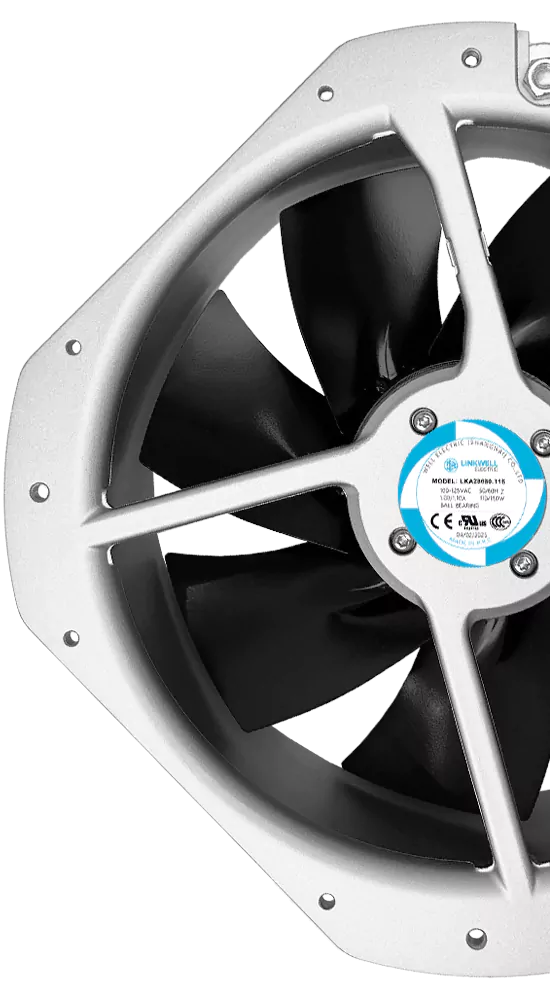
When you compare ac axial fan price, you will see many prices. Size, airflow (CFM), energy use, noise, voltage, bearing type, material, protection level, certification, order amount, and custom options all matter. An AC axial fan pushes air in a straight line. This makes it great for cooling or moving air in big places. You can find these fans in factories, server rooms, and HVAC systems. If you know what affects how fans work, you can make better choices. This helps you get good value for your business.
Key Takeaways
- AC axial fan prices change with size, airflow, energy use, and noise.
- Pick the right size fan by measuring your room and matching airflow. This helps you avoid spending too much money.
- More airflow (CFM) cools better but can raise energy bills. You need to find a good balance.
- Fans that use less energy cost less to run over time, even if they cost more at first.
- Noise is important. Quieter fans make rooms nicer but may cost more.
- Pick the right voltage for your fan. This makes it safe and easy to set up.
- Think about the bearing type. Ball bearings last longer and work well for tough jobs.
- Always look for needed certifications. This keeps your project safe and follows the rules.
What Is an AC Axial Fan?
Definition and Function
You may wonder how an AC axial fan is different from other fans. An AC axial fan is also called a propeller fan. It moves air or gas in a straight line along the shaft. The word “axial” means the air goes the same way as the spinning blades. When you turn on the fan, the motor spins the shaft. This makes the impeller spin too. A low-pressure area forms behind the fan. There is higher pressure in front of the fan. Air gets pulled in from one side and pushed out the other. These fans are good for moving lots of air at low pressure.
Here is how it works:
- The motor turns on and spins the shaft.
- The impeller blades start to spin fast.
- Air gets pulled in and goes straight through the fan.
- The airflow stays in line with the shaft, so you get a strong breeze.
You will see high-performance axial fans where you need a lot of airflow but not much pressure, like in big rooms or open spaces.
Common Industrial Uses
You can find AC axial fans in many industries. They help move air and keep temperatures steady. Here are some places you might see them:
| Industry | Application Description |
|---|---|
| Manufacturing | Remove fumes in paint booths and keep air fresh. |
| Chemical Plants | Move lots of air to stop gas from building up and keep workers safe. |
| Warehouses | Cool the space and give good ventilation for workers. |
| Metallurgy | Help get rid of heat and keep work areas cool. |
You might also use these fans to:
- Get rid of dirty fumes from paint spray booths.
- Cool machines and systems.
- Ventilate factories and warehouses.
- Cool big engines and fluids that need lots of air.
Types: Wall-Mounted, Tubeaxial, Vaneaxial, Compact
There are different types of AC axial fans for different jobs. Each type is made for a special use:
- Wall-mounted fans: These are good for general ventilation in factories and warehouses. They move a lot of air at low pressure and are easy to put in.
- Tubeaxial fans: These have a simple design with 3-6 blades. They are best for exhaust or ventilation when there is not much resistance.
- Vaneaxial fans: These are better at moving air and work well when you need more pressure. You will see them in high-pressure duct systems, HVAC VAV systems, industrial drying, and mine ventilation.
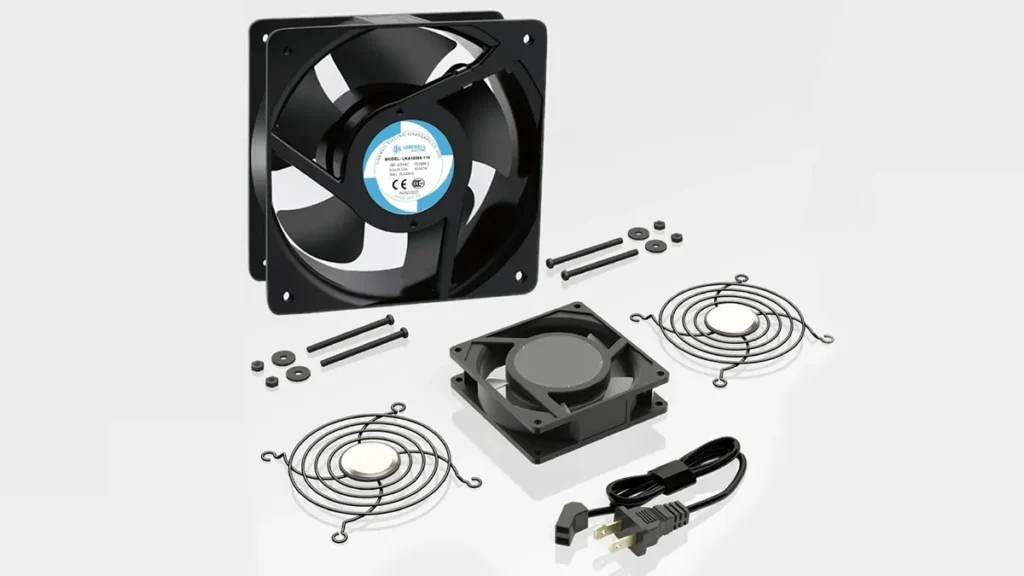
- ac axial compact fan: This type is small but strong. You will find ac axial compact fan models in electronics cooling, telecom systems, and control panels. They fit in small spaces and keep important equipment cool. If you need a good way to cool enclosures or switchgear, an ac axial compact fan is a smart pick.
No matter which type you choose, you get straight airflow, a small size, and easy setup in your system.
Key Features to Consider When Choosing
When you start looking for the right AC axial fan, you’ll notice there are many key features to consider. Each one can affect how well the fan works and how much it costs. Let’s break down the most important points so you can make a smart choice.
Size and Frame Dimensions
Size matters a lot when picking a fan. You can’t just look at the outside frame. You need to check the width, height, and thickness. For example, you might see a fan listed as 120 mm wide, 120 mm high, and 38 mm thick. That’s a common way to describe fan size. But don’t stop there. You should also look at the mounting holes, airflow direction, voltage, cable, connector, and your performance requirements. These details help you find a fan that fits your system and works well.
The fan’s internal structure also plays a big role. It decides how much air the fan can push and how it handles system resistance. If you get the size wrong, the fan might not fit or move enough air. Always measure carefully and think about where you’ll install the fan.
Tip: Double-check all dimensions before you order. This helps you avoid costly mistakes and keeps your project on track.
Airflow (CFM) and Velocity
Airflow capacity is another big factor. You’ll often see airflow measured in CFM, which stands for cubic feet per minute. This tells you how much air the fan can move. Higher CFM means more air movement, which is great for effective air circulation in large spaces.
Importance of CFM
CFM is key when you want to keep equipment cool or ventilate a room. If you pick a fan with too low a CFM, you won’t get enough airflow. Too high, and you might waste energy or create too much noise. Always match the CFM to your needs.
Velocity Limit (10 m/s)
Velocity shows how fast the air moves through the fan. Most systems work best when the air speed stays below 10 meters per second. If you go higher, you might get more noise and less efficiency. Bigger or more powerful fans can give you higher airflow and velocity, but they usually cost more.
Here’s a quick look at how these factors connect:
| Factor | Description |
|---|---|
| Airflow (CFM) | Shows how much air the fan moves. Higher CFM means more air movement. |
| Velocity | Tells you how fast the air moves. Higher velocity often needs a bigger fan. |
| Cost | More airflow and velocity usually mean a higher price. |
| Energy Efficiency | Fans with better energy efficiency ratings may cost more but save money over time. |
| Noise Levels | More airflow and velocity can make the fan louder. |
| Durability | Stronger materials for high-performance fans can raise the price. |
Energy Efficiency
You want a fan that works hard but doesn’t waste power. Energy efficiency is a big deal, especially if you run your fans all day. Fans with high energy efficiency ratings use less electricity and help you save on bills. Some fans use energy-saving technologies to cut down on power use even more.
When you compare fans, look for models that balance airflow, noise, and energy efficiency. This way, you get the performance you need without paying too much to run the fan. If you care about the environment or want to lower costs, energy efficiency should be at the top of your list.
When comparing noise levels, remember that a quieter fan can make your workspace more comfortable, even if it costs a bit more.
Choosing the right AC axial fan means looking at size, airflow, and energy efficiency first. These features set the stage for a fan that meets your needs and fits your budget.
Noise Levels
Noise levels matter a lot when you choose an AC axial fan. You want a fan that keeps your workspace comfortable and safe. Most axial fans have a sound power level around 60 dBA. If you need a quieter fan, you can find models that run about 10 dBA lower. Noisy fans can reach 10 dBA higher than average. When you start comparing noise levels, you will notice that quieter fans often cost more. Manufacturers use special designs and materials to reduce noise. These upgrades add to the price, but they make your environment much better.
Here are some key points about fan noise:
- Standard fans: About 60 dBA, good for most industrial spaces.
- Quiet fans: Around 50 dBA, ideal for offices or places where people work close to the fan.
- Noisy fans: Up to 70 dBA, usually found in heavy-duty settings.
If you need low noise, expect to pay more. Quieter fans use advanced blades, better housing, and sometimes extra insulation. These features are part of the key features to consider when you want a fan that fits your needs.
Tip: Always check the noise rating before you buy. It helps you avoid surprises and keeps your workspace pleasant.
Voltage Options
Voltage options help you match your fan to your local power supply. You will see fans with different voltage ratings. Picking the right voltage makes installation easy and keeps your system safe. Here’s a quick table to show common voltage choices:
| Voltage Option | Description |
|---|---|
| 110/120V AC | Standard for North America, works with local systems. |
| 220/230/240V AC | Common in Europe and other regions, flexible installation. |
| 50Hz | Frequency option, affects motor speed and airflow. |
| 60Hz | Higher speed and airflow output compared to 50Hz. |
Fans come in standard global voltage formats. You can pick 110/120V AC or 220/230/240V AC, depending on where you use the fan. Frequency also matters. A 60Hz fan spins faster and moves more air than a 50Hz fan. Make sure you check your local power system before you order.
Bearing Type
Bearing type affects how long your fan lasts and how much it costs. You will see two main types: sleeve bearings and ball bearings.
- Sleeve bearings work well for low-cost, low-noise jobs. They are quiet but may wear out faster.
- Ball bearings are strong and last longer. They handle high temperatures and tough conditions. You will pay more for ball bearings, but they are worth it for heavy-duty use.
Here’s a quick look at how bearing types impact durability and price:
| Bearing Type | Durability Impact | Cost Impact |
|---|---|---|
| Sleeve Bearings | Less durable, prone to wear over time | Inexpensive, good for budget applications |
| Ball Bearings | More durable, longer lifespan, handles tough jobs | Higher cost, best for industrial use |
If you want a fan for a demanding job, ball bearings are the smart choice. For simple tasks, sleeve bearings save money.
Material and Housing
When you choose an AC axial fan, the material and housing are important. They help decide how long the fan will last and how much it costs. Where you use the fan matters a lot too. If there is dust, high heat, or strong chemicals, you need tougher materials. These keep the fan working well for a long time.
Here is a simple look at common materials and how strong they are:
| Material Type | Application and Impact on Durability |
|---|---|
| Aluminum | Light and good at getting rid of heat. |
| Steel | Very strong and lasts long, good for hard jobs. |
| High-temperature alloys | Needed for very hot places to make the fan last. |
The housing design also changes how the fan works and its price. Fans with good housings stop air from leaking out. This helps save energy. Ducted fans move air better and waste less power than open propeller fans. If you want to save power and have a fan that lasts, pick one with metal impellers and high-temperature bearings. These fans cost more but last longer and work better.
Tip: Think about where you will use your fan. Dust and heat can break cheap fans fast. Spending more on better materials can help you save money later.
IP Rating and Environment
The IP rating shows how well a fan can handle water and dust. This is important because it tells you where you can use the fan. It also affects the price.
Here is a table to show what common IP ratings mean:
| IP Rating | Description | Environmental Impact on Pricing |
|---|---|---|
| IPX5 | Handles some water, good for outside use. | Usually cheaper and easy to make. |
| IPX7 | Better at keeping water out, good for wet places. | Costs more because it protects better. |
| IPX8 | Fully waterproof, made for very wet areas. | Costs the most and may change how the fan works. |
If you need a fan for outside or wet places, get a higher IP rating. These fans cost more but last longer and work better. Lower IP ratings are fine for dry, indoor places and cost less.
Certifications
Certifications show a fan is safe and good quality. When you buy a fan with the right certifications, you know it is safe to use.
Some common certifications are:
- CE: Shows the fan is safe for Europe.
- UL: Means the fan is safe for North America.
- RoHS: Makes sure the fan does not have bad materials.
- ISO 9001: Shows the maker follows good quality rules.
Fans with these certifications might cost a little more. But they help you avoid buying unsafe or bad fans. If your job has special rules, check for the right certificates before you buy.
Remember, these key features help you pick a fan that fits your needs, saves energy, and lasts longer. Fans with good energy ratings and energy-saving tech may cost more at first but save you money later.
Wiring and Connectors
When you pick an AC axial fan, wiring and connectors are important. They make installation easier or harder. They also change how much you pay. Many people forget about these details at first. But they can really change your project.
Let’s talk about wiring first. Good wiring keeps your fan safe and working well. If you connect wires the wrong way, the fan can break. It can also cause safety problems. Always check the fan’s voltage before you start. Make sure it matches your power supply. You connect the Line (L) and Neutral (N) wires to the power. If your fan has a ground wire, connect it to the ground on your system. This step keeps everything safe and stops electrical trouble.
Connectors are important too. The right connector makes setup fast and easy. Some fans have flexible connectors. These help lower noise and stop shaking. They also make repairs easier and help your fan last longer. If you use wire nuts or terminal blocks, tie the wires down with cable ties. This keeps wires away from moving parts and stops accidents.
Here’s a quick look at common wiring and connector choices:
| Wiring Type | Connector Option | Installation Complexity | Price Impact |
|---|---|---|---|
| Bare wire leads | Wire nuts | Simple | Low |
| Terminal blocks | Screw terminals | Moderate | Medium |
| Plug-and-play | Quick connectors | Easy | Higher |
| Flexible connectors | Vibration dampening | Easy | Higher |
You might see plug-and-play connectors on more expensive fans. These connectors save time and help you avoid mistakes. They cost more, but setup is faster and easier. If you want a simple fan, bare wire leads and wire nuts work well. They also cost less.
Here are some tips for wiring and connectors: Always follow the maker’s guide. Use cable ties to keep wires neat and safe. Double-check all connections before turning on the fan. Pick connectors that fit your skills and your project.
If your fan will be in a tough place, flexible connectors help. They lower noise and shaking. This helps your fan last longer and keeps things quiet. You’ll find these features in many industrial fans for hard jobs.
Think about future repairs too. Easy connectors make fixing and upgrading simple. If you follow a maintenance guide, your fan will work well for years.
Wiring and connectors may seem small, but they matter a lot. They change how fast you can install your fan. They also affect safety and cost. Pick the right ones for your job. You’ll save money and avoid problems later.
AC Axial Fan Price Factors
Size and Performance Impact
You might see that bigger fans cost more money. Size is a main reason for how well a fan works and its price. Large fans give more cooling and stronger airflow. Makers use more parts and bigger motors for these fans. This makes the price higher.
If you want good air movement in a big room, pick the right size fan. Small fans are good for tight spaces or cooling electronics. Large fans work best in factories, warehouses, or big HVAC systems. Always match the fan size to what you need. If your fan is too small, it won’t cool enough. If it’s too big, you waste money and energy.
Here’s a simple list showing how size changes price:
- Small fans: Cost less, cool less, fit small spaces.
- Medium fans: Cost more, cool more, fit most rooms.
- Large fans: Cost the most, cool the most, fit big areas.
Tip: Measure your space and check your cooling needs before buying. This helps you avoid getting a fan that is too strong or too weak.
Airflow, Pressure, and Efficiency
Airflow, pressure, and efficiency are important for how well a fan works and its price. You want a fan that moves enough air to keep things cool and comfy. Airflow is measured in CFM. More CFM means more cooling, but also a bigger fan and higher price.
Pressure matters if you need to push air through ducts or filters. If your system has high resistance, you need a stronger fan. This makes the fan cost more. Fans for low-pressure jobs are cheaper and easier.
Efficiency is another big thing. Fans with high energy efficiency use less electricity. Some fans have EC motors or special blade shapes. These features make fans work better and lower your energy bills. Efficient fans cost more at first, but save money later. People want energy-efficient fans, so the market keeps growing. New designs and smart controls can make fans up to 30% more efficient. You pay more for these fans, but you get better cooling and less maintenance.
Note: When you compare fans, look at airflow, pressure, and efficiency. These features help you pick the best fan for your needs and budget.
Material and Build Quality
Material and build quality are important for fan price. If you want a fan that lasts, you need strong materials. Makers use aluminum, steel, and high-temp alloys to make fans tough. Better materials make fans lighter and stronger. This can make them cost more.
Some fans use special ways to make parts. Additive manufacturing lets makers build tricky parts that help cooling and performance. These parts cost more because they need skill and care.
If you need a fan for tough places, pick one with high build quality. Fans with metal housings and strong bearings last longer. They handle dust, heat, and chemicals better. You pay more for these fans, but you get reliable cooling and fewer repairs.
Here’s a table showing how material and build quality change price:
| Material Type | Durability | Cooling Performance | Price Impact |
|---|---|---|---|
| Aluminum | Good | Moderate | Low to Medium |
| Steel | Excellent | High | Medium to High |
| High-temp alloys | Superior | Very High | High |
If you want a fan that works well and lasts, spend more on good materials and build quality. You’ll get better cooling and save money on repairs.
Noise and Special Requirements
Noise can change how you feel about an AC axial fan. If you work in a quiet place, you want a fan that does not bother you. In factories, noise may not matter as much, but sometimes rules say fans must be quiet. If you ask for a quieter fan, special features get added. These features can make the ac axial fan price go up.
Manufacturers use different ways to make fans quieter. These upgrades help balance comfort and performance. Here’s a table with common ways to lower fan noise:
| Noise Reduction Technique | Description |
|---|---|
| Enhanced Blade Design | Uses special blade shapes to cut down on air movement and make the fan quieter. |
| Noise-Absorbing Materials | Adds materials to the motor housing to soak up sound from the fan. |
| Absorption and Insulation Techniques | Uses materials that absorb or bounce sound waves, so less noise gets out. |
| Optimized Fan Design | Careful engineering lowers air movement, which means less noise when the fan runs. |
If you need a fan for places like labs or hospitals, you might want extra features. These can include vibration dampers or special coatings. These extras make the ac axial fan price higher, but they help you meet strict rules. Sometimes, fans must work in places with chemicals, high heat, or explosive gases. Special needs like these mean more tests and better materials, which also cost more.
Tip: Always tell your supplier about any special noise or safety needs. This helps you get the right fan and avoid expensive changes later.
Certifications and Compliance
Certifications are important when you buy fans for business or export. You want to make sure your fan follows safety and quality rules. If you skip this step, you might have delays or need to replace your fans. Certifications and compliance can make the ac axial fan price go up, but they protect your money.
Here’s a table that shows how certifications change pricing:
| Impact of Certifications on Pricing | Description |
|---|---|
| Export Suitability | Certifications decide if you can ship your fan to certain countries. |
| Project Approvals | Many projects need certified fans before work can start. |
| Quality Expectations | Standards set the quality level, which can raise costs. |
| Documentation and Traceability | You need paperwork for checks, which adds to the total cost. |
You might see labels like CE, UL, or RoHS on your fan. These show the fan passed safety and environmental tests. If your project is in a hospital, school, or government building, you probably need these certifications. They make sure your fan is safe and ready for tough jobs.
Note: Always check which certifications you need before you order. This saves you time and money, and keeps your project moving.
Order Quantity and Customization
How many fans you buy at once can change the price a lot. If you order just a few, you pay more for each one. If you buy many fans, you get a better deal. Here’s a table to show how order quantity affects unit price:
| Order Quantity | Unit Price |
|---|---|
| 1-1999 units | $30 |
| 2000+ units | $27 |
| 5000+ units | $0.80/piece |
If you need a custom fan, expect a higher price. Custom designs mean the factory must make special parts or change how they work. This takes more time and skill. You might also wait longer for your order. Here are some things that can raise the price:
- Custom designs lead to higher-value contracts.
- Increased lead times may accompany customization.
When you want special cooling features, like unique blades or strong housings, you pay more. But you get a fan that fits your needs exactly. If you plan to use the fan in a new product or special project, customization can help you stand out.
If you want the best price, try to order more fans at once. If you need something special, talk to your supplier early so you know what to expect.
Noise control, certifications, and order size all affect the final ac axial fan price. When you add special needs or want better cooling, you pay more for quality and performance that lasts.
AC Axial Compact Fan: Applications and Cost
Where Compact Fans Are Used
You might ask where an ac axial compact fan can go. These fans are small but strong. They fit in many places. You see them in factories, power plants, and greenhouses. They help cool machines and move air the right way.
Here are some ways people use an ac axial compact fan:
- In factories, these fans cool machines and equipment. This stops machines from getting too hot and keeps them working.
- In HVAC, ac axial compact fan models help move air better. They help air conditioners spread air all over a building.
- For controlling the environment, these fans set the right temperature and humidity. In greenhouses, they help plants grow well.
- Factories and power plants use ac axial compact fan units to handle heat, fumes, and exhaust. This keeps things safe and working right.
- In fridges, these fans help cool and collect fumes. They work best at low pressure and move a lot of air.
- You also use them for moving air in many work places. They keep airflow and flow rate safe.
If you need a fan for a small spot or a place that needs steady air, an ac axial compact fan is a good pick. You get strong airflow and save space.
Cost Considerations for Compact Models
When you check the price of an ac axial compact fan, you see a few things. Compact fans cost less than big ones, but you still need to look at the features. The price changes with size, airflow, materials, and extra parts.
Here’s a table to show what changes the price:
| Feature | Impact on Price |
|---|---|
| Size | Smaller size costs less |
| Airflow (CFM) | More airflow costs more |
| Material | Metal housing costs more |
| Bearing Type | Ball bearings cost more |
| IP Rating | Higher rating costs more |
| Certifications | Adds to the price |
| Customization | Custom designs cost more |
If you want a simple ac axial compact fan, you pay less. If you want more airflow, metal housing, or special certificates, the price goes up. Buying more fans at once can lower the price.
Tip: Always check what you need before you buy. If you only need basic cooling, pick a standard model. If you need special protection or high power, be ready to pay more.
You can save money by picking the right fan for your job. Compact fans give you good cooling and do not cost a lot. They work in many places and help keep your systems safe and working well.
Standard vs Customized AC Axial Fan Price
Standard Fan Pricing
Standard AC axial fans give you a quick and easy solution. You pick from models that are already designed and tested. These fans come in common sizes and shapes. You get a clear price right away. Most standard fans cost less because the factory makes them in large batches. You also save time since you do not wait for special parts or designs.
Here’s what affects the price of a standard fan:
- Basic size and airflow: Smaller fans for tight spaces cost less. Larger fans for big rooms cost more.
- Standard materials: Most use aluminum or steel. These keep the price down.
- Simple features: You get basic speed and airflow. No fancy controls or extras.
- Regular certifications: Standard fans often meet basic safety rules like CE or UL.
- Quick delivery: You get your fan fast, with no long wait.
If you need a fan for a common job, a standard model is a smart choice. You get good value and reliable performance.
Custom Fan Pricing
Custom AC axial fans cost more, but you get exactly what you want. You can ask for special sizes, shapes, or features. The factory builds your fan to match your needs. This takes more time and skill, so the price goes up.
Main drivers of custom fan cost include:
- Fan size and capacity: Bigger fans for large spaces need more parts and power.
- Materials: Heavy-duty or special materials, like high-temp alloys, raise the price.
- Type of fan: Complex designs or extra blades add to the cost.
- Brand reputation: Well-known brands may charge more for custom work.
- Technology and features: Smart controls, variable speed drives, or sensors increase the price.
- Installation and setup: Special mounting or wiring can add to your bill.
- Certifications: Meeting strict safety or export rules costs more.
You might need a custom fan if your project has tough rules or unique spaces. Custom fans also help if you want the latest technology or extra protection.
When to Choose Each
You may wonder when to pick a standard fan and when to go custom. Here’s a simple guide to help you decide:
| Criteria | Standard Fan | Custom Fan |
|---|---|---|
| Budget | Lower cost | Higher cost |
| Delivery Time | Fast | Longer lead time |
| Features | Basic | Advanced or unique |
| Certifications | Standard | Special or project-specific |
| Application Fit | Common uses | Unique or demanding environments |
You should choose a standard fan if:
- You need a quick solution.
- Your job has simple requirements.
- You want to save money.
You should choose a custom fan if:
- Your project needs special sizes or features.
- You work in harsh or unusual conditions.
- You need advanced controls or top-level certifications.
Tip: Always check your project needs before you decide. If you are not sure, talk to your supplier. They can help you pick the right fan for your job.
Price Factor Table
How Each Factor Affects Cost
When you look for an AC axial fan, you see many choices. Each feature can change how much the fan costs. Some features make the price go up. Others can help you save money. You might wonder which features are most important. The table below shows how each thing affects the price. Use it to compare fans and pick what works best for you.
| Feature | How It Affects Price | What You Should Know |
|---|---|---|
| Size | Bigger fans cost more | Match the size to your space |
| Airflow (CFM) | Higher airflow means a higher price | Pick the right CFM for your job |
| Energy Efficiency | Efficient fans cost more up front | Save money on power bills later |
| Noise Level | Quieter fans cost more | Good for offices or quiet spaces |
| Voltage | Special voltages may raise the price | Standard voltages cost less |
| Bearing Type | Ball bearings cost more than sleeve bearings | Ball bearings last longer |
| Material/Housing | Metal or special materials cost more | Needed for tough environments |
| IP Rating | Higher ratings cost more | Needed for wet or dusty places |
| Certifications | Certified fans cost more | Needed for safety and export |
| Wiring/Connectors | Plug-and-play options cost more | Make installation easier |
| Order Quantity | Buying more lowers the unit price | Bulk orders save money |
| Customization | Custom fans cost the most | Only choose if you need special features |
Tip: Always check which features you really need. If you only pick what matters for your project, you can keep costs down and not pay for things you do not need.
You can use this table as a quick guide. It helps you see what makes the price go up and what you can skip. If you want to save money, stick to the basics. If you need special features, be ready to pay more. This way, you get the right fan for your needs and your budget.
Quotation Information Table
When you want to get the best price for an AC axial fan, you need to give the supplier clear details. If you skip important information, you might get a quote that does not fit your needs. You can save time and avoid mistakes by preparing a simple checklist before you ask for a quote.
Buyer’s Checklist
You might wonder, “What do I need to tell the supplier?” Here’s a handy table that shows the key details you should share. This helps the supplier understand exactly what you want and gives you a fast, accurate price.
| Specification | Description |
|---|---|
| Voltage | What voltage do you need? (e.g., 110V, 220V) |
| Frame Size | What size fan frame fits your space? |
| Airflow | How much air do you want the fan to move? |
| IP Rating | What level of dust or water protection? |
| Certifications Needed | Do you need CE, UL, or other marks? |
Tip: The more details you give, the better your quote will match your project.
Let’s break down each item:
- Voltage: Tell the supplier your local power supply. For example, you might need 110V for North America or 220V for Europe. This keeps your fan safe and easy to install.
- Frame Size: Measure the space where you will put the fan. Write down the width, height, and thickness. This helps you avoid buying a fan that does not fit.
- Airflow: Think about how much air you need to move. You can ask for airflow in CFM (cubic feet per minute) or m³/h (cubic meters per hour). If you are not sure, describe your room or equipment, and the supplier can help.
- IP Rating: If your fan will be in a dusty or wet place, you need a higher IP rating. For example, IPX5 is good for light water, while IPX8 is best for very wet spots.
- Certifications Needed: Some jobs need special marks like CE or UL. If you plan to use the fan in a school, hospital, or export it, list the certifications you need.
You can also add extra details if you want a special color, connector, or bearing type. If you have a drawing or photo, send it to the supplier. This makes your request even clearer.
If you follow this checklist, you will get a quote that fits your needs and helps your project run smoothly. Suppliers love clear requests, and you will save time and money.
Why Not Choose by Lowest Price
Risks of Low-Cost Fans
You might think saving money upfront sounds smart. But when you pick the cheapest AC axial fan, you often get less value over time. Low-cost fans can look like a good deal, but they come with hidden problems.
Here’s a quick look at how fan quality affects lifespan:
| Fan Type | Lifespan |
|---|---|
| Premium Fans | Significantly longer |
| Low-Cost Fans | Shorter lifespan |
Low-cost fans usually need more repairs. You may find yourself fixing or replacing them more often. This means more work for your team and more money spent on parts.
- Low-cost fans often require more maintenance.
- You might see higher operational costs because these fans do not last as long.
- If a fan breaks, your system could stop working. This downtime can slow down your whole operation.
Tip: When a fan fails, you risk losing time and money. Downtime can hurt your business and make your team less productive.
You should always match the fan’s airflow and pressure to your system. If you pick a fan that does not fit, you could face even more problems. Cheap fans may not meet your needs, leading to poor performance and more headaches.
Total Cost of Ownership
It’s easy to focus on the sticker price. But the real cost of a fan includes much more than what you pay on day one. You need to think about how much energy the fan uses, how often you need to fix it, and how long it will last.
Let’s compare low-cost and premium fans:
| Metric | Low-Cost Fans | Premium Fans |
|---|---|---|
| Average Efficiency | 55-65% | 70-82% |
| Price Premium vs AC Baseline | N/A | 15-25% |
Premium fans use less energy and last longer. You might pay a bit more at first, but you save money on your power bill and repairs. Over time, these savings add up.
If you choose a low-cost fan, you may spend less now but pay more later. You could face higher energy bills, more downtime, and extra costs for replacements. Premium fans help you avoid these problems.
Remember, the lowest price is not always the best value. When you look at the total cost, a better fan can save you money and stress in the long run.
Choosing the right AC axial fan means thinking beyond the price tag. Look for quality, efficiency, and reliability. Your business will thank you.
Getting an Accurate AC Axial Fan Price Quote
Preparing Specifications
You want the best price for your AC axial fan. To get that, you need to prepare clear and complete specifications. Suppliers can only give you an accurate quote if they know exactly what you need. If you skip details, you might get a fan that does not fit your project or costs more than you expect.
Start by writing down the basics:
- Voltage: What power supply do you use? (110V, 220V, or something else?)
- Frame Size: Measure the space where you will install the fan.
- Airflow (CFM): How much air do you want the fan to move?
- IP Rating: Will the fan face dust or water?
- Certifications: Do you need CE, UL, or other marks?
- Order Quantity: How many fans do you need?
- Special Features: Do you want low noise, special connectors, or custom colors?
Tip: If you have a drawing, photo, or sample, share it with your supplier. Pictures help avoid confusion.
You can use a simple table to organize your needs:
| Specification | Your Requirement |
|---|---|
| Voltage | 220V |
| Frame Size | 120x120x38 mm |
| Airflow | 250 CFM |
| IP Rating | IPX5 |
| Certifications | CE, RoHS |
| Order Quantity | 500 |
| Special Features | Low noise, ball bearing |
If you are not sure about something, just describe your application. Tell the supplier where and how you will use the fan. Good suppliers will help you fill in the gaps.
Working with LINKWELL
When you work with LINKWELL, you get more than just a price. You get support from experts who know AC axial fans inside and out. LINKWELL listens to your needs and helps you choose the right fan for your job.
Here’s how you can make the process smooth:
- Send your specifications: Use the checklist above. The more details you give, the faster you get a quote.
- Ask questions: Not sure about airflow or IP rating? LINKWELL’s team can guide you.
- Request samples: If you want to test before you buy, ask for a sample fan.
- Discuss lead times: LINKWELL will tell you how long it takes to make and ship your fans.
- Review the quote: Check every detail. Make sure the quote matches your needs.
You can always reach out to LINKWELL for advice. Their team wants you to get the best value and the right solution.
Working with LINKWELL means you get clear answers, fast quotes, and fans that fit your project. You save time and avoid costly mistakes. Ready to get started? Gather your specs and contact LINKWELL today!
LINKWELL for Industrial Cooling Solutions
Product Range and Support
When you look for a reliable partner in industrial cooling, LINKWELL stands out. You get a wide range of AC axial fans that fit many needs. LINKWELL offers fans for factories, server rooms, greenhouses, and more. You can pick from different sizes, airflow levels, and protection ratings. If you need a compact fan for tight spaces or a heavy-duty model for tough jobs, LINKWELL has you covered.
Here’s what you can expect from LINKWELL’s product range:
- Standard AC Axial Fans: Great for most cooling and ventilation jobs.
- Compact Models: Perfect for control panels, electronics, and small enclosures.
- High-Performance Fans: Built for high airflow and tough environments.
- Fans with Special Features: Options like low noise, high IP ratings, or special certifications.
You also get strong technical support. LINKWELL’s team helps you pick the right fan for your project. If you have questions about installation or performance, you get clear answers fast.
Tip: Not sure which fan fits your needs? Just ask LINKWELL’s support team. They make the process easy and stress-free.
OEM/ODM Services
Do you need a fan that’s not on the shelf? LINKWELL offers both OEM (Original Equipment Manufacturer) and ODM (Original Design Manufacturer) services. You can get fans made just for your brand or project. LINKWELL works with you from the first idea to the finished product.
Here’s how LINKWELL helps with custom solutions:
| Service Type | What You Get |
|---|---|
| OEM | Fans with your logo and packaging |
| ODM | Custom designs for special projects |
You can ask for special sizes, colors, or features. LINKWELL’s engineers listen to your needs and turn them into real products. You get samples for testing before you order in bulk. This way, you know the fan will work in your system.
Need a unique cooling solution? LINKWELL’s custom services help you stand out in your market.
Conclusion
You have seen that AC axial fan price depends on size, airflow, efficiency, noise, and special features. Always think about what matters most for your project. Make a list of your needs before you buy. Talk with experts like LINKWELL to get the best advice.
FAQ
What is the main difference between AC and DC axial fans?
You use AC fans with standard wall power. DC fans need a direct current source, like a battery or adapter. AC fans work well for most industrial jobs. DC fans are better for low-voltage or portable equipment.
How do I choose the right size AC axial fan?
First, measure your space. Next, check how much airflow you need. Look at the fan’s frame size and CFM rating. If you are not sure, ask your supplier for help.
Why do some fans cost much more than others?
Fans with higher airflow, better materials, or special features cost more. Certifications, noise control, and custom designs also raise the price. Bulk orders usually lower the unit price.
Can I use an AC axial fan outdoors?
Yes, you can use some fans outside. Make sure you pick a fan with a high IP rating, like IPX5 or above. This protects the fan from water and dust.
What certifications should I look for?
You should look for CE, UL, or RoHS marks. These show the fan meets safety and quality standards. Some projects or countries require certain certifications.
How long does an AC axial fan usually last?
Most fans last several years. Ball bearing fans last longer than sleeve bearing fans. If you keep the fan clean and use it as recommended, it will last even longer.
Can I get a custom fan for my project?
Yes! You can order custom fans with special sizes, colors, or features. Custom fans cost more and take longer to make. Talk to your supplier about your needs.