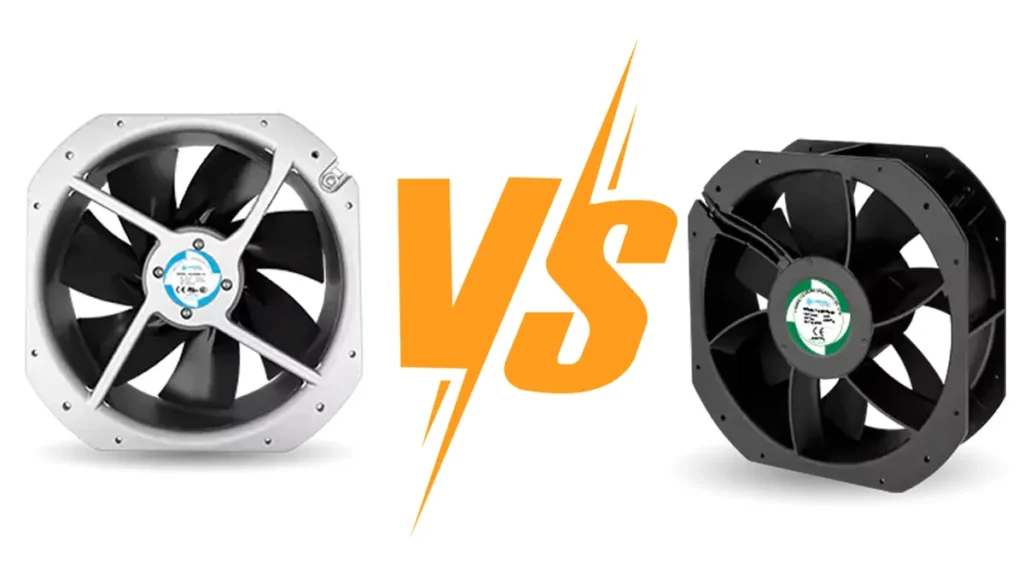
When comparing AC vs EC fans, you have a significant decision to make. Choosing the right fan can lead to cost savings, enhance the performance of your equipment, and improve the overall ambiance of your workplace. Refer to the table below to understand the key factors:
| Factor | Why It Matters |
|---|---|
| Energy Efficiency | Allows you to reduce expenses by utilizing energy more effectively. |
| Durability | Prevents frequent breakdowns, ensuring reliable operation even under challenging conditions. |
| Noise | Influences the comfort and safety of workers. Quieter fans make a substantial difference. |
| Cost | While price is a consideration, it’s crucial to factor in long-term savings on repairs and maintenance. |
It’s important not to focus solely on the initial cost. The right fan can significantly enhance the efficiency of your entire business.
Key Takeaways
- AC fans work well and do not cost much. They can run all the time in hard places.
- EC fans use less energy. They can save up to 70% power compared to AC fans.
- Pick AC fans if you need simple and steady airflow. They work best in dusty or wet places.
- EC fans can change their speed on their own. They do not need extra parts to do this.
- Think about noise: EC fans are quieter. This makes them good for quiet work areas.
- Look at long-term costs: EC fans may cost more at first. But they save money on energy and fixing later.
- Always pick the fan that fits your job best. This helps the fan work well.
- Talk to experts to help you choose the right fan for cooling.
AC and EC Fans Overview
When you walk into a factory, cooling is very important. The right fan keeps machines safe and workers comfortable. Let’s look at how ac and ec fans are different, so you can choose the best one.
What Is an AC Fan?
AC Motor Basics
AC fans use alternating current to make their motors work. You can see these fans in many factories and warehouses. The motor turns the blades. This pulls in cool air and pushes out warm air. This helps keep the temperature steady and stops machines from getting too hot.
- AC fans always run at the same speed because of the power supply.
- They are made to work all the time, even in tough places.
- The design is simple, so you don’t need to worry about tricky controls.
Industrial Uses for AC Fans
You will find ac fans where steady airflow is needed. They work well in electrical boxes, control panels, and big machines. These fans move air over hot parts and carry heat away. This helps your equipment last longer. If you need a fan that works well in hard places, ac fans are a good pick.
Tip: AC fans are strong and reliable, so they are great for places with lots of dust or water.
What Is an EC Fan?
EC Motor Technology
EC means electronically commutated. EC fans use a special motor with electronic controls and permanent magnets. This lets you change the fan speed easily and saves energy.
Here’s a quick look at how ec fans work compared to ac fans:
| Core Operating Principles of EC Fans | Differences from Traditional AC Fans |
|---|---|
| Electronic controls and permanent magnet motors work together | Traditional AC fans use asynchronous motors |
| Power is used well and commutation is electronic | Speed is set by the power grid |
| Speed can be changed easily and output stays steady | Need extra devices to change speed |
| High efficiency even when not at full power | Lower efficiency and more energy loss when not at full power |
- EC fans have brushless motors, so they are quieter and last longer.
- You can change the speed with a simple signal, which is good for systems that need different airflow.
- EC fans use less energy, especially when you don’t need them to run at full speed.
Industrial Uses for EC Fans
You will see ec fans in new HVAC systems, data centers, and telecom gear. These fans are best when you want to save power and do less maintenance. They are also quieter, which is nice if you care about noise. If you want a fan that can change to fit your needs and lower your energy bill, ec fans are a smart choice.
Note: EC fans last longer and need less fixing because they have brushless motors.
AC vs EC Fans: Key Differences
When you compare ac vs ec fans, you’ll notice some key differences that can really impact your industrial cooling setup. Let’s break down what sets them apart, starting with how their motors work, how much energy they use, and how you can control their speed.
Motor Technology
You might wonder what makes the motors inside ac and ec fans so different. Here’s a quick look:
- AC motors have a simple design. They use either a single-phase or three-phase power supply. These motors run at a fixed speed, so you get steady performance, but you can’t easily change how fast they spin.
- EC motors use modern technology. They have permanent magnets and built-in electronic controls. This setup lets them change speed and adapt to what your system needs. EC motors are more precise and flexible than traditional ac motors.
If you want a fan that just runs and runs, ac motors are tough and reliable. But if you need something that can adjust on the fly, ec motors give you that flexibility.
Energy Efficiency
Energy efficiency performance is a big deal in any industrial setting. You want to keep energy consumption low and operational efficiency high. Here’s how ac vs ec fans stack up:
| Fan Type | Efficiency Level |
|---|---|
| AC Fans | Lower (15%-50%) |
| EC Fans | High (75%-90%) |
- AC fans usually have efficiency levels between 15% and 50%. They use more power to do the same job.
- EC fans reach efficiency ratings from 75% to 90%. That means they waste less energy and save you money.
You’ll see even bigger savings with ec fans when you don’t need them running at full speed. In fact, ec fans can cut energy consumption by 20% to 50% compared to ac fans, especially when you use them in systems that don’t always need maximum airflow. This boost in operational efficiency comes from their smart electronic controls and permanent magnet motors.
Speed Control
Speed control is another area where you’ll spot clear key differences between ac and ec fans.
- AC fans need extra equipment like frequency inverters or voltage controllers if you want to change their speed. These add to your costs and can waste energy. Sometimes, people use mechanical dampers, but those just block airflow and don’t really save power.
- EC fans make speed control easy. They have built-in electronic controls, so you can adjust their speed with a simple 0–10V signal or even a PWM signal. Some ec fans can connect to smart building systems using protocols like Modbus or BACnet. This means you can change the fan speed whenever you want, without extra gadgets.
Let’s say you run an HVAC system that needs different airflow at different times. EC fans let you dial in the exact speed you need, right from your control panel. AC fans just can’t match that level of control without extra parts.
Tip: If you want to save energy and have more control, ec fans are the way to go for most modern industrial cooling setups.
Noise Levels
Noise can make a big difference in your workspace. When you compare ac vs ec fans, you will notice that ac fans often make more noise. This happens because ac fans use motors that create both aerodynamic and electromagnetic sounds, especially when they run fast. You might hear a loud hum or even a whine from these fans.
Now, let’s talk about ec fans. These fans use brushless motors and smart controls. The brushless design means there is less friction, so you hear less noise. EC fans also use special technology to control speed and reduce high-frequency sounds. Some ec fans can be 5 to 15 decibels quieter than ac fans, even when both move the same amount of air. That is a big difference if you want a peaceful work area or need to protect your hearing.
If you work in a place where noise matters, like a lab or a control room, ec fans are a better choice. You will notice the quiet right away.
Airflow & Static Pressure
Airflow and static pressure are important when you pick a fan for cooling. Airflow tells you how much air the fan can move. Static pressure shows how well the fan can push air through filters, vents, or tight spaces.
AC fans usually give you steady airflow at a fixed speed. They work well in open spaces where you do not need to change the airflow often. If you need to move air through a long duct or past a filter, ac fans can do the job, but you cannot adjust them easily.
EC fans give you more control. You can change the speed to get the exact airflow you need. This helps you save energy and match the fan to your system. EC fans also keep their airflow steady, even if the pressure changes. This makes them great for places where you need precise cooling, like data centers or clean rooms.
If you want a fan that can handle different jobs and save on energy consumption, ec fans are the way to go. You get both strong airflow and smart control.
Durability & Service Life
You want your fans to last a long time, especially in tough industrial settings. When you look at ac vs ec fans, you will see some big differences in how long they last.
AC fans are known for their simple design. They can handle dust, moisture, and rough conditions. Many people use ac fans in places that are not air-conditioned or have lots of moisture. You can count on them to keep working, but they do not last as long as ec fans.
EC fans use advanced technology and brushless motors. This means there are fewer parts that wear out. EC fans can run for 40,000 to 60,000 hours. AC fans usually last between 15,000 and 25,000 hours. That is a big gap.
| Fan Type | Average Service Life (Hours) |
|---|---|
| EC Fans | 40,000 – 60,000 |
| AC Fans | 15,000 – 25,000 |
If you want a fan that needs less fixing and lasts longer, ec fans are a smart pick. You will spend less time and money on repairs. But if you need a fan for a wet or dusty spot, ac fans are still a strong choice.
Maintenance Needs
When you look at maintenance, you want a fan that keeps running with little effort. AC fans and EC fans have different needs here. AC fans use simple motors with more moving parts. These parts can wear out faster, so you need to check and service them more often. You might have to replace bearings or clean out dust and debris. This can mean more downtime for your equipment.
EC fans use advanced motors with fewer parts that touch each other. The design helps them last longer and need less attention. You spend less time fixing or checking these fans. This is great if you want to keep your system running without a lot of stops.
Here’s a quick comparison:
| Fan Type | Maintenance Frequency | Design Characteristics |
|---|---|---|
| AC Fans | More frequent | Simpler construction, mechanical components prone to wear |
| EC Fans | Less frequent | Electronically commutated motors, designed for efficiency and longevity |
If you want to cut down on maintenance and keep your cooling system running smoothly, EC fans are a smart choice. AC fans still work well, but you will need to check them more often.
Control Compatibility
You might wonder how easy it is to control these fans. AC fans usually run at one speed unless you add extra devices. If you want to change the speed, you need special controllers or inverters. These can be tricky to set up and may not give you smooth control.
EC fans make things much easier. They work with digital controllers that let you adjust the speed with a simple signal. Some EC fans connect to smart building systems. You can set the fan to speed up or slow down based on temperature or other needs. This helps you save energy and keep your system just right.
Here are some things you should know about EC fan control:
- You can use digital EC fan controllers made for EC systems, like the G.A.S Digital EC Fan Controller.
- EC fans use electronically commutated motors for precise digital speed control.
- These controllers do not work with traditional AC fans.
- EC fan systems offer ultra-quiet operation and better energy efficiency.
- The controller can adjust fan speed based on the environment, giving you intelligent climate management.
If you want easy, smart control, EC fans give you more options. AC fans are simple, but you get less flexibility.
Application Suitability
Choosing between ac vs ec fans depends on where you plan to use them. Each type fits different jobs best.
- AC fans work well for continuous operation. They are reliable and cost less up front. You often see them in industrial ventilation, HVAC systems, agricultural equipment, and transportation. If you have a tight budget or just need basic cooling, AC fans are a practical pick.
- EC fans shine when you want to save on energy consumption and need smart control. They fit best in air handling units, refrigeration equipment, and fresh air systems. If your project needs high efficiency or runs for long hours, EC fans are the better choice. They help you cut costs over time and give you more control.
Tip: If you want a fan for a simple, tough job, go with AC. If you want to lower your bills and get more control, EC is the way to go.
AC vs EC Fans Comparison Table
Feature Comparison Table
You might feel overwhelmed by all the technical talk about AC and EC fans. Sometimes, you just want to see the facts side by side. That’s where a comparison table helps. You can spot the differences at a glance and decide which fan fits your needs.
Here’s a handy table that breaks down the most important features:
| Feature | AC Motor (Induction) | EC Motor (Electronically Commutated) |
|---|---|---|
| Efficiency | 70–85% | 80–90%+ |
| Partial Load Eff. | Drops a lot | Stays high |
| Initial Cost | Lower | Higher |
| Energy Consumption | Higher | Lower |
| Control Complexity | Simple | More advanced |
| Speed Control | Needs extra device | Built-in |
| Long-Term Cost | Higher | Lower |
Tip: If you want to save money on your energy bill, EC fans usually win. They use less power and keep their efficiency even when you don’t need full speed.
Let’s break down what this means for you:
- Efficiency: EC fans squeeze more work out of every watt. You get more cooling for less electricity. AC fans do a good job, but they can’t match the top numbers of EC fans.
- Partial Load Efficiency: Many systems don’t run at full blast all day. EC fans keep their efficiency high, even when you slow them down. AC fans lose a lot of efficiency at lower speeds.
- Initial Cost: You’ll pay less up front for an AC fan. If your budget is tight, this might matter. But remember, the story doesn’t end there.
- Energy Consumption: EC fans use less energy over time. You’ll notice the savings on your utility bills, especially if your fans run all day.
- Control Complexity: AC fans are simple. You plug them in, and they run. EC fans have more advanced controls, but that means you can fine-tune them for your system.
- Speed Control: Want to change the speed? AC fans need extra gear, like a variable frequency drive (VFD). EC fans let you adjust speed right out of the box.
- Long-Term Cost: Even though EC fans cost more at first, they save you money in the long run. Lower energy use and less maintenance mean fewer headaches.
If you want a fan that’s easy to set up and tough in harsh places, AC fans are a solid pick. If you want to cut costs and have more control, EC fans are the smart choice.
Take a moment to think about what matters most for your project. This table gives you a clear starting point.
Application Scenarios & Recommendations
Application Table
You may ask which fan is best for your job. The table below helps you choose. It shows common cooling needs and the right fan type. This makes picking easier for your setup.
| Application Scenario | Recommended Fan Type | Why It Works |
|---|---|---|
| Electrical Enclosures | Axial Fan, AC Fan | Simple, reliable airflow for electronics |
| HVAC Systems | Centrifugal Fan, EC Fan | Handles pressure, saves energy |
| Telecom/Data Centers | EC Fan, Axial Fan | Quiet, energy-efficient, precise control |
| Machinery Cooling | AC Fan, Axial Fan | Tough, steady airflow in harsh conditions |
| Filtration/Boilers | Centrifugal Fan | Moves air through filters and tight spaces |
| Medical Equipment | EC Fan | Low noise, high efficiency, long service life |
| Portable/Special Needs | Specialized Fan | Fits unique or mobile cooling requirements |
Tip: EC fans are best for saving energy in telecom or data centers. AC fans work well in places with dust or moisture.
Typical Industrial Uses
Fans are used in many places in industry. Each fan type has its own strong points. Here are some places you might use each fan:
- Axial fans are good for server racks and electronics. They move air straight through and keep devices cool. They do not take up much space.
- Centrifugal fans are great for HVAC systems and filtration. They push air through filters and ducts. They are perfect for heating, cooling, and cleaning air.
- EC fans help save power. You find them in telecom rooms, data centers, and medical gear. They run quietly and let you control speed easily.
- AC fans are used for tough jobs in machinery and electrical boxes. They keep working even when the air is dusty or damp.
- Specialized or portable fans are good for cooling spots that move or have special needs.
Here is a quick list to help you remember:
- Use axial fans for electronics and server racks.
- Pick centrifugal fans for HVAC, filtration, and boilers.
- Choose EC fans for data centers, telecom, and medical equipment.
- Go with AC fans for machinery and harsh environments.
- Try specialized fans for unique or portable cooling jobs.
Remember: The right fan keeps your equipment safe. It lowers your energy bills and makes your workplace comfortable. Look at your needs closely before you choose.
When to Choose AC Fans
Best Uses for AC Fans
You might wonder when ac fans are the right choice for your cooling needs. These fans work best in places where you want simple, steady airflow and tough performance. If you have a factory, workshop, or any area with lots of dust or moisture, ac fans can handle the challenge. They keep running even when the environment gets rough.
Here are some situations where you should pick ac fans:
- You need a fan that fits into a tight space or a specific spot.
- Your equipment needs steady airflow to stay cool.
- You want a fan that matches your building’s voltage and power setup.
- You care about keeping noise low for your team’s comfort.
- You need a fan that can push air through filters or long ducts.
Take a look at this table to see the main things you should check before choosing ac fans:
| Factor | Description |
|---|---|
| Airflow (CFM) | Matches ventilation with cooling needs for various uses for industrial fans. |
| Static Pressure | Handles resistance in ductwork or filters. |
| Noise Level (dBA) | Supports silent operation and enhanced employee comfort. |
| Voltage Requirements | Ensures compatibility with industrial power sources. |
| Size and Form Factor | Fits design constraints and tight spaces. |
Tip: If you want a fan that just works, even in tough spots, ac fans are a solid pick.
Advantages of AC Fans
You get several benefits when you choose ac fans for your industrial cooling. These fans stand out for their cost, durability, and simple design. You can count on them to keep your equipment cool without a lot of fuss.
Here’s a quick look at what makes ac fans a smart choice:
| Advantage | Description |
|---|---|
| Cost | AC fans are generally more affordable to purchase and install. |
| Simplicity | Their uncomplicated engine design contributes to easier maintenance. |
| Durability | AC motors are robust and can handle varying loads without significant wear. |
- You save money up front because ac fans cost less than many other options.
- The simple design means you spend less time fixing or maintaining them.
- These fans last a long time, even if you use them every day in a busy factory.
Note: AC fans give you peace of mind. You can set them up and trust them to keep working, year after year.
If you want a cooling solution that is easy to install, reliable, and budget-friendly, ac fans are a great fit for your industrial space.
When to Choose EC Fans
Best Uses for EC Fans
You might wonder when ec fans make the most sense for your cooling needs. These fans shine in places where you want smart control, energy savings, and quiet operation. If you run a data center, a telecom room, or a clean lab, you need fans that can adjust to changing demands. Ec fans do this job well.
Let’s look at the main criteria you should check before picking ec fans for your industrial setup:
| Criteria | Description |
|---|---|
| Airflow requirement (CFM) | Figure out how much heat your equipment makes. Use the formula: CFM = (3.16 × Watts) / ΔT°F. |
| Static pressure | Check if your system has filters or long ducts. High resistance means you may need a centrifugal fan. |
| Environment rating | For dusty or wet areas, pick fans with IP54 or higher. For cleanrooms, look for UL-certified parts. |
| Voltage and power supply | Match the fan’s voltage to your system. You can find options like 12V DC, 24V DC, 48V DC, or 115V/230V AC. |
| Noise level (dBA) | If you need a quiet workspace, choose low-noise fans with backward-curved blades or ec motors. |
Tip: Ec fans work best in places where you want to save energy, keep noise low, and control airflow with precision.
Advantages of EC Fans
You get many benefits when you choose ec fans for your industrial cooling. These fans help you cut costs, reduce noise, and give you more control over your system.
- You can save up to 70% on power compared to old-style AC fans. This means lower bills and less wasted energy.
- Ec fans let you change the speed easily. They adjust to what your system needs in real time. You don’t have to run them at full blast all the time.
- These fans run much quieter. The special motor design keeps noise down, which is great for offices, labs, or anywhere you want a peaceful environment.
- You get more flexibility. Ec fans can match many different voltages and fit into lots of setups.
- Small changes in speed can lead to big energy savings. Even slowing the fan a little can cut power use a lot.
- Ec fans keep your airflow steady, even if your system changes. This helps protect your equipment and keeps everything running smoothly.
Note: If you want a fan that saves energy, runs quietly, and gives you smart control, ec fans are a top choice for modern industry.
AC Fan Price vs EC Fan Price
Initial Cost
When you look at the price tag, AC fans usually seem like the better deal. You pay less up front. Most AC fans cost about 15% less than EC fans. If you have a tight budget, this can look very appealing.
Here’s a quick table to show the difference:
| Factor | AC Motor | EC Motor |
|---|---|---|
| Initial Cost | Lower | Higher |
You might think, “Why pay more for an EC fan?” The answer comes down to what happens after you buy the fan. While AC fans are cheaper at first, EC fans give you savings over time. They use less energy and last longer. So, the higher price at the start can pay off in the long run.
Note: If you only look at the initial cost, you might miss out on big savings later.
Operating Cost
Let’s talk about what you spend to keep your fans running. This is where EC fans really shine. They use advanced motors that waste less power. You can save 30% to 50% on electricity every year compared to AC fans. Sometimes, the savings go up to 70%!
Here’s a table to help you compare:
| Fan Type | Energy Savings | Maintenance Needs | Overall Operating Costs |
|---|---|---|---|
| AC Fans | Baseline | Higher | Higher |
| EC Fans | 30-50% savings | Lower | Lower |
You also spend less time and money fixing EC fans. They run cooler, so they break down less often. That means fewer repairs and replacements. Over a few years, these savings can add up fast.
- EC fans can cut your power bills by 40-60% under the same airflow.
- You will need less maintenance with EC fans.
- AC fans cost more to run and fix over time.
Tip: If you want to lower your energy bills and reduce downtime, EC fans are a smart choice.
ROI Analysis
You might wonder, “How long before I get my money back if I buy EC fans?” The answer is pretty quick. Most people see a return on investment in about 2.5 to 4.5 years. After that, the savings keep coming.
Think about it like this: You pay a bit more at the start, but you save money every month. Over time, those savings can be much bigger than the extra you paid at first.
- You get your money back in 2.5 to 4.5 years.
- After that, you keep saving on energy and repairs.
If you want a fan that pays you back, EC fans are the way to go. You spend less in the long run and get better performance for your business.
Common Selection Mistakes
Price-Only Decisions
You might think picking the cheapest fan saves money. In reality, this can cost you more in the long run. Many people make the mistake of looking only at the price tag. They forget about what the fan actually needs to do.
Here are some common problems when you choose based only on price:
- You might pick the wrong fan type. This can mess up your cooling system and lead to expensive fixes.
- If you choose a fan just because it fits the space, you might not get enough airflow or pressure.
- Ignoring static pressure can make your fan work poorly, especially in tight or complex systems.
- Not thinking about how air moves through your system can lower cooling efficiency.
Tip: Always look at the job your fan needs to do, not just the price. A cheap fan that does not work well will cost you more in repairs and lost time.
Ignoring Airflow/Pressure
Airflow and static pressure are two things you cannot ignore. If you do, your cooling system might not work right. You need to know how much air your system needs and how hard it is to push that air through.
Problems can pop up if you overlook these:
- Dirty or tight filters block airflow.
- Ductwork that is too small or has sharp bends slows air down.
- Vents that are closed or blocked stop air from moving.
- Not enough return air paths can make the system struggle.
When static pressure gets too high, your fan has to work harder. This means it uses more energy and can break down faster. You might see higher power bills and more repairs. If you keep static pressure low and pick the right fan, you can cut energy costs by up to 40%. Your system will also last longer and need less fixing.
If you want your fans to last and your system to run smoothly, always check airflow and static pressure before you buy.
Overlooking Control Needs
You may not think about how you will control your fan. This is a big mistake. Some fans run at one speed. Others let you change the speed to match what you need.
If you skip this step, you might end up with a fan that cannot adjust when your system changes. You could waste energy or not get enough cooling when you need it most. Modern EC fans offer easy speed control and can connect to smart systems. AC fans need extra parts for this.
Remember: Think about how you want to control your fans. The right controls can save energy, cut noise, and make your system work better.
Not Considering Environment
When you pick a fan, you might focus on price, airflow, or noise but forget one big thing: the environment where the fan will work. This is a common mistake that can cause problems later. Fans face different conditions in factories, data centers, or outdoor spaces. If you don’t think about these conditions, your fan might fail early or not work well.
Here are some key environment factors you should always check before buying a fan:
- Dust and Dirt: Some places have lots of dust or dirt in the air. Fans in these spots need to handle particles without clogging or breaking down. AC fans often do better here because they are tough and simple.
- Moisture and Humidity: Wet or humid environments can damage fan motors and parts. You want fans with good protection ratings like IP54 or higher. EC fans usually have sealed motors that resist moisture better, but AC fans can be more durable in very damp places.
- Temperature Extremes: If your fan runs in very hot or cold areas, it needs to handle those temperatures without overheating or freezing. Check the fan’s temperature rating to avoid surprises.
- Chemical Exposure: Some industrial sites have chemicals or fumes that can corrode fan parts. You might need fans with special coatings or materials to survive these harsh conditions.
- Vibration and Shock: Machines or vehicles can shake or bump fans. Fans designed for these environments have stronger mounts and parts to avoid damage.
Tip: Always match your fan to the environment. A fan that works great in a clean, dry room might fail fast in a dusty or wet factory. Taking time to understand your site’s conditions saves you money and headaches.
Ignoring the environment can lead to frequent breakdowns, higher maintenance costs, and even safety risks. For example, a fan without proper moisture protection might short circuit. Or a fan not built for dust might clog and stop working. These issues slow down your operations and cost you more in repairs.
You can avoid these problems by asking yourself a few questions:
- Where will the fan be installed? Indoors or outdoors?
- Is the air clean or full of dust and particles?
- Does the area get wet or humid?
- Are there chemicals or fumes nearby?
- Will the fan face vibration or shocks?
Answering these helps you pick the right fan type and features. You might choose an AC fan with a rugged design for a dusty warehouse. Or an EC fan with sealed motors for a clean, climate-controlled data center.
Remember, the environment shapes how your fan performs and lasts. Don’t skip this step when choosing your industrial cooling fan. It’s one of the smartest moves you can make to keep your system running smoothly.
Buyer Information Checklist
Choosing the right fan for your industrial setup can feel overwhelming. You want to make sure you get the best fit for your needs. Here’s a checklist to help you focus on the most important things before you buy.
Key Selection Parameters
Size, Voltage, Airflow
Start with the basics. You need to know the size of the fan that fits your space. Measure the spot where you plan to install the fan. Check the voltage your system uses. Some fans run on 12V, 24V, or 48V DC, while others use 115V or 230V AC. Make sure the fan matches your power supply.
Airflow matters, too. Think about how much air you need to move. If you have a lot of heat, you’ll want a fan with higher airflow. You can use this simple formula to estimate:CFM = (3.16 × Watts) / ΔT°F
This helps you figure out the right size for your cooling needs.
Static Pressure, Installation
Static pressure tells you how well a fan can push air through filters, ducts, or tight spaces. If your system has lots of bends or filters, pick a fan that handles higher static pressure. Centrifugal fans work well here.
Think about installation. Will you mount the fan on a wall, in a cabinet, or inside a machine? Make sure the fan’s shape and mounting style fit your setup.
Temperature, Noise, Control
Check the temperature where the fan will run. Some fans work better in hot or cold spots. If your area gets very warm or cold, pick a fan rated for those conditions.
Noise can be a big deal. If you want a quiet workspace, look for fans with low noise ratings. EC fans and some DC fans are quieter than traditional AC fans.
Control is another key point. Do you need to adjust the fan speed? EC fans let you change speed easily. This helps you save energy and match airflow to your needs.
Application, Protection, Quantity
Match the fan to your application. Here’s a quick table to help you decide:
| Industry/Application | Recommended Fan Type | Key Requirements |
|---|---|---|
| Control Cabinets | DC/EC Axial Fan | Low noise, precise speed control |
| Telecom Equipment | EC Axial Fan | Energy efficiency, reliability |
| 3D Printers | DC Axial Fan | Compact size, stable airflow |
| Automation Systems | Centrifugal Fan | High static pressure, durability |
| EV Charging Stations | AC/EC Axial Fan | Long life, IP protection |
You also want to think about protection. If your fan will face dust, water, or chemicals, choose one with a high IP rating. This keeps your fan safe and running longer.
Don’t forget quantity. Figure out how many fans you need for your system. Sometimes, using several smaller fans works better than one big fan.
Tip: Always consider your local climate, indoor conditions, and safety needs. Plan for easy maintenance and pick a fan that matches your industry’s demands.
Here’s a quick checklist to guide you:
- Climate and site conditions
- Indoor humidity and temperature
- Maintenance needs
- Safety requirements
- Application match
- Size and location
- Temperature control
- Cooling fluid type
Take your time with these steps. You’ll end up with a fan that keeps your equipment cool, saves energy, and lasts for years.
Why LINKWELL for Industrial Fans
Product Range
You want choices when picking a fan for your business. LINKWELL gives you a wide range of options. You can find AC, EC, and DC fans. You can also pick between axial and centrifugal types. Each series fits different needs, from small cabinets to big data centers.
Here’s a quick look at what LINKWELL offers:
| Product Series | Voltage Options | Airflow Range | Noise Level | Applications |
|---|---|---|---|---|
| LKA Series AC | 100/125V AC, 200/240V AC | 50-5000 CFM | 50-70 dB | Cabinet cooling, commercial ventilation |
| LK Series DC | 5/12/24V DC | 20-800 CFM | 40-55 dB | Automation equipment, communication cabinets |
| LKE Series EC | 110/240V AC, 110/125V AC, 200/240V AC | 100-6000 CFM | 30-45 dB | Data centers, smart buildings |
You can see that LINKWELL covers almost every cooling job. You get fans that are quiet, powerful, and fit many voltage needs.
Custom Solutions
Sometimes, you need something special. LINKWELL can help you with custom fans for unique jobs. You might need a fan that fits a tight spot or one made from a special material. LINKWELL’s team can design and build what you need.
Here’s what you can ask for:
- Special size fans for non-standard spaces
- Fans made from stainless steel or corrosion-resistant materials
- Extra features like filters or heating functions
- Fans with certifications such as UL or TUV
You don’t have to figure it out alone. LINKWELL’s technical team has over 20 years of experience. They help you choose the right fan, design your cooling system, and guide you through installation. You get support for as long as you use the fan.
Need a fan for a tough job? LINKWELL can build it just for you.
Contact & Consultation
You might still have questions. That’s okay! LINKWELL makes it easy to get help. You can reach out for a free consultation. Just share your cooling needs or tell them about your project. The team will listen and suggest the best fan for you.
You get:
- Free selection advice
- Complete cooling system design
- Step-by-step installation help
- Lifelong technical support
Ready to find the perfect fan? Tell LINKWELL about your application. Their experts will help you pick the right solution for your business.
Conclusion
AC fans and EC fans both have their own advantages. AC fans are simple, durable, and cost-effective for many stable cooling applications, while EC fans offer higher efficiency, smarter speed control, and better long-term energy savings.
The right choice depends on your system requirements, including airflow, static pressure, energy use, noise level, control method, working environment, and budget. Instead of choosing only by initial price, it is better to match the fan type with the real operating conditions.
At LINKWELL, we manufacture AC fans, EC fans, DC cooling fans, axial fans, and centrifugal fans for industrial cooling applications. Share your fan size, voltage, airflow requirement, installation method, and application environment with us. Our team can help you choose a suitable cooling fan solution for your project.
FAQ
What is the main difference between AC and EC fans?
You will notice that AC fans use traditional motors with fixed speeds. EC fans use advanced motors with built-in electronics. This lets you control speed and save more energy.
Can I replace an AC fan with an EC fan easily?
Most of the time, you can swap them out. Just check the size, voltage, and mounting style. EC fans often fit where AC fans do, but always double-check before you buy.
Are EC fans always quieter than AC fans?
Usually, yes. EC fans use brushless motors and smart controls. This design cuts down on noise. You will hear less humming and buzzing in your workspace.
Do EC fans need special controllers?
You can control EC fans with simple signals like 0–10V or PWM. Some models connect to building management systems. You do not need extra inverters or complex gear.
Which fan type lasts longer in harsh environments?
AC fans handle dust and moisture better. They work well in tough spots like factories or outdoors. EC fans last longer in clean, climate-controlled places.
Will EC fans save me money in the long run?
Yes! EC fans use less power and need less maintenance. You will see lower energy bills and fewer repairs over time. The savings add up fast.
How do I know which fan is right for my application?
Start by checking your airflow needs, space, and environment. Think about noise, control, and energy use. If you are unsure, ask a fan expert for help.