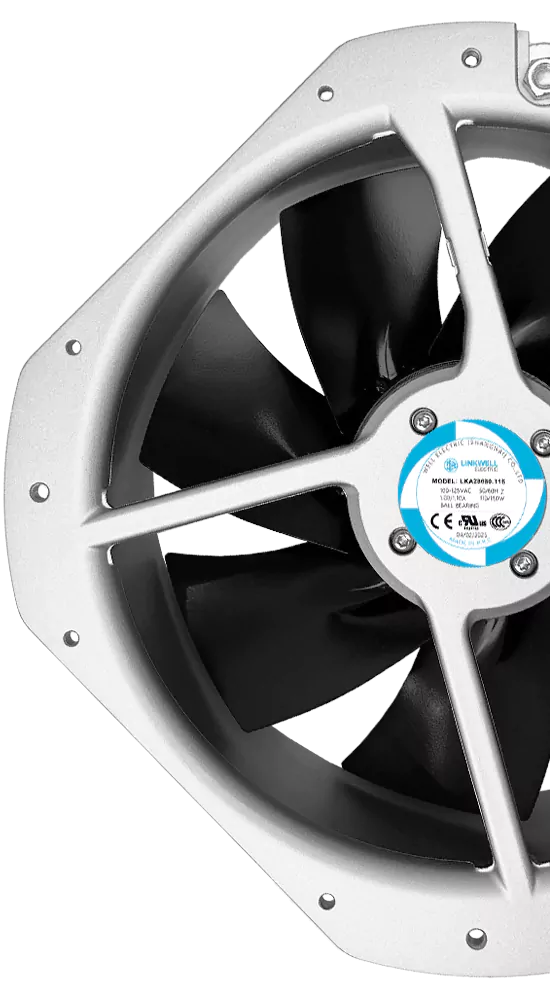
When deciding between EC Fans vs VFD Fans, it’s important to consider what features are most important to you. Are you looking for high efficiency, easy installation, or cost savings? Both EC Fans and VFD Fans offer unique advantages. EC Fans integrate the motor and electronics into a single unit, providing high efficiency, precise speed control, and quiet operation. On the other hand, VFD Fans utilize standard motors with external controls, making them ideal for larger systems. EC Fans can achieve up to 75% efficiency in modern installations, whereas AC fans typically range from 40% to 55% efficiency. Additionally, EC motors are energy-efficient even at lower speeds, allowing you to recoup your investment in as little as 12 months.
Key Takeaways
- EC fans have the motor and controls in one unit. They work very well and are quiet.
- VFD fans use normal motors with controls outside the fan. This makes them good for bigger systems.
- EC fans can be up to 75% efficient. VFD fans are usually between 40% and 55% efficient.
- Pick EC fans if you want to save energy and do less maintenance. They are good for things like HVAC and refrigeration.
- VFD fans are best for big jobs where you need to control many fans.
- EC fans are easier and faster to install. This is because they are small and have controls built in.
- Think about long-term costs. EC fans might cost more at first, but they save money on energy and fixing them later.
- Look at what you need, like how loud the fan is and how much space you have. This will help you pick the right fan for your job.
EC Fans and VFD Fans Overview
What Are EC Fans?
You may ask why EC fans are different. EC means electronically commutated motor. These fans have the motor and controls together in one small unit. The electronics help control the speed very well. This makes the fan use less energy. EC fans save power even when running slow. You can put them in new systems or older ones. They have fewer moving parts, so you do not fix them often. EC fans are quiet and work well for a long time.
What Are VFD Fans?
VFD fans use a normal AC motor with a variable frequency drive outside the fan. The VFD changes the speed by changing the power’s frequency. VFD fans are good for bigger systems. They work best when you need to control many fans at once. These fans are used with ducted upflow units. You might pick VFD fans if you want to upgrade old equipment. They need more care because they have belts and more parts.
Tip: EC fans have built-in controls. VFD fans need outside devices to change speed.
Here’s a simple table to show the main differences:
| Feature | EC Fans | VFD Fans |
|---|---|---|
| Energy Savings | More efficient, saving energy even at full load | Saves energy only below full speed |
| Cooling Unit Type | Better for downflow units | Suited for larger systems with ducted upflow |
| Maintenance | Lower maintenance due to no belts and integrated motors | Higher maintenance due to belts |
| Installation | Can be installed on existing or new units | Can also be installed on existing or new units |
| Payback | Longer-term savings, higher initial cost | Faster payback, better for short-term ROI |
Where Are These Fans Used?
EC fans and VFD fans are used in many places. EC fans are common in HVAC, refrigeration, and electronics. VFD fans are found in bigger systems like cars and factories. Studies show HVAC uses the most fans, with 38.7% of the market. Refrigeration and cars come next. Electronics use these fans to cool important parts.
| Industry/Application | Market Share (%) | Projected CAGR (%) | Market Value (2025) |
|---|---|---|---|
| HVAC | 38.7 | 7.8 | $1.86 billion |
| Refrigeration | 22.4 | 8.3 | N/A |
| Automotive | 17.6 | 10.2 | N/A |
| Electronics | 13.8 | N/A | N/A |
| Others | 7.5 | N/A | N/A |
You can see that EC fans are popular in HVAC and electronics because they save energy. VFD fans are best for big, central systems. If you want to use less energy and fix things less, EC fans are a good choice. If you need to control many fans in a big project, VFD fans may be better.
EC Fans vs VFD Fans: Key Differences
Motor and Control Structure
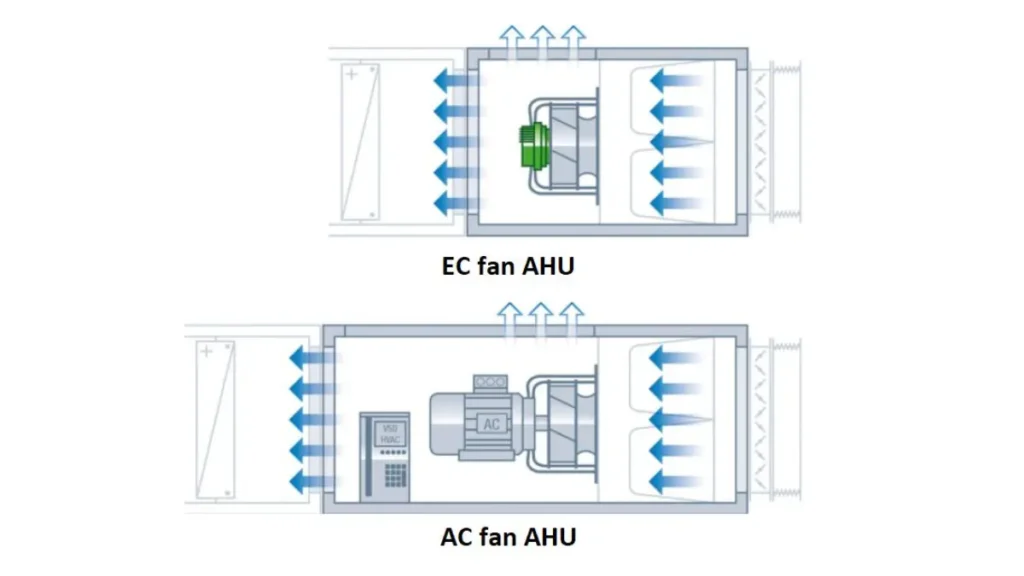
Let’s start with the basics. EC fans use an electronically commutated motor. This means the motor and the control system sit together in one compact unit. You get a fan that works smarter and uses less energy. VFD fans use a regular AC motor. The control system sits outside the fan and connects with wires. You need to manage the motor and the control separately. This setup works well for big cooling systems, especially in places like factories or large HVAC units.
If you look inside, EC fans have fewer moving parts. The motor and electronics work as a team. VFD fans have belts, pulleys, and more pieces. You might need to check these parts often. EC fans are simple and neat. VFD fans are flexible and can handle bigger jobs.
Built-in vs External Control
You might wonder why built-in control matters. EC fans have the control system inside the fan. This design lets you change the speed easily and get precise airflow. You save energy because the fan only works as hard as it needs to. The built-in control also helps the fan last longer. You don’t have to worry about extra wires or boxes.
VFD fans use external control. You need to set up the VFD outside the fan. This gives you more options for big systems, but you must manage the electrical and thermal conditions carefully. If the power quality changes or the environment gets tough, the VFD can struggle. This can affect reliability and efficiency. Choosing between built-in and external control can make a big difference in energy savings and how well your fans work.
Note: Built-in controls in EC fans make them easier to use and more reliable. External controls in VFD fans offer flexibility but need careful management.
Energy Efficiency
When you compare ec fans vs vfd fans, efficiency stands out. EC fans deliver high efficiency because the motor and control work together. You get more energy savings, especially when the fan runs at lower speeds. This means you spend less money on electricity and get a quieter fan.
VFD fans improve efficiency by letting you slow down the motor. You save energy when the fan doesn’t need to run full speed. However, VFD fans don’t match the efficiency of EC fans at low loads. EC fans shine in places where you want steady energy savings, like cooling electronics or HVAC systems.
Here’s a quick table to show how efficiency compares:
| Fan Type | Efficiency at Full Load | Efficiency at Low Load | Typical Applications |
|---|---|---|---|
| EC Fans | High | Very High | HVAC, electronics, refrigeration |
| VFD Fans | Moderate | Good | Large cooling systems, factories |
If you want a fan that saves energy and keeps costs low, EC fans are a smart choice. VFD fans work well for big projects where you need to control many fans at once.
Speed Control Range
When you look at ec fans vs vfd fans, you will notice a big difference in how they handle speed. EC fans use an electronically commutated motor, which lets you adjust the speed from as low as 10% all the way up to 100%. This wide range means you can fine-tune the airflow for your cooling or hvac needs. You get smooth, quiet operation and better energy savings, especially when you do not need full power.
VFD fans, on the other hand, usually work best between 30 and 60 Hz. If you try to run them much slower, the efficiency drops. You might hear more noise or feel more vibration at low speeds. This can make them less ideal for places where you want quiet or steady airflow.
Here’s a quick table to show the difference:
| Fan Type | Speed Control Range | Efficiency at Part-Load | Additional Notes |
|---|---|---|---|
| EC Fan | 10%-100% | 91-95% | Ideal for decentralized applications |
| VFD Fan | 30-60Hz | ~76% | Efficiency drops at low speeds |
- EC fans provide higher total system efficiency under part-load conditions.
- VFD fans experience significant efficiency loss at lower speeds.
If you want the best control and energy savings, EC fans are the clear winner for most applications.
Installation Complexity
Let’s talk about how easy it is to set up these fans. EC fans come as one compact unit. You just connect the power and the control wires, and you are ready to go. You do not need to worry about matching motors to drives or setting up extra boxes. This makes installation fast and simple, even if you are working in a tight space.
VFD fans need a bit more work. You have to install the fan, the motor, and the VFD controller separately. You also need to run extra wiring between the fan and the control box. Sometimes, you must add cooling for the VFD itself. This setup can take more time and may need a skilled technician.
Tip: If you want a plug-and-play solution, EC fans make your life easier. If you have a big system and need more flexibility, VFD fans might be worth the extra effort.
Cost Comparison
You might wonder which fan will cost you less in the long run. EC fans usually have a higher upfront price because of the built-in electronics and advanced motor. But you save money over time with lower energy bills and less maintenance. The efficiency and long life of EC fans often mean you get your money back faster, especially in places where fans run all day.
VFD fans can cost less at first, especially if you already have standard motors. But you need to buy the VFD controller and pay for extra installation work. Over time, the lower efficiency and higher maintenance can add up. If you only need fans for a short project or want to upgrade old equipment quickly, VFD fans might fit your budget better.
Here’s a simple way to compare:
- EC fans: Higher initial cost, lower operating cost, less maintenance, better for long-term savings.
- VFD fans: Lower initial cost (if reusing motors), higher operating cost, more maintenance, better for short-term or large-scale upgrades.
Think about how long you plan to use the fans and how important energy savings are for your application.
Maintenance and Reliability
You want your fans to work well and last long. EC fans have fewer moving parts. You do not need to worry about belts or pulleys. This means less fixing and longer use. EC fans help your cooling system stay reliable.
VFD fans need more care. You must check belts and pulleys often. If you use dampers, you have extra work. Dampers wear out and need fixing. In places with bad air, damper parts break faster. This causes more repairs and less reliability.
Here are some things you might face:
- Oversized fans waste energy and need dampers to slow airflow.
- Dampers add parts that wear out and need fixing.
- In tough places, damper parts break and cause problems.
If you want fewer repairs and less downtime, EC fans are a good choice. You get more working time and lower costs, especially in hvac and electronics cooling.
Noise and Vibration
Noise is important in labs and offices. EC fans are much quieter than vfd fans. The motor control keeps noise low. You hear less hum and feel less shaking. EC fans are great for places where quiet matters.
VFD fans can be loud when you change speeds. You may notice more shaking, which can hurt equipment. Traditional fans make more noise at high speeds.
Let’s look at the details:
- EC backward-curved fans are quieter because of motor control.
- EC fans run smoothly, so they are good for labs and offices.
- Traditional fans make more noise and shaking at high speeds.
- EC fans have special designs that cut down shaking.
- Less noise in EC fans means less shaking and longer equipment life.
If you need quiet and steady air, EC fans are best. You protect your equipment and enjoy a calm workspace.
Space and Integration
Space matters when you install or upgrade fans. EC fans are light and easy to move. You can fit them through doors and into small spaces. The plug-and-play design makes setup quick. You do not need cranes or big tools.
VFD fans take up more space. You may need special tools to move them. They need extra room for setup and access. If you want to upgrade, VFD fans can mean more work and longer downtime.
Here’s a table to compare:
| Consideration | EC Fans | VFD Fans |
|---|---|---|
| Installation Ease | Lightweight, easy to carry, plug-and-play | May need crane rigs or expensive rental equipment |
| Space Requirements | Fits through doors, works in tight spaces | Needs more space for installation and access |
| Retrofit Complexity | Quick install, less downtime | More disassembly, longer downtime |
You can install EC fans over a weekend when the building is empty. This means less downtime for your cooling system. The easy process lowers project costs and keeps energy savings high.
If you want easy setup, less space, and fast upgrades, EC fans are best. VFD fans work for big jobs but need more planning and space.
Efficiency and Energy Savings
EC Fans at Peak and Low Load
You want your cooling system to work hard when you need it and save power when you don’t. EC fans use an electronically commutated motor, which means you get high efficiency at any speed. When you run these fans at full power, they use less energy than old-style motors. When you slow them down, they save even more. You can set the speed to match the exact airflow you need. This helps you avoid wasting energy and keeps your equipment cool without extra cost. You also get quiet operation, which makes EC fans a favorite in offices, labs, and data centers.
VFD Fans in Large Systems
You might have a big building or factory that needs lots of air movement. VFD fans shine in these large systems. A VFD lets you control the speed of standard motors. You can match the fan speed to the real needs of your space. This means you don’t have to run everything at full blast all the time. You save energy and cut down on wear and tear. Motors often use the most electricity in industrial settings. If you use VFDs, you can lower your utility bills and make your equipment last longer. You also get better control over your system, which helps everything run smoother.
Tip: VFDs help you avoid wasted energy by letting you adjust the speed instead of running at full power all day.
Real-World Savings
Let’s look at what happens when you switch to EC or VFD fans in real life. Field research shows that adding VFDs to refrigeration systems can cut energy use by about 50%. That’s a big drop in your power bill. Some new motor types, like Q-Sync, use even less energy—sometimes 50% to 80% less than old motors. These numbers show that both EC and VFD fans can bring you real energy savings. You get lower costs, less maintenance, and a greener building. If you want to see the biggest impact, look for places where fans run all day or where you can slow them down during off-hours. That’s where the savings really add up.
Installation and Integration
EC Fans: Simplicity
You want your installation to go smoothly. EC fans make that possible. These units come with everything you need in one package. You get the electronically commutated motor, the controls, and the fan all together. You just connect power and set your airflow. There’s no need for extra boxes or complicated wiring. You can finish the job quickly, even if you have a tight schedule. Many people like how easy it is to fit these fans into new or old cooling systems. You save time and avoid mistakes. If you want less hassle, EC fans are a smart choice.
Tip: Plug-and-play design means you spend less time on setup and more time enjoying energy savings.
VFD Fans: Retrofit and Design
You might need to upgrade an older system. VFD fans can help you do that. These fans let you keep your existing setup but add new control. You can match the fan speed to what your building really needs. This helps you cut down on wasted energy and lower your bills. When you retrofit with VFDs, you may need to remove old fans and install new Fan Wall Array modules. You also have to connect electrical and control parts in the field. Sometimes, you need to invest in extra cabling, protection, and ways to handle harmonics. If you don’t plan well, you could run into voltage stress or other issues. Skilled workers make a big difference here. They help you pick the right VFD and get the best performance. When you size your fans correctly, you avoid wasting power and get better airflow.
Here’s what you should keep in mind when retrofitting with VFDs:
- Remove old fans before installing new modules.
- Connect all electrical and control components carefully.
- Plan for extra cabling and protection.
- Watch out for harmonics and voltage stress.
- Make sure you have skilled people for setup and tuning.
- Adjust fan size to match your real cooling needs.
Space and Wiring
Space can be tight in many buildings. EC fans help you here, too. They are compact and light. You can carry them through doors and fit them into small rooms. The wiring is simple because everything is built in. You don’t need to run lots of cables or find space for big control boxes.
VFD fans take up more room. You need space for the fan, the motor, and the VFD controller. You may have to add extra wiring and protection. This can make the job longer and more complex. If your building has limited space, think about how much room you need for all the parts.
Here’s a quick table to compare:
| Feature | EC Fans | VFD Fans |
|---|---|---|
| Size | Compact | Larger, more parts |
| Wiring | Simple | More complex |
| Installation Time | Short | Longer |
If you want a fast, easy install, EC fans are your best bet. If you need to upgrade a big system and have space, VFD fans can work well.
Maintenance and Reliability
EC Fans: Fewer Components
You want a cooling system that works well and is easy to care for. EC fans help with this. The electronically commutated motor has fewer parts inside. There are no brushes to change. The design is small and simple. You save money and time because you do not need to fix belts. EC-fan arrays use less energy, so you spend less over time. Sealed bearings mean you almost never need to do maintenance. Serrated fan blades help the fan work better and need less fixing. Here are reasons why EC fans need less repair:
- No brushes to change
- No belts to fix or replace
- Sealed bearings mean almost no maintenance
- Small and simple design
- Serrated blades help performance
You can do your job without worrying about fixing fans.
VFD Fans: Maintenance Needs
VFD fans need more care. You must check them often to keep them working. If you skip checks, they can break early. Many people think vfd units do not need care, but that causes trouble. Dust, heat, and old parts can make the fan stop working. You need to look for problems and change parts before they break. Here is a usual maintenance plan for VFD fans:
| Frequency | Maintenance Task | Tools Needed |
|---|---|---|
| Monthly | Look for dust, damage, warning lights | Flashlight, eyes |
| Quarterly | Clean or change panel air filters, check operation | Replacement filters |
| Semi Annual | Scan power connections for heat | IR camera |
| Annually | Tighten terminals, test motor and cables | Torque wrench, megger |
| Every 3-5 Years | Change cooling fans, check capacitors | Replacement parts |
| Every 7-10 Years | Check capacitor health, maybe replace | ESR meter or OEM service |
If you work in a tough place, fans can break in three to five years. You need regular checks to stop costly downtime. Checking often helps you find fan bearing problems and keeps your system safe.
- Fans break more in hard places without good care
- VFD fans break more if you skip regular checks
- Old parts and dirt cause breakdowns
Reliability in Industry
You want your fans to last and keep your business running. EC fans are good because their simple design means fewer breaks. You do not need to worry about belts, brushes, or fixing often. The sealed bearings and smart blades keep things working well. You get steady work and lower costs.
VFD fans can work well if you follow the maintenance plan. If you skip care, they can break early and cost more to fix. In factories and big buildings, you must plan for checks and changing parts. When you keep up with care, VFD fans can work well. If you want less trouble and more working time, EC fans are the best for most jobs.
Cost and ROI
Initial Cost
You probably want to know how much you will spend at the start. EC fans usually cost more up front. The price is higher because you get advanced technology and an electronically commutated motor. VFD fans have a lower initial cost. You can use standard motors, which saves money at first. If you look at commercial HVAC projects, most people see EC fans as the expensive option. AC fans and VFD fans seem cheaper when you buy them.
Here’s a quick table to show the difference:
| Fan Type | Initial Cost |
|---|---|
| EC Fans | Higher |
| VFD Fans | Lower |
You pay more for EC fans at the beginning. You pay less for VFD fans. But the story does not end there.
- EC fans generally have a higher initial cost compared to VFD fans.
- EC fans offer lower total lifecycle costs due to energy savings.
- AC fans usually have a lower initial price.
- EC fans often provide better total cost of ownership in long-hour, variable-load systems.
Control System Cost
You also need to think about the cost of the control system. EC fans come with controls built in. You do not need to buy extra boxes or wiring. This makes the control system cost lower. VFD fans need an external controller. You must pay for the VFD unit and extra wiring. This adds to your total cost.
Here’s a table to help you compare:
| Cost Category | EC Backward Curved Fan | Traditional Fan (Induction Motor Driven) |
|---|---|---|
| Control System Costs | Integrated (lower) | External (higher) |
If you want a simple setup, EC fans save you money on controls. VFD fans cost more because you need extra parts.
Operating Cost and ROI
Now let’s talk about what happens after you install the fans. EC fans use less energy because the electronically commutated motor works efficiently. You see lower power bills every month. You also spend less on maintenance. EC fans do not have belts or pulleys, so you do not fix them often. Over time, these savings add up.
VFD fans use more energy, especially at low speeds. You need to check belts and pulleys often. Maintenance costs can go up. If you run your system for many hours, EC fans give you a better ROI. You get your money back faster because you save on energy and repairs.
If you want to save money in the long run, EC fans are a smart choice. You pay more at first, but you get lower bills and fewer headaches. VFD fans work well if you need a quick upgrade or have a tight budget. You spend less at the start, but you may pay more over time.
Tip: Think about how long you will use your fans. If you want the best ROI, look at energy savings and maintenance costs, not just the price tag.
Cost Comparison Table
You want to know how the costs compare. A table makes it easy to see the differences. When you check the main costs for cooling fans, you can spot what is different right away. This table shows how an electronically commutated motor in an EC fan matches up with a traditional fan that uses a VFD.
| Cost Category | EC Backward-Curved Fan | Traditional Fan (Induction Motor Driven) |
|---|---|---|
| Initial Purchase | High | Low to Moderate |
| Installation & Commissioning | Moderate | Moderate |
| Energy Consumption | Lowest | High |
| Control System Costs | Integrated (lower) | External (higher) |
| Maintenance | Low | Moderate to High |
| Downtime & Service Interruptions | Low | Higher |
| Total 10-Year Cost | Competitive / Lower | Higher |
| Return on Investment (ROI) | Good | Moderate |
Let’s look at the details:
- Initial Purchase: EC fans cost more when you buy them. The electronically commutated motor and built-in controls make the price higher. Traditional fans with a VFD are cheaper at first, but you need to buy the controller and extra wires.
- Energy Consumption: EC fans use the least energy. You save money on your power bill over time. Traditional fans use more energy, especially if they run all day.
- Maintenance and Downtime: EC fans do not need much fixing. You spend less time and money on repairs. Traditional fans need more care, so you might have more downtime.
- Total 10-Year Cost: EC fans cost more at first, but you pay less over ten years. Using less energy and fixing less saves you money.
- ROI: You get your money back faster with EC fans if you use them a lot or need different speeds.
Tip: If you want to spend less in the long run and have fewer problems, EC fans are a smart choice. If you need something fast or have a small budget, traditional fans with a VFD could work for you.
This table helps you compare your choices easily. Think about how long you will use your fans and how much energy savings matter for your project.
Application Suitability
Application Table: EC vs VFD Fans
You might wonder which fan works best for your project. Let’s look at a table that shows where each type shines. This will help you see the strengths of each option at a glance.
| Application Type | EC Fans Advantages | VFD Fans Advantages |
|---|---|---|
| Air-conditioned/Refrigerated | Higher energy savings at partial speeds. | N/A |
| Ventilation Systems | Efficient for fractional horsepower and intermittent operation. | N/A |
| Air Handling Units | Provides uniform temperature distribution and reduced utility bills. | N/A |
If you need high energy savings or want to keep your bills low, you will like what EC fans offer. They work well in air-conditioned rooms, cold storage, and places where you want steady airflow. VFD fans do not show special advantages in these areas, but they can still help in large, central systems.
Compatibility with Existing Systems
You may ask, “Will these fans fit my current setup?” Good news—both types can work in many systems, but there are some differences. Here’s a table to make it clear:
| Feature | EC Fans | VFD Fans |
|---|---|---|
| Controller | Built into motor housing | External device required |
| Speed Control | 0–10V / PWM built-in | Requires additional wiring |
| Frame Size | Matches standard AC sizes | May require modifications |
| Energy Efficiency | Up to 50% savings vs AC | Varies, typically less efficient |
| Installation Complexity | Direct drop-in, no rewiring | More complex installation |
You can swap out old fans for EC fans without much trouble. The electronically commutated motor fits in the same space as your old AC fan. You do not need to rewire or add new boxes. VFD fans may need more work. You might have to change the wiring or add an external controller. This can take more time and skill.
Tip: If you want a quick upgrade, EC fans make the job easy. If you have a big system and need more control, VFD fans can still work, but plan for extra steps.
Best Use Cases
Let’s talk about where each fan does its best work. You want to pick the right tool for the job.
- Choose EC fans for offices, data centers, supermarkets, and any place where you want quiet, steady air, and low energy bills. They are also great for new buildings or when you want to save space.
- Pick VFD fans for large factories, warehouses, or when you need to control many fans from one place. They help when you want to upgrade old, big systems without changing everything.
You now have a clear idea of which fan fits your needs. Think about your space, your budget, and how much energy you want to save. The right choice will keep your air moving and your costs down.
When to Choose EC Fans
Compact, Efficient, Quiet Needs
You want a fan that saves space and is quiet. EC fans are small, so they fit in tight places. This helps if you have a small server room or crowded rack. You can move and install them easily. EC fans do not make much noise. The electronically commutated motor controls speed smoothly. You will not hear loud sounds or feel strong shaking. This keeps your workspace calm and protects your equipment. EC fans also use less power at any speed. You can change the airflow to match what you need. This means you do not waste energy. If you want a hard-working, quiet fan, EC fans are a great choice.
Tip: Pick EC fans if you need quiet and energy savings in a small or sensitive area.
HVAC, AHU, Telecom, New Energy
You may ask where EC fans work best. They are great for modern HVAC systems, air handling units, telecom shelters, and new energy projects. These places need steady airflow, low noise, and high efficiency.
- HVAC: EC fans help keep buildings comfy and lower energy bills. They adjust to changes and keep air moving well.
- AHU (Air Handling Units): EC fans give steady airflow and are easy to control. Building managers like them for this reason.
- Telecom: EC fans protect electronics from getting too hot. They run quietly and control airflow well.
- New Energy: EC fans are good for green projects. They use less power and fit in small spaces.
Here’s a quick table to help you choose:
| Application | Why Choose EC Fans? |
|---|---|
| HVAC | High efficiency, quiet, easy control |
| AHU | Reliable, compact, low maintenance |
| Telecom | Quiet, protects electronics |
| New Energy | Energy-saving, fits tight spaces |
If you want a fan that is efficient and quiet, EC fans are a smart pick. They are also good if you care about green technology and saving energy.
When to Choose VFD Fans
Large Motors, Central Control
You might have a big building or a factory. Sometimes, you need to move a lot of air. Large motors help you do this. If you want to control many fans from one place, a variable frequency drive is your best friend. You can set the speed for all fans at once. This makes your system easy to manage. You get more control over the airflow. You can change the speed when you need more cooling or less noise.
Here’s a quick list of reasons to pick vfd fans for large motors and central control:
- You run big air handling units.
- You want to control many fans from one panel.
- You need to match airflow to changing needs.
- You want to save energy in a large space.
Note: Central control helps you keep your building comfortable and saves money on your power bill.
A table can help you see why vfd fans work well for big jobs:
| Feature | VFD Fans Benefit |
|---|---|
| Motor Size | Handles large motors |
| Control | Centralized management |
| Airflow Adjustment | Easy speed changes |
| Energy Savings | Good for big systems |
You get flexibility and power. You can make changes fast. If you have a big team or a busy building, vfd fans make your life easier.
Retrofit Projects
You may want to upgrade your old cooling system. Retrofit projects let you keep your current setup but add new controls. If you already have standard motors, you can add a variable frequency drive. You do not need to buy new fans. This saves money and time. You can improve efficiency without changing everything.
Here’s how vfd fans help with retrofit projects:
- You keep your old motors and fans.
- You add a variable frequency drive for speed control.
- You get better energy savings.
- You avoid long downtime.
Tip: Retrofit projects are great when you want to upgrade but do not want to stop your business.
A retrofit with vfd fans gives you more control. You can adjust the speed to match your needs. You can fix problems without replacing the whole system. If you want to save money and keep your business running, vfd fans are a smart choice.
You might compare ec fans vs vfd fans for your project. If you need a compact, quiet fan with an electronically commutated motor, EC fans are best. If you want to control large motors or upgrade old systems, vfd fans are the way to go.
You now know when to choose vfd fans. You get power, control, and easy upgrades. You can make your cooling system work better without spending too much.
Common Mistakes to Avoid
Treating VFD Fans as Separate Products
You might think VFD fans are a single product, but that’s not true. VFD fans are actually a combination of a standard motor and an external controller. If you treat them as one unit, you can miss important details. You need to match the motor and the drive carefully. If you don’t, you could end up with poor performance or even damage. Always check the compatibility between the motor and the VFD. Make sure you understand how the control system works. If you skip this step, you might waste energy or get less cooling than you expect.
Tip: Always look at the whole system, not just the fan or the drive. This helps you avoid mistakes and keeps your cooling running smoothly.
Ignoring Total System Cost
Many people focus only on the price tag when choosing fans. You might see a lower upfront cost and think it’s the best deal. But there’s more to the story. You need to look at the total system cost, including installation, energy use, maintenance, and downtime. If you ignore these costs, you could spend more in the long run. EC fans often cost more at first, but they save money on energy and repairs. VFD fans may seem cheaper, but extra parts and maintenance can add up. Always compare the total cost over several years, not just the first day.
Here’s a quick list of what to include in your cost check:
- Installation fees
- Energy bills
- Maintenance and repairs
- Downtime and lost productivity
Note: Thinking about the total system cost helps you make smarter choices and avoid surprises later.
Overlooking Airflow and Space
You need to pay attention to airflow and space when picking fans. If you ignore airflow needs, your system might not cool properly. You could waste energy or even damage your equipment. Always check the airflow and static pressure requirements for your space. If you don’t, your system could run inefficiently and cost more to operate.
Space matters, too. EC fans are compact and easy to fit in tight spots. VFD fans need more room for the motor and controller. If you don’t plan for space, you might struggle during installation. Make sure you measure your area and check how much room you need for wiring and access.
Here’s what many people forget:
- Overlooking control needs can lead to wasted energy and poor cooling.
- Not considering the environment can cause fan failure and higher maintenance costs.
- Ignoring airflow and static pressure can result in inefficiency and higher bills.
Tip: Always check airflow, space, and control needs before you buy. This keeps your system efficient and reliable.
Not Checking Environment
You might think any fan will work in your space, but the environment can make a huge difference. If you skip checking the conditions where you plan to install your fans, you could run into big problems later. Every building and workspace has its own challenges. Some places get very hot or cold. Others have lots of dust, moisture, or even chemicals in the air. These things can affect how well your fans work and how long they last.
Let’s look at what you should check before you choose a fan:
- Temperature: Does your space get really hot or cold? Some fans can’t handle extreme temperatures. If you pick the wrong one, it might stop working when you need it most.
- Humidity: High moisture can cause rust or electrical problems. Make sure your fan is rated for damp or wet locations if needed.
- Dust and Debris: Factories, workshops, and construction sites often have a lot of dust. Dust can clog up the motor or block airflow. You may need a fan with special filters or a sealed design.
- Chemicals or Corrosive Air: Some places, like labs or chemical plants, have harsh air. Regular fans might break down fast in these spots. Look for fans made with special coatings or materials.
Tip: Always read the fan’s specs and see if it matches your environment. If you’re not sure, ask the supplier for advice.
Here’s a quick table to help you remember what to check:
| Environment Factor | What to Look For | Why It Matters |
|---|---|---|
| Temperature | Operating temp range | Prevents overheating/freezing |
| Humidity | Moisture resistance | Stops rust and shorts |
| Dust/Debris | Sealed motor or filters | Keeps airflow strong |
| Chemicals | Corrosion-resistant materials | Longer fan life |
If you ignore these things, you might end up with fans that break down early or don’t work right. You could face more repairs, higher costs, or even safety risks. Checking your environment first helps you pick the right fan and keeps your system running smoothly.
Note: The right fan for an office might not work in a factory or a greenhouse. Always match the fan to your space.
How to Choose the Right Fans
Key Selection Criteria
Choosing the right fans for your project can feel tricky, but you can make it simple by focusing on what matters most. Start by thinking about how much air you need to move. If you want high efficiency when loads change, EC fans work well. For steady ventilation, VFD fans do the job. Next, look at energy savings. EC fans give you more savings and let you control speed with precision. VFD fans also help you save energy, but they shine when you need to control speed in big systems.
Noise is another thing to consider. EC fans usually run quieter, which is great for offices or places where people work. VFD fans can get louder, especially when you change speeds. Think about where you will use the fans. EC fans fit best in refrigeration, semiconductor cooling, or anywhere you need quiet and efficiency. VFD fans are better for factories or places that run all day and need strong, steady airflow.
Here’s a table to help you compare:
| Selection Criteria | EC Fans | VFD Fans |
|---|---|---|
| Airflow | High efficiency under dynamic loads | Steady ventilation |
| Energy Efficiency | Greater savings and precision | Variable speed control |
| Application Suitability | Refrigeration, semiconductor cooling | Continuous-duty industrial applications |
| Noise Level | Generally quieter | Varies based on speed control |
| Performance Specs | Meets fan performance requirements | Stable airflow at low pressure |
Tip: Always match your choice to your real needs. Think about where you will use the fans and what matters most—energy, noise, or control.
Decision Checklist
You want to feel confident in your choice. Use this checklist to make sure you pick the right fans for your space:
- What is your main goal? (Energy savings, quiet operation, or strong airflow)
- Where will you install the fans? (Office, factory, data center, or cold storage)
- How much space do you have for installation?
- Do you need built-in controls or will you use an external controller?
- How important is low maintenance to you?
- Will you need to adjust speed often, or do you want steady airflow?
- What is your budget for both purchase and long-term use?
- Are there any special needs, like high humidity or dust?
Note: If you answer these questions before you buy, you will avoid surprises and get the best results.
Take your time with each step. The right choice will keep your system running smoothly and help you save money over time.
Buyer Information Needed
When you want to choose the right cooling solution, you need to gather some key details. Having the right information helps you get the best performance and value. Here’s what you should know before you talk to a supplier or place an order.
Fan Type, Size, Voltage
Start by knowing what type of fan you need. Do you want an EC fan or a VFD-controlled fan? Each type works best in different situations. Think about the size. Measure the space where you plan to install the fan. Write down the diameter and depth. This helps you avoid buying a fan that is too big or too small.
Next, check your voltage. Look at your building’s power supply. Most commercial fans run on 110V, 220V, or 380V. Some places use single-phase power, while others use three-phase. If you are not sure, ask your electrician. Getting the voltage right keeps your system safe and running well.
Tip: Take a photo of your current setup. This makes it easier to explain your needs to a supplier.
Airflow, Pressure, Control
You need to know how much air you want to move. This is called airflow and is measured in cubic feet per minute (CFM) or cubic meters per hour (m³/h). Write down the airflow you need for your space. You also need to know the pressure, which is measured in inches of water gauge (inWG) or Pascals (Pa). Pressure tells you how hard the fan must work to push air through filters, ducts, or vents.
Think about control. Do you want to change the speed often? Some fans let you adjust speed with a knob, switch, or remote. Others work at one speed all the time. If you want to save energy, look for fans with variable speed control.
Here’s a quick checklist:
- Airflow needed (CFM or m³/h)
- Pressure required (inWG or Pa)
- Speed control (manual, automatic, remote)
Environment, Special Needs
Your environment matters a lot. Is your space hot, cold, dusty, or damp? Some fans work better in tough places. If you have chemicals in the air, you may need a fan with special coatings. If your area is very quiet, pick a fan that runs with low noise.
List any special needs. Maybe you want a fan that fits in a small spot. Maybe you need extra safety features. Tell your supplier about these needs. This helps you get a fan that lasts longer and works better.
Note: The more details you share, the easier it is to find the perfect solution for your project.
Conclusion
You’ve seen how EC fans and VFD fans each offer unique benefits. Your best choice depends on what matters most—efficiency, installation, and budget. Check the tables and checklist to help you decide. If you still feel unsure, reach out to LINKWELL for expert advice. You’ll get support to pick the right solution for your project.
FAQ
What is the main difference between EC fans and VFD fans?
You get built-in controls with EC fans. VFD fans use an external controller. EC fans work quietly and save more energy. VFD fans fit better in large systems.
Can I replace my old fans with EC fans easily?
Yes, you can swap out old fans for EC fans. The compact design makes installation simple. You do not need to change much wiring or add extra boxes.
Are EC fans more expensive than VFD fans?
You pay more upfront for EC fans. Over time, you save money on energy and maintenance. VFD fans cost less at first but may need more repairs.
Which fan is quieter for office spaces?
EC fans run quietly. You hear less noise and feel less vibration. They work well in offices, labs, and places where silence matters.
Do I need special skills to install VFD fans?
You need skilled workers to install VFD fans. The setup involves extra wiring and connecting the controller. Planning helps avoid mistakes.
How often should I maintain my fans?
You check EC fans less often. They have fewer parts. VFD fans need regular checks for belts and controllers. Keeping up with maintenance prevents breakdowns.
Can I control the speed of both types of fans?
Yes, you can adjust the speed for both types. EC fans let you change speed easily with built-in controls. VFD fans use an external controller for speed changes.
Which fan saves more energy in the long run?
EC fans save more energy, especially at low speeds. You see lower power bills and fewer repairs. VFD fans help in big systems but use more energy at low speeds.