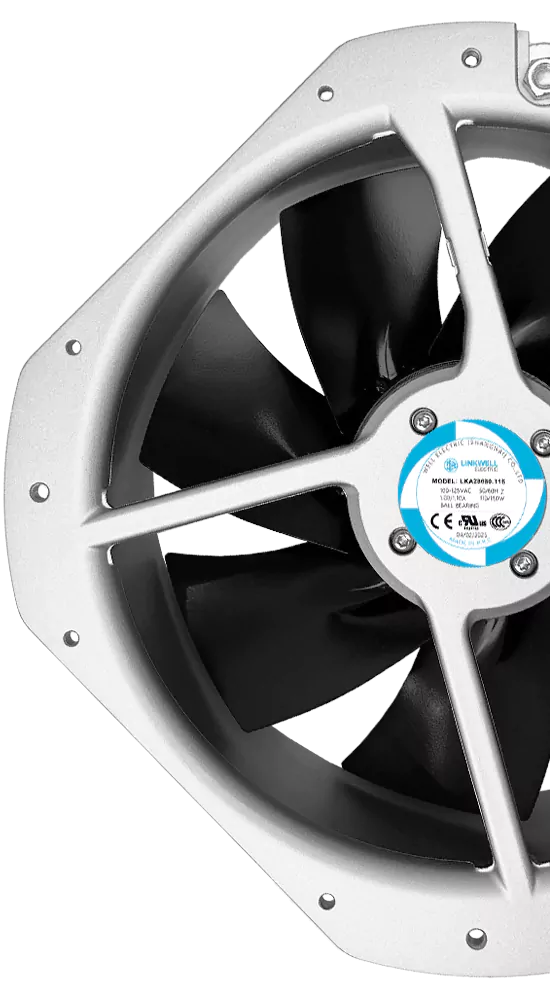
If you want to choose the right fan, you must know the main differences between AC and DC axial fans. AC fans usually cost less at first. They work well in bigger systems. DC fans use less power. They let you control speed more easily. Here is a quick comparison:
| Factor | AC Fans | DC Fans |
|---|---|---|
| Energy Efficiency | Usually not as efficient | More efficient with energy |
| Noise Levels | Can be louder | Runs more quietly |
| Speed Control | Not much speed control | Lets you control speed exactly |
| Cost | Costs less at first | Costs more at first, saves money later |
You should pick your ac dc axial fan based on what you need. Think about efficiency, noise, cost, or how long it will last.
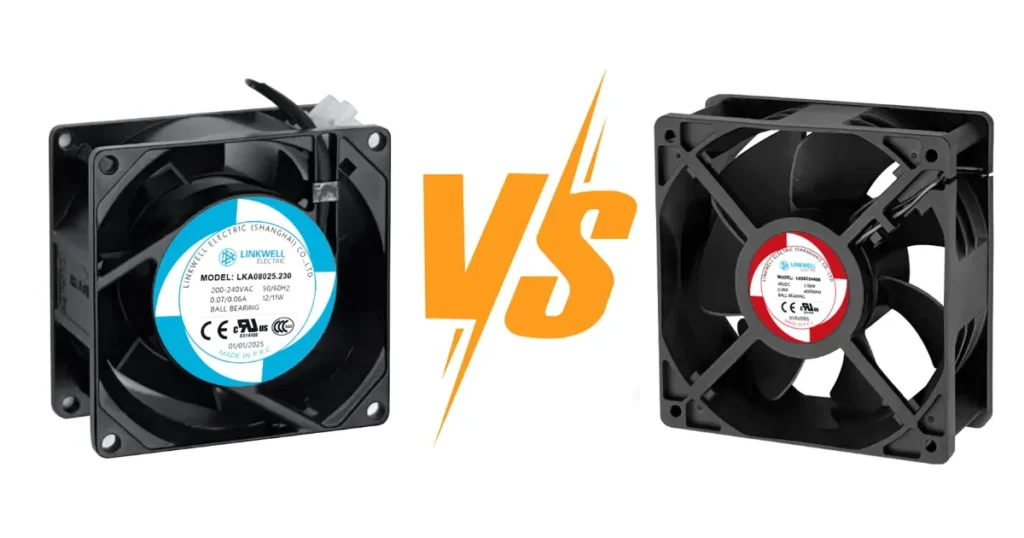
Key Takeaways
- AC axial fans cost less at first but can make your energy bills go up later.
- DC axial fans use less energy, so you save money on power over time.
- DC fans let you control the speed better, so you can change the airflow for what you need.
- AC fans can be louder, so they are not good for quiet places like bedrooms or offices.
- DC fans are usually quieter, so they are great for places where you want less noise.
- Think about where you will use the fan: AC fans are good for big systems, but DC fans work best in small devices and electronics.
- DC fans are easier to take care of because their brushless motors last longer and do not need much work.
- Pick the fan type that fits your needs, like how much air you want, how loud it is, and where you will put it.
What Are Axial Fans
Axial Fan Basics
You might see axial fans almost everywhere, but you may not know what they are. Axial fans are a special kind of fan that moves air in a straight line, right along the axis of the motor. You can picture the blades spinning and pushing air forward, just like how a propeller works on an airplane. These fans play a big role in keeping spaces cool and comfortable. You will find them in many places because they can move a lot of air quickly and efficiently. Axial fans help keep air flowing, which is important for both comfort and safety.
Axial fans are the backbone of many ventilation and cooling systems. They move large volumes of air with great efficiency, making them a smart choice when you need to keep things cool or fresh.
How They Work
Let’s break down how axial fans do their job. When you turn on an axial fan, the blades start spinning. The shape of the blades helps pull air in from one side and push it out the other. The air travels in the same direction as the motor’s axis. This design lets the fan move air in a straight path, which is perfect for spaces that need lots of airflow. You don’t need to worry about complicated mechanics. The fan simply rotates, and the air moves right along with it. This makes axial fans very effective for jobs where you need to move air fast and without much fuss.
Common Uses
Axial fans show up in all sorts of places. You might spot them in your home, at school, or even in big factories. Here’s a quick look at where you’ll find these fans working hard:
| Industry/Application | Description |
|---|---|
| HVAC Systems | Moves air through ducts for better temperature control. |
| Power Plants | Keeps equipment cool and safe by moving air efficiently. |
| Industrial Ventilation | Clears out heat, smoke, and dust to make workplaces safer. |
| Agricultural Ventilation | Brings in fresh air and controls humidity in farms and greenhouses. |
| Cooling Systems | Helps cool down commercial air conditioning units. |
| Home Ventilation | Removes moisture, odors, and pollutants from bathrooms and kitchens. |
| Computing Systems | Stops computers and servers from overheating by keeping air moving. |
You can see that axial fans are everywhere. They help keep air fresh, remove unwanted smells, and protect equipment from getting too hot. If you need to move a lot of air, axial fans are usually the best tool for the job.
AC Axial Fans Overview
How AC Axial Fans Work
You might wonder how ac axial fans actually move air. These fans use a central hub with blades attached. When you turn on the fan, the motor spins the hub. The blades rotate and create a pressure difference. This pulls air in from the back and pushes it out the front, right along the axis. The air flows straight through the fan, not around it. This design lets ac axial fans move large amounts of air quickly and efficiently. The speed and angle of the blades can change how much air moves. If you increase the speed or make the blades steeper, you get more airflow. Sometimes, this also means more noise and higher energy use. Ac axial fans work best when you need steady, strong airflow.
AC Axial Fans Features
Power Source
Ac axial fans run on alternating current. You plug them into a standard outlet or connect them to a system with the right voltage. Most ac axial fans work with common voltages like 110V, 220V, or even higher for industrial uses. You don’t need special adapters. Just make sure the voltage matches the fan’s rating. This makes ac axial fans easy to use in many places.
Speed Control
You usually get simple speed control with ac axial fans. Some models let you pick between high and low settings. Others run at a fixed speed. If you want more control, you might need extra equipment. The voltage affects how fast the fan spins, but most ac axial fans stick to one speed unless you add a controller.
Size and Weight
Ac axial fans come in many sizes. You can find small fans for home use or huge ones for factories. Sizes range from 25mm up to 250mm. The weight depends on the size and materials. Larger fans are heavier and need sturdy mounting. Smaller fans are light and easy to install. You can pick the right size for your space.
Noise Level
Ac axial fans usually operate quietly. The design helps keep noise low, so you can use them in places where you don’t want loud sounds. If you run the fan at higher voltage or speed, it might get louder. Still, most ac axial fans make less noise than other types.
Maintenance
You don’t have to worry much about maintenance with ac axial fans. They use ball or sleeve bearings that can last up to 50,000 hours. You just need to check for dust and clean the blades sometimes. The simple design means fewer parts to break. This makes ac axial fans reliable and easy to care for.
AC Axial Fans Pros
- Long lifespan—up to 50,000 hours.
- Low maintenance needs.
- Cost-effective, with a lower initial price.
- Reliable performance in tough environments.
- Easy to use with standard voltage sources.
- Quiet operation for comfort.
If you want a fan that lasts, saves money, and works with regular voltage, ac axial fans are a smart choice. You can trust them to keep your space cool and safe.
AC Axial Fans Cons
While ac axial fans offer many benefits, you should know about their downsides before making a choice. Every fan type has its weak spots, and ac axial fans are no exception. Here are some of the main drawbacks you might face:
- Noise Levels: Ac axial fans can get pretty loud, especially when you run them at higher speeds. If you need a fan for a quiet space like a bedroom, office, or library, the noise might bother you. The sound comes from the motor and the fast-moving blades. In some cases, the noise can even distract you from your work or sleep.
- Limited Speed Control: Most ac axial fans do not give you much control over how fast they spin. You usually get just one or two speed settings. If you want to fine-tune the airflow or reduce the noise, you might feel stuck. Some models let you add a separate speed controller, but that means extra cost and effort.
- Higher Energy Use: Ac axial fans often use more electricity than other types, like dc fans. If you run several fans at once or keep them on all day, your energy bill can go up. This can be a problem in places where you want to save power or lower your costs.
- Susceptibility to Dirt and Debris: These fans tend to collect dust, dirt, and even small bits of debris on the blades and inside the housing. Over time, this buildup can slow down the fan and make it less effective. You will need to clean ac axial fans regularly to keep them working well. If you skip this step, the fan might wear out faster or even break down.
- Size and Weight: Ac axial fans can be bigger and heavier than other options. If you have a small space or need a lightweight fan, this could be a problem. Larger fans also need stronger mounts and more room for installation.
- Not Ideal for Sensitive Equipment: Because of their higher noise and vibration, ac axial fans might not suit delicate electronics or places where you need very steady airflow. If you work with sensitive gear, you may want to look at other fan types.
Tip: If you want a fan for a quiet or clean space, or if you need to save energy, you might want to think twice before choosing ac axial fans. Always match the fan to your needs and the environment where you plan to use it.
When you weigh the pros and cons, you get a clearer picture of whether ac axial fans fit your project. Think about where you want to use the fan, how much noise you can handle, and how much time you want to spend on maintenance. This way, you can make a smart choice and avoid surprises down the road.
DC Axial Fans Overview
How DC Axial Fans Work
You might wonder how dc axial fans do their job. These fans use direct current, which means they get power from a steady source like a battery or a DC power supply. When you turn on a dc axial fan, the motor spins the blades. The blades pull air in from one side and push it out the other, just like a propeller. The air moves in a straight line along the axis of the fan. This simple design helps dc axial fans move air quickly and efficiently.
Let’s look at how dc axial fans compare to ac axial fans:
| Feature | AC Axial Fans | DC Axial Fans |
|---|---|---|
| Power Consumption | Generally higher | More efficient, lower consumption |
| Efficiency | Reliable and efficient | More powerful and efficient |
| Application Suitability | Wide range of applications | More suitable for demanding environments |
| Operating Principle | Blades rotate to create airflow | Similar principle but with different power source and efficiency characteristics |
You can see that dc axial fans stand out because they use less power and work better in tough situations.
DC Axial Fans Features
Power Source
Dc axial fans run on direct current. You can connect them to batteries, adapters, or DC power supplies. This makes them perfect for places where you need backup power or where AC power is not available. Many small devices and electronics use dc axial fans because they fit right in with other DC-powered parts.
Speed Control
One thing you will love about dc axial fans is the speed control. You can adjust the speed easily. Some fans let you change the speed with a simple dial or a control wire. Others use smart features like thermostats. The fan can speed up when things get hot and slow down when it cools off. This helps save energy and keeps your equipment safe.
Tip: If you want to fine-tune airflow or reduce noise, dc axial fans give you more control than most AC fans.
Size and Weight
Dc axial fans come in many sizes, but they are usually smaller and lighter than AC fans. You can fit them into tight spaces or mount them inside small devices. Their lightweight design means you do not have to worry about adding too much bulk. This makes installation quick and easy.
Noise Level
If you need a quiet fan, dc axial fans are a great choice. The motors in these fans make less noise than AC motors. You can use them in places where silence matters, like medical equipment, offices, or bedrooms. The quiet operation comes from the way the motor works and the smooth speed control.
Maintenance
You do not have to spend much time on maintenance with dc axial fans. Many models use ball bearings, which last a long time and work well even in tough spots. Some use sleeve bearings for quieter, low-speed jobs. Just keep the fan clean, and it will keep running for years.
DC Axial Fans Pros
Here are some reasons why you might pick dc axial fans for your project:
- High energy efficiency, which means lower power bills.
- Quiet operation, perfect for noise-sensitive areas.
- Flexible speed control for precise airflow.
- Lightweight and compact, so you can install them almost anywhere.
- Long lifespan with advanced bearing options.
- Easy to use with batteries or DC power supplies.
- Great for demanding environments and sensitive electronics.
Dc axial fans help you save energy, reduce noise, and fit your cooling needs in many different ways. If you want a fan that works hard and lasts long, dc axial fans are a smart pick.
DC Axial Fans Cons
While dc axial fans offer many benefits, you should know about some drawbacks before you decide to use them. Every fan type has a few weak spots, and dc axial fans are no different. Let’s look at the main cons you might face when you choose dc axial fans for your project.
- Higher Upfront Cost
You will notice that dc axial fans usually cost more at the start. If you compare them to AC fans, the price tag can seem high. This can make you think twice, especially if you need to buy a lot of fans for a big project. The good news is that dc axial fans save energy, so you might get your money back over time. Still, the first payment can be a hurdle for some people. - Power Conversion Needed
Dc axial fans run on direct current. Most homes and buildings use alternating current (AC) for their main power. This means you often need a special adapter or power supply to use dc axial fans. Setting up this extra equipment can take more time and money. If you do not have the right power source, you might find installation tricky. This step can also make things more complicated if you want to replace an old AC fan with a dc axial fan. - Installation Can Be More Complex
When you use dc axial fans, you may need to think about wiring and power supplies. Sometimes, you have to add a converter or change your setup. This can be tough if you do not have much experience with electrical work. You might need to call in a professional, which adds to your costs. - Compatibility Issues
Not every system works well with dc axial fans. Some older machines or setups only support AC fans. If you want to upgrade, you might run into problems fitting dc axial fans into your current system. You may need to check your equipment before you buy. - Limited Availability in Larger Sizes
Dc axial fans come in many sizes, but you might have trouble finding very large models. If you need a fan for a big industrial job, you could find more options with AC fans. Dc axial fans work best in smaller devices or places where you need quiet and efficient cooling.
Note: Dc axial fans can help you save energy and reduce noise, but you should plan for the higher upfront cost and possible installation challenges. Always check your power source and system needs before you buy.
Dc axial fans give you great control, quiet operation, and energy savings. However, you need to weigh these benefits against the extra cost and setup steps. If you want a simple, plug-and-play solution, dc axial fans might not be the best fit. But if you care about long-term savings and have the right setup, dc axial fans can be a smart choice.
AC DC Axial Fan Comparison
Power Source
When you look at the power source & voltage for ac dc axial fan options, you will notice a big difference. AC axial fans run straight from an AC power outlet. You just plug them in, and they work. These fans use an induction motor, which is tough and reliable. But you cannot change the speed much because the fan depends on the power grid’s frequency.
DC axial fans work differently. They use direct current, like what you get from a battery or a special DC power supply. Inside, they have a permanent magnet rotor and electronic controls. This setup lets you adjust the speed easily and makes the fan more energy efficient. If you need a fan for a place where you want to control airflow or save power, a DC fan is a better fit.
Tip: If you want simple setup, go with AC. If you want more control and efficiency, DC is the way to go.
Energy Efficiency
Energy efficiency is a big deal when you pick an ac dc axial fan. You want a fan that keeps things cool but does not waste power. Here’s a quick look at how each type stacks up:
| Fan Type | Efficiency Rating |
|---|---|
| AC Fans | Peak efficiency at one speed, drops at other speeds |
| DC Fans | High efficiency across many speeds (often 85-90%) |
Let’s break it down even more:
- An AC fan with a 2 kW rating running for 4,000 hours a year uses about 11,764 kWh.
- A DC fan with the same power rating uses only 9,091 kWh in the same time.
- That means you could save about 2,673 kWh every year. Depending on your local rates, that’s $300–$500 off your energy bill.
DC fans win when it comes to energy savings. They use less power and work well at different speeds. If you care about noise & efficiency, DC fans are the smart choice.
Cost
Cost is always something you think about before buying an ac dc axial fan. AC fans usually cost less when you buy them. They have a simple design and do not need fancy electronics. If you want to save money right now, AC fans are a good pick.
But DC fans tell a different story. They cost more at first because they have advanced electronic controls. However, they use much less power. Over time, you will see your energy bills drop. DC fans can cut your power use by up to 70% compared to AC fans that run at a fixed speed. This means you might spend more at the start, but you save money in the long run.
Here’s a quick summary:
- AC fans: Cheaper to buy, higher energy bills later.
- DC fans: More expensive to buy, but lower energy bills and bigger savings over time.
Note: If you plan to use your fan a lot, a DC fan can pay for itself with the money you save on electricity.
Speed Control
You want to control how fast your fan spins. This matters when you need more airflow or want to save energy. AC axial fans make speed control tricky. You usually need extra equipment like frequency inverters or voltage controllers. These add cost and can waste energy. Sometimes, people use mechanical dampers with AC fans. Dampers block airflow, but they do not help you save power. You end up paying more and getting less flexibility.
DC axial fans make speed control easy. You can adjust the speed with a simple dial or a signal. Many DC fans use a 0–10V or PWM signal. This lets you fine-tune the airflow without extra gadgets. You can connect DC fans to smart systems and change the speed whenever you want. This saves energy and keeps your space comfortable.
Here’s a quick list to show the difference:
- AC fans need extra devices for speed control. This means more money and less efficiency.
- DC fans let you change speed easily. You get better performance and save energy.
- Mechanical dampers with AC fans only block air. They do not help with energy savings.
- DC fans work well with smart controls. You can set the speed to match your needs.
If you want simple and flexible speed control, DC axial fans are the best choice.
Size & Weight
Size and weight matter when you install a fan. You want a fan that fits your space and does not add too much bulk. AC axial fans come in many sizes. You can find small models for homes and big ones for factories. Larger AC fans weigh more and need strong mounts. You must plan for extra space and support.
DC axial fans are usually smaller and lighter. You can fit them into tight spots or inside devices. Their compact design makes installation easier. You do not need heavy-duty mounts. This is great for electronics, computers, or places where space is limited.
Let’s compare:
| Fan Type | Typical Size Range | Weight | Best Use |
|---|---|---|---|
| AC Fans | Small to very large | Heavier | Large rooms, factories |
| DC Fans | Small to medium | Lighter | Electronics, compact spaces |
If you need a fan for a small device or a tight area, DC axial fans make your job easier.
Noise & Lifespan
Noise can bother you, especially in quiet places. AC axial fans are usually noisier. The motor and blades make more sound, especially at high speeds. You might hear a hum or a whir. This can distract you in offices, bedrooms, or labs.
DC axial fans are much quieter. Their motors run smoothly. You hear less noise, even when the fan spins fast. This makes DC fans perfect for places where silence matters.
Lifespan is another big difference. AC fans last between 40,000 and 60,000 hours. That is a long time, but DC fans last even longer. High-quality DC brushless fans can run for 50,000 to 100,000 hours. You get more years of use and fewer replacements.
Here’s a quick list:
- AC axial fans are noisier. You hear more sound in quiet spaces.
- DC axial fans are quieter. They keep noise low.
- AC fans last 40,000–60,000 hours.
- DC fans last 50,000–100,000 hours.
If you want a fan that runs quietly and lasts longer, DC axial fans are the smart pick.
Maintenance
When you pick a fan, you want to know how much work it takes to keep it running. Maintenance can make a big difference in how long your fan lasts and how much trouble you have down the road. Let’s see how AC and DC axial fans stack up when it comes to keeping them in top shape.
Here’s a quick look at what you can expect:
| Fan Type | Maintenance Requirements | Long-term Reliability |
|---|---|---|
| AC | Easy maintenance; check for dust, clean blades, inspect bearings. | Reduced lifespan with frequent start/stop cycles due to internal friction. |
| DC | Lower maintenance due to brushless motors; less heat and wear. | Longer operational life with MTBF over 50,000 hours; more reliable in demanding settings. |
AC Axial Fans:
You’ll find that AC fans are pretty simple to take care of. Most of the time, you just need to check for dust and wipe down the blades. If you hear strange noises or the fan starts to wobble, it’s a good idea to inspect the bearings. These parts can wear out over time, especially if you turn the fan on and off a lot. The more you start and stop the fan, the more friction builds up inside. This can shorten the fan’s life. Still, if you keep up with basic cleaning and checks, your AC fan will serve you well for years.
DC Axial Fans:
DC fans make life even easier. They use brushless motors, so there are fewer parts that can wear out. You won’t need to worry much about heat or friction. These fans run cooler and smoother, which means less maintenance for you. Just keep the fan clean and make sure nothing blocks the airflow. DC fans often last longer, with some models running for over 50,000 hours without trouble. If you need a fan for a place where you can’t check it often, DC fans are a smart pick.
Tip: If you want a fan that you can “set and forget,” go with a DC axial fan. You’ll spend less time on upkeep and get more years of reliable service.
No matter which fan you choose, a little care goes a long way. Clean the blades, check for dust, and listen for odd sounds. That’s all it takes to keep your fan spinning smoothly.
AC Axial Fans Applications
Industrial Equipment
AC axial fans are used a lot in factories. They help keep work areas cool and safe. These fans move air to get rid of heat. This makes the workspace more comfortable for everyone. They also protect machines from getting too hot. AC axial fans are important for good ventilation. They handle heat, fumes, and exhaust easily. You can find them in power plants and other big places. They connect right to the main power supply. Their strong design helps them do tough jobs. Here’s how AC axial fans help in industry:
- Move air to cool production lines.
- Carry away heat and improve ventilation.
- Protect machines and keep workers comfortable.
- Deliver high cfm rates at low pressure.
- Handle fumes and exhaust in busy work areas.
AC axial fans make workspaces safer and more efficient. You can trust them to keep things running smoothly.
Large Systems
AC axial fans are important in big systems. You see them in air handlers and fan coils. These fans keep temperatures steady by moving air around. They give ventilation to electrical boxes and automation cabinets. Industrial machines use these fans for exhaust and intake airflow. They also cool condenser coils and refrigeration units. Air purification systems use AC axial fans to boost airflow. Medical equipment and telecom gear need these fans for local ventilation. Here’s where AC axial fans show up in large systems:
- Air circulation in climate control units.
- Ventilation for electrical enclosures and automation cabinets.
- Exhaust or intake airflow in industrial machinery.
- Cooling for condenser coils and refrigeration systems.
- Enhanced airflow in air purification and filtration systems.
- Local ventilation in medical and telecom equipment.
When you need steady airflow in big systems, AC axial fans get the job done.
General Use
AC axial fans are not just for factories. You use them in offices, stores, and hotels. These fans help keep indoor spaces cool and comfy. At home, AC axial fans remove moisture and bad smells. They clean the air in kitchens, bathrooms, and laundry rooms. Computers and servers need these fans to stop overheating. Here’s a quick look at common uses:
| Use Case | Description |
|---|---|
| Cooling Systems | Keeps offices, stores, and hotels cool with efficient air conditioning. |
| Home Ventilation | Removes moisture, odors, and pollutants for clean air in kitchens, bathrooms, and laundry rooms. |
| Computing Systems | Stops computers and servers from overheating, keeping them working well. |
AC axial fans make life easier by keeping air fresh and equipment cool. You see them everywhere because they work so well.
DC Axial Fans Applications
Compact Devices
You find dc axial fans in many small gadgets. These fans help keep your devices safe and working well. Here’s what they do in compact devices:
- Heat Dissipation: They move heat out so your device stays cool.
- Temperature Regulation: They keep the temperature steady so your device lasts longer.
- Component Protection: They protect important parts like CPUs and GPUs from getting damaged by heat.
If you use a laptop, game console, or portable speaker, dc axial fans help keep them cool. These fans fit into small spaces and work quietly. You hardly notice them. They give you reliable cooling without taking up much room.
Electronics Cooling
Inside computers and servers, dc axial fans work hard. They push air in a straight line to where it is needed most. This helps cool sensitive electronics. The fans use less power and do not get too hot. Dc axial fans are small but powerful. They keep your PC, power supply, or gaming system running smoothly. You do not have to worry about your device overheating or shutting down. With these fans, your electronics stay safe and last longer.
Tip: If you want your electronics to work well and last longer, make sure you use the right fan.
Specialized Uses
Dc axial fans are not just for computers. You find them in many special places where cooling is important. Here are some unique uses:
| Application Area | Key Features |
|---|---|
| Automotive | Saves energy, works on lower voltages |
| Medical | Runs quietly, protects sensitive equipment |
| Other Niche | Fits custom designs, supports special needs |
In cars, dc axial fans cool parts without using much battery power. In hospitals, these fans keep medical machines at the right temperature and run quietly so patients can rest. Some industries need fans that fit into custom spaces or do special jobs. Dc axial fans give you the flexibility to meet these needs.
You can see dc axial fans everywhere. They keep devices cool, protect electronics, and help important work in many fields. If you need a smart and reliable cooling solution, these fans are a great choice.
Choosing the Right Axial Fan
Application Needs
You want to pick the right fan for your job, so start by thinking about what your space or equipment really needs. Every project is different. Some need lots of airflow, while others need a fan that can handle tough conditions. Here are some things you should check before you decide:
- Airflow: Figure out how much air you need to move. This helps you choose a fan that keeps things cool and fresh.
- Static pressure: Check if your system has any resistance. If your setup has filters or tight spaces, you need a fan that can push air through.
- Continuous temperature: Think about how hot your space gets during normal use. Make sure your fan can handle those temperatures every day.
- Emergency rating: Some places need fans that work during fires or smoke events. If this matters for you, look for fans with special ratings.
- Installation condition: Look at where you will put the fan. Will it be easy to reach? Does it need extra protection?
- Compliance need: Some jobs need fans that meet certain rules or standards. Always check if your project has these requirements.
If you match your fan to these needs, you will find a solution that works well and lasts a long time.
Efficiency vs. Cost
You might wonder if you should spend more for a fan that saves energy. Here’s a simple way to look at it:
| Factor | AC Axial Fan | DC Axial Fan |
|---|---|---|
| Upfront Cost | Lower | Higher |
| Energy Use | Higher | Lower |
| Speed Control | Limited | Precise |
| Long-Term Savings | Less | More |
Think about how often you will use the fan. If you run it all day, a DC fan can save you money over time. If you only use it sometimes, an AC fan might be enough. Always balance what you pay now with what you will save later. The best solution is the one that fits your budget and keeps your space comfortable.
Installation Considerations
Before you install your fan, check a few key things. You want the setup to go smoothly and work well for years. Here’s what you should look at:
- Input power: Make sure your power supply matches the fan. AC fans plug right in, but DC fans may need a special adapter.
- Motor platform: Some fans use different motors. Pick one that fits your system.
- Size and airflow: Measure your space and check the airflow you need. This helps you avoid picking a fan that is too big or too small.
- Static pressure: Know how much resistance your system has. This makes it easier to choose the right fan type.
- Bearing and cable options: Some fans last longer or run quieter because of their bearings. Check if you need special cables or signal wires.
- Heat load and environmental conditions: Match the fan to the heat your system makes and the conditions around it.
Axial fans work best in open spaces with short air paths. If your setup has lots of twists and turns, you might need a different solution. Always match the fan to your system’s needs for the best results.
Conclusion
Choosing between AC and DC axial fans comes down to your needs. Here’s a quick look:
| Feature | AC Axial Fans | DC Axial Fans |
|---|---|---|
| Power Source | AC | DC |
| Efficiency | Lower | Higher |
| Noise | Louder | Quieter |
| Cost | Lower upfront | Saves more later |
If you want simple setup and lower cost, go with AC. For quiet, energy-saving, and flexible speed, DC is best. Always think about airflow, space, and where you’ll use the fan. Need help? We’re a cooling fan manufacturer—reach out for expert advice!
FAQ
What is the main difference between AC and DC axial fans?
You get AC fans that run on alternating current and DC fans that use direct current. DC fans save more energy and let you control speed better. AC fans cost less upfront and work well in bigger spaces.
Can I use a DC axial fan in my home?
You can use DC axial fans at home, but you need a DC power supply or adapter. DC fans work great for electronics, computers, and places where you want quiet and efficient cooling.
Which fan lasts longer, AC or DC?
DC axial fans usually last longer. They use brushless motors that reduce wear. You get more years of use and less maintenance. AC fans still offer good reliability, but DC fans win for lifespan.
Are DC axial fans quieter than AC fans?
Yes, DC axial fans run quieter. Their motors make less noise, so you can use them in bedrooms, offices, or medical equipment. AC fans can get loud, especially at high speeds.
How do I control the speed of an axial fan?
You control AC fan speed with extra devices like controllers or dampers. DC fans let you adjust speed easily with a dial or signal. DC fans give you more precise control.
Do AC axial fans use more electricity?
AC axial fans use more power, especially at fixed speeds. DC fans save energy because you can adjust their speed and they run more efficiently. You pay less on your energy bill with DC fans.
What should I check before buying an axial fan?
You should check airflow needs, power supply, size, noise level, and installation space. Make sure the fan matches your system and meets your cooling goals.
Can I replace an AC axial fan with a DC axial fan?
You can replace AC fans with DC fans, but you may need a DC power supply or adapter. Check your system for compatibility before you switch.