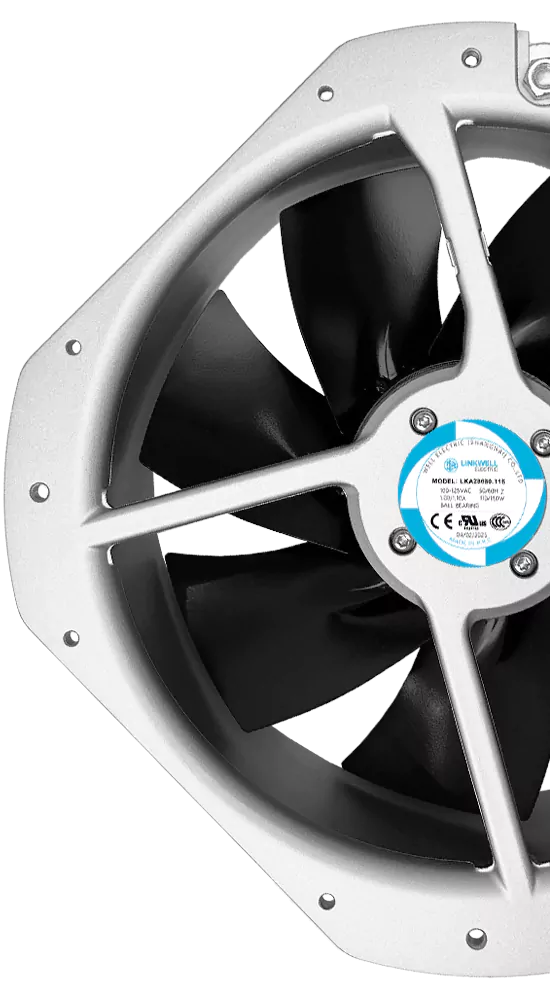
You see AC axial fan voltage ratings like 100V, 110V, 115V, 120V, 220V, 230V, 240V, and 380V. Each voltage has a purpose. Voltage affects how your fan works and keeps your equipment safe. If you pick the wrong voltage, you risk damage or poor performance. Always check voltage before you install a fan. You want a fan that matches your power supply. Safety starts with the right voltage.
- Standard voltages: 100V, 110V, 115V, 120V, 220V, 230V, 240V, 380V
Tip: Double-check your ac axial fan voltage to avoid costly mistakes.
Key Takeaways
- Always make sure your AC axial fan voltage matches your local power supply. This helps the fan work safely and well.
- Some common voltages are 100V, 110V, 115V, 120V, 220V, 230V, 240V, and 380V. You should know which voltage is used where you live.
- If you use the wrong voltage, the fan can break, not work right, or even be dangerous. Always check the voltage before you set up the fan.
- You can pick wide input voltage fans for more options. These fans work with many voltages, so they are good for use in different countries.
- Look at the fan’s nameplate or datasheet to find voltage and frequency details. This information is very important for setting up the fan the right way.
- You need to know the difference between 50Hz and 60Hz power. This changes how fast the fan spins and how well it works.
- If you do not know the voltage, ask an expert or your supplier. It is safer to ask questions than to risk breaking your equipment.
- Check your fan and wires often for problems. Finding issues early can save money on repairs and keep everyone safe.
AC Axial Fan Voltage Overview
Standard Voltage Ratings
When you shop for AC axial fans, you will see many voltages. The most common ones are 100V, 110V, 115V, 120V, 220V, 230V, 240V, and 380V. Each voltage fits a certain power supply. These numbers help you pick a fan that works safely with your power.
Here is a quick guide to the most common ac fan voltages and what they mean:
- 100V, 110V, 115V, 120V: These are used in North America, Japan, and some other places. They match the usual power in homes and businesses there.
- 220V, 230V, 240V: These are found in Europe, Asia, Australia, and many other places. They fit the higher power used in those areas.
- 380V: This is used in factories and big buildings. It is for three-phase power, which runs large machines.
Some fans are called “wide input voltage” or “universal voltage.” These can work from 100V to 240V. They are good if you need to use the same fan in different countries.
Why Voltage Matters
Picking the right ac axial fan voltage is important. It is not just about plugging it in. The voltage you choose affects how well your fan works and how long it lasts. If you use the wrong voltage, you might get weak airflow, loud noise, or a broken fan.
Here is how different voltage conditions can change your fan:
| Voltage Condition | Effect on Operation and Efficiency |
|---|---|
| Rated Voltage | The fan works well, gives steady airflow, and stays safe. |
| Lower than Rated Voltage | The fan may not start, airflow drops, and parts can get too hot. |
| Higher than Rated Voltage | The fan uses too much power, gets very hot, and can break fast. |
| Small Mismatches | You might see airflow problems, more noise, and a shorter fan life. |
To make your fan last and work well, always match the voltage to your power. This easy step can save you money and trouble.
Regional Standards
Not every country uses the same voltage. You need to know your local power before you buy a fan. For example, North America uses 120V in most homes and businesses. Europe and many other places use 230V. Japan often uses 100V. Factories may use 380V for big machines.
The International Electrotechnical Commission (IEC) sets global voltage rules in IEC 60038. This helps make sure electrical products work safely in different countries. Still, always check your local power and make sure your fan matches.
If you want a fan that works almost anywhere, pick wide input voltage models. These can handle 100-240V. They are good for global projects or if you move equipment between countries. Wide input voltage fans also have extra benefits. For example, EC fans are usually more energy-efficient, quieter, and last longer than regular AC fans. Here’s a quick comparison:
| Feature | EC Fans | AC Fans |
|---|---|---|
| Energy Consumption | More efficient | Consistent power |
| Noise Levels | Quieter | Can be noisier |
| Lifespan | Longer | Shorter |
| Maintenance | Lower | Higher |
Tip: Always check the nameplate or datasheet for the right ac axial fan voltage before you buy or install a fan. This helps you avoid mistakes and keeps your equipment safe.
Understanding Voltage Ratings
What Is a Voltage Rating?
You might see a number like 120V or 220V on your fan. This number is the voltage rating. It tells you the best voltage for your fan to run safely and work well. Manufacturers test each fan and pick this number based on how the fan works with the mains power in different places. If you use the right voltage, your fan will last longer and give you steady airflow.
Different fans have different voltage ratings. The blade type can change the voltage options you see. Here’s a quick look at how blade type matches with voltage:
| Blade Type | Voltage Options |
|---|---|
| Plastic Blade | 110V, 220V, 380V |
| Metal Blade | 100/120V, 200/240V, 380/400V |
| Larger Metal Blade | Three-phase 380/400V option |
| Custom Options | Available for OEM orders |
You can see that bigger fans or fans with metal blades often use higher voltage. Some fans even have custom voltage options if you need something special.
Voltage and Fan Performance
Voltage does more than just power your fan. It changes how your fan works. If you use the right voltage, your fan will spin at the right speed and move the right amount of air. If you use a voltage that is too low, your fan might not start or could run slow. If you use a voltage that is too high, your fan could get hot, make noise, or even break.
You want your fan to match the mains voltage in your area. For example, if your home uses 120V, pick a fan with a 120V rating. If your building uses 230V, choose a fan with that rating. This keeps your fan safe and helps it last longer.
Matching Voltage to Application
You need to match the voltage to your application. Think about where you will use the fan. Will it run in a home, a business, or a factory? Homes often use lower voltage, like 120V or 230V. Factories may use higher voltage, like 380V, for big machines.
Check the mains voltage before you buy a fan. Look at the fan’s nameplate or datasheet. Make sure the ac axial fan voltage matches your power supply. If you are not sure, ask an expert or your supplier. Some fans can work with a range of voltages. These are called wide input or universal fans. They are handy if you move equipment or use it in different countries.
Tip: Always match the ac fan voltage to your mains power. This simple step helps you avoid problems and keeps your equipment safe.
You now know why voltage matters. You also know how to pick the right fan for your needs. When you understand common ac fan voltages, you can make better choices for your projects.
Common AC Axial Fan Voltages
100V, 110V, 115V, 120V Fans
You see these voltages a lot when you look for fans in North America and Japan. These numbers match the mains power in homes, offices, and small shops. If you live in the United States, you probably use 120V outlets every day. Japan often uses 100V. Some cooling systems and household fans use 110V or 115V. These voltages are very common, so you find many fan options for them.
Here’s a quick look at where you might use each voltage:
| Voltage Rating | Typical Applications |
|---|---|
| 100V | General AC applications |
| 110V | Common in household fans |
| 115V | Used in various cooling systems |
| 120V | Standard in US electrical outlets |
If you want a fan for your home or office, check your mains voltage first. You want the fan to match your power supply. This helps your fan run smoothly and last longer. You also avoid problems like weak airflow or overheating.
Tip: Always check the label on your fan and your wall outlet. This simple step keeps your equipment safe.
220V, 230V, 240V Fans
These voltages show up in Europe, Asia, Australia, and many other places. If you travel or move equipment between countries, you notice that the mains voltage can change. In most European homes, you plug into 230V outlets. Some places use 220V or 240V. These numbers are close, so many fans can handle small differences.
You see these voltages in homes, offices, and even some factories. They work well for air conditioning, ventilation, and cooling electronics. If you need a fan for a project outside North America, you probably want one of these voltages.
When you pick a fan, match the voltage to your local power. This keeps your fan working well and helps you avoid damage. If you are not sure, ask your supplier or check the fan’s datasheet.
Note: Some fans can handle a range of voltages, but always double-check before you plug them in.
380V Fans
You find 380V fans in big buildings and factories. These fans use three-phase power, which is common for heavy machines and large cooling systems. If you need to move a lot of air in a warehouse or data center, you might need a 380V fan.
Here’s what you get with a 380V fan:
- Blade sizes from 25 mm to 900 mm, with popular sizes like 200 mm, 300 mm, and 400 mm.
- Operating voltage from 365 VAC to 400 VAC.
- Motors can be AC or BLDC/EC types.
- Strong aluminum die-cast housing.
- High-strength iron impellers.
- Two ball bearings for long life.
- Ball bearings work from -20℃ to +70℃; sleeve bearings from -10℃ to +55℃.
- Life expectancy up to 60,000 hours for ball bearings at 60℃.
- Used in refrigeration, data centers, and cooling chain systems.
If you work in industry, you know how important it is to match the ac axial fan voltage to your mains. This keeps your equipment safe and your air moving.
Callout: 380V fans are powerful and built for tough jobs. Always follow safety rules when you install or service these fans.
You now know the most common ac fan voltage options. This helps you pick the right fan for your home, office, or factory.
Wide Input Voltage Fans
Have you ever needed a fan that works in many countries? Wide input voltage fans can help with this problem. These fans work with different power supplies. They can use voltage from 100V to 240V. You do not have to match the voltage every time. If you move equipment or work on global projects, these fans are helpful.
Wide input voltage fans are also called universal fans. You can plug them into many outlets. They change to the right voltage by themselves. This keeps your fan safe and running well. You will not break your fan with the wrong voltage. You also save time because you do not need to check the power each time.
Here are some good things about wide input voltage fans:
- You can use them in many countries.
- You make fewer mistakes when installing.
- You keep your equipment safe from voltage spikes.
- You make buying and storing fans easier.
Tip: If you do not know the voltage in your area, pick a wide input voltage fan. It is a safe choice for most jobs.
Here is a table to show the differences:
| Feature | Standard Fans | Wide Input Voltage Fans |
|---|---|---|
| Voltage Range | Fixed (e.g., 120V) | 100V-240V |
| Installation | Needs matching mains | Works with many mains |
| Risk of Damage | Higher | Lower |
| Global Compatibility | Limited | Excellent |
You may wonder how these fans work. Wide input voltage fans have special circuits inside. These circuits sense the voltage and change how the fan works. You get steady airflow and good performance, even if the voltage changes. You do not need to worry about matching the ac axial fan voltage to the mains.
When you buy wide input voltage fans, check the datasheet or nameplate. Look for the voltage range. If it says “100-240V,” the fan works with most power supplies. You should also check the frequency, like 50Hz or 60Hz. Some fans work with both.
Wide input voltage fans are used in electronics cooling, HVAC, and portable gear. You see them in laptops, medical tools, and vending machines. If you need a fan for travel or export, this is a great choice.
Note: Even with wide input voltage fans, always check the ac fan voltage and power before you plug in. Safety is always important.
Now you know why wide input voltage fans are a smart pick. They make your work easier and give you peace of mind. If you need help choosing a fan, ask your supplier or check the datasheet.
Choosing the Right AC Axial Fan Voltage
Application Factors
You want your fan to work well and last a long time. Start by thinking about where you will use the fan. Will it cool a small office, a busy kitchen, or a large factory? Each place needs a different approach. The size of the room, the amount of heat, and the type of equipment all matter.
If you use an ac cooling fan in a computer or electronics cabinet, you need steady airflow and quiet operation. For a warehouse or industrial space, you want a fan that can handle heavy use and maybe even dust or moisture. The correct fan voltage helps your fan run at the right speed and keeps your equipment safe.
Here are some questions to ask yourself:
- What is the size of the space?
- How much heat does your equipment make?
- Will the fan run all day or just sometimes?
- Do you need a quiet fan or is noise not a problem?
- Will the fan face dust, water, or chemicals?
Write down your answers. This will help you pick the right fan for your needs.
Tip: The right voltage keeps your fan safe and helps it last longer.
Regional Power Supply
You need to match your fan to the power supply in your area. Different countries use different voltages. For example, homes in the United States use 120V. Many places in Europe use 230V. Factories often use 380V for big machines. If you pick the wrong voltage, your fan might not work or could break.
Check your wall outlet or ask your building manager about the voltage. You can also look at other equipment in the room. Most devices have a label that shows the voltage they need. If you travel or ship equipment to other countries, you might need a fan that works with more than one voltage.
Many ac axial fans come in these common voltage options:
- 110/120V AC
- 220/230/240V AC
Some fans can handle both 50Hz and 60Hz power. You may also find dual-voltage fans. These work in more than one region and make your job easier if you move equipment around.
Note: Always check your local electrical codes. This keeps your installation safe and legal.
Reading Nameplates and Datasheets
You can find a lot of information on the fan’s nameplate or datasheet. These labels tell you the voltage, frequency, and other important details. Look for numbers like “120V 60Hz” or “230V 50Hz.” This tells you what kind of power the fan needs.
Here’s how to read a typical nameplate:
| Label Example | What It Means |
|---|---|
| 120V 60Hz | Use with 120V, 60Hz |
| 230V 50Hz | Use with 230V, 50Hz |
| 100-240V 50/60Hz | Wide input, works in many places |
If you see a range like “100-240V,” you have a universal fan. This type can handle many voltages and is great for travel or export. If you see only one number, make sure it matches your power supply.
If you feel unsure, ask your supplier or an electrician. Never guess the ac fan voltage. Using the correct fan voltage keeps your equipment safe and helps you avoid costly mistakes.
Callout: Always check the datasheet before you buy or install a fan. This simple step can save you time and money.
Practical Steps for Selecting the Right Voltage
You can follow these steps to make sure you pick the right fan:
- Find out the voltage in your building or project site.
- Check the fan’s nameplate or datasheet for voltage and frequency.
- Make sure the fan’s voltage matches your power supply.
- If you need a fan for different regions, look for dual-voltage or wide input models.
- Ask for help if you are not sure.
You can avoid problems by following these steps. Your fan will work well, and you will keep your equipment safe.
Tip: Never plug a fan into the wrong voltage. This can damage the fan and your other equipment.
Now you know how to choose the right ac axial fan voltage for your needs. Take your time, check the details, and ask questions if you need help.
Frequency and Other Electrical Considerations
50Hz vs 60Hz
You might notice that some countries use 50Hz power, while others use 60Hz. This number tells you how many times the electrical current changes direction each second. It may sound like a small detail, but it actually makes a big difference for your AC axial fan.
The frequency controls how fast your fan spins. If you use a 50Hz supply, your fan will run at a certain speed. If you switch to 60Hz, the fan spins faster. This change affects airflow and energy use. Fans designed for 60Hz often move more air and use a bit more power. You cannot always swap a 50Hz fan into a 60Hz system or the other way around. The fan might not work right, or it could wear out faster.
AC axial fans get their speed from the grid frequency. You cannot adjust the speed easily without extra equipment. This means your fan will always run at the same speed unless you add a special controller. If you want to save energy or change airflow, you need to pick the right fan for your frequency.
Tip: Always check if your fan matches your local frequency—50Hz or 60Hz—before you install it.
Dual Voltage and Universal Fans
You may have seen fans that work with more than one voltage. These are called dual voltage or universal fans. They make your life easier, especially if you move equipment between places with different power supplies.
Here are some things you get with dual voltage and universal fans:
- Many sizes, from small 60×60×30 mm fans to large 254 mm models.
- Dual voltage options, usually 115V or 230V AC.
- Ball-bearing designs for longer life.
- Dielectric impellers for safety.
- Some models offer IP55 protection against dust and water.
Pros of dual voltage and universal fans:
- Low upfront cost
- Simple wiring—no controller needed
- Easy to find in stores
- Work well with steady loads
Cons to consider:
- No way to change speed without extra gear
- Use more energy when not running at full load
- No built-in monitoring or telemetry
- Sensitive to voltage drops
If you want a fan that works in many places and is easy to install, these fans are a smart pick. Just remember, you give up some control over speed and energy use.
Power and Current Ratings
When you choose a fan, you also need to look at power and current ratings. These numbers tell you how much electricity your fan will use. You can find them on the nameplate or datasheet. Power is measured in watts (W), and current is measured in amps (A).
If your fan uses more power, it will cost more to run. Higher current means you need thicker wires and better protection. Always make sure your power supply can handle the fan’s needs. If you use too many fans on one circuit, you might trip a breaker.
| Label Example | Power (W) | Current (A) | What It Means |
|---|---|---|---|
| 120V 60Hz | 25 | 0.21 | Standard US fan |
| 230V 50Hz | 30 | 0.14 | Standard European fan |
| 100-240V | 28 | 0.12-0.25 | Universal fan, wide range |
Note: Always check both power and current ratings before you buy or install a fan. This helps you avoid overloads and keeps your system safe.
Now you know how frequency, voltage, power, and current all work together. This knowledge helps you pick the right AC axial fan for any job.
Risks of Incorrect Voltage
Overvoltage and Undervoltage
Plugging your AC axial fan into the wrong voltage can cause big problems. If you use too much voltage (overvoltage), your fan might spin faster than it should. This can make the motor get hot and wear out quickly. Sometimes, the fan will make strange noises or even stop working. Overvoltage can also damage the wires and other parts inside the fan.
If you use too little voltage (undervoltage), your fan may not start at all. Sometimes, it will run slowly and move less air. The motor can get hot because it works harder to keep spinning. You might notice weak airflow or the fan stalling. Both overvoltage and undervoltage can shorten the life of your fan.
Tip: Always check the voltage before you plug in your fan. This simple step can save you money and trouble.
Fan Damage and Safety
Using the wrong voltage does not just hurt your fan. It can also be dangerous. Overvoltage can cause the fan’s insulation to break down. This can lead to short circuits or even fires. You might see sparks or smell burning plastic. If the fan gets too hot, it can damage nearby equipment or start a fire.
Undervoltage can also cause problems. The fan might overheat and stop working. Sometimes, the motor will hum but not spin. This can damage the motor windings. If you keep running the fan like this, it may fail for good.
Here’s a quick table to show what can happen:
| Voltage Problem | What You Might See | Possible Result |
|---|---|---|
| Overvoltage | Fast spinning, heat, noise | Motor damage, fire risk |
| Undervoltage | Slow speed, weak airflow | Overheating, failure |
Callout: Safety comes first. If you notice anything strange, turn off the fan and check the voltage.
Troubleshooting Issues
If your AC axial fan is not working right, you can follow some simple steps to find the problem. Start with the basics and work your way up.
- Check the Basic Wiring
Look at all the wires. Make sure nothing is loose or broken. Try to use a simple circuit to test the fan by itself. - Compare Applied Voltage with Capacitor Terminal Voltage
Use a voltmeter to measure the voltage at the fan and at the capacitor. If the numbers do not match, you might have a wiring or capacitor problem. - Verify if Electricity is Conducted through the Extension Cable
Test the extension cable and connectors. Make sure electricity can flow all the way to the fan. - Verify Motor Winding Resistance
Use a multimeter to check the resistance of the motor windings. If the numbers are too high or too low, the motor might have a short or a break.
If you follow these steps, you can find most voltage-related problems. If you still have trouble, ask an expert or contact your supplier.
Note: Never try to fix electrical problems if you feel unsure. Safety matters more than anything.
Conclusion
Choosing the correct AC axial fan voltage helps ensure safe operation, stable performance, and reliable cooling. Always confirm the equipment voltage and frequency before selecting a fan.
Do not check voltage alone. You should also review the rated current, power, airflow, static pressure, wiring method, and operating conditions listed in the product datasheet. Available voltage and frequency options vary by model.
At LINKWELL, we manufacture AC axial fans for industrial equipment and OEM cooling applications. Share your voltage, fan size, airflow, and operating requirements with us, and we will help you select or manufacture a suitable fan.
FAQ
What happens if I use the wrong voltage fan?
You risk damaging your fan or equipment. The fan may run too fast, too slow, or not at all. You could also create a safety hazard. Always match the fan voltage to your power supply.
Can I use a 220V fan in a 230V country?
Yes, you can. Most 220V and 230V fans work with small voltage differences. Manufacturers design them with tolerances. Always check the datasheet to be sure.
How do I find my local voltage?
Look at your wall outlet or check your building’s electrical panel. You can also search online for your country’s standard voltage. If you feel unsure, ask an electrician.
Are wide input voltage fans safe to use everywhere?
Wide input voltage fans are safe for most places. They adjust to different voltages automatically. You still need to check the frequency (50Hz or 60Hz) and read the datasheet.
What does “50Hz” or “60Hz” mean on a fan?
This number shows how many times the power changes direction each second. It affects fan speed. Use a fan that matches your local frequency for best performance.
Can I use an AC axial fan outdoors?
Some AC axial fans work outdoors, but not all. Look for fans with weatherproof ratings like IP55. Always check the datasheet or ask your supplier before installing outside.