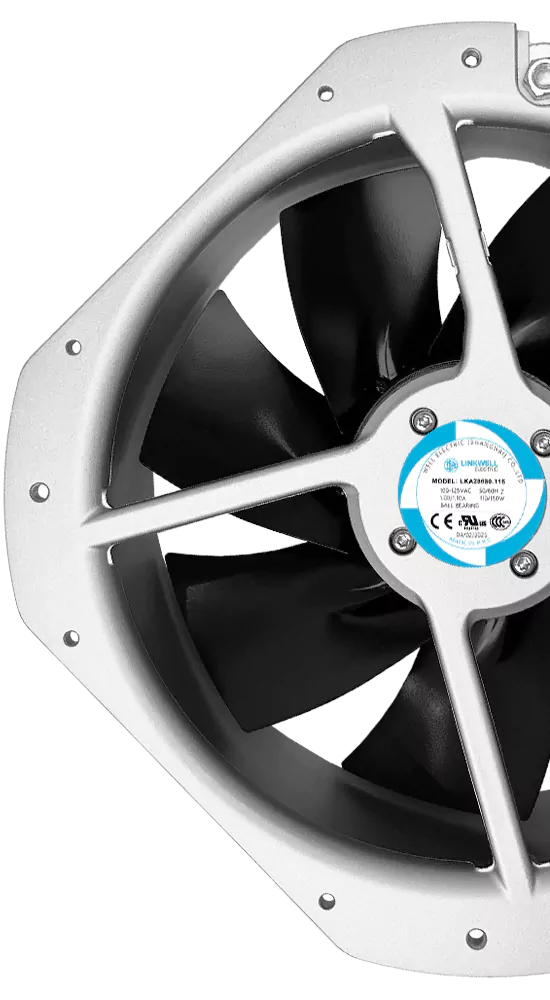
An enclosure can have two fans running at full speed and still develop a hot spot. The fans may be moving plenty of air, but not enough of that air is carrying heat out of the cabinet. Instead, warm exhaust is finding a short path back to the intake or bypassing the components that need cooling.
This is air recirculation. It reduces the temperature difference available for cooling and makes fan airflow look more useful than it really is. The cure is usually an air-path change, not simply a larger fan.
What Is Air Recirculation in an Electrical Enclosure?
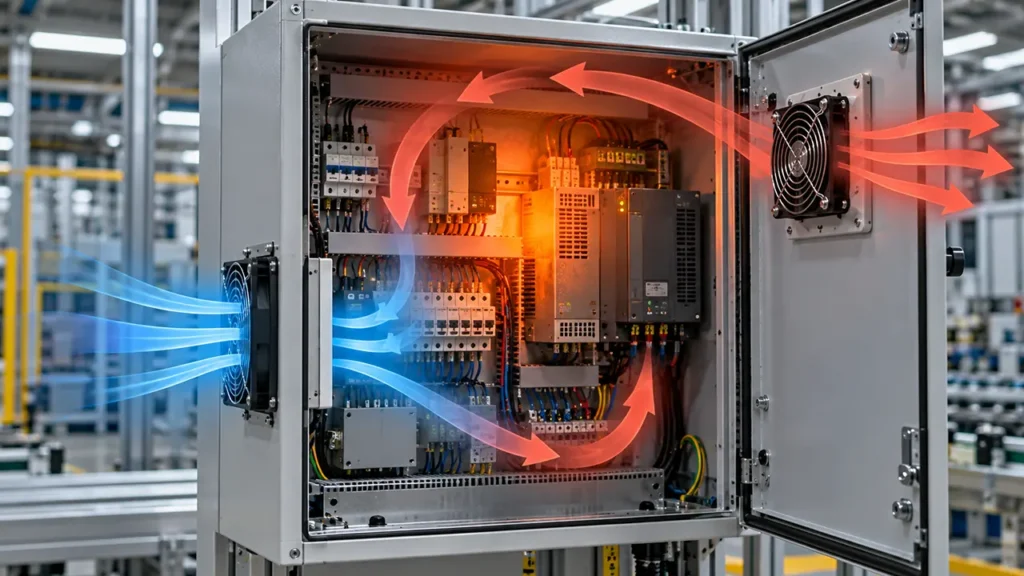
Recirculation occurs when air that has already absorbed heat is drawn back into the cooling path before that heat is rejected to the surrounding environment. It can happen outside the enclosure, where hot exhaust returns to an inlet grille, or inside the enclosure, where supply air loops back to the fan without passing through the intended hot components.
A related problem is bypass. In bypass flow, cool air takes the easiest path from inlet to outlet while a drive, power supply or other heat source receives little flow. The enclosure may show acceptable total airflow while the critical component continues to overheat.
External Recirculation vs Internal Recirculation
| Type | Typical path | Result |
|---|---|---|
| External recirculation | Hot exhaust leaves the cabinet and is drawn into a nearby intake | Fan inlet temperature rises |
| Internal recirculation | Warm air loops around a fan, partition or component inside the enclosure | Heat remains trapped in a local zone |
| Bypass flow | Cool air travels directly from inlet to outlet through an easy gap | High total airflow but poor component cooling |
The pressure balance can influence these paths, but positive or negative pressure alone does not guarantee good cooling. The fan and vents must create a directed route through the heat load. See positive versus negative enclosure pressure for the separate dust and leakage considerations.
Common Causes of Recirculation
Inlet and outlet openings are too close. A fan mounted beside its exhaust grille can pull warm air straight back in, especially when both are on the same panel.
Exhaust is trapped by the installation. A wall, machine frame or neighboring cabinet can create a pocket of hot air outside the exhaust.
Large internal gaps bypass the heat load. Air follows the lowest-resistance path around a rack, power module or partition instead of through it.
Missing blanking panels or seals. Open rack positions, cable cutouts and poorly fitted filter frames allow supply and return air to mix.
Fans oppose each other. Independent fans without a common airflow plan can create a local loop rather than a cabinet-wide exchange.
The outlet area is too restrictive. High outlet resistance can push air through unintended gaps and back toward the inlet.
Signs That the Enclosure Is Recirculating Air
A high inlet temperature is the clearest warning. If the air entering the fan is much warmer than the room, inspect where the exhaust goes. Other signs include a hot component beside a cool exhaust stream, large temperature differences between adjacent rack positions, or a temperature that barely changes when fan speed increases.
Dust patterns can also reveal unintended flow paths. A clean filter with heavy dust around unsealed gaps suggests that air is bypassing the planned intake. Noise may change as doors open because the pressure path and recirculation loop are altered.
How Recirculation Reduces Cooling Capacity
Ventilation removes sensible heat because air leaves the enclosure warmer than it entered. If hot exhaust is reused, the effective inlet temperature rises and each unit of airflow can absorb less additional heat before components reach their limits.
A simplified enclosure heat balance is:
Heat removed = air mass flow x air heat capacity x temperature rise
The equation is useful only when the measured airflow actually passes through the heat-producing zone. A recirculation loop may create high local velocity while contributing little net heat removal from the cabinet.
How to Find the Recirculation Path
- Measure room air, fan inlet, fan outlet and critical component temperatures.
- Check airflow direction at every fan and passive opening.
- Map velocity at several points instead of trusting one outlet reading.
- Inspect cable openings, empty rack spaces, partition edges and filter seals.
- Temporarily add a simple baffle or seal one gap and repeat the temperature test.
- Test with doors, covers and production cable routing in place.
Note: Use only a safe, equipment-compatible airflow visualization method, and de-energize equipment when access creates an electrical or mechanical hazard. Do not introduce smoke or loose material near live electronics without an approved procedure.
How to Stop External Recirculation
Separate intake and exhaust openings so the exhaust plume cannot return directly. A common enclosure layout brings cooler air in low and releases warmer air high, but natural buoyancy does not replace a pressure and restriction check. The best panel locations depend on internal obstructions and the surrounding machine.
Where physical separation is limited, use a discharge hood, duct or baffle to carry warm air away. Make sure the added part does not impose more pressure drop than the fan can handle. Keep the enclosure away from walls or adjacent equipment that trap its exhaust.
How to Stop Internal Bypass and Hot-Air Loops
Seal unintended gaps around heat sinks, rack modules and filter frames. Add blanking panels to open rack positions. Use baffles or short ducts to force cool air through the hot component rather than around it. Provide enough exit area so the planned route remains easier than leakage paths.
Fan placement should support one overall flow direction. Internal circulation fans can mix hot pockets, but they do not remove heat unless the enclosure also has a path to reject it. Review the full electrical enclosure ventilation layout before adding another fan.
How to Validate the Fix
Repeat the temperature map at maximum equipment load, maximum ambient temperature and the dirtiest allowed filter condition. The key result is the temperature of the critical components, not merely a higher grille velocity. Also verify that pressure changes have not increased dust entry or reduced the enclosure protection strategy.
When selecting a LINKWELL fan, provide the enclosure drawing, heat load, ambient range, filter and opening geometry. The fan curve can then be checked against the real airflow path rather than an isolated CFM target.
Frequently Asked Questions
Can recirculation happen in a positive-pressure enclosure?
Yes. Positive pressure can help control where unfiltered air enters, but internal bypass or a nearby exhaust-to-intake loop can still occur.
Will a higher-airflow fan stop recirculation?
Not necessarily. More flow can strengthen the same short circuit. Correct the supply and return paths first.
Where should enclosure intake and exhaust openings be placed?
Place them to create a route through the heat load and to prevent external exhaust from returning. Low intake and high exhaust is common, but the actual equipment layout must be tested.
Can an internal circulation fan cool a sealed enclosure?
It can reduce local hot spots by mixing air, but it does not remove net heat by itself. Heat still has to leave through the enclosure surface or a heat exchanger or air conditioner.
How do I know whether airflow is bypassing a component?
Compare velocity and temperature before and after the component, inspect gaps, and test temporary baffles or seals. A hot component beside a cool, high-velocity bypass path is a strong clue.