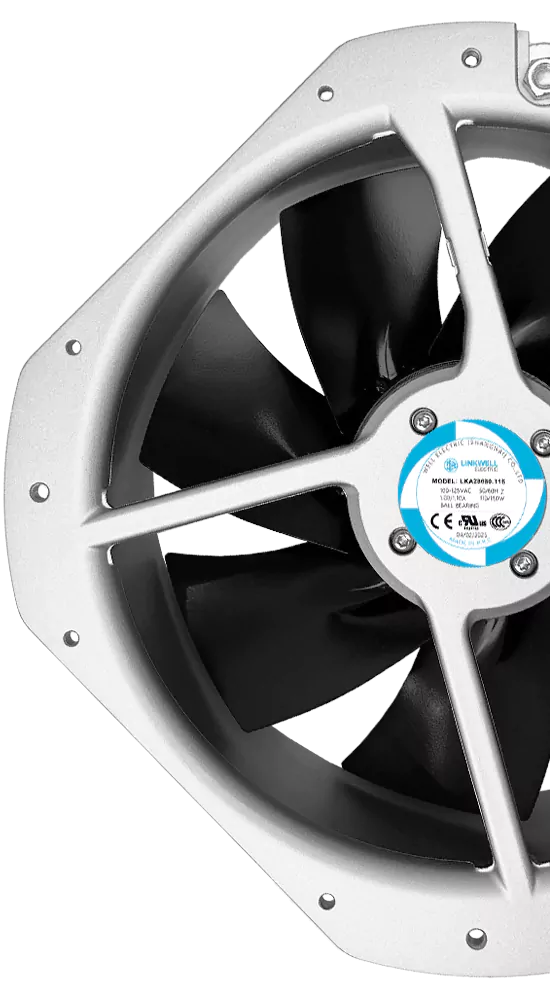
Have you ever wondered why some fans push air straight through while others seem to swirl it around? You face a lot of choices when picking the right fan for your space or project. The differences between fan types can affect how well your system cools, ventilates, or moves air. If you want to understand the real impact of Axial Fan vs Centrifugal Fan vs Radial Fan, you’re in the right place.
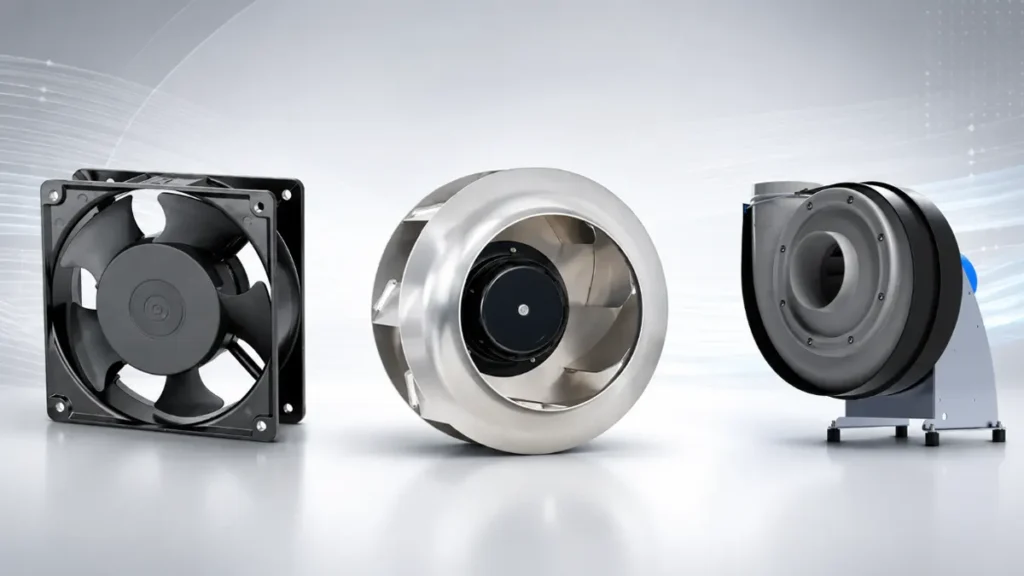
Tip: Knowing how each fan works can help you avoid costly mistakes and improve efficiency.
Key Takeaways
- Know how air moves with each fan: Axial fans push air straight. Centrifugal fans move air at a right angle. Radial fans send air outward.
- Pick axial fans for lots of airflow in open areas. They work well and are small, so they are good for general ventilation.
- Use centrifugal fans if you need high pressure. They are best for ductwork and can handle filters and bends.
- Choose radial fans for dusty or tough places. Their shape helps them deal with debris and keep air moving.
- Always check what airflow and pressure you need before picking a fan. Matching these needs helps the fan work better and saves energy.
- Think about where you will put the fan: Axial fans fit in small spaces. Centrifugal and radial fans need more space and support.
- All fans need regular care. Clean them often to help them last longer and work well.
- Do not make mistakes like ignoring static pressure or mixing up fan types. Picking the right fan saves time, money, and keeps things safe.
Main Differences Overview
Axial Fan vs Centrifugal Fan vs Radial Fan Summary
Not all fans work the same way. When you compare axial fan vs centrifugal fan vs radial fan, you see big differences. Each fan moves air in its own way and handles pressure differently. Axial fans push air straight along the motor shaft. Centrifugal fans pull air in and send it out at a right angle. Radial fans have blades that throw air outward. This makes them strong in tough places.
Let’s look at the main technical differences. Axial fans move a lot of air but only at low pressure. They are good for open spaces and are small in size. Centrifugal fans make higher pressure. They work best in ductwork or places with resistance. Radial fans are special because their blades handle dust and debris better than other fans.
Here’s a quick comparison table to help you see the differences:
| Fan Type | Airflow Direction | Performance Characteristics | Applications |
|---|---|---|---|
| Axial Fans | Parallel to motor shaft | Moves large volumes of air at low pressure; efficient in open spaces; compact design | Warehouse ventilation, cooling towers |
| Centrifugal Fans | Perpendicular to intake | Produces high-pressure airflow; ideal for ductwork; larger footprint; higher power consumption | HVAC systems, dust collection |
| Radial Fans | Outward from center | Handles dust and debris; reliable in harsh environments; moderate airflow and pressure | Industrial exhaust, dirty air systems |
Axial fan vs centrifugal fan vs radial fan covers many needs. Axial fans are great for general ventilation and cooling. Centrifugal fans are best when you need high pressure, like in HVAC or dust collection. Radial fans are good for tough jobs where there is dust or harsh air.
Why Fan Type Selection Matters
Picking the right fan is very important for your system. If you choose the wrong fan, you might not get enough airflow or pressure. You could also have problems with noise or reliability. Axial fan vs centrifugal fan vs radial fan is not just about how they work. It also affects how cool, clean, and comfortable your space is.
Airflow and pressure are the most important things. Axial fans give high airflow, sometimes up to 5,000 CFM, but only at low pressure. Centrifugal fans give moderate airflow, about 1,000 CFM, but can reach much higher pressure—up to 10 inwg. Radial fans balance airflow and pressure. They keep working even when dust or debris builds up.
Here’s another table to show how airflow and pressure compare:
| Fan Type | Airflow Characteristics | Pressure Characteristics |
|---|---|---|
| Axial Fans | High airflow (up to 5,000 CFM) at low pressure (0.5 inwg) | Designed for low-pressure applications, ideal for ventilation |
| Centrifugal Fans | Moderate airflow (around 1,000 CFM) at high pressure (up to 10 inwg) | Engineered for high-pressure situations, effective against resistance |
| Radial Fans | Moderate airflow, handles dirty air | Reliable in harsh environments, moderate pressure |
Note: If you need general ventilation in a warehouse, axial fans are your best choice. For ductwork or dust collection, centrifugal fans work better. Radial fans are perfect for dirty air or tough industrial places.
When you look at axial fan vs centrifugal fan vs radial fan, you see that each fan type is made for a certain job. You get better results when you pick the right fan for your needs. You save energy, get better ventilation, and avoid repairs. Always check airflow, pressure, and the environment before you choose.
What Are Axial Fans?
Structure and Airflow Direction
Axial fans are found in many places. These fans move air in a straight path. The air goes along the shaft. The blades sit on a hub in the center. The motor turns the hub. The blades push air forward. This makes the air move the same way as the shaft. You get air that flows in one direction.
Here are the main parts of axial fans:
- The motor makes the blades spin.
- The impeller holds the blades in place.
- The housing covers the inside and helps guide the air out.
Axial fans have blades that are tilted. These blades make a pressure change when they spin. This helps air move fast and easy. The simple design lets you put axial fans in small spaces. You do not need much room. You still get a lot of airflow. If you want to cool a room or move air, axial fans work well.
Tip: Axial fans are best for high airflow and low pressure. You can use them for cooling or moving air in big spaces.
Axial Fans in Industrial Use
Axial fans are used in many factories and warehouses. They help keep air moving and lower the heat. If you work in a factory, you may see axial fans often. These fans help remove hot air and keep people safe.
Here are some ways axial fans are used in industry:
- HVAC systems use axial fans to move air. This keeps the air fresh and the temperature steady.
- Factories and warehouses use axial fans for cooling and ventilation. This makes the space safe and comfortable.
- Cold storage and refrigerators use axial fans. They keep food fresh and the air cool.
- Data centers and telecom rooms use axial fans. These fans stop servers from getting too hot.
- Air cleaning and fume systems use axial fans. They help clean the air and remove bad particles.
Axial fans do big jobs in factories and other places. You can count on them to move air fast. They help keep spaces nice and safe. If you need good airflow in a factory, axial fans are a smart pick. They fit in many systems and work with other machines. You get good results without much trouble.
Note: Axial fans are easy to take care of. You can clean them fast and keep them working for years. If you want a fan that lasts, axial fans are a good choice.
You see axial fans in many places because they fix many problems. They help with cooling, moving air, and cleaning the air. You get strong airflow and easy use. If you need a fan for a factory, axial fans are ready to help.
What Are Centrifugal Fans?
How Centrifugal Fans Work
You can find centrifugal fans in many factories. These fans have a clever design to move air and make high pressure. When you turn on a centrifugal fan, it pulls air into the middle of a spinning impeller. The impeller has curved blades that catch the air and push it out. The air leaves the impeller at a right angle. This makes the air move faster and builds up pressure.
The housing around the impeller helps guide the air. It makes the air go even faster and adds more pressure before it leaves the fan. You get strong airflow that can move through pipes or ducts. Centrifugal fans are good when you need to push air against something blocking it.
The impeller is the most important part of the centrifugal fan. It spins quickly and throws air outward. As the air moves away from the center, the shape of the casing slows it down and turns speed into pressure.
Here’s how centrifugal fans work:
- The impeller spins and pulls air into the center.
- The blades push the air out and away from the center.
- The housing makes the air go faster and builds pressure.
- The air leaves at a right angle to where it came in.
Centrifugal fans are used for many tough jobs in factories. They keep air moving even if there are filters or bends in the system.
Centrifugal Fans for High Pressure
If you need high pressure, centrifugal fans are the best choice. These fans can make much higher pressure than axial fans or radial fans. You often see centrifugal fans in places with long ducts, filters, or coil assemblies. They work well when air needs to travel far or go through things in the way.
Centrifugal fans usually work between 500 Pa and several thousand Pa. Some heavy-duty fans can reach 25,000 Pa or more. This high pressure makes centrifugal fans the top pick for hard jobs. You can trust them in places where other fans cannot work.
Here is a table to compare high pressure in fan types:
| Fan Type | Typical Pressure Range (Pa) | Best Use Case |
|---|---|---|
| Axial Fans | Up to 500 | Open spaces, low resistance |
| Centrifugal Fans | 500–25,000+ | Ductwork, filters, industrial |
| Radial Fans | 500–2,000 | Dirty air, moderate pressure |
Centrifugal fans give you high pressure. They keep working even if the system gets dirty or blocked. You can use them in factories, plants, and places with tough air. If you need strong airflow and high pressure, centrifugal fans are the right pick.
Tip: Always check what your system needs. If you have resistance or need strong airflow, centrifugal fans will help you do the job.
What Is a Radial Fan?
Radial Blade Design
If you work in a factory, you may see a radial fan doing hard work. This fan is special because of its blade shape. The blades stick straight out from the hub, like the spokes on a bike wheel. Most radial fans have six to twelve flat blades. These blades are not curved. They point right away from the center.
This shape lets the radial fan pull air in along the axis and push it out at a right angle. You get strong airflow that moves fast. The straight blades help the fan handle high-pressure jobs. You can trust a radial fan when you need to move air through filters or long ducts.
Radial blade fans are tough. They use strong materials so they last in rough places. You do not have to worry about hot or cold temperatures or high static pressure. The self-cleaning design keeps dust and dirt from building up. Fewer moving parts make maintenance easy. You spend less time fixing and more time working.
Note: Radial fans are great for places with dirty air or where you need to keep things running without stopping often.
These fans move lots of air. You can count on them to keep your factory safe and comfortable. Their ability to reach high pressure makes them popular in hard jobs.
Radial Fan vs Other Centrifugal Fans
You might wonder how a radial fan is different from other centrifugal fans. The main difference is the blade shape and how air moves through the fan. Other centrifugal fans use curved blades, either forward or backward. Radial fans use straight blades.
Here’s a quick table to show the differences:
| Feature | Radial Fan | Other Centrifugal Fans |
|---|---|---|
| Blade Design | Straight blades extending radially | Forward-curved or backward-curved blades |
| Airflow Pattern | Air enters axially, discharged radially | Air typically moves in a curved path |
| Pressure Handling | High-pressure applications | Varies, generally lower than radial fans |
| Application Suitability | Industrial processes, dust extraction | General ventilation, lower resistance |
Radial fans work well in systems with resistance. You see them in jobs like drying, moving materials, and dust extraction. They create higher pressure and keep air moving even when filters or ducts block the way. The strong paddle-style impellers push air out at a 90-degree angle. This helps the radial fan handle dirty air.
If you need a fan that works well in tough places, a radial fan is your best choice. It keeps efficiency high and maintenance low. You get reliable performance in factories, especially where dust and debris are common.
Tip: Pick a radial fan when your system faces resistance or when you need to move air through obstacles. It is made for tough jobs.
Axial Fan vs Centrifugal Fan vs Radial Fan Comparison
Airflow and Pressure Differences
You might wonder how each fan moves air and handles pressure. Axial fans push air straight along the shaft. They move a lot of air but only at low pressure. If you need to move lots of air in open areas, axial fans are a good pick. Centrifugal fans pull air in and send it out at a right angle. They make much higher pressure than axial fans. You can use them in ductwork or places with things blocking the air. Radial fans throw air outward from the center. They work well with dirty air and keep running even when dust builds up. Their pressure is strong, so they are great for tough jobs in factories.
Let’s check some real numbers from companies that make fans. Axial fans like the BAF, TAF, and WAF Tube Axial Duct Fan can move up to 44,500 CFM and reach up to 10″ SPWG. Centrifugal fans such as the HDBC Backward Curved Fan can move up to 270,000 CFM and reach up to 34″ SPWG. Radial fans like the RTE Radial Tip Exhauster can move up to 240,000 CFM and reach up to 35″ SPWG. This shows that centrifugal and radial fans can handle much higher pressure than axial fans.
Here’s a table to help you compare:
| Fan Type | Model Name | Airflow (CFM) | Pressure (SPWG) | Applications |
|---|---|---|---|---|
| Centrifugal | HDAF Airfoil Fan | up to 48,551 | up to 21″ | Material conveying |
| HDBC Backward Curved Fan | up to 270,000 | up to 34″ | Filtration, exhausting | |
| HDBI Backward Inclined Fan | up to 150,000 | up to 25″ | Material conveying, cooling | |
| Axial | BAF, TAF, WAF Tube Axial Duct Fan | up to 44,500 | up to 10″ | Exhausting |
| PF Propeller Fan | up to 38,650 | up to 3/4″ | General air movement | |
| Radial | RTE Radial Tip Exhauster | up to 240,000 | up to 35″ | Filtration |
| RBE Radial Blade Exhauster | up to 22,528 | up to 41″ | Material conveying |
If you need to move a lot of air in a warehouse, axial fans are best. For jobs like filtration or moving materials, centrifugal and radial fans work better.
Efficiency and Noise
You probably care about how much energy a fan uses and how loud it is. Axial fans are good at moving air with less energy. They work best in open spaces where you need lots of air. Centrifugal fans use more power because they make higher pressure. They are not as efficient if you use them in the wrong place. Radial fans are strong and last a long time, but they are not as efficient as axial fans. They are best in places with dust or dirt.
Noise matters too. Axial fans are usually quieter because they spin slower and face less resistance. Centrifugal fans can get loud, especially when pushing air through ducts or filters. Radial fans might be even louder because of their blade shape and high pressure. You should think about noise if you work in an office or a quiet place.
Here’s a quick list to help you remember:
- Axial fans: High efficiency, low noise, best for open spaces.
- Centrifugal fans: Moderate efficiency, higher noise, good for ductwork.
- Radial fans: Lower efficiency, moderate to high noise, ideal for industrial jobs.
Tip: If you want a quiet fan, pick an axial fan. For hard jobs, radial fans can handle dust but might be louder.
Space and Installation
You need to know how much room each fan needs and how easy it is to put in. Axial fans are small and fit in tight spots. You can put them on walls or ceilings. Their simple shape makes them easy to install. Centrifugal fans are bigger and heavier. They need more space and stronger supports. You often see them in big HVAC systems or factories. Radial fans are also large and heavy. Their strong build helps them last in tough places, but you need enough space to install them.
If you do not have much space, axial fans are the best choice. Centrifugal and radial fans work better where you can build a strong base. You should plan ahead before you install them. Think about cleaning and fixing them too. Axial fans are easy to clean and fix. Centrifugal and radial fans need more care, especially in factories.
Note: Always check your space before picking a fan. Axial fans fit almost anywhere. Centrifugal and radial fans need more room and support.
Each fan type has its own strengths. Axial fans give you lots of air and are easy to install. Centrifugal fans give you high pressure and work well in ducts. Radial fans handle dust and tough places, so they are great for factories. Pick the fan that fits your job and space.
Dust and Harsh Environments
If you work where there is lots of dust or dirty air, some fans will not work well. Some fans get blocked fast or lose power when things get messy. You need a fan that keeps working even when the air is rough.
Radial fans are great in these places. Their straight blades push air out and stop dust from piling up. You see radial fans in factories, power plants, and dust systems. They help keep air clean and machines running. Radial fans also send air to boilers in power plants. This helps burning stay safe and strong. Their shape lets them move air through filters and long pipes without losing power.
Centrifugal fans are also good in dirty and tough spots. Many have strong cases and sealed parts. These features help them last longer and stay safe near hot air, gases, or sparks. You find centrifugal fans in air conditioning, drying, and big HVAC systems. They handle dust, hot air, and gases without breaking. But you must clean and check them often to keep them working well.
Axial fans are not the best for dusty or hard jobs. They move lots of air and use less energy, but dust can block their blades and slow them down. If you use an axial fan in a dirty place, you may fix it more than use it.
Tip: For dusty factories or places with rough air, pick a radial or centrifugal fan. They keep working when things get hard. Axial fans are better for clean, open spaces.
Application Table
You might want to know where each fan works best. Here’s a simple table to help you match the right fan to your job:
| Fan Type | Common Applications |
|---|---|
| Axial Fans | Exhaust systems, cooling towers, ventilation, ducted applications, HVAC systems |
| Centrifugal Fans | Dust collection, industrial ovens, pneumatic conveying, process cooling, large HVAC |
| Radial Fans | Dusty manufacturing, power plants, material handling, harsh industrial exhaust |
If you need to cool electronics or ventilate a room, axial fans are a smart pick. For moving air through long pipes or filters, centrifugal fans work better. When you deal with dust, debris, or rough air, radial fans are your best choice.
Comparison Table
Let’s look at the main points side by side. This table shows how each fan type compares in important ways:
| Feature | Axial Fan | Centrifugal Fan | Radial Fan |
|---|---|---|---|
| Airflow Direction | Parallel to shaft | Perpendicular to intake | Outward from center |
| Pressure Capability | Low | Medium to High | High |
| Efficiency | High in open spaces | Moderate, best in ducted systems | Lower, but reliable in tough spots |
| Noise Level | Low | Moderate to High | Moderate to High |
| Dust/Harsh Air Handling | Poor | Good | Excellent |
| Maintenance Needs | Low (in clean air) | Moderate (needs regular cleaning) | Low to Moderate |
| Typical Applications | General ventilation, cooling | HVAC, dust collection, process cooling | Dusty factories, power plants |
| Space Requirement | Compact | Larger footprint | Large, heavy-duty |
Note: Always check your space and air before picking a fan. The right fan saves you time, money, and trouble later.
Choosing Axial Fans
When to Use an Axial Fan
You might wonder when an axial fan is the right choice for your project. If you need to move a lot of air in a big space, you should look at this type of fan. Axial fans shine in low-pressure, high-flow scenarios. You often see them in warehouses, data centers, and other large rooms where you want to keep the air fresh and cool.
When you pick an axial fan for an industrial job, you need to think about a few key things:
- Airflow Requirements: Figure out how much air you need to move. This is usually measured in cubic feet per minute (CFM).
- Pressure Needs: Check if your system has low resistance. Axial fans work best in low-pressure applications.
- Environmental Conditions: Think about the temperature and if the fan needs to resist corrosion. Some industrial spaces get very hot or have chemicals in the air.
- Application-Specific Demands: Make sure the axial fan fits your industry. For example, food processing or places with lots of dust may need special features.
Tip: If your space has long ducts or lots of filters, an axial fan may not be the best fit. These fans do not handle high resistance well.
Axial Fan Advantages and Limits
Axial fans offer some big benefits, but they also have a few limits. Here’s what you should know before you choose one for your industrial setup:
Advantages of Axial Fans:
- High Volume Flow Rate: Axial fans move a lot of air quickly. This makes them perfect for cooling large spaces or keeping air moving in big rooms.
- Energy Efficiency: You get strong airflow without using a lot of power. This can help you save money on energy bills.
- Great for Large Spaces: Axial fans work well in places like warehouses, data centers, and big industrial halls.
Limits of Axial Fans:
- Limited Pressure Generation: Axial fans do not create much pressure. They are not good for systems with high resistance or long ductwork.
- Not for Complex Setups: If your system has many bends or filters, an axial fan may struggle to keep up.
- Noise Generation: These fans can be noisy, especially in smaller rooms or when running at high speed.
Here’s a quick table to help you decide if an axial fan fits your needs:
| Situation | Is Axial Fan a Good Choice? |
|---|---|
| Large, open industrial space | Yes |
| System with long ducts | No |
| Need for low-pressure applications | Yes |
| High system resistance | No |
Remember: Axial fans are your go-to for moving lots of air in open spaces. If you need to push air through obstacles, you might want to look at other options.
Choosing Centrifugal Fans
When to Use a Centrifugal Fan
You might wonder when a centrifugal fan is the right choice. If you need to move air through long ducts or around corners, this fan works better than an axial fan. Centrifugal fans shine in places where you need higher pressure. You see them in many industrial jobs, like dust collection, air conditioning, and big HVAC systems. These fans handle resistance well, so they keep air moving even when filters or coils block the way.
You should look at a few things before you pick a centrifugal fan:
- Know how much airflow you need. This is usually measured in CFM, just like with an axial fan.
- Figure out the static pressure your system needs. Centrifugal fans do better than axial fans when pressure is high.
- Check the layout of your HVAC system. Bends and long ducts raise the pressure, so a centrifugal fan is a smart pick.
- Try not to add too much extra pressure for safety. Too much can waste energy and make the fan less efficient.
Centrifugal fans come in different types. Each type fits a special job. Here’s a table to help you see the main types and where you might use them:
| Impeller Type | Pressure Level | Airflow Characteristics | Applications |
|---|---|---|---|
| Radial | High | Medium airflow | Typical HVAC, shop ventilation |
| Forward Curve | Medium | High airflow | Clean air, ventilating, exhaust |
| Backward Curve | High | High flow, high efficiency | Air conditioning, ventilation |
| Aerofoil | Highest | Best for clean air | Clean air applications |
If you work in an industrial plant, you will see centrifugal fans in many places. They help where axial fans cannot keep up with pressure. You can trust them for tough jobs.
Tip: If your system has lots of bends, filters, or needs to move air far, centrifugal fans are a better choice than axial fans.
Centrifugal Fan Pros and Cons
Centrifugal fans have some strong points, but they also have a few downsides. You should know both before you decide.
Here’s a quick look at the main pros and cons:
| Aspect | Centrifugal Fans |
|---|---|
| Pressure Capabilities | Better for high-pressure jobs, like air conditioning and industrial systems. |
| Efficiency | More efficient in ductwork and places with resistance than axial fans. |
| Size and Space | Usually bigger and need more room than axial fans. |
| Noise Levels | Can be louder because of airflow changes and higher pressure. |
You get strong pressure with centrifugal fans. They work well in industrial settings where you need to move air through filters or long pipes. These fans are often made from thick steel, especially the backward-curved and radial types. Makers sometimes paint them to stop rust. Many of these impellers are handmade, which makes them tough and long-lasting. Forward-curved impellers are lighter and made by machines, so they fit jobs where you need less power.
You might notice that centrifugal fans take up more space than axial fans. You need to plan for this when you set up your system. They can also be noisier, so you may want to add soundproofing if you work in a quiet area.
Note: If you want a fan that handles tough jobs and keeps working in industrial places, centrifugal fans are a solid choice. Just remember, they need more space and can be louder than axial fans.
You now know when to pick a centrifugal fan and what to expect. If you need high pressure and strong airflow in an industrial setting, centrifugal fans will not let you down.
Choosing a Radial Fan
When to Use a Radial Fan
You might wonder when a radial fan is the right choice for your project. If you work in an industrial setting, you often face tough air conditions. Radial fans shine when you need to move air that is full of dust, dirt, or even small particles. These fans work well in places where other fans, like axial fans, might get clogged or lose power.
Radial fans are perfect for jobs that need high static pressure. You see them in factories, process plants, and power plants. They help keep the air clean and safe for workers. You can use a radial fan to remove fumes, dust, or heat from machines. In some plants, these fans help get rid of acidic fumes and corrosive gases. Power plants use radial fans to push air into boilers, which helps with burning fuel and making energy.
Here are some common uses for radial fans in industrial spaces:
- Removing dust, fumes, and heat from machinery
- Expelling acidic fumes and corrosive gases in process plants
- Providing airflow for boilers in power plants
If you need a fan that can handle dirty air and keep running, a radial fan is a smart pick. Axial fans might move more air in open spaces, but they do not work as well when the air is full of dust or debris.
Tip: Choose a radial fan if your system faces harsh air, high temperatures, or lots of dust. These fans keep working when others stop.
Radial Fan Strengths
Radial fans have some unique strengths that make them stand out in industrial jobs. You get heavy-duty construction, which means these fans last a long time even in rough places. They are built to handle dusty or abrasive air streams. If your air has particles that could wear down other fans, a radial fan will keep going.
You can count on radial fans to work in harsh industrial environments. They do not clog easily, and their straight blades help push air out even when things get dirty. Axial fans might slow down or need more cleaning in these spots, but radial fans keep your system running.
Here’s a quick look at what makes radial fans strong:
- Heavy-duty build for long life
- Great for dusty or abrasive air
- Reliable in tough industrial settings
You might notice that radial fans do not move as much air as axial fans in open spaces. However, they make up for it by working well in places where air is hard to move. If you need to keep your factory safe and your machines cool, a radial fan is a solid choice.
Note: Radial fans are not always the quietest, but they are the most reliable when the air gets rough. If you want a fan that keeps working no matter what, this is the one to pick.
Common Selection Mistakes
When you pick a fan for your industrial project, it’s easy to make mistakes. These mistakes can cost you time, money, and even safety. Let’s look at the most common errors people make and how you can avoid them.
Overlooking Static Pressure
Many people forget to check static pressure before choosing a fan. Static pressure is the resistance the fan must push air against. This resistance comes from things like long ducts, bends, filters, and dampers. If you ignore static pressure, your fan may not move enough air. You might end up with a fan that works too hard or not at all.
Remember: When airflow goes up, static pressure goes down. When static pressure goes up, airflow goes down. You need to balance both for your system to work well.
Most mistakes in industrial fan selection happen because people guess or underestimate static pressure. This can lead to fans that waste energy or fail to deliver the right airflow. Always measure or calculate the static pressure in your system before you buy a fan.
Confusing Fan Types
It’s easy to mix up fan types. You might think any fan will work for your industrial needs, but that’s not true. Each fan type—axial, centrifugal, or radial—has its own strengths. If you use the wrong type, you could get poor airflow, too much noise, or even damage to your equipment.
Here are some common mistakes people make:
- Using a fan that doesn’t match the pressure or airflow needs.
- Picking a fan that’s too small or too large for the space.
- Forgetting about system impedance, like obstructions or restrictions in the airflow path.
- Installing the fan the wrong way, which can hurt performance.
You should always match the fan type to your industrial application. Think about how much air you need to move, how far it needs to go, and what might block the air.
Ignoring Environment
The environment in your industrial space matters a lot. Some fans work well in clean air, while others handle dust, heat, or chemicals. If you ignore the environment, your fan might break down fast or not work at all.
Tip: Always check the temperature, humidity, and if there are any corrosive materials in the air. Pick a fan that can handle these conditions.
Choosing the right industrial fan means looking at more than just size or price. You need to think about air movement, pressure, temperature, and possible corrosion. This helps you get a fan that lasts and keeps your space safe.
If you avoid these common mistakes, your industrial system will run better and last longer.
How to Choose the Right Fan
Key Selection Criteria
When you pick a fan for your industrial space, you want to make sure it fits your needs. You can follow these steps to make the right choice:
- Determine Application Requirements: Start by looking at your ventilation needs. Figure out how much air you need to move and what pressure your systems require. If you work with hvac or hvac systems, you must check airflow and pressure carefully.
- Evaluate Fan Performance Curves: Check the PQ curves. These show how the fan performs at different speeds and pressures. You can match the fan to your systems so you get the best results.
- Consider Fan Type and Design: Choose between axial, centrifugal, or radial fans. Each works best in certain situations. Axial fans are great for open spaces and general ventilation. Centrifugal fans handle higher pressure and work well in hvac systems. Radial fans are tough and handle dirty air in industrial settings.
- Optimize Installation and System Design: Make sure you install the fan correctly. Good installation and maintenance help your fan last longer and work better.
- Maintain and Monitor Fan Performance: Keep an eye on your fan. Regular checks and cleaning keep your systems running smoothly.
Airflow and Pressure Needs
You need to know how much air your systems must move. If you have a big warehouse or factory, you want strong ventilation. For hvac, you must balance airflow and pressure. Too little airflow means poor ventilation. Too much pressure can waste energy. Always check your system’s requirements before you buy.
Space and Noise
Think about where you will put the fan. Axial fans fit in tight spots. Centrifugal and radial fans need more room. If you work in an office or quiet area, you want a fan that makes less noise. In industrial spaces, noise matters less, but you still want to keep it safe for workers.
Motor and Control Options
You can pick fans with different motors and controls. Some fans use direct drive motors, which are more energy efficient. You can also choose fans with speed controls. This lets you adjust airflow as needed. Make sure the fan matches your voltage and control needs.
Practical Tips
You can use these tips to make your choice easier:
- Pick fans that resist corrosion if you work in wet or chemical areas. This helps your fan last longer.
- For food processing, choose fans that are easy to clean. Clean fans keep your products safe.
- If you handle dust or particles, use fans made for dirty air. These work well in mining or grain handling.
- Choose direct drive fans for better energy efficiency. You save money over time.
Tip: Always check the IP rating, temperature limits, and dust handling features. These help your fan work well in tough environments.
Here’s a quick table to help you compare:
| Factor | What to Check |
|---|---|
| Airflow & Pressure | System needs, PQ curves |
| Space & Noise | Installation area, noise level |
| Motor & Control | Voltage, speed control |
| Durability | Corrosion resistance, IP rating |
| Maintenance | Easy cleaning, monitoring |
You can make your ventilation systems stronger and more energy efficient by picking the right fan. If you follow these steps, you get better airflow, safer spaces, and lower costs.
LINKWELL Fan Solutions
Product Range Overview
You want a fan that fits your needs. LINKWELL gives you many choices. You can find fans for almost any job. Do you need to move air in a big warehouse? LINKWELL has strong axial fans. Do you need to push air through long ducts? You can pick from their centrifugal fans. If you work in a tough industrial space, you will find radial fans that handle dust and dirt.
Here is a quick look at what you can get from LINKWELL:
- Axial fans for cooling large rooms or machines
- Centrifugal fans for HVAC, dust collection, and air cleaning
- Radial fans for dirty air, high pressure, and harsh places
You can see that LINKWELL covers many types of industrial fans. You get fans that last a long time. You also get fans that save energy. LINKWELL tests every fan before it leaves the factory. You know you will get a fan that works right.
Note: LINKWELL fans come in many sizes. You can find small fans for tight spots or big fans for large factories.
Here is a table to help you see the main types:
| Fan Type | Best Use | Key Feature |
|---|---|---|
| Axial | Open spaces, cooling | High airflow |
| Centrifugal | Ducts, HVAC, dust | High pressure |
| Radial | Dirty air, tough jobs | Handles debris |
Custom Cooling Solutions
Every industrial job is different. LINKWELL knows this. You can ask for a custom fan that fits your project. Do you need a fan that works in high heat? LINKWELL can build it. Do you need a fan that fights off rust or handles chemicals? They can help with that too.
You can talk to LINKWELL’s team about your needs. They will listen and design a fan just for you. You get to pick the size, the power, and even the color. LINKWELL can add special coatings or seals for extra safety. You can also get fans with smart controls. This helps you save energy and keep your industrial space safe.
Tip: If you are not sure what fan you need, just ask LINKWELL. Their experts will help you find the best fit for your industrial project.
You do not have to settle for a one-size-fits-all fan. LINKWELL gives you choices. You get a fan that works the way you want. Your machines stay cool. Your workers stay safe. Your industrial space runs better.
Conclusion
You now understand how axial, centrifugal, and radial fans work in different places. Axial fans move a lot of air. They are quiet and use less power. Radial fans do hard jobs with high pressure. They can be louder and need more care. Here’s a simple look:
| Type of Fan | Airflow Characteristics | Pressure Capabilities |
|---|---|---|
| Axial Fan | Moves lots of air, low pressure | Handles only small resistance |
| Radial Fan | Pushes air in one direction, high pressure | Works well with big resistance |
- Axial fans are simple to take care of.
- Radial fans are best for places with high pressure.
- Axial fans are quiet, but radial fans can be loud.
Choose the fan that fits your space and needs to get the best results!
FAQ
What is the main difference between axial, centrifugal, and radial fans?
Axial fans push air straight. Centrifugal fans move air at a right angle. Radial fans throw air outward. Each fan works best in different places.
Which fan is best for dusty environments?
You should pick a radial fan. Its straight blades handle dust and debris better than other types. Centrifugal fans also work well in dirty air.
Can I use an axial fan for long ductwork?
No, axial fans struggle with high resistance. Centrifugal fans perform better in long ducts because they create higher pressure.
Are radial fans louder than other fans?
Radial fans can be louder. Their strong blades and high pressure make more noise. You may want ear protection in noisy factories.
How do I choose the right fan for my space?
Check your airflow needs, pressure, space, and environment. Match the fan type to your job. Ask experts if you feel unsure.
Do all fan types need regular maintenance?
Yes, you should clean and check all fans. Axial fans need less care in clean air. Radial and centrifugal fans need more attention in tough places.
What is CFM and why does it matter?
CFM stands for cubic feet per minute. It measures how much air a fan moves. You need to know your CFM to pick the right fan for your space.