You need a practical cooling fan selection guide: how to choose the right fan for your application. The right choice protects your equipment and boosts efficiency. Industry studies show that matching fan type and performance to your needs helps prevent failures and saves energy. Temperature alone causes 55% of equipment failures, as shown below:
Follow this guideline in selecting a fan for reliable results. You can trust fanacdc for advanced industrial cooling solutions.
Key Takeaways
- Choosing the right cooling fan is crucial for equipment reliability. It helps prevent overheating and reduces the risk of failures.
- Calculate airflow needs by planning for 1 CFM for every watt of heat produced. This ensures effective cooling for your system.
- Consider environmental factors like temperature and dust when selecting a fan. This helps maintain performance and longevity.
- Always check both airflow and static pressure ratings. This ensures your fan can handle the resistance in your system.
- Regular maintenance of cooling fans is essential. Schedule checks every 6 to 12 months to ensure optimal performance.
Why Cooling Fan Selection Matters
Impact on Equipment Reliability
You rely on your equipment to run smoothly every day. Choosing the right cooling fan plays a big role in keeping your machines safe and reliable. When you select a fan that matches your needs, you help maintain the best temperature for your devices. This prevents overheating and reduces the risk of component failures.
- Proper cooling fan selection helps keep temperatures steady, which is key for avoiding breakdowns.
- In high-performance computing, good cooling can extend the life of CPUs and GPUs by up to 50%.
- Advanced cooling in refrigeration systems can boost product reliability by as much as 30%.
In places with high power density, even a small rise in temperature can cause big drops in performance. Using industrial cooling fans adds only a small amount to your energy use, but it greatly improves how well your system handles heat.
Benefits for System Performance
When you pick the right fan, you improve your system’s uptime and energy efficiency. Efficient cooling keeps your equipment running longer and helps you avoid costly downtime. The table below shows how cooling affects important system metrics:
| Evidence Type | Description |
|---|---|
| Power Usage Effectiveness (PUE) | Efficient cooling can improve PUE, sometimes reaching values below 1.05. |
| Energy Consumption | Using liquid cooling can lower the need for internal fans and save energy. |
| Uptime Enhancement | Redundant fan setups allow maintenance without stopping your system. |
Key Industrial Applications
You find cooling fans in many industries. They keep machines from overheating in manufacturing plants and protect sensitive parts in electrical rooms. In the automotive and aerospace fields, fans cool engines. Food processing uses fans to control temperature during production.
When you choose a fan for your application, remember that airflow impedance matters. Always select a fan with enough airflow to handle backpressure. For example, if you need 50 CFM at zero backpressure, pick a fan rated for 75-100 CFM to ensure it works well under real conditions.
| Fan Type | Application Characteristics | Key Advantages |
|---|---|---|
| Axial Fan | High airflow, low-resistance environments | Simple, high airflow, lower noise |
| Centrifugal Fan | High-resistance, directional airflow | High static pressure, good for complex ducts |
| Air Blower | Localized high heat, focused cooling | Very high static pressure, precise airflow |
Cooling Fan Selection Guide: How to Choose the Right Fan for Your Application
Choosing the right cooling fan starts with understanding your unique needs. This cooling fan selection guide: how to choose the right fan for your application will help you make informed decisions for reliable and efficient operation. You can trust fanacdc’s experience in providing tailored solutions for industrial and electronics environments. Follow these steps to select an appropriate fan for your project.
Identify Application Requirements
You need to start by identifying what your system demands. This step forms the foundation of the cooling fan selection guide: how to choose the right fan for your application. Consider these key factors:
- Airflow Requirements: Calculate the total heat output of your components. You can use a simple rule—plan for about 1 CFM (cubic feet per minute) of airflow for every watt of heat your equipment produces. This ensures your fan can move enough air to keep things cool.
- Fan Size: Measure the space available in your enclosure. Common fan sizes include 40mm, 80mm, and 120mm. Make sure the fan fits without blocking other components.
- Noise Levels: Think about where you will use the fan. If you need quiet operation, choose larger fans that can move more air at lower speeds. This reduces noise and vibration.
- Energy Efficiency: Look for fans that use less energy. Modern fans, like those from fanacdc, offer high efficiency and can save you money on power bills.
When you select an appropriate fan, you match these requirements to your system’s needs. This step helps you avoid overheating, noise problems, and wasted energy.
Write down your system’s heat output, available space, and noise limits before you start shopping for fans.
Assess Thermal and Space Constraints
You must understand how much heat your equipment generates and how much room you have for cooling. This part of the cooling fan selection guide: how to choose the right fan for your application involves a few simple steps:
- Perform a thermal analysis. Find out how much heat your equipment produces during normal operation.
- Calculate the volume of air needed to remove this heat. Use your thermal analysis results to estimate the required airflow.
- Map the cooling air path. Use sensors or software to check that air can flow freely through your system.
If you have limited space, select an appropriate fan size that fits your enclosure. For tight spaces, compact fans with high airflow can be a smart choice. fanacdc offers a wide range of fan sizes and configurations to fit different layouts.
Note: Proper airflow mapping helps you avoid hot spots and ensures even cooling across all components.
Consider Environmental Factors
You need to think about the environment where your fan will operate. Harsh conditions can affect fan performance and lifespan. This step in the cooling fan selection guide: how to choose the right fan for your application is critical for long-term reliability.
In environments with extreme temperatures, high humidity, or lots of dust, you must select an appropriate fan with features that protect against these challenges. For example, fans with corrosion-resistant materials and high-temperature tolerance work better in hot or humid places. Dusty environments require fans with sealed bearings and filters to prevent clogging.
| Environmental Factor | Impact on Fan Performance |
|---|---|
| Temperature | Needs corrosion-resistant materials and high-temperature tolerance |
| Humidity | Can affect electrical parts and reduce reliability |
| Dust | Causes inefficiency and increases maintenance needs |
- Harsh conditions can lead to unwanted downtime.
- Operational costs may rise if you use the wrong equipment.
- Proper fan selection helps you avoid these risks and keeps your system running smoothly.
fanacdc specializes in cooling solutions for challenging environments. You can rely on their expertise to select an appropriate fan that meets your cooling fan selection needs, no matter the application.
This cooling fan selection guide: how to choose the right fan for your application gives you a clear path to follow. By understanding your requirements, checking thermal and space limits, and considering environmental factors, you can select an appropriate fan with confidence.
Determine Airflow (CFM) and Static Pressure
Airflow Calculation Basics
You need to know how much air your system must move to keep equipment cool. Start by following these steps to calculate the required airflow:
- Find out how much heat your system produces. Use the formula: q = mCp ΔT, where q is the heat to remove, m is the mass of air, Cp is the specific heat, and ΔT is the temperature rise allowed.
- Calculate the rate of cooling needed. Divide the total heat by the time over which you want to remove it.
- Use the cooling power formula to find the airflow rate: ṁ = Q̇/(1.0746 × ΔT). This gives you the airflow in cubic feet per minute (CFM).
- Adjust your result for real-world conditions by applying a service factor. This ensures your fan can handle unexpected changes or extra heat.
Always round up your airflow needs to add a safety margin.
Understanding System Impedance
You must consider system impedance when selecting a cooling fan. System impedance is the total resistance air faces as it moves through your equipment. Ducts, filters, and bends all add to this resistance. Static pressure measures how much force the fan needs to push air through these obstacles.
If you ignore system impedance, your fan may not deliver enough airflow. This can cause overheating or even damage your system. Compare your system’s resistance curve with the fan’s performance curve. Make sure the fan can overcome the pressure drop from the inlet to the exhaust.
Matching Fan Performance to Application
You want your fan to fit your application perfectly. Follow these best practices:
- Check your airflow needs in CFM to keep temperatures under control.
- Look at the static pressure rating. Make sure the fan can push air through all restrictions.
- Think about noise levels if your equipment runs in quiet spaces.
- Match the fan’s voltage and power use to your system for energy savings.
- Pick the right size. Too small or too large can hurt efficiency.
- Place fans near heat sources for better cooling.
- Leave space around the fan for smooth airflow and secure it to reduce vibration.
- Clean fans often to prevent dust buildup.
- Watch for signs of wear, like more noise or less airflow, and use speed control if needed.
fanacdc industrial cooling fans deliver stable airflow and pressure. They help you meet your cooling goals in industrial and electronics applications.
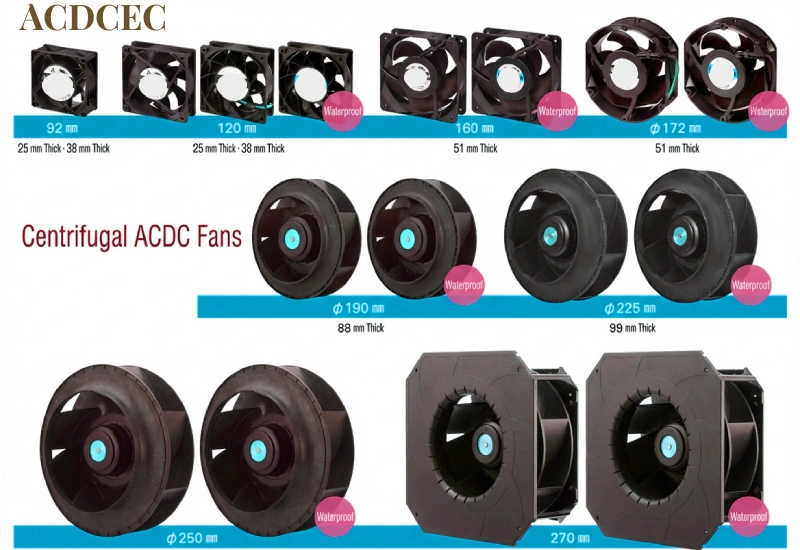
Compare Fan Types: AC, DC, EC, and Centrifugal
Choosing the right fan type is a key step in your cooling fan selection process. Each fan type from fanacdc offers unique features and advantages. You should understand these differences to match the best fan to your application.
| Fan Type | Unique Features | Static Pressure Capability |
|---|---|---|
| AC Fans | Simple, robust operation | Moderate |
| DC Fans | Precise speed control | Moderate |
| EC Fans | Efficient with intelligent control | High |
| Centrifugal Fans | High static pressure generation | Very High |
AC Fans by fanacdc
You can rely on AC fans for simple and robust operation. These fans work well in environments where you need steady airflow and moderate static pressure. AC fans from fanacdc are easy to install and maintain. They are ideal for control cabinets, industrial machinery, and telecom equipment. You get long service life and dependable cooling for continuous operation.
Choose AC fans when you need reliable performance and have access to standard AC power.
DC Fans by fanacdc
DC fans give you precise control over airflow and speed. You can adjust the fan speed to match your cooling needs, which helps reduce noise and save energy. DC fans from fanacdc are perfect for electronics, automation, and sensitive equipment. They offer quiet operation and low maintenance. You can use them in places where energy efficiency and noise control matter.
- Use DC fans for applications that need variable speed and low noise.
- Benefit from smart features like PWM control and real-time monitoring.
EC Fans and Advanced Solutions
EC fans combine the best of AC and DC technology. You get efficient airflow, intelligent speed control, and energy savings up to 30%. EC fans from fanacdc use advanced brushless motors and electronic controls. They are great for HVAC, refrigeration, and automation systems. You can enjoy quiet operation and long-term reliability.
Note: EC fans are the best choice when you want high efficiency and smart control.
Centrifugal Fans for High Pressure
Centrifugal fans stand out when you need to move air through complex ducts or high-resistance environments. These fans generate very high static pressure. fanacdc centrifugal fans are built for industrial systems, filtration units, and equipment with tight airflow paths. You can count on them for stable performance in demanding conditions.
- Select centrifugal fans for high-pressure, high-resistance applications.
- Ensure proper installation to maximize airflow and efficiency.
How to Choose the Right Fan Type:
- Calculate your required airflow and static pressure.
- Measure your available installation space.
- Match the fan type to your airflow and pressure needs.
- Consider noise, energy efficiency, and control features.
- Check for environmental protection and reliability.
By understanding these fan types, you can select the best cooling solution for your project. fanacdc offers a full range of AC, DC, EC, and centrifugal fans to meet your needs.
Guideline in Selecting a Fan: Size, Speed, and Configuration
Fan Size and Airflow
You need to match the fan size to your system’s airflow needs. Larger fans can move more air at lower speeds, which helps with cooling and reduces noise. Use this guideline in selecting a fan for your application:
- Identify your device’s ideal operating temperature and the range it must handle.
- Measure the total heat your equipment generates during normal use.
- Calculate the airflow needed to remove this heat and keep temperatures safe.
- Choose a fan that meets your airflow target and can handle the static pressure in your system.
Selecting the fan with the right size ensures your equipment stays cool and operates efficiently. If you have limited space, look for compact fans with high airflow ratings.
Speed, Noise, and Efficiency
Fan speed affects both cooling performance and noise. Higher speeds increase airflow but also raise noise levels. You should balance speed and noise for your environment.
A fan emits additional noise when it is not well matched to the load, which can significantly increase noise levels.
Proper ventilation and advanced fan designs help reduce noise. Engineers use special blade shapes and sound-absorbing materials to keep noise low. This improves comfort and helps meet workplace noise rules.
| Factor | Description |
|---|---|
| Fan Speed | Higher speeds mean more airflow but also more noise. |
| Fan Design | Optimized blades and materials can lower noise. |
| System Fit | Good integration reduces noise and improves airflow management. |
You can improve efficiency by choosing fans with smart speed control and energy-saving features.
Fan Direction and Mounting
You must install fans in the correct direction to move air where it is needed most. Place fans near heat sources and make sure nothing blocks the airflow. Secure mounting reduces vibration and noise.
- Increased fan speed leads to higher airflow but also more noise.
- Non-optimal fan operation can increase noise by 5 dB or more.
- Poor installation can cause flow distortions and extra noise.
fanacdc offers customization options for OEM and ODM projects. You can work with experts to design fans with unique sizes, performance curves, and mounting options. Technical support and after-sales service help keep your systems running smoothly.
Cooling Fan Selection: Reliability and Longevity
When you choose a cooling fan for industrial or electronics applications, you need to focus on reliability and long service life. Reliable fans help your equipment run smoothly and reduce the risk of costly downtime. You should always consider durability, environmental protection, and the support you receive after installation. fanacdc designs fans with robust engineering, advanced IP protection, and strong technical support to meet these needs.
Bearing Types and Service Life
The type of bearing inside your fan makes a big difference in how long it lasts and how well it works. You can choose from several bearing types, each with its own strengths:
- Sleeve bearings are quiet and cost-effective, making them a good choice for noise-sensitive environments.
- Ball bearings last longer and work well in high-temperature or harsh conditions. They can run in any position, which adds flexibility.
- Fluid bearings offer the longest service life, sometimes reaching up to 300,000 hours. These bearings are highly durable and help keep your system running for years.
Selecting the right bearing type helps you meet your system’s thermal needs and keeps noise levels low. Case studies show that choosing the best support can improve temperature control and reduce maintenance.
IP Rating and Environmental Protection
You must check the IP rating when you select a fan for tough environments. The IP rating tells you how well the fan resists dust and water. For most industrial settings, an IP54 rating is enough. In harsher places, you should look for IP65 or higher. IP68 fans give full protection against dust and can handle water submersion, which is important in mines or chemical plants.
| IP Rating | Description | Recommended Use |
|---|---|---|
| IP54 | Protection against dust and splashing water | General industrial environments |
| IP65 | Dust-tight and resistant to water jets | Harsh environments with heavy dust and spray |
| IP68 | Fully dustproof and submersible | Mines, chemical plants, extreme environments |
You do not need to pick the highest rating every time. Sometimes, higher ratings can lower heat dissipation. fanacdc offers fans with advanced IP protection, so you can match the rating to your real needs.
Maintenance and Support
Keeping your cooling fans in top shape means you need a good maintenance plan. Here are some steps you can follow:
- Set up a regular maintenance schedule to avoid sudden breakdowns.
- Lubricate the bearings as needed.
- Check the fan housing and blades for signs of wear.
- Balance the fan wheels to prevent vibration.
- Use sensors to monitor vibration levels.
- Keep the ventilation system clean.
You also benefit from strong technical support and after-sales service. fanacdc provides expert help for installation, troubleshooting, and confirming the selected fan meets your requirements. This support ensures your fans deliver reliable performance year after year.
Common Mistakes in Fan Selection
When you select a cooling fan, you want to avoid common mistakes that can harm your system’s performance and reliability. Many users overlook key factors, which leads to overheating, wasted energy, or even equipment failure. Let’s look at the most frequent errors and how you can prevent them.
Overlooking Static Pressure
You might think that picking a fan with a high airflow rating is enough. However, if you ignore static pressure, your fan may not move enough air through ducts or filters. This mistake often happens when you choose a fan based only on its free-air CFM rating. In real systems, airflow faces resistance from bends, filters, and tight spaces.
- Low static pressure can cause hot and cold spots in your equipment.
- High static pressure makes your system work harder, using more energy and wearing out parts faster.
- If you do not measure static pressure, you risk poor performance and possible system failure.
Always check both airflow and static pressure ratings to ensure your fan matches your system’s needs.
Incorrect Voltage or Power Type
Selecting the wrong voltage or power type can stop your fan from working or even damage your equipment. You need to match the fan’s voltage to your power supply. For example, using a 24V DC fan on a 12V supply will not provide enough cooling. Always confirm the voltage and current requirements before installation.
| Mistake | Result |
|---|---|
| Wrong voltage selected | Fan fails or overheats |
| Wrong power type | System damage or no operation |
Poor Airflow Path Design
You may install a powerful fan, but if the airflow path is blocked or poorly designed, cooling will suffer. Air needs a clear path to move heat away from critical components. Poor airflow design can cause overheating, create hot spots, and reduce the life of your equipment.
- Overheating increases operational risks and energy use.
- Hot spots stress hardware and can cause sudden shutdowns.
- Consistent airflow helps prevent component fatigue.
Make sure your enclosure allows air to flow smoothly from intake to exhaust.
Ignoring Environmental Conditions
If you ignore the environment where your fan operates, you risk equipment failure and safety hazards. High temperatures, dust, or humidity can damage fans and electronics. This can lead to downtime, higher maintenance costs, or even fires.
- Equipment failure disrupts production and increases costs.
- Excess heat can create safety risks.
- Downtime can delay customer orders and hurt your reputation.
You should always consider temperature, humidity, and dust levels when choosing a fan. Select fans with the right protection for your environment to keep your system safe and reliable.
You can achieve the best results by following a structured cooling fan selection process for your application. Start by calculating airflow, measuring installation space, and matching the right fan type. Evaluate reliability and consider smart features. When you consult fanacdc, you gain access to expert advice and custom solutions. Reliable, high-performance fans lower costs, extend equipment life, and keep your system safe.
| Feature | Benefit |
|---|---|
| Energy-efficient motor | Reduces costs and boosts reliability |
| Custom design options | Fits unique industrial requirements |
| IP-rated protection | Ensures performance in harsh environments |
FAQ
What is the difference between AC, DC, and EC fans?
You get AC fans for simple, robust cooling. DC fans offer precise speed control and low noise. EC fans combine energy efficiency with smart control. Choose based on your power source, control needs, and energy goals.
How do I calculate the airflow (CFM) needed for my system?
You can use this rule: plan for 1 CFM of airflow for every watt of heat your equipment produces. For more accuracy, use thermal analysis tools or consult with a cooling expert.
Why does static pressure matter when selecting a fan?
Static pressure shows how well a fan pushes air through obstacles like filters or ducts. If you ignore static pressure, your fan may not cool your equipment properly.
How often should I maintain my cooling fan?
You should check your fan every 6 to 12 months. Clean dust from blades and grills. Listen for unusual noise. Replace the fan if you notice reduced airflow or vibration.