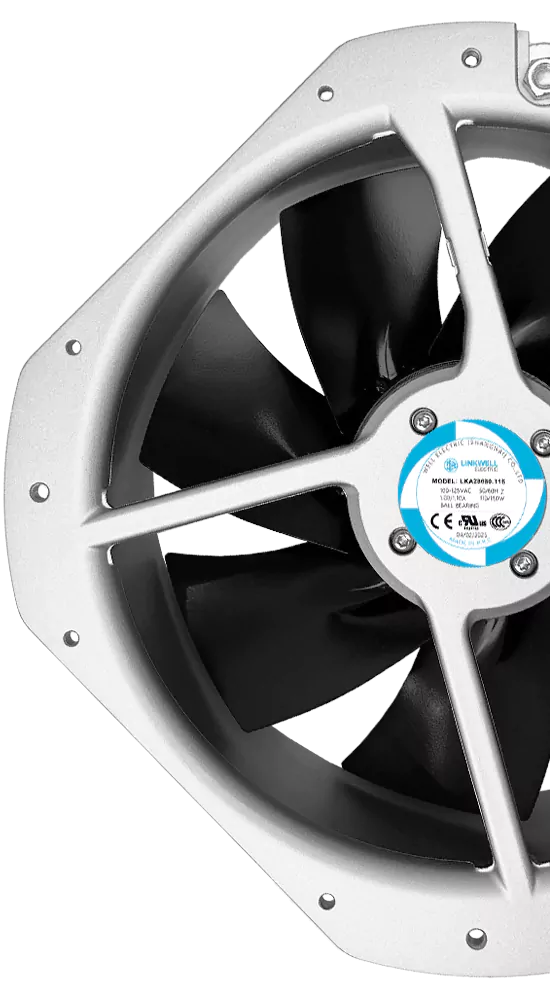
DC Exhaust Fan Manufacturer
Not a low‑voltage alternative to AC. A dedicated solution for battery‑powered, solar‑direct, and off‑grid exhaust applications. Telecom, energy storage, vehicles, and remote shelters.
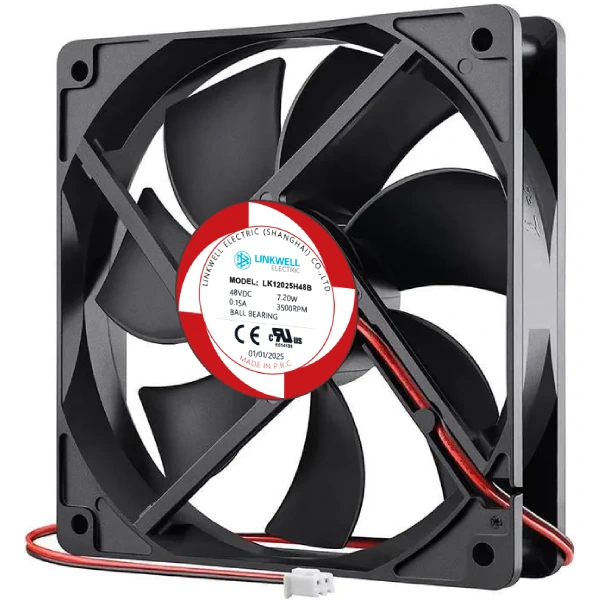
When AC Power Is Not Available or Efficient
DC exhaust fans are not a simple voltage conversion — they are purpose‑built for systems where AC power is unreliable, expensive, or simply absent.
Telecom Shelters
-48V DC systems are standard in telecom. Our DC exhaust fans integrate directly with existing DC power plants — no inverter, no conversion loss.
Energy Storage & Battery Cabinets
BESS containers operate on DC. Our fans can be directly controlled by BMS (battery management system), responding to cell temperature in real time.
Solar‑Powered Sites
Remote monitoring stations, irrigation controls, and off‑grid shelters. Run exhaust fans directly from solar panels or battery banks without AC inverters.
Vehicles & Mobile Equipment
12V/24V systems in trucks, buses, RVs, construction machines, and marine vessels. DC exhaust fans work from the existing vehicle electrical system.
What Makes DC Exhaust Fans Different
Direct Drive
No inverter needed. Connect directly to batteries, solar panels, or DC power supplies. Eliminate conversion losses and reduce system cost.
9–60V
Wide voltage input. One fan model works across 12V, 24V, and 48V systems — tolerant to voltage fluctuations common in battery operation.
<0.5W
Standby power consumption near zero. Ideal for solar‑powered or battery‑critical applications where every milliamp matters.
PWM Speed Control & Smart Signals – Native to DC
DC fans offer the simplest, most cost‑effective speed control methods. No VFDs, no complex drives.
PWM Control
Apply a 5V or 10V pulse‑width modulated signal directly to the fan. Duty cycle from 0% to 100% gives smooth, linear speed adjustment. Low cost, high reliability.
0–10V / Resistor Control
Simple analog control. A potentiometer or 0–10V signal from a PLC, thermostat, or BMS adjusts fan speed without digital complexity.
FG Tachometer Signal
Open‑collector pulse output. Each rotation generates a pulse. Real‑time speed monitoring for diagnostics, closed‑loop control, or remote reporting.
RD Locked Rotor Alarm
When the fan stops due to blockage or failure, the RD signal goes low. Critical for unattended sites — telecom towers, substations, remote shelters.
Add Your Heading Text Here
| Model | Voltage (VDC) | Power (W) | Airflow (CFM) | Static Pressure (Pa) | Speed Control | IP Rating |
|---|---|---|---|---|---|---|
| LK006DS1 | 48 (35–60V) | 180 | 500 | — | PWM / 0-10V | IP55 |
| LK010DS1 | 48 (35–60V) | 295 | 1000 | — | PWM / 0-10V | IP55 |
| LK015DS1 | 48 (35–60V) | 495 | 1500 | — | PWM / 0-10V | IP55 |
| LK015DS2 | 48 | 395 | 1500 | — | PWM / 0-10V | IP44 |
| LK020DS2 | 48 | 405 | 2000 | — | PWM / 0-10V | IP44 |
Full datasheets including dimension drawings and fan curves available. Custom voltages (12V, 24V, 48V) and signal options on request.
Engineered for the Realities of DC Systems
Battery voltage drops. Connections get reversed. Environments get harsh. Our DC exhaust fans are designed for those conditions.
Low‑Voltage Start
Guaranteed start‑up even when battery voltage sags to 9V (12V nominal) or 18V (24V nominal). No “brown‑out” failure.
Over‑Voltage & Under‑Voltage Protection
Automatic shutdown outside safe operating range. Protects the fan and your system from abnormal conditions.
Reverse Polarity Protection
Hook up the wires backwards? The fan won’t spin — but it won’t burn either. Saves installation errors in the field.
Wide Temperature Range
-20°C to +70°C operating range. Suitable for outdoor telecom cabinets, uninsulated shelters, and engine compartments.
FAQ of Ventilator Fans
Can I run a DC exhaust fan directly from a solar panel without a battery?
Yes, but with caution. Solar panel voltage varies with sunlight. Our wide‑voltage models (9–60V) can run directly, but speed will fluctuate. A small buffer battery is recommended for stable operation.
What happens if I connect a 24V fan to a 12V system?
It will spin slower and deliver less airflow. No damage, but performance will be below spec. For best results, match nominal voltage or use a wide‑voltage model.
What happens if I connect a 24V fan to a 48V system?
Do not do this. Exceeding maximum voltage will damage the fan. Our wide‑voltage models (9–60V) handle 12V, 24V, and 48V safely — standard models do not.
How do I choose between PWM speed control and 0–10V?
PWM is simpler and cheaper — just a signal wire and ground. 0–10V is better when your existing controller already outputs analog signals. Both offer linear speed adjustment.
Are DC exhaust fans less powerful than AC fans?
Not necessarily. For the same frame size and power consumption, DC and AC fans achieve similar airflow. The difference is in voltage and control, not raw power.
Can I get an IP66‑rated DC exhaust fan?
Yes. IP56 is standard for our outdoor models. IP66 is available for special projects — contact engineering for lead time.
Do your DC fans have built‑in reverse polarity protection?
Yes, as standard. Incorrect wiring will not damage the fan. It simply will not run until corrected.