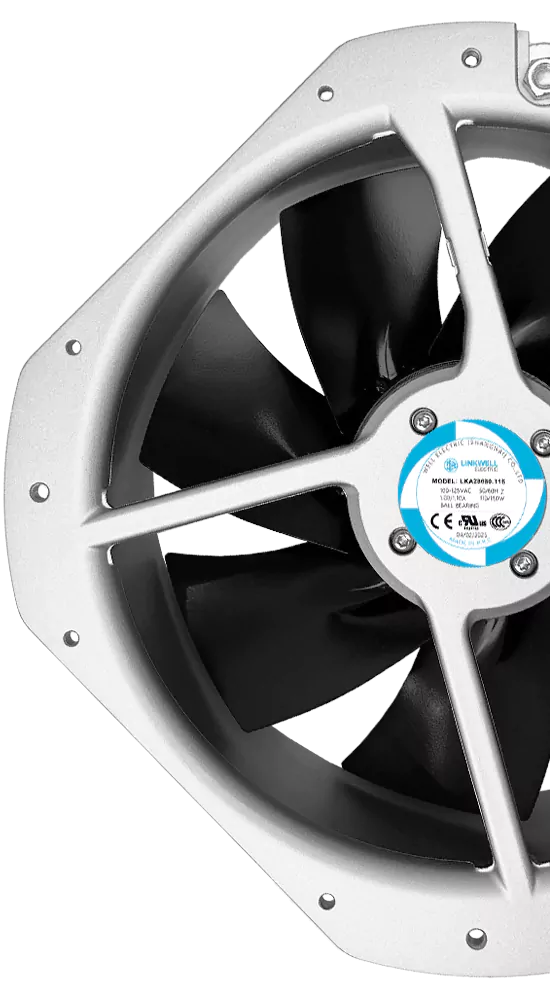
You may see that ec fan price changes a lot based on your needs. The main things that affect price are fan size, airflow, power, efficiency, voltage, noise level, protection, customization, and how many you buy. EC fans have special motors that help save energy. They are used in industrial cooling, HVAC, and AHU systems. These fans can lower your energy use by 15–30% compared to old fans.
Key Takeaways
- EC fan prices change with size, airflow, power, and efficiency. Pick the right fan for your needs so you do not spend too much.
- Bigger fans usually cost more because they need more materials and stronger motors. Think about your space and how much air you need before picking a fan size.
- Airflow capacity and static pressure are important for how well the fan works. Fans with higher airflow and pressure often cost more, so check what you really need.
- Energy efficiency is a big plus for EC fans. They might cost more at first, but they can save you 15-30% on energy bills over time.
- Voltage options change the price. Single-phase fans are cheaper. Three-phase fans cost more but work better for bigger jobs.
- Speed control features, like PWM or digital controls, help the fan use less energy and make less noise. Paying for these features can save money in the long run.
- Noise level is important for comfort. Quiet fans may cost more but are better for places like offices or hospitals.
- Buying many fans at once can lower the price for each fan. If you need a lot of fans, ask about bulk discounts to save money.
EC Fan Price Factors
Size and Structure
When you look at ec fans, size and structure play a big role in price. Bigger fans usually cost more because they use more materials and need stronger motors. Smaller fans fit tight spaces and cost less, but they might not move as much air.
Axial vs Centrifugal
You can pick between axial and centrifugal fans. Axial fans push air straight through. They work well for cooling and ventilation. Centrifugal fans move air in a different way. They create higher pressure and work best in duct systems or places with resistance. Centrifugal fans often cost more because their design is more complex and they use extra parts.
Blade and Material
The blades and materials also affect the cost. Metal blades last longer and handle tough environments. Plastic blades cost less and work well in light-duty jobs. Some ec fans use special coatings or high efficiency motors to boost durability and efficiency. If you need a fan for harsh conditions, you might pay more for stronger materials.
Tip: Always check the blade material before you buy. It can change the fan’s efficiency and lifespan.
Airflow and Pressure
Airflow and pressure are key factors in ec fan pricing. If you need a fan that moves a lot of air, you will pay more. High airflow means bigger blades and stronger motors.
Airflow Capacity
Airflow capacity tells you how much air the fan moves. Fans with higher airflow cost more because they need bigger motors and better blades. If your application needs strong cooling or ventilation, you should expect a higher price.
Static Pressure
Static pressure measures how well the fan pushes air against resistance. Fans with high static pressure work in places like filters or ducts. These fans cost more because they use advanced designs and stronger motors. If you need a fan for a system with lots of resistance, you will need to invest more.
| Feature | Low Cost Fans | High Cost Fans |
|---|---|---|
| Airflow Capacity | Low | High |
| Static Pressure | Low | High |
| Blade Material | Plastic | Metal/Coated |
Power and Efficiency
Power and efficiency are important when you choose ec fans. Fans with higher motor power can move more air and handle tough jobs. These fans cost more because they use advanced motors and extra energy-saving features.
Motor Power
Motor power affects how much air the fan can move. If you need a fan for heavy-duty cooling, you will pay more for a stronger motor. High power fans use more energy but offer better performance.
Energy Efficiency
Energy efficiency is a big reason people pick ec fans. These fans use less energy than old AC fans. You pay more upfront, but you save money over time because ec fans cut your energy bills. EC fans use high efficiency motors that deliver strong performance and lower energy use. This makes them a smart choice for long-term savings.
Note: EC fans cost more at first, but their energy efficiency means you spend less on energy in the long run.
Voltage Options
Voltage options are important for ec fan price. Some fans use single-phase power. These work well in homes or small systems. They cost less because their motors are simple. Other fans use three-phase power. These are for big factories or large machines. Three-phase fans can handle more power and run smoother. Because of this, they usually cost more.
If you need a fan for different countries, you might want wide voltage input. These fans work with many voltages and still perform well. They have special electronics to keep the motor steady. This makes them cost more, but it helps avoid problems later.
Tip: Pick the right voltage for your power source. The wrong choice can break the fan or waste energy.
| Voltage Option | Typical Use | Price Impact |
|---|---|---|
| Single-phase | Small systems, homes | Lower cost |
| Three-phase | Industrial, large fans | Higher cost |
| Wide voltage input | Variable power supply | Higher cost |
Speed Control
Speed control also changes the price of ec fans. You can change fan speed in a few ways: PWM, analog, or digital. PWM is the most common way. It turns the power on and off very fast. This saves energy and keeps the fan working well. Fans with PWM cost a bit more but save energy.
Analog speed control uses voltage or current to change speed. It is simple and cheap but not as exact. You might pay less at first, but it can waste energy later.
Digital speed control is the most advanced. It uses microcontrollers to set speed very exactly. This can save energy and make the fan quieter. But it costs more because it needs extra parts and programming.
Note: If you want the best energy savings and control, pick digital or PWM speed control.
Noise Level
Noise level is important when you choose an ec fan. Fans made to be quiet cost more. They use special blades, motors, and covers. These parts help stop shaking and lower sound. If you need a quiet fan for an office or hospital, you will pay more for this design.
Quiet fans can change speed to stay quiet when full power is not needed. This also saves energy. Regular fans without noise control cost less but can be loud.
Tip: Think about where you will use the fan. Quiet fans cost more but make the space nicer and less noisy.
| Noise Level | Design Features | Price Impact |
|---|---|---|
| Standard | Basic blades and motors | Lower cost |
| Low noise | Special blades, vibration control | Higher cost |
Picking the right voltage, speed control, and noise level helps you get the best ec fan. These things change the price but also affect how well the fan works and saves energy. If you balance cost and what you need, you get a fan that works well for a long time.
IP Rating & Protection
When you choose ec fans, you need to look at the IP rating. This rating tells you how well the fan handles dust and water. If you want a fan for outdoor use or wet places, you need a higher IP rating. Here’s what you should know:
Dust/Water Resistance
- IPX5 fans give basic moisture protection. You can use them outside, and they balance cost and protection.
- IPX7 fans offer better waterproofing. These fans need special production steps, like vacuum coating. This makes the fan more expensive.
- IPX8 fans are fully waterproof. They use advanced parts and a potting process. You pay more for these fans, but they work in tough conditions.
Higher IP ratings mean the fan uses special parts and production methods. You pay more for these features, but your fan lasts longer. Some ec fans also have explosion-proof designs or advanced technology. These features use high-quality materials and engineering, so the cost goes up.
Corrosion Protection
If you need a fan for places with chemicals or salt, you want corrosion protection. Fans with special coatings or stainless steel parts resist rust and damage. These fans cost more, but they last longer and need less maintenance. For example, IP55-rated ec fans work well in humid areas and cost less. IP68-rated ec fans are made for outdoor jobs and cost more because they use advanced materials.
Tip: Always check the IP rating and protection features before you buy. You want your fan to match your environment.
Temperature & Environment
You need to think about temperature and humidity when you pick ec fans. Some fans work in extreme heat or cold. Others handle high humidity. If your fan must run in tough conditions, you pay more for special designs.
High/Low Temp
Fans built for high or low temperatures use stronger parts. They cost more, but they keep working when regular fans fail. For example, Mr. Li’s factory switched to ec fans and saved $55 per fan each year on electricity. Mr. Wang’s data center used ec fans and saved nearly $20 per fan every year. These fans cost more at first, but you save money over time.
Humidity
If you need a fan for damp places, look for models with sealed motors and coated blades. These features keep water out and stop rust. You pay more for these fans, but they last longer and need fewer repairs.
Note: Fans that handle extreme temperatures and humidity cost more, but they help you avoid downtime and save money in the long run.
Bearings & Service Life
The type of bearing inside your fan changes how long it lasts and how much it costs. You have three main choices: ball bearings, sleeve bearings, and FDB bearings.
Ball vs Sleeve
| Bearing Type | Cost Impact | Service Life Impact | Performance Characteristics |
|---|---|---|---|
| Ball Bearings | Higher initial cost | Longer service life | More stable, handles higher speeds, can be noisier |
| Sleeve Bearings | Lower initial cost | Shorter service life | Less stable, may fail in high temperatures |
| FDB Bearings | Moderate cost | Extended service life | Good for continuous operation, reduces maintenance costs |
Ball bearings cost more, but your fan lasts longer and works better at high speeds. Sleeve bearings cost less, but they may wear out faster, especially in hot places. FDB bearings sit in the middle. They cost a bit more than sleeve bearings, but they last longer and need less maintenance.
MTBF
MTBF stands for “mean time between failures.” If you want a fan that runs for years without stopping, pick one with a high MTBF. Choosing better bearings can lower your total ownership cost. Poor bearing choices may lead to more repairs and higher warranty costs. The bearing type also affects how efficient your fan is and how long it lasts.
Tip: Always ask about the bearing type and MTBF when you buy ec fans. You want your fan to run smoothly and save you money.
Certifications
CE/UL/RoHS
You want your ec fans to be safe and reliable. That’s where certifications come in. When you see marks like CE, UL, or RoHS, you know the fan meets strict rules. CE means the fan follows European safety standards. UL shows the fan passed tests in the United States. RoHS means the fan does not use harmful chemicals.
If you need ec fans for Europe or North America, you must have these certifications. Fans with these marks usually cost more. The factory pays for testing and paperwork. You get peace of mind and can use the fan in more places.
Tip: Always ask for certificates before you buy. Certified ec fans last longer and keep your workplace safe.
Customization
Cable/Connector/Label
Sometimes, you need ec fans with special cables, connectors, or labels. Maybe your project needs a longer cable. Maybe you want a plug that fits your machines. You might even want your company’s name on the label. These changes help the fan fit your needs.
Custom cables or connectors can raise the cost. The factory must change their process. Custom labels also add a small fee. If you order many fans, the extra cost per fan goes down.
Packaging
You may want special packaging for your ec fans. Maybe you need strong boxes for shipping. Maybe you want your logo on the box. Custom packaging protects the fan and makes your brand look good.
Special packaging can add to the cost, especially for small orders. If you buy in bulk, you save money on each fan. Always ask about packaging options when you order.
Note: Custom features make your ec fans perfect for your job. They also change the price, so plan your budget.
Order Quantity & MOQ
Bulk Discounts
When you buy more ec fans, you pay less for each one. This is called a bulk discount. Factories like big orders. They can make many fans at once and save money. They pass some of these savings to you.
If you need a lot of fans, ask about bulk discounts. You can save a lot on your total cost. Even a small discount adds up when you buy hundreds of fans.
Minimum Order
Factories often set a minimum order quantity, or MOQ. This means you must buy a certain number of fans. Making just one fan costs too much for the factory. If you only need a few fans, you might pay more for each one.
Always check the MOQ before you order. If you need a small number, ask if the factory can help. Sometimes, they offer samples or small batches for testing.
| Order Size | Price per Fan | Best For |
|---|---|---|
| Small (1–10) | Higher | Testing, Prototypes |
| Medium (11–100) | Medium | Small Projects |
| Large (100+) | Lower | Factories, Big Orders |
Tip: Plan your order size. Buying more fans at once can lower your cost and help your project run smoothly.
Manufacturing Scale
Large-scale Production
When you look at EC fan prices, you might wonder why some brands cost less. The answer often comes down to manufacturing scale. Big factories in places like China and Southeast Asia make thousands of EC fans every day. They buy materials in bulk and use machines that work fast and don’t need much rest. This lets them make each fan for less money. You get a better price because the factory saves on every step.
This is called “economies of scale.” When a company makes more fans, the cost for each one drops. That’s why you see lower prices from big manufacturers. They pass some of those savings to you. If you need a lot of fans for your project, you can really see the difference.
But there’s something else to think about. Sometimes, things outside the factory can change prices. Trade tensions or new rules between countries can make it harder to get parts or ship fans. For example, if there are problems between the US and China, prices might go up or fans might take longer to arrive. You should always ask your supplier about where the fans are made and if there are any risks.
Tip: If you want the best price, look for suppliers who make fans on a large scale. But also check if they have a stable supply chain.
Raw Material Costs
Copper/Rare Earth Fluctuations
Raw materials play a big part in EC fan prices. The most important ones are copper and rare earth metals. Copper goes into the motor windings. Rare earth metals help make the magnets inside the motor. If the price of copper or rare earths goes up, the cost of your fan will go up too.
Prices for these materials can change a lot. Sometimes, mines close or countries limit exports. When that happens, factories pay more for materials. They have to charge you more for the fans. On the other hand, if material prices drop, you might see lower fan prices.
Here’s a quick look at how raw material costs affect EC fan prices:
| Material | When Prices Rise | When Prices Fall |
|---|---|---|
| Copper | Fans cost more | Fans cost less |
| Rare Earth Metals | Fans cost more | Fans cost less |
You can’t control the price of copper or rare earths, but you can ask your supplier if prices are stable. Some companies buy materials ahead of time to keep prices steady. Others might change prices every few months.
Note: Always check if your quote is fixed or if it might change because of raw material costs. This helps you plan your budget and avoid surprises.
Standard vs Custom EC Fans
When you shop for EC fans, you’ll see two main choices: standard models and custom designs. Each option has its own benefits and price points. Let’s break down what you get with each type and why custom fans often cost more and take longer to deliver.
Standard Features
Standard EC fans come ready to use. Manufacturers design these fans for common jobs like cooling, ventilation, or HVAC systems. You can pick from a catalog of sizes, voltages, and airflow ratings. These fans usually have:
- Fixed sizes and shapes
- Common voltage options (like 230V or 115V)
- Standard airflow and pressure ratings
- Basic protection features (like IP54 or IP55)
- Regular connectors and cables
You get a lower price because factories make these fans in large batches. You also get fast delivery since they keep them in stock. If your project matches these specs, a standard EC fan is a smart choice.
Tip: Standard fans work best if you don’t need special features or unique sizes.
Custom Requirements
Sometimes, your project needs more than a standard fan. That’s when you look at custom EC fans. These fans fit your exact needs, but they can cost more and take longer to make.
Application-specific Design
You might need a fan for a special job. Maybe your equipment has a tight space, or you need a fan that works in high heat. Custom fans can have:
- Unique shapes or mounting holes
- Special coatings for harsh environments
- Extra-long cables or rare connectors
These changes help the fan fit your system perfectly.
Performance Specs
Custom fans can meet strict performance needs. You might want higher airflow, lower noise, or a special speed control. The factory may need to redesign the motor or blades. This takes extra time and skill.
| Feature | Standard Fan | Custom Fan |
|---|---|---|
| Airflow | Fixed range | Adjustable |
| Noise Level | Standard | Ultra-low |
| Voltage | Common | Special |
Lead Time & Cost
Custom fans take longer to build. The factory must design, test, and sometimes make new tools. You may wait weeks or even months for delivery. The price goes up because of extra work and smaller production runs.
Note: Custom EC fans give you the perfect fit, but you pay more and wait longer. Always plan ahead if you need a custom solution.
If you know your project needs special features, talk to your supplier early. They can help you decide if a standard fan will work or if you need a custom design.
EC Fan Price vs AC Fan Price
Initial Cost
When you look at fans for your project, you probably notice the initial cost first. EC fans usually cost more than AC fans when you buy them. For example, an AC fan might cost $1,000, while an EC fan could cost $1,400. You pay more upfront for EC fans because they use advanced motors and electronics. AC fans are cheaper at the start, often about 15% less than EC fans. This lower initial cost makes AC fans seem like a good deal if you only think about the price tag.
But you should not focus only on the initial cost. EC fans save you money over time. They use less energy and last longer. If you want to see how the numbers stack up, check out this table:
| Item | AC Fan | EC Fan |
|---|---|---|
| Initial Cost | $1,000 | $1,400 |
| Annual Energy Savings | — | $350 |
| Payback Period | — | 1.14 years |
You can see that EC fans cost more at first, but you get your money back in just over a year. After that, you keep saving every year.
Efficiency & Savings
EC fans stand out because they use much less energy than AC fans. You can save up to 70% on your energy bills by switching to EC fans. That’s a big deal for factories and businesses. EC fans use brushless DC motors with electronic controls. This makes them much more efficient. AC fans waste energy, especially when you slow them down. EC fans adjust their power use based on speed, so you only use what you need.
If you switch from AC fans to EC fans, you can cut your energy costs by about 20%. That’s almost like getting a 5% boost in sales for your business. The payback period is short, usually between 1.5 and 2 years. Sometimes, you get your money back in just a few months because your operating costs drop so much.
Here’s a quick look at the savings:
| Aspect | Value |
|---|---|
| Energy Savings | Up to 70% less energy used |
| Payback Period | 1.5 to 2 years |
Tip: If you want to lower your bills and help the environment, EC fans are a smart choice.
Speed Control
You get better speed control with EC fans. They let you change the speed easily and keep the fan running efficiently. EC fans use electronic controls to adjust speed. When you slow down an EC fan, it uses less power. AC fans do not work this way. If you slow down an AC fan, it still uses almost the same amount of energy. That means you waste money.
EC fans also run quieter and last longer because you can control the speed. AC fans do not have this feature unless you add expensive parts. EC fans give you more options for your system. You can set the speed for different jobs and save energy every time.
- EC fans provide adaptive speed control for better efficiency.
- Power use drops when you slow down EC fans, but stays high for AC fans.
- EC fans last about twice as long as AC fans.
Note: If you need flexible speed and want to save money, EC fans are the best pick.
Long-term Value
When you think about fans for your business or home, you probably want something that lasts and saves money over time. EC fans really shine here. You pay more upfront, but you get a lot back in the long run. Let’s break down why EC fans offer better value than AC fans.
First, EC fans use less energy. You see lower electricity bills every month. For example, the EC Axial Fan from Suzhou Dowell Ventilation Technology Co., Ltd works quietly and efficiently. It fits right into modern HVAC systems and gives you precise airflow. You notice your power costs drop, which adds up year after year.
Next, EC fans need less maintenance. Their motors have fewer parts that wear out. You spend less time and money fixing them. AC fans can be durable, but they often need more repairs and replacements. That means more downtime and higher costs for you.
You also get better control with EC fans. You can adjust the speed easily. This helps you keep the air just right and saves even more energy. AC fans don’t offer this kind of smooth control. You might have to buy extra parts or deal with noisy operation.
Let’s look at some key points:
- EC fans offer high energy efficiency and smooth speed control.
- You enjoy quiet operation, which makes your space more comfortable.
- You spend less on maintenance and repairs.
- Your air quality improves because EC fans run reliably and adjust to your needs.
- You help the environment by using less energy and reducing waste.
Here’s a quick table to compare long-term value:
| Feature | AC Fan | EC Fan |
|---|---|---|
| Energy Efficiency | Moderate | High |
| Maintenance Costs | Higher | Lower |
| Noise Level | Often loud | Quiet |
| Speed Control | Limited | Precise |
| Environmental Impact | More energy used | Less energy, eco-friendly |
| Air Quality | Standard | Improved |
You see that EC fans give you more benefits over time. They help you save money, keep your equipment running longer, and make your space nicer. You also do your part for the planet. Even though EC fans cost more at first, their long-term value makes them a smart investment.
Tip: If you want a fan that pays you back year after year, choose EC fans. You’ll notice the difference in your bills, your comfort, and your peace of mind.
EC Fans for Industrial Applications
HVAC & AHU
You probably see EC fans everywhere in heating, ventilation, and air handling units (AHU). These systems need steady airflow and energy savings. When you use an ec duct fan in your HVAC or AHU, you get better control over air movement. You can adjust the speed to match the room’s needs. This helps you save money on power bills.
If you run a big building, you want fans that last a long time and don’t break down. EC fans work quietly, so you don’t hear loud noises in offices or schools. You also get less heat from the motor, which means your cooling system works better. Some buildings use many ec duct fan models to move air through long ducts. These fans handle high pressure and keep the air fresh in every room.
Tip: If you want to lower your energy costs and keep your building comfortable, try using an ec duct fan in your HVAC system.
Electrical Enclosures
Electrical enclosures protect sensitive equipment from dust and heat. If you use the wrong fan, your equipment might overheat or fail. An ec duct fan fits well in these enclosures because it moves air efficiently and keeps the temperature steady. You can pick a fan with the right size and airflow for your box.
Many factories use ec duct fan units to cool control panels and switch cabinets. These fans have a compact design, so they fit in tight spaces. You also get options for dust and water protection. This means your equipment stays safe, even in tough environments. You can trust an ec duct fan to run for years without much maintenance.
| Application | Why Use EC Duct Fan? |
|---|---|
| Control Panels | Keeps electronics cool |
| Switch Cabinets | Prevents overheating |
| Server Enclosures | Quiet and reliable airflow |
Telecom & New Energy
Telecom stations and new energy sites need fans that work all day, every day. You can’t afford downtime. An ec duct fan gives you strong airflow and uses less power. This is important for telecom towers, battery rooms, and solar inverter boxes.
You might need fans that handle high temperatures or work in outdoor cabinets. EC fans with special coatings or high IP ratings protect your equipment from dust and rain. Many telecom companies choose ec duct fan models because they run quietly and last a long time. In new energy projects, these fans help cool batteries and inverters, making sure your system runs smoothly.
Note: If you want reliable cooling for telecom or new energy, an ec duct fan is a smart choice.
Industrial Automation
You see EC fans everywhere in industrial automation. These fans help keep machines cool and running smoothly. Many factories now use programmable EC fans with IoT sensors. You can set these fans to adjust speed based on real-time heat. This saves energy and keeps your equipment safe. Governments want factories to use less power. EC fans help you meet these rules and lower your carbon footprint.
You might notice that precision cooling is a big deal in Industry 4.0. EC fans let you control airflow exactly where you need it. If you use variable-speed EC fans, you can save up to 45% on energy compared to old fixed-speed fans. That means you spend less on electricity and maintenance. EC fans also last longer because they use advanced motors. You get fewer breakdowns and more uptime.
Here’s what makes EC fans popular in automation:
- Programmable speed control for precise cooling
- IoT sensors for real-time energy optimization
- Lower carbon footprint for your facility
- Up to 70% less energy used than traditional fans
Tip: If you want your automation system to run efficiently, EC fans are a smart choice.
Refrigeration & Power
You need reliable cooling in refrigeration and power systems. EC fans work well in these tough environments. They handle high humidity and extreme temperatures. You can trust EC fans to keep your compressors and power cabinets cool. These fans use less energy, so you save money every month.
Many cold storage facilities use EC fans to keep food fresh. You can adjust the fan speed to match the cooling demand. This helps you avoid wasting energy. EC fans also run quietly, which is important in places where noise matters. Power stations use EC fans to cool electrical equipment. You get steady airflow and fewer repairs.
If you upgrade to EC fans, you pay more at first. Over time, you see big savings on your energy bills. EC fans need less maintenance, so you spend less on repairs. You also meet strict energy rules for commercial buildings.
EC Duct Fan Use Cases
You find the ec duct fan in many industrial applications. This fan stands out because it offers strong airflow and high efficiency. You can use an ec duct fan in HVAC systems, electrical enclosures, and telecom cabinets. It fits well in places where you need reliable cooling and dust protection.
Let’s look at how the ec duct fan affects your project costs:
| Aspect | Description |
|---|---|
| Initial Investment | You pay more upfront for an ec duct fan, but you save money in the long run. |
| Energy Efficiency | The ec duct fan cuts your electricity bills by using less power. |
| Long-term Performance | Advanced motors in the ec duct fan mean fewer breakdowns and less downtime. |
| Quality Control | Factories test each ec duct fan to make sure it lasts and works well. |
You can use the ec duct fan in data centers, factories, and commercial buildings. It helps you meet energy-saving goals and keeps your equipment safe. If you want a fan that works hard and saves money, the ec duct fan is a great pick.
Note: Always check the specs of the ec duct fan before you buy. Make sure it matches your cooling needs and fits your system.
Price Factor Table
Factor vs Cost Impact
Want to know what makes an EC fan cost more or less? Here’s an easy table to help you see which parts affect the price. Use it when you compare fans or ask for prices.
| Factor | Lowers Price 🟢 | Raises Price 🔴 | What to Watch For |
|---|---|---|---|
| Fan Size | Small size | Large size | Bigger fans need more materials |
| Fan Structure | Simple design | Complex/Heavy-duty | Special shapes cost extra |
| Airflow Capacity | Low airflow | High airflow | High airflow needs bigger motor |
| Static Pressure | Low pressure | High pressure | Ducts or filters raise cost |
| Motor Power | Lower wattage | Higher wattage | More power means higher price |
| Energy Efficiency | Standard efficiency | Premium/high efficiency | Saves money over time |
| Voltage Option | Single-phase | Three-phase/Wide input | Wide input adds electronics |
| Speed Control | Basic/Analog | PWM/Digital | More control costs more |
| Noise Level | Standard | Low noise design | Quiet fans need special parts |
| IP Rating | IP20–IP44 | IP55–IP68 | Outdoor use needs better sealing |
| Corrosion Protection | None | Coated/Stainless | Needed for harsh places |
| Temperature Range | Standard | Extreme high/low | Special parts for tough jobs |
| Bearing Type | Sleeve | Ball/FDB | Ball/FDB last longer |
| Certifications | None/Basic | CE/UL/RoHS | Needed for safety or export |
| Customization | Standard | Custom cables/labels/packaging | Custom orders take more work |
| Order Quantity | Large batch | Small batch | Bulk orders get discounts |
| Manufacturing Scale | High volume | Low volume | Big factories offer better price |
| Raw Material Cost | Stable/Low | Fluctuating/High | Copper and rare earths matter |
Tip: To save money, choose standard features and buy in bulk. If you want special features, expect a higher price.
Use this table to see which parts affect your project most. Lots of red means your fan will cost more. Stick with green to keep your budget low.
Note: Always pick fan features you really need. Paying for extras wastes money.
Application Feature Table
Application vs EC Fan Features
Picking the right EC fan means you need to match its features to your job. Different jobs need different kinds of fans. For example, a fan for an office must be quiet. A fan for a factory must handle dust. Knowing what you need helps you get the best fan.
Here’s a simple table that shows where EC fans work best and what features to look for:
| Application | Recommended EC Fan Features | Why It Matters |
|---|---|---|
| HVAC & AHU | High airflow, low noise, PWM speed control, IP54 or higher | Keeps air moving quietly and efficiently in buildings |
| Electrical Enclosures | Compact size, high static pressure, IP55+, corrosion protection | Protects sensitive electronics from heat and dust |
| Telecom & New Energy | Wide voltage input, high efficiency, low noise, IP65+ | Reliable cooling in harsh outdoor environments |
| Industrial Automation | Digital speed control, high MTBF bearings, smart sensors | Precise airflow control and long service life |
| Refrigeration & Power | High static pressure, corrosion resistance, wide temp range | Handles tough conditions and keeps equipment cool |
EC fans work better than other fans for many jobs. They use brushless motors and smart controls. This makes them very efficient. EC fans are quiet, usually between 30 and 45 decibels. You can change the speed easily. EC fans last longer, often 5 to 8 years. AC fans last only 2 to 3 years.
Here’s a quick table to show how fan types compare:
| Characteristic | AC Fans | DC Fans | EC Fans |
|---|---|---|---|
| Power Type | AC only | DC only | AC/DC adaptive |
| Motor Type | Induction motor | Brushless motor | Brushless motor + electronic control |
| Efficiency Level | 15%-50% | Medium (~30%) | High (75%-90%) |
| Noise Level | Medium (50-70 dB) | Low (40-50 dB) | Very low (30-45 dB) |
| Control Flexibility | Fixed speed | Flexible speed | Intelligent speed, remote control |
| Maintenance | Low (annual) | Medium | Low (brushless design) |
| Service Life | 2-3 years | 3-5 years | 5-8 years |
Think about where you will use your EC fan. For a data center, pick fans with low noise and good speed control. For salty or humid places, choose fans with corrosion protection and high IP rating. For factories, pick fans with strong motors and tough bearings.
Tip: Match your fan’s features to your job. Don’t pay for features you don’t need. This helps you get the best price and performance.
Choosing the right EC fan features helps you save energy, reduce noise, and keep your equipment safe. It’s all about finding the best fan for your project.
Common Pricing Mistakes
When you compare EC fan prices, you might make some common mistakes. These mistakes can lead you to pick the wrong fan or pay more than you should. Let’s look at the most frequent errors and how you can avoid them.
Size-only Comparison
You might think that picking a fan is all about size. Many buyers look at the diameter or length and compare prices based only on that. This is a big mistake. EC fans come in many sizes, but the size doesn’t tell you everything about performance or cost.
- A bigger fan isn’t always better for your job.
- Small fans can cost more if they have special features.
- Two fans with the same size can have different airflow, noise, or efficiency.
Tip: Don’t just look at the size. Always check the airflow, pressure, and other specs. Ask yourself what you really need for your project.
Ignoring Airflow/Pressure
Another mistake is ignoring airflow and pressure. You might see a fan that fits your space and think it’s good enough. If you don’t check how much air it moves or how well it handles resistance, you could end up with a fan that doesn’t work.
- Airflow tells you how much air the fan moves. If you need strong cooling, you want high airflow.
- Static pressure shows how well the fan pushes air through filters or ducts. If your system has lots of resistance, you need a fan with high static pressure.
Here’s a quick table to help you remember:
| Spec | Why It Matters |
|---|---|
| Airflow | Keeps your equipment cool |
| Static Pressure | Handles filters and ducts |
Note: Always check both airflow and pressure. If you skip these, you might buy a fan that fails in your system.
Overlooking Control
You might forget about speed control when you compare EC fan prices. Some fans let you change the speed with PWM, analog, or digital controls. Others run at a fixed speed. If you need to adjust airflow for different jobs, you want a fan with good control options.
- Fans with speed control save energy and reduce noise.
- Fixed-speed fans cost less but can waste power.
- Digital and PWM controls give you more flexibility.
Alert: If you overlook control features, you might pay more in the long run. Pick a fan that matches your control needs.
When you shop for EC fans, remember these mistakes. Don’t just look at size. Always check airflow, pressure, and control options. This helps you get the best fan for your project and saves money.
Service Life Neglect
You might think that picking the cheapest EC fan is the best way to save money. Many buyers focus on the price tag and forget about how long the fan will actually last. This is a big mistake. Service life matters a lot when you compare EC fan prices. If you ignore it, you could end up spending more in the long run.
Let’s break it down. EC fans come with different types of bearings, motors, and materials. Some fans last only a couple of years. Others keep running for five or even eight years. If you buy a fan with a short service life, you’ll need to replace it sooner. That means more downtime, extra labor, and higher costs for your business.
Here’s a quick table to show how service life affects your total cost:
| Fan Type | Average Service Life | Replacement Frequency | Long-term Cost |
|---|---|---|---|
| Low-cost EC Fan | 2–3 years | High | Higher |
| Premium EC Fan | 5–8 years | Low | Lower |
You can see that paying a little more for a premium EC fan saves you money over time. You don’t have to worry about frequent replacements or surprise breakdowns.
Tip: Always ask about the fan’s MTBF (Mean Time Between Failures) and bearing type. Ball bearings and FDB bearings usually last longer than sleeve bearings. If you want a fan that runs smoothly for years, check these specs before you buy.
You should also look at warranty terms. Some suppliers offer longer warranties for fans with better service life. That’s a good sign. It means the manufacturer trusts their product.
Don’t forget about maintenance. Fans with longer service life need less maintenance. You spend less time fixing them and more time focusing on your business. If you skip this step, you might end up with a fan that needs constant repairs.
Here’s what you can do to avoid this mistake:
- Ask for the MTBF and bearing type.
- Check the warranty period.
- Look for reviews or case studies about fan durability.
- Think about the total cost, not just the price tag.
If you pay attention to service life, you get a fan that works harder and lasts longer. You save money, avoid headaches, and keep your equipment safe.
Buyer Info for Accurate Quote
When you want an accurate EC fan price quote, you need to give your supplier clear details. The more information you share, the easier it is for them to match the right fan to your needs. Let’s break down what you should prepare before you ask for a quote.
Size & Structure
Start with the basics. Tell your supplier the size of the fan you need. You can measure the diameter or the length and width if it’s a square fan. If you know the mounting hole pattern or the thickness, include that too. These details help the supplier pick a fan that fits your space.
You should also mention the structure. Do you want an axial fan or a centrifugal fan? Axial fans move air straight through, while centrifugal fans push air out at an angle. If you have a special shape or need a fan with a certain frame, let the supplier know. The more details you give, the less chance there is for mistakes.
- Fan diameter or dimensions (mm or inches)
- Mounting hole pattern
- Fan thickness or depth
- Axial or centrifugal type
- Special frame or housing needs
Tip: If you have a competitor’s model number, share it. This helps the supplier find a matching EC fan faster.
Voltage & Input
Next, think about power. Tell your supplier what voltage you use. Most EC fans come in common voltages like 12V, 24V, 48V, 115V, or 230V. If your project uses a special voltage, mention it right away. This keeps you from getting a fan that won’t work with your system.
You should also say if you need single-phase or three-phase input. Some fans can handle a wide range of voltages. If you need this, ask for “wide voltage input.” Don’t forget to mention the control interface you want. Do you need PWM, analog, or digital speed control? This affects both the price and how you use the fan.
- Voltage (for example, 230V or 24V)
- Single-phase or three-phase
- Wide voltage input needed?
- Control interface (PWM, analog, digital)
Note: Giving the right voltage and control info helps you avoid delays and extra costs.
Airflow & Pressure
Now, let’s talk about performance. You need to tell your supplier how much air you want the fan to move. This is called airflow. You can measure it in CFM (cubic feet per minute) or m³/h (cubic meters per hour). If you’re not sure, think about how big your room or equipment is and how fast you want the air to change.
You also need to share the static pressure requirement. This tells the supplier how much resistance the fan must overcome. You can measure static pressure in Pascals (Pa) or inches of water gauge (in. w.g.). If your fan will push air through filters or long ducts, you need a higher static pressure.
- Airflow requirement (CFM or m³/h)
- Static pressure (Pa or in. w.g.)
- Where the air goes (open space, duct, filter)
Tip: If you give both airflow and pressure, your supplier can pick a fan that works well and lasts longer.
When you provide these details, you help your supplier give you the best EC fan for your job. You also get a faster and more accurate price quote. Take a few minutes to gather this info before you ask for a quote—it saves you time and money in the end.
Speed & Noise
You want your EC fan to work just right for your project. To get the best price and the right fan, you need to tell your supplier about speed and noise. These two things can change how much you pay and how happy you are with your fan.
Let’s start with speed. Every EC fan has a speed, usually measured in RPM (revolutions per minute). Some fans run at one fixed speed. Others let you change the speed with controls like PWM, analog, or digital signals. If you know the speed you need, share that number. If you want to adjust the speed, say so. This helps your supplier pick a fan that matches your needs.
Here are some questions you can answer for your supplier:
- Do you need a fixed-speed fan or a variable-speed fan?
- What is the highest speed you want (in RPM)?
- Do you need speed control (PWM, analog, or digital)?
- Will you change the speed often, or just set it once?
Now, let’s talk about noise. Some fans are loud. Others are very quiet. If you use the fan in an office, hospital, or classroom, you probably want a quiet fan. If you use it in a factory, noise might not matter as much. Tell your supplier how much noise you can accept. Noise is measured in decibels (dB). You can ask for a fan under a certain dB level.
Here’s a simple table to help you decide:
| Application | Noise Level (dB) | What to Ask For |
|---|---|---|
| Office/Classroom | < 40 dB | Ultra-quiet fan |
| Hospital/Lab | < 45 dB | Low-noise design |
| Factory/Warehouse | < 60 dB | Standard fan |
Tip: If you want a quiet fan, say so early. Quiet fans use special blades and motors. They cost more, but they make your space nicer.
Don’t forget to mention if you have special rules about noise. Some places have limits on how loud machines can be. If you know the rules, share them with your supplier.
When you give clear info about speed and noise, you help your supplier find the best EC fan for you. You also get a price that matches what you really need. Take a minute to think about where you will use the fan and how quiet or fast it should be. This small step can save you time and money.
Quantity & Custom Needs
When you ask for an EC fan quote, you should always tell the supplier how many fans you want. Quantity matters a lot. If you need just one or two fans, the price per fan will be higher. If you order a big batch, you can get a much better deal. Factories love big orders because they can make more fans at once. This saves them money, and they often pass those savings to you.
Here’s what you should share about quantity:
- The exact number of fans you need now.
- If you plan to order more in the future, mention that too.
- If you want a sample first, say so. Some suppliers offer sample pricing.
Tip: If you know your project will need more fans later, let the supplier know. You might get a better price for future orders.
Custom needs can change the price and lead time. You may want something special for your EC fan. Maybe you need a longer cable, a different connector, or your company’s logo on the label. Some buyers ask for special coatings to protect against salt or chemicals. Others want unique packaging for shipping or branding.
Here are some common custom requests:
- Special cable length or type
- Unique connector or plug
- Custom label with your logo or part number
- Special color or coating for harsh environments
- Unique packaging (stronger boxes, branded cartons)
- Extra features like speed sensors or alarms
If you have any of these needs, write them down before you ask for a quote. The supplier will check if they can do it and how much extra it will cost. Custom features often add a small fee, especially for small orders. For large orders, the extra cost per fan is usually lower.
Here’s a quick table to help you organize your info:
| Info to Share | Why It Matters |
|---|---|
| Order quantity | Affects price per fan |
| Sample needed? | Helps with testing and approval |
| Custom cable/connector | Ensures easy installation |
| Label/branding | Matches your company’s needs |
| Special packaging | Protects fans during shipping |
| Extra features | Adds value to your project |
Note: The more details you give, the faster you get an accurate quote. Suppliers can also suggest the best options for your project.
Take a few minutes to list your quantity and any custom needs. This helps you avoid surprises and makes the buying process smooth and easy.
LINKWELL EC Fan Solutions
Product Range
You want choices when picking EC fans. LINKWELL gives you a wide range of options. You can find EC axial fans, EC centrifugal fans, and EC duct fans. Each type fits different jobs. If you need a fan for HVAC, LINKWELL has models with high airflow and low noise. For electrical enclosures, you can pick compact fans with strong static pressure. LINKWELL also offers fans with different voltages, sizes, and protection levels.
Here’s a quick look at what you can get:
| EC Fan Type | Size Options | Voltage Choices | Special Features |
|---|---|---|---|
| Axial | 120–800mm | 12V–230V | Low noise, high airflow |
| Centrifugal | 100–500mm | 24V–400V | High pressure, compact |
| Duct | 150–630mm | 230V–400V | IP55+, corrosion proof |
You can also ask for custom fans. LINKWELL can change cables, connectors, or packaging to match your needs. If you want a special label or color, just let them know.
Tip: If you’re not sure which fan fits your project, LINKWELL’s team can help you choose.
Industrial Support
You need more than just a fan. LINKWELL gives you support for industrial projects. Their engineers help you pick the right fan for your system. You can send your specs, and they will check airflow, pressure, and voltage. If you have a tricky job, like cooling a telecom cabinet or a factory machine, LINKWELL can suggest the best EC fan.
LINKWELL also helps with installation. You get guides and wiring diagrams. If you run into problems, their support team answers your questions fast. You can ask about certifications, IP ratings, or custom features. LINKWELL works with factories, data centers, and energy companies. They know what you need to keep your equipment safe and running.
Note: LINKWELL’s support makes your buying process easy. You get expert advice and quick answers.
Request a Quote
Ready to find your EC fan? You can request a quote from LINKWELL. Just share your project details. Tell them the size, voltage, airflow, and any special needs. If you want a custom cable or label, mention it. LINKWELL will check your specs and send you a price.
Here’s what you should include:
- Fan size and type (axial, centrifugal, duct)
- Voltage and power input
- Airflow and static pressure
- Noise level and IP rating
- Quantity and custom requests
You can send your info by email or use LINKWELL’s online form. Their team replies quickly. You get a clear quote and advice on picking the best fan.
Callout: Don’t wait! Share your specs with LINKWELL and get a fast, accurate quote for your EC fan project.
If you want reliable EC fans and strong support, LINKWELL is ready to help. You get quality products, expert advice, and easy ordering. Try LINKWELL for your next EC fan solution.
Conclusion
EC fan price is not only about the initial purchase cost. Fan size, motor power, airflow, static pressure, control method, protection level, and customization needs can all affect the final price. More importantly, energy use, service life, maintenance, and system reliability also influence the total cost of ownership over time.
To choose the right EC fan, you need to match the fan specifications with your real application conditions. A fan that is too small may not provide enough cooling, while an oversized or poorly matched fan may increase energy use and operating costs. That is why buyers should check the required airflow, voltage, installation space, working temperature, noise level, and control requirements before asking for a quotation.
At LINKWELL, we manufacture EC fans, AC fans, DC cooling fans, axial fans, and centrifugal fans for industrial cooling applications. Share your fan size, voltage, airflow requirement, static pressure, application environment, and order quantity with our team. We can help you select a suitable EC fan solution and provide a quotation based on your project needs.
FAQ
What does “EC” mean in EC fan?
EC stands for “Electronically Commutated.” You get a fan with a brushless DC motor and smart controls. This design saves energy and gives you better speed control.
Why do EC fans cost more than AC fans?
You pay more for EC fans because they use advanced motors and electronics. Over time, you save money on energy bills and maintenance. EC fans last longer, too.
Can I use EC fans outdoors?
Yes, you can. Just pick a model with a high IP rating, like IP65 or IP68. These fans resist dust and water. Always check the specs before you buy.
How do I choose the right EC fan size?
First, measure your space. Next, check how much airflow you need. Look at the fan’s airflow rating (CFM or m³/h). If you’re not sure, ask your supplier for help.
Do EC fans need special wiring?
Most EC fans use standard wiring. Some models need a control wire for speed adjustment. Always read the manual or ask your supplier if you have questions.
What is the typical lifespan of an EC fan?
You can expect EC fans to last 5 to 8 years. Some premium models last even longer. Good bearings and quality parts make a big difference.
Can I control EC fan speed?
Yes! You can use PWM, analog, or digital controls. This lets you set the speed for your needs. Many EC fans support easy speed changes.
Are EC fans noisy?
No, most EC fans run quietly. You can find models with low-noise designs for offices or hospitals. Always check the noise level in the specs.