When you think about keeping your home or business safe, electrical panel components play a huge role. These panels control where power goes and help prevent major problems. Outdated systems often cause electrical shocks, fires, and even higher insurance bills because old parts can fail. New panels use advanced designs and safety features to keep everything running smoothly. If you want peace of mind and reliable power, understanding how these panels work makes a big difference.
Key Takeaways
- Modern electrical panels enhance safety and efficiency, reducing risks of electrical fires and shocks.
- Upgrading to electrical pane allows for better energy management and integration with smart devices.
- Regular maintenance, including visual checks and cleaning, keeps your electrical panel safe and reliable.
- Choosing the right components, like busbars and circuit breakers, ensures optimal performance and longevity.
- Understanding your panel’s capacity and load requirements helps prevent overloads and ensures safe operation.
Modern Electrical Panels Overview
What Are Electrical Panel Components?
When you look at your home or business, you probably see outlets, switches, and lights. Behind the scenes, Electrical Panel Components act as the main hub that controls and distributes electricity safely and efficiently. These panels use advanced technology to manage power, protect your devices, and even connect with smart systems.
You might wonder how these panels differ from older ones. Here’s a quick comparison to help you see the difference:
| Feature | Electrical Panel Components | Traditional Panels |
|---|---|---|
| Connectivity | Wi-Fi or Bluetooth for remote monitoring | No connectivity options |
| Energy Monitoring | Detailed monitoring to optimize consumption | Basic monitoring |
| Integration with Renewables | Supports solar power and battery storage | Limited or no integration |
| Efficiency | Enhanced energy efficiency and cost savings | Less efficient |
| User Convenience | Allows for easy management of energy usage | Manual management required |
Electrical Panel Components use busbars instead of old daisy-chain wiring. This design helps distribute high electrical currents more efficiently and safely. You get better energy management, improved safety, and the ability to connect with new technologies like solar panels and smart home devices.
Importance for Safety and Efficiency
You want your electrical system to be safe and reliable. Electrical Panel Components make this possible by using advanced circuit protection, surge protection, and optimized energy distribution. They include features like AFCI (Arc Fault Circuit Interrupter) and GFCI (Ground Fault Circuit Interrupter) breakers, which help prevent electrical fires and shocks.
Here are some key benefits you get with modern panels:
- Minimize energy waste by distributing power intelligently.
- Handle the increased demands from today’s appliances and gadgets.
- Reduce risks of overheating, short circuits, and electrical fires.
- Meet the latest safety codes and standards.
Upgrading to a Electrical Panel means you can trust your system to keep your family, employees, and property safe. You also save money on energy bills because the system works more efficiently.
Role in Automation and Power Distribution
If you use smart devices or want to automate your home or business, you need a panel that can keep up. Modern electrical panels serve as the control center for all your automation needs. They make sure every device gets the power it needs, when it needs it.
Smart panels allow you to:
- Monitor and control energy usage in real time.
- Track consumption patterns and spot inefficiencies.
- Support solar panels, battery storage, and electric vehicle chargers.
- Avoid circuit overloads when adding new technology.
When you upgrade your panel, you prepare your space for the future. You can add more smart devices, automate lighting and climate control, and even manage everything from your phone. This level of control helps you save energy, reduce costs, and enjoy a safer, more convenient environment.
Key Components Explained
AC/DC /EC Fan Cooling Ventilation Systems
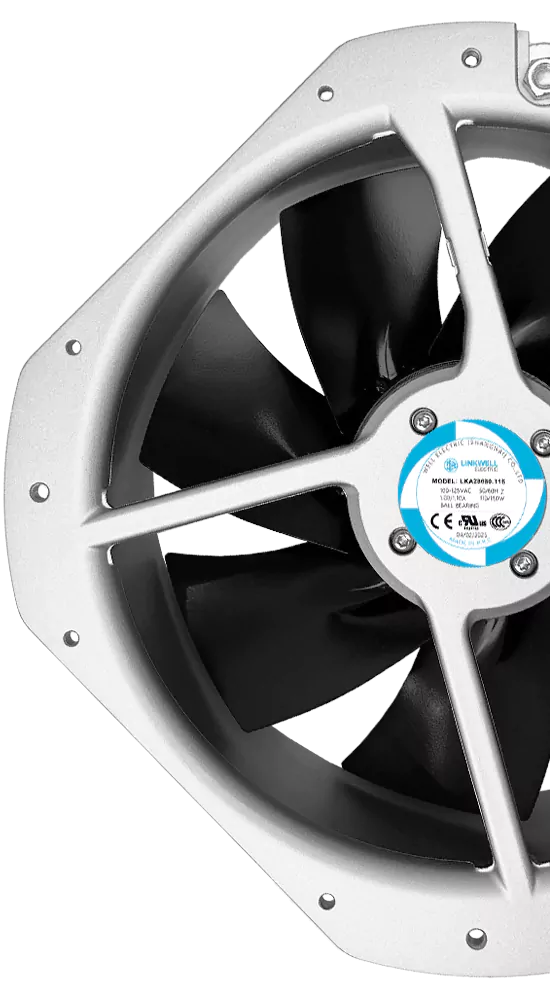
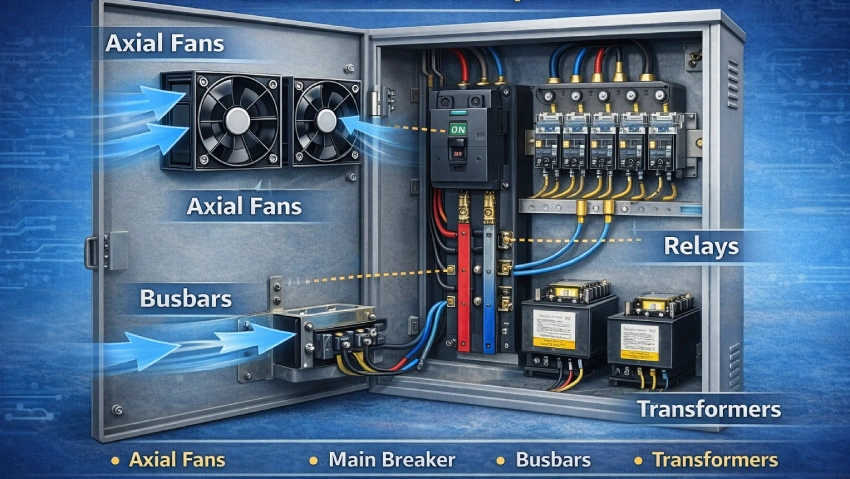
You might not think about cooling fans when you look at an electrical panel, but they play a huge role in keeping everything safe and reliable. Cooling fans help regulate temperature and prevent overheating, which keeps your panel running smoothly and extends its life. If your panel gets too hot, you risk system failures, efficiency loss, and even damage to your equipment.
Here are the main types of fan cooling ventilation systems you’ll find in modern electrical panels:
- Axial Fans: These fans move air in one direction and work well for cooling large surface areas.
- Centrifugal Fans: These handle higher pressure and fit well in tight spaces with airflow restrictions.
- Blowers: They deliver a strong flow of air at low pressure, perfect for cooling specific components.
- Cross Flow Fans: These provide wide, even airflow, making them great for cooling long or multiple components at once.
When you choose the right fan, you help your panel stay cool, reliable, and efficient. Brands like fanacdc offer advanced cooling solutions that fit a wide range of industrial needs.
Main Breaker and Circuit Breakers
Main breakers and circuit breakers act as the guardians of your electrical system. The main breaker manages the total electricity load for your home or building. It has the highest amperage rating and can shut off all power if there’s an overload or surge.
Circuit breakers protect each branch circuit. They interrupt the flow of electricity if they detect problems like overloads or short circuits. This helps prevent wiring damage and reduces the risk of electrical fires.
- The main breaker controls power to all branch circuits and trips during high demand or surges.
- Circuit breakers trip when they sense excess current, keeping your wiring and devices safe.
Busbars: Copper vs. Aluminum
Busbars carry electricity inside your panel. You’ll usually see copper or aluminum busbars. Each has its own strengths.
- Copper conducts electricity better and lasts longer than aluminum.
- Copper dissipates heat more efficiently, which helps with reliability.
- Copper busbars resist mechanical stress and deformation, so they’re more durable.
- Aluminum costs less upfront but needs more maintenance and inspection for corrosion.
Copper busbars require little maintenance and can last for decades. Aluminum busbars may need regular checks to ensure they stay safe and effective.
Branch Circuits and Covers
Branch circuits split the main power into smaller paths, sending electricity to different parts of your building. Each branch circuit has its own breaker for safety. Covers protect these circuits from dust, debris, and accidental contact. You should always keep covers in place to prevent shocks and keep your panel clean.
Relays, Contactors, Switches
Relays, contactors, and switches help control the flow of electricity in your panel. Relays handle low-current tasks, like turning on fans or lights. Contactors manage high-voltage loads, such as motors and industrial drives.
| Feature | Relays | Contactors |
|---|---|---|
| Application | Low-current, low-voltage control | High-current, high-voltage loads |
| Current Capacity | Handles small currents (<10A) | Handles large currents (tens to hundreds of amps) |
| Size | Small | Large |
Relays make or break control signals, while contactors open and close power loads. Switches let you manually control circuits for maintenance or emergencies.
Transformers and Power Supplies
Transformers and power supplies keep your panel running safely. Transformers adjust voltage levels so your devices get the right amount of power. This prevents damage and hazards.
- Transformers provide voltage stability and overload tolerance.
- They reduce the risk of electric fires and short circuits.
- You can customize transformers to match your equipment’s needs.
Power supplies convert incoming electricity to the correct voltage and current for your devices, making sure everything operates smoothly.
PLCs, HMIs, and Automation
PLCs (Programmable Logic Controllers) and HMIs (Human-Machine Interfaces) bring automation to your electrical panel. PLCs act as the brains of the system, processing inputs and controlling outputs to manage machines and processes. HMIs give you a visual interface to monitor and control the system.
While HMIs and PLCs serve different roles in automation, they work together to keep your operations running smoothly and efficiently.
With these tools, you can automate tasks, monitor performance, and make quick adjustments.
Terminal Blocks and Wire Management
Terminal blocks and good wire management keep your panel organized and safe. Terminal blocks connect wires securely and make it easy to add or change circuits.
- Choose modular terminal blocks for flexibility.
- Use compact designs to save space.
- Label and color-code wires for easy identification.
- Pick materials that resist heat and wear.
- Make sure terminal blocks match your current load and wire size.
- Tighten connections with a torque screwdriver.
- Follow safety standards like IEC, UL, and CSA.
Proper wire management prevents overheating, reduces troubleshooting time, and keeps your panel neat.
Enclosures and Knockouts
The enclosure protects your panel from dust, moisture, and physical damage. The material and design matter a lot for durability and safety.
| Enclosure Type | Location | Features |
|---|---|---|
| Type 1 | Indoors | Basic protection from dirt, dust, falling objects |
| Type 2 | Indoors | Type 1 + drip/splash protection |
| Type 3 | Indoors/Outdoors | Resists weather, ice, windblown dust |
| Type 4 | Indoors/Outdoors | Type 3 + hose-directed water protection |
| Type 5 | Indoors | Dust-tight |
| Type 6 | Indoors/Outdoors | Types 1-5 + submersion protection |
| Type 12 | Indoors | Protects from dust, fibers, oil, coolant |
| Type 13 | Indoors | Type 12 + oil/coolant splash protection |
Stainless steel enclosures resist corrosion, making them great for harsh environments. Aluminum enclosures offer a cost-effective solution for moderate conditions. Knockouts let you add cables easily and safely, which helps with installation and maintenance.
Fuses and Surge Protection
Fuses and surge protection devices shield your panel from dangerous spikes in voltage. Fuses break the circuit if the current gets too high, protecting your wiring and devices.
Surge Protection Devices (SPDs) guard against sudden overvoltages. You can install them at the main panel to protect your whole building or at sub-panels for extra safety. Combined SPDs (like Type 1+2 or Type 2+3) offer broad protection from both external and internal surges.
- Install a surge protection device at the service entrance.
- Add more SPDs at different panels for layered protection.
- This approach keeps your entire electrical system safe.
Motor Drives and Starters
Motor drives and starters help you control motors in industrial settings. Soft starters gently ramp up motor speed, reducing wear and tear. Variable Frequency Drives (VFDs) give you precise control over motor speed and energy use.
- Smart starter panels let you control motors remotely and run automatic diagnostics.
- You can spot issues quickly, which cuts downtime and maintenance costs.
- Energy-efficient components like soft starters and VFDs improve motor control and extend equipment life.
When you use these components, you boost energy management and keep your operations running smoothly.
How Modern Electrical Panels Work
Power Flow and Distribution
You might wonder how electricity actually gets to your devices. The journey starts far away and ends right inside your panel. Here’s how the power flows:
- Electricity starts at a power plant.
- It travels over long distances through high voltage wires.
- A substation transformer steps down the voltage.
- A local transformer reduces the voltage even more.
- Power lines carry electricity to your home’s meter.
- It enters your breaker panel at 120V or 240V, ready for use.
This process makes sure you get safe, usable power for your lights, appliances, and gadgets. Modern electrical panels manage this flow, sending electricity to different circuits and keeping everything balanced.
Circuit Protection and Trip Curves
You want your home or business to stay safe from electrical problems. Circuit breakers do this job by protecting against overcurrent, which can cause fires. They use trip curves to decide when to cut off power. Trip curves show how much current a breaker can handle and how fast it will trip.
- Trip curves help you pick the right breaker for each circuit.
- They prevent nuisance tripping and protect your equipment.
- Miniature circuit breakers use thermal and magnetic trips. The thermal part reacts to overloads, while the magnetic part responds instantly to short circuits.
If you choose the right trip curve, you avoid damage and keep your system reliable.
Tip: Always match the breaker’s trip curve to your equipment’s needs for the best protection.
Grounding and Safety Mechanisms
Grounding keeps you and your equipment safe. It gives extra electricity a safe path to the earth during faults or surges. Here’s a quick look at common grounding methods:
| Grounding Method | Description | Benefits |
|---|---|---|
| Grounding Rod | Metal rod connected to the system | Directs surges and fault currents safely |
| Ufer Grounding | Copper in concrete foundations | Lower resistance, better conductivity |
| Cold Water Pipe Grounds | Connects to metal water pipes | Low-resistance path if pipes are conductive |
| Plate Grounding | Metal plate buried in the ground | Cost-effective, good for dry soil |
| Surge Protection | Devices that block voltage spikes | Needs proper ground to work well |
| GFCIs | Cuts power in wet areas | Prevents electric shock near water |
Grounding protects you from shocks and keeps your appliances safe from voltage swings. Surge protection and GFCIs add extra layers of safety, especially in kitchens, bathrooms, and outdoor spaces.
Types and Applications
Single-Phase vs. Three-Phase
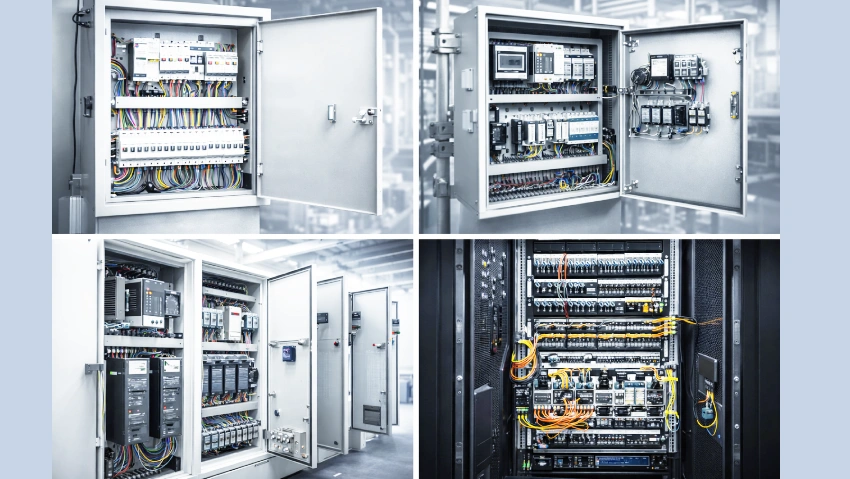
When you look at electrical panels, you’ll notice two main types: single-phase and three-phase. Each one fits different needs. Here’s a quick comparison to help you decide which works best for your space:
| Aspect | Single Phase | Three Phase |
|---|---|---|
| Number of Conductors | Two (Three if neutral present) | Three (Four if neutral present) |
| Voltage Peaks | Peaks twice per cycle | Peaks six times per cycle |
| Power Delivery | Pulsating, not constant | Constant, smoother delivery |
| Applications | Residential, light commercial | Industrial, heavy commercial |
| Motor Efficiency | Less efficient, less starting torque | More efficient, higher starting torque |
Single-phase panels work well for homes and small shops. They cost less and are easier to install. Three-phase panels shine in factories, hospitals, or big offices. They deliver more power, run motors better, and keep things running smoothly.
Main Breaker, Sub-Panels, Fuse Boxes
You’ll find different panel types in buildings. Each one has a special job:
| Type | Role |
|---|---|
| Main Breaker Panel | Acts as the main power source for your building. You can shut off all power here. |
| Sub-Panel | Sends power to certain areas, like a garage or workshop. It gets electricity from the main panel. |
| Fuse Box | Uses fuses to stop overloads. You see these in older homes, but most people now use breaker panels. |
If you want more control or need to add circuits, sub-panels make it easy. Main breaker panels give you full control over your system.
Automation-Ready Panels
Want to make your building smarter? Automation-ready panels help you do that. These panels include features like programmable logic controllers (PLCs) and human-machine interfaces (HMIs). PLCs act as the brains, while HMIs let you see and control what’s happening.
Here’s what you get with automation-ready panels:
- Boosted productivity and less downtime
- Better energy use and lower bills
- Safer operations with fewer accidents
- Easy upgrades as your needs grow
You can monitor everything in real time and make changes fast. This setup works great for factories and businesses that want to stay ahead.
Enclosure Materials
The material of your panel’s enclosure matters. It protects your system from dust, water, and bumps. Here are some common choices:
- Steel: Strong and durable. Great for most indoor spaces.
- Stainless Steel: Resists rust. Perfect for wet or harsh environments.
- Aluminum: Lightweight and cost-effective. Good for moderate conditions.
- Plastic: Won’t rust and is easy to install. Works well for light-duty jobs.
Pick the right enclosure to keep your panel safe and working for years.
Sizing and Selection
Standard Panel Sizes
When you pick an electrical panel, size matters. You want a panel that fits your needs today and gives you room to grow. Most homes use panels rated at 100, 150, or 200 amps. Larger buildings or workshops might need 225 amps or more. Always check the number of spaces for breakers, not just the amp rating. More spaces mean you can add circuits later without replacing the whole panel.
Load Calculation Formula
You don’t want to guess when it comes to electrical loads. Calculating your total load helps you choose the right panel and avoid overloads. Here’s a simple way to figure it out:
| Circuit Type | Amperage | Voltage | Calculation | Result (VA) |
|---|---|---|---|---|
| 11 circuits | 20 amps | 120 V | (11 × 20 × 0.8 × 120) | 21,100 VA |
| 1 circuit | 30 amps | 208 V | (1 × 30 × 0.8 × 208 × 1.732) | 8,646 VA |
| 4 circuits | 30 amps | 120 V | (4 × 30 × 0.8 × 120) | 11,520 VA |
| Total Load | Before Addition | 41,286 VA | ||
| Additional Load | 7,240 VA | |||
| Total Load After Addition | 48,526 VA | |||
| Final Calculation | 208 V | (48,526 ÷ 208 ÷ 1.732) | 135 amps | |
| Panel Rating | 225 amps |
You add up all your circuits, multiply by their amperage and voltage, and then divide by the supply voltage and a safety factor. This helps you find the right panel size.
Size Chart and Matching
Matching your calculated load to a panel is easy with a size chart. Here’s a quick guide:
| Total Load (Amps) | Recommended Panel Size |
|---|---|
| Up to 100 | 100A |
| 101–150 | 150A |
| 151–200 | 200A |
| 201–225 | 225A |
Pick a panel that meets or exceeds your calculated load. This gives you a safety margin and space for future upgrades.
Code Compliance
You want your installation to be safe and legal. The National Electrical Code (NEC) sets the rules for panel sizing and installation. Following NEC standards helps prevent shocks, fires, and equipment failures. NEC 408 covers how to install and maintain circuit breakers, and it also tells you how to rate panels for safety. Make sure your panel is easy to reach and not hidden in tight spots. Always check local codes before you start.
Tip: Always work with a licensed electrician to make sure your panel meets all code requirements and keeps your property safe.
Maintenance and Inspection
Keeping your electrical panel in top shape means you need a solid maintenance routine. Regular checks help you catch problems early and keep your system safe and reliable.
Visual Checks and Testing
Start with a careful look at your panel. Here’s a checklist you can follow:
- Check for physical damage or signs of wear.
- Inspect the electrical meter for proper operation.
- Check circuit breaker capacity and make sure it matches your needs.
- Verify the tightness of all connections.
- Test GFCI outlets for correct function.
- Perform voltage testing on circuits.
- Do insulation resistance testing.
- Test each breaker to make sure it trips as it should.
- Inspect indication lamps for correct status.
- Look at busbars for discoloration or corrosion.
- Check the grounding system.
- Watch for signs of overloading.
- Verify that all labels are clear and accurate.
- Make sure there’s enough clearance around the panel.
Tip: Use this checklist every few months to keep your panel safe and up to code.
Cleaning and Labeling
Dust and dirt can cause trouble inside your panel. Use a dry cloth or vacuum to clean the inside. Never use water or spray cleaners. Keep all labels clear and up to date. Good labeling helps you and your electrician find circuits fast during repairs.
Annual Retorque and IR Scans
You should retorque all connections and perform infrared (IR) scans at least once a year. This helps you spot loose wires and hot spots before they cause failures. The frequency may change if your equipment is critical or in a harsh environment. Always follow manufacturer guidelines and standards like NFPA 70B.
Cooling System Upkeep
Cooling fans work hard to keep your panel at the right temperature. Check that all fans run smoothly and clean any dust from vents. For the best results, consider using fanacdc cooling solutions. These fans offer high performance and reliability, even in tough conditions. They help prevent overheating and extend the life of your panel.
PLC Battery and Seal Checks
If your panel uses PLCs, check the battery status and replace it if needed. Inspect seals and gaskets to keep out dust and moisture. This keeps your automation running without interruptions.
Schedule Templates and Software
Set up a maintenance schedule using templates or software. Digital tools can remind you when it’s time for checks and help you track repairs. Staying organized means fewer surprises and a safer electrical system.
Safety and Compliance
NEC, IEC, OSHA Standards
You want your electrical panel to be safe and up to code. Several important standards guide how you install and maintain panels. Here’s what you need to know:
- OSHA guidelines require clear access to panels. You must keep pathways open and make sure nothing blocks your way in or out. Proper guarding helps prevent accidental contact.
- NEC rules set the minimum distances around panels. This keeps you safe when you work on or near them. You also need to follow rules for panel height and where you place them.
- IEC standards help ensure panels meet global safety expectations. They focus on design, construction, and testing.
These standards protect you and anyone who works with your electrical system.
Safe Clearance and Hazards
You should always keep enough space around your panel. This space lets you work safely and gives you room to move if something goes wrong. The NEC says you need at least 36 inches of clear space in front of the panel. You also need enough width—at least the width of the panel or 30 inches, whichever is greater.
If you block this space, you risk accidents and code violations. Watch out for water, dust, and clutter near your panel. These hazards can cause shocks, fires, or equipment failure.
Tip: Keep the area around your panel clean and dry. Never store boxes or tools in front of it.
Identifying Dangerous Panels
Some panels pose more risk than others. Look for these warning signs:
- Rust, corrosion, or water stains on the enclosure
- Burn marks or melted insulation
- Buzzing, crackling, or a burning smell
- Loose or missing covers
- Overheated breakers or wires
If you spot any of these, call a licensed electrician right away. Don’t try to fix it yourself.
PPE and Safe Practices
Personal protective equipment (PPE) keeps you safe when you work near electrical panels. You should wear insulated gloves, safety glasses, and flame-resistant clothing. Always use insulated tools. Never touch exposed wires or terminals.
Follow these safe practices:
- Turn off power before you open the panel
- Use one hand when possible to avoid creating a path for electricity
- Stand on an insulated mat
- Never work alone
Staying alert and using the right gear helps you avoid injury.
Costs and Upgrades
Pricing Factors
When you start thinking about upgrading your electrical panel, you probably wonder what affects the price. Several things come into play. Take a look at this table to see the main factors:
| Factor | Description |
|---|---|
| Size and Capacity | The size of the panel, measured in amperes, directly affects the cost. Larger panels cost more. |
| Labor Costs | Installation complexity and labor time significantly influence overall costs. |
| Materials | The type and quality of materials, including the panel and components, contribute to total expenses. |
| Permits and Local Regulations | Costs for necessary permits and adherence to local regulations can add to the overall price. |
You can see that both the panel itself and the work needed to install it matter a lot.
Replacement and Upgrade Costs
Panel upgrades and replacements come with a wide range of prices. Here are some common costs you might run into:
- Moving your panel to a new spot can add $500 to $4,000.
- Adding a subpanel usually costs between $400 and $1,750.
- Upgrading wiring can range from $500 to $20,000, depending on how much rewiring you need.
If your home or business needs a bigger panel or more circuits, expect the price to go up.
When to Replace Panels
You should think about replacing your panel if you notice flickering lights, tripped breakers, or a burning smell. Old panels may not handle today’s power needs. If you plan to add new appliances or upgrade your HVAC, a new panel might be the safest choice. Water damage, rust, or outdated fuse boxes are also signs it’s time for a replacement.
Tip: If your panel is over 25 years old, it’s a good idea to have an electrician check it out.
Warranty Coverage
Most new panels come with a manufacturer’s warranty. This usually covers defects in materials or workmanship for several years. Some brands offer extended warranties for extra peace of mind. Always ask your installer about the warranty details. Keep your paperwork in a safe place so you can use it if you ever need repairs or replacements.
Reliability and Longevity Tips
Professional Installation
You want your electrical panel to last. Start with a professional installation. A licensed electrician knows how to size your panel, select quality components, and follow safety codes. This step helps prevent future problems and keeps your system safe from day one. Always choose trusted brands and certified installers for the best results.
Load Balancing and Troubleshooting
Balanced loads keep your panel running smoothly. If one side of your panel works harder than the other, you might see flickering lights or tripped breakers. Spread out your circuits evenly. If you notice issues, check for loose connections or overloaded circuits. Use a clamp meter to measure current on each leg. Quick troubleshooting helps you avoid bigger problems later.
Documentation and Layouts
Good records make maintenance easy. Keep a clear layout of your panel, with each circuit labeled. Store manuals, wiring diagrams, and maintenance logs in a safe spot. When you update or repair your panel, write down what you did. This habit saves time during repairs and helps electricians work faster and safer.
Tip: Use digital tools or apps to track maintenance and changes. You’ll always know your panel’s history.
Thermal Management with fanacdc
Heat is the enemy of electrical panels. Overheating can shorten the life of your equipment and cause failures. Advanced cooling fans from fanacdc help you control temperature inside your panel. These fans run quietly, use less energy, and last for years. They work well in tough environments and protect your investment. Clean your fans and vents often to keep airflow strong.
Extending Panel Life
You can make your panel last longer with a few simple habits:
- Keep your panel clean and dry.
- Inspect connections and cables often.
- Replace old parts before they fail.
- Protect against power surges.
- Monitor temperature and humidity.
- Schedule regular maintenance.
- Use high-quality components.
If you follow these tips, your panel will stay reliable for many years.
You now know how to keep your electrical system safe and reliable. When you understand each part, choose the right size, and stick to a maintenance routine, you protect your home or business for years. Always follow safety codes and trust experts for big jobs. Don’t forget about cooling—solutions from fanacdc help your panel last longer. Use these tips to get the best performance in any setting.
FAQ
How often should you check your electrical panel?
You should check your panel every 3 to 6 months. Look for dust, loose wires, or signs of overheating. Regular checks help you catch problems early and keep your system safe.
Why does your panel need cooling fans?
Cooling fans stop your panel from overheating. They keep components at the right temperature. This helps your panel last longer and work better. Brands like fanacdc offer reliable options for every setup.
Can you upgrade your panel without rewiring your whole house?
Yes, you can upgrade your panel without changing all the wiring. A licensed electrician can tell you if your current wires are safe. Upgrading just the panel often boosts safety and adds more capacity.
What signs show your panel needs replacing?
Watch for flickering lights, burning smells, or tripped breakers. Rust or water damage also means trouble. If your panel is over 25 years old, you should get it checked by a pro.