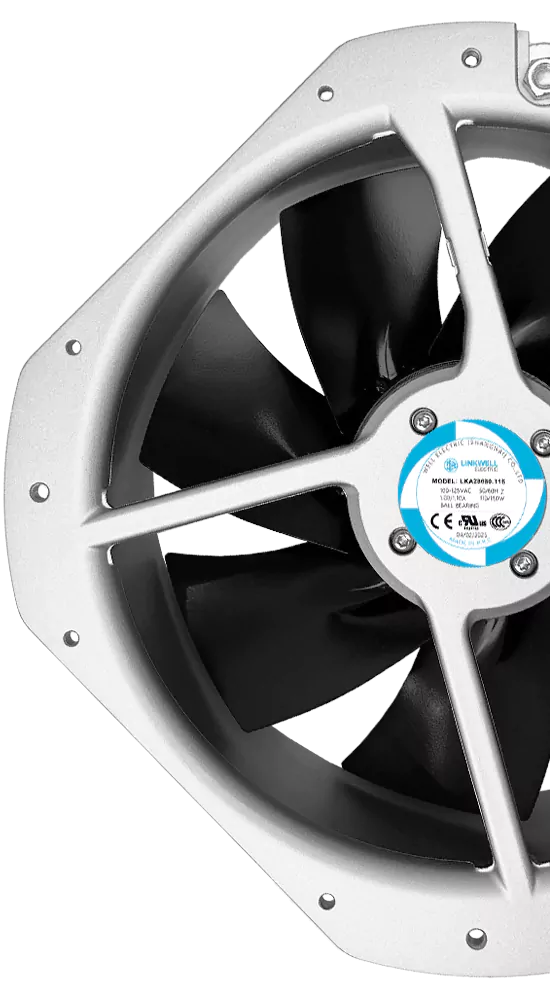
When you look at cooling technology in 2026, you’ll see four main types of fan blades leading the way: AC, DC, EC, and centrifugal. Each type brings something unique to the table. AC fans deliver long-lasting airflow for industrial machines. DC fans run quietly and offer precise speed control for electronics. EC fans help you save energy with smart controls. Centrifugal fans push air through tough spaces, keeping things cool in high-pressure environments.
Here’s a quick snapshot of how these fan blades stack up in the market:
| Fan Blade Type | Market Share (%) | Key Applications |
|---|---|---|
| Axial Fans | 61 | HVAC systems, electronics, computer cooling |
| Centrifugal Fans | 27 | Industrial and commercial, ventilation |
Choosing the right fan blade means thinking about material, efficiency, and where you plan to use it. If you want reliable cooling, fanacdc stands out with advanced solutions for every industrial need.
Key Takeaways
- AC fan blades provide reliable cooling for industrial applications, offering durability and strong airflow.
- DC fan blades are ideal for electronics, delivering quiet operation and precise speed control, which can save up to 70% on power.
- EC fan blades combine the benefits of AC and DC, using up to 50% less power while maintaining high efficiency across various speeds.
- Centrifugal fan blades excel in high-pressure environments, making them suitable for HVAC systems and industrial processes.
- Choosing the right fan blade type depends on your specific needs, including efficiency, noise levels, and environmental conditions.
Types of Fan Blades in 2026
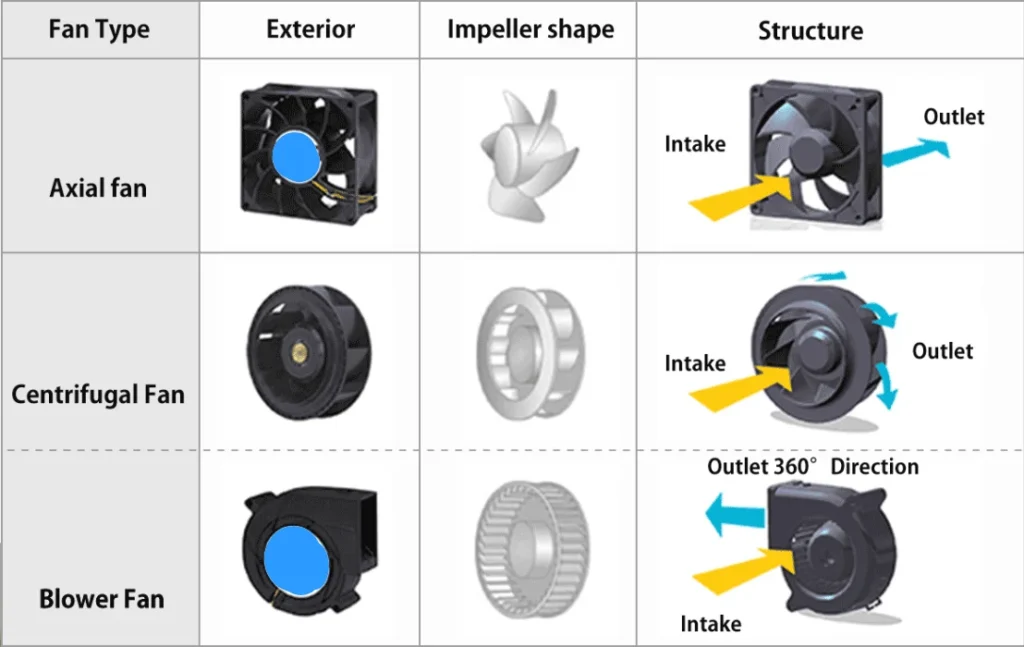
When you look at cooling systems in 2026, you’ll see a wide range of fan blades designed for different environments and needs. Let’s break down the main types you’ll find and see how each one stands out.
AC Fan Blades
AC fan blades remain a popular choice for industrial cooling. You’ll notice these types in factories, control panels, and telecom equipment. The design focuses on durability and strong airflow. If you want a fan that runs for years with minimal fuss, AC axial fan blades are a solid pick.
Did you know? AC fan blades from fanacdc use advanced aerodynamic designs that cut energy use by 15%. You get more airflow with less power.
Here’s a quick look at what sets AC fan blades apart:
| USP | Core Advantage | Differentiator | Adoption Benefit | Benchmark | Validation |
|---|---|---|---|---|---|
| 15% Energy Consumption Reduction via Advanced Aerodynamic Design | Proprietary blade geometries validated through CFD simulations | Demonstrable ROI within 12 months | Outperforms top three competitors by 10–20% in efficiency metrics | Pilot programs confirm energy savings and lower lifecycle costs | |
| 30% Faster Deployment Through Modular, Standardized Platforms | Proprietary quick-assembly technology | Reduces installation time from 4 weeks to 2 weeks | Competitors typically require 3–4 weeks | Customer case studies demonstrate deployment acceleration | |
| Fully Integrated IoT-Enabled Fans with Real-Time Data & Predictive Maintenance | Embedded sensors and cloud connectivity | Minimizes downtime by 25% | Top competitors lack integrated analytics | Pilot deployments show improved uptime and operational efficiency |
You’ll find AC fan blades cost-effective and easy to install. They work well with existing electrical systems and deliver reliable performance for long-term operations.
DC Fan Blades
DC fan blades have become the go-to solution for electronics, automation, and even electric vehicles. These types use brushless motors, which means you get quiet operation and precise speed control. DC axial fan blades are perfect for places where you need to keep noise low and efficiency high.
Here’s what’s new with DC fan blades in 2026:
- Increased focus on energy efficiency, especially with brushless motors.
- Smart cooling systems let you control and monitor fans remotely.
- Manufacturers offer custom DC axial fan blades for specific industrial needs.
- Electric vehicles use DC axial fan blades to cool batteries and electronics.
- There’s a growing demand for noise-reducing fan blades in consumer electronics.
You’ll save up to 70% on power compared to AC fan blades. The initial cost is higher, but you’ll notice lower electricity bills over time. DC fan blades from fanacdc come with smart features like PWM control and real-time monitoring, making them a smart investment for modern systems.
EC Fan Blades
If you want the most energy-efficient option, EC fan blades are the way to go. These types combine the best features of AC and DC motors. EC axial fan blades adjust speed smoothly and use up to 50% less power than older designs. You’ll see EC fan blades in HVAC, refrigeration, and automotive industries.
Let’s look at what makes EC fan blades unique:
- EC fan blades reduce power consumption by up to 50%.
- They keep efficiency high (91-95%) across a wide speed range.
- You can adjust output and energy use easily.
- Some EC motors can reverse blade spin direction for flexible airflow.
- EC motors eliminate energy loss found in traditional induction motors.
| Industry | Advantages of EC Fan Blades |
|---|---|
| Automotive | Up to 70% lower energy consumption compared to traditional AC fans, enhancing vehicle efficiency and sustainability. |
You’ll find EC fan blades from fanacdc in systems where energy savings and smart controls matter most. These fan blades help you cut costs and improve performance in demanding environments.
Centrifugal Fan Blades
Centrifugal fan blades work differently from axial fan blades. These types push air at a 90-degree angle, making them ideal for high-pressure environments like HVAC systems and industrial processes. You’ll see centrifugal fan blades in places where you need to move air through ducts or filter systems.
Here’s a breakdown of centrifugal fan blade designs:
| Blade Type | Characteristics | Applications |
|---|---|---|
| Forward Curved Blades | High airflow rates, less efficient at higher pressures, limited static pressure. | HVAC systems, electronics cooling. |
| Backward Curved Blades | Better airflow control, higher efficiency, noisier and costlier. | Industrial processes, data centers. |
| Radial Blades | Handles high resistance, generates high-pressure air output, noisier. | Industrial applications with dust. |
The impeller’s rotation speed and blade design play a big role in how well centrifugal fan blades perform. The housing guides airflow and increases pressure, while the volute casing keeps air moving smoothly. You’ll find fanacdc centrifugal fan blades deliver stable airflow and high static pressure, making them a top choice for tough industrial jobs.
Tip: If you need to move air through a complex system or deal with high resistance, centrifugal fan blades are your best bet.
No matter which types of fan blades you choose, fanacdc offers solutions that match your needs. You can pick from AC, DC, EC, or centrifugal fan blades and get reliable cooling for any environment.
Different Fan Blade Types and Their Features
Axial vs. Centrifugal Fan Blades
When you compare fan blades, you’ll notice two main styles: axial and centrifugal. Axial fan blades move air straight along the axis, which means you get a high flow rate but lower pressure. Centrifugal fan blades push air outwards, changing direction and creating higher pressure. You’ll see axial fans in places with low resistance, like open workshops. Centrifugal fans work best in systems with ducts or filters that need more pressure.
Here’s a quick table to help you see the differences:
| Feature | Axial Fans | Centrifugal Fans |
|---|---|---|
| Airflow Direction | Air moves parallel to the fan axis, high flow rate but low pressure | Airflow is radial, changing direction as it passes through the blades, generating higher pressure |
| Efficiency | More efficient in low resistance applications | More efficient in high resistance applications, such as duct systems or filtration systems |
If you need simple installation and easy maintenance, axial fan blades are a good choice. Centrifugal fan blades need more space but deliver stable airflow performance in tough environments.
Propeller and Tube Axial Designs
Propeller fan blades and tube axial fan blades both focus on moving lots of air. Propeller fan blades work well in open areas, giving you strong airflow with low pressure. Tube axial fan blades use a disk-type wheel inside a cylinder, which boosts efficiency. The small gap between the housing and blades helps tube axial fan blades save energy and handle high temperatures.
Check out these features:
- High airflow efficiency up to 65%
- Can withstand high temperatures and pressures
- Better pressure characteristics than regular panel fans
- Flexible positioning for optimized airflow and pressure
You’ll find tube axial fan blades in industrial settings where energy savings matter. Propeller fan blades are great for general ventilation. The number and shape of blades affect how air moves and how much power you use. Tube axial fan blades can save up to 40% on power compared to other types.
Backward and Forward Curved Blades
Fan blade design plays a big role in how your system performs. Forward curved fan blades give you high airflow capacity and run quietly, making them perfect for HVAC systems and electronics cooling. Backward curved fan blades offer better control and higher efficiency, especially in high-pressure situations.
Here’s a table to show the differences:
| Feature | Forward Curved Fans | Backward Curved Fans |
|---|---|---|
| Airflow Capacity | High airflow capacity, suitable for large volumes | Efficient airflow control, better for pressure generation |
| Noise Levels | Operate at lower noise levels | Tend to generate more noise due to larger blades |
| Cost-Effectiveness | More cost-effective due to simpler design | Generally more expensive due to manufacturing complexity |
| Efficiency at High Pressures | Lower efficiency at higher pressures | Higher efficiency, excels in high pressure applications |
| Applications | HVAC systems, air handling units, electronics cooling | HVAC systems, cleanrooms, industrial processes, data centers |
You’ll want forward curved fans for low-pressure environments like commercial spaces. Backward curved fan blades shine in industrial settings, clean rooms, and places that need high pressure. If you need reliable airflow performance in demanding conditions, backward curved fan blades are the way to go.
Tip: Always match the fan blade type to your system’s needs. The right choice boosts efficiency and keeps your equipment running smoothly.
Materials Used for Fan Blades
When you’re choosing fan blades in 2026, you’ll notice that the material makes a huge difference in how your cooling system performs. Let’s break down the main options you’ll see on the market.
Metal Fan Blades
Metal fan blades are a classic choice for heavy-duty cooling. You’ll often find steel and aluminum used in industrial settings. Steel blades can handle high-impact forces and extreme temperatures, so they’re perfect for tough jobs. Aluminum blades are lighter and resist corrosion, which helps them last longer in moist environments. You’ll see metal fan blades in places where you need strength and durability.
- Steel blades stand up to heat and stress.
- Aluminum blades balance strength and weight, plus they fight rust.
- Metal fan blades work well for larger sizes and higher static pressures.
Here’s a quick look at their strengths and weaknesses:
| Advantage/Disadvantage | Description |
|---|---|
| Strength and Durability | Metal fan blades are stronger and more durable than plastic, able to withstand higher speeds and mechanical stress. |
| Heat Resistance | They can operate at higher temperatures without deforming, making them ideal for high-heat applications. |
| Aerodynamic Performance | Metal blades can be designed for better efficiency, moving more air with less energy consumption. |
| Higher Cost | Metal blades cost more than plastic. |
| Noise | They can be louder during operation. |
Plastic Fan Blades
Plastic fan blades are everywhere in electronics and light-duty cooling. You’ll like how lightweight and quiet they are. These blades allow for creative aerodynamic designs, which means you get efficient airflow with less noise. Plastic fan blades resist corrosion, so they last longer in humid places. They’re best for smaller diameters and lower static pressures.
| Type of Fan Blade | Pros | Cons |
|---|---|---|
| Plastic | Corrosion resistance, lightweight and quiet, prolongs the life of motors and bearings | Reserved for smaller diameters, not suitable for higher static pressures or extreme temperatures |
| Metal | Appropriate for larger sizes, can handle higher static pressures, usable in extreme temperatures | Can create loud noise, susceptible to corrosion, balancing problems if not handled correctly |
Composite Fan Blades
Composite fan blades are changing the game in 2026. You’ll see materials like fiberglass reinforced plastics (FRP) and carbon fiber reinforced plastics (CFRP) leading the way. These fan blades combine strength, lightness, and durability. They meet strict safety and environmental standards, which is great if you care about sustainability. Composite fan blades also offer advanced aerodynamic shapes, making them perfect for backward-curved fan blades in high-performance systems.
| Benefit | Explanation |
|---|---|
| Regulatory Compliance | Lightweight, durable composite materials meet stringent safety and environmental standards, improving fuel efficiency. |
| Technological Innovations | Advances in manufacturing techniques enhance performance, reduce costs, and increase reliability, promoting industry adoption. |
| Cost-Benefit Dynamics | Higher initial investment is offset by long-term savings from reduced weight, lower maintenance, and increased lifespan. |
| Industry Demand | Growing demand from aerospace OEMs and industrial machinery manufacturers accelerates market penetration, supported by partnerships and R&D. |
| Sustainability Concerns | The shift towards greener products incentivizes the use of composites that lower carbon footprints and comply with environmental standards. |
You’ll find composite fan blades in advanced cooling systems, especially where backward-curved fan blades are needed for efficiency and quiet operation. If you want the latest technology and care about the environment, composite fan blades are a smart choice.
Tip: Always match your fan blades’ material to your application. Metal works for tough jobs, plastic is great for quiet spaces, and composites offer the best of both worlds.
Engineering the Core: The Soul of Every Fan is Its Blade.
At FANACDC, we master fan blade design and manufacturing from the source. Our complete in-house production ensures exceptional performance stability, exceeding industry benchmarks by 30%.
Feature Icon Specification & Benefit Manufacturing ⚙️ 100% In-House Production. Guarantees superior performance consistency and quality control, delivering 30% greater stability than standard industry performance. Steel Blade Option 🔩 Laser-Welded Steel Construction. Features lifetime anti-rust coating and is engineered for durability in extreme environmental conditions. PBT Blade Option 🔥 High-Performance PBT Polymer. Rated 94V-0—the highest flame-retardant standard—for critical safety-first applications. Certifications ✅ Fully Certified & Compliant. Holds UL, CE, TÜV, and RoHS certifications. Our global promise of reliability and safety is independently verified.
How to Choose the Right Fan Blade Type
Efficiency and Performance
When you pick fan blades for your cooling systems, you want the best cooling efficiency. Start by looking at the number of blades. Three or four blades give you greater airflow and lower static pressure, which works well in open spaces. If you need more static pressure for heavy duty industrial fans, choose blades with five to seven. Blade pitch, angle, and material also matter. Aluminum blades offer lightweight strength, while advanced composites deliver optimal cooling performance in specialized settings.
Here’s a quick checklist to help you focus on what matters most:
- Maintenance needs
- Airflow direction
- Fan size
- Noise levels
- Energy efficiency
- Durability
Fanacdc offers AC fans for consistent cooling in standard environments. DC fans from fanacdc provide energy efficient equipment and smart controls for dynamic cooling needs. EC fans help you save energy and boost cooling efficiency in modern facilities.
Noise and Environmental Factors
Noise can make or break your choice of fan blades. Mechanical factors like blade design and bearing quality affect sound levels. Faster fans move more air but create more turbulence and noise. If you work in a quiet office or sensitive lab, look for fan blades with aerodynamic designs. These can cut fan disturbance by up to 97.5%.
Environmental factors also play a role. High temperatures and humidity can change how fan blades perform. Steel blades handle heat and stress, while plastic blades resist corrosion in humid places. Always match your fan blades to your environment for the best cooling efficiency.
Tip: If you need quiet operation, choose fan blades with advanced aerodynamic shapes and high-quality bearings.
Application-Specific Selection
Your application decides which fan blades you need. Heavy duty industrial fans use steel blades for durability. General duty fans often use aluminum for lightweight strength. Advanced composites fit specialized industrial uses where cooling efficiency and reliability matter most.
| Material | Key Properties | Applications |
|---|---|---|
| Aluminum | Lightweight strength | General duty fans |
| Steel | Exceptional durability | Heavy duty industrial fans |
| Advanced Composites | High-performance capabilities | Specialized industrial uses |
Think about environmental conditions, mechanical stress, thermal resistance, and industry standards. Fanacdc’s AC fans deliver strong airflow and long service life for demanding jobs. DC fans offer intelligent functions and predictive maintenance for advanced cooling systems. EC fans provide optimal cooling performance and energy efficiency for modern industries.
Remember: The right fan blades keep your cooling systems running smoothly and help you save money over time.
Conclusion
You’ve explored the main types of fan blades used in 2026. Each type brings something special to the table. AC fans offer reliable cooling for tough jobs. DC fans give you quiet operation and smart controls. EC fans help you save energy and keep your systems running smoothly. Centrifugal fans push air through challenging spaces and handle high-pressure environments.
When you choose fan blades, think about your environment and what your system needs. You want efficiency, durability, and the right material for the job. If you work in a factory, a data center, or a lab, matching the right fan blade type to your application makes all the difference.
Here’s a quick recap to help you make the best choice:
- AC fans work well for long-term, steady cooling.
- DC fans fit electronics and places where noise matters.
- EC fans shine in energy-saving and smart systems.
- Centrifugal fans excel in high-pressure and ducted setups.
If you want cooling solutions that keep up with modern demands, check out fanacdc. You’ll find advanced technology, strong support, and products built for every industry. The right fan blades can boost your system’s performance and help you save money over time.
Ready to upgrade your cooling system? Use these tips and trust fanacdc to power your next project.
You’ve seen how AC, DC, EC, and centrifugal fan blades each bring something special to cooling systems. When you match the right fan blades to your industrial needs, you boost airflow and save energy. You get better efficiency, lower noise, and longer lifespan. The market for centrifugal fans keeps growing, thanks to new materials and smarter designs. If you want reliable cooling, fanacdc gives you expert support and a wide range of solutions. Use these tips to pick the best fan blades for your setup in 2026.
FAQ
What is the main difference between AC, DC, and EC fan blades?
You’ll notice AC fans use alternating current, DC fans use direct current, and EC fans combine both for higher efficiency. EC fans often give you the best energy savings and smart control.
How do I know which fan blade material is right for my application?
Think about your environment. Metal blades work well for heavy-duty jobs. Plastic blades suit quiet, low-stress spaces. Composite blades offer strength and lightness for advanced cooling needs.
Can I replace an AC fan with an EC fan in my existing system?
Yes, you can usually swap AC fans for EC fans. Just check the size, voltage, and mounting. EC fans often fit standard setups and help you save energy right away.
What maintenance do fan blades need?
Most fan blades need only basic cleaning to remove dust. Check for unusual noise or vibration. If you spot damage, replace the blade. Regular checks keep your system running smoothly.