You often need to move air through tight spaces or past filters, and that’s where a centrifugal fan comes in handy. This type of fan uses spinning blades to push air in a new direction, making it perfect for systems that need to handle resistance. In many places—like HVAC setups or industrial equipment—you want steady airflow even when obstacles get in the way. Take a look at some common challenges you might face:
| Obstacle | Description |
|---|---|
| Ductwork Compatibility | Making sure the fan fits with the ductwork helps everything run smoothly. |
| Pressure Drops | Big pressure drops can slow things down, so you need a fan with enough power. |
| Noise Control | The right fan can help keep noise levels down where it matters. |
| Energy Consumption | Picking an efficient fan means you save energy while still getting the airflow you need. |
If you ever wondered, “How Does a Centrifugal Fan Work?”—you’re in the right place.
Key Takeaways
- Centrifugal fans are great for moving air in small spaces. They can push air through places with lots of resistance. This makes them good for HVAC systems and factories.
- These fans have spinning impellers that pull air inside. They push air out at a right angle. This helps air move well, even with things like filters and ducts in the way.
- Picking the right fan means you must know your system’s needs. You should check how much air and pressure your system needs. Always look at the fan’s performance curves to make sure it fits.
- Centrifugal fans can deal with high static pressure. This makes them good for systems with long ducts or thick filters. These things can make it hard for air to move.
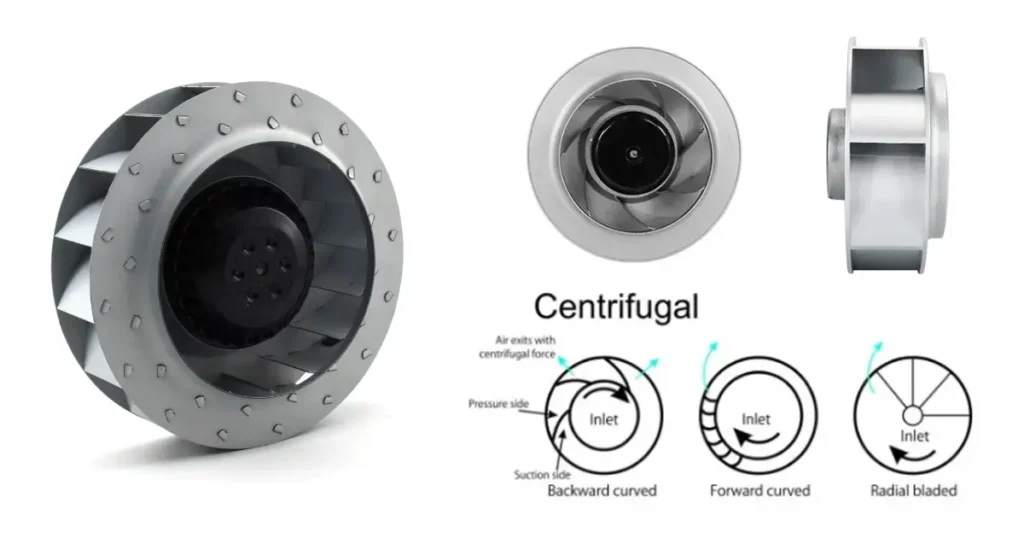
- Blade designs change how the fan works. Forward-curved blades are quiet and use less energy. Backward-curved blades work well with high pressure. Radial blades are strong and good for dusty places.
- It is important to do regular maintenance. You should check and clean filters often. This keeps your fan working well and efficiently.
- When picking a fan, think about where you will use it. Centrifugal fans are best for ventilation, cooling, and filtration systems. They help when air quality and pressure matter.
- Talking to experts can help you choose the right fan. This is helpful for special or hard setups. Experts make sure your fan works well and lasts a long time.
What Is a Centrifugal Fan?
Definition
You might wonder what makes a centrifugal fan different from other fans you see every day. A centrifugal fan is a mechanical device that uses spinning blades, called impellers, to move air or gas. When you turn it on, the fan pulls air into the center. The impeller spins fast and pushes the air outward. This action uses centrifugal force, which means the air moves away from the center and changes direction—usually by 90 degrees. You often find this type of fan in places where you need to move air through filters, ducts, or other obstacles.
Centrifugal fans do more than just move air. They increase the speed of the air and turn that speed into pressure. This makes them perfect for jobs where you need strong airflow and steady performance, even when there are things in the way.
Tip: If you need to push air through a long duct or past a filter, a centrifugal fan will do the job better than most other fans.
Key Features
You can spot a centrifugal fan by looking at how it moves air and handles tough jobs. Here are some features that set it apart:
- Moves air at a right angle to the shaft, not straight through.
- Handles changes in resistance without losing much power.
- Works well in ducted systems where air needs to travel far or face obstacles.
Centrifugal fans stand out because they create higher static pressure than other types, like axial fans. This means you get strong, steady airflow, even when the path is not clear. You will see these fans in HVAC systems, air purifiers, and industrial exhaust setups. They keep air moving, even when filters or dampers add resistance.
If you need a fan that gives you stable airflow and can handle higher pressure, a centrifugal fan is a smart choice. You can count on it for ventilation, air cleaning, and many other uses where air needs to move against resistance.
How Does a Centrifugal Fan Work?
Air Intake at the Inlet
Let’s start at the very beginning of the process. When you turn on a centrifugal fan, the first thing that happens is air gets pulled into the center of the fan. This spot is called the inlet. You might picture it like a big mouth that draws in air from the room or duct. The design of the inlet helps guide the air smoothly toward the spinning part inside. If you ever wondered how does a centrifugal fan work to grab air so efficiently, it all starts right here. The inlet makes sure the air enters the fan with as little turbulence as possible, which helps everything run quietly and smoothly.
Impeller Rotation by Motor
Now, let’s look at what happens next. The motor sits at the heart of the centrifugal fan. When you flip the switch, the motor comes alive and starts spinning the impeller. The impeller looks a bit like a wheel with curved blades. As the motor turns the impeller, it grabs the air that just entered and starts to spin it around. This is where the magic happens. The motor takes electrical energy and turns it into mechanical energy. That spinning motion gives the impeller the power to move air. If you ask, “how does a centrifugal fan work to make air move?”—the answer is right here. The impeller’s rotation is what gets the air moving fast.
Air Acceleration and 90-Degree Turn
Here’s where things get really interesting. As the impeller spins, it throws the air outward from the center to the edges. This is because of centrifugal force. Imagine spinning a wet tennis ball on a string—the water flies off the edge. The same thing happens with air inside the fan. The impeller blades push the air outward, making it move faster and faster. When the air reaches the edge, it doesn’t just keep going straight. The design of the centrifugal fan makes the air turn a sharp 90 degrees. Instead of moving in the same direction it came in, the air now heads out through the outlet, usually at a right angle to the inlet.
Did you know? The way a centrifugal fan accelerates air and turns it 90 degrees is what lets it handle resistance in ducts and filters so well.
If you want to know how does a centrifugal fan work to create pressure, this is the key step. The spinning impeller gives the air speed, and the special shape of the fan housing helps turn that speed into pressure. The air slows down a bit as it leaves, but the pressure goes up. That’s why a centrifugal fan can push air through long ducts or past obstacles without losing power.
Let’s break down the whole process in a simple list:
- Air enters the inlet at the center of the fan.
- The motor spins the impeller, which grabs the air.
- The impeller blades accelerate the air outward using centrifugal force.
- The air turns 90 degrees and exits through the outlet, now moving with higher pressure.
If you ever find yourself asking, “how does a centrifugal fan work in real life?”—just remember these steps. The fan takes in air, spins it fast, turns it, and sends it out with enough pressure to get past whatever stands in its way. That’s the secret behind the power of a centrifugal fan.
Housing and Air Outlet
Now, let’s talk about the part that gives the centrifugal fan its special power—the housing and the air outlet. You might think the spinning blades do all the work, but the housing is just as important. The housing is the shell that wraps around the impeller. It looks a bit like a snail’s shell or a curved box. This shape is not just for looks. It has a big job.
The housing collects the fast-moving air that the impeller throws out. It guides this air in the right direction. Without the housing, the air would just spin around and lose energy. The curved design helps slow the air down a little. When the air slows, its speed turns into pressure. This is what gives the fan its strength to push air through long ducts, filters, or even a whole building.
You will find the air outlet at the edge of the housing. This is where the air leaves the fan. The outlet usually points at a right angle to the way the air came in. This sharp turn is what makes centrifugal fans different from other fans. The outlet’s size and shape matter a lot. A wide outlet lets more air out but with less pressure. A narrow outlet gives you higher pressure but less airflow. You can pick the right fan for your job by looking at the outlet.
Tip: If you want to move air through a long duct or past a filter, choose a fan with a housing and outlet designed for high pressure.
Here’s a quick look at what the housing and outlet do for you:
- Guide the air: The housing makes sure air goes where you need it.
- Build pressure: The shape turns fast air into strong pressure.
- Control direction: The outlet points the air in the right way for your system.
- Reduce noise: A good housing can help keep things quiet.
If you ever open up a piece of equipment and see a fan with a curved shell and a side outlet, you are looking at a centrifugal fan. The housing and outlet work together to give you steady, powerful airflow—even when the path is tough.
Centrifugal Fan Components
Motor
The motor is the heart of your centrifugal fan. When you switch it on, the motor starts everything in motion. It takes electrical energy and turns it into the spinning force that drives the impeller. You can think of the motor as the engine that powers the whole system. If you want your fan to run smoothly and last a long time, you need a reliable motor.
Motors come in different types and power ratings. The type and size of the motor decide how much air your fan can move and how much pressure it can create. A stronger motor means more airflow and higher pressure, but it might use more energy. If you pick the right motor, your centrifugal fan will work efficiently and handle tough jobs like moving air through long ducts or past filters.
Tip: Always check the motor’s power rating before choosing a fan. The right motor keeps your system running strong and saves energy.
Impeller
The impeller is the spinning part inside your centrifugal fan. It looks a bit like a wheel with blades attached. When the motor turns the impeller, it grabs the air and throws it outward at high speed. This action creates the airflow and pressure you need.
You will find different shapes and sizes of impellers. Some are small and light, while others are big and heavy. The impeller’s design affects how much air the fan can move and how much pressure it can build. If you want a fan that works well in your system, pay attention to the impeller’s size and shape.
Here’s what the impeller does for you:
- Pulls air into the center of the fan.
- Spins the air outward using centrifugal force.
- Helps create strong airflow and pressure.
Blades
The blades sit on the impeller and do the real work of moving air. Each blade grabs a bit of air and pushes it outward as the impeller spins. The shape and angle of the blades change how the fan performs.
You will see three main types of blades:
- Radial blades: These are strong and handle dust well. They make more noise but are great for tough jobs.
- Forward-curved blades: These move a lot of air but can get dirty fast. They work best in clean air systems.
- Backward-curved blades: These are quiet and efficient. They need clean air and work well in most HVAC systems.
Here’s a quick look at how blade type affects performance:
| Blade Type | Efficiency Range | Power Behavior | Dust Tolerance | Noise Level |
|---|---|---|---|---|
| Radial (paddle) | 45 to 60% | Power rises steadily with flow | Excellent | High |
| Forward-curved | 55 to 65% | Power keeps rising with flow | Poor | Moderate to high |
| Backward-curved | 75 to 85% | Power peaks then falls | Moderate | Moderate |
If you want your centrifugal fan to last and work well, choose the right blade type for your job. The right blades help your fan handle dust, stay quiet, and use less energy.
Housing
The housing is like the shell that wraps around the spinning parts of your centrifugal fan. You might think of it as the fan’s armor. It does more than just hold everything together. The shape of the housing helps guide the air and build up pressure. Most housings look a bit like a snail shell or a curved box. This special shape is not just for looks. It makes sure the air moves in the right direction and does not escape before it should.
When the impeller spins, it throws air outward. The housing catches this fast-moving air and channels it toward the outlet. If you did not have a housing, the air would just spin around and lose energy. The housing helps turn the air’s speed into pressure. That is why your fan can push air through long ducts or past filters.
You will also notice that the housing can help keep things quiet. A well-designed housing reduces noise by stopping air from bouncing around inside the fan. Some housings even have extra padding or special shapes to make them even quieter.
Tip: If you want your fan to work well and last a long time, make sure the housing is strong and fits tightly around the impeller.
Inlet and Outlet
The inlet and outlet are the entry and exit points for air in your centrifugal fan. The inlet sits at the center of the fan. It acts like a mouth that pulls air in. The design of the inlet helps air flow smoothly into the impeller. If the inlet is too small or shaped wrong, the fan will not work as well. You might hear more noise or feel less airflow.
The outlet is where the air leaves the fan. It usually sits at a right angle to the inlet. This sharp turn is what makes centrifugal fans special. The outlet’s size and shape decide how much air comes out and how much pressure the fan can build. A wide outlet lets out more air but with less pressure. A narrow outlet gives you higher pressure but less airflow.
You can find fans with different inlet and outlet shapes. Some are round, and some are square. You should pick the one that fits your ductwork or equipment best.
Note: Always check the size and shape of the inlet and outlet before you buy a fan. This helps you avoid problems during installation.
Component Function Table
Here is a quick table to help you see what each part of your centrifugal fan does:
| Component | What It Does |
|---|---|
| Motor | Powers the impeller and starts the airflow |
| Impeller | Spins and throws air outward using centrifugal force |
| Blades | Grab and move air as the impeller spins |
| Housing | Guides air, builds pressure, and reduces noise |
| Inlet | Pulls air smoothly into the center of the fan |
| Outlet | Directs air out, controls pressure and airflow |
If you know what each part does, you can pick the right fan for your job and keep it running well. Each component works together to give you strong, steady airflow—even when the path is tough.
Airflow and Pressure Generation
Energy Conversion
When you turn on a centrifugal fan, you start a chain reaction. The motor takes electrical energy and turns it into spinning motion. This spinning motion drives the impeller. As the impeller spins, it grabs air from the center and throws it outward. The energy from the spinning blades changes the speed and direction of the air. You get a boost in both airflow and pressure. This process lets the fan move air through tight spaces, bends, and filters without losing power.
You might wonder how much air a centrifugal fan can move. Most centrifugal blowers handle airflow from 100 to 4,000 SCFM. Some large fans can even reach up to 300,000 CFM. The pressure they create can range from 0.2 PSI to 4 PSI, and some heavy-duty models go as high as 35 psig. This wide range means you can find a fan for almost any job.
Static Pressure vs Airflow
Static pressure is the force your fan uses to push air through obstacles like ducts and filters. If you have a long duct or a filter that blocks the way, you need a fan that can handle higher static pressure. Centrifugal fans shine in these situations. They keep the air moving, even when the path gets tough.
Here are some key points to remember:
- Static pressure helps the fan move air through resistance.
- Matching the fan’s static pressure to your system makes everything work better.
- Centrifugal fans work well in systems with high resistance, such as long ducts and filter banks.
- You can use fan performance curves to check if your fan meets your airflow and pressure needs.
If you pick a fan with the right balance of airflow and static pressure, you get better energy efficiency and smoother operation.
Handling Resistance
You often face resistance in real-world systems. Ducts twist and turn. Filters get dirty. Equipment adds obstacles. Centrifugal fans are built for these challenges. They can handle pressures from 500 Pa to over 25,000 Pa. This makes them perfect for systems with lots of bends, long duct runs, or heavy filters.
Let’s compare centrifugal fans to axial fans:
| Fan Type | Handles High Resistance? | Typical Use Case |
|---|---|---|
| Centrifugal Fan | Yes | Long ducts, filters, bends |
| Axial Fan | No | Open spaces, low resistance |
Centrifugal fans keep the air flowing, even when resistance goes up. Axial fans lose airflow and efficiency when faced with high resistance. If you want steady air movement in a tough system, a centrifugal fan is your best choice.
Tip: Always check your system for resistance points. The right fan will keep your air moving strong, no matter what stands in the way.
Blade Design and Performance
When you see a centrifugal fan, the blades look simple. But the way the blades curve and point changes how the fan works. Blade design decides how much air the fan moves. It also affects how much pressure it makes and how loud it is. There are three main blade types: forward-curved, backward-curved, and radial blades.
Forward-Curved Blades
Forward-curved blades bend the same way the impeller spins. You find these in small fans or places that need lots of air at low speed. These blades move a lot of air but do not make high pressure. They are quiet, so they work well in offices or homes.
But forward-curved fans can overload the motor if resistance drops. This means the fan might use too much power and get too hot if air moves too easily. Always check your system before you pick this type.
Tip: Use forward-curved fans when you want quiet and lots of airflow, but not much pressure.
Backward-Curved Blades
Backward-curved blades tilt away from the way the fan spins. These blades are very efficient and can handle higher pressure. You get a good mix of airflow and pressure. This makes them great for big buildings and factories. Backward-curved fans do not overload the motor. The motor will not use too much power, even if resistance drops.
These fans are a little louder than forward-curved ones. But they still keep noise at a normal level. They work best in clean air systems like HVAC units.
- Very efficient
- Handles high pressure
- Safe for motors (no overload)
- Medium noise
Radial Blades
Radial blades stick straight out from the center, like wheel spokes. These blades are strong and can handle dirty or dusty air. You see them in factories or workshops with lots of dust or dirt. Radial fans are not as efficient as the other types. They are also the loudest. But they are tough and do not clog easily.
Note: Pick radial blades when you need a fan for dirty jobs, even if it is noisy.
Blade Comparison Table
Here is a table to help you compare the three blade types:
| Blade Type | Efficiency | Pressure Handling | Noise Levels | Motor Overload Risk |
|---|---|---|---|---|
| Forward-Curved | Moderate | Low to Medium | Low | High |
| Backward-Curved | High | High | Moderate | Low |
| Radial | Low | Moderate | High | Moderate |
When you choose a centrifugal fan, think about what you need most. Do you want quiet? Pick forward-curved blades. Need high pressure and efficiency? Backward-curved is best. Working in a dirty place? Radial blades will keep your fan working well.
Centrifugal Fan vs Axial Fan
Airflow Direction
You might wonder how centrifugal fans and axial fans move air differently. The answer is simple but important. Axial fans push air straight through, in line with the fan’s shaft. The air comes in one side and goes out the other, all in the same direction. Centrifugal fans work in a different way. They pull air in from the center, then spin it and send it out at a right angle. The air makes a sharp 90-degree turn before it leaves the fan.
Here’s a quick table to help you see the difference:
| Fan Type | Airflow Direction |
|---|---|
| Axial Fans | Parallel to the intake direction |
| Centrifugal Fans | 90-degree angle from the intake direction |
If you need to move air straight through a space, an axial fan does the job. If you need to turn the air or fit it into a tight spot, a centrifugal fan is the better choice.
Tip: Centrifugal fans are great when you need to change the direction of airflow, like in ductwork that bends or turns.
Pressure and Volume
Now, let’s talk about how much air these fans can move and how hard they can push. Axial fans move a lot of air at once. They work best when there’s not much in the way—just open space or a short path. Centrifugal fans can’t always move as much air at once, but they can push much harder. They shine when you need to move air through long ducts, filters, or anything that slows the air down.
Check out this table to compare them:
| Feature | Axial Fan | Centrifugal Fan |
|---|---|---|
| Typical static pressure range | Up to 500-1,000 Pa | 500 Pa to 25,000 Pa+ |
| Peak airflow volume | Very high (up to 830,000 m³/h) | High (up to 500,000 m³/h) |
| Efficiency in low-pressure systems | High | Lower |
| Efficiency in high-pressure systems | Low | High |
You get the most out of an axial fan when you need lots of air and not much pressure. Centrifugal fans are your go-to when you need to fight against resistance. They keep working even when the path gets tough.
Note: If your system has lots of bends, filters, or long ducts, a centrifugal fan will keep the air moving strong.
Operating Conditions
Choosing the right fan depends on where you plan to use it. Axial fans fit best in open spaces or places with little resistance. You see them in rooms, on walls, or anywhere air needs to move freely. Centrifugal fans work better in tough spots. They handle high pressure and keep airflow steady, even when the system has lots of twists, turns, or filters.
Here’s when you should pick a centrifugal fan:
- You need higher pressure.
- Your system has lots of resistance, like ductwork or filters.
- You want steady airflow in a restrictive environment.
If you face a tricky setup with lots of obstacles, centrifugal fans will not let you down. They keep your air moving, no matter what stands in the way.
Application Suitability Table
You may ask where a centrifugal fan works best. The answer depends on what job you need done. Some fans are good for open areas. Others do better with dust, heat, or long ducts. If you want to know if this fan fits your needs, look at the table below. It matches common jobs with reasons why a centrifugal fan is a smart pick.
| Working Condition | Why a Centrifugal Fan Is Suitable |
|---|---|
| Ventilation | Moves air through long ducts and around bends. Handles resistance from filters and grilles. |
| Air Conditioning (HVAC) | Circulates and conditions air in buildings. Maintains steady airflow even with obstacles. |
| Filtration | Draws in dust-laden air and pushes it through filters. Keeps air clean in dust collection systems. |
| Industrial Processes | Provides controlled airflow for manufacturing, chemical plants, and food processing. |
| Exhaust Systems | Removes unwanted air, fumes, or pollutants. Maintains safety in buildings and factories. |
| Cooling | Dissipates heat in cooling towers and heat exchangers. Keeps equipment and spaces at safe temps. |
| Machinery Enclosures | Pushes air through tight spaces to cool motors, electronics, or control panels. |
| Dirty or Dusty Environments | Handles air with particles or debris. Radial blade designs resist clogging and wear. |
Tip: If your system has filters, long ducts, or needs to move air against resistance, you will get better results with a centrifugal fan.
Let’s look at some examples:
- For ventilation, you often need to move air through twisty ducts. A centrifugal fan keeps air moving, even when the path turns.
- In filtration, dust can block airflow. This fan type pulls in dirty air and pushes it through filters, so the air stays clean.
- When you need cooling for machines or heat exchangers, you want steady airflow. Centrifugal fans give strong, reliable air movement, even if things get hot or crowded.
- In industrial processes, you need to control airflow. These fans help you do that, so your process works well.
You can also use centrifugal fans in exhaust systems. They remove fumes and bad air, which keeps your workspace safe. If you work where there is lots of dust, pick a fan with radial blades. These blades do not clog easily and last longer.
Here are some places you will see these fans:
- HVAC systems in homes and offices
- Dust collection in shops
- Cooling towers and heat exchangers
- Factory exhaust and process ventilation
When you pick a fan, think about what gets in the way. If you need to push air through filters, ducts, or tight spots, a centrifugal fan will do the job.
Where Centrifugal Fans Excel
HVAC and Air Handling
You see centrifugal fans everywhere in heating, ventilation, and air conditioning systems. These fans do more than just move air—they help you control temperature, remove dust, and keep spaces comfortable. When you need to push air through long ducts or around corners, centrifugal fans step up. They work well in both small offices and huge factories.
Here’s why you want centrifugal fans in your HVAC setup:
- They reach high energy efficiency, sometimes up to 84% static efficiency.
- You can count on them in tough places, even where the air is dirty or the environment is harsh.
- They don’t overload easily, so your system stays safe.
- Maintenance is simple because many fans use lighter materials and self-cleaning designs.
- You get lots of choices in size and power, so you can match the fan to your needs.
- They handle all kinds of air—clean, dusty, or even gas.
If you want steady airflow and low energy bills, these fans are a smart pick. They last a long time and don’t need much attention.
Electrical Enclosures
Electrical enclosures can get hot fast, especially when you pack in lots of wires and devices. You need to keep the air moving to stop things from overheating. Centrifugal fans shine here because they create strong pressure. This helps them push air through tight spaces and around crowded parts.
You’ll notice these benefits:
- High static pressure lets the fan move air even when there’s a lot of resistance.
- The fan keeps cool air flowing over hot components, which protects your equipment.
- You get reliable cooling, even in small or packed enclosures.
If you work with server racks or control panels, you know how important it is to keep everything cool. Centrifugal fans make sure the air gets where it needs to go, no matter how crowded things get.
Filtration Systems
Filtration systems need fans that can push air through thick filters. Dust, pollen, and other particles can block the way, but centrifugal fans don’t slow down. They keep the air moving so your filters work well and your space stays clean.
Here’s what makes centrifugal fans perfect for filtration:
- They push air through HEPA and other dense filters without losing power.
- They work well in systems with lots of resistance, like dust collectors.
- You can use them in compact devices where you need strong airflow to cool parts.
If you want clean air in your home, workshop, or factory, you can trust centrifugal fans to keep things fresh. They help your filters last longer and make sure you always have a steady flow of air.
Power and Electronics Cooling
You know how hot electronics can get. When you pack computers, servers, or power supplies into a small space, heat builds up fast. If you do not move that heat away, your equipment can slow down or even break. That is where centrifugal fans come in. These fans help you keep things cool by pushing air right where you need it.
Centrifugal fans work well in power and electronics cooling because they create strong pressure. You can use them to move air through tight spaces, over circuit boards, or around crowded parts. The fan pulls air in, spins it, and sends it out at a right angle. This sharp turn helps you direct air to the hottest spots.
Here is how you can use centrifugal fans for cooling:
- Place a fan near your power supply to blow air across hot components.
- Use fans in server racks to keep air moving between each device.
- Install fans in control panels to push air through small vents and out of the enclosure.
You do not have to worry about dust or small obstacles. Centrifugal fans keep air flowing, even when filters or grilles slow things down. They handle resistance better than other fans. That means you get steady cooling, even in tough setups.
Tip: If you notice your electronics getting warm, check if the air can move freely. Sometimes, just adding a centrifugal fan makes a big difference.
You might see these fans in:
- Computer power supplies
- Data center racks
- Industrial control boxes
- Battery backup systems
Centrifugal fans also help you save energy. They use less power to move air through resistance. You get more cooling without higher bills. The fans run quietly, so you do not add extra noise to your workspace.
If you want your electronics to last longer, keep them cool. Choose a centrifugal fan to move air right where it is needed. You will see better performance and fewer breakdowns.
Performance Factors
Airflow and Pressure
When you choose a centrifugal fan, you need to think about airflow and pressure first. Airflow tells you how much air the fan can move, usually measured in cubic feet per minute (CFM) or cubic meters per hour (m³/h). Pressure shows how hard the fan can push air through obstacles like ducts, filters, or bends. If you want your system to work well, you must balance both.
Here’s a quick list of what affects airflow and pressure:
- The type and design of the fan.
- How much air your system needs.
- The static pressure from ducts, filters, or equipment.
- The speed at which the fan spins.
- The way your ducts are set up.
If you pick a fan that matches your airflow and pressure needs, you get better efficiency and less noise. You also avoid problems like weak airflow or overheating equipment. Always check your system’s requirements before you decide.
Tip: A well-matched fan keeps your air moving strong, even when resistance goes up.
Speed and Impeller Design
The speed of your fan and the design of the impeller make a big difference in how your fan works. When the impeller spins faster, it moves more air and builds higher pressure. The shape and size of the impeller also change how much air the fan can move and how much pressure it can create.
- The impeller’s shape and design decide how much air and pressure you get.
- Higher speeds mean more airflow and higher static pressure.
- The fan affinity laws show that if you double the speed, airflow goes up a lot, but so does the power needed.
You can see this in action when you adjust the speed of your fan. If you turn it up, you get more air and pressure. If you slow it down, both drop. The right impeller design can boost efficiency by up to 20% if you get the shape and speed just right.
“Notably, the American Society of Heating, Refrigerating and Air‐Conditioning Engineers (ASHRAE) has established that it is possible to increase the efficiency of a centrifugal fan up to 20% given a suitable alteration in its design under optimal aerodynamic conditions.”
If you want your fan to work its best, pay attention to both speed and impeller design. The right combo gives you strong, steady airflow and saves energy.
Voltage and Power
The voltage and power you supply to your fan matter more than you might think. When you change the voltage, you change how fast the motor spins. Lower voltage means slower speed, less airflow, and less pressure. If the voltage drops too low, your fan might not start up again after a power cut. This can cause trouble if you need steady airflow all the time.
You want to keep your voltage stable to avoid problems like noise, weak airflow, or even fan failure. If you use a fan in a place where power changes a lot, look for one with controls that keep the speed steady. That way, you always get the airflow you need.
Note: Always check your power supply before you install a fan. A steady voltage keeps your fan running smoothly and your system safe.
Space and Duct Resistance
You might think a fan just needs to spin fast to move air, but the space around your fan and the ductwork shape matter a lot. If you squeeze a fan into a tight spot, you can block the airflow before it even gets started. When you set up your system, always check how much room you have for the fan and the ducts.
Duct resistance is like a traffic jam for air. Every bend, twist, or narrow spot in your ductwork slows things down. The longer the duct, the harder your fan has to work. Sharp turns and sudden changes in duct size make the fan push even harder. If you want your fan to work well, keep the path as straight and smooth as possible.
Here are some things that increase duct resistance:
- Long duct runs
- Sharp bends or elbows
- Sudden changes in duct size
- Rough or dirty duct walls
Tip: Try to use wide, straight ducts. Fewer bends mean less resistance and better airflow.
You can use a simple table to see how different duct setups affect resistance:
| Duct Feature | Effect on Resistance |
|---|---|
| Short, straight duct | Low |
| Long duct | High |
| Many bends | High |
| Smooth walls | Low |
| Rough/dirty walls | High |
If you notice weak airflow, check your ductwork first. Sometimes, just moving the fan or changing the duct shape can make a big difference.
Filters and Blockage
Filters keep your air clean, but they also slow it down. When you add a filter, you add resistance. The fan has to work harder to push air through. If the filter gets dirty, the resistance goes up even more. You might see less airflow or hear the fan working harder.
You should check your filters often. A clean filter lets air move easily. A clogged filter blocks the flow and can even damage your fan over time. If you use a fan in a dusty place, you may need to clean or change filters more often.
Here’s what you can do to keep things running smoothly:
- Check filters every month.
- Clean or replace dirty filters right away.
- Use the right filter for your system. Some filters block more dust but also add more resistance.
Note: If you see a drop in airflow or hear strange noises, check for blockages. Sometimes, leaves, dust, or even small objects can get stuck in the fan or ducts.
A blocked filter or duct can make your fan use more energy and wear out faster. You save money and keep your system safe by keeping everything clean and clear. Always remember, a little maintenance goes a long way!
Common Misunderstandings
Confusing Fan Types
You might think all fans do the same job. That is not true. Many people mix up centrifugal fans with axial fans. They look different and work in different ways. Axial fans move air straight through, like a desk fan or a ceiling fan. Centrifugal fans pull air in and push it out at a right angle. This sharp turn helps them handle resistance better.
Here is a quick way to tell them apart:
| Fan Type | Airflow Path | Best Use |
|---|---|---|
| Axial Fan | Straight through | Open spaces |
| Centrifugal Fan | 90-degree turn | Ducts, filters, obstacles |
If you need to move air through a long duct or past a filter, pick a centrifugal fan. If you just want to move air in a room, an axial fan works fine. Always check your system before you choose.
Tip: Take a look at the fan’s shape. If it has a snail shell housing, it is probably a centrifugal fan.
Speed vs Cooling
You may think a faster fan always cools better. That is not always true. Speed does matter, but it is not the only thing. If you spin a fan too fast, you can get more noise and use more energy. Sometimes, the air cannot move any faster because of resistance in the system.
Let’s break it down:
- Higher speed can mean more airflow.
- Too much speed can make the fan noisy.
- If ducts or filters block the way, speed will not help much.
You need to match the fan speed to your system. If you just turn up the speed, you might waste power and not get better cooling. Always check for blockages or dirty filters first.
Note: More speed does not always mean more cooling. Look at the whole system, not just the fan.
Ignoring Static Pressure
Static pressure is a big deal, but many people forget about it. You might focus on airflow numbers and skip the pressure part. That can lead to weak performance. Static pressure tells you how hard the fan can push air through obstacles like ducts, filters, or grilles.
Here is what happens if you ignore static pressure:
- The fan moves less air than you expect.
- Airflow drops when you add filters or long ducts.
- The system gets noisy or overheats.
You should always check both airflow and static pressure when you pick a fan. If your system has lots of resistance, you need a fan that can handle high static pressure.
Alert: Ignoring static pressure can lead to poor airflow and wasted energy. Always match the fan to your system’s needs.
Size-Based Selection
You might think, “A bigger fan must be better, right?” It’s a common mistake. Many people look at a fan and pick the largest one they can fit. You may believe that a bigger fan will always move more air and solve every problem. But that’s not how centrifugal fans work.
Let’s break down why size alone doesn’t guarantee good performance:
- Bigger isn’t always better: A large fan can move a lot of air, but only if your system lets it. If your ducts are narrow or you have lots of filters, a big fan might not help at all.
- Mismatch with system needs: If you pick a fan that’s too big, you might get too much airflow. This can make your system noisy or even damage equipment.
- Wasted energy: Oversized fans use more power. You’ll pay higher energy bills for airflow you don’t need.
- Poor pressure handling: Sometimes, a smaller fan with the right design can handle resistance better than a big one.
Tip: Always match the fan size to your system’s airflow and pressure needs, not just the space you have.
Here’s a quick table to show what can go wrong when you choose by size alone:
| What You Do | What Happens | Why It’s a Problem |
|---|---|---|
| Pick a fan that’s too big | Too much airflow, more noise, wasted energy | System becomes inefficient, noisy, or even unsafe |
| Pick a fan that’s too small | Not enough airflow, overheating | Equipment may fail or not work right |
| Ignore pressure needs | Airflow drops, poor performance | Fan can’t push air through resistance |
You want a fan that fits your system, not just your space. Here’s how you can avoid the size trap:
- Check your airflow needs: Figure out how much air your system really needs. Look at the CFM (cubic feet per minute) or m³/h (cubic meters per hour).
- Measure static pressure: Find out how much resistance your ducts, filters, and equipment add.
- Use performance curves: Every fan has a chart that shows how it performs at different pressures and speeds. Match your needs to the right spot on the curve.
- Ask for help: If you’re not sure, talk to a fan expert. They can help you pick the right size and type.
Note: The right fan size gives you steady airflow, saves energy, and keeps your system running smoothly.
Don’t let the size fool you. The best centrifugal fan is the one that matches your system—not just the biggest one you can find. Take a little time to check your needs, and you’ll get better results every time.
Choosing the Right Centrifugal Fan
Selection Criteria
Picking the right centrifugal fan can feel tricky, but you can break it down into simple steps. Start by looking at what your system needs. Here’s a quick checklist to help you:
- Figure out how much air you need to move and how much pressure your system requires. Write down the airflow (like CFM or m³/h) and the static pressure.
- Check the fan’s performance curves. These charts show you how the fan works at different speeds and pressures. Match your numbers to the right spot on the curve.
- Think about the type and design of the fan. Some fans work better in certain jobs. For example, you might need a special design for high pressure or dirty air.
Tip: Always measure your space and note any obstacles, like filters or long ducts. This helps you avoid surprises later.
Matching to Application
You want your centrifugal fan to fit your job perfectly. Different types work best in different places. Here’s a table to help you match the fan to your needs:
| Fan Type | Best Applications | Key Benefits |
|---|---|---|
| Forward Curved | HVAC, electronics cooling | Quiet, compact, high airflow |
| Backward Curved | Cleanrooms, data centers, dust collection | High pressure, energy saving |
| Radial/Radial Tip | Material handling, dust, fibers | Handles dirty air, durable |
| Inline Centrifugal | Duct systems, commercial buildings | Space-saving, easy to install |
Let’s say you work in a dusty factory. You’ll want a radial or backward curved fan because they handle particles better and last longer. If you need quiet air movement in an office, a forward curved fan is a smart choice. Always think about air quality, too. Some fans need special materials if you have chemicals or lots of dust.
When to Consult Experts
Sometimes, you need more than a standard fan. Maybe your project is unique, or you have special rules to follow. That’s when you should talk to a fan expert. Here’s when to reach out:
- You need a custom setup for your industry or equipment.
- You have special size, noise, or airflow needs.
- You want to make sure your fan lasts a long time.
When you contact an expert, bring as much info as you can. Share your airflow and pressure needs, the size of your space, and any special requirements. This helps the expert find the best solution for you.
Note: LINKWELL offers AC, DC, and EC centrifugal fans, as well as axial fans and custom solutions. If you’re not sure what you need, their team can help you pick the perfect fan for your job.
Conclusion
You now know how a centrifugal fan helps you move air through tough spaces, control dust, and keep machines cool. These fans work well in HVAC, dust collection, and fume extraction. When you choose a fan, think about airflow, pressure, noise, and your space. If you want the best fit for your project, reach out to LINKWELL for expert help and custom solutions.
FAQ
What is the main job of a centrifugal fan?
You use a centrifugal fan to move air through places with lots of resistance, like long ducts or filters. It pushes air with enough force to keep things cool, clean, or ventilated.
How do I know if I need a centrifugal fan or an axial fan?
If your system has long ducts, filters, or bends, you need a centrifugal fan. For open spaces or simple air movement, you can use an axial fan. Always check your airflow and pressure needs.
Can I use a centrifugal fan for dirty or dusty air?
Yes! You can pick a centrifugal fan with radial blades. These blades handle dust and dirt well. They do not clog easily and last longer in tough environments.
Why does my fan get noisy sometimes?
Your fan might get noisy if something blocks the airflow, like a dirty filter or a bend in the duct. Sometimes, running the fan too fast also makes more noise. Check for blockages first.
How often should I clean or check my fan?
You should check your fan and filters every month. Clean or replace filters when they look dirty. Keeping things clean helps your fan last longer and work better.
What happens if I pick the wrong fan size?
If you pick a fan that is too big, you waste energy and make more noise. If it is too small, you do not get enough airflow. Always match the fan size to your system’s needs.
Can I control the speed of a centrifugal fan?
Yes, you can use a speed controller with many centrifugal fans. Adjusting the speed lets you change airflow and noise levels. Just make sure your fan and controller work together.
Do centrifugal fans save energy?
Centrifugal fans can save energy if you pick the right size and type for your job. Efficient fans use less power and keep your system running smoothly.