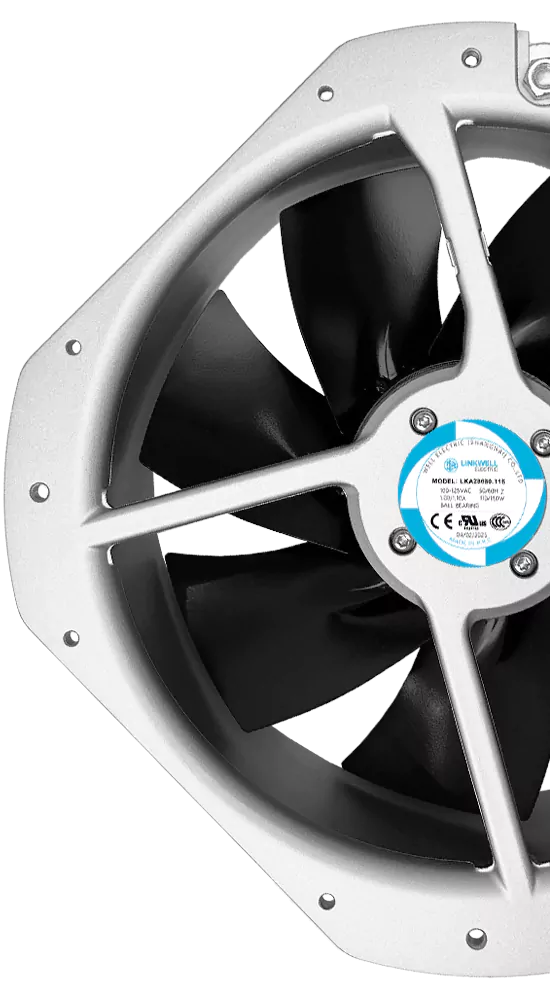
If you work in an industrial setting, you know how crucial it is to keep every fan running at just the right speed. When you adjust fan speed, you can cut energy use by up to 50% just by slowing a fan down 20%. You also protect your equipment, improve air quality, and create a quieter workspace. Modern fan technology—like EC fans and PWM—helps you save even more energy and lets you control each fan with smart systems.
The challenge? Most AC fans use motors that run at fixed speeds, making it tough to fine-tune airflow. That’s where fanacdc comes in. This brand leads the way with reliable, innovative fan solutions for every industrial need. If you want to know how to control ac (Alternating Current)fan speed, you’re in the right place.
Key Takeaways
- Adjusting AC fan speed can reduce energy use by up to 50%, leading to significant cost savings.
- Choosing the right type of fan—axial or centrifugal—can improve efficiency and extend equipment life.
- Utilize Variable Frequency Drives (VFDs) for precise fan speed control, enhancing energy savings and performance.
- Regular maintenance and cleaning of fan blades ensure optimal airflow and prolong fan lifespan.
- Select fan speed control methods that match your specific application needs for the best results.
AC Fans in Industrial Applications
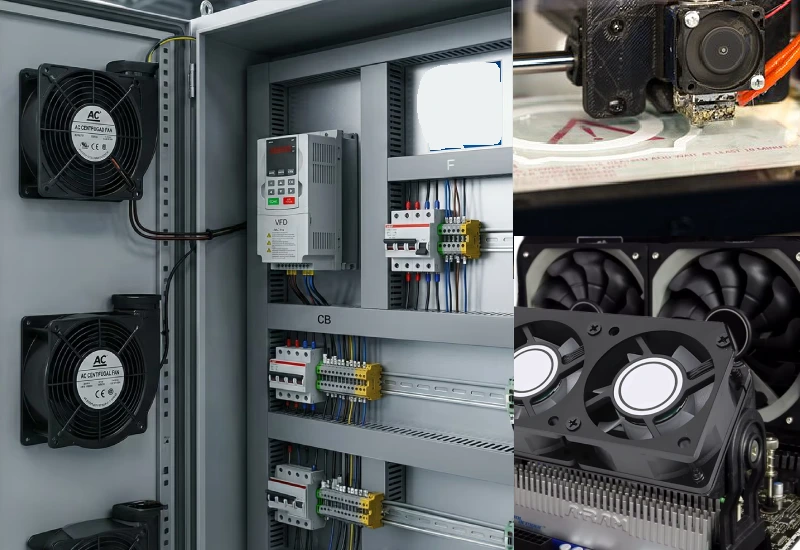
You see AC fans everywhere in industry. They keep machines cool, protect sensitive electronics, and help your systems run smoothly. When you use the right fan, you avoid overheating, cut down on energy waste, and make your equipment last longer. Here are some places where you’ll find these fans working hard:
- Manufacturing plants keep machines from overheating.
- Electrical rooms and control panels stay at safe temperatures.
- Automotive and aerospace systems get steady cooling.
- Food and beverage processing lines keep products at the right temperature.
- Medical equipment, telecom hardware, and aviation systems all rely on stable airflow.
AC fans play a big role in thermal management. They keep things cool, prevent shutdowns, and help you avoid costly repairs. You get better energy efficiency and longer equipment life when you pick the right fan for your needs.
Types of AC Fans: Axial vs Centrifugal
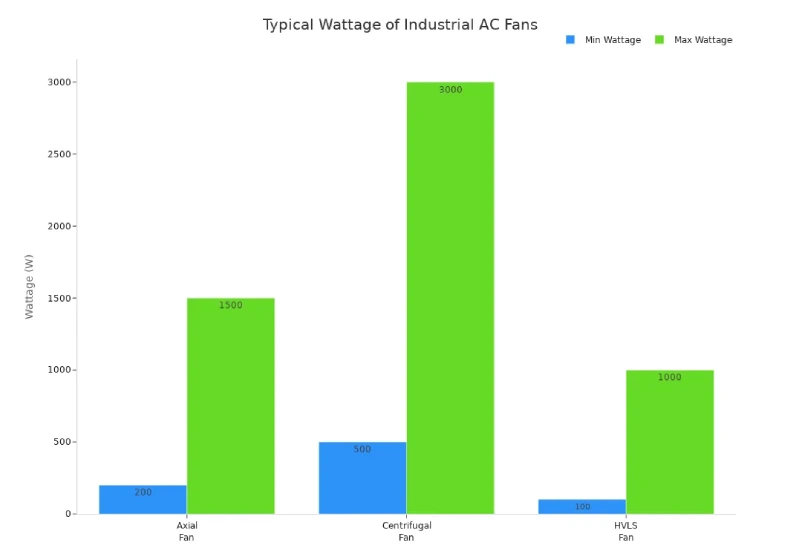
You’ll usually choose between two main types: axial and centrifugal. Each one fits different jobs. Check out this table to see how they compare:
| Factor | Centrifugal Fans | Axial Fans |
|---|---|---|
| Energy Efficiency | Less energy-efficient | More energy-efficient |
| Cost | Lower upfront cost | Higher initial cost |
| Space Requirements | Good for tight spaces | Best for open areas |
| Noise Generation | Quieter | Can be louder |
| Airflow Efficiency | High-pressure airflow | High-volume airflow |
| Pressure Needs | Handles high pressure | Suits low-pressure applications |
Axial fans move a lot of air and work well in open spaces. Centrifugal fans handle high pressure and work best in ducted or filtered systems. Choosing the right fan can lower your operational costs and reduce maintenance.
Key Features of fanacdc AC Fans
When you pick a fanacdc AC fan, you get more than just airflow. These fans stand out for their quality and reliability. Here’s what makes them special:
- Certified to UL, CE, RoHS, and ISO standards for safety and quality.
- Built from strong, flame-retardant materials for long life.
- Designed to work in tough environments and keep running for up to 70,000 hours.
- Offer custom sizes, voltages, and performance curves to fit your exact needs.
- Include options for IP-rated protection and corrosion resistance.
You can trust fanacdc fans to deliver steady performance, even in harsh conditions. Their durability and customization options make them a smart choice for any industrial setup.
Why Controlling AC Fan Speed Is Challenging
Fixed-Speed Nature of AC Motors
If you have ever tried to adjust the speed of an industrial fan, you know it is not as simple as turning a dial. Most ac fans use induction motors that run at a fixed speed. This speed depends on the frequency of the ac power supply. You cannot easily slow down or speed up the fan without special equipment.
Tip: Standard ac motors are built for one speed. If you try to run them slower, you might notice the fan becomes less efficient and wears out faster.
Here are some reasons why the fixed-speed design makes things tricky:
- Standard ac motors, especially induction types, are not made for variable speed. This limits how much you can adjust the airflow from your fan.
- If you force the fan to run slower than its rated speed, you may see more wear and less efficiency.
- You can use a variable frequency drive (VFD) to control speed, but these work best with three-phase motors. This can make it harder to pick the right fan and motor for your system.
You might find that changing the speed of your fan means you need to rethink your whole setup. That can add time and cost to your project.
Frequency and Voltage Limitations
The speed of an ac fan depends on two things: the frequency and the voltage of the power supply. In most factories, the power supply stays steady. That means your fan runs at the same speed all the time. If you want to change the speed, you need to change the frequency or the voltage.
Controlling the speed of ac fans in industrial settings is tough because the motor’s rotation matches the frequency of the power supply. If you want to adjust the speed, you often need a VFD. These devices can add complexity and cost to your system. Traditional speed control methods may also require big engineering changes, which can make your project more complicated.
You need to think about these limits when you choose a fan for your application. Picking the right fan and control method helps you get the airflow you need without wasting energy or damaging your equipment.
How to Control AC (Alternating Current) Fan Speed

You might wonder how to control ac (alternating current)fan speed in your industrial setup. There are several ways to do this, each with its own strengths and best-fit scenarios. Let’s break down the main methods so you can pick the right fan speed controller for your needs.
Voltage Control Methods
Voltage control is one of the most common answers to how to control ac (alternating current)fan speed. You can use different types of controllers to adjust the voltage that reaches your fan. Lower voltage means the fan spins slower, while higher voltage makes it run faster. This method works best for fans with voltage-controllable motors, like shaded-pole or PSC types.
Here’s a quick look at the main voltage control options:
| Method | Description | Advantages |
|---|---|---|
| Reducing motor voltage | Reduces both motor speed and torque; suitable for voltage controllable motors. | Simple, economical, effective for HVAC. |
| Transformer fan speed controllers | 5-step speed control using autotransformers. | Robust, minimal noise, no configuration needed. |
| Electronic fan speed controllers | Uses TRIAC technology for continuous variable control. | Silent operation, adjustable settings. |
| PWM technology | Offers continuous variable motor control for speed and torque. | Optimal control, potential energy savings. |
You’ll find that transformer-based controllers are reliable and quiet. Electronic controllers use TRIACs for smooth, silent operation. PWM control, or pulse-width modulation, gives you continuous variable fan speed control, which means you can fine-tune the airflow to match your exact needs. This is great for energy savings and precise temperature management.
Tip: PWM control and pulse-width modulation are especially useful if you want to adjust fan speed smoothly and avoid sudden jumps between settings.
Let’s look at the pros and cons of voltage control:
| Advantages of Voltage Control | Disadvantages of Voltage Control |
|---|---|
| Allows the use of speed and alarm sensors | Power dissipation in the pass element |
| Simple structure and low cost | Startup and stall issues |
| Direct compatibility with most motherboards | Low speed regulation precision |
| Suitable for common heat dissipation requirements | Low voltage may cause fans to fail to start or stop |
- Advantages:
- Simple setup and low cost.
- Works well for basic cooling needs.
- Compatible with most standard systems.
- Disadvantages:
- Not very precise for speed adjustments.
- Low voltage can cause the fan to stall or not start.
- Some fans may not work well at very low speeds.
If you use fanacdc AC Fans, you’ll get the most out of voltage control in applications where you need basic, reliable airflow. These fans are built to handle a range of voltages and work well with transformer or electronic fan speed controllers. For more advanced needs, you might want to look at PWM control for smoother, more efficient operation.
Frequency Control with VFDs
Frequency control is another key method for how to control ac (alternating current)fan speed. Variable Frequency Drives (VFDs) let you change the frequency of the power supply, which directly changes the speed of your fan. This method gives you precise control and can save a lot of energy.
Here’s how VFDs work:
| Feature | Description |
|---|---|
| Power Adjustment | VFDs adjust the power supplied to an electric motor, altering speed and output. |
| Frequency Control | They control the hertz (Hz) delivered to the motor, directly affecting RPM. |
| Efficiency | VFDs improve system efficiency and energy savings by matching motor speed to demand. |
When you use a VFD, you can match the fan speed to the exact airflow your system needs. This is perfect for situations where demand changes throughout the day. For example, in HVAC systems, VFDs help you optimize performance and cut energy costs by adjusting airflow as needed.
You’ll see VFDs used in:
- Pumps, where you want to match flow to demand and save energy.
- Fans and blowers, where you need to adjust airflow without wasting power.
- Conveyors, where you fine-tune belt speeds for different loads.
Note: VFDs are best for three-phase motors. If you use single-phase fans, check compatibility before installing a VFD.
fanacdc AC Fans are designed for industrial use and can work with VFDs in many applications. You get reliable performance, especially in high-power setups where energy savings matter. Always follow best practices for wiring and setup to protect your equipment and get the most out of your fan speed controller.
Multi-Speed and Tap Switching
Multi-speed and tap switching offer another answer to how to control ac (alternating current)fan speed. These methods let you pick from two or three preset speeds, like low, medium, or high. You can switch speeds using a simple dial or switch, making it easy to adapt to changing needs.
- Multi-speed switches let you select between multiple predefined fan speeds.
- This gives you more control over fan operation and helps you match airflow to your process.
- You can improve energy efficiency, especially when you don’t need full power all the time.
Here’s a quick look at the pros and cons:
| Method | Pros | Cons |
|---|---|---|
| Tap-speed | Simple and inexpensive option | Limited speed flexibility, usually only 2-3 preset options |
| Multi-speed | More speed options than tap-speed | May be more complex and expensive than tap-speed |
Multi-speed and tap switching work well for applications where you don’t need continuous variable fan speed control. You get a simple, cost-effective way to adjust airflow. fanacdc AC Fans support these methods and offer reliable performance, even when you switch speeds often.
Tip: If you want more flexibility or need to fine-tune airflow, consider PWM control or VFDs for your fan speed controller.
When you choose how to control ac (alternating current)fan speed, think about your power requirements, budget, and how much precision you need. fanacdc AC Fans give you the flexibility to use voltage control, VFDs, or multi-speed switching, so you can always find the right solution for your application.
Best Practices for fanacdc AC Fan Speed Control
Application Scenarios and Method Selection
Choosing the right way to handle fan speed control can make a big difference in your system’s performance. You want to match your method to your application for the best results. Here’s what you should keep in mind:
- Think about your cooling needs. If your equipment gives off a lot of heat, you may need a method that lets you regulate ac fan speed in real time, like PWM or VFDs.
- Look at your environment. Dust, humidity, and temperature changes can affect how your fan works. Pick a fan speed control method that fits your space.
- Use feedback systems. These help you adjust fan speed control automatically, so you always get the right airflow.
- Test before you commit. Try out your setup on a small scale to make sure everything runs smoothly.
- Clean your fan blades often. This keeps your fan efficient and helps your fan speed control system work better.
If you use fanacdc AC fans, you get options for different speed control methods. You can regulate ac fan speed with simple switches, advanced controllers, or even smart automation. This flexibility means you can always find the right fit for your project.
Safety and Reliability Considerations
You want your fan speed control system to be safe and reliable. Here’s a quick table to help you focus on what matters:
| Consideration | Description |
|---|---|
| Material and Durability | Choose fans made from corrosion-resistant materials for tough environments. |
| Compliance with Safety Standards | Make sure your fans meet UL, CE, and RoHS standards for safety. |
| Installation and Maintenance | Go for fans that are easy to install and maintain. |
| Smart Ventilation and Automation | Use smart controls for remote monitoring and better efficiency. |
High-quality fans like those from fanacdc deliver strong airflow and precise temperature control. They keep your electronics cool and extend their lifespan. Certified fans also give you peace of mind, knowing your system meets industry standards.
Tip: Regularly check connections and monitor for overheating. If you spot a problem, follow a troubleshooting checklist or reach out to the manufacturer for help.
With the right fan speed control practices, you can keep your system running safely and efficiently for years.
When you want to control AC fan speed, you have a few solid options. You can use voltage control, VFDs, or multi-speed switches. To pick the best method, you should:
- Check your fan type and motor.
- Think about how much power your fan needs.
- Decide if you want manual or digital control.
- Make sure your controller matches your fan.
- Look for safety features.
Choosing a fan from fanacdc gives you big advantages:
| Advantage | Description |
|---|---|
| Reliability | The fan keeps your space cool and works nonstop in tough spots. |
| Durability | The fan stands up to heat, dust, and vibration for years. |
| Continuous Operation | The fan runs over 50,000 hours, so you worry less about downtime. |
| Customization | You can get a fan that fits your project perfectly. |
If you want the best results, talk with experts or reach out to fanacdc. They can help you pick the right fan, design your system, and support you from start to finish.
| Service Type | Description |
|---|---|
| Requirement Evaluation | Experts help you match the right fan to your needs. |
| Product Selection & Technical Recommendation | They guide you to the most efficient fan for your setup. |
| Design & Engineering Optimization | They customize your fan for top performance. |
| Project Management & Implementation Support | They support you through installation and beyond. |
You can always count on fanacdc for reliable fans and expert help.
FAQ
How do I know which speed control method works best for my fan?
You should check your application needs first. If you want simple speed control, try voltage control. For more precise adjustments, use a VFD. Multi-speed switches work well for basic setups. Always match your speed control method to your fan type.
Can I use speed control on any industrial fan?
Not every fan supports every speed control method. Some fans work best with voltage control, while others need a VFD. Always check your fan’s manual or ask the manufacturer before you try a new speed control setup.
Will speed control affect my fan’s lifespan?
Yes, the right speed control can help your fan last longer. If you use the wrong method, you might cause extra wear. Always use a speed control system that matches your fan’s design and your cooling needs.
What should I do if my fan makes noise after speed control changes?
If your fan gets noisy after you adjust speed control, check for loose parts or dirt. Sometimes, the speed control method can cause vibration. Clean your fan and make sure everything is tight. If the noise stays, contact support.
Do I need special wiring for fan speed control?
Some speed control systems, like VFDs, may need special wiring or protection. Always follow the instructions for your fan and speed control device. If you are not sure, ask an expert before you install anything.
Conclusion
Controlling AC fan speed is essential for improving energy efficiency, reducing operating costs, and extending equipment life in industrial applications. By using methods such as voltage control, variable frequency drives (VFDs), or multi-speed switching, you can match airflow to real-time demand.
Choosing the right control approach depends on your system requirements, power conditions, and precision needs. With reliable solutions from fanacdc, you can achieve stable, efficient, and customizable cooling performance for a wide range of industrial environments.