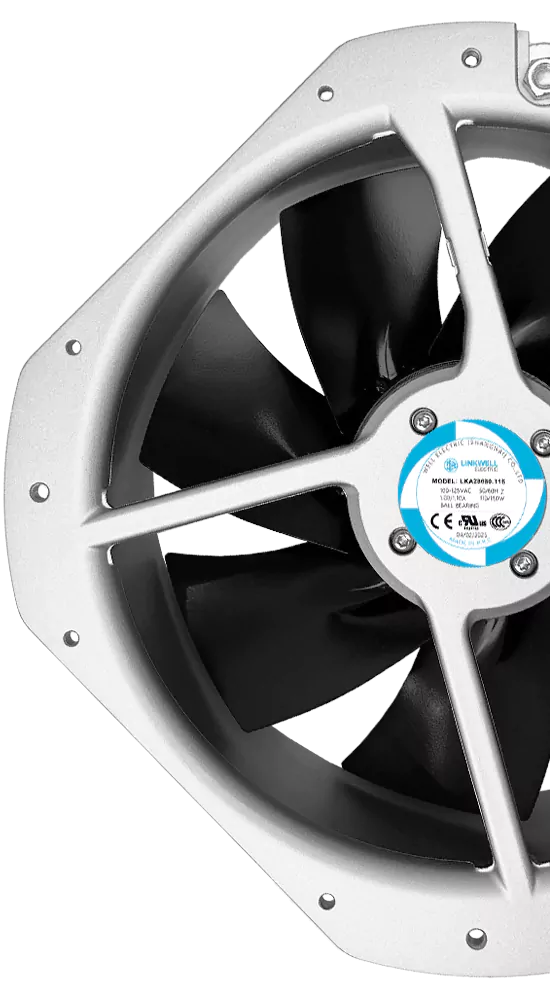
You might wonder what really separates an industrial fan from a blower. The answer comes down to how each device handles pressure, airflow, and design. Fans move a lot of air at low pressure, making them perfect for cooling open spaces. Blowers push air with higher pressure, which helps when you need to move air through ducts or filters. This technical difference matters because choosing the right tool keeps your equipment cool and your operations running smoothly. Take a look at how the global market values these products:
| Year | Market Size (Billion USD) | CAGR (%) |
|---|---|---|
| 2024 | 5.87 | N/A |
| 2025 | 6.27 | N/A |
| 2033 | 10.62 | 6.8 |
You’ll see examples from fanacdc’s Industrial Cooling Fan, Centrifugal Fan, AC Fans, and DC Fan as we explore the Industrial Fan vs Blower debate.
Key Takeaways
- Industrial fans move large volumes of air at low pressure, making them ideal for cooling open spaces like factories and data centers.
- Blowers generate higher pressure to push air through obstacles, making them suitable for HVAC systems and dust collection.
- When choosing between a fan and a blower, consider your airflow needs and the resistance in your system to ensure optimal performance.
- Fans typically require less energy to operate compared to blowers, which can help reduce your energy costs.
- Understanding the technical differences between fans and blowers helps you select the right tool for your specific application.
Industrial Fan vs Blower: Core Differences
What Is an Industrial Fan?
When you walk into a factory or data center, you’ll probably spot large fans spinning away. These are industrial fans. They’re built tough and designed to move air efficiently in all sorts of industrial settings. You’ll find them in power plants, electronics manufacturing, and even renewable energy systems. Industrial fans, like those from fanacdc, use high-quality materials to deliver consistent airflow. This keeps your equipment cool and your workspace safe.
Industrial fans focus on moving a lot of air with minimal pressure change. You might see them as AC fans, DC fans, or even EC fans in the fanacdc lineup. Each type serves a unique purpose, but they all share one goal: reliable, efficient air movement.
Tip: Airflow is measured in cubic feet per minute (CFM) or cubic meters per hour (M3/Hr). This tells you how much air passes through the fan in a set time.
What Is a Blower?
Blowers look similar to fans, but they play a different role. Instead of just moving air around, blowers push air with more force. This helps when you need to move air through filters, ducts, or tightly packed equipment. You’ll see blowers in HVAC systems, industrial ovens, and dust collection units.
Here’s a quick breakdown of what makes a blower unique:
| Definition | Description |
|---|---|
| Blower | A device that moves a volume of gas to overcome system resistance without compressing it. |
| Operation | Typically operates below 20 psig and does not reduce the volume of gas. |
| Type | Generally classified as positive displacement machines. |
Fanacdc’s centrifugal fans are a great example. They use a spinning impeller to create higher pressure, sending air exactly where you need it—even through long ducts or dense filters.
Key Technical Differences
You might wonder, what’s the real difference between an industrial fan vs blower? Let’s break it down:
- Pressure: Industrial fans move air with low pressure changes. Blowers generate higher pressure, making them perfect for pushing air through obstacles.
- Airflow: Fans excel at moving large volumes of air. Blowers focus on directing air to a specific spot, even if there’s resistance.
- Design: Fans usually have blades that spin and move air in a straight line. Blowers, especially centrifugal types, use an impeller to send air out at a 90-degree angle.
- Direction: Fans disperse air widely. Blowers channel air in a focused direction.
Here’s a table to help you see the difference at a glance:
| Device | Pressure Ratio | Functionality |
|---|---|---|
| Fan | Up to 1.11 | Moves large volumes of air with minimal pressure changes |
| Blower | 1.11 to 1.2 | Generates higher pressure and directs airflow effectively |
| Compressor | More than 1.2 | Compresses air to a much higher pressure level |
You’ll notice that industrial fans, like those from fanacdc, are all about airflow. They keep things cool and comfortable. Blowers, on the other hand, step in when you need to overcome resistance—like pushing air through a filter or cooling densely packed electronics.
- Fans are designed for high airflow with low pressure changes.
- Blowers operate at higher pressure ratios, allowing for more directed airflow.
- Blowers can exceed a pressure ratio of 1.2 in specific scenarios.
- Industrial fans typically require less electricity to operate than blowers.
When you compare industrial fan vs blower, you’ll see that the difference comes down to how each handles pressure and airflow. If you need to move air freely in a large space, go with a fan. If you need to push air through something, a blower is your best bet.
Fanacdc’s product range shows these technical differences in action. Their AC fans and DC fans deliver reliable airflow for general cooling. Their centrifugal fans act as blowers, generating higher static pressure for specialized tasks. You get the right tool for every job.
Note: Static pressure is the force the fan or blower uses to push air against resistance. The higher the static pressure, the better the device can move air through filters, ducts, or crowded spaces.
Understanding the difference between an industrial fan vs blower helps you pick the right solution for your needs. Whether you want to cool a control cabinet or ventilate a long duct, knowing these technical differences makes your choice easy.
Technical Differences: Pressure, Airflow, and Design

Pressure and Airflow Comparison
When you compare industrial fans and blowers, you’ll notice that pressure and airflow volume set them apart right away. Fans, like fanacdc’s AC and DC models, move a large airflow volume but create only a small pressure change. In most manufacturing environments, a fan’s pressure ratio stays up to 1.11. Blowers, especially centrifugal types, push air with more force. Their pressure ratio ranges from 1.11 to 1.2, which means they can overcome more resistance in ducts or filters.
| Device | Pressure Ratio |
|---|---|
| Fan | Up to 1.11 |
| Centrifugal Blower | 1.11 – 1.2 |
If you need to move air freely in an open space, a fan is your best friend. When you need to push air through a filter or a long duct, a blower’s higher pressure output gets the job done. Centrifugal fans from fanacdc can discharge air at a 90-degree angle, making them perfect for targeted cooling or ventilation.
Mechanical Design and Construction
The design of these devices also shows clear technical differences. Axial fans, like many AC and DC fans from fanacdc, use airfoil-shaped blades and an open frame. This design moves air parallel to the axis and delivers high airflow volume with low pressure. Centrifugal fans and blowers use a squirrel cage impeller and a sturdy, enclosed housing. This setup directs air at a right angle and handles higher pressure.
| Feature | Axial Fans | Centrifugal Fans |
|---|---|---|
| Blade Shape | Airfoil-shaped blades | Squirrel cage impeller |
| Airflow Direction | Parallel to the axis of rotation | 90-degree angle to the axis |
| Housing Structure | Open frame, less rigid | Casing (volute or scroll shape) |
| Pressure Characteristics | Low pressure, high volume | High pressure, lower volume |
Materials matter, too. Stainless steel and special coatings boost durability and temperature resistance, which is why fanacdc uses high-quality materials for both fans and blowers.
Energy Efficiency and Control
You want your cooling system to save energy and give you control. DC fans from fanacdc stand out for their energy efficiency, using up to 30 percent less power than traditional AC motors. That means lower energy bills and a greener footprint. EC fans take it a step further with built-in electronics for precise speed control and even better efficiency.
For variable speed, you have options. Variable Frequency Drives (VFDs) let you adjust the speed of AC fans and blowers. EC motors offer smart, built-in control for easy adjustments. This flexibility helps you match airflow volume to your exact needs, whether you’re cooling a server rack or ventilating a factory floor.
Tip: Choosing the right fan or blower based on these technical differences ensures your system runs efficiently and reliably, no matter the challenge.
Difference Between Fans and Blowers: Comparison Table
If you want a quick way to spot the difference between fans and blowers, a side-by-side comparison helps. You can see how each device stacks up in terms of airflow, pressure, efficiency, and where you might use them. Let’s break it down so you can make the best choice for your setup.
Here’s a table that highlights the main technical specs and typical applications. You’ll find examples from fanacdc’s product range, like their AC axial fans, DC fans, and centrifugal blowers.
| Technical Metric | Industrial Axial Fans (fanacdc AC/DC) | Centrifugal Blowers (fanacdc Centrifugal Fan) |
|---|---|---|
| Airflow Direction | Parallel to shaft | Radial (perpendicular to shaft) |
| Airflow Range (CFM) | 500 – 150,000 | 100 – 100,000 |
| Static Pressure (inWG) | 0.1 – 2.5 | 2.0 – 100+ |
| Efficiency (%) | 75 – 85 | 80 – 90 |
| Noise Level (dB) | 65 – 85 | 60 – 90+ |
| Speed Range (RPM) | 500 – 3,600 | 300 – 5,000 |
| Temp Limit (°F) | Up to 300 | Up to 500 |
| Humidity Tolerance | Up to 95% RH | Up to 98% RH |
| Particle Handling | Up to 50 microns | Up to 100 microns |
| Power Consumption (HP) | 0.5 – 50 | 1.0 – 200 |
| Voltage Compatibility | 120V, 240V, 480V | 240V, 480V, 600V |
| Typical Applications | General ventilation, cooling electronics | HVAC, dust collection, industrial processes |
You’ll notice that fans, like fanacdc’s AC and DC models, work best for moving lots of air at low pressure. These are perfect for cooling electronics or ventilating large rooms. Blowers, such as fanacdc’s centrifugal fans, shine when you need higher pressure to push air through filters, ducts, or complex machinery.
Tip: If your project needs high airflow but low resistance, go with a fan. If you need to overcome obstacles or direct air with force, a blower is the better choice.
Understanding the difference between fans and blowers helps you match the right product to your application. You get better performance and efficiency when you choose based on your system’s needs.
Industrial Fan Applications vs Blower Applications
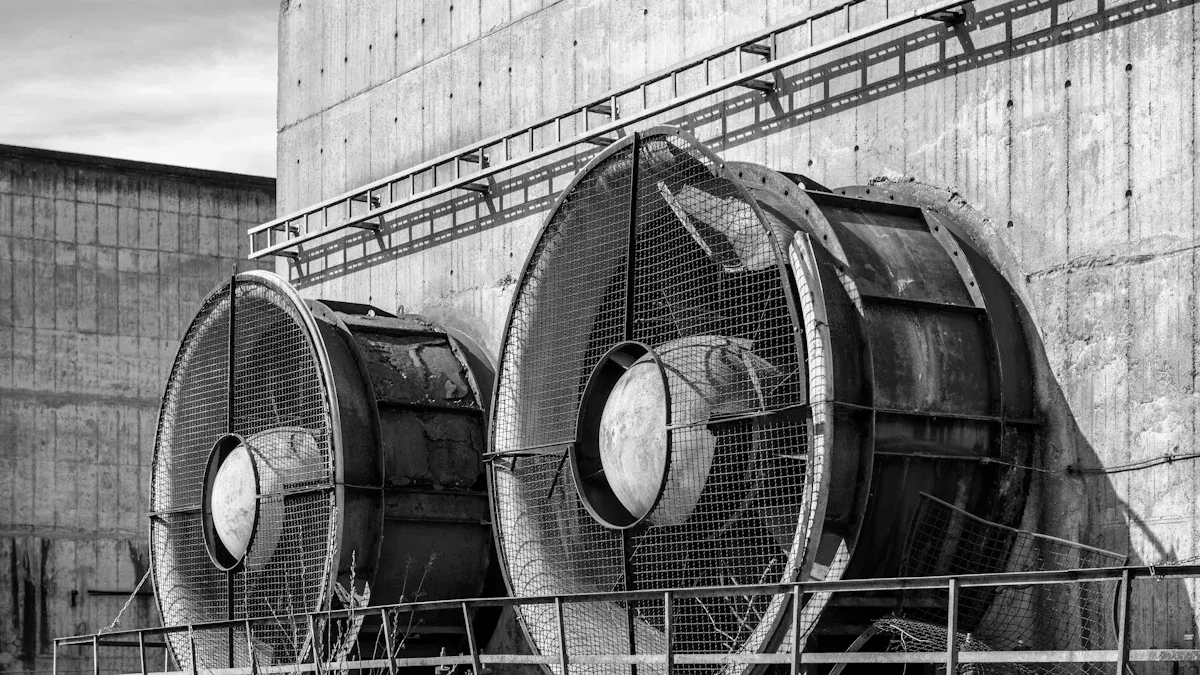
Where to Use Industrial Fans
You see industrial fans in action across many industries. They keep air moving and temperatures under control. Here are some common places where you’ll find them working hard:
- Cement and asphalt plants for dust control and high-temperature airflow
- Agriculture for ventilation and climate management
- Glass and pulp factories to handle heat and fumes
- Manufacturing plants for general cooling and air quality
- Power plants to manage emissions and equipment cooling
- Mines for fresh air and dust removal
- Food processing facilities for sanitation and climate control
Industrial fans deliver unique benefits in these environments. They move large volumes of air, help control temperature, and improve air quality. You can rely on them to keep workers comfortable and equipment running smoothly.
Where to Use Blowers
Industrial blower fans step in when you need to push air through resistance or direct it with force. You’ll spot them in:
- Manufacturing facilities for process ventilation
- Wastewater treatment plants for aeration
- HVAC systems for ducted air movement
- Metalworking shops to clear fumes and particles
- Chemical processing plants for hazardous fume extraction
- Cooling systems in electronics and power equipment
- Environmental management and water treatment facilities
Industrial blower fans shine in confined or ducted spaces. They create higher static pressure, making them perfect for moving air through filters, ducts, or crowded machinery.
fanacdc Product Examples in Industry
Let’s look at how fanacdc products fit into real-world scenarios:
| Application Area | fanacdc Product Used | Role in Industry |
|---|---|---|
| Automotive Manufacturing Plant | AC Fans, Centrifugal Fan | Heat and fume extraction, air quality improvement |
| Food Processing Facility | Industrial Cooling Fan | Ventilation, air curtains for hygiene |
| Steel Manufacturing Plant | Centrifugal Fan | High-pressure air for smelting and casting |
| Electronics Assembly Facility | DC Fan | Spot cooling, temperature control |
| Textile Factory | AC Fans | Humidity control, airborne fiber reduction |
| HVAC and Air Filtration | Centrifugal Fan | Stable airflow, efficient duct ventilation |
| Cold Storage and Supermarkets | Centrifugal Fan | Consistent temperature control |
You can see how each fanacdc solution matches the needs of different industries. Whether you need broad airflow or targeted pressure, there’s a product designed for your application.
How to Choose: Industrial Fan or Blower?
Selection Criteria and Technical Needs
Choosing between an industrial fan and a blower can feel tricky, but you can break it down into a few simple steps. Start by thinking about what your system needs most—airflow, pressure, and the environment where the device will run.
Here’s a quick checklist to help you decide:
- Airflow Requirements: Figure out how much air you need to move. Measure this in cubic feet per minute (CFM).
- Static Pressure: Check the resistance in your system. Ducts, filters, and equipment all add up. Higher resistance means you’ll need a blower.
- Operating Environment: Look at temperature, humidity, and any dust or chemicals in the air. Some fans handle tough conditions better than others.
- Efficiency Goals: Want to save on energy bills? Choose a fan or blower that balances performance with power use.
- Compliance Needs: Make sure your choice meets safety and environmental rules.
Tip: Always include losses from filters and dampers when you calculate static pressure. This helps you avoid surprises later.
You can also use this table to see what matters most for pressure:
| Criteria | Description |
|---|---|
| Fan Static Pressure | Difference between discharge and inlet pressure plus velocity pressure. |
| Measurement Unit | Measured in Water Gauge (WG), shows airflow resistance. |
| Factors Affecting Pressure | Duct size, air temperature, altitude, and material handling. |
| Importance | Knowing inlet and outlet pressure keeps your system running smoothly. |
Matching fanacdc Products to Applications
Now, let’s match your needs to the right fanacdc product. Each product shines in different situations:
- AC Fans: Great for steady cooling in control panels, industrial machinery, and telecom stations. They offer strong airflow, long life, and low maintenance.
- DC Fans: Perfect for electronics, automation, or places where you want energy savings and smart speed control. DC fans use less power and last longer, thanks to advanced bearings.
- Centrifugal Fans: Best for high-pressure jobs like HVAC, dust collection, or moving air through long ducts. They handle tough environments and keep airflow stable.
- Industrial Cooling Fans: Versatile for factories, food processing, or agriculture. They protect equipment, reduce failure rates, and work well in demanding conditions.
| Application Area | fanacdc Product | Key Benefit |
|---|---|---|
| Industrial Machinery | AC Fan, Cooling Fan | Reliable cooling, protects electronics |
| Control Panels | AC Fan | Maintains temperature balance |
| Telecommunications | DC Fan | Stable operation, energy savings |
| HVAC/Ducted Systems | Centrifugal Fan | High pressure, efficient duct ventilation |
| Agriculture | Cooling Fan | Durable, continuous operation |
If you need help matching a product to your project, fanacdc’s team can guide you to the best fit for your technical needs.
Conclusion
You’ve now got a clear picture of what sets industrial fans and blowers apart. Fans move lots of air with low pressure. Blowers push air with higher pressure through obstacles like ducts and filters. This technical difference shapes how you use each device in your facility.
Let’s recap the key points:
- Fans work best for open spaces and general cooling. You’ll see them in factories, data centers, and control panels.
- Blowers shine when you need to move air through resistance. They handle jobs in HVAC systems, dust collection, and process ventilation.
You can match your needs to the right tool by looking at airflow, pressure, and your environment. If you want to cool a large room, pick a fan. If you need to push air through a filter or a long duct, go with a blower. It’s that simple.
Tip: Always check your system’s airflow and pressure needs before you choose. This step saves you time and money.
Fanacdc gives you plenty of options. Their AC fans and DC fans deliver reliable airflow for electronics and automation. Centrifugal fans provide the pressure you need for tough jobs like HVAC and industrial processes. You can even customize your solution for unique projects.
Here’s a quick checklist to help you decide:
- Measure your airflow needs (CFM).
- Check for resistance in your system.
- Think about the environment—temperature, dust, and humidity.
- Choose the fanacdc product that fits your specs.
If you’re still unsure, don’t worry. You can reach out to the fanacdc team for expert advice and technical support. They’ll help you pick the best cooling solution for your project.
Want to learn more? Visit fanacdc’s website for detailed guides, product specs, and more tips on industrial cooling.
You now know the key differences between industrial fans and blowers—fans move lots of air at low pressure, while blowers push air with higher pressure through obstacles. These differences shape how you pick the right tool for your job. To make a smart choice, follow these steps:
- Figure out your airflow needs.
- Calculate the pressure in your system.
- Pick the right fan type.
- Choose the best impeller.
- Check how your setup affects performance.
Want to dive deeper? Explore resources like “What is Industrial Blower, Types, Working Principle and More.” If you need help, reach out to the fanacdc team for expert support.
FAQ
What’s the main difference between an industrial fan and a blower?
You’ll find that fans move a lot of air at low pressure. Blowers push air with higher pressure through obstacles like ducts or filters. Your choice depends on your airflow and resistance needs.
How do I know if I need a fan or a blower?
Check your system. If you need to move air freely in open spaces, pick a fan. If you must push air through filters, ducts, or crowded equipment, go with a blower.
Can I use a fanacdc centrifugal fan as a blower?
Yes! Fanacdc centrifugal fans work great as blowers. They generate high static pressure, so you can move air through ducts, filters, or complex machinery with ease.
What does “static pressure” mean for my application?
Static pressure measures how much force your fan or blower uses to push air against resistance. Higher static pressure means better performance in ducted or filtered systems.
Do fanacdc fans support custom solutions for unique projects?
Absolutely. Fanacdc offers OEM and ODM services. You can customize size, voltage, speed control, and protection features to match your project’s exact needs.