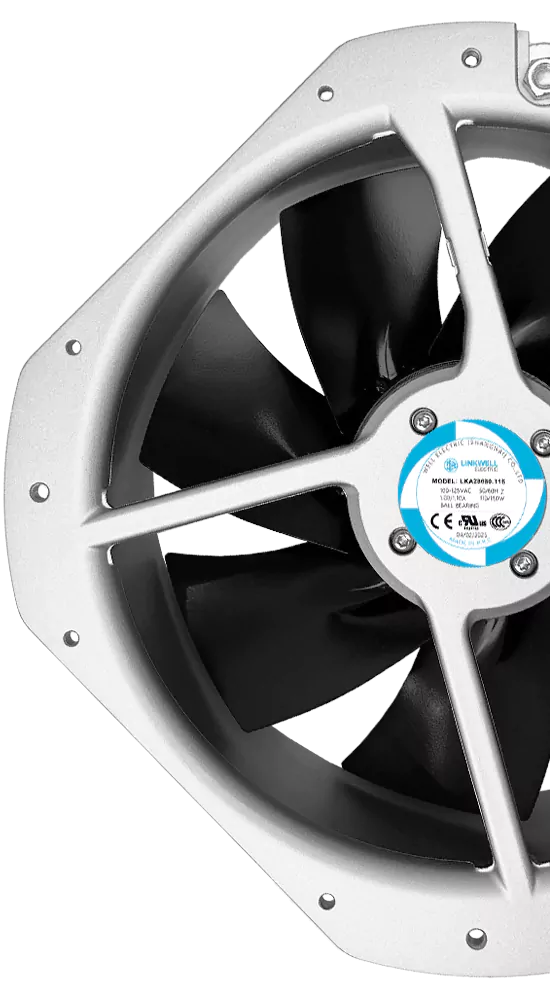
In today’s industrial world, managing heat effectively is essential for maintaining the performance, efficiency, and longevity of equipment. Whether it’s high-performance CPUs in data centers, semiconductor manufacturing machinery, or automotive electronics, cooling systems play a critical role. Two of the most common industrial cooling solutions are air cooling and liquid cooling.
Deciding between air or water cooling, understanding how liquid cooling works, and comparing fan vs liquid cooling setups are key considerations for engineers, manufacturers, and facility managers.
This comprehensive guide will cover all aspects of air cooled vs liquid cooled systems, including principles, advantages, drawbacks, efficiency, safety, environmental impact, and practical applications. By the end, you’ll have a clear understanding of which solution is best suited for your industrial needs.
How Cooling Systems Work in Industry
Industrial cooling systems are designed to remove excess heat from machinery and maintain optimal operating temperatures. Heat management ensures that equipment runs smoothly, prevents overheating, and reduces the risk of performance degradation or failure.
Cooling systems work by transferring heat from hot components to the surrounding environment. The efficiency of this process depends on several factors, including the thermal conductivity of the medium, the surface area available for heat dissipation, and the airflow or coolant flow rate.
- Air cooling systems use fans, heat sinks, and ventilation ducts to move heat away from equipment. Fans draw in cooler ambient air, which passes over heat sinks connected to hot components. The heat is then expelled, keeping the machinery at a safe temperature.
- Liquid cooling systems, sometimes called water cooling systems, use a coolant circulated through pipes, pumps, and heat exchangers. The coolant absorbs heat from components, then transfers it to a radiator or heat exchanger where it is dissipated into the surrounding air. This method is highly effective for high-density industrial environments where precise temperature control is required.
Understanding these mechanisms helps industries select the most efficient cooling strategy based on thermal load, space, maintenance, and cost considerations.
Air Cooling Systems Explained
How Air Cooling Works
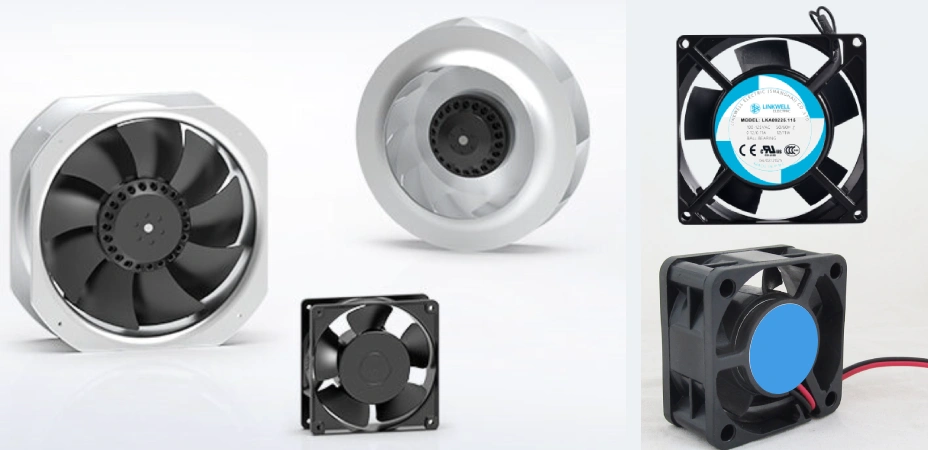
Air cooling relies on the movement of air to remove heat from machinery. Industrial air cooling systems typically consist of:
- Fans: Draw in cool air and push warm air out.
- Heat sinks: Absorb heat from components and increase surface area for heat dissipation.
- Ventilation ducts: Guide airflow efficiently over critical areas.
Types of Fans
AC Fans operate on alternating current, offering simplicity and reliability for industrial applications where variable speed is not required. They are cost-effective and durable, ideal for continuous operation in harsh environments.
DC Fans use direct current, providing higher energy efficiency and quieter operation than AC fans. They offer precise speed control and are commonly used in electronics cooling, telecommunications, and applications requiring variable airflow.
EC Fans combine AC power input with DC motor technology, delivering the best of both worlds: AC compatibility with DC efficiency. They achieve up to 70% energy savings, offer integrated speed control, and produce minimal noise, making them ideal for smart, energy-conscious industrial systems where precise thermal management is essential.
The continuous cycle of drawing cool air in and expelling hot air ensures consistent temperature control, making air cooling a reliable option for many industrial applications.
Advantages of Air Cooling
Air cooling has several advantages that make it popular:
- Low Cost: Air-cooled systems require fewer components and are generally cheaper to purchase and install than liquid cooling setups.
- Ease of Maintenance: Fewer moving parts and the absence of liquid reduce maintenance complexity. Periodic dust removal and fan inspections are usually sufficient.
- Leak-Free Operation: Since no fluids are involved, there is no risk of leaks damaging equipment.
- Flexibility: Air cooling can be adapted to different equipment arrangements and space constraints.
Drawbacks of Air Cooling
Despite its advantages, air cooling has limitations:
- Lower Efficiency: Air has a lower thermal conductivity than liquids, making heat transfer slower. This can limit performance in high-density or high-heat applications.
- Noise: Fans operating at high speeds can generate considerable noise.
- Space Requirements: Large fans and heat sinks may take up more room than compact liquid cooling systems.
Use Cases: Air cooling is commonly used in automotive electronics, telecommunications equipment, and facilities with moderate thermal loads. For example, remote telecom stations often rely on air-cooled solutions due to simplicity and reliability.
Liquid Cooling Systems Explained
Principles of Liquid Cooling
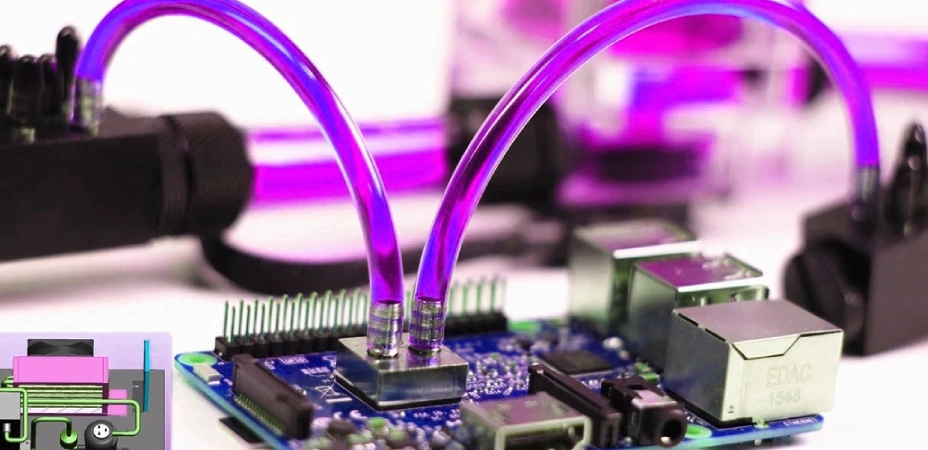
Liquid cooling systems, also referred to as water-based cooling systems, work by circulating a coolant—usually water or a specialized industrial fluid—through a closed loop. Key components include:
- Pumps: Move coolant through the system.
- Water blocks: Transfer heat from equipment to the coolant.
- Radiators / Heat exchangers: Dissipate heat from the coolant to the surrounding air.
The fluid absorbs heat from the components, transfers it to a radiator, and then returns cooled to continue the cycle. This method allows for high heat transfer rates, making it ideal for environments where thermal loads are extremely high or constant temperature stability is required.
Advantages of Liquid Cooling
- Superior Efficiency: Liquids have much higher heat capacity than air, allowing faster and more uniform heat removal. According to research, liquid cooling systems can achieve heat transfer coefficients of up to 10,000 W/m²K, compared to just 10–100 W/m²K for air-cooled systems.
- Noise Reduction: Fewer high-speed fans are needed, resulting in quieter operation.
- Consistent Temperature Control: Liquid cooling maintains even temperatures across high-density equipment, improving reliability and performance.
- Space Efficiency: Liquid cooling components can be compact, making them suitable for tight installations.
Drawbacks of Liquid Cooling
- Higher Initial Cost: Pumps, tubing, and heat exchangers increase upfront investment.
- Maintenance Complexity: Regular monitoring of coolant levels, potential leak inspections, and occasional fluid replacement are required.
- Leak Risk: Improper installation or tube damage can lead to spills that may harm equipment.
Use Cases: Liquid cooling is favored in data centers, high-density server racks, semiconductor manufacturing, and high-energy physics laboratories due to its superior heat dissipation and temperature stability.
Comparing Air Cooling and Liquid Cooling
| Factor | Air Cooling | Liquid Cooling |
|---|---|---|
| Cooling Performance | Moderate | High |
| Initial Cost | Lower | Higher |
| Maintenance | Simpler | More Complex |
| Noise Level | Higher | Lower |
| Space Requirements | Larger | Compact |
| Environmental Impact | Higher | Lower |
| Leak Risk | None | Possible |
Efficiency and Performance: Liquid cooling consistently outperforms air cooling in high-thermal-demand scenarios. It can reduce equipment temperatures by up to 20°C compared to air-cooled solutions, enhancing performance and lifespan.
Cost Implications: While liquid cooling is more expensive upfront, energy efficiency and reduced wear on equipment can offset long-term operational costs.
Fan vs Liquid Cooling
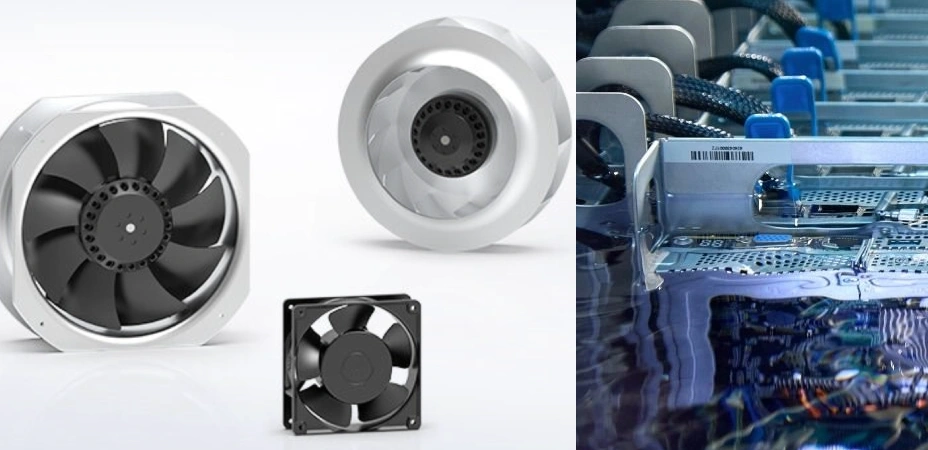
Fans are critical in both systems but serve different roles:
- Air Cooling: Fans move ambient air across heat sinks to remove heat directly from components.
- Liquid Cooling: Fans are secondary, usually mounted on radiators to dissipate heat from the coolant. This allows lower-speed fan operation, reducing noise.
Hybrid Solutions: Some industrial setups combine fans with liquid cooling loops for high-performance systems, ensuring both rapid heat transfer and consistent airflow.
Two-Phase and Advanced Cooling Technologies
For cutting-edge industrial applications, two-phase cooling is emerging as a highly efficient solution. In these systems, the coolant undergoes a phase change (liquid to vapor) to absorb heat more effectively. Two-phase and other advanced techniques are particularly useful in high-density data centers and semiconductor fabrication where traditional air or single-phase liquid cooling may not suffice.
Factors Influencing Your Choice
When selecting air or liquid cooling, consider:
- Industrial Needs: High-thermal-load industries benefit more from liquid cooling, while lower-load environments can rely on air cooling.
- Efficiency: Liquid cooling generally consumes less energy for the same thermal management, offering long-term savings.
- Space: Air cooling requires more room due to large fans and heat sinks; liquid cooling can be more compact.
- Maintenance: Fewer parts in air cooling reduce maintenance complexity, while liquid systems need careful monitoring.
- Noise: Liquid cooling is quieter, which may be crucial in labs or office-adjacent facilities.
- Cost: Initial cost vs long-term operational savings must be evaluated.
Safety and Environmental Considerations
Air Cooling: Safe and simple—no fluids are involved—but requires regular cleaning to prevent dust accumulation and fire hazards.
Liquid Cooling: Higher efficiency comes with leak risks and potential hazards from coolant chemicals. Proper containment, leak detection, and choosing environmentally compatible fluids are essential.
Industry Applications
- Data Centers: Liquid cooling is preferred for high-density server racks to reduce energy consumption and maintain stable temperatures.
- Semiconductor Manufacturing: Precision temperature control via liquid cooling ensures quality in lithography machines.
- Automotive Electronics: Air cooling is common due to space and cost constraints.
- Telecommunications: Remote or outdoor stations often use air cooling for simplicity and low maintenance.
Leading Manufacturers in Industrial Cooling
Companies like ACDCFAN provide a range of AC fans, DC fans, EC fans, heat-dissipating solutions, and custom OEM/ODM/OBM cooling systems. Their products are designed to withstand extreme industrial environments, from high temperatures to corrosive conditions, ensuring reliable operation in demanding applications.
Maintenance, Longevity, and Cost Optimization
Regular inspections, dust removal, coolant level monitoring, and leak checks are vital for both cooling systems. Liquid cooling systems may need more frequent attention but can extend equipment lifespan and efficiency. Air cooling systems are simpler but require fan replacement and filter cleaning to maintain performance.
Conclusion
Choosing the right cooling system depends on thermal load, efficiency, cost, noise, space, and maintenance.
- Liquid cooling excels in high-performance, high-density, or precision applications where efficiency and temperature stability are critical.
- Air cooling is cost-effective, simple, and suitable for moderate workloads or restricted budgets.
Understanding both methods, emerging technologies like two-phase cooling, and industry-specific requirements ensures informed decisions that maximize productivity, safety, and equipment longevity.
FAQs
1. How does liquid cooling work?
Liquid cooling circulates a fluid through pipes and heat exchangers to absorb heat from components and dissipate it efficiently into the surrounding air.
2. Is water cooling better than air cooling?
Yes, for high-heat or high-density applications, water or liquid cooling provides faster, more uniform heat removal than air cooling.
3. Can air cooling handle high-performance industrial machinery?
Yes, if designed with sufficient fan capacity and heat sinks, air cooling can be effective, especially for moderate heat loads or where space is not constrained.
4. How often should cooling systems be maintained or upgraded?
Maintenance depends on the system type and operating conditions. Air systems require periodic fan and dust checks, while liquid systems need coolant monitoring and leak inspections.
5. Are hybrid systems (fan + liquid) effective?
Yes, combining fans with liquid cooling loops can optimize heat transfer while maintaining quieter operation.
6. What factors influence the choice between air and liquid cooling?
Key factors include thermal load, efficiency, space, noise, maintenance, safety, cost, and environmental impact.