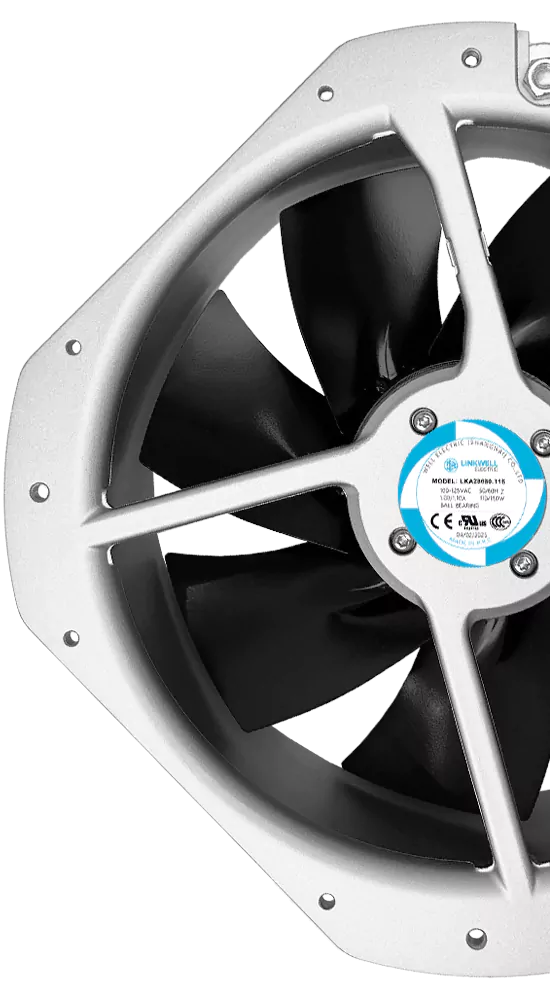
Radial Fan vs Axial Fan—this question pops up often in industrial cooling. Radial fans push air out sideways, while axial fans move it straight through. Your choice impacts more than airflow. It affects energy use, cost, and fit for your space. For example:
- Axial fans often use less energy, which means lower bills.
- Radial fans sometimes cost less upfront but may use more power over time. Fanacdc gives you both options, so you always find a match for your needs.
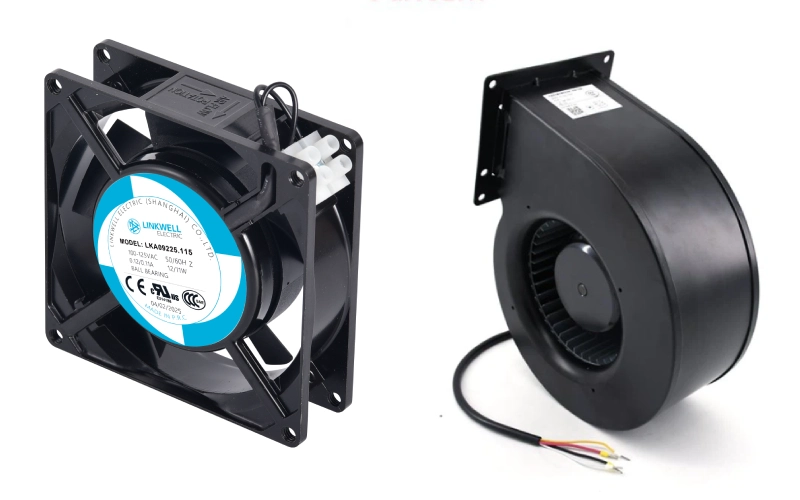
The Basics
- Understand the difference: Radial fans push air sideways and handle high pressure, while axial fans move air straight through and excel in open spaces.
- Choose based on needs: For high-pressure applications like HVAC systems, radial fans are ideal. For cooling large areas, axial fans are more efficient.
- Consider energy efficiency: Axial fans typically use less power, leading to lower energy bills, while radial fans may consume more but are effective in challenging environments.
- Plan for space: Axial fans fit easily into tight spots, making them suitable for compact installations. Radial fans require more room due to their larger design.
- Regular maintenance matters: Keep axial fans clean to prevent overheating and check radial fans for dust buildup to maintain performance.
Fan Basics and Types
Why Industrial Fans Matter
Industrial fans keep your equipment cool and your workspace safe. You rely on them to move air, control temperature, and remove dust or fumes. Without the right fan, machines can overheat, electronics may fail, and air quality drops. You need a fan that matches your environment and workload. Some fans push huge volumes of air, while others handle tough resistance in ductwork. Choosing the right fan means fewer breakdowns and lower energy bills.
Tip: If you work in electronics, telecom, or manufacturing, the fan you pick can affect your system’s lifespan and performance.
Here’s a quick table showing the main types of industrial fans and where you usually find them:
| Fan Type | Characteristics | Applications |
|---|---|---|
| Centrifugal | High-pressure, radial airflow, curved blades | Industrial exhaust, dust collection, material handling |
| Axial | High-volume, low-pressure, parallel airflow | General ventilation, cooling systems, tunnel ventilation |
| EC Fans | Energy-efficient, variable speed control | Data centers, building management systems |
Axial vs Radial Fan Overview
You might wonder how axial and radial fans differ. The Radial Fan vs Axial Fan debate centers on airflow direction, pressure, and efficiency. Axial fans use blades that spin like a propeller. Air moves straight through, making them perfect for cooling large spaces or electronics. Radial fans, sometimes called centrifugal fans, throw air out sideways. They handle higher pressure and work well in systems with filters or long ducts.
Take a look at this comparison table:
| Feature | Axial Fans | Radial Fans |
|---|---|---|
| Blade Orientation | Blades are parallel to airflow, resembling a propeller. | Blades are perpendicular to airflow, accelerating air around them. |
| Airflow Direction | Air is expelled in the axial direction. | Air is flung outward at a right angle to the inlet. |
| Pressure Characteristics | Designed for low pressure, high volume airflow. | Designed for high pressure, suitable for overcoming resistance. |
| Efficiency | More efficient in high volume applications. | More efficient in high pressure, low volume applications. |
| Applications | Suitable for general ventilation and cooling. | Ideal for industrial processes and long duct systems. |
If you need to move air through filters or long pipes, radial fans fit best. For open spaces or electronics, axial fans usually work better. Your choice shapes how well your system runs and how much energy you use.
What Is an Axial Fan?
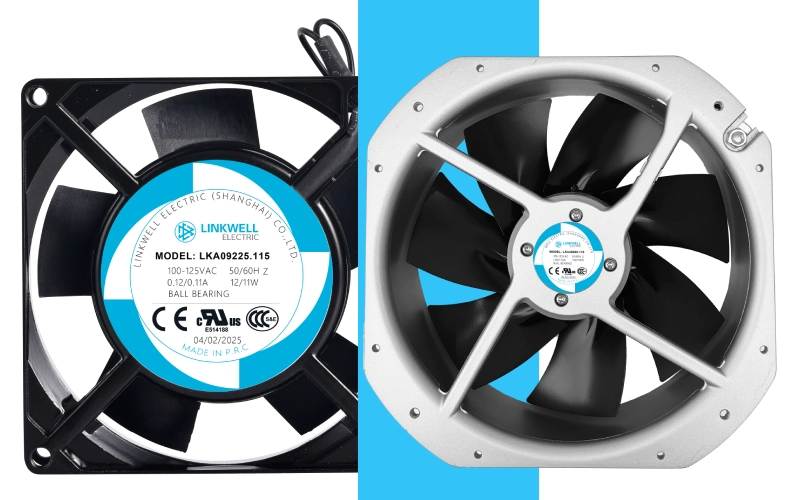
Axial Fan Working Principle
You see axial fans everywhere, from server racks to factory floors. These fans move air in a straight line along the shaft. The blades spin, drawing air in from one side and pushing it out the other. This creates a pressure difference that drives airflow. The blade and hub design speeds up the air, so you get a lot of airflow at low pressure. If you need to cool electronics or ventilate a workspace, axial fans make it easy.
- Air travels straight through the fan.
- Blades rotate to pull air in and push it out.
- The design lets the fan move large volumes of air at low pressure.
Key Axial Fan Components
Every axial fan has a few important parts. The motor powers the blades, keeping them spinning. The impeller holds the blades and directs airflow. The housing protects everything inside and guides the air. Ball bearings help the motor and blades rotate smoothly, cutting down on friction and noise. You’ll find materials like cast aluminum, heavy-duty steel, and stainless steel in fanacdc’s AC and DC fans. These materials handle high temperatures and resist corrosion.
| Material | Properties |
|---|---|
| Aluminum | Lightweight, spark-resistant, used for housing and wheel components. |
| Stainless Steel | Corrosion-resistant, high-temperature resistant, used in various fan parts. |
| Heavy-duty Steel | Used for propellers, withstands high temperatures. |
Axial Fan Advantages
Axial fans offer several benefits. You get high airflow, which is perfect for cooling electronics and industrial spaces. Their compact design fits into tight spots, so installation is simple. Energy efficiency stands out, especially in fanacdc’s brushless DC fans. These fans use less power, saving you money on energy bills. AC fans from fanacdc run for over 50,000 hours, making them a smart choice for long-term cooling. You also save on upfront costs and maintenance.
Research shows that a +10° staggered blade arrangement can boost total pressure rise, improving performance.
- High airflow for effective cooling
- Compact size for easy installation
- Lower power consumption
- Affordable and easy to maintain
Axial Fan Limitations
Axial fans work best in low-pressure environments. If you need to push air through filters or long ducts, you might notice performance drops. Noise can reach over 70 dB, which matters in quiet spaces. Maintenance needs can increase in compact setups, especially if dust builds up. You should clean the blades and check bearings regularly to keep the fan running smoothly.
| Limitation | Description |
|---|---|
| Limited Pressure | Not designed for high-pressure applications; performance drops in those settings. |
| Noise Levels | Can produce noise above 70 dB, which affects sound-sensitive areas. |
| Maintenance Needs | Compact design may require frequent cleaning and bearing checks. |
Fanacdc’s AC and DC axial fans shine in electronics cooling and industrial ventilation. If you compare Radial Fan vs Axial Fan, axial fans win in open spaces and low-pressure jobs. You get reliable cooling, energy savings, and flexible installation.
What Is a Radial (Centrifugal) Fan?
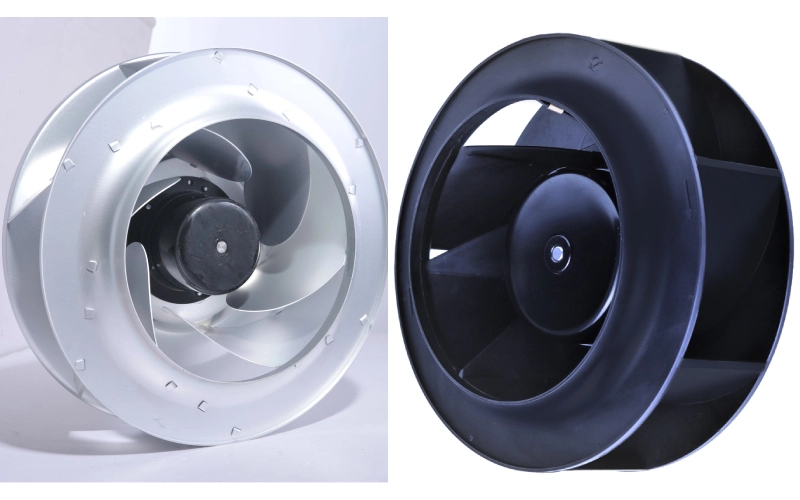
Radial Fan Working Principle
Radial fans, also called centrifugal fans, use a spinning impeller to draw air in through the center. The air enters at a right angle to the shaft and gets pushed outward by centrifugal force. This design lets you move air against high resistance, making these fans a favorite for HVAC systems and industrial processes. Unlike axial fans, which push air straight through, radial fans generate higher pressure and handle tough airflow challenges. If your system needs to overcome filters or long ductwork, you’ll notice the difference.
| Feature | Radial (Centrifugal) Fan | Axial Fan |
|---|---|---|
| Airflow Direction | Enters at a right angle, expelled radially outward | Moves air parallel to the shaft |
| Pressure Generation | High pressure, overcomes resistance | High airflow, lower pressure |
| Applications | HVAC, industrial ventilation, appliances | General cooling, open spaces |
Key Radial Fan Components
You’ll find several important parts inside a radial fan. The electric motor spins the impeller, which is shaped to boost airflow and pressure. Fan blades curve and angle to minimize noise and maximize efficiency. The housing surrounds everything, guiding air and protecting the internal parts. Fanacdc’s centrifugal fans use flame-retardant housings and sealed bearings, which help them last longer in harsh environments. Certifications like ISO9001, CE, and RoHS show that these fans meet strict safety and quality standards.
| Component | Role in Durability and Performance |
|---|---|
| Electric Motor | Powers the impeller, affects efficiency and reliability |
| Fan Blades | Shape and angle control airflow and noise |
| Housing | Protects parts, guides air, reduces vibration |
Radial Fan Advantages
If you need a fan that keeps working when static pressure rises, radial fans fit the bill. They stay efficient even as resistance increases. Their construction cuts down on maintenance costs and downtime. You can clean the housing and check the bearings without much hassle. Fanacdc’s centrifugal fans offer high static pressure up to 300 Pa, making them ideal for demanding industrial jobs. You get a fan that’s built for continuous operation, with a service life of up to 60,000 hours.
- Efficient in high-pressure situations
- Maintains performance as resistance increases
- Simple maintenance, easy access to parts
- Certified for safety and quality
Radial Fan Limitations
Radial fans usually take up more space than axial fans. If you work in a tight area, like a small server room or compact ventilation system, installation can get tricky. The larger housing and impeller may not fit where space is limited. You might need to plan carefully to avoid conflicts between airflow needs and available room. In these cases, you should measure your space before choosing a fan.
- Larger footprint, less suitable for tight spaces
- Installation can be challenging in confined areas
- May not fit in environments needing high-volume air supply with limited space
The Radial Fan vs Axial Fan debate often comes down to pressure and space. If your application demands high pressure and reliability, fanacdc’s centrifugal fans stand out with their certifications and industrial strengths.
Radial Fan vs Axial Fan: Key Differences
Airflow Direction and Pressure
You notice a big difference in how these fans move air. Axial fans push air straight through, following the axis of the fan. Radial fans draw air in parallel to the shaft and then fling it out at a right angle. This change in direction affects how much pressure each fan can create. Axial fans work best when you need lots of airflow with little resistance. Radial fans handle tough jobs, like pushing air through filters or long ducts, because they generate higher pressure.
| Fan Type | Airflow Direction | Pressure Characteristics |
|---|---|---|
| Axial Fan | Moves air parallel to the axis | Produces lower pressure, suitable for high airflow rates with minimal resistance. |
| Radial Fan | Draws air parallel, expels perpendicular | Generates higher pressure, effective in overcoming significant air resistance. |
If your system faces obstacles or needs to overcome resistance, you’ll find radial fans more effective. For open spaces or electronics cooling, axial fans usually fit the bill.
Efficiency and Noise
Energy efficiency and noise levels matter when you choose a fan. Axial fans deliver high airflow with less power, making them a smart pick for energy savings. You might notice, though, that they tend to run louder, especially at high speeds. Radial fans operate more quietly because their centrifugal design reduces turbulence. They use more power to create pressure, but you get quieter performance in return.
| Fan Type | Energy Efficiency | Noise Levels |
|---|---|---|
| Axial Fans | Higher airflow rates, lower power consumption | Generally produce more noise due to high-speed rotation |
| Radial Fans | Lower airflow rates, higher pressure generation | Operate more quietly due to centrifugal design |
If you work in a noise-sensitive area, radial fans can help keep things calm. For large spaces where airflow matters more than sound, axial fans shine.
Tip: If you need both quiet operation and high pressure, radial fans offer a good balance.
Size and Installation
Space constraints often guide your decision. Axial fans have a slim profile, so you can squeeze them into tight spots. Their compact shape makes installation easy in crowded control cabinets or electronics enclosures. Radial fans need more room because their design includes a larger housing and extra components. You might need to plan for extra space if you choose a radial fan.
- Axial fans are compact and ideal for limited space applications.
- Radial fans require more space due to their design and additional components.
| Characteristic | Axial Fans | Radial Fans |
|---|---|---|
| Airflow Direction | Parallel to fan axis | Perpendicular to fan inlet |
| Pressure | Low | High |
| Airflow Volume | Large | Small |
| Energy Efficiency | High efficiency at high airflow | High efficiency at high pressure and low airflow |
| Suitable Applications | Large space ventilation, cooling towers, exhaust systems, etc. | Long distance ductwork, industrial filtration, dust collection systems, etc. |
You find axial fans easier to install in restricted areas. Radial fans suit larger systems where space isn’t a problem and high pressure is needed.
Maintenance and Durability
Maintenance routines differ between these two fan types. Axial fans have a simpler design, so you spend less time on upkeep. You might only need to check bearings and clean blades occasionally. Their durability comes from fewer moving parts, which means fewer breakdowns. Radial fans demand more attention, especially in dusty environments. You should inspect for material buildup, clean the housing, and check the impeller regularly. Dust and debris can reduce performance if left unchecked.
| Fan Type | Maintenance Requirements | Durability Aspects |
|---|---|---|
| Axial Fan | Requires less frequent attention due to simpler design. | Generally more durable due to fewer moving parts. |
| Radial Fan | Demands more maintenance; check for material buildup often, especially in dusty areas. | More susceptible to dust and debris accumulation, leading to reduced performance. |
If you want a fan that needs minimal maintenance, axial fans make life easier. Radial fans work well in tough environments, but you must stay on top of cleaning and inspections.
The Radial Fan vs Axial Fan comparison shows clear differences in airflow, efficiency, installation, and upkeep. Your choice depends on what matters most—space, pressure, noise, or maintenance.
Performance Comparison Table
You want to see how radial and axial fans stack up side by side. Numbers tell the story best. The table below compares the most important performance metrics for industrial fans. If you work in manufacturing, electronics, or HVAC, these details help you pick the right fan for your system.
| Metric | Axial Fans | Radial (Centrifugal) Fans |
|---|---|---|
| Airflow Direction | Parallel to shaft | Perpendicular to shaft |
| Airflow Range (CFM) | 500 – 150,000 | 100 – 100,000 |
| Static Pressure (inWG) | 0.1 – 2.5 | 2.0 – 100+ |
| Peak Efficiency (%) | 75 – 85 | 80 – 90 |
| Efficiency Band | Narrow (60–80% max airflow) | Wide (40–90% max airflow) |
| Noise Level (dB) | 65 – 85 | 60 – 90+ |
| Speed Range (RPM) | 500 – 3,600 | 300 – 5,000 |
| Air Temp Limit (°F) | Up to 300 | Up to 500 |
| Humidity Tolerance | Up to 95% RH | Up to 98% RH |
| Particle Handling | Up to 50 microns | Up to 100 microns |
| Power Consumption (HP) | 0.5 – 50 | 1.0 – 200 |
| Voltage Compatibility | 120V, 240V, 480V | 240V, 480V, 600V |
| Start-Up Current Draw | 3–5x running current | 5–7x running current |
| Variable Speed Control | Easy (VFD standard) | Possible (specialized VFD needed) |
| Altitude Sensitivity | High (>5% drop above 3,000 ft) | Low (<2% drop above 3,000 ft) |
If you need high airflow for cooling electronics, axial fans cover a wide range. Radial fans shine when you face tough resistance, like filters or long ducts. You notice that radial fans handle higher static pressure and tolerate more humidity. Axial fans run efficiently at high airflow, but their efficiency drops outside the sweet spot. Radial fans keep steady performance across a broader range.
Noise levels vary. Axial fans can get loud at full speed, while radial fans stay quieter unless you push them hard. Particle handling also differs. Radial fans move larger particles without filters, which helps in dusty environments.
You see that power consumption climbs with radial fans, especially in heavy-duty jobs. Axial fans use less power for basic ventilation. Voltage compatibility depends on your system. Radial fans often need three-phase power, while axial fans work with single-phase setups.
Variable speed control is easier with axial fans. Radial fans require specialized drives. If you want flexibility, axial fans make adjustments simple.
This table gives you a clear snapshot. You can match your needs to the right fan type and avoid surprises down the road.
Applications of Axial Fans
Industrial and Commercial Cooling
Factories and warehouses often depend on axial fans to keep temperatures steady. You might notice these fans in large cooling systems where air needs to move quickly and efficiently. Fanacdc’s AC fans fit right into these environments, running for over 50,000 hours and handling tough conditions. Paint spray booths, tunnel ventilation, and exhaust systems all benefit from strong airflow and low static pressure. If you work in a place that needs clean air or safe temperatures, axial fans help prevent overheating and improve air quality.
| Application Type | Description |
|---|---|
| Industrial Cooling Systems | Moves large volumes of air, ideal for cooling machinery and workspaces. |
| Tunnel Ventilation | Keeps tunnels safe by circulating fresh air and removing fumes. |
| Exhaust Applications | Removes contaminants, dust, and fumes from factories and commercial spaces. |
| Aeration | Mixes air for processes that need oxygenation, like wastewater treatment. |
| Paint Spray Booth Exhaust | Clears out paint particles and fumes, protecting workers and equipment. |
You can spot axial fans in places where air needs to move fast and stay clean. Maintenance usually involves checking for dust buildup on blades and cleaning them every few months. If you see vibration or hear extra noise, inspect the bearings and replace them if needed.
Electronics and Telecom
Axial fans play a big role in electronics and telecom. You rely on them to cool server racks, control cabinets, and telecom equipment. Fanacdc’s DC fans use brushless motors, which means less noise and longer life—up to 70,000 hours. These fans fit into tight spaces and keep sensitive electronics from overheating. In automotive electronics, axial fans manage heat for systems like ADAS and infotainment. Data centers and manufacturing lines also use these fans to protect equipment and keep operations running smoothly.
- Automotive electronics need steady cooling for advanced systems.
- Industrial electronics depend on efficient airflow to avoid downtime.
- Telecom equipment stays reliable with consistent cooling.
You get high airflow efficiency, compact design, and energy savings with fanacdc’s AC and DC fans. If you want to lower your energy bills and protect your equipment, these fans make a smart choice. Maintenance involves monitoring fan speed and checking for dust inside enclosures. Clean the blades and housing regularly to keep performance high.
Tip: Choosing the right axial fan helps you meet cooling needs and keeps your electronics safe, even in demanding environments.
Applications of Radial Fans
HVAC and Filtration
You often find radial fans at the heart of HVAC systems. These fans keep air moving and help maintain indoor air quality. In factories and commercial buildings, about half of HVAC setups rely on radial fans to circulate air efficiently. When you need to remove dust or particles, radial fans step up. They can extract over 90% of airborne dust, which keeps your workspace safer and helps you meet health standards. Laboratories and industrial sites use radial fans for fume extraction, protecting workers from harmful gases. Cooling machinery and electronics also depends on these fans. They prevent overheating and keep equipment running smoothly. Material handling gets easier with radial fans, especially in food processing and chemical plants, where they move powders and granules through pneumatic systems.
Radial fans support HVAC and filtration in several ways:
- Air circulation for steady indoor temperatures.
- Dust collection with high effectiveness.
- Fume extraction for safer work environments.
- Cooling for electronics and machinery.
- Material transport in manufacturing.
Fanacdc centrifugal fans offer flame-retardant housings and sealed bearings, which means you spend less time worrying about breakdowns. If you notice dust building up, clean the housing and check the impeller for debris. Regular maintenance keeps airflow strong and prevents unexpected shutdowns.
High-Pressure Industrial Uses
Factories and power plants depend on radial fans for tough jobs. These fans generate strong static pressure, making them perfect for environments with filters, long ducts, or resistance. You see them in dust collection systems, where they pull particles out of the air and help you stay compliant with safety rules. In power plants, radial fans supply airflow for boilers, ensuring proper combustion and efficient energy production. Their design lets them handle resistance without losing performance.
- Dust collection in manufacturing keeps air clean and safe.
- Power systems rely on radial fans for steady airflow and combustion.
- Ventilation in factories removes heat, fumes, and dust from machines.
Fanacdc centrifugal fans shine in these high-pressure roles. Their certifications, like ISO9001 and CE, show they meet strict standards. If you work in a demanding environment, these fans help you maintain safe operations and keep your systems running at peak efficiency.
Tip: For environments with filters or long ductwork, radial fans give you the pressure you need to keep air moving.
How to Choose: Radial Fan vs Axial Fan
Airflow and Pressure Needs
Every cooling system starts with airflow and pressure. If your workspace needs a steady breeze across a wide area, axial fans make sense. They push large volumes of air at low pressure, perfect for electronics cooling or open rooms. On the other hand, radial fans thrive in environments with filters, ducts, or resistance. These fans create higher pressure, so you can move air through obstacles without losing performance.
You might wonder which fan fits your needs. Take a look at this comparison:
| Factor | Radial Fans | Axial Fans |
|---|---|---|
| Energy Efficiency | Less energy-efficient | More energy-efficient, lower power use |
| Cost | Often lower upfront cost | Higher initial cost |
| Space Requirements | Compact for tight spots | Better for open areas |
| Noise Generation | Typically quieter | Can be louder |
| Airflow Efficiency | High-pressure airflow for industrial use | High-volume airflow for cooling large spaces |
| Pressure Needs | Handles high-pressure applications | Suits low-pressure applications |
If your system faces resistance, like filters or long ducts, radial fans handle the challenge. For open spaces or electronics, axial fans deliver the airflow you need.
Space and Installation
Space shapes your decision more than you might think. Axial fans fit easily into server racks, control cabinets, or anywhere you need a slim profile. Their design lets you squeeze them into tight corners. Radial fans need a bit more room, but they shine in narrow ducts or compact installations where pressure matters.
Check out this table for a quick comparison:
| Fan Type | Space Requirement | Best Use Case |
|---|---|---|
| Radial Fan | Constricted spaces | Narrow ducts, compact installations |
| Axial Fan | Large open areas | Warehouses, data centers, stadiums |
If you have limited space and need to push air through a maze of ducts, radial fans fit better. Axial fans work well in wide-open rooms or large enclosures.
Energy Efficiency
Energy costs add up fast. Axial fans usually use less power, especially in applications where you need high airflow and low resistance. Fanacdc’s brushless DC fans offer smart speed control, so you can match cooling to demand and cut energy bills. AC fans from fanacdc run for over 50,000 hours, giving you reliable performance with minimal maintenance.
Radial fans use more power to create pressure, but they operate quietly and handle tough jobs. If your system needs to overcome resistance, the extra energy pays off in stable airflow. Fanacdc’s centrifugal fans feature high-efficiency motors and aerodynamic impellers, so you get strong performance without wasting energy.
Industry and Application Fit
Your industry shapes your fan choice. Factories, power plants, and HVAC systems often rely on radial fans for high-pressure airflow and compact spaces. These fans handle dust collection, fume extraction, and material transport with ease. Axial fans dominate in electronics cooling, telecom, and large-scale ventilation. They keep server racks, control cabinets, and data centers cool and safe.
- Radial fans suit high-pressure airflow and tight spaces.
- Axial fans work best for high-volume airflow and cooling large areas.
If you need a fan for a specific application, fanacdc offers a wide range of AC, DC, and centrifugal fans. You can customize size, voltage, and performance to match your system. Fanacdc supports OEM and ODM services, so you get a solution tailored to your needs. Technical support and project customization help you avoid mistakes and optimize cooling.
If you’re unsure which fan fits your project, reach out to fanacdc. Their experts can guide you through selection, customization, and installation. You get support from design to after-sales service.
The Radial Fan vs Axial Fan debate comes down to your unique requirements. Think about airflow, pressure, space, and energy. Fanacdc’s product range covers every need, from electronics cooling to industrial ventilation. With customization and expert support, you can build a cooling system that works for your environment.
Common Selection Mistakes
Choosing the right fan can feel tricky. You might think all fans are the same, but small errors can lead to big headaches. Many people skip the math and guess at airflow needs. If you don’t measure your room or equipment, you risk poor cooling and wasted energy. Sometimes, ignoring static pressure means air barely moves through ducts or filters. That mistake can leave your workspace stuffy and uncomfortable.
Noise surprises many buyers. You may grab a fan that moves lots of air, only to find it’s too loud for your team. Checking decibel ratings before you buy helps avoid this problem. Materials matter, too. Fans made from cheap plastics break down fast. Steel or aluminum with protective coatings last longer and handle tough environments.
Energy costs sneak up on you. If you don’t check efficiency ratings, your power bills can climb. Models with certifications like Energy Star help keep costs low. Installation can trip you up as well. Complicated setups mean more downtime and frustration. Fans with easy-access panels and clear instructions save time and keep your system running.
Budget decisions often focus on price tags. If you chase the lowest price, you might pay more later for repairs and replacements. Balancing upfront costs with long-term savings makes sense.
If you want to avoid these mistakes, look for fans that match your airflow and pressure needs, offer quiet operation, and use quality materials. Fanacdc’s range covers these bases, making your choice easier.
| Mistake | Explanation | Solution |
|---|---|---|
| Airflow Requirements | Not calculating the required CFM can lead to inadequate cooling or ventilation. | Measure room dimensions and match with fan CFM ratings. |
| Static Pressure | Ignoring static pressure can result in poor air movement in ducted systems. | Choose fans that can handle the specific static pressure needs of the space. |
| Energy Efficiency | Selecting fans without considering energy use can lead to high operational costs. | Opt for energy-efficient models with certifications like Energy Star. |
| Noise Levels | Choosing fans that are too loud can disrupt the work environment. | Check decibel ratings and select models that balance performance with acceptable noise levels. |
| Durability and Build Quality | Picking fans made from cheap materials can lead to frequent breakdowns. | Invest in fans made from durable materials like steel or aluminum with protective coatings. |
| Installation and Maintenance | Complicated installation can lead to increased downtime and maintenance challenges. | Look for fans that offer easy installation and maintenance features. |
| Budget Considerations | Focusing solely on initial cost can result in higher long-term expenses. | Balance upfront costs with long-term savings on energy and repairs. |
You can dodge these pitfalls by planning ahead and choosing fans that fit your needs. Fanacdc’s experts help you match the right fan to your space, so you get reliable cooling and fewer surprises.
Fan Technology Trends
You probably notice fans everywhere, but the technology behind them keeps changing fast. Manufacturers now focus on smarter, greener, and quieter solutions. If you want to stay ahead, you need to know what’s coming in 2026.
Energy efficiency sits at the top of the list. New fans use brushless DC motors and electronically commutated motors (ECMs). These motors cut power use and run cooler, which means you save money and reduce heat in your workspace. You also get more control. Modern fans come with advanced systems that let you adjust speed and airflow with precision. You can set the temperature you want, and the fan responds automatically.
Blade design has moved forward, too. Engineers use computational fluid dynamics (CFD) to shape blades for better airflow and less noise. You hear less humming and get more air where you need it. Materials matter more than ever. Companies now choose plastics and metals that have a lower environmental impact. You see fans made from recycled or sustainable materials, which helps your business meet green goals.
Here are some trends you’ll see in fan technology for 2026:
- High-efficiency brushless DC motors and ECMs for lower energy use.
- Smart control systems for precise temperature and airflow regulation.
- CFD-optimized blade designs that boost airflow and cut noise.
- Sustainable materials that shrink the environmental footprint.
Looking to a fan that keeps up with the times, look for these features. You’ll find that fanacdc leads the way with advanced cooling solutions, smart controls, and eco-friendly designs. Staying updated means you get better performance, lower bills, and a cleaner planet.
FAQs
You probably have a few questions before you decide which fan fits your needs. Choosing between radial and axial fans can feel confusing, especially with so many options out there. Let’s clear up some common questions buyers ask:
| Question | Answer |
|---|---|
| What is the difference between radial and axial fans? | Radial fans move air at a 90-degree angle and are better for high-pressure systems, while axial fans move air parallel to the fan axis and are suited for high-volume ventilation. |
| Can radial fans be used for cooling electronics? | Yes, they are effective in tightly packed areas where directed airflow is needed. |
| Do radial fans consume more energy than axial fans? | Not necessarily; modern EC-powered radial fans can be more efficient than AC axial fans in restrictive systems. |
| How long do radial fans typically last? | Ball-bearing models can last 50,000–100,000 hours, while sleeve-bearing models may last only 10,000–20,000 hours. |
| Are there quiet radial fans available? | Yes, some models operate below 45 dB, suitable for quiet environments. |
You might wonder about maintenance. If you use a radial fan in a dusty factory, cleaning the impeller and housing every few months keeps airflow strong. For axial fans in electronics, wiping blades and checking bearings twice a year prevents overheating.
If you need a fan for a noise-sensitive area, look for models with sound ratings below 45 dB. That way, you keep your workspace comfortable.
Many buyers ask about energy use. EC-powered fans often save more power than older AC models, especially in systems with filters or long ducts. If you want a fan that lasts, ball-bearing designs offer longer service life and fewer breakdowns.
Still unsure? You can always reach out to fanacdc for help with sizing, installation, or custom solutions. Their team knows how to match the right fan to your project.
Conclusion
Choosing between radial and axial fans shapes how your system performs every day. If you work in a factory, a data center, or a power plant, the right fan keeps your equipment cool and your workspace comfortable. Radial fans fit best in places where you need high pressure, like HVAC systems or dust collection units. Axial fans suit wide-open areas, such as cooling towers or wind tunnels, where airflow matters most.
You might notice that noise and space play a big part in your decision. Radial fans usually run quieter and fit into tighter spots. Axial fans move more air but can get loud, especially in busy environments. Maintenance also changes depending on your choice. For radial fans, cleaning the impeller and checking sealed bearings every few months keeps performance steady. Axial fans need blade cleaning and bearing checks, especially in dusty rooms.
Take a look at this comparison table:
| Factor | Radial Fans | Axial Fans |
|---|---|---|
| Power Consumption | Lower cost but less energy-efficient | More energy-efficient, reducing operational costs |
| Space Requirements | Compact design for constricted spaces | Ideal for large open areas with high airflow |
| Noise Generation | Generally quieter, good for noise-sensitive areas | Produces more noise, may need noise reduction |
Looking to a fan for HVAC, industrial ventilation, or dust collection, radial fans make sense. For cooling towers, data centers, or wind tunnels, axial fans offer strong airflow.
You can match your needs with fanacdc’s AC, DC, and centrifugal fans. Their product range covers everything from electronics cooling to heavy-duty industrial jobs. If you need a custom solution or technical support, fanacdc’s team helps you find the right fit. Reach out for expert advice and project customization. You get cooling innovation that powers every industry.
Choosing between radial and axial fans depends on your needs. Radial fans push air sideways and handle high pressure. Axial fans move air straight through and work best in open spaces. You should check your airflow, pressure, and space before making a decision.
| Fan Type | Best For | Space Needed |
|---|---|---|
| Radial | High-pressure systems | Larger |
| Axial | Large airflow, open areas | Smaller |
Looking to a reliable solution, fanacdc offers centrifugal, AC, and DC fans. Reach out for expert advice and custom cooling options. You get support from selection to installation.
Need help? Contact fanacdc for a cooling system that fits your project.
FAQ
What’s the main difference between radial and axial fans?
Radial fans push air out sideways and handle higher pressure. Axial fans move air straight through and work best in open spaces. If you need to overcome resistance, radial fans fit better.
Can I use an axial fan for electronics cooling?
Yes, you can. Axial fans fit tight spaces and keep electronics cool. Fanacdc’s DC fans offer brushless motors, smart speed control, and quiet operation for sensitive equipment.
How often should I clean a radial fan in a dusty environment?
You should clean the impeller and housing every three months. Remove dust buildup with a soft brush or compressed air. Check sealed bearings for wear and replace them if needed.
Are radial fans quieter than axial fans?
Usually, radial fans run quieter because their design reduces turbulence. If you work in a noise-sensitive area, radial fans help keep things calm.
What certifications should I look for in industrial fans?
Look for UL, CE, and RoHS certifications. These show the fan meets safety and quality standards. Fanacdc’s products carry these certifications for peace of mind.