A drop in solar inverter output on a hot afternoon can be thermal derating, but the production curve alone cannot establish that. Grid limits, export control, available solar input and normal clipping can also reduce output.
Confirm the recorded operating state and temperature information first. If thermal limitation is present, inspect installation ambient, sunlight, clearances, cooling passages and fan behavior before considering a modification. The correct remedy depends on the inverter’s original thermal design.
Hot Housing, Derating and Shutdown Are Different
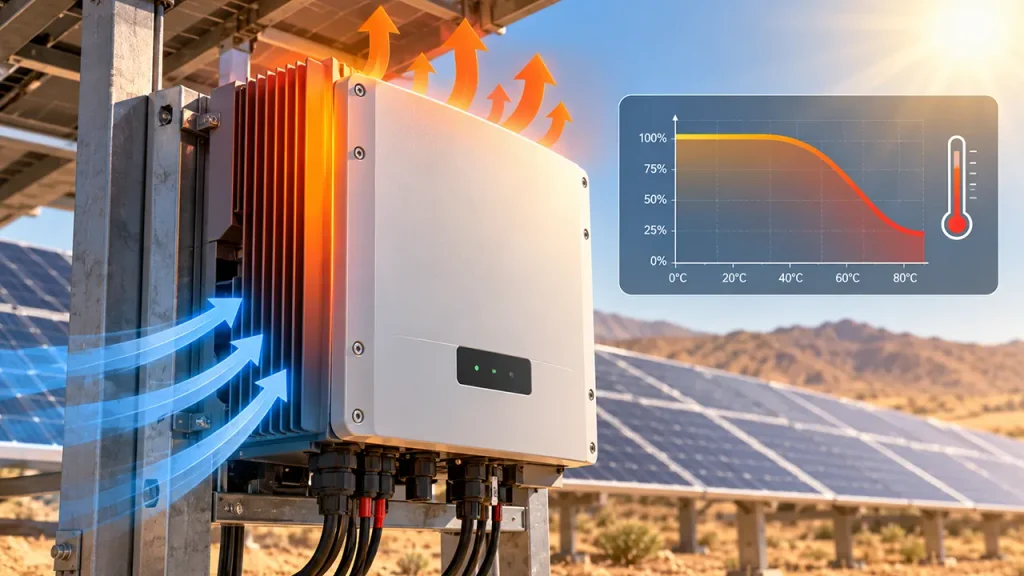
An inverter converts electrical power and releases some of it as heat. A housing or heat sink that feels hot is not by itself proof of overheating. Surface temperature, internal temperature and the device’s permitted operating condition are different measurements.
Thermal derating reduces output to manage temperature. A temperature shutdown is a protective interruption. Both need to be interpreted using the exact model’s events and operating data.
Some inverters use natural convection and have no cooling fan. Others use demand-controlled fans. A stopped fan or the absence of a fan should not be judged without identifying the cooling architecture.
Confirm That Output Loss Is Thermal
Record the event code, thermal state, available DC input, AC output, ambient, grid condition and time. Check whether output returns when temperature falls and whether the inverter records a temperature-related limit.
Normal power clipping occurs when available input exceeds the inverter’s output capacity. Export limitation can also flatten the production curve. A midday plateau does not automatically establish a heat fault.
Compare similar weather and loading conditions where possible. If the limitation appears after maintenance or a mounting change, retain that timing as part of the evidence.
Note: Inverter service can involve live DC sources, AC supplies and stored energy. Internal inspection and repair belong to qualified personnel following the model’s isolation procedure; daylight PV input requires particular attention.
Check the Actual Installation Temperature
Measure shaded ambient near the inverter and the air entering its cooling path. A weather station several metres away may not capture heat trapped under a roof, inside a small equipment room or between adjacent units.
A wall heated by sunlight can also raise the local thermal load. Record exposure through the day rather than checking only when a technician arrives in the morning. The highest output demand and most severe solar heating may occur at different times.
Compare the installation condition with the model’s operating and derating data. Temperature thresholds cannot be transferred reliably between inverter families.
Sunlight, Shade and Mounting Clearance
Direct solar exposure adds heat to an outdoor inverter or its enclosure. Suitable shading can reduce that load, but a tight box or improvised cover can block convection and fan discharge.
Maintain all required clearances around cooling surfaces and openings. Check the finished arrangement after cable trays, roofing and nearby equipment have been installed. A canopy should preserve access and the intended air path.
Do not wrap the inverter in insulation or place it in a sealed box without a complete heat-rejection design. A sealed cabinet can require a heat exchanger or active cooler. See Sealed Enclosure Cooling for the distinction between internal circulation and external heat rejection.
Inspect the Cooling Path
Dust, insects, vegetation and other deposits can obstruct external fins, screens and fan openings. The correct cleaning method depends on the construction. A protected electronics compartment may have a separate external heat-sink air path; do not assume the housing can be opened or washed.
Use the manufacturer’s service instructions and preserve seals and barriers. Avoid uncontrolled compressed-air cleaning, solvent exposure or water jets that the installation was not designed to tolerate.
After cleaning, compare temperature and operating state at similar load. If derating persists with an unobstructed path, investigate ambient, fan control, thermal interfaces and other faults through the approved service route.
Verify Demand-Controlled Fans
A fan may remain off at low load, increase speed with temperature or continue after power conversion has reduced. These behaviors can be normal. Confirm the expected command before diagnosing a stopped fan.
When cooling is required, inspect for repeated start attempts, abnormal noise, speed instability and fan alarms. A rotating fan can still deliver too little flow through a restricted heat sink or be incompatible with the original control circuit.
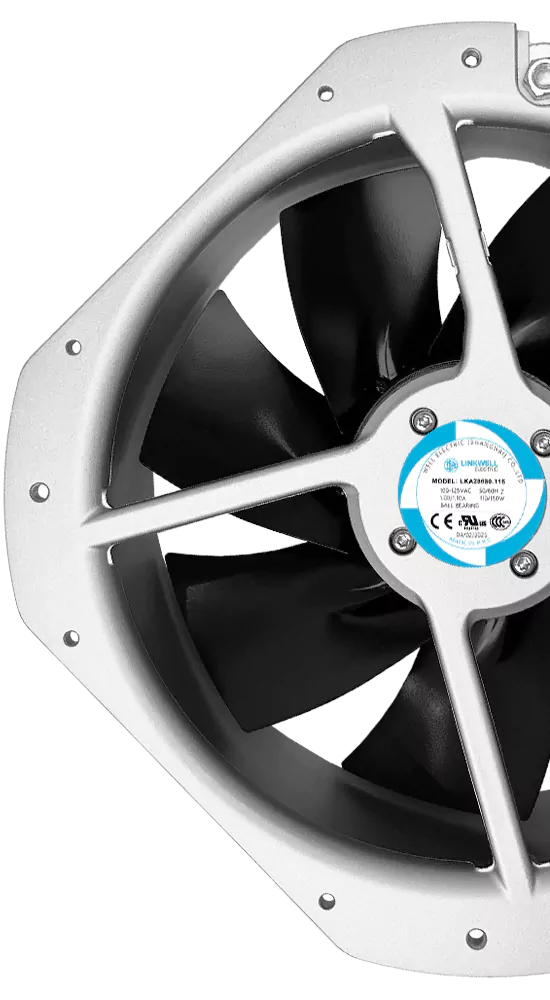
For OEM designs, DC or EC fans can support inverter heat-sink cooling where their operating point and interface fit. Voltage, startup demand, PWM input and FG or RD feedback are all model-specific.
Do Not Assume Every Inverter Needs More Airflow
A convection-cooled inverter relies on its heat sink, orientation and surrounding clearance. Adding an unapproved fan changes the installation and may not address a thermal-interface or sensor fault.
On a fan-cooled inverter, more free-air CFM does not guarantee more useful cooling. The heat sink creates resistance, while duct leakage and recirculation determine where the air goes. Select and validate a fan at the installed operating point.
If the permitted internal temperature is below the available ambient, ventilation alone cannot achieve it. The thermal architecture needs review rather than an indefinite increase in fan speed.
A Practical Diagnostic Order
| Check | Decision it supports |
|---|---|
| Operating events and limit status | Separate thermal derating from clipping, grid limits and other controls |
| Local ambient and sunlight | Determine whether the environment exceeds the installation assumptions |
| Clearances and neighboring exhaust | Identify trapped heat and recirculation |
| Fins, screens and cooling passages | Identify contamination or blockage |
| Fan demand, speed and alarms | Separate a control state from actual fan failure |
| Authorized internal evaluation | Investigate sensors, electronics or thermal interfaces after external causes are checked |
Verify the Correction Under Comparable Conditions
Record the original and corrected conditions: output, inlet temperature, exposure, fan state and thermal limit status. A cool morning restart does not demonstrate that an afternoon fault has been resolved.
Where the final climate cannot be reproduced immediately, use the equipment supplier’s validation method or monitor a representative operating period. Do not disable thermal protection to establish an output target.
Retain maintenance records and watch for deterioration in fan behavior or cooling performance. A changing pattern under comparable conditions is more informative than a single housing-temperature reading.
Fan Requirements for New Inverter Designs
For an OEM thermal review, define heat losses over the duty cycle, ambient and altitude, solar exposure, heat-sink resistance, available mounting space, supply range and fault response. Specify actual connector and control details before approving samples.
LINKWELL’s new energy cooling applications include photovoltaic equipment. Candidate fans require validation for the individual inverter; availability does not imply universal retrofit compatibility.
Frequently Asked Questions
Why does my solar inverter overheat?
Possible causes include excessive local ambient, direct sunlight, inadequate clearance, blocked fins or airflow, fan faults and internal thermal problems. Confirm the recorded thermal condition before attributing a production drop to overheating.
Is thermal derating always a fault?
No. It can be the intended protective response under a specified condition. Unexpected or repeated derating still warrants comparison with the installation requirements and operating history.
Will shading stop inverter overheating?
It may reduce solar heat gain, but cannot correct every cause. The shade structure must preserve the manufacturer’s airflow and clearance requirements.
Can I add a cooling fan to a solar inverter?
Only through an approved engineering review. The modification must suit the original cooling architecture, electrical interface, enclosure protection and service requirements.
Does a fan running continuously mean the inverter is failing?
Not necessarily. Continuous operation can reflect high load, temperature or a defined control strategy. Compare the command, temperatures and event record before diagnosing failure.