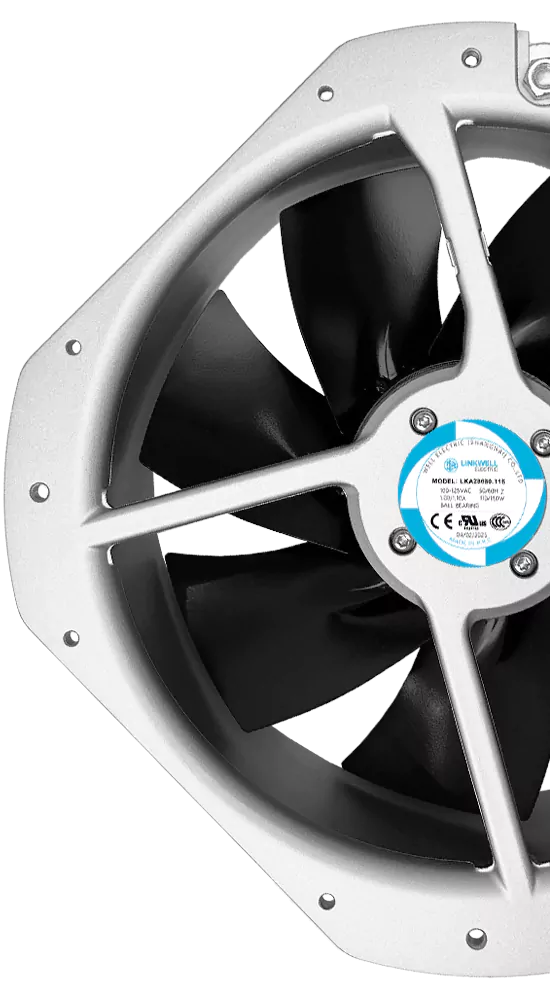
Did you know high temperatures can drop your solar panel’s efficiency by up to 15% on a hot day? When panels heat up past 25°C, electrons get excited, voltage drops, and you lose power. Studies show every degree Celsius above 25°C cuts efficiency by about half a percent.
Managing heat is key if you want the best results. With several Solar Panel Cooling System options out there, professional-grade fan cooling delivers the most reliable performance. At fanacdc, you get expert heat management strategies designed for real-world solar challenges.
Key Takeaways
- High temperatures can reduce solar panel efficiency by up to 15%. Keeping panels cool is essential for maximizing energy production.
- Active fan cooling systems are the most effective solution for hot climates. They can boost energy output by 10-25% and extend the lifespan of your panels.
- Regular maintenance of cooling fans is crucial. Simple checks and cleaning can prevent issues and ensure optimal performance.
- Passive cooling methods may not suffice in extreme heat. Consider liquid or active cooling options for better results in hot environments.
- Investing in quality cooling fans can save money on repairs and replacements. Choose fans designed for durability and efficiency.
Why Solar Panel Cooling Matters
Heat and Efficiency Loss
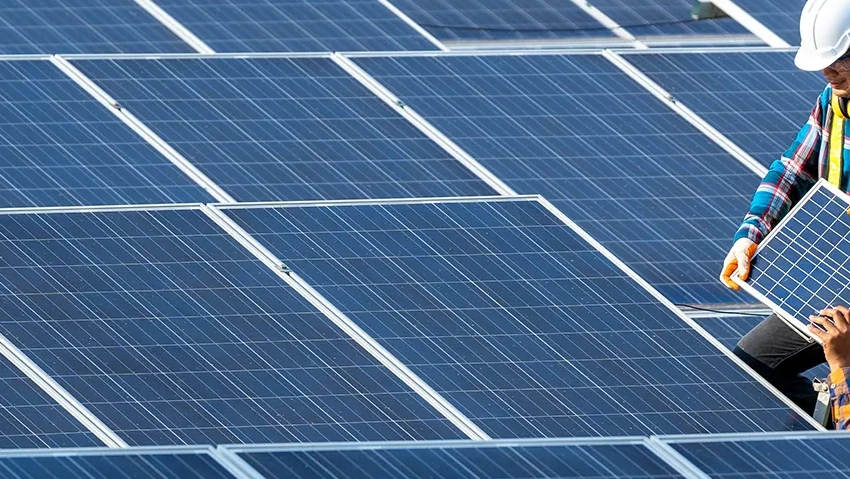
You might think sunlight is all your solar panels need, but heat can actually work against you. When hot solar panels sit under the blazing sun, their temperature climbs well above the ideal 25°C (77°F). Every degree higher means less power for your home or business. Most panels lose about 0.3% to 0.5% efficiency for each degree Celsius above 25°C. For example, if the temperature hits 35°C (95°F), a 320W panel could drop to just 308.5W. That’s a noticeable hit to your energy production.
Recent research shows that high temperatures mess with the silicon inside your panels. Electrons start to recombine instead of generating electricity, which lowers the voltage and overall output. You’ll see the biggest difference when you compare hot vs cool solar panel performance. Cooler panels always win, delivering more power and better returns. If you live in a hot climate, cooling strategies like fan systems or reflective surfaces can help you fight these losses and keep your solar panel efficiency high.
Tip: Solar panels work best in cooler weather. They use sunlight, not heat, to make electricity. Keeping them cool means more energy for you.
- Solar panel effectiveness drops by about 0.0316% for every 1°C increase in temperature.
- Most panels have a temperature coefficient around -0.35% to -0.45%, so even small temperature changes matter.
System Longevity and Reliability
Heat doesn’t just hurt your energy output. It can shorten the life of your solar system, too. When hot solar panels run at high temperatures day after day, their materials wear out faster. Every 10°C rise can double the rate of system degradation. That means more repairs and replacements down the road.
If you keep your panels cool, you protect the delicate electronics and wiring inside. You’ll get fewer breakdowns and longer-lasting performance. Cooling systems, especially active fan solutions, help you avoid costly downtime and keep your investment working for years. Reliable cooling means you spend less time worrying and more time enjoying clean energy.
Solar Panel Cooling System Methods Compared
When you look at ways to keep your solar panels cool, you’ll find three main types of solar panel cooling system: passive cooling techniques, liquid cooling options, and active air cooling. Each method has its own strengths and weaknesses. Let’s break them down so you can see which one fits your needs best.
Passive Cooling Techniques
Passive cooling solutions use natural processes to lower panel temperature. These methods don’t need extra power or moving parts. Here’s a quick look at how they stack up:
| Passive Cooling Technique | Effectiveness | Notes |
|---|---|---|
| Immersion Cooling | High | Uniform temperature in PV installations |
| Heat Pipes | Very High | Effective heat flux dissipation |
| Natural Air Cooling | Moderate | Utilizes fins for cooling |
| Heat Sinks | Moderate | Reduces temperature to 37°C, but needs large area for high concentration |
| Porous SiC with PCM | High | Increases efficiency and reduces temperature |
You might see researchers using porous silicon-carbide ceramics or phase change materials to absorb and release heat. These passive solar panel cooling methods can boost efficiency and use sustainable materials. They often cost less to set up.
Passive cooling strategies are highly climate dependent and rely on careful user behavior. In extremely hot climates, where average air temperatures and levels of solar radiation are high, passive cooling may not maintain indoor comfort. This is particularly true when minimum night temperatures do not drop below about 20 ºC, limiting the effectiveness of natural night ventilation.
Liquid Cooling Options
Liquid cooling systems use water or special fluids to carry heat away from your panels. Some designs use water channels, heat pipes, or even full immersion. Studies show water cooling can improve panel efficiency by up to 16.2% at 45°C. Finned liquid systems and circular channel designs also help keep temperatures down.
But you should know that liquid cooling comes with higher costs and more complex maintenance. Here’s a quick comparison:
| Aspect | Liquid Cooling | Air Cooling |
|---|---|---|
| Initial Investment | 20-30% higher due to extra components | Lower initial costs |
| Maintenance Complexity | More complex, risk of coolant leakage | Simpler maintenance requirements |
Active Air Cooling with fanacdc Fans
Active air cooling stands out as the most practical solar panel cooling system for most users. You use professional-grade fans to move cool air over the panel surface. This forced convection quickly removes heat and prevents overheating. With fanacdc’s range of AC, DC, and centrifugal fans, you get energy-efficient, long-lasting performance. These fans can increase your energy generation by 10-20% and work well in both residential and commercial setups.
Active cooling systems also shine in hot climates where passive methods and shading fall short. You get reliable results, simple maintenance, and a great return on investment. If you want a solar panel cooling system that delivers steady performance, active air cooling with fanacdc fans is your best bet.
How to Keep Your Solar Panels Cool with Active Fan Cooling
Efficiency Gains and ROI
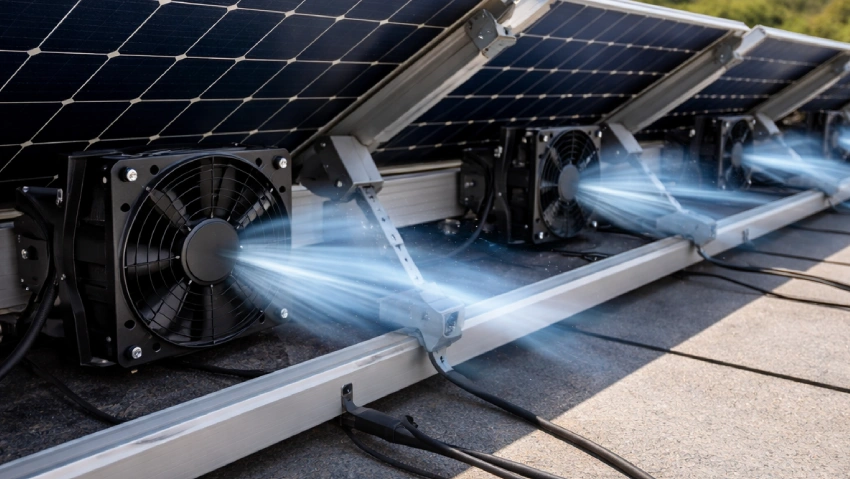
You want your solar panels to work at their best, especially when the sun is blazing. Active fan cooling can make a big difference. When you install fans near your panels, you create airflow that helps remove heat. This keeps your panels cooler and boosts their performance. Studies show that air circulation can lower panel temperatures by 10-15 degrees Fahrenheit. Cooler solar panels mean you get more electricity from the same sunlight.
Let’s look at how active solar panel cooling compares to other methods:
| Aspect | Active Cooling Benefits | Passive Cooling Limitations |
|---|---|---|
| Thermal Performance | Superior thermal performance for high-performance CPUs and GPUs. | May not suffice for high heat loads. |
| Thermal Control | Dynamic adjustment of fan speeds for optimized cooling. | Fixed cooling performance. |
| Design Compactness | Achieves high performance in tight spaces. | Larger solutions may not fit in compact designs. |
| Reliability | Fans have a limited lifespan (30k-70k hours). | Solid heat sinks have near-infinite lifespan. |
| Total Cost of Ownership | Ongoing operational costs due to power consumption. | Potentially lower TCO for passive solutions. |
| Noise | Can introduce noise and micro-vibrations. | Silent operation is achievable. |
| Use Case | Necessary for heat loads above 100W. | Sufficient for heat loads below ~15W. |
You see the biggest gains when you use fans in hot climates. Cooler solar panels can boost your energy output by 15-25%. That means you get more value from your investment. Most homeowners spend $100-$300 to install basic fan systems. You can expect a faster payback period because your panels work harder and last longer.
If you want to know how to keep your solar panels cool, start with active fan cooling. You’ll see better performance and a stronger return on your solar investment.
Cost and Reliability Benefits
You might worry about the cost and reliability of adding fans to your solar setup. Good news: active fan cooling is affordable and dependable. Most systems use solar-powered fans that run automatically when the sun shines. You don’t need to program anything or do regular maintenance. These fans use the energy from your panels to keep them cool, so you don’t add much to your power bill.
Here’s what you get with fanacdc cooling fans:
- Long service life, with motors lasting up to 70,000 hours.
- Warranty coverage: 2 years for motors, 5 years for blades.
- Project customization for your specific needs.
- Technical support from design to installation.
- After-sales service with 24/7 assistance.
You save money on repairs and replacements because cooler solar panels last longer. You also avoid downtime and keep your system running smoothly. If you want reliable performance, fanacdc fans deliver.
Tip: Choose fans with IP-rated protection and high-temperature resistance for the best results in harsh environments.
Scalability for Residential and Commercial Use
You can use active fan cooling for any size solar setup. Homeowners often install small DC fans under their panels. These fans are quiet, energy-efficient, and easy to mount. You can set up a basic system yourself without special tools. Most fans run automatically, so you don’t have to worry about turning them on or off.
For larger commercial arrays, you need more powerful solutions. EC centrifugal blowers and industrial AC fans work well for big installations. These fans move more air and handle higher heat loads. You can customize your system to fit ground-mounted panels, rooftop arrays, or smart solar farms.
Here’s how to keep your solar panels cool in different settings:
- Use standalone solar-powered fans for small residential panels.
- Install integrated fan systems for ground-mounted commercial panels.
- Choose EC fans with smart controls for advanced temperature management in solar farms.
Cool solar panels perform better and last longer, no matter where you install them. You get flexible options that scale with your needs. Whether you have a few panels or a whole field, active fan cooling helps you get the most from your solar investment.
Note: Air circulation from fans can reduce panel temperatures by up to 15 degrees, leading to higher performance and longer system life.
Selecting and Implementing fanacdc Cooling Fans
Choosing the Right Fan Type
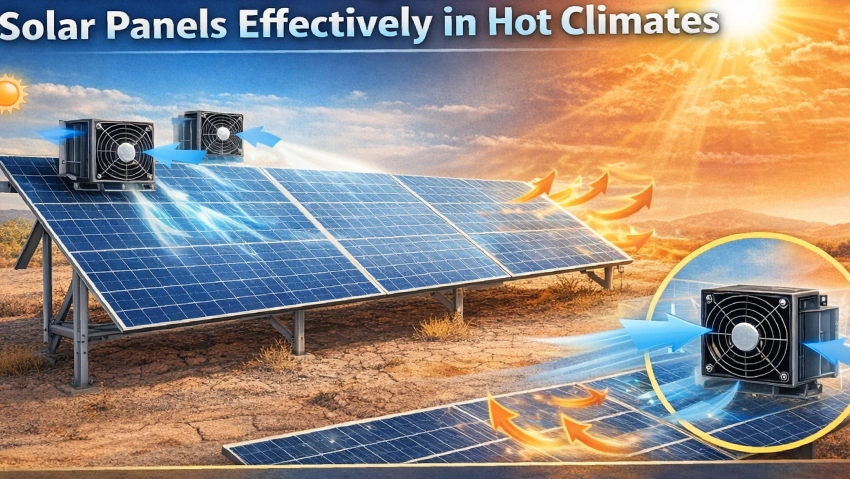
Picking the right cooling fan for your solar panels can feel tricky, but you can break it down step by step. Start by thinking about where you’ll use the fan. Is it for your home, a business, or a smart solar farm? Each setup needs a different approach. For example, small DC axial fans work well for home panels because they’re quiet and energy-saving. Large commercial arrays often need EC centrifugal blowers that move more air and handle bigger heat loads. If you deal with high temperatures, industrial AC fans give you the durability you need. Smart farms benefit from EC fans with advanced controls.
Here’s a quick matrix to help you match your scenario with the best fan type:
| Application Scenario | Recommended Fan Type | Key Benefits |
|---|---|---|
| Residential panels | DC Axial Fans | Quiet, efficient, easy to install |
| Commercial arrays | EC Centrifugal Blowers | High airflow, strong performance |
| High-temperature sites | Industrial AC Axial Fans | Durable, reliable in tough heat |
| Smart solar farms | EC Fans with PWM control | Smart, precise temperature control |
When you choose a fan, check for weatherproof ratings like IP65 if you plan to use it outdoors. Look for sturdy materials that resist rust and UV rays. Always review the specs and make sure the brand stands behind its products.
Installation and Maintenance Tips
You want your cooling system to last, so proper installation matters. Mount fans where they get the best airflow across your panels. Make sure the wiring is safe and secure. If you’re in a dusty or rainy area, pick fans with weather-resistant features. Clean your fans regularly to keep them running smoothly. Check for any odd noises or vibrations, which can signal a problem.
Tip: Schedule a quick inspection every few months. This helps you catch small issues before they turn into big headaches.
Optimizing Your Cool Solar Panels Setup
To get the most from your fanacdc cooling fans, match the fan size and airflow to your panel’s needs. Higher CFM ratings mean better cooling, especially for large or high-power panels. Choose energy-efficient models to save power. If you want smart control, go for fans with PWM or temperature-triggered features. With the right setup, you’ll keep your panels cool, boost your energy output, and protect your investment for years.
Future Trends in Solar Panel Cooling
Smart Controls and AI Integration
You might wonder what’s next for solar panel cooling. The answer is smart technology. Today, you can find systems that use artificial intelligence to keep your panels at the perfect temperature. These smart controls do more than just react to heat—they predict it. Machine learning lets your cooling system study energy use and weather patterns. Then, it adjusts fan speeds or switches between cooling modes before your panels get too hot.
Here are some trends you’ll see in smart solar cooling:
- AI-powered systems use sensors and data to predict when your panels need cooling.
- Phase Change Materials (PCMs) work with AI to balance passive and active cooling.
- Smart controls help you save energy by running fans only when needed.
- These systems boost safety and extend the life of your solar panels.
You get a setup that works harder for you, not the other way around.
Advanced Materials and Hybrid Systems
New materials are changing how you cool your solar panels. For example, scientists have created a hydrogel that can lower panel temperatures by up to 23°C. This hydrogel is light, easy to apply, and doesn’t need electricity. You just add it to your panels, and it helps them stay cool and work better. In fact, panels with this hydrogel can see their power conversion efficiency jump by over 12%.
Hybrid systems are also making waves. Some designs combine multijunction PV technology with sand-bed thermal storage. Nickel chromium oxide-coated sand particles boost heat absorption and storage. This means your panels stay cool longer and store more energy for later use.
You’ll also see these advanced cooling techniques:
- New absorber materials with high thermal conductivity move heat away fast.
- Micro-channel heat exchangers pull heat out more efficiently.
- Nanofluids improve heat transfer, keeping your panels at the right temperature.
Here’s a quick look at how these materials impact your solar panels:
| Evidence Description | Findings |
|---|---|
| Substrate materials with high thermal conductivity | Effectively dissipate heat, reducing operational temperature |
| Lower temperatures in solar panels | Improve efficiency, as excessive heat degrades PV performance |
| Impact of substrate choice on flexible PV systems | Boost long-term stability and efficiency by cutting heat |
You can expect even more innovation as researchers look for ways to make solar energy cleaner and more reliable.
Conclusion
You’ve learned a lot about keeping your solar panels cool. High temperatures can steal your energy and shorten your system’s life. You don’t have to let the heat win. With the right cooling strategy, you can protect your investment and boost your power output.
Let’s recap the best ways to keep your panels running strong:
- Passive cooling works in mild climates but may not be enough for hot regions.
- Liquid cooling offers great results but brings higher costs and more maintenance.
- Active fan cooling gives you the best mix of performance, reliability, and value.
When you choose active fan cooling, you get more electricity from every ray of sunshine. You also help your panels last longer. That means more savings and less stress for you.
Pro Tip: Regular cleaning and quick checks keep your cooling fans working their best. A little maintenance goes a long way.
If you want a solution that fits your needs, fanacdc has you covered. You can pick from AC, DC, EC, or centrifugal fans. Each one is built for tough jobs and long life. You get expert support from start to finish. Whether you have a small rooftop system or a big solar farm, you’ll find the right fan for the job.
Ready to get the most from your solar panels? Take a look at the options on fanacdc’s website. You’ll find guides, product details, and friendly help. Make your solar setup cooler, smarter, and more efficient today!
You have many ways to keep your solar panels cool, but active fan cooling stands out for real results. Studies show that forced air cooling can boost daily energy production by 10-15% and help your panels last longer. Here’s what you should remember:
- High heat drops panel efficiency fast.
- Active cooling systems kick in when panels get too hot.
- Even a simple fan setup can add extra power each day.
Check your solar setup and see if you need an upgrade. For expert help and the best cooling fans, visit fanacdc’s website.
FAQ
How much can cooling fans boost my solar panel output?
You can see a 10–25% increase in energy production with active fan cooling. Cooler panels work more efficiently, especially during hot afternoons.
Are fanacdc fans hard to install on my solar panels?
No, you can install most fanacdc fans with basic tools. Many models come with easy mounting options. You can follow the instructions or ask for technical support.
Do cooling fans use a lot of electricity?
Not at all! Most fans use a small amount of power. If you choose DC or EC fans, you get even better energy savings. Some fans run directly from your solar system.
What maintenance do solar panel cooling fans need?
You should check your fans every few months. Clean off dust and debris. Listen for unusual noises. Regular care keeps your system running smoothly.
Can I use fanacdc fans outdoors in harsh weather?
Yes! Many fanacdc fans have IP-rated protection. They resist dust, rain, and UV rays. You can trust them for outdoor solar setups.