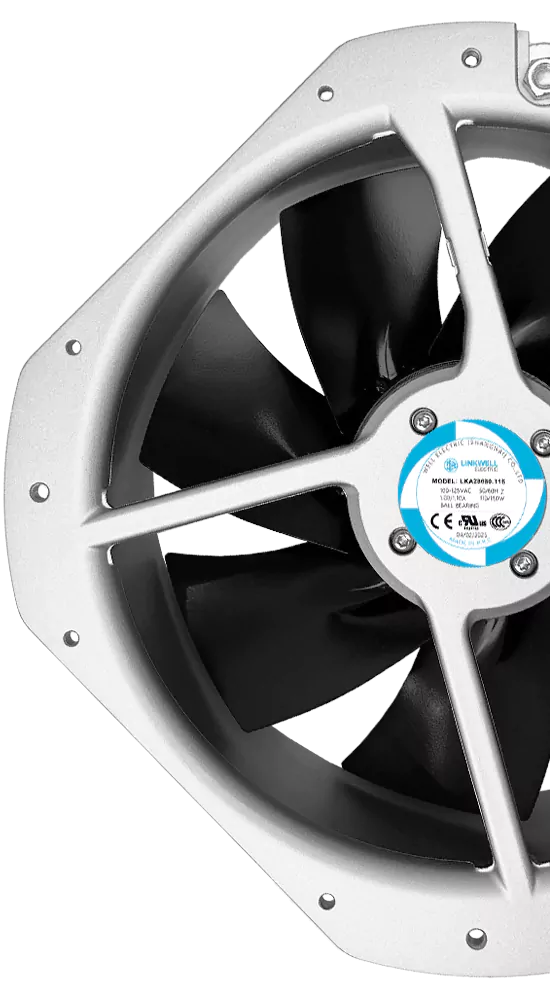
A 12V AC Fan for Control Panels and Electrical Cabinets helps keep electrical systems cool and running safely. Overheating can cause serious problems, with 65% of common IT equipment faults linked to poor cooling according to the Uptime Institute. Reliable fans protect sensitive components and reduce the risk of failure. fanacdc offers advanced cooling solutions designed for industrial needs, making sure equipment stays at safe temperatures.
Key Takeaways
- A 12V AC fan helps keep electrical systems cool, preventing overheating and equipment failure.
- These fans are compact and operate safely in tight spaces, making them ideal for control panels and cabinets.
- Regular maintenance, like cleaning and lubrication, extends the fan’s lifespan and ensures reliable performance.
- Choosing the right fan involves considering airflow needs, size, and noise levels for specific environments.
- Safety certifications like UL and CE ensure that the fan meets industry standards for performance and safety.
12V AC Fan for Control Panels and Electrical Cabinets
What Is a 12V AC Fan
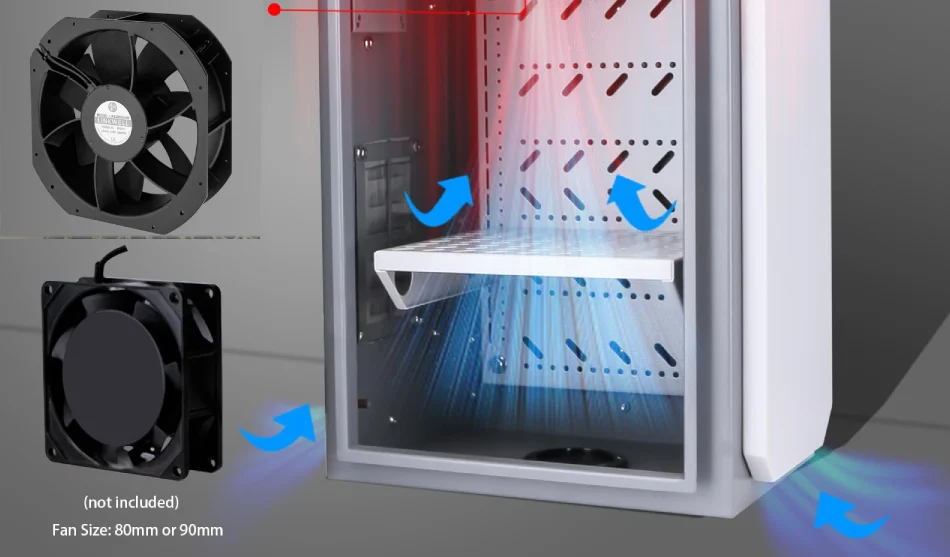
A 12V AC fan is a cooling device that runs on low-voltage alternating current. It is designed for use in control panels and electrical cabinets. The fan moves air inside the enclosure, helping to keep electronic components at safe temperatures. This prevents overheating, which can cause equipment to fail or shut down. Many industries rely on these fans to protect sensitive systems and maintain reliable operation.
The 12V AC Fan for Control Panels and Electrical Cabinets is popular because it fits well in small spaces and works safely in environments where higher voltages might pose risks. It is often used in automation systems, telecom modules, and compact machinery. The market share for 12V fans is strong, holding 35% of global volume. These fans are the most common voltage type, used in 65% of desktop PCs and 40% of automotive climate control systems. Demand has grown by 6% due to the rise in PC gaming.
Key Features and Benefits
The 12V AC Fan for Control Panels and Electrical Cabinets offers several important features:
- Stable airflow performance keeps temperatures consistent.
- Long lifespan, ranging from 30,000 to 60,000 hours, reduces maintenance needs.
- Low noise operation improves comfort and reduces distractions.
- Compact design allows easy installation in tight spaces.
- Safe low-voltage operation lowers the risk of electric shock.
These fans are built to last. Most models use ball bearings, which support continuous operation and extend service life. The compact structure makes them ideal for electrical enclosures where space is limited. Safety is a top priority. The fans operate at low voltage, making them suitable for maintenance-heavy environments.
The cooling efficiency of a 12V AC fan is good for small systems. It provides up to 11.8 CFM of airflow. Compared to 24V fans, the 12V model has higher current consumption over long distances but remains effective for compact setups.
| Fan Voltage | Efficiency | Current Consumption | Airflow (CFM) |
|---|---|---|---|
| 12V | Good for small systems | Higher over long distances | Up to 11.8 |
| 24V | Higher efficiency, ideal for larger setups | Lower current for same power | Up to 12.5 |
Safety certifications are essential for industrial fans. The most important certifications include UL, CSA, CE Marking, RoHS, and IP Ratings. These certifications ensure the fan meets safety, environmental, and performance standards.
| Certification | Description |
|---|---|
| UL | Meets U.S. safety requirements for electrical components and flame resistance |
| CSA | Recognized for Canadian regulatory compliance |
| CE Marking | Indicates compliance with EU safety, health, and environmental protection |
| RoHS | Confirms the fan is free from hazardous materials |
| IP Ratings | Protects against dust and water ingress, essential for specific environments |
Common failure modes for 12V AC fans include overheating, electrical system stress, bearing wear, and contamination. Prevention strategies help extend fan life and keep systems safe.
| Failure Mode | Prevention Strategy |
|---|---|
| Overheating | Regular cleaning, proper ventilation, temperature monitoring |
| Electrical System Stress | Surge protectors, voltage monitoring, safety tests |
| Bearing Wear | Quarterly lubrication, vibration analysis, bearing replacement |
| Contamination | IP54/IP68 enclosures, filtration, scheduled cleaning |
fanacdc Product Highlights
fanacdc stands out as a leading provider of cooling solutions for industrial applications. The brand offers a wide range of 12V AC Fan for Control Panels and Electrical Cabinets, designed for stable performance and long-term reliability. Products from fanacdc are certified to UL, CE, and RoHS standards, ensuring safety and compliance in global markets.
The fans feature durable ball bearing systems, supporting up to 50,000 hours of continuous operation. The compact design allows easy integration into electrical cabinets and control panels. fanacdc provides models with various sizes and airflow capacities, making them suitable for different industrial needs.
Note: fanacdc supports OEM and ODM services, offering customized solutions for unique applications. The brand delivers excellent technical support and after-sales service, helping customers maintain optimal cooling performance.
fanacdc products are trusted by major companies in electronics, telecommunications, and power electronics. The brand’s commitment to innovation and quality ensures that every 12V AC Fan for Control Panels and Electrical Cabinets delivers reliable cooling and extends equipment lifespan.
Applications in Electrical Cabinets
Industrial and Automation Uses
Factories and automation systems rely on stable temperatures for smooth operation. Electrical cabinets in these environments often contain sensitive controllers, relays, and power supplies. Heat buildup can cause these components to malfunction or fail. A 12V AC Fan for Control Panels and Electrical Cabinets helps remove excess heat and keeps the air moving inside the enclosure. This airflow prevents hot spots and extends the life of the equipment. Many automated production lines use these fans to maintain reliable performance and reduce downtime. Compact size and low-voltage operation make them a safe choice for areas with frequent maintenance.
Telecom and Power Electronics
Telecom cabinets and power electronics enclosures face unique cooling challenges. These cabinets often operate in harsh or contaminated environments. The following issues are common:
- Maintaining the environmental seal of the cabinet is critical to prevent ingress of contaminants, which can cause premature system failure.
- Managing internal hot spots is essential to ensure reliable operation and longevity of sensitive electronics.
- Contaminated or high-ambient environments, such as oily mist in factory air or exposure to solar radiation, create conditions where simple filtered fans fail due to clogging or inability to exchange air without compromising the seal.
- Closed-loop cooling solutions, often powered by 12V AC fans, are necessary to handle these challenges by preserving enclosure integrity while effectively dissipating heat.
A 12V AC fan supports these needs by providing steady airflow without breaking the cabinet’s seal. This helps protect telecom switches, inverters, and power modules from overheating and contamination.
Why Choose fanacdc for Cabinet Cooling
fanacdc offers advanced cooling solutions for a wide range of industrial applications. The brand’s 12V AC Fan for Control Panels and Electrical Cabinets stands out for its long lifespan, quiet operation, and certified safety. Customers benefit from a variety of sizes and airflow options, making it easy to find the right fit for any cabinet. fanacdc also provides technical support and customization services, ensuring each solution meets specific requirements. Trusted by leading companies, fanacdc helps keep electrical systems safe and reliable in demanding environments.
Selecting a 12V AC Fan
Airflow and Size Considerations
Choosing the right 12V AC fan starts with understanding airflow and size requirements. Airflow is measured in cubic feet per minute (CFM). It shows how much air the fan can move. Cabinets with many components or tight spaces need fans with higher static pressure. Static pressure helps the fan push air through obstacles like heat sinks and wiring. For example, a fan with a static pressure rating between 1.5 and 4 inH2O works well in densely packed control panels.
Consider these factors when selecting a fan:
- Input power must match the cabinet’s voltage.
- Airflow impedance affects how much air the fan can move.
- Static pressure is important for cabinets with complex layouts.
- Airflow requirements should account for losses. If you need 110 CFM in a medium-impedance cabinet, select a fan that provides 160–170 CFM.
- Fan size matters. Common sizes range from 40mm to 120mm. Choose a size that fits your enclosure.
fanacdc offers a wide range of models, from compact to large sizes, to meet different airflow needs.
Noise and Protection Ratings
Noise level is important in quiet environments. Office, laboratory, and medical cabinets require fans with noise levels between 20 and 30 dBA. Lower noise improves comfort and reduces distractions.
Protection ratings show how well a fan resists dust and moisture. The right IP rating keeps the fan safe in harsh conditions.
| IP Rating | Description | Suitable Environments |
|---|---|---|
| IP55 | Protects against dust and low-pressure water jets. | General industrial settings |
| IP56 | Prevents harmful dust ingress and strong water jets. | Marine, HVAC, medical |
| IP68 | Complete protection against dust and moisture. | Extreme wet environments |
| IP69K | High-temperature and high-pressure washdown. | Food processing, sanitation |
fanacdc provides fans with advanced protection ratings for demanding environments.
Compatibility and Installation
Compatibility ensures the fan works with your cabinet’s power supply and control system. Check voltage and connector types before installation. Proper mounting and airflow direction help maximize cooling efficiency. Choose fans that fit your enclosure and match your system’s requirements.
Tip: fanacdc supports OEM and ODM customization. You can select models with special sizes, protection ratings, or performance curves to fit unique applications.
fanacdc’s technical support team helps customers select and install the best fan for their needs. Reliable cooling starts with the right choice and proper setup.
Installation and Maintenance Tips
Proper Mounting and Airflow Direction
Correct installation improves fan performance and extends equipment life. Follow these steps to maximize airflow direction in an electrical cabinet:
- Securely mount the fan using rubber grommets or mounts. This reduces vibrations and noise.
- Position the fan according to the arrows on its housing. These arrows show the airflow direction.
- Design ductwork with minimal bends and restrictions. Keep the outlet ducting at least 2.5 times the duct diameter for lower air velocities.
Tip: Proper orientation ensures that cool air reaches all components and prevents hot spots.
Cleaning and Lifespan Optimization
Routine maintenance keeps the fan running efficiently. Clean fan blades regularly to prevent dust and debris buildup. Inspect blades for cracks and check connections for looseness. Monitor airflow and noise levels. Irregularities may signal a problem. Lubricate moving parts to reduce friction and wear. Check electrical connections for corrosion or looseness.
- Clean fan blades monthly or quarterly.
- Inspect for damage and loose connections.
- Monitor airflow and noise levels.
- Lubricate moving parts as needed.
- Check electrical connections for security and corrosion.
A well-maintained fan delivers stable cooling and lasts longer.
Common Mistakes to Avoid
Avoid these mistakes to ensure reliable operation:
- Installing the fan in the wrong orientation. This reduces cooling efficiency.
- Neglecting regular cleaning. Dust buildup can block airflow and cause overheating.
- Ignoring unusual noise or reduced airflow. These signs often indicate mechanical or electrical issues.
- Using improper mounting hardware. This can increase vibration and shorten fan lifespan.
- Overlooking electrical connection checks. Loose or corroded connections may lead to fan failure.
Note: Consistent maintenance and correct installation help prevent costly downtime and extend the life of your electrical cabinet.
Comparing 12V AC, 24V, and 220V Fans
Safety and Efficiency Differences
Safety is a key factor when choosing a fan for electrical cabinets. A 12V AC fan operates at low voltage. This reduces the risk of electric shock during installation and maintenance. It is a safe choice for environments where workers handle equipment often. The 24V DC fan also offers low-voltage operation. It is popular in electronics and battery-powered devices. The 220V AC fan runs on high voltage. It is used in industrial settings with stable power sources. Workers must follow strict safety procedures when installing or servicing these fans.
Efficiency depends on the voltage and application. The 12V AC fan is efficient for small enclosures and compact systems. It provides stable airflow and reliable cooling. The 24V DC fan is more efficient for larger setups. It uses less current for the same power output. The 220V AC fan delivers strong airflow. It is ideal for high-power cooling in large cabinets and factory machines.
Tip: Always check the voltage rating before installing a fan. This ensures compatibility and safety.
| Fan Type | Safety Level | Efficiency | Typical Airflow (CFM) |
|---|---|---|---|
| 12V AC | High (low voltage) | Good for small setups | 20–70 |
| 24V DC | High (low voltage) | Efficient for larger setups | 30–120 |
| 220V AC | Moderate (high voltage) | Strong for industrial use | 100–1050 |
Application Scenarios
Different fans suit different environments. The 12V AC fan fits best in compact electrical cabinets, automation systems, and sensitive equipment. It is safe for maintenance-heavy areas. The 24V DC fan is common in servers, miners, and electronic devices. It works well in setups that need efficient cooling and low power consumption. The 220V AC fan is used in ICT equipment, control panels, factory automation, vending machines, and general industrial machines. It handles high-power cooling and large airflow demands.
| Fan Type | Common Applications |
|---|---|
| 24V DC Fans | Servers, miners, electronic devices |
| 220V AC Fans | ICT equipment, control panels, factory automation, vending machines, general industrial machines |
| 12V AC Fans | Compact cabinets, automation systems, sensitive equipment |
Choosing the right fan depends on the cabinet size, voltage supply, and cooling needs. Each fan type offers unique benefits for specific environments.
Note: fanacdc provides a wide range of fan models to match every application scenario, ensuring safe and efficient cooling for all industrial needs.
A 12V AC Fan for Control Panels and Electrical Cabinets offers strong protection for electrical systems. These fans help regulate temperature, prevent equipment damage, and extend component life. The table below highlights the main benefits:
| Benefit | Explanation |
|---|---|
| Temperature Regulation | Cooling fans help maintain optimal temperatures, preventing overheating and ensuring safe operation. |
| Prevention of Equipment Damage | By controlling heat, fans reduce risks of insulation breakdown and potential fire hazards. |
| Enhanced Component Longevity | Consistent operating temperatures lead to longer lifespans for circuit breakers and transformers. |
| Energy Efficiency | Efficient cooling minimizes unnecessary energy consumption while maintaining performance. |
| Overall Safety | Prevents harmful gas release and ignition of combustible materials due to overheating. |
Selecting the right fan and keeping it clean ensures reliable performance. fanacdc provides certified solutions that support safe and efficient operation in industrial environments.
FAQ
What is the difference between a 12V AC fan and a 12V DC fan?
A 12V AC fan uses alternating current, while a 12V DC fan uses direct current. AC fans are common in industrial systems with stable power. DC fans work well in electronics and battery-powered devices.
How long does a 12V AC fan last?
Most 12V AC fans last between 30,000 and 60,000 hours. Ball bearing models from fanacdc can reach up to 50,000 hours. Regular cleaning and proper installation help extend lifespan.
Is a 12V AC fan safe for electrical cabinets?
Yes. The 12V AC fan operates at low voltage, which reduces the risk of electric shock. It is suitable for maintenance-heavy environments and sensitive equipment.
What certifications should I look for in a 12V AC fan?
Look for UL, CE, RoHS, and IP ratings. These certifications show the fan meets safety, environmental, and performance standards. fanacdc fans are certified for global industrial use.
Can I customize a 12V AC fan for my application?
fanacdc offers OEM and ODM services. You can request custom sizes, protection ratings, and performance curves. Technical support helps you select the best fan for your needs.