There are several effective methods for managing 12V DC fan speeds to optimize performance. The most reliable techniques include PWM (pulse-width modulation), voltage adjustment, or integrating a potentiometer. Precision speed control is essential for managing acoustic noise, reducing power consumption, and extending component reliability.
LINKWELL 12V DC Fans offer versatile configurations, including various frame sizes, premium ball bearings, and integrated PWM control. Review the standard fan specifications below:
| Parameter | Details |
|---|---|
| Speed | 1000 to 5000 RPM |
| Noise Level | 20 to 40 dBA |
| Connector Type | 2-pin, 3-pin, 4-pin |
Think about your project’s needs before deciding on how to control 12v DC fan speed.
Key Takeaways
- Controlling 12V DC fan speed reduces noise and saves energy, making your workspace more comfortable.
- PWM (pulse-width modulation) offers precise speed control, allowing fans to run quietly and efficiently.
- Using temperature-based control can automatically adjust fan speed, enhancing cooling and energy efficiency.
- Lowering fan speed extends its lifespan, reducing maintenance costs and improving reliability.
- Choose the right control method based on your project needs, whether for industrial setups or DIY projects.
Why Control 12V DC Fan Speed?
Noise and Power Reduction
High-speed fan operation often leads to significant noise levels. By implementing precise speed control, industrial environments become quieter and more conducive to productivity. The primary benefits of moderating 12V DC fan speeds include:
- Acoustic Optimization: Reduced fan speeds significantly lower decibel levels, creating a focused work environment.
- Energy Efficiency: Lowering RPM reduces power consumption, directly cutting operational energy costs.
- Extended Service Life: Operating at optimized speeds reduces mechanical wear on bearings and components, enhancing long-term reliability.
Modern technologies, such as PWM (pulse-width modulation), allow for high-precision speed adjustment. By rapidly switching the electrical signal, PWM aligns fan performance with specific cooling demands. This prevents unnecessary full-speed operation, further minimizing noise and power waste. In larger systems, VFDs (variable frequency drives) are often utilized to boost motor efficiency. When integrated with thermal sensors, fan speeds adjust automatically based on real-time temperature loads—ensuring minimal energy waste and lower overall operating costs.
Cooling and Reliability
You need reliable cooling for electronics and industrial equipment. Fans help remove heat from sensitive parts, stopping them from overheating. If you control fan speed, you can keep temperatures steady and prevent thermal fatigue. Smart fan controls adjust speed based on temperature, improving energy efficiency by up to 40% compared to fixed-speed fans. Consistent cooling protects your devices and keeps them running smoothly.
- Active heat dissipation prevents equipment failure.
- Proper cooling reduces the risk of malfunctions or fire hazards.
- Smart fan control boosts system safety and reliability.
Fan Lifespan
Running a fan at full speed all the time wears it out faster. If you slow it down when you don’t need maximum cooling, you extend its lifespan. Consistent temperature regulation prevents thermal stress, so your fan and other components last longer. You spend less on maintenance and replacements. LINKWELL’s dual ball bearing fans are built for durability, but controlling speed makes them last even longer.
How to Control 12V DC Fan Speed
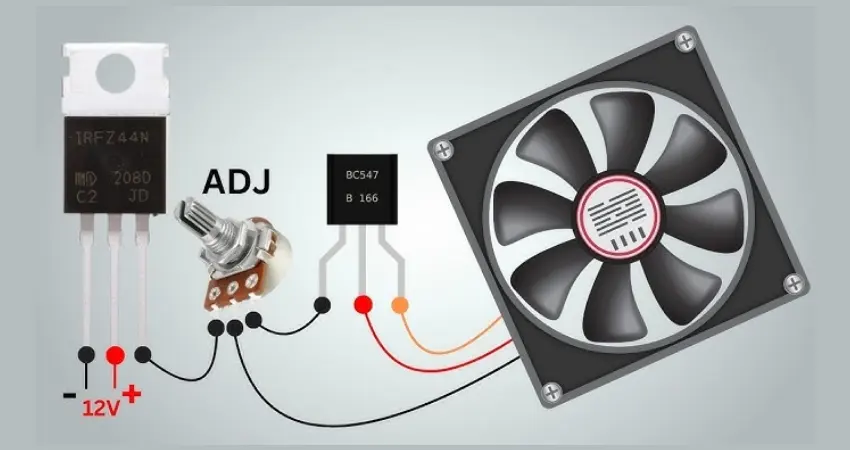
You have several ways to manage how to control 12v dc fan speed. Each method gives you different levels of precision, efficiency, and flexibility. Let’s break down the most popular options and see how you can use them with LINKWELL 12V DC Fans.
PWM Control
PWM stands for pulse-width modulation. This method lets you change the speed of your fan by adjusting the duty cycle of the signal sent to the fan. The duty cycle is the percentage of time the fan gets power during each cycle. For example, a 50% duty cycle means the fan runs at about half speed. You can use a PWM drive to send signals at frequencies between 25 kHz and 30 kHz. Always check your fan’s datasheet for the best frequency.
Here’s why PWM is so popular:
- You get smooth and seamless speed control.
- Fans start reliably even at low speeds.
- You can reduce noise and power use by lowering the speed when you don’t need full cooling.
- PWM fans adjust their speed based on system needs, which saves energy and keeps things quiet.
LINKWELL offers 12V DC Fans with PWM input. These models let you fine-tune airflow and noise. You can customize your setup for different applications, from 3D printers to server rooms.
Let’s compare PWM and voltage control:
| Aspect | PWM Control (4-pin fans) | Voltage Control (3-pin fans) |
|---|---|---|
| Control Method | Uses a fixed +12V supply with a PWM signal on a separate pin to modulate speed seamlessly | Varies voltage supplied to the fan to control speed, which can cause abrupt changes during tuning |
| Speed Control Precision | Allows smooth and seamless speed adjustments without abrupt changes | Tuning can cause sudden jumps in voltage, leading to less smooth speed changes |
| Startup Behavior | Can start and run at lower speeds without stalling | Requires full 12V at startup to reliably spin the fan, cannot start at low speeds |
| Compatibility | 4-pin headers provide PWM signals; 3-pin fans plugged into 4-pin headers run at full speed as PWM signal is missing | 4-pin fans plugged into 3-pin headers lose PWM control and run based on voltage supplied, losing PWM benefits |
| Speed Range | Can run at lower speeds reliably due to PWM modulation circuitry | Limited low-speed operation; fans may stall or require full voltage to start |
You can see that PWM drive gives you better control and reliability. LINKWELL’s PWM models are perfect for projects where you need smooth speed changes.
Voltage Adjustment
Voltage adjustment is a classic way to control fan speed. You lower the voltage to slow the fan down. This method works best with 3-pin fans. You can use a simple power supply or a variable voltage regulator.
Here’s what you need to know:
- Lower voltage means lower speed.
- You can use this method for basic setups.
- It’s easy to use but not very precise.
Adjusting voltage doesn’t give you smooth transitions between speeds. Sometimes, the fan jumps from one speed to another. This can create extra heat and shorten the fan’s life. LINKWELL fans handle voltage changes well, but PWM drive is usually better for fine control.
Buck Converter
A buck converter is a type of DC-DC regulator. It lets you step down the voltage from 12V to a lower value. You can use it to control how to control 12v dc fan speed without wasting energy.
Here’s how it works:
- You set the output voltage to match the speed you want.
- The converter keeps the voltage steady, so the fan runs smoothly.
- It’s more efficient than using resistors.
You can use a buck converter with LINKWELL fans for projects where you need stable speed and low power loss. This method works well in industrial automation and custom electronics.
Potentiometer or Resistor
You can use a potentiometer or resistor to control fan speed. A potentiometer is a variable resistor. You turn the knob to change resistance, which lowers the voltage and slows the fan.
Here’s what you get:
- Simple manual control.
- Easy to install in DIY projects.
- Good for basic speed adjustments.
This method doesn’t give you precise speed control. The fan might not start at low speeds. You can use LINKWELL fans with potentiometers for hobby projects or quick tests.
MOSFET Circuit
A MOSFET circuit lets you control fan speed electronically. You use a MOSFET as a switch or amplifier. You can build a circuit that uses PWM drive to adjust the speed.
Here’s why you might choose this method:
- You get electronic control without mechanical parts.
- You can automate speed changes with microcontrollers.
- It works well for custom projects and advanced setups.
LINKWELL fans work great with MOSFET circuits. You can create smart cooling systems for IT equipment or industrial controls.
Temperature-Based Control
Temperature-based control uses sensors to adjust fan speed. You can use a thermistor or digital sensor to measure heat. The controller changes the speed based on temperature.
Here’s a quick look at common controllers:
| Fan Controller | Type | Control Method | Temperature Range | Accuracy | Notes |
|---|---|---|---|---|---|
| Controller 1 | 2-pin | PWM and voltage | 30C-50C | Not accurate | Slow acceleration, audible PWM |
| Controller 2 | 4-pin | PWM (control pin) | 35C-90C | Fairly accurate | Smooth acceleration, manual control for other fans |
| Controller 3 | 4-pin | PWM (control pin) | 0-70C | Very accurate | Dual zone control, smooth acceleration, no auto shutoff |
Professional Conclusion (De-personalized)
Maintaining optimal thermal levels ensures that electronic devices remain cool while significantly reducing energy consumption. This performance is critical for 3D printers, industrial control systems, and high-density electronics.
Modern thermal management relies on diverse speed control methods, including PWM (pulse-width modulation), voltage regulation, buck converters, and MOSFET-based circuits. By integrating temperature-based control, cooling becomes both reactive and efficient. LINKWELL 12V DC Fans support these advanced requirements with models featuring dedicated PWM inputs, premium dual ball bearings, and fully customizable specifications. Selecting the appropriate control architecture ensures a balance of reliable airflow and maximum operational efficiency for any industrial project.
Choosing the Right Method
Factors to Consider
You want to pick the best way to control your 12V DC fan speed. Here are some key things to think about:
- Power Source: Make sure your fan matches your power supply. DC fans need a steady direct current.
- Control Method: Decide if you want precise control with PWM or simple voltage adjustment for basic speed changes.
- Ambient Temperature: If your setup gets hot, automatic speed control can protect your equipment.
- Load Resistance: Dust or blockages can slow down airflow. Keep your fan clean for top performance.
- Internal Sensors: Smart fans can adjust speed based on temperature or other conditions.
Method Comparison
You have several options for controlling fan speed. Each method has its own strengths. Check out this table to see how they stack up:
| Method | Efficiency | Cost | Precision | Reliability |
|---|---|---|---|---|
| PWM Control | High | Moderate | Excellent | High |
| Voltage Adjustment | Moderate | Low | Fair | Moderate |
| Buck Converter | High | Moderate | Good | High |
| Potentiometer | Low | Low | Basic | Moderate |
| MOSFET Circuit | High | Moderate | Excellent | High |
| Temp-Based Control | High | Moderate | Excellent | High |
Hybrid controllers and PWM methods let you run fans at very low speeds, saving energy and extending lifespan. You get more flexibility and can match cooling to your needs. Conventional methods often need higher speeds to work well, which uses more power.
Application Recommendations
You want the right method for your project. Here’s what works best:
- Industrial setups: Use PWM or MOSFET circuits for precise, automated control. Larger LINKWELL fans at lower speeds reduce noise and boost reliability.
- DIY projects: Try voltage adjustment or potentiometers for simple, hands-on control. These methods are easy to set up and cost less.
- Sensitive environments: Choose temperature-based control with PWM. Smart fans adjust speed as needed, keeping noise and heat low.
- General tips: Clean your fans regularly. Use rubber mounts to cut down on vibration. Place fans carefully to avoid turbulence.
Note: LINKWELL’s customizable fans fit all these methods, so you can build the perfect cooling solution for any application.
Applications of 12V DC Fan Speed Control
Electronics and IT
Thermal Solutions Across Industries
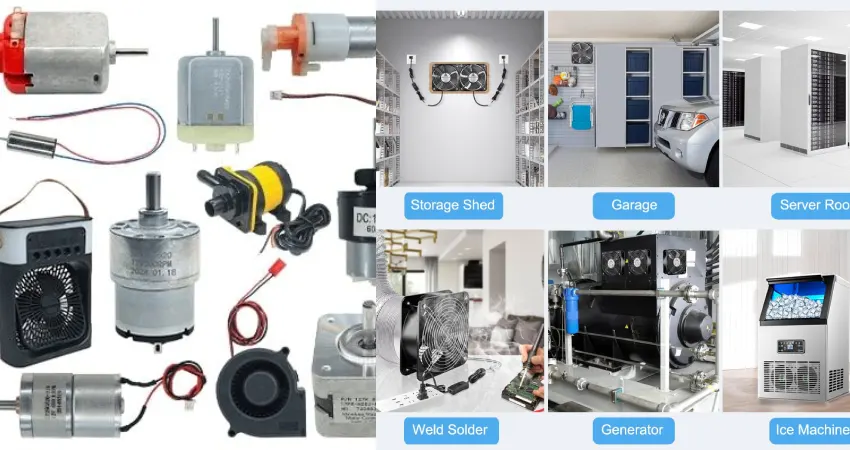
Fans are essential components throughout the electronics and IT sectors. These units are integrated to cool computers, servers, and power supplies, ensuring smooth operation and preventing critical overheating through precise speed adjustment. Beyond computing, fans are foundational in AV equipment, automotive ventilation, and solar-powered systems.
In industrial control panels, cooling fans are relied upon to protect motor drivers and PLC systems from thermal stress. Furthermore, medical diagnostic devices and portable units utilize fans for vital ventilation, while home appliances—such as air purifiers and refrigerators—depend on them for consistent airflow.
- Computing & Servers: Integrated for high-density cooling.
- Automotive Systems: Applied in seat ventilation and battery thermal protection.
- Solar Equipment: Utilized for inverter and battery enclosure cooling.
- Industrial Panels: Required for robust enclosure thermal management.
- Medical Devices: Essential for the safe operation of sensitive electronics.
- Home Appliances: Implemented for temperature regulation and air circulation.
LINKWELL fans are engineered for all these applications, providing reliable performance and streamlined speed control.
Industrial and Automation
In factory and automation environments, cooling components must withstand demanding conditions. Fans are deployed to cool control cabinets, secure heavy machinery, and shield sensitive electronic circuits. By modulating fan speed, noise levels are minimized and energy efficiency is significantly enhanced. LINKWELL products feature dual ball bearings and customizable specifications to match exact technical requirements.
These cooling solutions are frequently integrated into industrial robots, conveyor systems, and automated production lines. Systems can be configured to respond dynamically to temperature fluctuations, increasing overall operational intelligence.
Expert Tip: For extended service life, select a LINKWELL fan with an increased lifespan rating and IP-rated environmental protection.
Custom Projects
Unique engineering projects often require specialized control logic. Technical designs can incorporate PWM signals, tachometer pulse monitoring, and integrated safety fusing. Advanced configurations also allow for EMI suppression and current limiting to ensure total system stability. With LINKWELL, you can choose the precise cooling architecture that fits your specific project needs.
| Feature | Description |
|---|---|
| Supply Voltage | 36 to 72 VDC |
| Fans | Six 12 VDC, 20.2 watt fans |
| Fan Speed Control | PWM control signal based on external signal |
| Fan Performance Monitoring | Monitoring Tach Pulses from the fans |
| Fusing | Both power feed and individual fans |
| EMI Suppression | All input and output lines |
| Current Limiting | Passive in-rush current at start-up |
You can use a LINKWELL fan for 3D printing, IT equipment, industrial automation, or OEM projects. You get flexibility and reliability every time you use a fan.
You have plenty of ways to control your 12V DC fan speed, from PWM and voltage adjustment to temperature-based automation. Each method offers unique benefits, like quieter operation or energy savings. When you choose a LINKWELL fan, you get high airflow, low noise, and reliable protection:
| Feature | LINKWELL Fan |
|---|---|
| Airflow (CFM) | 84 |
| Noise Level (dBA) | Low |
| Energy Efficiency | High |
Pick the method that fits your project. Always select quality components and experiment safely for the best results.
FAQ
How do you control the speed of 4-wire fans?
Control 4-wire fans using PWM signals. The fourth wire lets you send a control signal that adjusts speed. You get smooth and reliable control. Many 4-wire fans work with smart controllers for automatic speed changes.
Can you control 3-wire fans with a PWM controller?
Control 3-wire fans, but you need a special controller. 3-wire fans use voltage control, not PWM. You adjust the voltage to control speed. Some controllers convert PWM to voltage for 3-wire fans.
What is the difference between 4-wire and 3-wire fans for speed control?
4-wire fans use a dedicated control wire for PWM speed control. You get precise control. 3-wire fans rely on voltage control. You adjust voltage to control speed. 4-wire fans offer better control and smoother operation.
| Fan Type | Control Method | Precision | Reliability |
|---|---|---|---|
| 4-wire fans | PWM control | High | High |
| 3-wire fans | Voltage control | Moderate | Moderate |
Can you use a single controller for both 4-wire fans and 3-wire fans?
You can use some controllers for both fan types. The controller must support both PWM and voltage control. You select the right mode for each fan. Always check the controller specs before you connect 4-wire fans or 3-wire fans.
How do you control multiple 4-wire fans in a system?
You connect all 4-wire fans to a controller with multiple PWM outputs. The controller sends a control signal to each fan. You can control speed for each fan separately. This setup gives you flexible control for cooling.
Can you control 4-wire fans with a microcontroller?
4-wire fans with a microcontroller. You program the microcontroller to send PWM signals. You connect the control wire to a PWM output pin. You can control speed, monitor tach feedback, and automate cooling.
What happens if you connect a 4-wire fan to a 3-wire controller?
A 4-wire fan to a 3-wire controller, you lose PWM control. The fan runs at full speed or responds to voltage control. You cannot control speed with the PWM wire. Always use the right controller for 4-wire fans.
How do you control 3-wire fans in a DIY project?
Control 3-wire fans by adjusting voltage. You use a potentiometer or a voltage regulator. You turn the knob to control speed. You can use a simple circuit for basic control. 3-wire fans work well in small projects.
Can you control 4-wire fans and 3-wire fans together in one system?
Control both fan types in one system if your controller supports PWM and voltage control. You connect 4-wire fans to PWM outputs and 3-wire fans to voltage outputs. You control each fan based on its wiring.
What is the best way to control fan speed for sensitive electronics?
The best results with 4-wire fans and PWM control. You use a smart controller to adjust speed based on temperature. You control noise and cooling. 4-wire fans give you precise control for sensitive electronics.