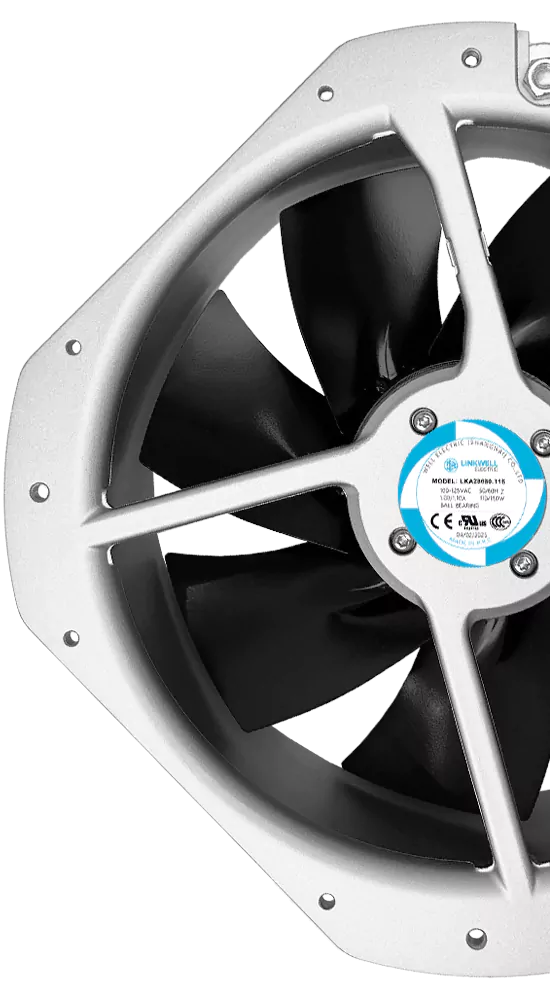
When you observe a DC centrifugal fan in operation, you can see how a dc centrifugal fan works by pulling air in and then pushing it out at a sharp 90-degree angle. This process utilizes centrifugal force, allowing the fan to generate high static pressure that efficiently moves air through filters and ducts.
Understanding how a dc centrifugal fan works reveals why its design is ideal for demanding cooling applications. Engineers and system designers depend on this fan for powerful airflow in compact environments.
Key Takeaways
- DC centrifugal fans generate high static pressure by using centrifugal force, making them ideal for pushing air through filters and ducts.
- The impeller is the heart of the fan, spinning to accelerate air outward and create pressure, while the housing guides the airflow efficiently.
- Choose a centrifugal fan for systems with obstacles like filters or long ducts to ensure reliable airflow and prevent overheating.
- Brushless DC motors in centrifugal fans offer longer lifespan, lower noise, and less maintenance compared to traditional motors.
- When selecting a fan, consider airflow needs, size, voltage, noise level, and reliability to ensure optimal performance in your application.
What Is a DC Centrifugal Fan?
Basic Structure and Function
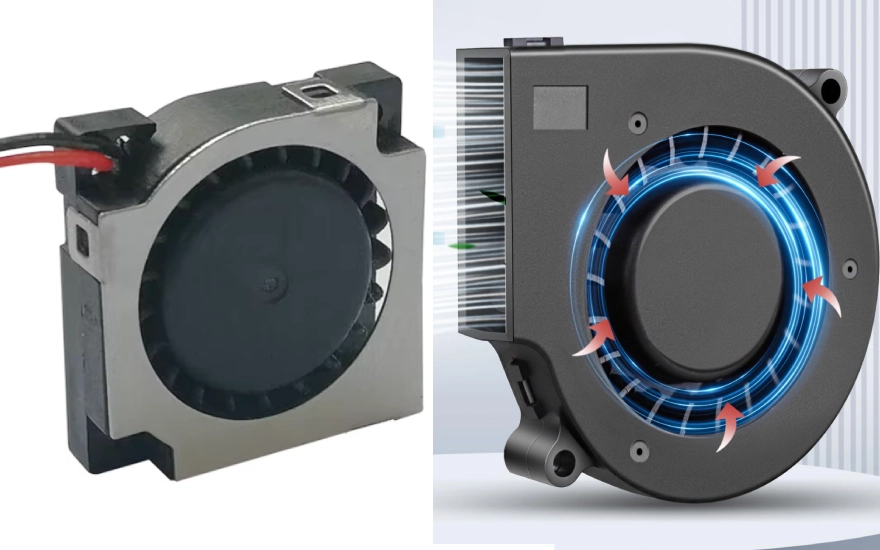
When you look at a DC centrifugal fan, you see a device built for powerful and reliable airflow. This fan pulls air in through the center, then spins it outward using a rotating impeller. The air exits at a 90-degree angle, which helps push it through filters, ducts, or tight spaces. You often find these fans in places where steady airflow and high pressure matter most.
Here’s a quick look at the main parts and what they do:
| Component | Function |
|---|---|
| Impeller | Spins to move air outward, creating pressure. |
| Inlet | Lets air enter smoothly, reducing turbulence. |
| Fan Housing | Guides the air and helps turn speed into pressure. |
| Motor | Powers the impeller, keeping the fan running at the right speed. |
| Bearings & Shaft | Keep everything spinning smoothly and quietly. |
| Mounting Base | Holds the fan steady in your system. |
You’ll see DC centrifugal fans in many industries. Here are some common uses:
| Application Type | Description |
|---|---|
| HVAC Systems | Heating, ventilation, and air conditioning. |
| Data Centers | Cooling and airflow management. |
| Refrigeration Equipment | Temperature control in cooling systems. |
| Factory Ventilation | Air circulation in industrial settings. |
| Commercial Buildings | Air distribution in large spaces. |
| Automotive Systems | Cooling batteries and electronics in vehicles. |
| Industrial Machinery | Keeping machines cool during operation. |
| Consumer Electronics | Cooling for devices like computers and consoles. |
Differences from Axial Fans
You might wonder how centrifugal fans compare to axial fans. The main difference comes down to how they move air and the pressure they create. Centrifugal fans pull air in and push it out at a right angle, which builds up high pressure. This makes them perfect for systems with filters or long ducts.
Axial fans, on the other hand, move air straight through, parallel to the fan’s shaft. They work best when you need to move a lot of air but don’t need much pressure.
Here’s a quick comparison:
| Fan Type | Airflow Direction | Pressure Generation |
|---|---|---|
| Centrifugal | Radially at 90 degrees | High pressure for ducted systems |
| Axial | Parallel to the shaft | High airflow at lower pressures |
So, if your system needs to push air through obstacles or tight spaces, a centrifugal fan is your best bet. If you just need to move a lot of air in an open space, an axial fan will do the job.
How a DC Centrifugal Fan Works
Centrifugal Fan Operation Principle
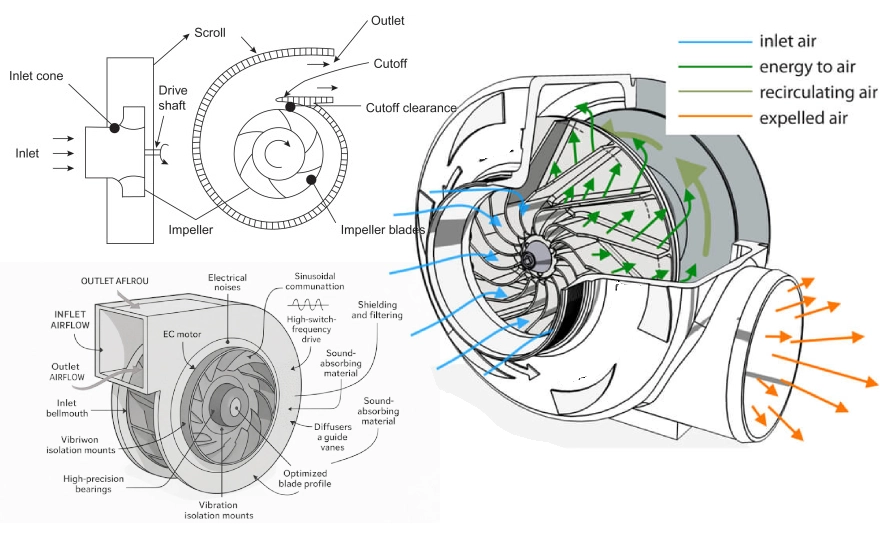
If you want to understand how a dc centrifugal fan works, you need to start with the heart of the system—the impeller. This spinning part sits inside the fan housing and connects directly to the brushless DC motor. When you power up the fan, the motor kicks into action and spins the impeller at high speed.
Here’s what happens during centrifugal fan operation:
- The fan draws air in through the center, right along the motor shaft. This is called axial intake.
- The impeller grabs the air and accelerates it outward. The spinning motion creates centrifugal force, which pushes the air toward the edge of the impeller.
- The air gains speed and pressure as it moves outward.
- The fan housing, shaped like a spiral (volute), collects the fast-moving air and guides it toward the outlet.
The impeller converts the energy from the motor into kinetic energy, which boosts the pressure of the air. Centrifugal force pushes the air outward toward the edge of the impeller, resulting in a strong, steady stream of air.
You get high static pressure because the impeller and centrifugal force work together to overcome resistance in filters, ducts, or other obstacles. That’s why centrifugal fans shine in tough environments where you need reliable airflow.
Fanacdc’s brushless DC motor makes this process even better. You don’t have to worry about worn-out brushes or frequent maintenance. The motor runs quietly and efficiently, keeping your system cool for thousands of hours. With features like PWM speed control and auto-restart protection, you get precise control and peace of mind.
Airflow Path and 90° Discharge
Let’s break down how a dc centrifugal fan works from intake to discharge. The airflow path inside the fan follows a unique pattern:
- Air enters the fan axially, moving straight in along the shaft.
- The impeller spins and throws the air outward using centrifugal force.
- The air hits the volute housing and makes a sharp 90° turn before exiting the fan.
This 90° discharge is a key part of centrifugal fan airflow. It means you can direct the air exactly where you need it, even in tight or crowded spaces. The design also helps the fan maintain high pressure, so you don’t lose performance when pushing air through filters or long ducts.
Here’s a quick look at what makes centrifugal fans different:
| Step | What Happens |
|---|---|
| Axial Intake | Air enters straight in along the shaft |
| Impeller Spin | Air accelerates outward by centrifugal force |
| 90° Discharge | Air exits at a right angle, under high pressure |
You’ll notice that centrifugal fan airflow always follows this path. That’s how a dc centrifugal fan works to deliver strong, steady cooling in challenging environments.
If you use a fanacdc DC centrifugal fan, you get even more benefits. The brushless motor means less noise and longer life. The fan handles high static pressure with ease, making it perfect for telecom, medical, and industrial systems.
You can adjust the speed with PWM control and monitor performance with a tachometer output. These features help you keep your equipment safe and efficient.
Centrifugal force enables the fan to generate high-pressure airflow. The impeller’s rotation creates a force that pushes air outward. This force helps the fan overcome resistance in ducts and filters.
When you need to move air through obstacles, you can count on centrifugal fans. That’s the secret behind how a dc centrifugal fan works and why it’s the top choice for high-resistance cooling jobs.
Key Components of Centrifugal Fans
Impeller and Housing Design
When you look inside a centrifugal fan, you’ll see the impeller and housing working together to move air efficiently. The impeller acts like the heart of the fan. It spins fast, grabbing air and pushing it outward. The housing, often called the volute, catches this air and guides it out at a 90-degree angle.
Choosing the right impeller makes a huge difference. If you pick the wrong one, you might lose over 20% of your fan’s performance. A well-designed impeller can save up to 30% of energy, especially in industrial ventilation. Materials matter, too. Aluminum and reinforced plastic keep the fan light but strong, so it lasts longer and costs less.
The shape of the housing also matters. An aerodynamic housing reduces air resistance and protects the fan’s insides. High-quality materials and precise engineering help the fan run smoothly and last longer, even in tough environments. You get reliable airflow, less vibration, and lower energy bills.
Here’s a quick look at the main components and what they do:
| Component | Contribution to Performance |
|---|---|
| Rotor | Creates the magnetic field for rotation, boosting airflow. |
| Stator | Generates the electromagnetic field, making the fan efficient. |
| Motor | Uses sensors and controls for precise, responsive operation. |
| Outer Frame | Adds durability and helps cool the fan, protecting the inside parts. |
Brushless DC Motor Benefits
The motor is the powerhouse of any centrifugal fan. When you use a brushless DC motor, you get a lot of advantages over older brushed motors. Brushless motors run more efficiently because they don’t have brushes that wear out or cause friction. This means your fan lasts longer and needs less maintenance.
You’ll also notice less noise and almost no electrical interference. That’s important if you’re using the fan in sensitive equipment like medical devices or telecom systems. With brushless motors, you can control the speed precisely using PWM signals, so you get just the right amount of airflow for your needs.
Check out how brushless DC motors compare to brushed motors:
| Advantage | Brushless DC Motors | Brushed Motors |
|---|---|---|
| Efficiency | Higher, no brush losses | Lower, brush and commutator losses |
| Lifespan | Longer, less maintenance | Shorter, more maintenance |
| Noise and EMI | Minimal electrical noise and EMI | Higher electrical noise and EMI |
| Speed Control | Precise with PWM | Less precise |
Fanacdc centrifugal fans stand out because of their unique brushless motor design, high IP68 protection, and quiet operation. You get a fan that adapts to your needs, runs smoothly, and keeps your equipment safe—even in harsh conditions.
The engineering behind these fans means you can count on them for years, with less downtime and fewer repairs.
Tip: If you want a fan that’s reliable, energy-efficient, and easy to control, go with a centrifugal fan that uses a brushless DC motor. You’ll see the difference in performance and peace of mind.
Why Centrifugal Fans Deliver High Static Pressure
Static Pressure Explained
You might hear the term “static pressure” when you look at cooling systems. Static pressure is the resistance air meets as it moves through ducts, filters, or coils.
Think of it as the force that pushes against the airflow inside your system. If your system has lots of bends, filters, or long ducts, the resistance goes up. Your fan needs to work harder to keep air moving.
Static pressure matters because it decides if your fan can push air through all those obstacles. If the static pressure is too high for your fan, you get weak airflow and hot spots.
That’s why you need a fan that can handle the job. The working principles of centrifugal fans focus on overcoming this resistance. They use their unique design to create strong pressure, making sure air keeps moving where you need it.
Centrifugal Fan vs Axial Fan Performance
Let’s see how centrifugal fans stack up against axial fans. Centrifugal fans shine in high-resistance environments. They move air at a 90-degree angle, which boosts the pressure. This design lets them push air through filters, ducts, and even heatsinks without losing power.
Axial fans, on the other hand, move air straight through. They work well in open spaces with little resistance. But when you add filters or long ducts, their airflow drops fast. You might see a DC axial fan reach only 0.1 inH₂O static pressure with no airflow. That’s not enough for tough jobs.
Here’s a quick comparison:
| Feature | Centrifugal Fan | Axial Fan |
|---|---|---|
| Airflow Direction | 90° (perpendicular) | Straight (parallel) |
| Static Pressure | High (up to 1.49 inH₂O) | Low (about 0.1 inH₂O) |
| Best For | Ducts, filters, high resistance | Open spaces, low resistance |
You’ll notice centrifugal fans are more effective in systems with lots of resistance, like ductwork or filter banks. They keep airflow steady, even when the path gets tough.
That’s why fanacdc DC centrifugal fans are a top choice for telecom, medical, and industrial cooling. Their operation stays reliable, and you get peace of mind knowing your equipment stays cool.
If your system has filters, long ducts, or anything that slows down air, pick a centrifugal fan. You’ll get better performance and fewer headaches.
Applications and Selection
Industrial and Commercial Uses
You’ll find centrifugal fans in all sorts of places where reliable cooling and high efficiency matter. These fans keep your equipment running smoothly in tough environments. Here are some of the most common uses for centrifugal fans from fanacdc:
- Telecom base stations and server racks
- Medical equipment and laboratory devices
- Industrial automation systems
- Power electronics and inverters
- Solar-powered ventilation systems
- Battery-operated equipment
- Portable air purifiers
- Offices, hospitals, and residential buildings where quiet operation is important
Industrial centrifugal fans also work well in textile factories, chemical plants, and other harsh settings. You can count on them to handle high humidity, dust, and even exposure to chemicals. Just remember to clean the blades and housing regularly and check the bearings to keep everything running at peak performance.
Choosing the Right DC Centrifugal Fan
Picking the right centrifugal fan for your system can feel tricky, but you can break it down into a few key steps:
- Airflow Needs: Figure out how much airflow your system requires. This helps you avoid overheating and keeps your equipment safe.
- Fan Size and Shape: Make sure the fan fits your device. A good fit means better centrifugal fan airflow and less wasted energy.
- Voltage and Power: Check that the fan matches your system’s voltage. This keeps operation stable and efficient.
- Noise Level: If you need quiet operation, look for fans with low-noise ratings. Offices and hospitals benefit from quieter fans.
- Temperature Range: Choose a fan that works well in your system’s temperature conditions.
- Reliability: Go for fans with a high MTBF (Mean Time Between Failures) for continuous operation in critical applications.
You should also look at the airflow rate and noise level in the product specs. High airflow is great for cooling, but you don’t want too much noise. Try to balance both for your application. If you need help, check the P-Q curve in the datasheet.
This curve shows how the fan’s pressure and airflow change together, helping you match the fan to your system.
Tip: Avoid installing fans in parallel unless you know how to manage turbulence. Series configurations can boost pressure, but always check for proper alignment.
If you need special features, fanacdc offers customization options like different bearing types, IP ratings, and even OEM/ODM engineering support. Always make sure your fan meets the right certifications for your market, such as UL, CE, or RoHS.
You want a cooling solution that handles tough jobs. Fanacdc DC centrifugal fans keep airflow steady, even when pushing through filters or dense fins.
Their design helps you maintain stable temperatures and quiet operation. You get energy efficiency, precise speed control, and a long lifespan with brushless motors. If you need something special, fanacdc offers options like custom connectors, wire lengths, and noise optimization.
| Customization Options |
|---|
| Connectorization |
| Wire/Cable customization |
| Fan Filters and Guards |
| Noise and vibration tuning |
Need help? Reach out for technical support or a custom solution that fits your project.
FAQ
What does “static pressure” mean in a fan?
Static pressure is the force your fan uses to push air against obstacles like filters or ducts. It shows how well your fan can move air through tight spaces. High static pressure means your fan handles resistance better.
What is an impeller and a volute?
| Term | What It Does |
|---|---|
| Impeller | Spins and throws air outward in the fan. |
| Volute | Curved housing that guides air to the outlet. |
You’ll find both inside every centrifugal fan.
What happens if my fanacdc DC centrifugal fan stops working?
You might see a locked rotor or hear no sound. First, check for dust or blockages. Make sure the power supply works. If the fan still won’t spin, contact technical support for help.
What is a “locked rotor”?
A locked rotor means the fan’s impeller can’t spin. You might hear a click or see the fan try to start. This can happen if something blocks the blades or the motor fails. Remove any debris and restart the fan.
How do I troubleshoot common fan failures?
- Check for dust or dirt blocking the blades.
- Make sure the power supply is steady.
- Listen for odd noises.
- If you see the fan slow down or stop, turn off power and inspect for damage.
Conclusion
DC centrifugal fans deliver reliable high-pressure airflow, making them ideal for demanding cooling systems with filters and ducts. Their brushless motor design ensures long lifespan, low noise, and stable performance in industrial and commercial applications.
With Fanacdc’s engineering strength and customization capability, you get more than a standard fan—you get a dependable airflow solution built for efficiency, durability, and real-world performance in critical environments.