To ensure your electrical enclosure operates efficiently over time, managing heat buildup is crucial. Excessive heat can lead to numerous issues. Consider these risks:
| Risk Type | Description |
|---|---|
| System Failures | Excessive heat can damage critical components such as circuit boards and transformers. |
| Loss of Productivity | Heat-induced system failures halt operations, impacting business and financial performance. |
| Increased Maintenance Costs | Overheated equipment deteriorates more rapidly, leading to frequent repairs and elevated costs. |
| Safety Hazards | Excessive heat can trigger fires or equipment malfunctions, compromising workplace safety. |
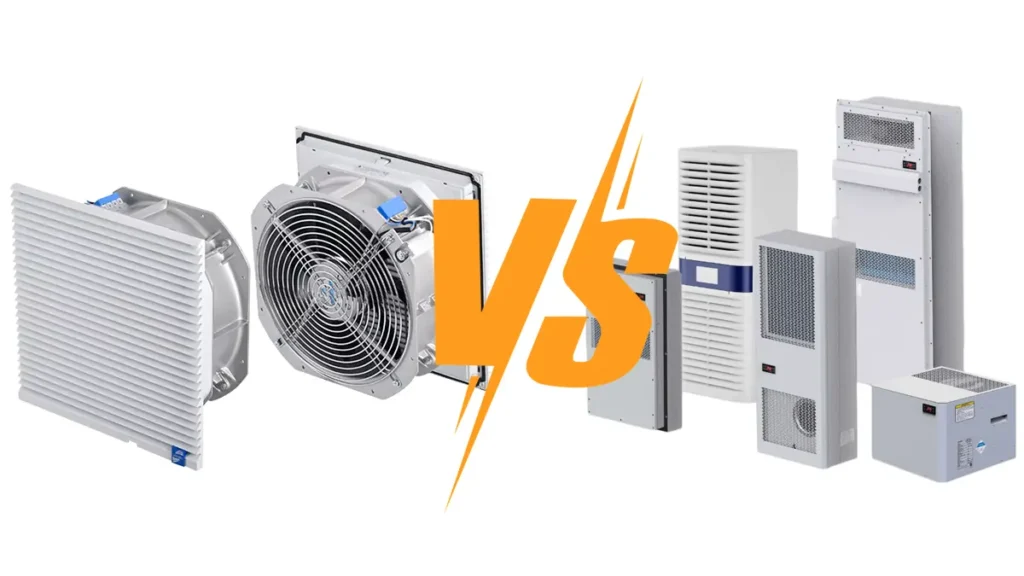
Effective cooling is essential to safeguard your system and conserve energy. This is why many evaluate Enclosure Fan vs Air Conditioner to determine the optimal solution.
Key Takeaways
- Too much heat in electrical enclosures can break systems and make repairs cost more.
- Enclosure fans push air with forced ventilation and work best inside where it is clean.
- Air conditioners use closed-loop cooling to keep out dust and water, so they are good for outside.
- Fans save money and use less energy, but they cannot cool lower than the room’s temperature.
- Air conditioners control temperature and humidity well, but they cost more.
- Pick fans for medium heat and clean places; pick air conditioners for lots of heat and wet air.
- Think about the size of the enclosure, how much heat there is, and the environment before you choose a cooling method.
- Cleaning filters and doing regular maintenance is important for both fans and air conditioners to work well.
Enclosure Fan Basics
Forced Ventilation Cooling
You want your electrical enclosure to stay cool, right? Forced ventilation cooling makes that happen. Instead of waiting for air to move on its own, you use fans to push air through the enclosure. This active method works much better than just relying on natural airflow, especially when things get hot inside. If you have a lot of equipment packed into a small space, forced ventilation cooling helps remove heat quickly. Passive methods, like vents, only work well when the heat load is low. When you need real temperature control, fans give you the power to keep things safe and running smoothly.
Air Exchange and Filter Fans
Let’s talk about how air gets in and out. Filter fans pull cooler air from outside into the enclosure and push warm air out. This keeps the temperature down and helps your equipment last longer. You might wonder how much airflow you need. Here’s a simple formula you can use:
- Required Airflow (CFM) = [3.16 × Heat Load (Watts)] / Allowable Temperature Rise (°C)
- For example, if your heat load is 200 watts and you want the temperature to rise no more than 10°C, you’ll need about 82 CFM.
- It’s smart to pick a fan that can move more air than you think you need. If you need 75 CFM, go for a fan rated at 100 CFM. This way, you always have enough airflow for proper cooling.
Efficiency in Clean Environments
Fans work best in clean environments. When there’s no dust, they can move air freely and keep your enclosure cool. If you have a dusty area, you’ll need filters to stop dust from getting inside and causing problems. Humidity can also make things tricky, so you might need extra protection. In a clean space, though, fans are a simple and efficient way to handle cooling. You get reliable performance and less worry about maintenance.
Tip: Always check your environment before choosing a fan. Clean spaces mean less trouble and better cooling for your enclosure.
Enclosure Air Conditioner Overview
Closed-Loop Cooling
You want your outdoor enclosure cooling systems to stay clean and safe. Closed-loop cooling helps with this. This method keeps inside air away from outside air. The conditioner moves air around inside the enclosure. Dust, water, and dirt from outside cannot get in. You do not have to worry about dirty air hurting your electronics. This system is great for outdoor cabinet air conditioners. It protects your equipment from bad weather. You can relax knowing your system is sealed. Your gear stays dry and cool.
Cooling Below Ambient Temperature
Sometimes you need your enclosure cooler than the air outside. Fans cannot do this, but conditioners can. Outdoor cabinet air conditioners use forced convection. They make the inside cooler than the outside. This is important for electronics that get too hot. The conditioner takes heat out and sends it away. Your equipment stays safe from heat. You get better cooling and more control. These air conditioners work even on very hot days. You can trust them to keep things running well.
Humidity Control and Efficiency
Humidity can damage electronics. Outdoor enclosure cooling systems must keep things dry. Outdoor cabinet air conditioners do this job. They take moisture out of the air inside. Your equipment stays safe from water. Fans only move air around. Conditioners remove water from the air. You do not have to worry about rust or short circuits. These air conditioners also save energy. They keep the temperature steady and do not use too much power. You save energy and get better performance. Outdoor cabinet air conditioners are made to be efficient. You get more cooling with less energy. Here is a quick look at how conditioners and fans compare:
| Feature | Enclosure Air Conditioners | Enclosure Fans |
|---|---|---|
| Humidity Control | Dehumidifies air, protecting electronics | Facilitates air circulation, may allow moisture in |
| Cooling Efficiency | Cools and dehumidifies effectively | Primarily circulates air, less effective in cooling |
| Protection from Contaminants | Prevents moisture and contaminants from entering | Allows moisture and contaminants to enter, risking equipment failure |
If you want the best for your outdoor enclosure cooling systems, choose outdoor cabinet air conditioners. You get great cooling, humidity control, and energy savings. Your equipment will work better and last longer.
Outdoor Enclosure Cooling Systems
You may ask why outdoor enclosure cooling systems are important. Electrical enclosures outside face tough weather and other dangers. Sun, rain, dust, and animals can cause trouble. You need to keep your equipment safe from all these things. Outdoor enclosure cooling systems help protect your electronics.
Let’s see how outdoor enclosure cooling systems are different from indoor ones:
- They handle very hot and cold temperatures. Summer heat can make enclosures really warm. Outdoor enclosure cooling systems keep things cool, even when it is sunny.
- They stop dust and water from getting inside. Outdoor enclosure cooling systems use sealed designs. This keeps your electronics safe from rain, dirt, and bugs.
- They last longer because they use strong materials. These systems resist rust and damage from bad weather.
You have many options when picking outdoor enclosure cooling systems. Some use air conditioners. Others use heat exchangers or thermoelectric coolers. Each type has its own good points. Air conditioners are best when you need cooling below the outside temperature. Heat exchangers move heat from inside to outside. Thermoelectric coolers use special plates to move heat. You can choose the system that works for you.
Tip: Always check the size of your enclosure and how much heat it makes before picking a cooling system. If you pick the wrong size, your equipment might still get too hot.
Outdoor enclosure cooling systems also help save energy. Many systems use smart controls. These controls turn cooling on and off when needed. You do not waste energy when the weather is nice. You save money and help the environment.
Here are some common features in outdoor enclosure cooling systems:
- Digital temperature controls
- Weatherproof housings
- Easy-to-clean filters
- Alarms for high temperature
You can put outdoor enclosure cooling systems in many places. You might see them on cell towers, traffic control boxes, or security camera enclosures. These systems keep everything working, even in bad weather.
If you want your electronics to last, you should think about outdoor enclosure cooling systems. They help you worry less. Your equipment stays cool and safe, no matter what the weather is like.
Enclosure Fan vs Air Conditioner Comparison
Cooling Method Differences
When you compare enclosure fan and air conditioner, you see they cool in different ways. Fans pull air from outside into the enclosure. They push out warm air and bring in cooler air. This works well if the outside air is not too hot or wet. Air conditioners use a sealed system. They cool the air inside without mixing it with outside air. This lets you control temperature and humidity better.
Here’s a table to show the main differences in how they cool and work:
| Feature | Outdoor Cabinet Air Conditioner | Cabinet Fan |
|---|---|---|
| Cooling Precision | Precise temperature and humidity control | Moderate cooling by moving ambient air |
| Environmental Protection | Sealed system blocks dust and moisture | Allows outside air, less protection from contaminants |
| Energy Consumption | Uses more energy due to refrigeration cycle | Uses less energy, efficient in mild climates |
| Maintenance Requirements | Needs regular filter, coil, and refrigerant checks | Simple cleaning or replacement of fans and filters |
| Initial Cost | Higher upfront cost, $3,000 to $15,000+ | Lower upfront cost, more affordable installation |
| Suitability for Environment | Great for harsh, dusty, humid, or extreme climates | Best for mild, clean, and stable environments |
| Cooling Capacity | Can cool below ambient temperature | Cannot cool below outside air temperature |
Fans and air conditioners give different cooling and protection. Fans are simple and cheap for moving air. Air conditioners give better control and keep your equipment safer.
Open-Loop vs Closed-Loop
You might wonder what open-loop and closed-loop mean for enclosure fan and air conditioner. Fans use an open-loop system. They pull air from outside and move it through the enclosure. This can bring in dust, dirt, and bugs. If your place is clean, this may not be a problem. In dirty or wet places, open-loop systems can cause trouble.
- Open-loop systems can bring in dust and other things. These can land on your electrical parts and cause problems.
- High humidity can make water collect inside your enclosure. This can hurt your electronics.
- Closed-loop systems, like air conditioners, keep inside air away from outside air. This protects your equipment from dust, water, and other bad things.
If you want your enclosure to stay clean and dry, a closed-loop system is better. You get more reliable cooling and less chance of damage.
Cooling Capacity and Performance
Cooling capacity is important when you look at enclosure fan and air conditioner. You need to know how much heat your system can handle. Fans have limits. They can only cool down to the outside air temperature. If it is hot outside, fans cannot make it cooler inside. This means fans do not cool as much.
Air conditioners can cool much more. They can make the inside cooler than the outside air. Some units can cool up to 20,000 BTU/H. Many jobs need at least a 5,000 BTU/H unit. This gives strong cooling, even on very hot days.
Let’s break it down:
- Fans are best for small heat and mild weather. They give basic cooling and cost less.
- Air conditioners are good for big heat and tough weather. They give strong cooling and keep your equipment safe.
When you think about enclosure fan and air conditioner, ask how much cooling you need. If your equipment gets very hot or your area is tough, air conditioners give more power and protection. Fans are good for simple jobs and lower cost, but they cannot cool as much as air conditioners.
Efficiency and Energy Use
You probably want to keep your enclosure cool without wasting energy. Fans give you the most efficient way to move air. They use about 1% of the electricity that air conditioners need. You could run a fan all day and still use less energy than running an air conditioner for just 15 minutes. That means fans are a great choice if you care about energy bills and want a greener solution.
Air conditioners use more power because they do more work. They cool the air inside the enclosure and protect your equipment from dust, dirt, and water. This extra protection comes with higher energy use. If you have a tough environment or lots of heat, you may need an air conditioner for better cooling and safety. You get more control, but you pay for it with higher energy costs.
Tip: If your enclosure sits in a clean, mild place, fans give you the best efficiency. If you need to cool below the outside temperature or fight humidity, air conditioners are the better choice.
Initial Cost: Cheaper Way to Cool Off
Let’s talk about money. Fans are the cheaper way to cool off your enclosure. You can buy and install a fan for much less than an air conditioner. Most fans cost a fraction of what you’d pay for an air conditioner. Air conditioners usually cost between $3,000 and $15,000 or even more. That’s a big difference!
Fans also help you save on energy bills. They use less power, so you spend less each month. If you want to keep your costs low, fans are a smart pick for many projects.
Here’s a quick look at the cost difference:
| Cooling Solution | Average Initial Cost | Energy Use |
|---|---|---|
| Enclosure Fan | Low | Very Low |
| Air Conditioner | $3,000 – $15,000+ | High |
If you need strong cooling or have a harsh environment, the higher cost of an air conditioner can be worth it. For most indoor or mild settings, fans give you the best value.
Maintenance and Installation
You want to keep things simple, right? Fans make that easy. They have a simple design, so you only need to clean or replace the fan and filters. You can do this yourself or with a little training. Fans don’t need much attention, and you can fix most problems fast.
Air conditioners need more care. You have to check and clean filters, look at the coils, and watch the refrigerant levels. Experts say you should clean the condenser and evaporator coils every year. Sometimes, you might need to call a pro for repairs. Air conditioners have more parts, so you should plan for extra maintenance and possible repairs.
Here’s a quick list to help you compare:
- Fans
- Simple design
- Easy cleaning or filter changes
- Most tasks can be done by you
- Air Conditioners
- More complex
- Need regular filter and coil checks
- May need expert help for repairs
If you want low-maintenance cooling, fans are the way to go. If you need more protection and cooling power, be ready for more work with air conditioners.
Dust, Moisture, and Environmental Protection
You want your enclosure to stay clean and dry. Dust and water can harm your equipment quickly. Fans pull air from outside. This air brings dust and moisture inside. Filters help stop the mess, but they get dirty fast. You must clean or change filters often. If you forget, dust builds up and blocks airflow. Your equipment gets hot and might break.
Air conditioners use a closed-loop system. Outside air never touches your electronics. The air conditioner keeps dust and water out. You do not worry about dirty air or wet weather. Your enclosure stays sealed and safe. Air conditioners also control humidity inside. Your equipment stays dry, even if it rains or gets humid outside.
Let’s see how fans and air conditioners protect your enclosure:
| Feature | Enclosure Fans | Air Conditioners |
|---|---|---|
| Dust Protection | Pulls outside air, brings dust and moisture | Closed-loop system keeps contaminants out |
| Moisture Protection | Needs filters, regular cleaning required | Manages inside air and moisture |
| Environmental Suitability | Works best in clean places, not for harsh areas | Built for tough conditions, strong cooling system |
| Cooling Efficiency | Can fail if airflow is blocked | Can cool below outside air temperature |
| Maintenance Needs | Needs filter cleaning or replacement often | Needs less maintenance for good operation |
Fans work well in clean rooms or offices. Just keep filters clean. In factories or outside, air conditioners protect better. You spend less time fixing things and worry less about equipment breaking.
Tip: Always check your environment before picking a cooling system. Dust and moisture can cause big problems if you choose the wrong method.
Application Scenario Table
You might wonder where fans or air conditioners work best. Different places need different cooling solutions. Let’s look at some common scenarios:
| Application Scenario | Challenge | Solution |
|---|---|---|
| Food & Beverage Plants | High humidity, frequent washdowns, caustic detergents | Sealed stainless-steel cabinets with air-to-air heat exchangers or stainless cabinet ACs |
| Outdoor Traffic Signal Cabinets | Solar heating, dust, vehicle exhaust | Double-wall design + filtered fan units; optional sunshield coating |
| Solar Inverter Cabinets | High continuous heat + outdoor exposure | Natural convection + heat sinks; upgrade to heat exchangers in hot climates |
| Large Motor Control Centers (MCCs) | Heavy heat load from multiple drives and contactors | Dedicated cabinet air conditioning with redundancy |
Food plants deal with water and cleaning chemicals. You need sealed cabinets and strong cooling. Air conditioners or heat exchangers work best. Traffic signals outside face dust and heat from the sun. Filtered fans help, but extra protection like sunshields may be needed. Solar inverter cabinets get hot all day. Heat sinks and natural airflow work in mild climates, but heat exchangers are needed in hotter places. Big motor control centers make lots of heat. You need air conditioners with backup systems to keep everything safe.
Note: Always match your cooling solution to your environment. Fans cost less, but air conditioners protect better in tough conditions.
Pros and Cons: Enclosure Fan vs Air Conditioner
Advantages of Enclosure Fans
You want your electrical enclosure to stay cool and work well. Enclosure fans are a simple way to handle heat. They do not cost much money. Fans help stop problems from too much heat. Here are some reasons why fans are a smart choice:
| Advantage | Description |
|---|---|
| Prevents overheating | Cooling fans stop electrical enclosures from getting too hot. |
| Maintains steady temperatures | Fans help keep the temperature steady, improving device performance. |
| Protects against early failure | The right fan setup can save money by preventing early equipment failure. |
| Avoids shutdowns and repairs | Helps prevent sudden shutdowns or repairs caused by heat. |
| Controls dust and lint | Fans assist in controlling dust and lint, especially with filters. |
Fans work best in clean places. They keep air moving inside the enclosure. This helps your equipment last longer. Fans also use less energy. They are cheaper to buy and install.
Tip: If you want to save money and keep things cool, fans are a good choice.
Disadvantages of Enclosure Fans
Fans are helpful, but they have some problems. You should know these before you pick a cooling method.
- Fans can only cool down to the outside air temperature. If it is hot outside, your enclosure cannot get cooler than that.
- Fans pull in air from outside. This can bring dust, dirt, and water into your enclosure. These things can hurt your electronics.
- In places with high humidity, fans let water vapor inside. This can cause rust or short circuits.
- You need to clean or change filters often. If you forget, dust can block the airflow.
- Fans do not work well in sealed or outdoor enclosures. They cannot keep out weather or dirt.
If your electronics are sensitive or your enclosure is in a tough place, you may need more than a fan.
Advantages of Air Conditioners
Air conditioners give you more control over your enclosure’s air. They have many good points, especially for important equipment. Here are some main reasons to use air conditioners:
- You can keep things cool even if it is hot outside. This helps stop your equipment from breaking.
- Air conditioners protect your equipment from dust, dirt, and water. Your electronics stay safe and clean.
- The closed-loop design keeps inside air away from outside air. This makes your system more reliable.
- Many air conditioners save energy, are easy to put in, and do not need much care.
- Some units have UL certification and NEMA ratings. These show the air conditioner meets safety rules.
If your cooling system stops working, your equipment can get hot fast. This can cause expensive problems and repairs. Air conditioners help you avoid these risks and keep things running well.
Disadvantages of Air Conditioners
Air conditioners do a good job keeping your enclosure cool and safe. But they also have some problems you should know about before you pick one for your electrical cabinet.
Here are some common disadvantages you might face:
- Higher Upfront Cost: Air conditioners cost a lot more than fans. You might need to spend thousands of dollars just to buy and put one in. This is a big problem if you do not have much money or need to cool many enclosures.
- Increased Energy Bills: These units use a lot of electricity. If you run them all day, your energy bills can get high very fast. Fans use much less power, so air conditioners are not the best if you want to save money on energy.
- More Maintenance Needed: Air conditioners have lots of moving parts. You need to check filters, coils, and refrigerant often. If you skip these jobs, the unit can break or not work as well. Sometimes, you need a trained person to fix problems, which costs more money.
- Restricted Airflow Issues: If the airflow inside the unit gets blocked, the air conditioner has to work harder. This can make the parts wear out faster and lead to expensive repairs.
- Difficult Maintenance Access: Some air conditioners are hard to reach or open. This makes it tough for workers to do their job. If you cannot get to the parts easily, you might pay more for service calls.
- Moisture Problems: Air conditioners can trap moisture inside the enclosure. This can cause rust, corrosion, or even mold. Moisture can also hurt your electronics and make the air inside the cabinet worse.
- Pest Issues: Sometimes, air conditioners create small spaces where bugs or rodents can hide. Pests can chew on wires or damage the unit, making repairs harder and more expensive.
- Heat Dissipation Challenges: If the air conditioner cannot get rid of heat well, it will not cool as much. This means your equipment might still get too hot, and your energy bills could go up even more.
Tip: Always check the airflow and keep up with maintenance. This helps your air conditioner last longer and work better.
Here’s a quick table to help you see the main disadvantages:
| Disadvantage | What It Means for You |
|---|---|
| High Initial Cost | You spend more money upfront |
| High Energy Use | Your electricity bills go up |
| Frequent Maintenance | You need to clean and check parts often |
| Airflow Restrictions | Can lead to breakdowns and higher costs |
| Moisture Retention | Risk of rust, mold, and poor air quality |
| Pest Habitats | Bugs or rodents may damage your equipment |
| Hard to Access | Service and repairs can take more time |
You get strong cooling and protection with air conditioners, but you also need to plan for these problems. If you want something simple and cheap, a fan might be better. If you need strong cooling and can handle extra work, an air conditioner could be worth it.
When to Use an Enclosure Fan
Moderate Heat Load Cooling
You might ask if an enclosure fan is right for you. If your equipment makes a medium amount of heat, a fan can help. Fans work best when the inside is just a bit warmer than outside. If the air outside is cool, the fan brings it in and pushes warm air out. This stops your electronics from getting too hot.
- Fans are good if you do not need cooling below outside air.
- If your enclosure is indoors and does not get very hot, a fan keeps things safe.
- You can use a simple formula to find the airflow you need:
CFM = BTU/hr ÷ (1.08 × ΔT)
This helps you pick the right fan for your cooling.
Tip: If your enclosure gets very hot or sits where outside air is warm, you may need another cooling method.
Indoor and Clean Environments
Fans work best in clean, dry places. If your enclosure is inside a building with clean air, a filtered fan works well. You do not have to worry about dirt or water getting inside. Fans are not the best for outdoor enclosures or places with lots of dust, water, or chemicals.
- Use fans in commercial buildings with HVAC systems.
- Fans fit well in electronic systems and industrial places where air stays clean.
- Filtered fans are not good for NEMA 4, NEMA 4X, NEMA 6, or NEMA 6P environments. These ratings mean the enclosure must stay sealed against water and dust.
Note: Always check your environment before picking a fan. Clean air means less work and better cooling.
Cost-Sensitive Projects
If you want to save money, enclosure fans are a smart choice. Fans cost much less than air conditioners. They also use less energy, which lowers your bills. Many projects run all day and night, so energy savings add up fast. Fans make less noise and need less care.
Here are some projects that do well with fans:
- Continuous operation systems
- Commercial buildings wanting energy savings
- Projects where you want better environmental ratings
- Industrial and electronic setups with medium heat
Fans help you keep costs low while giving you the cooling you need. If your project does not need strong protection or cooling below outside air, a fan is often the best choice.
When to Use an Enclosure Air Conditioner
High Heat and Humidity Cooling
Some electrical setups get very hot. If your panels make lots of heat or run all day, you need a cabinet air conditioner. Fans only move air, but they cannot cool things if it is hot outside. In warm places, airflow is not enough. A cabinet air conditioner gives strong cooling and keeps your system safe, even in tough weather.
Humidity can cause problems too. Moist air can make rust or short circuits. Fans let wet air inside, but a cabinet air conditioner keeps things dry. This matters if you work where it is sticky or rainy. You want your enclosure to stay dry and cool so your electronics last longer.
Here are signs you need a cabinet air conditioner:
- Your enclosure is in a hot place or gets sun.
- The system has many parts that make heat.
- You must keep the temperature steady all the time.
If you see these signs, do not risk it—choose a cabinet air conditioner for reliable cooling.
Sealed and Outdoor Enclosure Cooling Systems
Outdoor jobs are harder. Dust, rain, and pollution can get inside if you use fans. Sealed enclosures with a cabinet air conditioner work best outside. These systems use closed-loop cooling, so outside air never touches your electronics. You get a steady climate inside, even if the weather changes fast.
A cabinet air conditioner protects your system from dust and moisture. This is important for outdoor traffic boxes, solar inverter cabinets, or any setup outside. You do not want to open your enclosure and find dirt or water inside. With a cabinet air conditioner, everything stays sealed and safe.
Here is why you should pick a cabinet air conditioner for outdoor or sealed systems:
- You work in a place with lots of dust or rain.
- The enclosure sits outside for a long time.
- You need your system to run without stopping, year after year.
Tip: Sealed enclosures with a cabinet air conditioner help you worry less in any climate.
Sensitive Electronics and Cooling Below Ambient
Some electronics need extra care. If you have sensitive gear, you cannot let the temperature go above a certain point. Fans cannot cool below the outside air temperature, but a cabinet air conditioner can. This means you control the climate inside your enclosure, no matter how hot it gets outside.
A cabinet air conditioner also helps keep humidity low. This is important for computers, sensors, or control panels that cannot handle moisture. You want your system to last, so you need the right cooling.
Here is when you should use a cabinet air conditioner for sensitive electronics:
- You have strict temperature rules for your equipment.
- The climate outside changes a lot.
- You want your system to work well for a long time.
Note: For the best protection, always use a cabinet air conditioner when you need cooling below ambient or have delicate electronics.
Limitations of Enclosure Fans
Not Effective for Cooling Below Ambient
You might think a fan can handle any heat, but that’s not true. Fans only move air from outside into your enclosure. If the air outside is hot, your equipment inside will stay just as warm. Fans cannot make the temperature inside your enclosure cooler than the air outside. This is a big problem if you need strong cooling for sensitive electronics.
In high-temperature environments, fans often fall short. They rely on forced air convection, which means they just push air around. When the outside air is already warm, this method does not provide enough cooling. Your equipment can overheat, and you might see system failures or shutdowns. If you need to keep things cooler than the outside air, you should look at other options like air conditioners.
Tip: Always check the temperature outside before you choose a fan for your enclosure. If you need lower temperatures, a fan will not do the job.
Unsuitable for Sealed, Dusty, or Wet Enclosures
Fans work best in clean, dry places. If your enclosure sits in a factory, outside, or anywhere with dust, moisture, or oil mist, fans can cause trouble. When you use a fan, you open your enclosure to the outside world. This means dust, water, and even oil mist can get inside. These things can damage your electronics and make your system less reliable.
Here are some problems you might face with fans in tough environments:
- Dust can build up on your equipment and block airflow.
- Moisture can cause rust or short circuits.
- Oil mist can coat your electronics and make them fail.
Fans also need filters to keep out dirt, but these filters get dirty fast. You have to clean or change them often. If you forget, your cooling system will not work well. In sealed enclosures, you want to keep everything out. Fans break that seal and let in problems.
If you want to protect your equipment and save energy, you need to think about your environment. Fans use less energy, but they only work well in clean, indoor spaces. For dusty, wet, or sealed enclosures, a closed-loop cooling system is a better choice.
Note: Always match your cooling method to your environment. The wrong choice can lead to costly repairs and lost time.
Common Cooling Mistakes
Price-Only Decisions
You want to save money. That makes sense. But picking a cooling system for your enclosure based only on price can cause big problems. Many people look for the cheapest fan or air conditioner and stop there. They forget to check if it fits their needs. You might end up with a system that cannot handle the heat or protect your equipment.
Here are some things that can go wrong when you choose by price alone:
- The cooling system may not match your enclosure’s size.
- Cheap fans might not last long or move enough air.
- You could face more repairs and downtime.
- Your equipment might overheat and break.
Tip: Always look at what your enclosure needs, not just the price tag. Spending a little more now can save you a lot later.
Ignoring Heat Load and Ambient Temperature
You need to know how much heat your equipment makes. This is called the heat load. If you ignore it, your cooling system might not work well. Some people guess or use airflow numbers without checking the real heat load. That can lead to overheating.
Ambient temperature matters too. If the air around your enclosure is hot, a fan cannot cool it down. Fans only move air. They cannot make the inside cooler than the outside. You should measure the temperature near your enclosure at different times of day. This helps you pick the right cooling solution.
Here’s what can happen if you ignore heat load and ambient temperature:
- Your enclosure gets too hot, even with a fan running.
- Sensitive electronics can fail or shut down.
- You might need to replace parts more often.
Note: Always check the heat your equipment makes and the air temperature around your enclosure before you choose a cooling method.
Using Fans in Sealed Cabinets
Fans seem like an easy fix, but they do not work in every situation. If you use a fan in a sealed enclosure, you break the seal. This lets dust, water, and bugs get inside. Sealed cabinets need to stay closed to protect your electronics. Fans pull in outside air, which can bring in problems.
Here’s why fans do not belong in sealed enclosures:
- They let in dust and moisture.
- They can lower the protection rating of your cabinet.
- Your equipment might get dirty or wet.
If you need to keep your enclosure sealed, use a closed-loop cooling system like an air conditioner. This keeps the inside air clean and dry.
Remember: Fans are not for sealed enclosures. Choose the right system to keep your equipment safe.
Overlooking Dust and Moisture
You might think your enclosure is safe, but dust and moisture can sneak in and cause big problems. Many people forget about these two troublemakers when picking a cooling system. Dust can build up on your electronics and block airflow. Moisture can lead to rust, short circuits, or even mold. If you ignore these risks, your equipment might stop working when you need it most.
Fans pull air from outside. This air often brings dust, dirt, and water vapor into your enclosure. Even if you use filters, they can get clogged fast. When filters get dirty, airflow drops, and your cooling system cannot do its job. You need to check and clean filters often. If you skip this step, you risk overheating and damage.
Air conditioners use a closed-loop system. This means outside air never touches your electronics. You get better protection from dust and moisture. If you work in a factory, near the ocean, or outside, you need to think about these dangers. Humid air can be just as bad as dust. It can make water collect inside your enclosure. This can ruin your electronics and cost you money.
Here’s a quick table to help you see the risks:
| Problem | What Can Happen | Best Solution |
|---|---|---|
| Dust | Blocks airflow, causes shorts | Closed-loop cooling, regular filter checks |
| Moisture | Rust, mold, short circuits | Air conditioner, sealed enclosure |
Tip: Always check your environment. If you see dust or feel humidity, pick a cooling system that keeps these out.
Poor Airflow Path Design
You want your cooling system to work well, right? The way air moves inside your enclosure matters a lot. Some people put fans or air conditioners in the wrong spot. Others block vents with wires or tools. If air cannot move freely, hot spots form. Your equipment can get too hot, even if your cooling system is strong.
Think about how air should flow. Cool air needs to reach every part of your enclosure. Hot air must have a way out. If you use fans, place them so they pull cool air in at the bottom and push hot air out at the top. This follows the natural rise of warm air. If you use an air conditioner, make sure nothing blocks the vents or coils.
Here are some common mistakes you should avoid:
- Placing fans too close to walls or corners
- Blocking airflow with cables or power supplies
- Using too few fans for a large enclosure
- Forgetting to check airflow after adding new equipment
You can test airflow with a simple piece of paper. Hold it near the vent. If it moves, air is flowing. If not, you need to fix your setup.
Note: Good airflow keeps your equipment cool and safe. Take time to plan your cooling path before you install anything.
Choosing the Right Cooling Solution
Assessing Cabinet Size and Heat Load
You want your enclosure to stay safe and cool, right? Start by looking at the size of your enclosure. A small box with just a few wires will not need the same cooling as a big cabinet packed with electronics. The more equipment you have, the more heat it makes. This heat load tells you how much cooling you need.
Make a list of everything inside your enclosure. Check how much heat each part gives off. Add it all up. If you have a lot of devices running at once, your heat load will be higher. You can use a simple formula or ask your equipment supplier for help. When you know your heat load, you can pick a cooling system that matches. If you choose a fan for a big, hot enclosure, it might not be enough. For heavy heat, you may need an air conditioner for better cooling precision.
Tip: Always check the size and heat load before you buy any cooling system. This helps you avoid overheating and keeps your equipment running longer.
Ambient and Target Temperature
Think about where your enclosure sits. Is it inside a cool office or out in the sun? The air around your enclosure is called the ambient temperature. If the air outside is warm, your enclosure will get even hotter. Fans can only cool down to the same temperature as the air outside. If you need your equipment to stay cooler than that, you need more cooling precision.
Set a target temperature for your enclosure. This is the highest temperature your equipment can handle safely. If your target is lower than the outside air, a fan will not work. You need an air conditioner for that level of cooling precision. Always match your cooling system to both the ambient and target temperatures. This gives you the best protection and keeps your electronics safe.
IP Rating and Environmental Factors
You want your enclosure to last, so you need to think about the environment. Look at the IP rating on your enclosure. This rating tells you how well it keeps out dust and water. If your enclosure sits in a clean, dry place, a fan might be enough. In harsh areas with dust, rain, or chemicals, you need more protection and cooling precision.
Check these factors before you choose:
- Is your enclosure indoors or outdoors?
- Does it face dust, water, or chemicals?
- How often will you need to clean or fix the cooling system?
- What is the energy use for each option?
- How long do you want your cooling system to last?
A table can help you compare:
| Factor | Fan Suitability | Air Conditioner Suitability |
|---|---|---|
| Clean, indoor space | Good | Good |
| Dusty or wet area | Poor | Excellent |
| Cooling below ambient | Not possible | Excellent |
| High cooling precision | Limited | Excellent |
| Energy efficiency | High | Moderate |
Always match your cooling choice to the environment and the IP rating. This ensures the best suitability for environment and keeps your equipment safe and cool.
Airflow, Voltage, and Budget
When you pick a cooling solution for your enclosure, you need to think about airflow, voltage, and your budget. These three things can make a big difference in how well your system works and how much you spend.
Airflow
Airflow tells you how much air moves through your enclosure. If you get this wrong, your equipment can overheat. You want to make sure cool air reaches every part of your cabinet. Fans and air conditioners both have airflow ratings, usually measured in CFM (Cubic Feet per Minute).
Here’s how you can check if you have enough airflow:
- Look at your heat load. More heat means you need more airflow.
- Check the size of your enclosure. Bigger cabinets need more air movement.
- Use the airflow formula:
CFM = [3.16 × Heat Load (Watts)] / Allowable Temperature Rise (°C) - Pick a fan or AC unit with a higher CFM than you need. This gives you a safety margin.
Tip: Place fans so they pull cool air in at the bottom and push hot air out at the top. This helps air move in the right direction.
Voltage
You also need to match the voltage of your cooling system to your power supply. Fans and air conditioners come in different voltage options, like 12V, 24V, 48V DC, or 110V, 220V AC. If you pick the wrong voltage, your system won’t work or could get damaged.
Here’s a quick table to help you:
| Cooling Device | Common Voltages | Where Used |
|---|---|---|
| Enclosure Fans | 12V, 24V, 48V DC | Control panels, telecom |
| AC Fans | 110V, 220V AC | Industrial, commercial |
| Air Conditioners | 110V, 220V, 380V AC | Large enclosures, outdoor |
Check your enclosure’s power supply before you buy. If you’re not sure, ask your electrician or supplier.
Budget
Your budget will shape your choices. Fans cost less to buy and run. Air conditioners cost more but give better cooling and protection. Think about what you need most—low cost, strong cooling, or both.
Here’s what to consider:
- Fans: Low price, low energy use, easy to install.
- Air Conditioners: Higher price, more energy, better for tough jobs.
- Don’t forget about maintenance costs. Filters and repairs add up over time.
Note: If you have a tight budget, start with fans. If you need more cooling later, you can upgrade to an air conditioner.
When you balance airflow, voltage, and budget, you get a cooling system that fits your needs. Take your time, check your numbers, and pick the best option for your enclosure.
Buyer Information Checklist
Enclosure Size and Heat Sources
You want your cooling system to fit your enclosure perfectly. Start by measuring the size of your enclosure. Bigger cabinets hold more equipment and make more heat. If you have a small box, you might only need a simple fan. For a large enclosure, you may need a stronger cooling solution.
Think about what goes inside. Every device, light, or power supply adds heat. You should add up all the heat your equipment makes. This is called the internal heat load. Don’t forget about heat from outside, like sunlight or nearby machines. That’s the external heat transfer. When you add both together, you get the total heat load. This number helps you pick the right cooling system.
Here’s a quick way to remember:
- List all the equipment inside your enclosure.
- Add up the heat each part makes (internal heat load).
- Check if the enclosure sits in the sun or near hot machines (external heat transfer).
- Combine both numbers for your total heat load.
If you know your total heat load, you can choose a cooling system that keeps everything safe.
Ambient and Target Temperatures
You need to know the temperature around your enclosure. This is the ambient temperature. If your enclosure sits in a cool room, you have more options. If it sits outside in the sun, things get hot fast. Fans can only cool down to the same temperature as the air outside. If you need your equipment to stay cooler than that, you need an air conditioner.
Set a target temperature for your enclosure. This is the highest temperature your equipment can handle. If your target is lower than the outside air, a fan will not work. You need a closed-loop cooling system for that. Always match your cooling system to both the ambient and target temperatures. This gives you the best protection and keeps your electronics safe.
Installation Location and Environment
Where you put your enclosure matters a lot. Is it inside a clean office or outside in the rain? The environment changes what kind of cooling you need. If your enclosure sits in a dusty or wet place, you need more protection. Open-loop cooling is simple and saves energy, but it lets in dust and moisture. Closed-loop cooling keeps out dirt and water, but it costs more and uses more energy.
Check the NEMA rating on your enclosure. This rating tells you how well your enclosure keeps out dust and water. If you need a high level of protection, pick a closed-loop cooling system. If your enclosure sits in a clean, dry place, open-loop cooling might be enough.
Here’s a table to help you compare:
| Cooling Method | Pros | Cons |
|---|---|---|
| Open-Loop Cooling | Straightforward, energy-saving, and cheap | Introduces dust, moisture, and other particles |
| Closed-Loop Cooling | Protects against dirty and wet conditions | More complex, expensive, and energy-consuming |
Tip: Always check your installation spot before you choose a cooling system. The right choice keeps your enclosure safe and your equipment running longer.
Dust, Moisture, and IP Rating
You want your electrical enclosure to last a long time. Dust and moisture can ruin your equipment fast. If you ignore these problems, you might face breakdowns, short circuits, or even fires. You need to check for dust and moisture before you pick a cooling system.
Dust can sneak into your enclosure through small gaps. It can build up on circuit boards and fans. When dust covers your electronics, they get hot and stop working. Moisture is just as bad. Water can come from rain, cleaning, or even humid air. If water gets inside, it can cause rust or make your equipment short out.
You can protect your enclosure by looking at the IP rating. IP stands for “Ingress Protection.” This rating tells you how well your enclosure keeps out dust and water. The IP rating has two numbers. The first number shows how well it blocks dust. The second number shows how well it blocks water.
Here’s a quick table to help you understand IP ratings:
| IP Rating | Dust Protection | Water Protection | Where to Use |
|---|---|---|---|
| IP20 | No protection | No protection | Indoor, clean, dry places |
| IP54 | Some dust protection | Splash-proof | Light industrial, indoor use |
| IP65 | Dust-tight | Water jets | Outdoor, dusty, or wet areas |
| IP66 | Dust-tight | Strong water jets | Harsh outdoor, washdown areas |
| IP67 | Dust-tight | Temporary immersion | Flood-prone or very wet locations |
Tip: If you see lots of dust or water near your enclosure, pick a higher IP rating. This keeps your equipment safe.
Fans work best in enclosures with lower IP ratings, like IP20 or IP54. These are for clean, dry places. If you need to keep out dust and water, you should use a closed-loop cooling system, like an air conditioner. These work well with IP65 or higher enclosures.
You should also check the filters on your fans. Clean them often. Dirty filters let dust inside. If you use an air conditioner, make sure the seals stay tight. This stops water and dust from getting in.
When you match your cooling system to the right IP rating, you protect your equipment. You save money on repairs and keep your system running longer. Always check the dust, moisture, and IP rating before you choose a cooling solution.
LINKWELL Cooling Solutions
Product Range Overview
You want your electrical enclosure to stay cool and safe. LINKWELL gives you many options for cooling. You can pick from different types of fans and systems to match your needs. Here’s what you can find:
- Enclosure fans
- AC fans
- DC cooling fans
- EC fans
- Axial fans
- Centrifugal fans
- Filter fans
Each fan type helps move air and control temperature inside your enclosure. Some fans use less energy, so you save money over time. If you need a strong system for a big enclosure, you can choose a powerful fan. If you want to save energy, EC fans are a smart pick. They use advanced motors and help lower your bills.
You can use these fans in many places. Some work best indoors. Others are made for outdoor systems. LINKWELL makes it easy to find the right cooling product for your setup.
Custom Cooling Solutions
Sometimes, you need more than a standard fan. LINKWELL offers custom solutions for your enclosure. You can get help with airflow design and thermal consultation. This means you get a system that fits your equipment perfectly.
Do you have a special project or a unique enclosure? LINKWELL can design a cooling system just for you. Their team will look at your needs and suggest the best way to keep your equipment safe. You do not have to guess or worry about overheating.
Need help picking the right cooling system? Reach out to LINKWELL’s experts. You will get advice and support to protect your enclosure and save energy.
Conclusion
You’ve seen how enclosure fans and air conditioners work in different ways. Fans give you simple cooling efficiency and lower costs, while air conditioners handle tough jobs and protect your equipment better. Think about your space, your budget, and your needs before you pick a cooling solution. Want long-term savings or need help choosing? Reach out to LINKWELL for expert advice that fits your setup.
FAQ
What is the main difference between an enclosure fan and an air conditioner?
You use a fan to move air through your enclosure. An air conditioner cools and dries the air inside. Fans cost less and use less energy. Air conditioners give you better cooling and protect against dust and moisture.
Can a fan cool my enclosure below the outside temperature?
No, a fan cannot cool below the outside air temperature. It only moves air. If you need your enclosure cooler than the air outside, you need an air conditioner.
When should I choose an air conditioner for my enclosure?
Pick an air conditioner if your enclosure sits outside, faces high heat, or holds sensitive electronics. You also need one if you want to control humidity or keep dust and water out.
Do fans work in dusty or wet environments?
Fans do not work well in dusty or wet places. They pull in outside air, which brings dust and moisture. This can damage your equipment. Use a closed system like an air conditioner for these environments.
How often should I clean or replace filters in my enclosure fan?
Check your filters every month. Clean or replace them when they look dirty. Dirty filters block airflow and make your fan work harder.
Are enclosure fans cheaper to run than air conditioners?
Yes! Fans use much less energy than air conditioners. You save money on your electric bill. Fans also cost less to buy and install.
Can I use both a fan and an air conditioner together?
You can use both, but it is not common. Most enclosures need one or the other. If you have a big enclosure with different zones, you might use both for special needs.