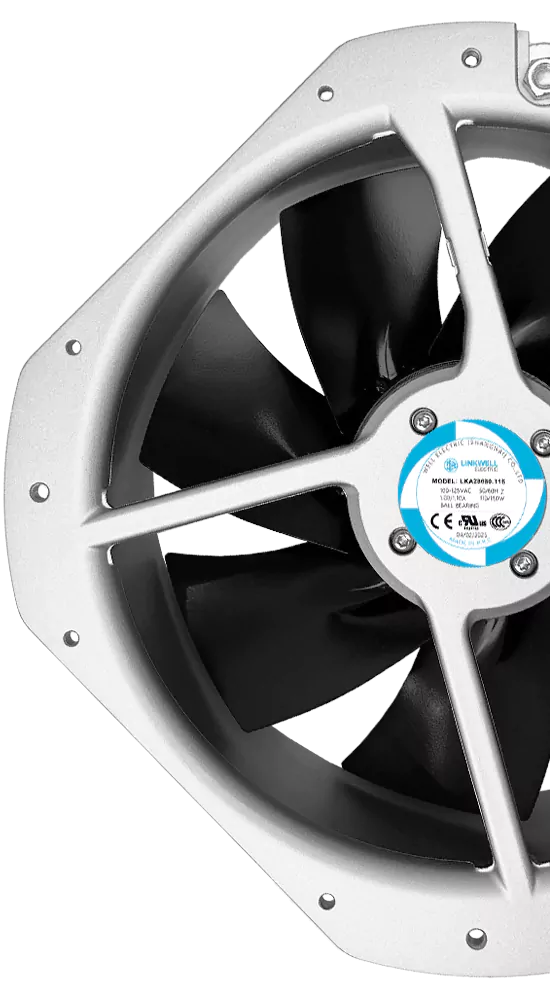
An axial fan rarely works alone. The fan may provide the airflow, but the guard, filter, grille, mounting hardware and electrical connection determine whether that airflow reaches the equipment safely and reliably.
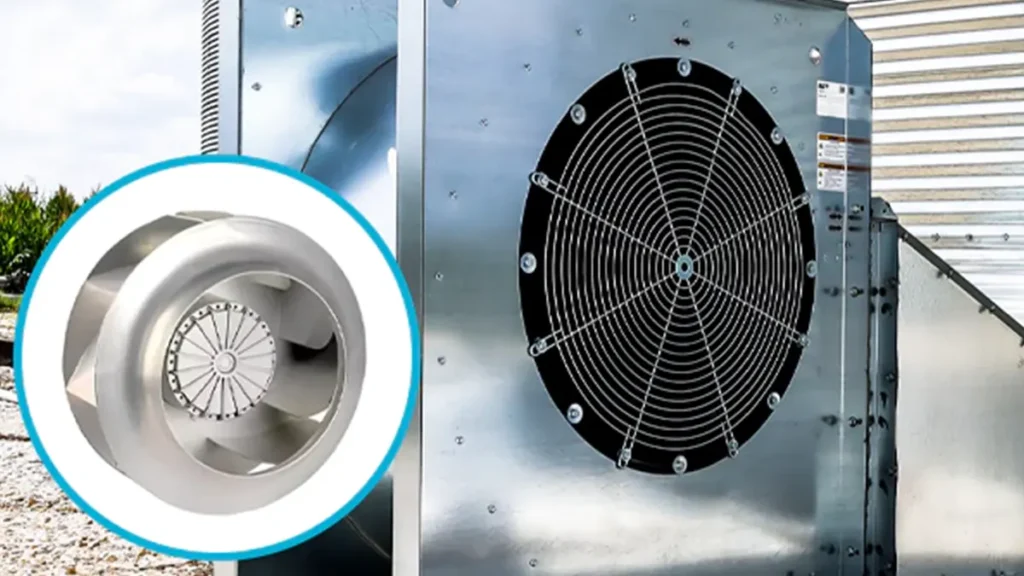
The difficult part is compatibility. A guard can protect the rotating blades yet add restriction. A filter can keep dust out while gradually reducing airflow as it loads. A mounting gasket can stop vibration from reaching a panel, but it cannot repair an unbalanced rotor or a weak cabinet structure. You need to choose the fan and its accessories as one airflow system.
Which axial fan accessories do you actually need?
For most industrial cooling projects, the useful answer depends on the job the accessory must perform. Start with the problem, then choose the part.
| Need | Typical accessory | Main check before ordering |
|---|---|---|
| Prevent contact with rotating blades | Finger guard or protective grille | Fan size, mounting-hole pattern, inlet or outlet position, required clearance |
| Reduce dust entering an enclosure | Filter kit or filtered grille | Initial pressure drop, filter loading, service access, replacement media |
| Finish a panel opening and control rain or debris entry | Louver, grille or weather hood | Free area, orientation, drainage and outdoor rating |
| Limit vibration transfer to a panel | Rubber mounts, grommets or gasket | Fan weight, screw size, compression and mounting stiffness |
| Connect the fan to a duct or shaped inlet | Flange, adapter, shroud or inlet bell | Opening geometry, leakage, inlet clearance and pressure loss |
| Simplify power or control wiring | Cord set, connector, controller or sensor | Voltage, current, pinout, signal type and environmental limits |
Not every fan has a matching version of every accessory. Dimensions and availability are model-specific, so confirm the exact combination before the enclosure drawing or wiring harness is released.
Protection accessories: guards, filters and grilles
Finger guards and protective grilles
A finger guard creates a physical barrier between people or loose objects and the rotating blades. It is common on fans mounted close to a service area, an external panel or exposed wiring. Wire guards usually leave more open area than solid decorative grilles, but the actual restriction depends on the guard geometry and its distance from the blade.
Do not select a guard from the nominal fan size alone. A 120 mm label does not guarantee the same hole spacing, frame thickness or blade clearance on every design. Check the fan drawing, the guard drawing, screw length and the side on which the guard will be installed. Some guards fit either side; others are designed for the inlet or outlet.
A guard also needs enough clearance to remain rigid without touching the blade. If a thin panel flexes, the guard can move closer to the rotor than it appeared in the CAD model. Verify the assembled condition, not just the individual dimensions.
Filter kits and replacement media
A filter is useful when an axial fan draws outside air into a cabinet, control panel or electronics enclosure. It captures dust before the particles settle on heat sinks, circuit boards and other internal surfaces. The trade-off is pressure drop.
The clean filter already adds resistance. As dust collects, resistance increases and the operating point moves toward lower airflow. That is why the free-air CFM on the fan datasheet cannot tell you whether the filtered assembly will cool the equipment. Use the fan curve and include both clean-filter and loaded-filter conditions. The fan curve operating-point method is the right place to make that check.
Filter density is not a simple ?higher is better? decision. Finer media may capture smaller particles, but it normally creates more resistance and may need more frequent maintenance. Match filtration to the contamination you actually need to control. In a relatively clean indoor cabinet, an overly restrictive filter can cost more cooling performance than it saves.
Grilles, louvers and weather protection
Grilles and louvers finish a panel opening, block larger debris and can reduce direct entry of splashed water or wind-driven rain. Their free area matters. A small outer grille on a large fan can become the narrowest part of the airflow path and raise both pressure loss and turbulence noise.
Outdoor protection is an assembly-level question. A hood or louver does not automatically give the complete enclosure a particular IP rating. Sealing, drainage, mounting orientation, gasket design and every other opening still affect the final result. If an IP target is part of the project, define the required enclosure test and validate the finished installation.
Airflow and mounting accessories
Shrouds, flanges, adapters and inlet bells
An axial fan performs best when air can approach the inlet evenly and leave without immediately striking a wall, cable bundle or sharp obstruction. A shroud or adapter can connect the fan to a panel or duct, while an inlet bell can smooth the entry into some round fan installations. These parts can improve the flow path when they are sized correctly; an abrupt adapter can do the opposite.
Check the clear opening through the accessory and the transition angle, not just the outside dimensions. Keep fasteners, wiring and structural ribs out of the inlet. If the fan sits directly behind a dense heat exchanger or grille, prototype the installed arrangement because catalog performance is normally measured under controlled test conditions.
Mounting hardware, gaskets and vibration isolators
Ordinary screws provide a rigid connection. Rubber grommets, soft mounts and gaskets can reduce the amount of motor and blade-pass vibration transferred into a sheet-metal panel. They are most helpful when the fan itself is healthy but the mounting panel behaves like a sounding board.
Soft mounting is not automatically better. Over-compressed rubber becomes stiff, under-tightened hardware can loosen, and a very soft mount can allow the fan to move enough to stress wiring or reduce blade clearance. The mounting method must support the fan in its real orientation and survive the expected temperature, oil, humidity and service life.
If vibration is already high, inspect the rotor, bearings, mounting panel and nearby obstructions before adding isolation. Our article on reducing vibration in industrial cooling fans separates source vibration from vibration transmission.
Electrical and control accessories
Cord sets and connectors
A cord set or plug can shorten assembly time and make replacement easier, but only when the electrical details match. Confirm AC or DC supply, rated voltage, current capacity, conductor size, polarity, grounding and connector pinout. A connector that physically fits may still be electrically wrong.
Lead length and exit direction also affect assembly. Leave enough service loop for installation without allowing the wire to enter the blade path. Where water, oil or repeated movement is present, specify the connector sealing and cable strain relief as part of the system rather than assuming the plug alone provides protection.
Speed controllers, thermostats and monitoring signals
Speed control can reduce noise and power when full cooling is not needed. The controller must match the fan technology and control interface. A voltage-controlled DC fan, a PWM-input fan, an EC fan and a mains AC fan do not use the same control method.
If your design needs tachometer feedback, alarm output or temperature-based speed control, define the signal voltage, pulse format, fail-safe behavior and wiring before ordering. Treat these functions as electrical specifications, not optional labels. The wrong interface can leave a mechanically compatible fan unusable in the control system.
How accessories change fan performance
Anything placed in the airflow path can change the system resistance. The effect may be small, or it may move the fan far enough along its performance curve to cause an overheating problem. The only dependable approach is to evaluate the assembled path.
| Accessory or condition | Likely system effect | What to verify |
|---|---|---|
| Open wire guard | Usually modest resistance, depending on geometry and spacing | Installed airflow and tonal noise |
| Decorative grille or louver | Reduced free area and more turbulence | Pressure drop at required airflow |
| Clean filter | Higher initial resistance | Clean-filter operating point |
| Loaded filter | Resistance rises over time | Minimum acceptable airflow and maintenance trigger |
| Abrupt duct adapter | Separation, turbulence and uneven inlet flow | Transition shape and prototype test |
| Obstruction close to inlet | Uneven loading, lower airflow and extra noise | Clearance around the fan inlet |
Do not add percentage losses from unrelated catalog examples. Pressure drop depends on airflow, geometry and media condition. Ask for the accessory curve or pressure-drop data where available, add it to the rest of the fan system resistance, and find the new operating point.
How to choose axial fan accessories
1. Define the job before the part number
Write down what must be protected, filtered, connected, controlled or isolated. This prevents the accessory list from growing without a clear performance reason.
2. Match the mechanical interface
Compare frame dimensions, hole spacing, hole diameter, fan thickness, screw size, guard stand-off and available panel space. Use drawings for both parts. Nominal size is only a starting point.
3. Check the airflow side and direction
Confirm which face is the inlet and which is the outlet. Intake filters belong where they can intercept incoming contamination and remain accessible for service. Guards must have adequate blade clearance on the selected side.
4. Recalculate the operating point
Combine the filter, grille, heat exchanger, duct and cabinet losses. Compare that resistance with the exact fan curve for the planned voltage and speed. Leave margin for filter loading and normal production variation.
5. Check the environment
Review temperature, humidity, oil, ultraviolet exposure, corrosion, flammability requirements and cleaning method. Plastic, plated steel, stainless steel, foam and filter media age differently in the same environment.
6. Plan maintenance access
A filter that cannot be removed without dismantling the cabinet will not be serviced as often as the thermal design expects. Provide access, define the inspection trigger and make the replacement media easy to identify.
7. Validate the complete assembly
Run the equipment in the most demanding condition: maximum heat load, lowest allowed supply voltage, loaded filter and realistic ambient temperature. Measure temperature or airflow where it matters. A bench test of the bare fan cannot replace an assembled-system test.
Accessory choices by application
| Application | Accessories often considered | Selection priority |
|---|---|---|
| Indoor electronics enclosure | Finger guard, open grille, connector, optional speed control | Low restriction, electrical compatibility and acoustic behavior |
| Industrial control cabinet | Filtered intake grille, exhaust grille, gasket and monitoring signal | Dust loading, service access and airflow through the hottest components |
| Heat exchanger or dense equipment module | Shroud, gasket, guard and controller | Operating point against the exchanger pressure drop |
| Outdoor enclosure | Weather hood, louver, filter, sealed connector and corrosion-resistant hardware | Drainage, full enclosure protection and material durability |
| Thin sheet-metal panel | Guard, gasket or rubber mounts, reinforcement if needed | Panel resonance, fastener retention and fan support |
These are starting combinations, not universal kits. A clean indoor telecom cabinet and an outdoor power enclosure can use the same fan size while needing completely different accessory materials and airflow margins.
Common mistakes that cost airflow or service time
- Choosing a guard by frame size without checking the hole pattern or blade clearance.
- Using the free-air fan rating after adding a filter, grille and heat exchanger.
- Sizing the fan for a clean filter with no allowance for loading.
- Placing wiring, a wall or a cable bundle directly against the inlet.
- Assuming a weather grille gives the entire enclosure an IP rating.
- Using soft mounts to hide a rotor, bearing or structural problem.
- Ordering a controller before confirming the fan control signal and pinout.
- Making filter replacement difficult enough that maintenance is skipped.
What to include in an axial fan accessory RFQ
A useful request lets the supplier check the combination, not just quote isolated parts. Include:
- Fan model or required frame dimensions and mounting drawing.
- Supply voltage, frequency for AC models, current and control interface.
- Required airflow and estimated static pressure at the operating point.
- Intake or exhaust arrangement and the planned accessory stack.
- Panel thickness, hole pattern, screw limits and available installation depth.
- Dust, water, oil, corrosion, temperature and compliance requirements.
- Filter maintenance target and replacement-media requirement.
- Annual quantity, harness preference and any OEM labeling or packaging needs.
LINKWELL supplies AC, DC and EC cooling fan solutions for industrial equipment. Accessory availability and dimensions vary by model and project, so send the assembly drawing and duty point when you need a compatibility review or OEM recommendation.
FAQ
Do axial fans always need a guard?
Not in every enclosed installation, but you need a protection measure wherever people, tools, cables or loose objects could reach the rotating blades. The final equipment risk assessment and applicable safety requirements determine what is necessary.
How much airflow does a fan filter reduce?
There is no reliable universal percentage. The reduction depends on filter media, area, airflow, dust loading and the rest of the system. Use pressure-drop data for the filter and the exact fan curve, then verify the assembled equipment.
Should the filter go on the intake or exhaust side?
If the goal is to keep outside dust from entering an enclosure, filtration is normally placed on the intake. The exhaust opening still needs enough free area and may need a guard or grille. Keep the cabinet slightly positive only if the leakage paths and application support that strategy.
Can I use an accessory from a different fan brand?
Only after checking dimensions, clearances, materials and performance. A matching nominal size does not prove mechanical or airflow compatibility. Test the assembled combination and do not assume another supplier accepts responsibility for the fit.
How often should an axial fan filter be replaced?
Set the interval from actual dust loading, temperature rise, pressure drop or inspection results. A fixed calendar interval may be useful at first, but the maintenance plan should be adjusted using field data from the real environment.
Can a fan guard increase noise?
Yes. A restrictive guard or one mounted very close to the blades can create turbulence and tonal noise. Increasing open area, improving clearance or changing the guard geometry may help, but the finished assembly should be tested.