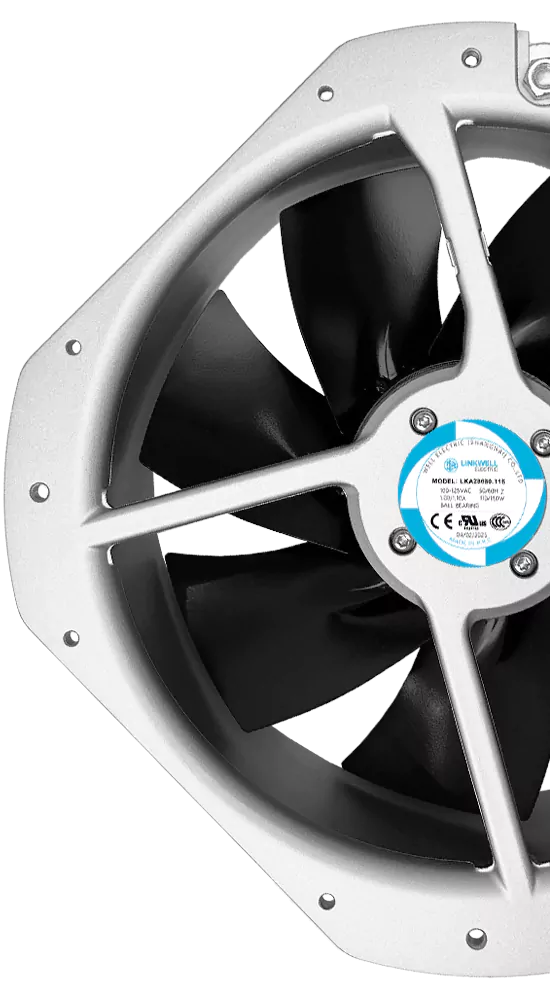
When you look at industrial cooling fans, you will see both EC fans and DC fans used in places like electronics plants, telecom sites, and automation lines. If you need to cool control cabinets, server racks, or power systems, you might wonder which fan works best. Your decision often comes down to factors like power supply, control needs, energy efficiency, and the conditions of your application.
Here’s a quick comparison to help you start thinking about EC Fan vs DC Fan for your project:
| Feature | DC Cooling Fans | EC Cooling Fans |
|---|---|---|
| Efficiency | Good, but lower than EC fans | Higher efficiency and better control |
| Control Capabilities | Simple voltage-based control | Precise speed, airflow, and pressure |
| Noise Levels | Usually higher | Low noise and vibration |
| Cost | More cost-effective | Higher manufacturing cost |
If you want the best performance and control, EC fans are often preferred for industrial cooling. If you focus on cost and simple control, DC fans might fit your needs better.
Key Takeaways
- EC fans offer higher efficiency and better control, making them ideal for HVAC and data center applications.
- DC fans are cost-effective and suitable for low-voltage systems, perfect for compact equipment and telecom applications.
- Consider the total cost of ownership, including energy savings and maintenance, when choosing between EC and DC fans.
- Ensure the fan’s power requirements match your system to avoid operational issues; EC fans work with both AC and DC power.
- Regular maintenance and checks can extend the lifespan of both EC and DC fans, ensuring reliable performance.
EC Fan Overview
What Is an EC Fan
You might hear the term EC fan and wonder what it means. EC stands for electronically commutated. EC cooling fans use advanced motor technology that combines AC input compatibility with the benefits of DC motors. You can plug these fans into standard AC power, but they convert that power internally to DC. This lets you get precise speed control and energy-efficient operation. EC cooling fans are popular in HVAC, ventilation, telecom, and industrial cooling systems. You get reliable performance and lower energy costs. The brushless design reduces friction, so the fan runs smoother and generates less heat. Electronic commutation means you avoid the wear and tear of brushes, which leads to less maintenance and a longer lifespan.
Key Features of EC Fans
Let’s look at what makes EC cooling fans stand out. You get a lot of advantages compared to traditional fans.
- EC cooling fans use brushless DC motors, so you don’t have to worry about mechanical brushes wearing out.
- They offer energy savings of up to 70% compared to older fan designs.
- Integrated electronic controls let you adjust speed easily, which improves performance and reduces wasted energy.
- EC cooling fans operate quietly, thanks to optimized motor and blade design.
- Maintenance needs are low, and the fans last longer.
Here’s a quick table to show how EC cooling fans compare to other industrial fans:
| Feature | EC Cooling Fans | Other Industrial Fans |
|---|---|---|
| Motor Technology | Electronically Commutated (EC) motors | Traditional AC motors |
| Energy Efficiency | Higher efficiency, lower energy use | Generally lower |
| Speed Control | Variable speed control | Fixed or limited control |
| Intelligent Communication | Yes | Limited or none |
| Noise Performance | Lower noise | Higher noise |
| Maintenance | Reduced, longer lifespan | More maintenance needed |
fanacdc EC Fan Solutions
If you want reliable EC cooling fans for your project, fanacdc has you covered. You get energy-efficient fans with UL, CE, and RoHS certifications. These fans work well in HVAC, refrigeration, and industrial systems. fanacdc EC cooling fans come in sizes from 60mm to 280mm, with AC input options and power ratings up to 145W. You can use them for control cabinets, server racks, and automation equipment. The integrated electronics give you smart speed control and stable airflow. fanacdc EC cooling fans are easy to install and require almost no maintenance. You get strong airflow, low noise, and long-lasting performance. If you need a custom solution, fanacdc offers OEM, ODM, and OBM services. You can trust fanacdc to deliver EC cooling fans that meet your energy and cooling needs.
DC Fan Overview
What Is a DC Fan
You might wonder what makes dc cooling fans different from other types. A dc fan runs on direct current power. You usually see voltages like 12V, 24V, or 48V. These fans use brushless dc motors, which means you get reliable performance and less maintenance. You find dc cooling fans in compact equipment, electronics, telecom systems, and control cabinets. They fit well in places where you need stable cooling and precise speed control. Direct current lets you adjust speed easily, so you can match the cooling to your system’s needs. If you work with automation or energy storage, dc cooling fans help keep everything running smoothly.
Key Features of DC Fans
Let’s break down what makes dc cooling fans stand out. You get strong airflow, low power consumption, and quiet operation. The brushless dc motors inside these fans boost efficiency and extend service life. You can control speed with PWM signals or monitor fan status with tachometer feedback. Direct current fans also handle tough environments, like high temperatures or vibration. Here’s a quick look at some important metrics:
| Metric | Description |
|---|---|
| Power Consumption | dc cooling fans can achieve energy savings of up to 70% compared to AC fans. |
| Airflow Performance | Actual airflow often reaches about half of the fan’s maximum output. |
| Noise Levels | dc cooling fans are designed to minimize noise while maintaining efficiency. |
You can choose the voltage that fits your application. For example, 12V works for PCs and small devices. 24V fits industrial machines and telecom equipment. All these fans use brushless dc motors for smooth and reliable operation.
| Voltage | Application | Motor Type |
|---|---|---|
| 12V | PCs, consumer electronics, small devices | Brushless |
| 24V | Industrial machines, telecom equipment, vehicles | Brushless |
fanacdc DC Fan Solutions
If you need dc cooling fans for your project, fanacdc offers a wide range. You get fans with brushless dc motors, smart speed control, and strong airflow. These fans meet ISO9001, ISO14001, CE, and RoHS standards, so you know they’re safe and reliable. You can use fanacdc dc cooling fans in telecom, automation, and energy storage systems. They handle continuous duty and tough environments. You can pick from different sizes and voltages to match your needs. fanacdc also supports OEM, ODM, and OBM services if you need custom solutions. You get technical support and after-sales service, making your project easier.
| Certification/Standard | Description |
|---|---|
| ISO9001 | Quality management standard |
| ISO14001 | Environmental management standard |
| CE | Compliance with health, safety, and environmental protection standards |
| RoHS | Restriction of hazardous substances in electrical and electronic equipment |
Tip: If you want stable cooling and flexible speed control, dc cooling fans from fanacdc give you the performance and reliability you need.
EC Fan vs DC Fan Comparison
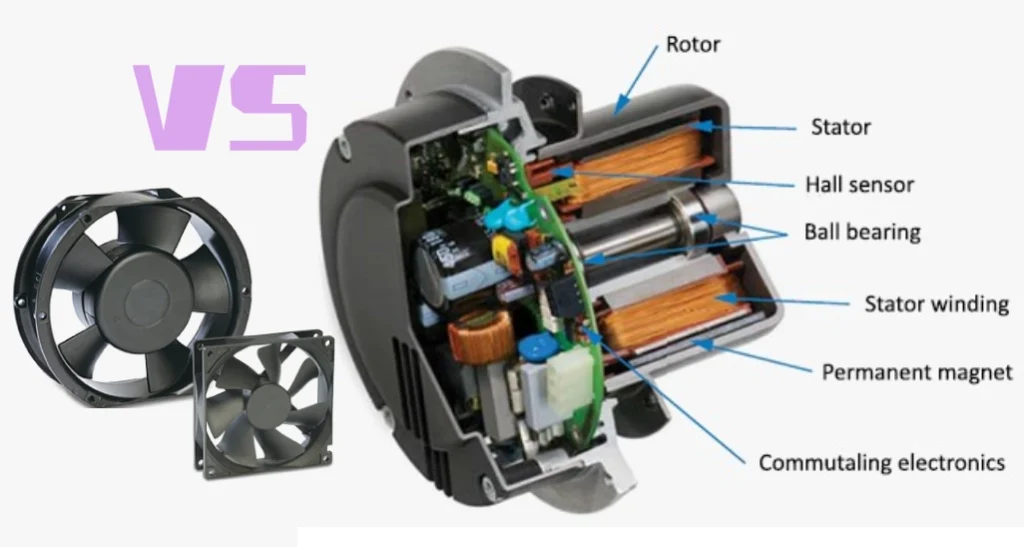
When you compare ec fan vs dc fan for industrial cooling, you want to know how each option fits your project. Let’s break down the main differences so you can make the right choice.
Power Input and Motor Type
You’ll notice that ec fans work with both AC and DC power. They convert AC to DC inside the fan, which boosts efficiency and makes installation easier. dc fans need a direct DC power supply, so you must match the voltage to your system. The motor type matters too. ec fans use electronically commutated motors, which deliver high efficiency and precise control. dc fans usually have brushless motors, giving you improved energy efficiency and reliable performance.
Here’s a quick table to show the differences:
| Fan Type | Power Input Requirements | Motor Type | Efficiency | Additional Features |
|---|---|---|---|---|
| EC Fans | AC or DC (internal conversion) | Electronically Commutated | Higher, uses up to 80% less power than AC fans | Long service life, low noise, high intelligence |
| DC Fans | Direct DC power | Brushless or Brushed | Improved over AC fans | Simpler design, less control |
Note: If your project needs flexible power input and high efficiency, ec fans give you more options.
Control and Integration
Control options play a big role in ec fan vs dc fan selection. ec fans offer advanced control features like PWM, FG, RD, analog control, and digital protocols such as MODBUS. You can integrate them with building management systems and industrial controls for smart energy management. dc fans provide speed regulation through PWM and tachometer feedback. They work well in systems where you need basic speed control and monitoring.
| Feature | EC Fans | DC Fans |
|---|---|---|
| Control Options | PWM, FG, RD, analog, MODBUS, digital | PWM, tachometer, alarm |
| Integration | BMS, industrial automation, smart systems | Simple automation, basic monitoring |
Tip: If you want seamless integration and precise control, ec fans are the better fit for modern automation.
Efficiency and Performance
Efficiency and performance are where ec fan vs dc fan really stand out. ec fans achieve efficiency ratings between 75% and 90%. They regulate speed based on real-time demand, saving up to 50% power compared to constant-speed fans. dc fans improve efficiency over AC fans, but don’t match ec fans in large-scale systems. ec fans deliver high airflow and high static pressure, making them ideal for continuous operation and demanding environments. dc fans perform well in low-power and compact devices.
| Fan Type | Efficiency Rating | Airflow Performance | Energy Consumption | Operation |
|---|---|---|---|---|
| EC Fans | 75% – 90% | High airflow, high static pressure | Lower, optimized for demand | Continuous, large-scale |
| DC Fans | ~30% better than AC | Good airflow, moderate static pressure | Efficient in low-power systems | Compact, battery-based |
- ec fans adjust speed to match cooling needs, cutting electricity costs.
- dc fans save energy during low-demand periods, but ec fans offer greater savings in HVAC and industrial setups.
Reliability and Maintenance
You want your cooling system to last. ec fans and dc fans both deliver long service life, often reaching 70,000 hours or more. Maintenance is simple for both types. You should clean the fans regularly, check for dust and damage, and lubricate bearings when needed. The design of ec fans reduces wear, so you spend less time on upkeep. dc fans also require minimal maintenance, especially with brushless motors.
Reminder: Regular checks and professional inspections help keep your fans running at peak performance.
Cost and Application Range
Cost is a big factor in ec fan vs dc fan decisions. ec fans have a higher initial price, but their energy savings pay off over time. You can expect significant reductions in electricity bills, especially in large installations. dc fans cost less upfront and work well in projects with tight budgets or simple cooling needs.
| Fan Type | Initial Cost | Long-term Savings | Application Range |
|---|---|---|---|
| EC Fans | Higher | Significant | HVAC, data centers, refrigeration, cleanrooms, medical equipment, commercial ventilation |
| DC Fans | Lower | Moderate | Telecom, automation, energy storage, compact devices |
- ec fans are preferred for air conditioning, data centers, and high airflow or high static pressure applications.
- dc fans fit telecom equipment, automation, and energy storage systems.
If you need high performance, advanced control, and long-term savings, ec fans are the top choice. For simple, cost-effective cooling, dc fans get the job done.
Choosing the Right Fan for Industrial Cooling
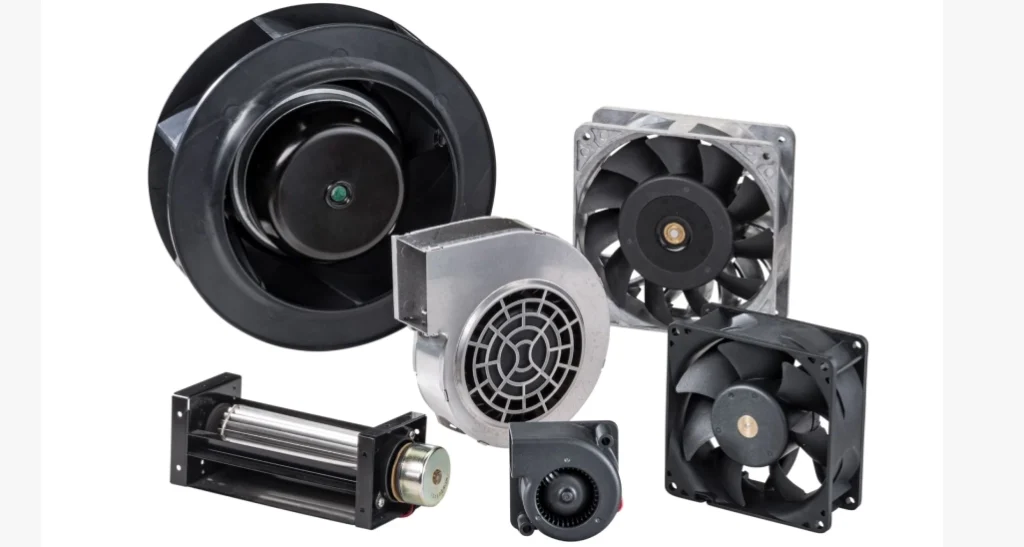
When to Choose EC Fans
You should pick an EC fan when your project needs precise speed control, high energy efficiency, and long operating hours. EC fans shine in places where you want to cut energy costs and keep noise low. If you work with HVAC systems, large ventilation setups, or data centers, EC fans give you the best results. They adjust their speed based on real-time cooling demand, which means you get low power consumption and stable airflow. You also get smart integration with building management systems. For example, if you need to cool a control cabinet in an automation line or keep a server rack at the right temperature, EC fans from fanacdc deliver reliable performance and help you save on energy bills.
Tip: EC fans are perfect for projects where energy savings and advanced control matter most.
When to Choose DC Fans
You should choose a DC fan if your system already uses a low voltage power supply or if you need compact, efficient cooling. DC fans work well in telecom equipment, power supplies, inverters, and automation machines. They offer low power consumption and quiet operation, making them a smart pick for sensitive environments. If your project has a tight budget or does not need advanced speed control, DC fans give you solid performance and long-term reliability. For example, fanacdc DC fans keep telecom racks cool and protect sensitive electronics in industrial control systems.
| Application Scenario | Reason for Suitability |
|---|---|
| Moderately cooled budget builds | DC fans are simpler and more affordable, making them ideal for cost-sensitive projects. |
| Machines with low cooling precision | They provide adequate cooling without the need for high-performance solutions. |
| Environments requiring low noise levels | DC fans generate minimal electrical noise, suitable for quiet settings like libraries. |
| Long-term cooling solutions | Their durability ensures consistent performance over time, even under regular workloads. |
Application Scenarios
Let’s look at how system architecture and cooling demand guide your choice:
- Operational Requirements: Think about what your system needs. If you want reliability and have a strict budget, DC fans are a great fit. If you need advanced control and energy savings, EC fans are the way to go.
- Comprehensive Cost Analysis: Don’t just look at the price tag. Consider energy costs, maintenance, and how long the fan will last. EC fans often pay off over time with their low power consumption.
- Environmental Adaptability Assessment: Check the temperature range, space, and protection ratings. EC fans handle wide temperature swings and tight spaces well.
- System Integration Requirements: Make sure the fan matches your control system. EC fans work with smart controls, while DC fans fit simple setups.
For control cabinets, inverters, and automation, fanacdc offers both EC and DC fans. You can match the right fan to your system’s needs and cooling demand. The best choice always depends on your project’s unique setup and goals.
Common Comparison Mistakes
When you compare EC fans and DC fans, you might make some common mistakes. Let’s break down these pitfalls so you can avoid them and make a smarter choice.
Efficiency Only
Many buyers focus only on efficiency. You might see a fan with high efficiency and think it’s the best option. That’s not always true. EC fans often deliver better returns over their lifespan because they save energy, reduce noise, and don’t need extra controllers. If you look at efficiency alone, you miss out on other benefits like lower maintenance and smarter control features. You should consider the total cost of ownership, including energy use, maintenance, and lifespan.
Don’t let efficiency numbers fool you. Think about how the fan fits your system and how much you’ll save in the long run.
Ignoring Voltage Architecture
Another mistake is ignoring voltage architecture. You need to match the fan’s power requirements to your system. EC fans work with AC or DC input, making them flexible. DC fans need a direct DC power supply. If you overlook voltage compatibility, you might end up with a fan that doesn’t work or causes operational issues. Always check the voltage and make sure it fits your setup.
| Fan Type | Power Input | Flexibility |
|---|---|---|
| EC Fan | AC or DC | High |
| DC Fan | DC only | Moderate |
Installation Conditions
You might forget to consider installation conditions. Fans need to fit the space, handle the ambient temperature, and meet airflow demands. Some buyers choose fans based on peak CFM without checking static pressure or real-world conditions. If you ignore installation details, you risk poor cooling performance and reduced fan lifespan. Always check the space, airflow path, and temperature before making your choice.
Tip: Don’t assume EC fans are always better. Look at your project’s needs and installation environment.
Common mistakes to avoid:
- Comparing only efficiency
- Ignoring voltage architecture
- Overlooking installation conditions
- Assuming EC fans are always the best choice
If you keep these points in mind, you’ll pick the right fan for your industrial cooling needs.
fanacdc Support for Buyers
Project Consultation
When you start a new cooling project, you want expert advice that makes your job easier. At fanacdc, you get more than just fans—you get a partner who listens to your needs. You can reach out for help with comparing EC and dc fan options. The team helps you look at voltage, size, airflow, and the environment where your fans will run. You get support for every step, from the first question to the final installation.
Here’s what you can expect from fanacdc’s support:
| Type of Service | Description |
|---|---|
| Technical Support | Quick help with troubleshooting and keeping your fans running smoothly. |
| Service Agreements | Plans for regular maintenance, repairs, and parts replacement. |
| Installation Assistance | Guidance for setting up your cooling fans the right way. |
| Maintenance Checklists | Easy-to-follow lists to keep your equipment in top shape. |
| Training for Facility Staff | Training so your team knows how to use and care for the fans. |
You also get access to datasheets, so you can check all the details before making a choice. If you ever need help, the after-sales team responds fast and keeps your project on track.
Model Recommendation and Customization
Choosing the right fan can feel tricky, but fanacdc makes it simple. You get help with model recommendations based on your project’s unique needs. The team looks at your requirements and suggests the best EC or dc fan for your setup. They consider voltage, size, airflow, and even the smallest details about your operating environment.
Here’s how fanacdc supports you:
- Requirement evaluation for your application
- Product selection and technical recommendations
- Design and engineering optimization for better performance
- Project management and support from start to finish
- Professional consultation during the design phase
- Application and integration guidance for your system
- Installation support and ongoing troubleshooting
If you need something special, fanacdc offers full customization through OEM, ODM, and OBM services. You can get fans built to your exact specs, with support for unique sizes, features, or certifications. The team also provides sales training, so you and your staff feel confident using and recommending fanacdc products.
Need a custom solution? Just ask! fanacdc is ready to help you get the perfect cooling setup for your project.
You get unique benefits from both EC fans and DC fans by fanacdc. EC fans give you high efficiency and smart control. DC fans offer reliable cooling and flexible voltage options. The best fan for your project depends on what you need, not just what’s popular or theoretical.
Ready to find the right cooling solution? Send your project requirements to fanacdc. You’ll get expert recommendations tailored to your needs.
FAQ
What is the main difference between an EC fan and a DC fan?
You’ll find EC fans use electronically commutated motors and work with AC or DC input. DC fans run on direct current only. EC fans offer better speed control and higher efficiency, while DC fans are simpler and fit low-voltage systems.
When should I choose an EC fan for my project?
Pick an EC fan if you need variable speed, high energy savings, and long operating hours. These fans work best in HVAC, large ventilation, and data center cooling where precise control and efficiency matter most.
Are DC fans better for compact or low-voltage equipment?
Yes! DC fans are perfect for telecom racks, power supplies, and automation gear that already use low-voltage power. They’re reliable, quiet, and fit tight spaces where you need steady cooling.
Can I replace an AC fan with an EC fan in my existing system?
You can usually swap an AC fan for an EC fan with minimal changes. Just check the size, airflow direction, and mounting. EC fans often fit right in and give you instant energy savings.
How does fanacdc help me pick the right fan?
You get expert advice from fanacdc. The team helps you compare options, recommends models, and supports customization. You also receive datasheets and technical support to make sure your cooling solution matches your project needs.