You see four main ev battery cooling methods in use today: passive, forced-air, liquid, and direct refrigerant. Liquid cooling leads the global market in 2026, holding about 62% market share because it provides the best heat dissipation for high-density batteries. Effective thermal management keeps your electric vehicle system safe and reliable. It also maintains optimal performance, supports fast charging, and extends battery life by preventing overheating and minimizing temperature swings in vehicles.
Key Takeaways
- Liquid cooling is the most effective method for managing battery temperature, ensuring optimal performance and safety.
- Maintaining battery temperatures between 15°C and 45°C is crucial for longevity and efficiency; avoid extremes to prevent damage.
- Choose the right cooling method based on your driving needs: forced-air for city driving, liquid for long distances, and direct refrigerant for high performance.
- Regular maintenance of your cooling system, including checking for dust and leaks, enhances reliability and extends battery life.
- Utilize thermal pre-conditioning to optimize battery temperature before driving or charging, improving performance in varying weather conditions.
Why Battery Cooling Matters
Battery Performance and Longevity
You depend on your battery to deliver consistent power and keep your electric vehicle running smoothly. The battery thermal management system protects your battery from overheating and ensures safety. When you drive or charge your vehicle, the battery generates heat. If you do not control this heat, you risk damaging the battery and reducing its lifespan.
Efficient thermal management is crucial for ensuring EV batteries’ performance, safety, and longevity, as it regulates the heat generated during use, charging, and demanding operations.
A battery thermal management system keeps the temperature stable. This helps you maintain battery performance and avoid sudden failures. You also get longer battery life and safer operation.
- Thermal Runaway: Excessive heat can lead to overheating, battery failure, or even fire hazards.
- Reduced Performance: High temperatures decrease efficiency and limit driving range.
- Shortened Lifespan: Constant exposure to extreme temperatures accelerates battery aging and wear.
Heat Sources in Electric Vehicle Batteries
You notice heat building up during charging and discharging cycles. The battery thermal management system must handle this heat. Internal electrochemical reactions create most of the heat. The C-rate, which measures how fast you charge or discharge, affects heat buildup. Higher C-rates mean more heat.
- Significant heat generation occurs during the charging and discharging cycles of lithium-ion batteries due to internal electrochemical processes.
- The C-rate affects the heat buildup; higher C-rates lead to larger currents and faster heat generation.
- For a 10 Ah lithium-ion battery, heat generation at charging rates of 3C, 5C, and 8C is approximately 10.5 W, 25 W, and 54 W, respectively.
- Heat generation is a combination of reversible heat (due to entropy generation) and irreversible heat (due to Joule heating).
Ideal Battery Temperature Range
You want your battery to operate within a safe temperature range. Manufacturers recommend keeping the battery between 5°C and 45°C for best performance and safety. If the temperature goes outside this range, you see reduced output and faster aging.
| Source | Ideal Temperature Range | Notes |
|---|---|---|
| Source 1 | 5°C to 25°C (up to 35°C) | Performance degrades outside this range. |
| Source 2 | 25°C to 40°C | Optimal for longevity and performance. |
| Source 3 | 15°C to 45°C | Colder temperatures reduce output and range. |
You rely on the battery thermal management system to keep the battery within this range. This protects safety and ensures reliable operation.
Main EV Battery Cooling Methods
You have four main ev battery cooling methods to choose from when designing or selecting an electric vehicle. Each method uses a different approach to manage heat in electric vehicle batteries. The table below gives you a quick comparison of how these methods work, their strengths, and their weaknesses.
| Cooling Method | How it Works | Pros | Cons |
|---|---|---|---|
| Passive Cooling | Relies on conduction and natural convection without active components. | Extremely low cost, simple packaging. | Limited heat removal capacity, unsuitable for high-performance use. |
| Forced-Air Cooling | Uses fans to drive air through ducts, removing heat via convection. | Low complexity, lightweight, easier maintenance. | Poor thermal conductivity, struggles with high currents. |
| Liquid Cooling | Uses a heat transfer fluid to carry heat away to a radiator. | High thermal capacity, excellent temperature uniformity. | Increased complexity, higher initial cost. |
| Direct Refrigerant Cooling | Utilizes the vehicle’s refrigerant circuit for direct cooling. | Highest cooling density, excellent for fast charging. | Technical complexity, higher cost, integration challenges. |
Passive Cooling Mechanisms
You see passive cooling in early or low-power electric vehicles. This method uses metal plates, heat sinks, and natural airflow to move heat away from the battery. You do not find fans, pumps, or moving parts in these systems. The design relies on conduction and natural convection to transfer heat.
- Passive cooling systems can only handle 0.5-2.0 kW of heat dissipation. Modern electric vehicle batteries often generate 5 kW or more.
- These systems lack temperature control precision. You may find them ineffective in extreme climates.
- Passive cooling cannot manage thermal loads during fast charging, which can reach 200-300 kW.
You get a simple and low-cost solution, but you sacrifice performance. Most new electric vehicles use active cooling methods for better control and safety.
Forced-Air Cooling and fanacdc Solutions
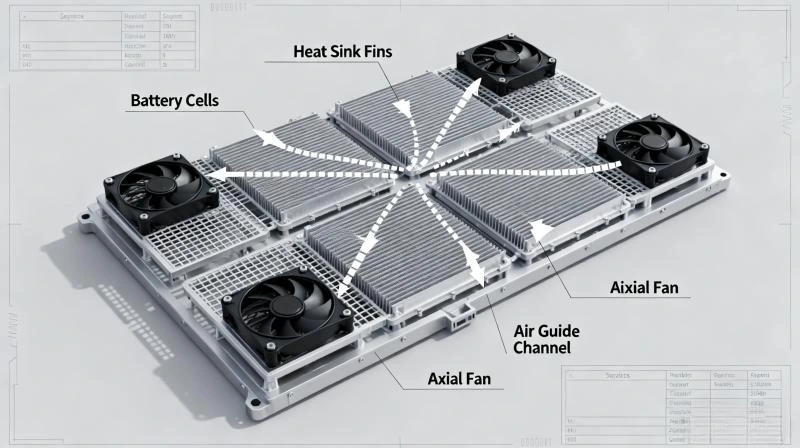
You use forced-air cooling when you want a lightweight and easy-to-maintain system. This method uses fans to blow air across the battery pack. The moving air removes heat by convection. You find this method in some hybrid vehicles and entry-level electric cars.
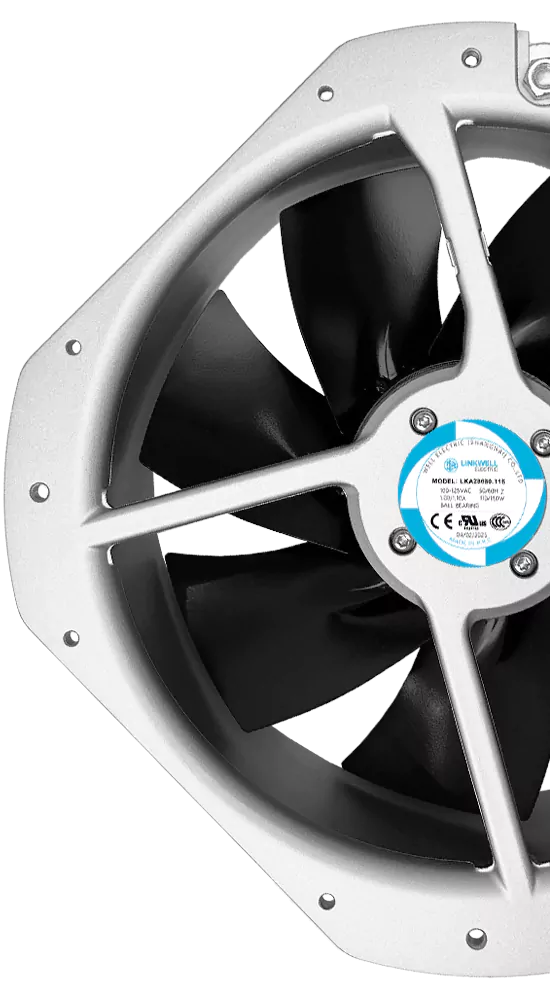
You can improve forced-air cooling with advanced fan technology. fanacdc offers a range of solutions, including Industrial Cooling Fan, EC Fans, and DC Fan products. These fans deliver stable airflow, precise speed control, and long service life. You can select AC, DC, or EC fans to match your system’s needs. For example, EC fans from fanacdc provide high efficiency and intelligent speed regulation, which helps you save energy and reduce noise. DC fans offer accurate speed control and reliable operation, making them ideal for sensitive electronics and automation equipment.
Tip: You can customize fanacdc fans for your battery cooling system. Choose the right size, voltage, and control features to optimize performance and reliability.
Forced-air cooling works well for moderate heat loads. You get low complexity and easier maintenance. However, this method struggles with high currents and fast charging. Air does not transfer heat as efficiently as liquid cooling.
Liquid Cooling for Electric Vehicle Batteries
You see liquid cooling as the leading choice for modern electric vehicle batteries. This method uses a coolant, such as water-glycol, to absorb heat from the battery. The coolant flows through channels or plates in the battery pack, then moves to a radiator where it releases the heat.
Liquid cooling offers high thermal capacity and excellent temperature uniformity. You can control battery temperatures precisely, even during fast charging or heavy driving. Research shows that liquid cooling systems, especially those with thermoelectric modules, can lower battery temperatures significantly. For example, the average temperature of a lithium-ion battery dropped from 85°C to 76°C with a thermoelectric module. Enhanced designs can reduce temperatures even further.
You may also hear about two-phase immersion cooling. This advanced method submerges the battery cells in a special dielectric fluid. The fluid absorbs heat and changes from liquid to vapor, carrying heat away quickly. Two-phase immersion cooling can extend battery life by 8% compared to water-glycol systems. It also reduces peak battery temperatures by 5%. This method prevents thermal runaway and eliminates risks from water exposure. OEMs and fluid manufacturers work together to develop fluids that provide optimal heat transfer, safety, and durability for electric vehicle batteries.
You get the best performance and safety with liquid cooling. You can support fast charging and high-power driving. The main drawbacks are higher cost and increased system complexity.
Direct Refrigerant Cooling
You find direct refrigerant cooling in some advanced electric vehicles. This method uses the vehicle’s air conditioning refrigerant circuit to cool the battery directly. The refrigerant circulates through cold plates attached to the battery, improving heat transfer efficiency.
- Direct refrigerant cooling maintains optimal battery temperatures, especially during fast charging.
- This method offers the highest cooling density among all ev battery cooling methods.
- You may face challenges with temperature uniformity, which can lead to local overheating and affect reliability.
You get excellent performance for fast charging and high-power applications. However, you must manage technical complexity and integration challenges.
How Battery Cooling Mechanisms Work
Natural Heat Dissipation
You rely on natural heat dissipation when you want a simple approach to battery cooling techniques. This process uses the physical principles of conduction and convection. Heat moves from the battery cells to the outer casing, then escapes into the air. Natural convection happens because warmer air rises and cooler air takes its place. This passive fluid motion, caused by density differences, helps remove heat from the battery pack. Battery thermal management systems use these principles to keep the system within a safe temperature range. You see this method in low-power electric vehicles, where heat loads remain small.
- Battery thermal management systems add or remove heat to maintain optimal operating temperatures.
- Natural convection uses passive fluid motion due to density differences for heat dissipation.
Airflow and Fan Technology
You improve cooling with airflow and advanced fan technology. EC fans and DC fans play a key role in battery cooling mechanisms. These fans deliver strong airflow, adjust speed based on temperature sensors, and use less energy than traditional fans. The table below shows how EC fans enhance cooling efficiency in electric vehicle systems:
| Feature | Description |
|---|---|
| Fan Type | Electronically Commutated (EC) fans |
| Speed Adjustment | Dynamically adjusts based on temperature sensors |
| Airflow | Delivers up to 200 CFM at 5,000 RPM during fast charging |
| Power Consumption | Consumes only 10-20 watts, much less than traditional AC fans |
| Optimal Temperature Range | Maintains battery temperature between 20-30°C |
| Efficiency Innovations | Staggered blades reduce turbulence and noise, up to 70% static efficiency |
You benefit from variable speed control, which uses only the energy needed for cooling. This approach extends battery range and supports next-generation battery systems.
Coolant Circulation Systems
You find coolant circulation systems in advanced cooling technologies for electric vehicles. These systems use several main components to move heat away from the battery. The process starts with heat generated inside the cells. The heat transfers to thermal interface materials, then a coolant carries it away. The warm fluid moves to a radiator or heat exchanger, where it releases the heat. The table below outlines the key parts:
| Component | Function | Example in Practice |
|---|---|---|
| Coolant Channels | Carry heat-laden fluid away from cells | Built into metal plates |
| Pump | Forces coolant circulation | Electric or mechanical pump |
| Heat Exchanger | Releases heat to the environment | Radiators or coolers |
| Thermal Interface | Bridges gap between cell and cooling plate | TIM paste or gels |
| Monitoring System | Tracks temperature, triggers alerts | Sensors with diagnostics |
You achieve better temperature uniformity and precise thermal management with these systems.
Refrigerant Integration
You see refrigerant integration in some thermal management methods for high-performance vehicles. Refrigerant lines run through the battery pack, removing heat as the refrigerant evaporates and moves to a condenser. This system adapts HVAC technology to keep cell temperatures stable. You must consider technical complexity, strict sealing requirements, and safety risks with refrigerant use. Proper management ensures reliable operation and protects your electric vehicle investment.
Pros and Cons of Cooling Methods
Passive Cooling: Simplicity vs. Limits
You may choose passive cooling strategies for their simplicity. This method uses natural heat dissipation without moving parts. You benefit from high energy efficiency, minimal weight, and low cost. The table below shows the main advantages and limitations:
| Advantages | Limitations |
|---|---|
| Energy efficiency of up to 98% | Heat Dissipation Inadequacy: Only handles 0.5-2.0 kW of heat, while modern batteries generate 5kW or more. |
| Minimal weight and volume impact | Temperature Control Precision: Limited control, influenced by ambient conditions. |
| Lower initial costs ($100-500) | Fast Charging Limitations: Cannot manage thermal loads during fast charging (200-300kW). |
| No risk of coolant leaks | N/A |
| Simplified manufacturing and maintenance | N/A |
You see that passive cooling strategies work best for low-power systems. They cannot support high battery performance or fast charging in a modern electric vehicle.
Forced-Air: Efficiency and Applications
You often find forced-air cooling strategies in early or budget electric vehicles. This method uses fans to move air across the battery pack. You gain easy maintenance and lower system complexity. Forced-air cooling strategies suit lower power applications, such as city cars. However, you may notice reduced cooling efficiency in extreme heat or during repeated fast charging. You should consider this method if you want a lightweight solution for moderate thermal management needs.
Note: Advanced fan technology, like EC and DC fans, can improve cooling efficiency and cooling performance in forced-air systems.
Liquid Cooling: Performance and Adoption
You see liquid cooling strategies dominate new electric vehicle models. This method uses a coolant to absorb and transfer heat away from the battery. Liquid cooling strategies provide high cooling efficiency and excellent cooling performance. You benefit from precise temperature control and improved battery performance. Major manufacturers, including Tesla and Hyundai, use this system for high-density batteries. Liquid cooling strategies hold a 62% market share due to their superior cooling efficiency and ongoing advancements. You should choose this method for long-range or high-performance vehicles.
Direct Refrigerant: Advanced Cooling
You may select direct refrigerant cooling strategies for the highest cooling efficiency and cooling performance. This method uses refrigerant to remove heat quickly, making it ideal for fast charging and high-performance electric vehicles. The table below highlights key benefits:
| Benefit | Description |
|---|---|
| Highest cooling density | Allows for efficient heat removal, crucial for high-performance applications. |
| Fastest transient cooling | Enables quick temperature adjustments, ideal for extreme fast-charging. |
| High cooling rates per area | Utilizes phase change of refrigerant to absorb significant latent heat. |
You achieve advanced thermal management and rapid temperature control with this system. Direct refrigerant cooling strategies offer unmatched cooling efficiency for demanding applications.
Comparison of EV Battery Cooling Methods
Effectiveness and Cost
You want to choose a battery cooling system that balances effectiveness and cost. Each method offers different benefits and challenges. Liquid cooling systems stand out for their ability to manage temperature changes and support high power output. These systems work well in long-range electric vehicles because they spread cooling evenly across large battery packs. However, advanced cooling technologies can increase the price of your vehicle. High costs often slow down the adoption of new electric vehicle models. Here is a quick look at how the main methods compare:
- Liquid cooling: Delivers high efficiency and strong battery performance, but comes with higher costs and complexity.
- Forced-air cooling: Offers a cost-effective solution for daily driving, but may not handle extreme conditions well.
- Passive cooling: Keeps costs low and design simple, but cannot support high-performance needs.
- Direct refrigerant cooling: Provides top thermal management and cooling efficiency, but adds significant cost and technical demands.
Suitability for Fast Charging
You need a cooling method that supports fast charging if you want to reduce charging time. Engineers use phase-change materials, heat pipes, and immersion cooling to control temperature spikes during ultra-fast charging. These advanced methods help keep battery cells safe and improve temperature uniformity. The table below shows how different systems perform during fast charging:
| Cooling Method | Temperature Reduction | Charge Rate | Source |
|---|---|---|---|
| Bio-Based PCM with Copper Fins | 10–14 K | 4–5C | National Renewable Energy Laboratory |
| Hybrid Active Liquid Cooling with PCM | 31.8°C at 4C | Up to 6C | Fraunhofer Institute for Chemical Technology |
Bio-based composite phase change materials with copper fins can lower temperature by 10–14 K compared to air cooling and do not use extra power. Hybrid active liquid cooling with PCM can handle higher charge rates while keeping temperatures safe, but the system is more complex.
Choosing the Right Cooling Method
You should consider several factors when selecting the best cooling method for your electric vehicle. Think about how much cooling you need, how uniform the temperature must stay, and how much you want to spend. The table below helps you compare your options:
| Cooling Method | Suitability | Pros/Cons |
|---|---|---|
| Forced-Air Cooling | Daily commuting, cost-sensitive | Cost-effective, less effective in extreme conditions |
| Basic Liquid Cooling | General use, moderate performance | More effective, but more complex and costly |
| Liquid-Cooled Pack | Fast charging, heavy loads | Highly efficient, increases system cost |
| Refrigerant Direct-Cooling | Extreme performance, fast charging | Best efficiency, complex and high cost |
| Hybrid Solutions | Optimal performance | Balances efficiency and cost, may need more maintenance |
You also need to think about energy efficiency, size, weight, and how easy the system is to use and maintain. Your choice will affect battery performance, safety, and the total cost of your electric vehicle.
Trends in Battery Cooling for 2026
Integration with HVAC and Heat Pumps
You will see more electric vehicles using integrated systems that combine battery cooling with HVAC and heat pump technology. This approach lets you recover battery heat for cabin warming in cold weather and use advanced cooling methods to keep the battery at the right temperature. These systems improve energy efficiency by up to 20% in harsh climates. You get better comfort and lower power use, which helps your vehicle go farther on a single charge. Modern designs use battery heat recovery and dehumidification, so you can drive in any weather with confidence.
Intelligent Thermal Management
You can expect the next generation of electric vehicles to use smart thermal management software. This software acts as the “Thermal Brain” of your vehicle. It controls how much cooling the battery needs and adjusts the system in real time. You get faster charging, longer battery life, and better efficiency. Intelligent systems can save up to 76% more energy than older designs by matching cooling intensity to the battery’s needs. fanacdc’s EC Fans and DC Fan products support these smart systems with precise speed control and real-time monitoring, making your vehicle safer and more reliable.
Advances in Materials and Design
You will notice new materials and design ideas shaping battery cooling. Manufacturers use hybrid composites with graphene coatings to boost heat transfer and cut weight. Some vehicles use composite materials for insulation, while others use aluminum cold plates for fast heat removal. These changes help keep the battery temperature stable during rapid driving or charging. You also see a shift toward liquid cooling, which now leads the market in premium vehicles. fanacdc’s advanced fan technology fits well with these new designs, offering efficient airflow and easy integration into modern battery packs.
Practical Impacts on Range and Lifespan
Range and Charging Speed
You want your electric vehicle to go farther and charge faster. The battery cooling system plays a big role in both. If you keep the battery at the right temperature, you prevent thermal throttling. This means your vehicle can deliver steady power and keep high efficiency. When you use advanced cooling methods, you allow the battery to handle higher charge currents. This reduces the time you spend at charging stations.
Here is how different cooling mechanisms affect your driving experience:
| Mechanism | Impact on Range and Charging Speed |
|---|---|
| Preserving power output | Prevents thermal throttling, maintaining optimal power and efficiency. |
| Enabling faster charging | High cooling capacity allows for higher charge currents, reducing charge times. |
| Reducing parasitic energy | Efficient systems minimize energy spent on heating/cooling, enhancing net range. |
Note: A battery that operates outside its ideal temperature range becomes less efficient. In hot weather, extra cooling can use more energy and lower your range. In cold weather, the system may use energy to warm the battery and cabin, which can limit power for a short time.
Liquid cooling stands out as the most effective way to manage battery temperature. Liquids move heat better than air, so you get easier temperature management and better battery performance.
Battery Aging and Maintenance
You want your battery to last as long as possible. The cooling system helps slow down battery aging. If you use air-cooling, you may see uneven temperatures. This can make some battery cells age faster and increase maintenance needs. High temperatures raise the internal resistance in lithium-ion batteries. This speeds up aging and can lead to more repairs.
A good thermal management system keeps the battery in the best temperature range. This reduces how fast the battery wears out. You will need less maintenance, and your electric vehicle will stay reliable for more years. By choosing the right cooling methods, you protect your investment and enjoy better performance over time.
Advice for Buyers and Designers
Matching Cooling to Use Case
You need to match the right cooling method to your electric vehicle’s needs. Start by thinking about how you use your vehicle. If you drive short distances in mild weather, a simple system may work. For high-speed driving or frequent fast charging, you need a more advanced solution. Use this table to help you decide:
| Use Case | Best Cooling Method |
|---|---|
| City driving | Forced-air |
| Long-distance travel | Liquid |
| Racing or heavy loads | Direct refrigerant |
Choose a method that fits your battery size and power needs. This helps you get the best efficiency and keeps your system safe.
Maintenance and Reliability
You want your cooling system to last. Check your system often for dust, leaks, or worn parts. Clean fans and vents to keep airflow strong. Replace filters and coolant as needed. Reliable systems need less repair and keep your battery at the right temperature. Good thermal management protects your electric vehicle and saves you money over time.
Tip: Use high-quality fans and parts for better reliability. Products from trusted brands can improve system performance.
Thermal Pre-Conditioning
You can use thermal pre-conditioning to prepare your battery before driving or charging. This process warms or cools the battery to the best temperature. Many electric vehicles let you set this up with a timer or app. Pre-conditioning helps your battery work better in hot or cold weather. It also supports faster charging and longer battery life. Make this part of your daily routine for the best results.
You have several battery cooling methods for your electric vehicle. Each system offers unique benefits for thermal management, efficiency, and temperature control. You should match the method to your needs and budget. Liquid cooling stands out for most drivers in 2026. Watch for new technology that will improve how you manage battery temperature and extend system life.
FAQ
What is the safest temperature range for EV batteries?
You should keep your battery between 15°C and 45°C. This range helps you avoid overheating and supports long-term performance. Staying within these temperatures also reduces the risk of damage or fire.
How often should you check your EV cooling system?
You should check your cooling system every six months. Look for dust, leaks, or worn parts. Regular checks help you catch problems early and keep your vehicle running safely.
Can you upgrade your EV’s cooling system?
You can upgrade your cooling system in some vehicles. Choose advanced fans or liquid cooling kits for better performance. Always follow your manufacturer’s guidelines before making changes.
Do cooling systems affect charging speed?
Yes, cooling systems help your vehicle charge faster. They keep the battery at the right temperature during fast charging. This prevents overheating and lets you use high-power chargers safely.
What role do fans play in battery cooling?
Fans move air across the battery pack. This airflow removes heat and keeps temperatures stable. Modern fans use smart controls to adjust speed and save energy.