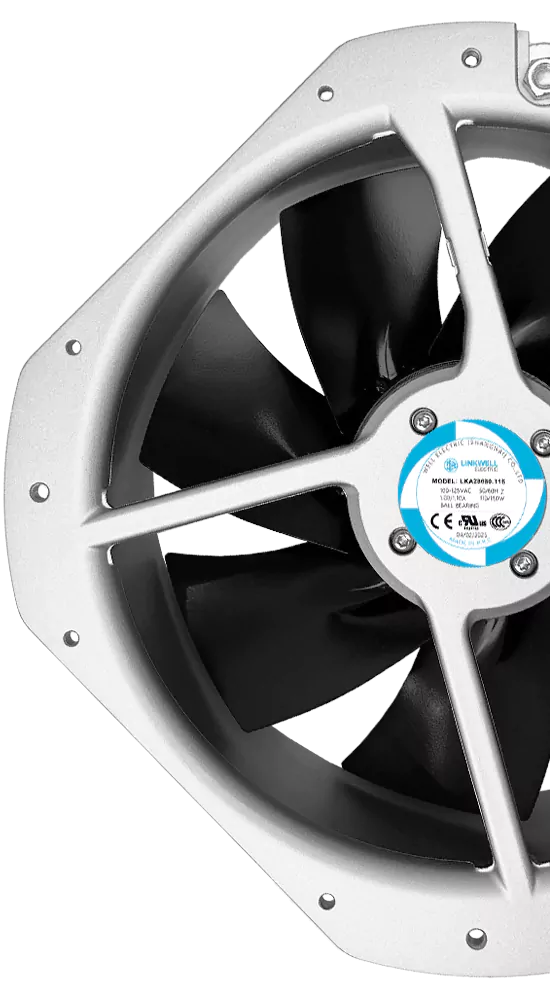
To choose a reliable ball bearing fan manufacturer, you should focus on proven quality, strict manufacturing standards, and strong after-sales support. Imagine a factory where critical equipment stops because a cheap fan failed early. When you pick a manufacturer based only on price, you risk low-grade bearings that wear out fast, cause vibration, or even overheat.
This can quickly lead to higher maintenance bills and unexpected downtime. If you want a fan that keeps running, it pays to invest in quality from the start. fanacdc stands out for innovation and a real commitment to customer satisfaction. Ready to learn How to Choose a Ball Bearing Fan Manufacturer: A Buyer’s Guide that puts reliability first?
Key Takeaways
- Choose a manufacturer with a strong track record. Reliable companies focus on quality and provide support, ensuring your cooling system runs smoothly.
- Avoid the 30% price trap. Investing in high-quality fans saves money in the long run by reducing maintenance and downtime.
- Look for certifications like UL, CE, and RoHS. These ensure the fans meet safety and quality standards, giving you peace of mind.
- Define your requirements before selecting a fan. Consider airflow, pressure needs, and the environment to find the best fit for your application.
- Ask about after-sales support. A good manufacturer will provide technical help and spare parts, ensuring your fan lasts longer.
How to Choose a Ball Bearing Fan Manufacturer
Why Manufacturer Choice Matters for Cooling Reliability
When you start looking for cooling solutions, you might wonder how to choose a ball bearing fan manufacturer: a buyer’s guide can make all the difference. Your choice of manufacturer shapes the efficiency, performance, and reliability of your entire system. If you pick a supplier with little experience, you risk early failures, noisy operation, or even total breakdowns. That’s why you need to define requirements before you even look at a catalog. Think about your application, the environment, and the expected lifespan. These requirements help you avoid surprises later.
Let’s break down what makes a manufacturer reliable. Companies with a strong track record, like fanacdc, focus on quality and provide technical support when you need it most. They understand how fan materials degrade over time and design products to handle tough conditions. You want a partner who can help you define requirements, not just sell you a product. High-quality, purpose-built fans can boost efficiency and reduce maintenance headaches. When you choose a manufacturer that values performance and enhanced efficiency, you get peace of mind.
Here’s a quick table to help you compare key reliability metrics:
| Metric | Description |
|---|---|
| L2 Life | The second percentile of fan life under a specific distribution, indicating reliability at lower failure rates. |
| L10 Life | The tenth percentile of fan life, providing insight into the longevity of the fan under normal conditions. |
| MTTF | Mean Time To Failure, often confused with MTBF, relevant for non-repairable systems. |
| MTBF | Mean Time Between Failures, applicable in repairable systems, indicating average time between failures. |
| Weibull Model | A statistical model that fits fan life data, useful for predicting failure rates and understanding wear-out phenomena. |
You should also watch for these warning signs:
- Change in coast-down time or start time to reach full speed.
- Coil insulation breakdown or workmanship problems.
- Bearing life limited by grease life, especially at high temperatures.
Manufacturers like fanacdc use advanced life estimation methods, such as the Weibull distribution, to predict how long their fans will last. This approach helps you plan for maintenance and avoid unexpected downtime. When you define requirements up front, you can match your needs to the right product and manufacturer.
The 30% Price Trap: Cheap Fans vs. Quality Fans
It’s tempting to chase the lowest price, but that can backfire fast. Many buyers fall into the 30% price trap—choosing a fan that costs less up front but fails much sooner. Cheap fans often use lower-grade bearings, poor insulation, or cut corners on testing. You might save money at first, but you’ll pay more in repairs, replacements, and lost productivity.
Let’s look at the numbers. The average lifespan of a sleeve bearing fan is about 30,000 hours. Hydraulic bearings last around 40,000 hours. A single ball bearing fan can reach 40,000 hours, but a high-quality two ball bearing fan, like those from fanacdc, can run for 50,000 to 100,000 hours. That’s a huge difference in efficiency and total cost of ownership.
| Bearing Type | Average Lifespan (hours) |
|---|---|
| Sleeve Bearing | 30,000 |
| Hydraulic Bearing | 40,000 |
| 1 Ball Bearing | 40,000 |
| 2 Ball Bearing | 50,000 – 100,000 |
When you define requirements for your project, think beyond the initial budget. Consider the long-term impact on energy efficiency, downtime, and maintenance. A cost-effective choice isn’t always the cheapest one. It’s the fan that meets your requirements, delivers consistent performance, and keeps your systems running smoothly.
Fanacdc stands out because they build fans for demanding environments. Their ball bearing fans last longer, handle higher temperatures, and keep working when others fail. You get enhanced efficiency, lower maintenance, and real value for your investment. When you follow how to choose a ball bearing fan manufacturer: a buyer’s guide, you protect your equipment and your bottom line.
Tip: Always ask your supplier about their testing standards, certifications, and after-sales support. A reliable manufacturer will have answers ready and will help you define requirements for your application.
If you want your cooling system to deliver top performance, don’t let the 30% price trap catch you. Use how to choose a ball bearing fan manufacturer: a buyer’s guide to make a smart, informed decision that pays off for years.
Ball Bearings and Lifespan: What Sets fanacdc Apart
Bearing Selection Guide: Types and Quality
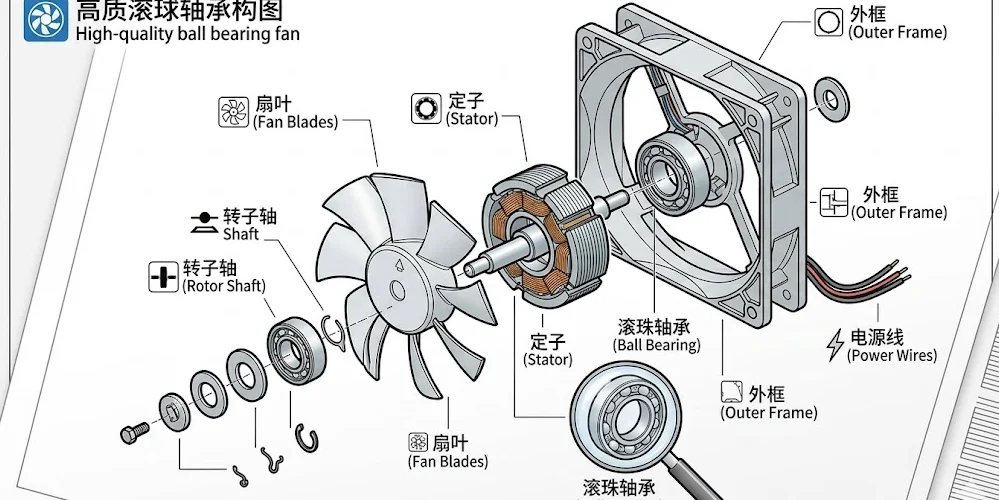
You want your cooling system to last. That starts with the right bearing selection guide. When you look at different types of bearings, you see big differences in how they work and how long they last. Ball bearings stand out because they use rolling contact bearings. These bearings reduce friction and handle heat better than other types. You can use them in any position, which gives you more options for your design.
Let’s compare the most common types of bearings you’ll find in industrial fans:
| Bearing Type | Advantages | Disadvantages |
|---|---|---|
| Ball Bearings | Less prone to wear, operate in any orientation, higher temperature tolerance | More complex, expensive, less rugged, can create more noise |
| Sleeve Bearings | Simpler design, generally quieter | More prone to wear, limited operational orientation, lower lifespan |
You need a bearing selection guide to help you choose. Ball bearings give you high precision and extended lifespan. Sleeve bearings cost less, but they wear out faster. If you want lasting performance, you should select bearing type based on your application’s needs.
When you choose fanacdc, you get fans built with high precision rolling contact bearings. These bearings meet strict quality standards. Here are some certifications you should look for in a bearing selection guide:
| Standard | Description |
|---|---|
| ISO 9001 | Specifies requirements for a quality management system (QMS) ensuring products meet customer requirements and regulatory standards. |
| CE | Certification for compliance with EU safety, health, and environmental protection standards. |
| UL | Certification for safety standards in North America. |
| RoHS | Restricts the use of specific hazardous materials in electrical and electronic equipment. |
You want your fan bearings to meet these standards for safety and reliability. With fanacdc, you get fans that pass all these tests.
Precision Bearings and Supply Chain
Precision matters when you want your fans to run smoothly for years. High precision ball bearings make a huge difference in performance and longevity. You need to know that every ball and raceway in your fan bearings meets strict tolerances. That’s where a good bearing selection guide helps you spot the best options.
Fanacdc uses high precision rolling contact bearings in every ball bearing fan. These bearings go through careful inspection and testing. The supply chain matters, too. You want a manufacturer who controls every step, from raw materials to finished product. That’s how you get consistent quality and high precision.
You might see terms like angular contact ball bearings in technical specs. These bearings handle both radial and axial loads, which means your fan can handle tough jobs without extra wear. Fanacdc uses angular contact ball bearings and other high precision designs to boost performance and reduce maintenance.
Here’s what you get with high precision bearings from fanacdc:
- Smooth operation with less vibration
- Longer lifespan for your fan
- Lower risk of early failure
- Consistent performance in demanding environments
You want your cooling system to deliver optimal performance. High precision rolling contact bearings make that possible.
Lubrication and Heat Resistance
Lubrication is the secret to long-lasting fan bearings. It reduces friction between the ball and the raceway. Less friction means less heat. Your fan runs cooler, and the bearings last longer. Good lubrication also protects against dust and moisture, which can cause early failure.
Fanacdc uses special lubricants designed for high precision rolling contact bearings. These lubricants keep working even when temperatures rise. You can trust your fan to run in hot or cold environments without losing performance. That’s why fanacdc fans work well in outdoor telecom cabinets, industrial machines, and other tough spots.
You don’t want to worry about bearing maintenance all the time. With the right lubrication, your ball bearings need less attention. You get more uptime and less hassle. That’s the value of choosing a fan with high precision bearings and the right lubricant.
Here’s a quick checklist for bearing maintenance:
- Check for noise or vibration changes
- Watch for rising temperatures
- Make sure the fan spins freely
If you follow these steps, your fan bearings will give you lasting performance and reliability.
Tip: Always ask your supplier about the types of bearings and lubrication used in their fans. High precision and the right lubricant mean longer life and less maintenance.
When you choose fanacdc, you get fans with high precision ball bearings, advanced lubrication, and certifications that prove their quality. You get peace of mind and a cooling system built for longevity.
Dynamic Balancing and Vibration Control
G2.5 Balancing Standard Explained
You want your cooling system to run smoothly. That starts with dynamic balancing. The G2.5 balancing standard is a global benchmark for industrial fans. It measures how much vibration a fan creates when it spins. If a fan meets the G2.5 standard, it means the vibration is very low. This helps your equipment last longer and keeps noise down. You get better performance and less wear on your bearings. When you choose a fan that meets this standard, you know you are getting top quality.
Micro-Vibration and Bearing Wear
Tiny vibrations can cause big problems over time. Even if you cannot see them, micro-vibrations can wear out your bearings fast. This leads to more noise, heat, and even early failure. You want to avoid that. Good balancing reduces these micro-vibrations. When your bearings stay smooth, your fan works better and lasts longer. You get steady performance and fewer breakdowns. That means less time fixing things and more time focusing on your work.
Tip: Listen for changes in sound or feel for extra shaking. These signs can warn you about bearing wear before it gets worse.
fanacdc Production Line Insights
You might wonder how fanacdc keeps vibration under control. They use smart practices on their production line to boost performance and protect your bearings:
- Choose the right fan for your job. Ball bearings and brushless motors last longer and handle tough conditions.
- Install fans the right way. Make sure you have good airflow, secure mounting, and the best placement.
- Keep up with maintenance. Clean the blades, check the bearings, and swap out filters. Use both preventive and predictive maintenance to catch problems early.
- Use smart technology. Sensors and monitoring tools help you spot issues before they cause trouble.
These steps help you get the most out of your cooling system. You enjoy longer life, better performance, and less downtime. When you pick a fan from fanacdc, you know you are getting a product built for reliability and quality.
Motor Design and Material Quality
Pure Copper vs. Copper-Clad Aluminum
When you look at the inside of a ball bearing fan, the motor windings play a huge role in how well it works. You might see motors made with pure copper or copper-clad aluminum (CCA). Each material affects the efficiency, durability, and cost of your fan. Here’s a quick comparison:
| Material | Conductivity | Lifespan | Resistance | Weight | Cost |
|---|---|---|---|---|---|
| Pure Copper | Best | Longest | Lowest | Heavier | Most Expensive |
| Copper-Clad Aluminum (CCA) | Moderate | Acceptable | Higher | Lighter | Cheaper |
Pure copper motors give you the best efficiency and the longest lifespan. They have the lowest resistance, which means less heat and better energy use. CCA motors cost less and weigh less, but they have higher resistance and a shorter lifespan. If you want top quality and long-term reliability, pure copper is the way to go.
- Pure copper motors are the most efficient and durable, offering the longest lifespan and lowest resistance.
- CCA motors provide a cost-effective alternative, being lighter and cheaper but with higher resistance and a shorter lifespan.
Temperature Rise and Longevity
Heat is the enemy of bearings and motors. When the temperature rises, the oil inside the bearings can evaporate faster. This leads to more friction and wear. For every 15°C increase in temperature, the lifespan of your ball bearing fan can drop by half. If you run a fan rated for 50,000 hours at 40°C in a 65°C environment, you might only get about 12,500 hours of use. High temperatures also break down the insulation in the motor windings and reduce the effectiveness of lubricants. To keep your bearings and fan running longer, always check the operating temperature and choose fans designed for your environment.
- Increased air temperature leads to a higher likelihood of losing service life in cooling fans due to accelerated oil volatilization.
- Higher ambient temperatures significantly impact the service life of cooling fans, as they accelerate lubricant degradation and other wear factors.
Custom Electrical Options
You can boost the performance and lifespan of your fan by choosing custom electrical options. Some advanced systems use a special magnetic structure that lets the rotor spin at any angle. This design reduces friction and removes the need for extra lubrication, making the fan quieter and helping the bearings last longer. Other options include enhanced bearing designs that improve how lubrication flows, cutting down on noise and friction. Both of these upgrades help your fan run more efficiently and last longer than traditional systems. When you pick the right custom features, you get a cooling solution that matches your needs and delivers reliable quality.
Tip: Always ask about custom electrical options when you select a fan. The right choice can make a big difference in how long your bearings last and how well your system performs.
Testing and Certification for Reliability
Wind Tunnel and P-Q Curve Testing
You want to know how your bearings will perform in real-world conditions. Wind tunnel testing gives you answers. Engineers measure air volume, static pressure, input power, and rotational speed. They use these numbers to create an efficiency curve. P-Q curve testing shows the relationship between airflow and pressure. You see the maximum airflow when there’s no pressure difference. When airflow drops to zero, you get the maximum air pressure. Adjusting the nozzle and auxiliary blower lets you record airflow and pressure differences. This process helps you understand how your bearings will handle different loads.
| Testing Type | Measurement Parameters |
|---|---|
| Wind Tunnel Testing | Air volume (CFM/CMM), static pressure (Pa/mmH2O), input power (W), rotational speed (RPM), efficiency curve |
| P-Q Curve Testing | Maximum airflow and air pressure under ideal conditions, relationship between airflow and pressure |
Aging and Load Tests
You want your bearings to last. Aging and load tests predict how they’ll perform over time. Technicians run the fan at different speeds and loads. They introduce faults to the inner and outer races of the bearings. You see how the bearings respond to stress. Healthy bearings show no faults at low speeds and loads. As the load increases, faults appear in the inner or outer race. This testing helps you spot weak points and improve reliability.
| Load (kg) | Speed (RPM) | Fault Class | Description |
|---|---|---|---|
| 0 | 200 | Healthy | No faults present |
| 0.2 | 300 | Inner Race 0.2 mm | Fault introduced on inner race |
| 0.5 | 400 | Outer Race 0.5 mm | Fault introduced on outer race |
| 0.75 | 600 | Inner Race 1.0 mm | Fault introduced on inner race |
Tip: Ask your supplier about their aging and load tests. You want proof that your bearings will stand up to real-world use.
IP56/IP68 Protection and Compliance
You need bearings that can handle dust and water. IP56 protection gives you limited dust ingress and shields against water splashes. IP68 protection offers complete dust protection and lets your bearings survive continuous immersion in water. You can use IP56 bearings outdoors or in industrial settings. IP68 bearings work best in harsh environments where dust and water are constant threats.
| Feature | IP56 Protection | IP68 Protection |
|---|---|---|
| Dust Ingress | Limited dust ingress | Complete dust protection |
| Water Ingress | Protection against water splashes | Continuous immersion in water |
| Application Suitability | Suitable for outdoor and industrial | Suitable for harsh environments |
You want to trust the quality of your bearings. Testing and certification show you that your fan will deliver reliable performance, even in tough conditions.
Factory Audit Checklist for Buyers
Key Questions for Supplier Evaluation
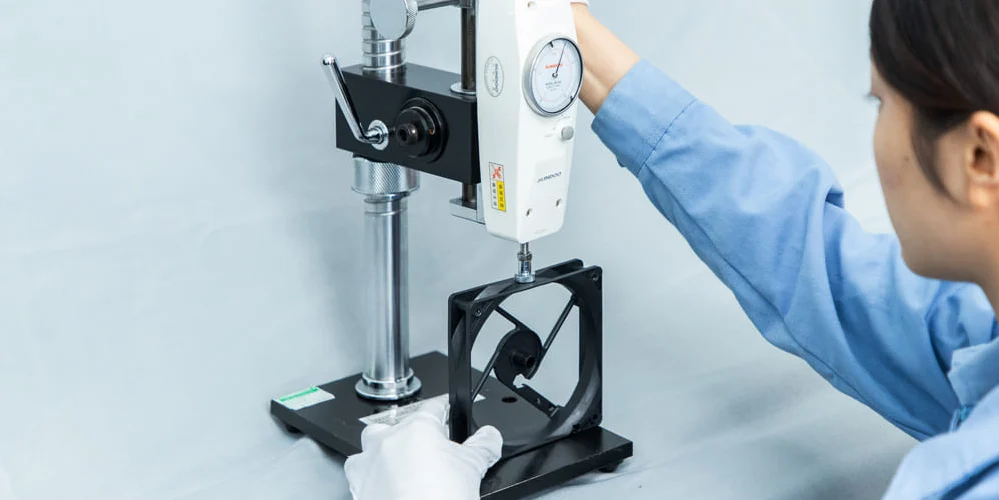
You want to make sure you pick the right supplier for your cooling needs. A factory audit helps you see if a manufacturer can deliver the bearings and fans you need. You do not have to be an expert to ask smart questions. Here is a checklist you can use during your visit or supplier call:
- How do you test your bearings for reliability?
Ask about their testing process. Reliable suppliers will show you their test reports and explain how they check for noise, vibration, and lifespan. - What certifications do your bearings and fans have?
Look for UL, CE, and RoHS marks. These show the supplier meets international safety and quality standards. - Can you show your production line for bearings?
A good supplier will let you see how they make and assemble bearings. You want to see clean workspaces and organized tools. - How do you handle defective bearings?
Ask how they find and fix problems. A strong supplier will have a clear process for quality control. - What is your after-sales support like?
You want help if something goes wrong. Ask if they offer technical support, spare parts, or quick replacements.
Tip: Bring this checklist with you. It helps you remember what to ask and keeps your focus on quality.
Here is a quick table to help you compare suppliers:
| Question | Supplier A | Supplier B | Supplier C |
|---|---|---|---|
| Bearings Testing Process | |||
| Certifications (UL, CE, RoHS) | |||
| Bearings Production Line Tour | |||
| Defective Bearings Handling | |||
| After-Sales Support |
You want to trust your supplier. When you ask these questions, you protect your investment and make sure your bearings and fan will last.
Long-Term Partners vs. Low-Cost Suppliers
Total Cost of Ownership
You might think saving money up front is smart, but the real cost of a cooling system shows up over time. When you choose a long-term partner instead of a low-cost supplier, you get more than just a product. You get peace of mind. Here’s a quick look at what you gain:
| Benefit | Description |
|---|---|
| Quality Assurance | Ensures products meet safety and durability standards. |
| Cost-Effectiveness | Reduces long-term maintenance and replacement costs. |
| Timely Delivery | Avoids project delays and enhances productivity. |
| Technical Support & Warranty | Provides assistance and guarantees for products. |
| Compliance with Regulations | Meets industry safety and operational guidelines. |
A reliable partner focuses on quality. They make sure every fan and its bearings meet strict standards. You spend less time fixing problems and more time getting work done. Over the years, you save money because you don’t have to replace bearings as often. You also avoid costly downtime. That’s why thinking about the total cost of ownership matters more than just the price tag.
Engineering Support and After-Sales Service
You want your bearings to last as long as possible. Good engineering support and after-sales service help you reach that goal. Fans often face tough conditions like vibrations, shocks, and power surges. These can wear out bearings quickly. When you have a strong support team, you get help to solve these problems fast.
Here’s what makes a difference:
- Regular lubrication and inspection of bearings keep your system running smoothly.
- Picking the right type of bearings for your setup boosts performance.
- Sticking to a routine maintenance schedule extends the life of your bearings and your fan.
Most fan failures happen because of bearing problems. In fact, bearings fail four times more often than motor insulation. When you work with a partner who offers real support, you get advice, spare parts, and quick fixes. You don’t have to worry about being left alone when something goes wrong. That’s the value of choosing a partner who stands by their products.
Tip: Ask your supplier about their after-sales service and how they help with bearing issues. A good answer means you’re in safe hands.
When you choose a ball bearing fan manufacturer, follow these steps for success:
- Define your airflow and pressure needs.
- Pick high-quality bearings for longer life.
- Check for certifications and strong support.
- Review material safety and electrical fit.
- Consider total cost, not just price.
Remember, reliable bearings mean fewer failures and better performance. Use your checklist and technical guide to compare suppliers. If you want a fan that lasts, explore fanacdc’s solutions for dependable cooling in any environment.
FAQ
What makes a ball bearing fan more reliable than other types?
You get better reliability because ball bearings reduce friction and handle heat well. This means your fan lasts longer and works in any position. You also see less noise and fewer breakdowns over time.
How do I know if a fan meets high quality standards?
Look for certifications like UL, CE, and RoHS. These show the fan passed strict tests. You can also ask for test reports or check if the company has a strong reputation for quality.
Can I use these fans in outdoor or harsh environments?
Yes, you can. Many fans come with IP56 or IP68 ratings. These ratings mean the fan can handle dust, water, and tough weather. Always check the specs before you install your fan outdoors.
How often should I check or replace bearings in my cooling fan?
You should check bearings every few months for noise or vibration. Most high-quality fans run for years without problems. If you hear odd sounds or see shaking, it might be time to replace the bearings.
What support can I expect after buying a fan from a trusted manufacturer?
You get technical help, spare parts, and fast answers to your questions. Good companies offer strong after-sales support. This helps you keep your fan running smoothly and avoid long downtimes.