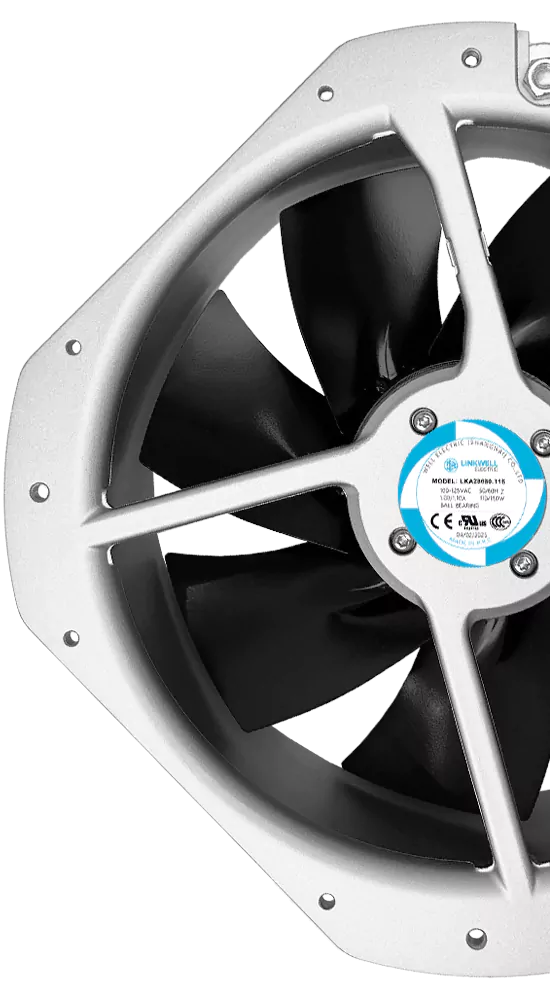
When you ask how to choose the right transformer cooling fan for your substation, you should focus on fan type, airflow, and durability to match your substation’s needs. Advanced cooling fans play a vital role in transformer reliability and grid stability. Studies show:
- High-quality cooling fans prevent overheating, a major cause of transformer failures.
- About 40% of transformer failures result from thermal stress, making effective cooling essential.
- Reliable cooling systems support the stability of the electrical grid.
You can trust fanacdc’s expertise and product innovations to help you make the best choice.
Key Takeaways
- Choose the right fan type based on your cooling needs. Understand the difference between main and auxiliary cooling applications to ensure effective transformer operation.
- Consider airflow and static pressure when selecting a fan. High airflow improves cooling, while adequate static pressure ensures air moves through filters and tight spaces.
- Match the fan voltage to your transformer’s power supply. Using the correct voltage prevents damage and ensures reliable fan operation.
- Select fans with appropriate IP ratings for environmental protection. Higher ratings like IP68 offer better resistance against dust and moisture in harsh conditions.
- Consult with experts for tailored solutions. Technical support can help you navigate specifications and ensure optimal performance for your substation.
Understanding Transformer Cooling Needs
Main vs Auxiliary Cooling Applications
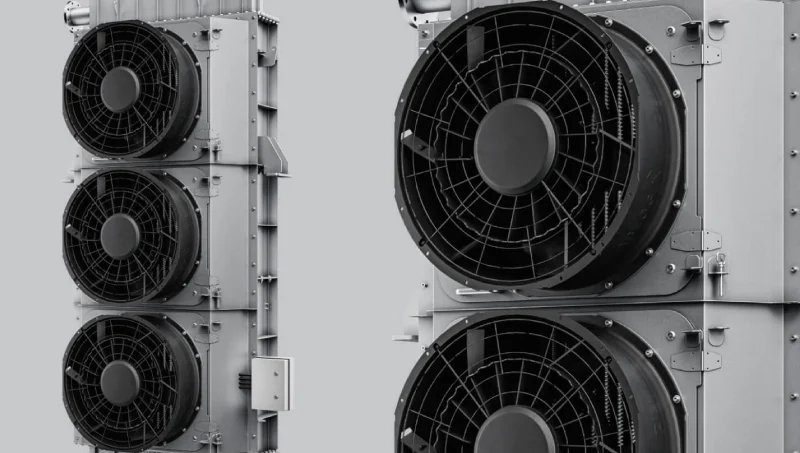
Proper cooling keeps your transformer running efficiently and extends its lifespan. When a transformer overheats, insulation breaks down faster, which can lead to early failure. You need to understand the difference between main and auxiliary cooling applications to make the right choice for your system.
Main cooling handles the regular heat produced during normal transformer operation. Auxiliary cooling supports the main system during high load or emergency situations. In many substations, you see both systems working together to prevent overheating, especially during peak demand.
Here is a table showing common transformer cooling classes and their features:
| Cooling Class | Description | Key Features |
|---|---|---|
| ONAN | Oil Natural, Air Natural | Uses natural convection, no fans, needs more space. |
| ONAF | Oil Natural, Air Forced | Adds fans for forced air, boosts cooling during high loads. |
| OFAF/ODAF | Oil Forced/Directed, Air Forced | Uses pumps and strong fans, best for high-power transformers. |
fanacdc transformer cooling fans play a key role in ONAF and OFAF/ODAF systems. These fans provide reliable airflow, helping your transformer stay within safe temperature limits. By using advanced fanacdc cooling fans, you reduce the risk of costly downtime and extend the life of your transformer.
Assessing Load, Environment, and Space
You must consider several factors when choosing a cooling solution for your transformer. Load profile is important. If your transformer faces steady loads, natural cooling may be enough. For variable or peaking loads, forced cooling with fans becomes essential.
Environmental conditions also affect cooling needs. High temperatures speed up insulation aging, while high humidity can cause corrosion and moisture problems. Excess moisture in transformer oil lowers its strength and increases the risk of failure. You should keep relative humidity below 95% and use dehumidifiers or proper ventilation in humid areas.
Other factors include:
- Environmental regulations, especially in protected zones.
- Maintenance needs for different cooling systems.
- Fire safety standards, which may require special fluids.
- Noise limits, especially near homes or sensitive sites.
Transformer rooms must allow enough airflow. Small transformers may use natural ventilation, but larger units need forced ventilation with fans. Openings should protect against weather and pests while keeping fire safety in mind.
By understanding these needs, you can select the right fanacdc cooling fan to match your transformer’s requirements and ensure reliable operation in your substation.
How to Choose the Right Transformer Cooling Fan for Your Substation
Key Selection Parameters
You need to understand several technical criteria when learning how to choose the right transformer cooling fan for your substation. These criteria help you match the fan to your transformer and ensure reliable cooling. Start by looking at airflow, static pressure, voltage, size, noise, IP rating, and materials.
- Airflow measures how much air the fan moves. You see this in cubic feet per minute (CFM). Higher airflow means better cooling for your transformer.
- Static pressure shows how well the fan pushes air through obstacles like filters or tight spaces. You need enough static pressure to overcome resistance in transformer cooling methods.
- Voltage matters because you must match the fan to your transformer’s power supply. Choose from AC, DC, or EC fans based on your system.
- Size affects how the fan fits in your transformer enclosure. Pick a fan that fits your space and provides enough cooling performance.
- Noise is important if your transformer sits near homes or offices. Select fans with low noise levels to avoid complaints.
- IP rating tells you how well the fan resists dust and moisture. Higher ratings like IP68 protect your fan in harsh environments.
- Materials must resist corrosion and vibration. This ensures your fan lasts longer and keeps your transformer safe.
fanacdc offers fans with advanced features. You find EC fans with energy-saving motors, IP68 protection, and customizable options. These fans meet strict certifications and provide reliable cooling for your transformer.
Airflow and Static Pressure
Airflow and static pressure are key factors in transformer cooling methods. You must balance both to get the best cooling performance. If you choose a fan with high airflow but low static pressure, it may not push air through filters or tight spaces. If you pick a fan with high static pressure but low airflow, your transformer may not cool enough.
You see the importance of proper ventilation in substations:
- Proper ventilation helps dissipate heat from transformers and equipment.
- Excessive ventilation can cause condensation, which harms transformer performance.
- Natural ventilation avoids sudden temperature changes.
- Forced ventilation fans must run continuously to keep temperatures stable.
fanacdc fans deliver high airflow and strong static pressure. You find axial fans for general cooling and centrifugal fans for tight spaces. EC fans adjust speed based on transformer load, improving efficiency and cooling performance.
Voltage, Size, and Installation
Voltage, size, and installation play a big role in how to choose the right transformer cooling fan for your substation. You must match the fan voltage to your transformer’s power supply. AC fans work with standard voltages like 110V or 220V. DC fans fit systems with 12V, 24V, or 48V. EC fans offer flexible voltage options and save energy.
Size matters because you need a fan that fits your transformer enclosure. Small fans suit compact transformers. Large fans cool bigger units. Installation method affects cooling efficiency and maintenance:
- Proper ventilation keeps your transformer cool.
- Excessive ventilation increases condensation risk.
- Natural ventilation works best for steady loads.
- Forced ventilation fans must run nonstop for stable cooling.
fanacdc fans come in many sizes and voltages. You can retrofit EC fans into existing cooling banks. This improves cooling performance and saves energy without major changes.
Noise and Environmental Protection
Noise and environmental protection are important when choosing transformer cooling methods. You want fans that run quietly, especially near homes or offices. Low-noise fans help you meet local regulations and keep your substation safe.
Environmental protection matters because transformers often operate in harsh conditions. IP ratings show how well fans resist dust and moisture. IP55 fans offer dust and water resistance. IP68 fans protect against flooding, heavy rain, and dust storms. Construction materials must resist corrosion and vibration.
fanacdc fans feature IP68 protection, corrosion-resistant materials, and vibration-resistant designs. EC fans use advanced motors that save energy and adjust speed in real time. You see up to 30% energy savings compared to traditional AC fans. EC fans are 40-60% more energy-efficient and help you save 30-50% on electricity costs each year.
You must match fan specs to your transformer and substation needs. This ensures reliable cooling, long fan life, and stable transformer performance. When you follow these steps, you learn how to choose the right transformer cooling fan for your substation and improve efficiency.
Transformer Cooling Fan Types and Applications
Axial, Centrifugal, and EC Fans
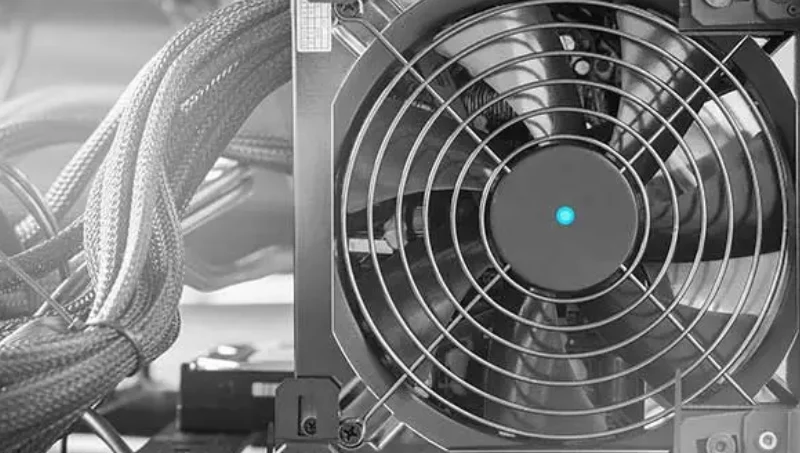
You have several types of fan to choose from when selecting transformer cooling solutions. Each type works best in different situations. Here is a quick comparison:
- Axial EC fans move large volumes of air with high efficiency. You often use them for continuous operation in large substations. These fans are cost-effective and help keep your transformer cool with minimal energy use.
- Centrifugal EC fans provide higher pressure and quieter operation. You find them useful in places where air must move through filters or ducts. These fans handle dusty or harsh environments well, making them ideal for industrial transformer cooling.
- Mixed flow EC fans combine features of both axial and centrifugal designs. They offer a balance of high airflow and moderate pressure. You can use them in substations with limited space or unique layouts.
Matching Fan Types to Substation Needs
You must match the right fan to your transformer and cooling methods. High-capacity substations often use ONAF and OFAF cooling methods. These methods rely on forced air to remove heat from the transformer. Axial fans work well for ONAF cooling methods because they move air directly across the transformer surface. Centrifugal fans fit OFAF cooling methods, where you need to push air through complex paths or filters.
EC fans stand out for their energy efficiency. They use advanced motors and electronic controls to save power. The table below shows some benefits of EC fans over traditional AC fans:
| Benefit | Description |
|---|---|
| Energy Savings | EC motors can reduce power consumption by up to 50% compared to traditional motors. |
| Enhanced Performance | Efficient motors and controls maximize energy conversion. |
| Reduced Maintenance Requirements | Fewer mechanical parts mean less maintenance. |
| Extended Component Life | Lower heat output extends the life of your cooling system. |
Typical Use Cases for fanacdc Fans
fanacdc offers a wide range of transformer cooling fans for different cooling methods. You can find fans for new installations or retrofit projects. The table below highlights how fanacdc addresses unique substation challenges:
| Feature | Description |
|---|---|
| Tailored Solutions | Custom designs for specific airflow and static pressure needs. |
| Flexibility | Adaptable to various transformer configurations and environments. |
| Unique Requirements | Options for high heat, limited space, or dusty surroundings. |
| Flexible Configurations | Suitable for both new and retrofit projects. |
You can select axial fans for large transformers needing strong airflow. Centrifugal fans work best in substations with tight spaces or high dust levels. EC fans help you save energy and reduce maintenance, making them ideal for modern substations using advanced cooling methods.
Common Mistakes and How to Avoid Them
Sizing and Specification Errors
You can avoid many problems by choosing the right size and specifications for your cooling fan. Many people make the mistake of picking a fan that is too large or too small. Oversizing a fan wastes energy and increases noise. Undersizing leads to poor cooling and higher temperatures. Some users ignore static pressure, which is the fan’s ability to push air through filters or tight spaces. If you do not match the fan’s static pressure to your system, you may not get enough airflow.
Another common error is selecting the wrong voltage. Always check your power supply before choosing a fan. Using the wrong voltage can damage the fan or cause it to stop working. You should also pay attention to the installation space. A fan that does not fit properly will not cool your transformer effectively.
Tip: Use fanacdc’s technical support to help you calculate the correct airflow, static pressure, and voltage for your application. Their experts can guide you through the selection process and recommend the best cooling solution.
Ignoring Environmental and Control Factors
Environmental and control factors play a big role in cooling system performance. Many users overlook these details, which can lead to failures. High humidity and extreme temperatures can speed up insulation breakdown. Dust and airborne pollution can clog fans and reduce airflow. Wildlife and insects may interfere with fan operation, causing tracking or flashover.
- Ambient temperature extremes and humidity can damage insulation.
- Contaminants and wildlife can cause electrical problems and worsen cooling issues.
- Dust buildup can slow down or stop fans, leading to overheating.
You should always consider the environment where your cooling fan will operate. Choose fans with the right IP rating for dust and moisture protection. Regular maintenance helps prevent dust accumulation and keeps your cooling system running smoothly.
Note: fanacdc offers fans with IP68 protection and corrosion-resistant materials. Their team can help you select fans that match your site’s environmental challenges and control needs.
Choosing a Reliable Supplier
What Sets fanacdc Apart
You need a supplier who can deliver more than just products. The right partner brings advanced technology, proven reliability, and strong support. When you choose a supplier for your transformer cooling fans, look for these key certifications and standards:
| Certification/Standard | Purpose | Region/Market |
|---|---|---|
| IEC 60076 | Design & performance benchmark | Worldwide |
| IEEE C57 | US-specific operation | Americas |
| EcoDesign Directive | Efficiency & loss reduction | EU |
| ISO 9001 | Quality management | Global |
| CE Marking | Market compliance | Europe |
| UL/CSA | Safety approval | US/Canada |
| RoHS / REACH | Environmental protection | Global |
| PCB-Free | Health & environment safety | Global |
You want a supplier who meets these standards. fanacdc stands out with strong R&D, advanced testing, and a focus on innovation. The company uses computational fluid dynamics and physical testing to improve fan design. You benefit from dedicated technical support and a team that helps you select the right product for your system.
| Differentiator | Description |
|---|---|
| R&D | Uses advanced CFD and testing to enhance fan performance. |
| Technical Support | Provides expert guidance for product selection and integration. |
| Customization Services | Delivers tailored solutions for unique project needs. |
Evaluating Quality, Support, and Customization
You should always check the supplier’s quality management and after-sales support. Reliable suppliers offer warranties, technical help, and flexible service options. fanacdc provides comprehensive warranty coverage, expert support, and options for extended service.
| Feature | Details |
|---|---|
| Warranty Coverage | Covers materials and workmanship. |
| Support Services | Dedicated team for guidance and post-installation help. |
| Extended Warranty | Options for auxiliary equipment and remote monitoring. |
| Manufacturer Support | Includes technical assessments and free parts for defects. |
| Standard Warranty | 2 years, extendable up to 5 years. |
| Coverage | Support for defects and user-caused issues. |
You gain peace of mind when you choose a supplier with strong certifications, advanced R&D, and reliable support. fanacdc delivers all these advantages, making it a trusted choice for your next transformer cooling project.
You can select the right transformer cooling fan by following a clear process. Start by matching airflow and static pressure to your transformer’s needs. Choose advanced fans that prevent overheating, improve efficiency, and reduce wear. Always check for energy efficiency, compliance with standards, and noise levels. Use a checklist for your final decision. Consult with experts to address unique substation requirements and ensure reliable, long-term performance.
FAQ
Can you retrofit EC fans into existing transformer cooling banks?
Yes, you can retrofit EC fans into most AC fan frames. EC fans offer energy savings and improved speed control. You do not need major modifications.
What IP rating should you choose for outdoor substations?
| Environment | Recommended IP Rating |
|---|---|
| Standard Outdoor | IP55 |
| Harsh Conditions | IP68 |
Choose IP68 for areas with flooding, heavy rain, or dust storms.
How do you ensure reliable 24/7 fan operation?
You should select fans with dual ball bearings and high-temperature insulation. fanacdc fans undergo burn-in testing and have an MTBF over 50,000 hours at 40°C ambient.
Do you offer vibration-resistant fans for mobile transformers?
Yes, you can request vibration-resistant models. These fans feature enhanced mounting and shock-resistant designs. They suit railway and mobile transformer applications.
Can you customize cooling fans for unique substation needs?
You can request custom solutions from fanacdc. Options include temperature sensors, PWM speed control, and tropicalized coatings for coastal or offshore environments.