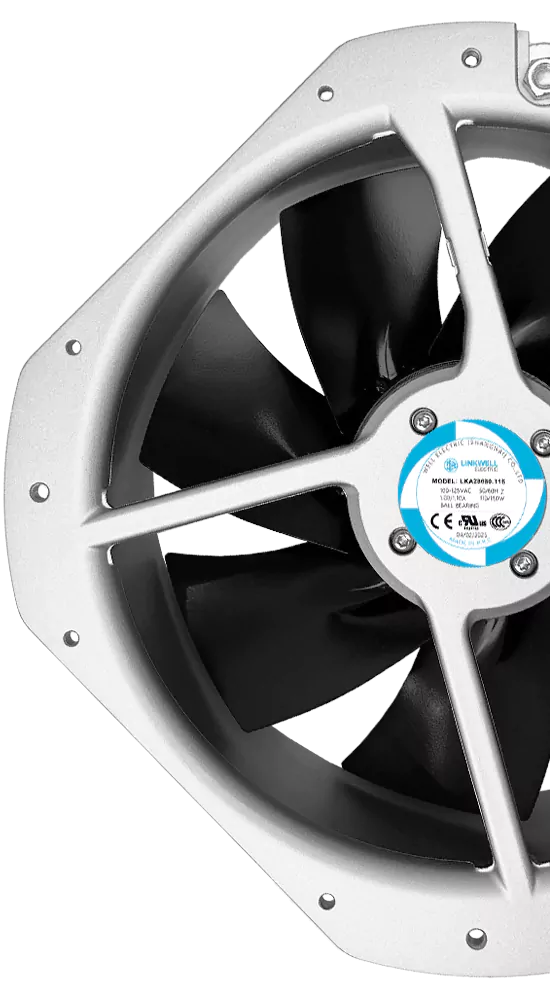
If you want your industrial system to run efficiently and last longer, you need to know how to select a centrifugal fan that matches your exact needs. Picking the right fan boosts airflow, keeps noise down, and saves energy. This guide is designed for you if you use small to medium AC/DC centrifugal fans (133–355 mm, 115–240V). Many users struggle with airflow gaps, loud operation, and poor fan selection. Here’s a quick look at the top pain points industrial users face:
| Pain Point Type | Description |
|---|---|
| Operational | High re-spin risk when fans are selected late in the design cycle. |
| Cost | Rising energy costs and the need to reduce TCO across device fleets. |
| Regulatory | Increasing expectations around automotive AEC-Q qualifications and ingress ratings. |
| Staffing | Shortage of experienced thermal engineers who can pair CFD with control strategy. |
| Technology | Integrating telemetry with existing BMS or control networks without adding EMI or reliability risk. |
With over 20 years of expertise, fanacdc helps you avoid these issues and choose the perfect solution.
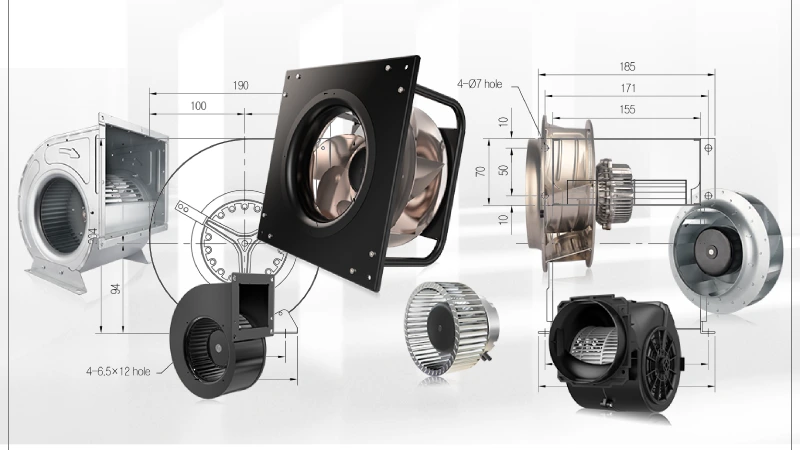
Key Takeaways
- Define your airflow needs in CFM to ensure your fan moves the right amount of air for your system.
- Check the static pressure requirements to avoid airflow issues and ensure your fan can handle system resistance.
- Choose the right fan size and voltage to fit your installation space and power supply, preventing installation headaches.
- Consider noise levels and efficiency to maintain a comfortable work environment and save on energy costs.
- Select a reputable supplier like fanacdc for customization options and fast support to meet your specific needs.
Quick Selection Guide
How to Select a Centrifugal Fan Fast
You want to make the right choice quickly. Here’s a simple checklist to help you figure out how to select a centrifugal fan for your industrial setup:
- Define Your Airflow Needs
Start by knowing how much air you need to move. This is usually measured in cubic feet per minute (CFM). If you’re not sure, check your equipment specs or ask your supplier. - Check Static Pressure Requirements
Look at the resistance in your system. Ducts, filters, and bends all add pressure. You need a fan that can handle this. Write down the static pressure your system needs. - Match Fan Size to Your Space
Measure the space where you’ll install the fan. If you have limited room, look for compact models in the 133–355 mm range. - Pick the Right Voltage
Make sure your power supply matches the fan’s voltage. Most small to medium centrifugal fans run on 115–240V. - Consider Noise and Efficiency
If you need quiet operation or want to save on energy, ask about low-noise and high-efficiency models. - Check Certifications and Durability
For peace of mind, choose fans with certifications like CE, UL, or RoHS. This means they meet safety and quality standards.
If you need help, fanacdc offers fast technical support and a wide range of options. Their team can guide you through how to select a centrifugal fan that fits your exact needs.
Here’s a quick table to help you focus on the top three criteria for rapid selection:
| Criteria | Description |
|---|---|
| Airflow Requirements | The volume of air the fan can move, crucial for dust and fume removal. |
| Pressure Demands | The resistance the fan must overcome, essential for ducts and filters. |
| Fan Size & Voltage | Ensures the fan fits your space and matches your power supply. |
When you choose fanacdc, you get more than just a fan. You get strong R&D, fast support, and high customization. Here’s how fanacdc stacks up:
| Feature | fanacdc Brand | Competitors |
|---|---|---|
| Selection of Fans | Wide | Limited |
| R&D Investment | Strong | Varies |
| Customization Options | High | Moderate |
| Support Speed | Fast | Slower |
| Energy Efficiency | High | Varies |
If you want to know how to select a centrifugal fan without stress, start with these steps. You’ll avoid common mistakes and get a solution that works.
Choosing Between Centrifugal and Axial Fans
Not sure if you need a centrifugal or an axial fan? Here’s a quick way to decide:
- Choose a centrifugal fan if:
- You need to move air through ducts, filters, or systems with high resistance.
- Your application needs high static pressure.
- You want quieter operation in high-pressure environments.
- You need a reliable fan for demanding industrial settings.
- Choose an axial fan if:
- You need to move a lot of air in open spaces with little resistance.
- Your system has low static pressure.
- You want a compact, easy-to-install fan for simple ventilation.
Check out this comparison to help you decide:
| Factor | Axial Fan | Centrifugal Fan |
|---|---|---|
| Airflow Performance | High volume, low pressure | Lower volume, high pressure |
| Static Pressure | Low | High |
| Energy Efficiency | Best at low pressure | Best at high pressure |
| Noise Levels | Louder at high speeds | Quieter in high-pressure setups |
| Installation | Simple, compact | Needs more space, careful setup |
| Maintenance | Simple construction | More complex, very reliable |
If you still wonder how to select a centrifugal fan for your system, remember:
- Go with centrifugal for high pressure, ducts, or tough environments.
- Pick axial for open spaces and simple airflow.
Fanacdc’s experts can help you compare options and find the best fit. Their wide product range and fast support make it easy to get the right solution the first time.
Airflow Needs & Static Pressure
Calculating Airflow Needs
Getting your airflow needs right is the first step to choosing the best centrifugal fan for your system. If you want your equipment to run smoothly, you need to know exactly how much air you want to move. Most industrial users measure this in cubic feet per minute (CFM). You can figure out your airflow requirements in a few simple ways.
One common method is to measure the size of your space. Multiply the length, width, and height to get the room volume in cubic feet. Next, decide how many times you want the air to change each hour (ACH). Multiply the room volume by the ACH, then divide by 60. This gives you the CFM you need for your application.
For example, if your room is 1,000 cubic feet and you want 6 air changes per hour, your calculation looks like this:
CFM = (1,000 x 6) / 60 = 100 CFM
You can also use the formula Q = V x A, where Q is the airflow, V is the average air velocity, and A is the cross-sectional area of your duct. This method works well if you already know the duct size and airspeed.
If you need more precision, especially in systems with filters or pressure drops, you can use the formula Q = C × A × √(2 × ΔP / ρ). This formula takes into account the pressure difference and air density, giving you a more accurate airflow value.
Fanacdc offers a wide range of centrifugal fans that cover airflow outputs from 159 to 1,735 CFM. These fans are built to handle the airflow needs of small and medium industrial systems, so you can always find a model that matches your requirements.
If you’re not sure which calculation fits your setup, reach out to fanacdc’s technical team. They can help you size your centrifugal fan for the best performance.
Understanding Static Pressure
Static pressure is the resistance your fan must overcome to move air through your system. Think of it as the “push” your fan needs to get air past filters, ducts, bends, and other obstacles. If you have a lot of filters or long duct runs, your static pressure goes up. This is where centrifugal fans shine.
Centrifugal fans are designed to generate high static pressure, making them perfect for ducted and filtered systems. They push air at a right angle to the intake, which helps them handle tough resistance. In industrial settings, static pressure can range from 500 to over 2,000 Pascals (Pa), or up to 10 inches of water gauge. If your system has high resistance, you need a fan that can keep up without losing airflow.
When you pick a centrifugal fan, always check the static pressure rating. If your fan can’t handle the pressure, you’ll see reduced airflow, higher energy use, and even possible fan failure. Fanacdc’s centrifugal fans are built for these challenges. They use advanced impeller designs and strong motors to deliver reliable airflow, even in high-pressure environments.
Here’s a quick table to help you match your system’s needs:
| System Type | Typical Static Pressure | Recommended Fan Type |
|---|---|---|
| Open space, no ducts | Low (< 250 Pa) | Axial Fan |
| Short ducts, light filters | Medium (250–500 Pa) | Centrifugal Fan (small) |
| Long ducts, heavy filters | High (500–2000+ Pa) | Centrifugal Fan (medium) |
If you work with HVAC units, dust collection, or any system with lots of resistance, a centrifugal fan is your best bet. Fanacdc’s product range covers all these needs, so you can always find a fan that matches your airflow and static pressure requirements.
Note: Choosing the right centrifugal fan for your airflow needs and static pressure will keep your system efficient, quiet, and reliable.
Fan Types & Applications
When you look at different types of centrifugal fans, you’ll see that each one has its own strengths. Picking the right type helps you get the best airflow and efficiency for your industrial setup. Let’s break down the three main types and where they work best.
Backward Curved Centrifugal Fan
You’ll find backward curved fans in many modern industrial systems. These fans have blades that curve away from the direction of rotation. This design gives you high efficiency and low noise. Backward curved fans handle higher static pressure, so they work well in HVAC systems, clean rooms, and air filtration units. They also resist clogging from dust and debris, which means less maintenance for you.
Here’s a quick look at the certifications you get with a fanacdc backward curved centrifugal fan:
| Certification Type | Description |
|---|---|
| ISO9001 | Quality Management System |
| IS014001 | Environmental Management System |
| UL Certification | Safety for AC and DC fans |
| EMC Certificate | Electromagnetic Compatibility |
| LVD Certificate | Low Voltage Directive |
| CE Certificate | Compliance for DC fans |
| RoHS | Restriction of Hazardous Substances |
Forward Curved Centrifugal Fan
Forward curved fans use blades that curve in the direction of rotation. These fans move a lot of air at low to medium pressure. You’ll see them in applications like commercial refrigeration, small air handlers, and ventilation units. If you need a compact fan that delivers steady airflow in tight spaces, this type is a solid choice. Fanacdc offers forward curved models that fit perfectly in small and medium systems, giving you reliable performance and quiet operation.
Radial Centrifugal Fan
Radial fans stand out when you need to move dirty or hot air. They use straight blades and can handle tough environments. You’ll find them in places like cement plants, steel mills, power stations, and chemical factories. These fans work well for de-dusting, waste gas removal, and cooling ovens. Fanacdc radial centrifugal fans feature heavy-duty construction, sealed bearings, and corrosion-resistant materials. You can count on them for long-lasting performance, even with harsh air or high temperatures.
- Radial fans are great for:
- Cement plants (raw material prep, grinding, waste gas)
- Steel plants (de-dusting, sintering)
- Power stations (boiler operations)
- Chemical industry (hazardous gas exhaust)
- Textile and glass manufacturing (drying, cooling ovens)
If you want a custom solution, fanacdc offers rapid prototyping and engineering support to match your exact needs.
Want to see more options? Check out the fanacdc centrifugal fan product page for details on all models.
Size, Installation & Power
Compact Design for Limited Space
You might find that installing a centrifugal fan in your facility isn’t always easy, especially if you work in an older building or need to retrofit existing systems. The physical size and ductwork requirements of centrifugal fans can create real challenges when space is tight. Many industrial users run into this problem, so you’re not alone.
When you look at different fan types, you’ll notice that radial fans usually need more space because of their larger housing and impeller. Axial fans fit more easily into tight spots like server racks. Here’s a quick comparison to help you see the difference:
| Feature | Radial Fans | Axial Fans |
|---|---|---|
| Space Requirement | Require more space due to larger housing and impeller | Fit easily into tight spaces like server racks |
| Installation in Limited Areas | Can be tricky in small areas; careful planning needed | Ideal for wide-open rooms or large enclosures |
| Airflow through Ducts | Better suited for pushing air through narrow ducts | Less effective in confined duct systems |
If you need a compact solution, fanacdc offers centrifugal fans in the 133–355 mm range. These models are perfect for small and medium industrial systems where every inch counts. You get high airflow and static pressure without sacrificing valuable space.
Always check the fan specifications before you buy. This helps you avoid installation headaches and ensures the fan fits your setup.
Voltage and Power Options
Choosing the right voltage and power type matters for both performance and safety. Fanacdc’s AC fans work with standard global voltages, including 110/120V and 220/230/240V AC. This means you can install them almost anywhere, whether your facility uses North American or international power standards. Dual-voltage designs give you even more flexibility.
For industrial applications, AC centrifugal fans are a solid choice because they handle heavy-duty cycles and offer long service life. If you need energy savings or precise speed control, consider DC or EC fans. DC fans work well in precision equipment, while EC fans deliver high efficiency and lower energy costs.
Fanacdc uses high-quality components in every model. This ensures stable operation and reliability, even if your voltage fluctuates. You can trust these fans to keep your system running smoothly, no matter the environment.
Efficiency, Noise & Special Needs
Energy Efficiency and Noise Levels
You want your system to run at peak efficiency and keep energy costs low. Centrifugal fans can help you reach your efficiency goals, especially in HVAC energy efficiency projects. Top-tier centrifugal blowers often hit efficiency ratings over 80%, and some models even reach 90%. This means you get more airflow for less power. The average specific power consumption for these fans is about 0.60 kW/m³/h, which is better than the industry average of 0.75 kW/m³/h.
Noise matters, too. Most centrifugal fans run between 50 and 60 decibels. That’s about as loud as a normal conversation. Sometimes, turbulence inside the housing can make them noisier. If you work in a noise-sensitive area, you can pick a lower-speed model or add soundproofing. This helps you keep indoor air quality high and maintain a comfortable workspace.
You should always check the efficiency and noise specs before you buy. This helps you balance airflow, air quality, and comfort in your facility.
High Temperature & Custom Requirements
Industrial environments often have special needs. You might need a centrifugal fan that handles high temperatures, resists corrosion, or stands up to abrasive dust. Stainless steel fans work well in places with moisture or chemicals. The chromium in stainless steel protects against rust and keeps your air quality safe. Cast iron fans are tough and resist wear, making them perfect for mining or power plants.
Here are some common special requirements:
- High temperature exposure, which may need insulation for safety and noise control.
- Corrosion resistance for chemical, food, or pharmaceutical applications.
- Extra-thick materials and wear protection for abrasive flows.
- Explosion-proof designs for hazardous locations.
Fanacdc offers full customization to match your unique needs. You can get custom airflow performance, housing shapes, and motor setups. Rapid prototyping lets you test designs fast. You also get engineering support from start to finish, so your centrifugal fan fits your system perfectly.
| Customization Aspect | Description |
|---|---|
| Airflow Performance | Solutions tailored to your airflow and air quality needs. |
| Housing Shape | Designs that fit your installation space and application. |
| Motor Configuration | Motors set up for your exact efficiency and performance targets. |
| Rapid Prototyping | Fast samples for testing and quick adjustments. |
| Engineering Support | Help from concept to production for precise compatibility. |
If you have a tough environment or unique airflow needs, ask fanacdc about custom centrifugal fans. Their team will help you get the right solution for your air quality and efficiency goals.
Common Selection Mistakes
Choosing the right centrifugal fan can feel tricky, but you can avoid most headaches by watching out for a few common mistakes. Let’s break down what to look for so you don’t get stuck with the wrong fan.
Overlooking Pressure
Many people focus only on airflow and forget about static pressure. If you skip this step, your fan might not push air through ducts, filters, or bends. This can lead to overheating, poor air quality, or even system failure. Always check the pressure your system needs, not just the airflow. Static pressure is a key part of fan selection criteria.
Fanacdc’s team helps you measure and match the right pressure for your setup. Their experts make sure your fan keeps air moving, even in tough conditions.
Ignoring Space Constraints
You might find the perfect fan on paper, but if it doesn’t fit your space, it won’t work. Ignoring space constraints is a common mistake. Some fans need more room for installation or maintenance. If you don’t measure first, you could face costly changes later.
- Always check the size of your installation area.
- Think about how you’ll access the fan for cleaning or repairs.
- Compact models from fanacdc fit tight spots and make installation easier.
Wrong Fan Type Choice
Picking the wrong fan type can cause big problems. For example, using a forward-curved fan for kitchen grease exhaust can lead to fire hazards and early failure. Each fan type works best in certain conditions. If you choose the wrong one, you might see vibration, noise, or even a shorter fan life.
Here’s a quick table to help you avoid these mistakes:
| Factor | Importance |
|---|---|
| Static Pressure | Keeps airflow strong through ducts and filters. |
| Airflow Path Design | Prevents hot spots and keeps cooling even. |
| Environmental Factors | Protects against temperature, humidity, and dust issues. |
Fanacdc offers technical support and custom solutions. Their team helps you pick the right fan type, size, and features for your exact needs.
By watching out for these mistakes, you’ll get a centrifugal fan that works well and lasts longer.
Choosing a Supplier
Customization and Support
You want a supplier who listens to your needs and offers more than just a catalog. Customization matters, especially if your ventilation system has unique requirements or space constraints. Look for a partner who can adjust fan size, airflow, and motor options to fit your setup. Testing and technical support are also important. You need a team that helps you solve problems fast and keeps your downtime low.
Fanacdc stands out here. With over 20 years of experience, they offer OEM, ODM, and OBM services. That means you get a ventilation solution built for your exact application. Their engineers help you design, test, and install the right fan. You can ask for rapid prototyping or special features, and they will deliver. If you run into issues, their support team responds quickly. This saves you time and reduces costs.
Here’s what you should expect from a reliable supplier:
| Criteria | Description |
|---|---|
| Material Quality | High-grade materials ensure durability and performance under operational stresses. |
| Balancing and Vibration Control | Precision balancing reduces wear and extends the lifespan of the fan. |
| Bearing Type and Lubrication | Sealed or re-lubricatable bearings enhance reliability and reduce maintenance needs. |
| Aerodynamic Design and Efficiency | Efficient designs improve airflow and reduce energy consumption. |
| Corrosion and Erosion Resistance | Materials must withstand environmental challenges to maintain functionality over time. |
| Environmental and Operational Conditions | Fans should be compatible with specific operational environments to ensure longevity. |
| Maintenance Practices | Regular maintenance and inspections are crucial for long-term reliability. |
| Overall Durability and Construction | Robust construction methods contribute to the fan’s ability to withstand operational demands. |
Quality and Delivery
You want your fans to arrive on time and work right out of the box. Delays or poor quality can lead to extra costs and lost productivity. Always check for certifications that prove the supplier meets international standards. These show the company cares about safety, performance, and the environment.
Fanacdc delivers on all fronts. Their centrifugal fans carry ISO9001, CE, RoHS, UL, and TÜV certifications. This means you get products that meet strict quality and safety rules. Their lean production and strong supply chain help you avoid delays. You can count on fast delivery, even for custom orders.
Here’s a quick look at the certifications and services you should look for:
| Certification/Service | Description |
|---|---|
| ISO9001 Certified | Quality management standard |
| RoHS Compliant | Restriction of hazardous substances |
| CE Certified | Conformity with health, safety, and environmental protection standards |
| ISO14001 Certified | Environmental management standard |
| UL Certified | Safety certification for products |
| TÜV Certified | Technical inspection and certification services |
| OEM/ODM/OBM Services | Customized solutions for diverse applications with high-performance industrial DC fans. |
When you choose a supplier like fanacdc, you get more than just a fan. You get a partner who helps you control costs, improve quality, and keep your ventilation system running smoothly. That’s how you build a reliable operation.
You can choose the right centrifugal fan by following these steps: define your airflow needs, check static pressure, match fan size, and select the best voltage. When you pick the right fan, you get lower energy bills, longer lifespan, and safer operation. Here’s a quick look at the benefits:
| Selection Factor | Key Benefits |
|---|---|
| Efficiency | Lower energy bills, less emissions |
| Maintenance | Fewer repairs, longer lifespan |
| Compliance | Safer, avoids penalties |
Want expert advice or a custom solution? Reach out to fanacdc or visit their website for support.
FAQ
What is a centrifugal fan, and how does it work?
A centrifugal fan moves air by spinning an impeller. The air enters the center and exits at a 90-degree angle. You get strong airflow and high pressure, perfect for ducts and filters.
How do I know which size centrifugal fan I need?
Check your system’s airflow needs in CFM and measure your available space. Pick a fan size that fits both. If you’re unsure, ask fanacdc’s team for help.
Can I use a centrifugal fan for high-temperature or harsh environments?
Yes! You can choose models with high-temperature resistance or corrosion-proof materials. Fanacdc offers custom solutions for tough conditions. Just tell them your requirements.
How do I reduce noise from my centrifugal fan?
Pick a low-noise model or run your fan at a lower speed. You can also add soundproofing around the fan. Fanacdc’s experts can suggest the best options for quiet operation.