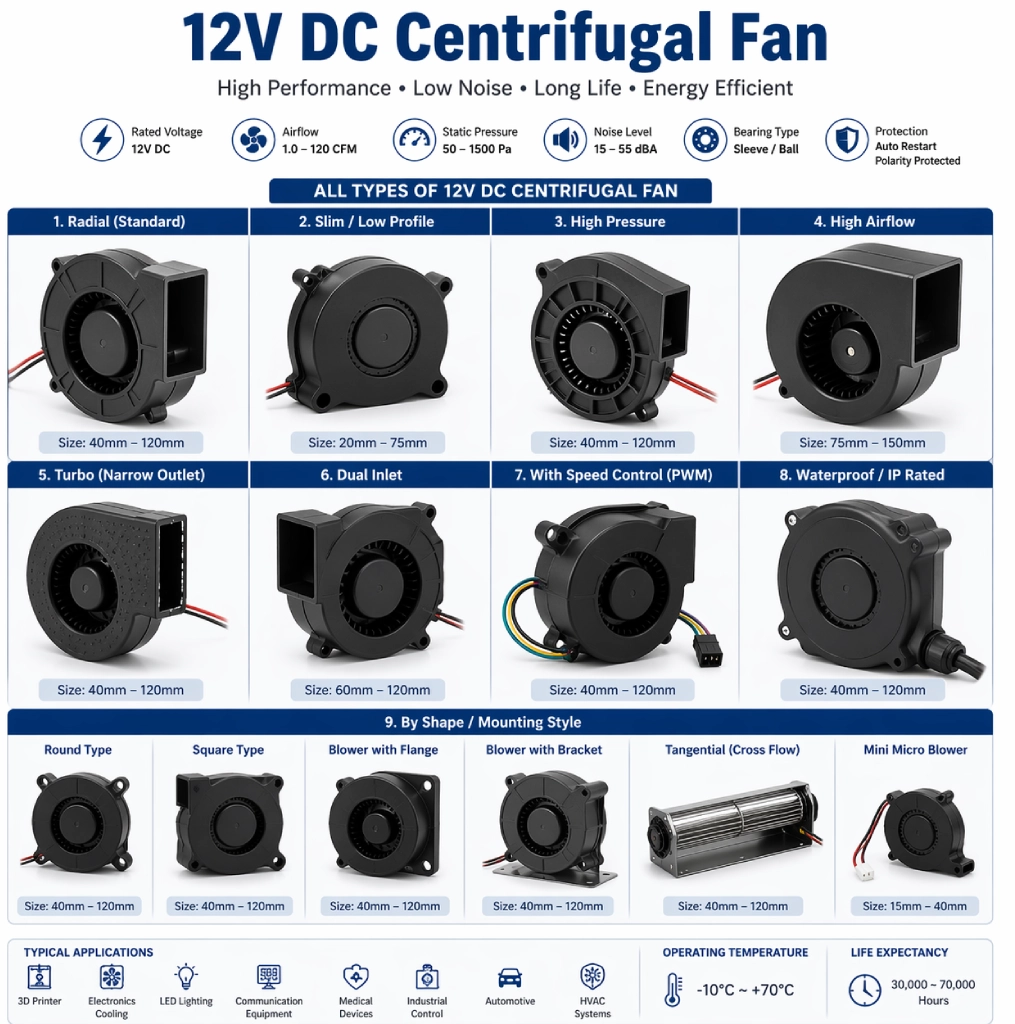
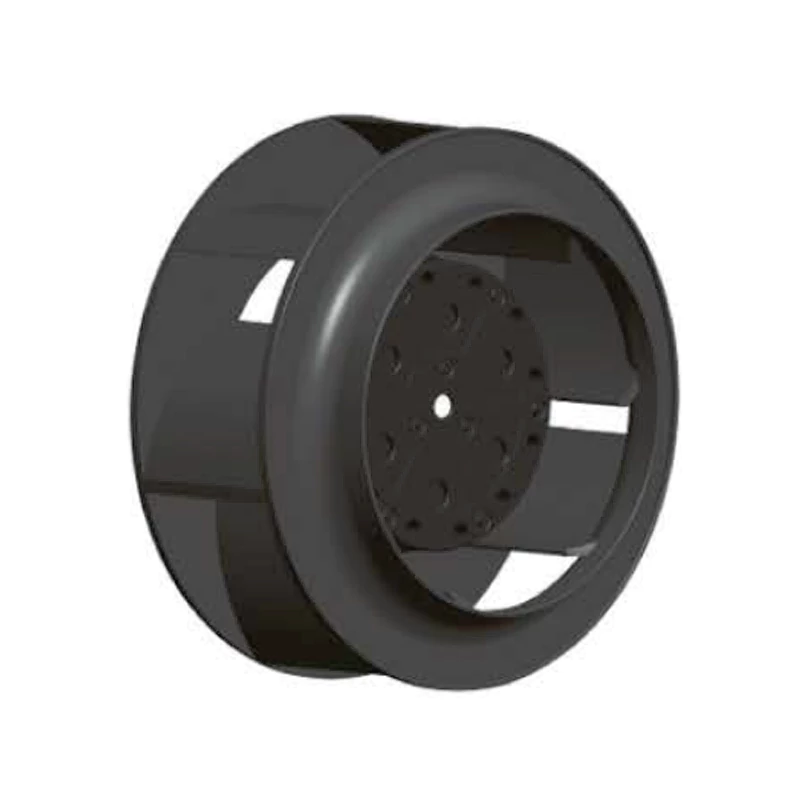
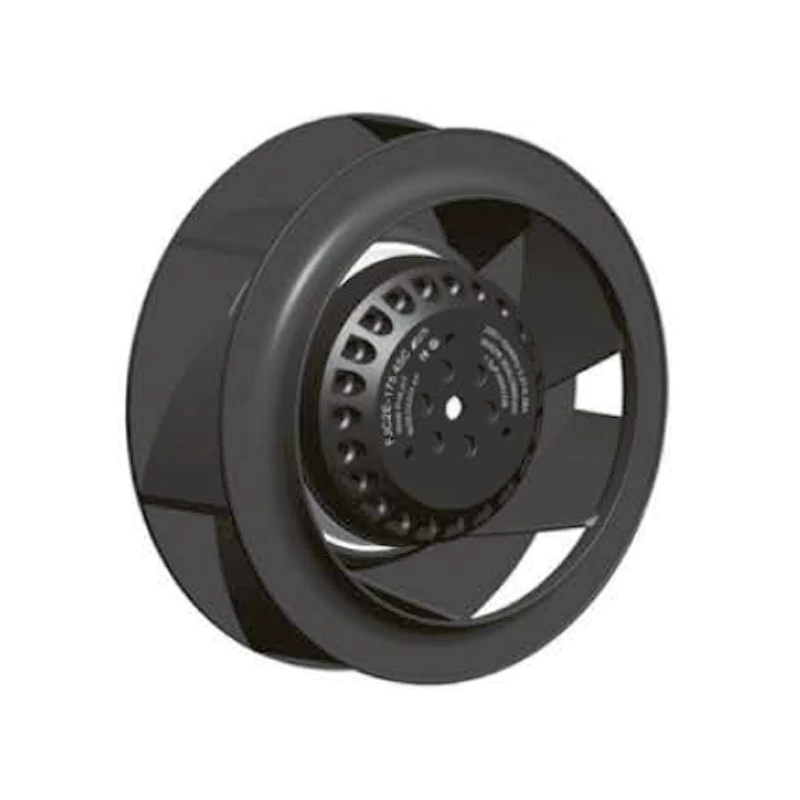
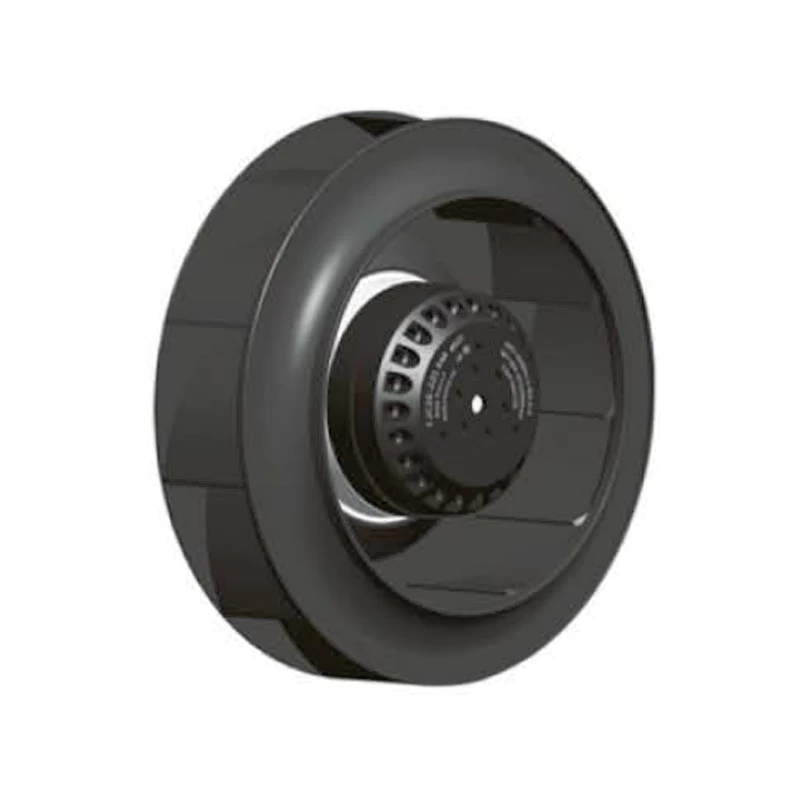
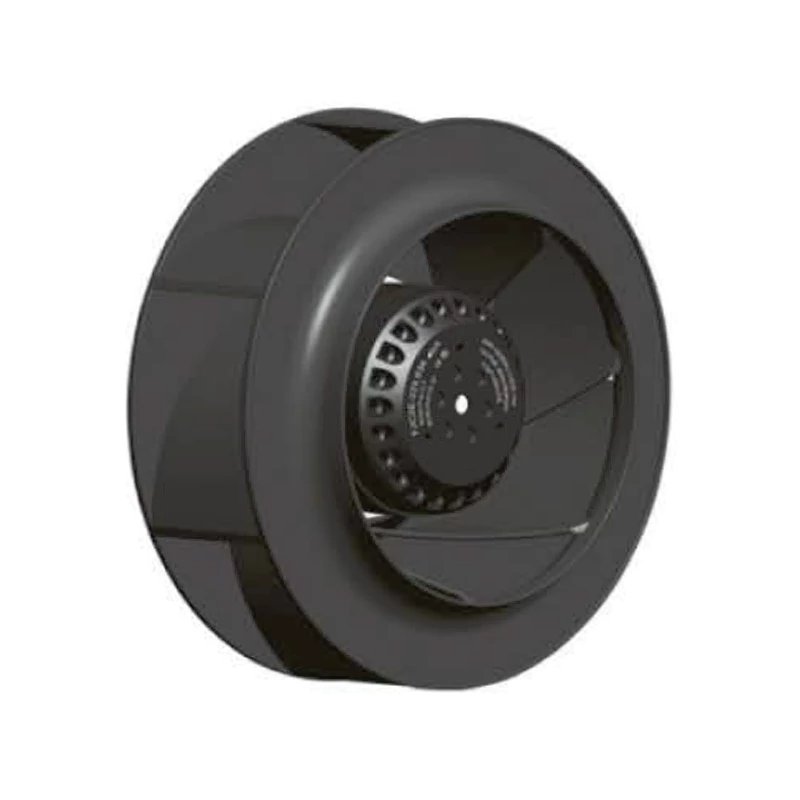
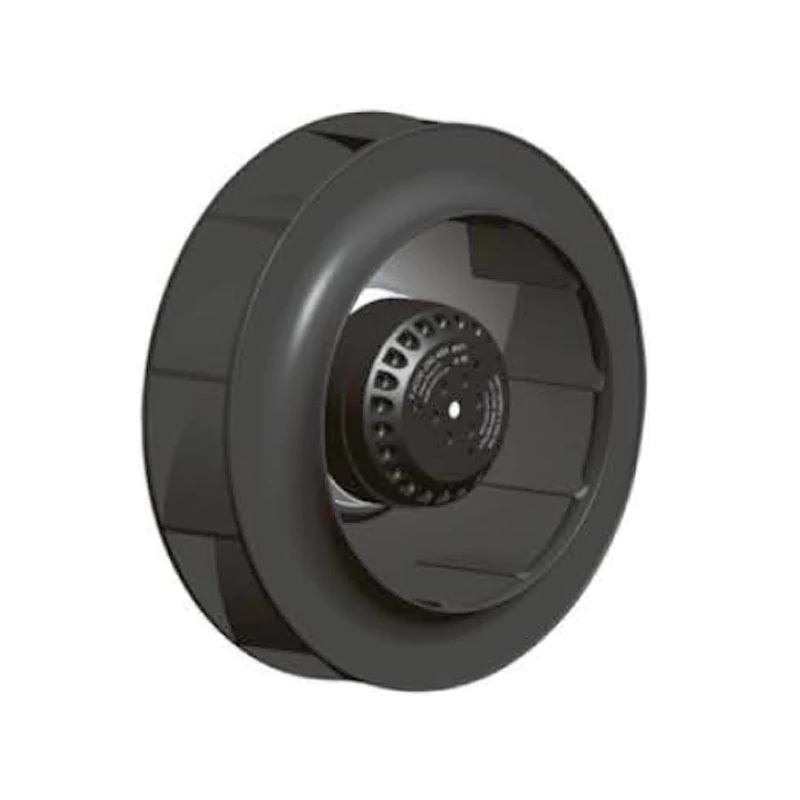
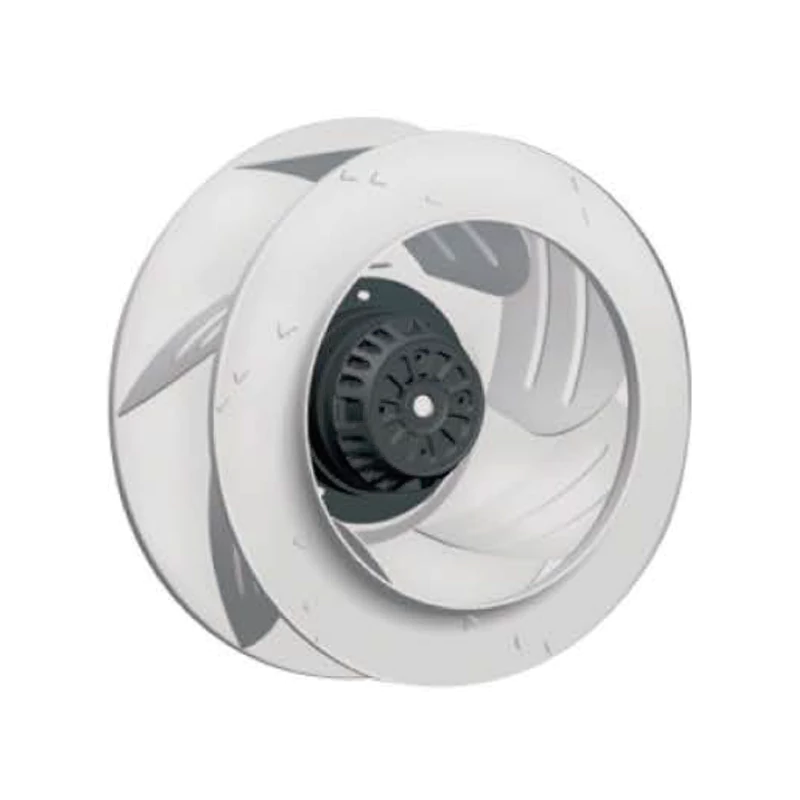
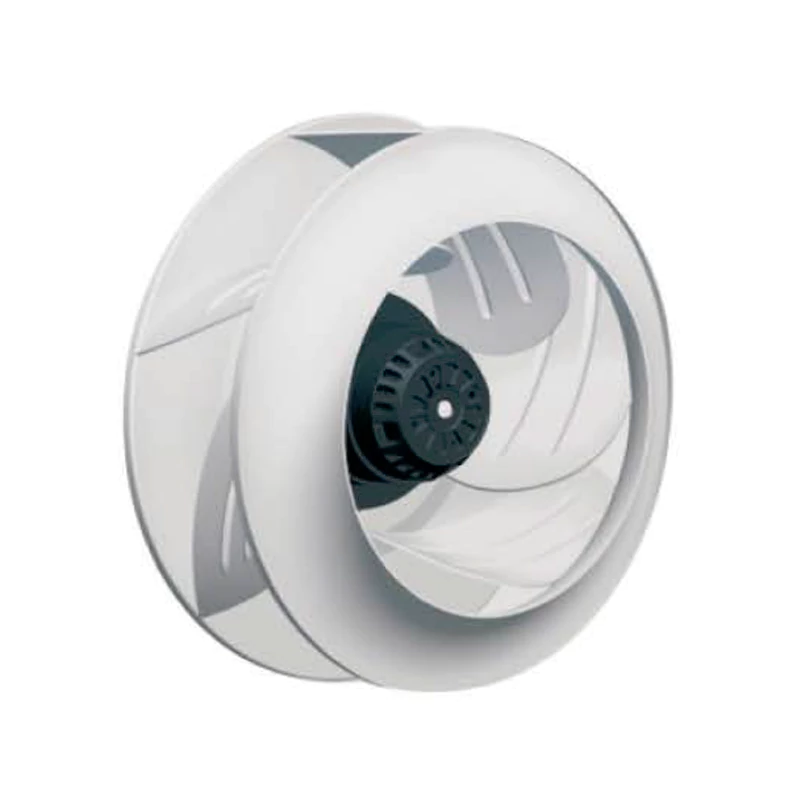
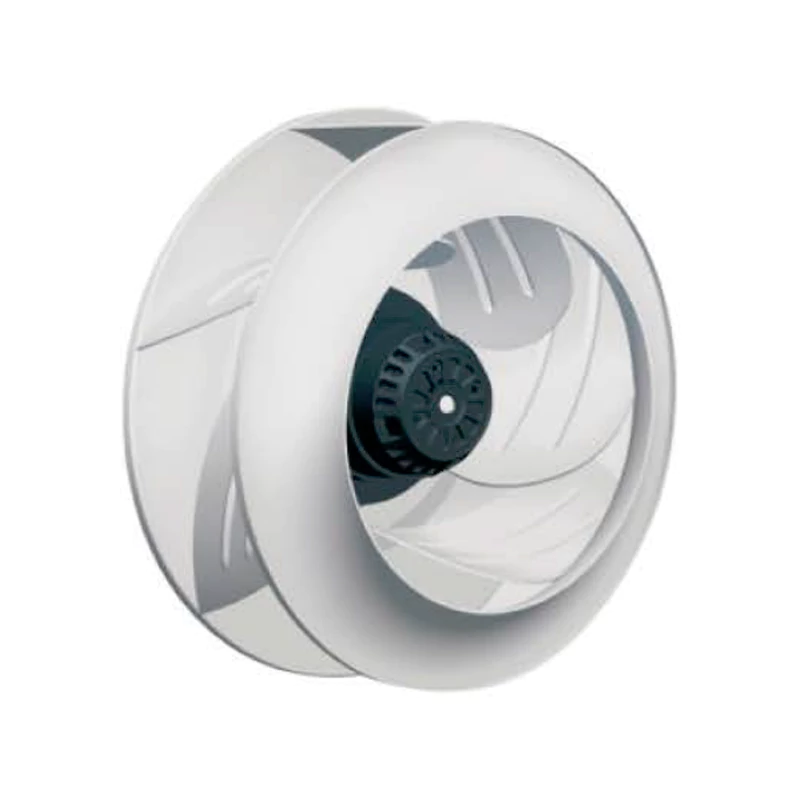
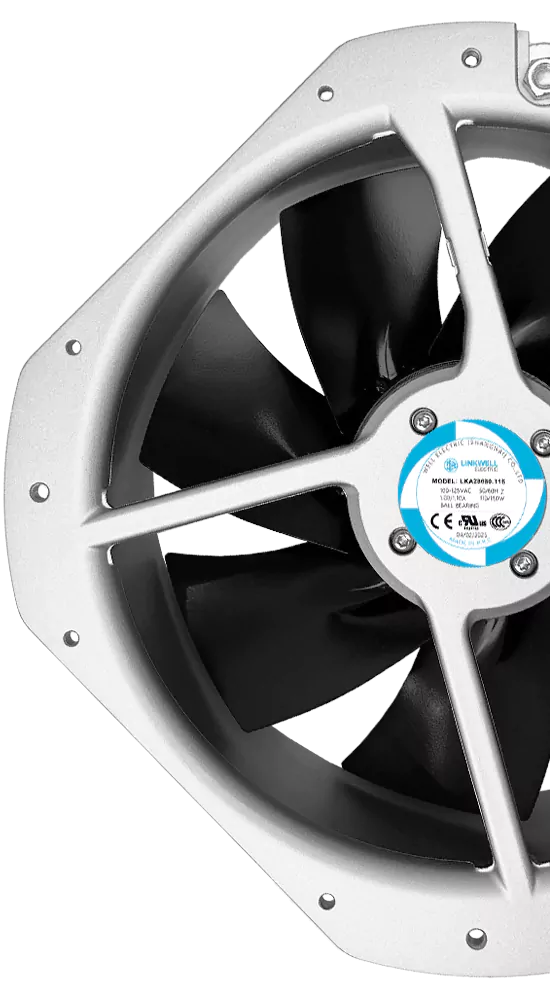
12V DC Centrifugal Fan
Compact, High Static Pressure & Brushless
If your cooling system struggles to push air through tight ducts, dense heat sinks, or filters, a standard axial fan may fail under pressure. A 12V DC centrifugal fan is designed to solve this exact problem.
Why a dc centrifugal fan outperforms when static pressure matters.
Standard Axial Fan
High airflow volume, but pressure drops drastically with any resistance. Best for open, unrestricted exhaust.
Low static pressure (<30Pa)
Fails with filters/ducts
12V Centrifugal Fan (Blower)
High static pressure (100–300+ Pa) maintains airflow even through dense heat sinks, long ducts, and filters. 90° airflow direction.
Excellent for back pressure
Brushless, long life, compact
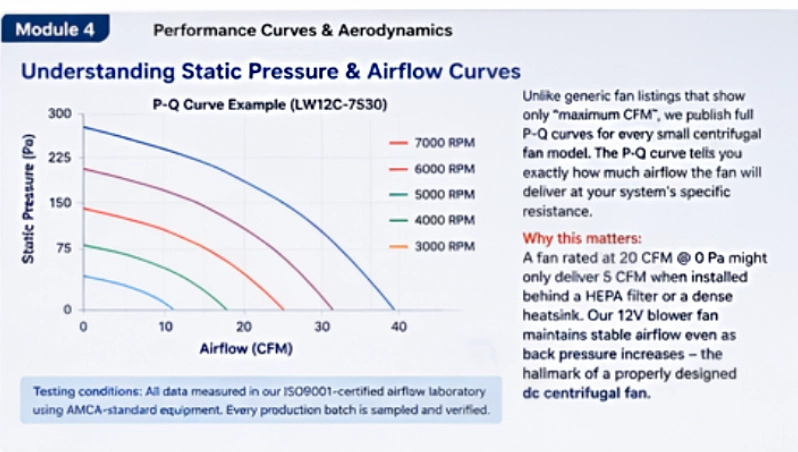
Performance Curves & Aerodynamics
Unlike generic listings, we publish full P‑Q curves for every brushless centrifugal fan. Know exactly the airflow at your system’s static pressure.
Why it matters: A fan rated at 20 CFM @ 0 Pa might deliver < 5 CFM behind a filter. Our 12V centrifugal fans maintain stable airflow even as back pressure increases — proven in AMCA-style lab testing.
ISO9001:2015 certified lab, every batch verified. Request fan curve data for your specific model.
Critical Applications & Global Trust
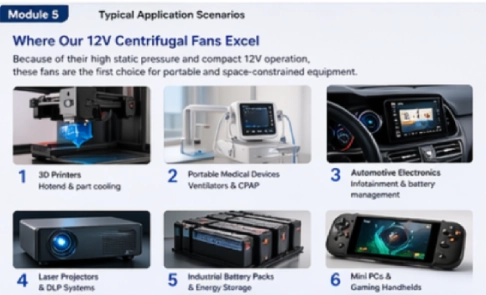
Our 12V DC centrifugal fans excel where high pressure meets limited space.
Why BLDC makes the difference for 12V centrifugal fans.
60,000 hrs life
No brushes, no spark
PWM speed control
0–100% regulation
Low start voltage
Reliable down to 5V
OEM/ODM Custom Engineering
Tailor size, voltage, connector, IP rating & performance. No MOQ for engineering samples.
Frame & impeller
Non-standard mounts
Voltage range
5V, 12V, 24V, 48V
Connectors
JST, Molex, custom wires
Signal options
FG tach, RD alarm, PWM
IP protection
IP54, IP67, conformal coating
Material
UL94V-0, high-temp plastic
Lead time for custom samples: 15–20 days after spec confirmation.
Certifications & Global Compliance
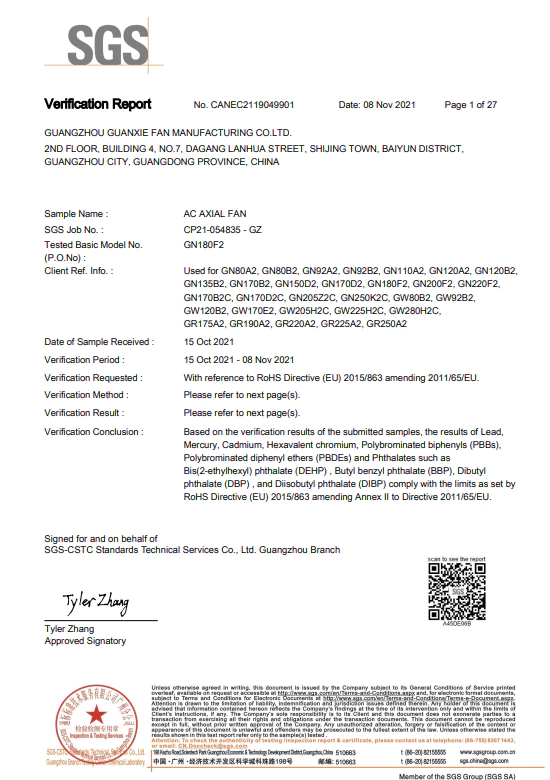
12V DC Centrifugal Fan RoHS certificate
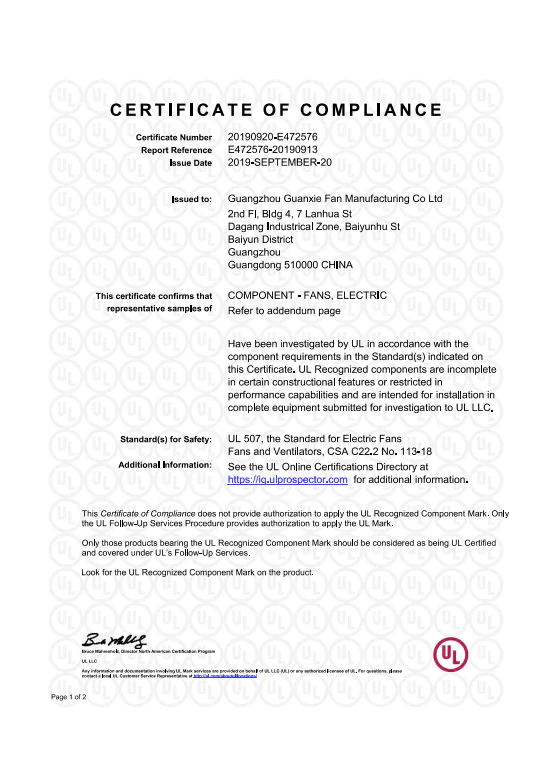
12V DC Centrifugal Fan UL certificate
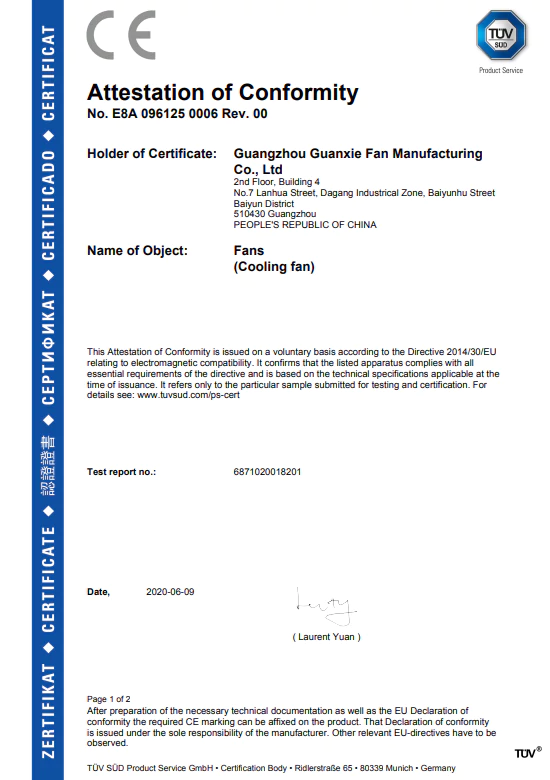
12V DC Centrifugal Fan EMC certificate
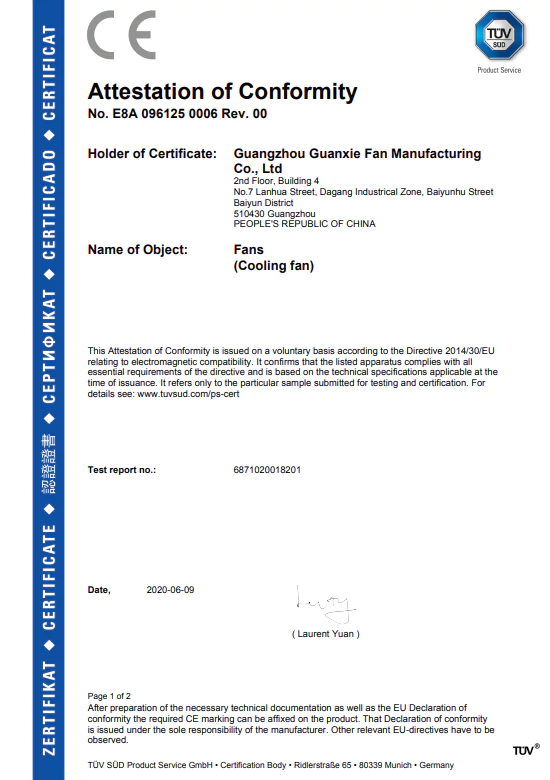
12V DC Centrifugal Fan EMC certificate
Common Mistakes When Selecting a 12V Centrifugal Fan
Responsive Table
Issue
Effect
Recommendation
Choosing only CFM without static pressure
Fan won't deliver rated airflow against resistance
Consider both CFM and static pressure in selection
Using axial fans in high-resistance systems
Airflow drops near zero with filters or ducts
Use suitable fan type for high-resistance system
Ignoring voltage stability
Voltage ripple reduces motor lifespan
Ensure stable voltage supply
Blocking the air inlet
Cavitation, noise, and low output
Keep air inlet unobstructed
Sleeve bearings for horizontal mount
Premature failure
Use ball bearings for horizontal installation
FAQ of Centrifugal Fan
Can I run a 12V centrifugal fan at 5V or 9V?
Yes, you can. Reducing the supply voltage lowers the fan speed linearly. At 9V, most of our models run at approximately 70-75% of their rated speed. At 5V, they typically operate at around 40% speed. No damage will occur to the fan when running at lower voltages. However, please note that the fan may not start reliably below 4.5V due to insufficient torque to overcome initial inertia. For precise and reliable speed control across the full range, we strongly recommend using a PWM (Pulse Width Modulation) signal instead of voltage reduction alone. All our 12V centrifugal fans support PWM control.
Are these fans quiet? What noise level should I expect?
At full speed, a 12V centrifugal fan produces primarily aerodynamic noise – a “whoosh” of moving air – rather than mechanical whine or bearing noise. The exact noise level depends on the model and operating point. For example, our LW12C-6025 model typically operates at 38-42 dBA at full speed. The good news is that noise drops dramatically when you reduce speed. At 50% PWM duty cycle, noise typically decreases by 10-15 dBA, making the fan suitable for desktop or residential applications. If near-silent operation is required, we recommend oversizing the fan and running it at 40-60% of maximum speed.
What is the difference between a "blower" and a "centrifugal fan"?
In the cooling industry, the terms are used interchangeably. Both refer to a fan with a scroll (spiral) housing and either a radial, forward-curved, or backward-curved impeller. The defining characteristic is that air enters axially (through the center) and exits radially (at a 90-degree angle). Our 12V centrifugal fans are technically blowers – designed for high static pressure with low to medium air volume. If you see the term “12V blower fan” elsewhere, it refers to the same product category.
Can these fans handle continuous 24/7 operation?
All our 12V centrifugal fans use dual ball bearings and a brushless DC motor design. This combination is rated for 60,000 hours of continuous operation at 40°C ambient temperature. In real-world terms, that is nearly 7 years of non-stop running. We have customers who have deployed our fans in telecom cabinets and medical ventilators with zero failures after 5+ years of continuous service. The brushless design eliminates the single most common failure point in fans: brushed motor wear.
What is the difference between forward-curved, backward-curved, and radial-blade centrifugal fans?
This is an excellent technical question. Each blade design has distinct performance characteristics:
Forward-curved blades: Our most common configuration for 12V applications. They provide good airflow at low to moderate static pressure, are compact, and operate efficiently in the pressure range typical of electronics cooling (up to 300 Pa). They have many small blades curved in the direction of rotation.
Backward-curved blades: Higher efficiency than forward-curved, especially at higher static pressures. They typically run quieter and consume less energy for the same airflow. However, they require higher rotational speeds and are generally larger. Available upon request for custom projects.
Radial-blade (straight) blades: Designed for material handling – moving air that contains dust, particles, or debris. The straight blades are self-cleaning. Not typically needed for clean electronics cooling, but available for industrial applications.
For most 12V cooling applications (3D printers, medical devices, battery packs), our forward-curved impeller design offers the best balance of size, pressure, and efficiency.
What is the lead time for 1000 units? Can I get samples first?
Yes, samples always come first. For standard models, we keep limited stock for sample orders. Sample lead time is 3-5 business days for small quantities (1-5 pieces). For mass production of 1000 units of a standard model, the lead time is 20-25 working days after sample approval and payment confirmation. For custom models (modified wire length, connector, voltage, or speed), sample lead time is 15-20 days, and mass production lead time for 1000 units is approximately 30 working days. Expedited production is available at additional cost – contact our sales team for options.
Ready to Solve Your Cooling Challenge
WhatsApp us
Contact Us
Curious how LINKWELL’s cooling solutions can address your business challenges? Let’s connect and discuss your needs.