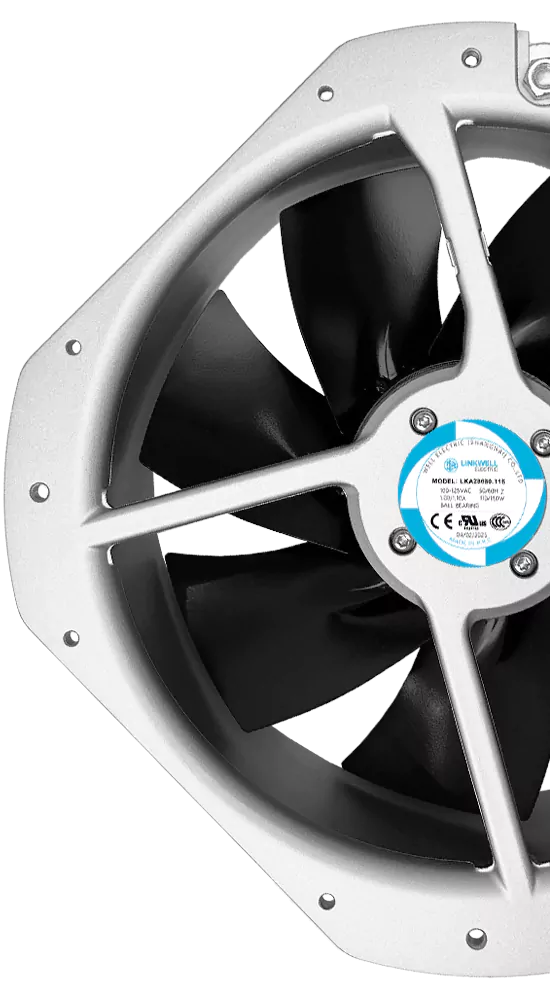
An AC fan keeps equipment cool in factories, data centers, and control cabinets. It moves air using alternating current, making it reliable for electrical cabinets, HVAC systems, and refrigeration. Choosing the right voltage matters because it affects how well the fan works, how much energy it uses, and how easy it is to install.
Here are the 10 most common AC fan voltages and their relevance for 2026:
| Voltage | Market Share (%) | Key Application/Notes |
|---|---|---|
| 12V | 37 | Server rooms, electronics |
| 24V | 24 | Automation, heavy machinery |
| 48V | 19 | Telecom, 5G towers |
| 110V | 5 | North America, legacy gear |
| 115V | 4 | Industrial cabinets |
| 120V | 3 | US power systems |
| 220V | 3 | Asia, HVAC |
| 230V | 2 | Europe, high efficiency |
| 240V | 2 | UK, Australia |
| Others | 1 | Custom, niche uses |
Voltage selection impacts performance, cost, and maintenance. AC fans connect directly to power grids, so they simplify wiring and improve reliability. In harsh environments, they resist dust, moisture, and even chemical vapors. For any industrial setup, picking the right voltage helps equipment run longer and more efficiently.
Key Takeaways
- Choosing the right AC fan voltage improves equipment safety, efficiency, and lifespan.
- Low voltages like 12V and 24V suit small electronics and control panels with safer handling.
- Medium voltages such as 115V and 120V fit North American industrial cabinets and simplify installation.
- High voltages like 220V, 230V, and 240V power large machinery and HVAC systems with better energy savings.
- Matching fan voltage to local power grids and applications prevents failures and reduces maintenance costs.
AC Fan Voltage Comparison
Voltage Table
Choosing the right ac fan voltage can feel confusing, especially with so many options. This table helps compare the most common voltages, their main uses, where you will find them, and what makes each one stand out. It also shows which voltages are often considered equivalent.
| Voltage | Typical Application | Region/Standard | Advantages | Voltage Equivalence |
|---|---|---|---|---|
| 12V | Electronics, control panels | Global (specialty) | High safety, easy handling | – |
| 24V | Automation, robotics | Global (industrial) | Good balance of power and safety | – |
| 48V | Telecom, 5G towers | Global (telecom) | Efficient for telecom gear | – |
| 110V | Legacy equipment | North America, Japan | Fits older systems | 115V, 120V |
| 115V | Industrial cabinets | North America | Standard for US industry | 110V, 120V |
| 120V | Electrical enclosures, HVAC | North America | Direct to US power grid | 110V, 115V |
| 220V | Machinery, HVAC | Asia, parts of Europe | High efficiency, long wiring runs | 230V, 240V |
| 230V | Automation, large equipment | Europe, Middle East | European standard, strong airflow | 220V, 240V |
| 240V | Heavy-duty, commercial kitchens | UK, Australia | Powerful, fits local grids | 220V, 230V |
| Custom/Others | Specialized, OEM/ODM projects | Global | Tailored to unique needs | – |
Regional Standards
Different regions use different voltages for their power grids. North America usually uses 110V, 115V, or 120V. Europe and most of Asia use 220V, 230V, or 240V. These voltages often work together because most equipment can handle small differences. For example, a 230V ac fan usually works fine on a 220V or 240V supply.
When choosing a fan, always check the equipment label and local standards. This helps avoid problems with compatibility and keeps everything running safely. If a project covers more than one country, look for fans that list all three voltag
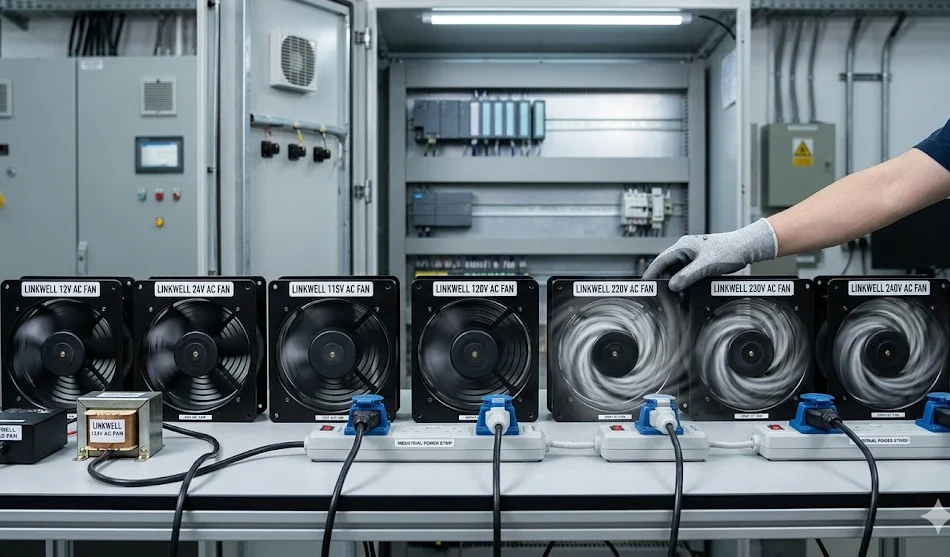
12V AC Fan
Performance & Use Cases
A 12V AC fan stands out as a safe and flexible cooling solution for many industries. Many engineers choose this voltage for environments where safety matters most. Low voltage means less risk of electric shock during installation or maintenance. This makes 12V fans a smart pick for schools, hospitals, and places where people work close to electrical equipment.
You can find 12V AC fans in a wide range of applications:
- Electronics cooling for computers, servers, and sensitive devices
- HVAC systems that need gentle air movement
- Industrial ventilation to remove heat and fumes
- Refrigeration units in both homes and retail stores
- Cleanrooms where airflow control keeps dust away
- Automotive cooling for radiators and engine bays
- Commercial kitchen equipment to clear smoke and heat
- Medical devices that need precise temperature control
Compared to 24V AC fans, 12V models provide even lower risk but may not deliver as much power. For small enclosures or delicate equipment, 12V often wins. For larger systems, 24V might be better.
Efficiency & Maintenance
When it comes to efficiency, 12V AC fans use more current to deliver the same power as higher voltage fans. This can lead to higher energy loss, especially if the wiring runs are long. Here’s a quick look at how 12V compares to 24V:
| Voltage | Current (for 1200W) | Wiring Loss Implications |
|---|---|---|
| 12V | 100 amps | Higher energy loss over long distances due to higher current. |
| 24V | 50 amps | Lower energy loss, improved efficiency, and reduced heat generation due to lower current. |
Maintenance for 12V AC fans is simple. The lower voltage makes them easier and safer to handle. Technicians can replace or clean these fans with less worry about electrical hazards. For short wiring runs and small devices, 12V AC fans keep things cool, safe, and easy to manage.
24V AC Fan
Performance & Use Cases
A 24V AC fan brings more power and reliability to industrial environments than its 12V counterpart. Many engineers pick 24V fans for automation systems, control panels, and factory equipment. These fans handle larger loads and keep machines running smoothly, even in tough conditions.
You will often see 24V AC fans in:
- Industrial control cabinets
- Automated assembly lines
- Robotics and conveyor systems
- Security and access control panels
- Battery backup systems
- Laboratory equipment
Why do so many industries choose 24V? The answer is simple: 24V offers a sweet spot between safety and performance. It delivers more airflow than 12V fans, which means it cools bigger enclosures and more powerful electronics. At the same time, it keeps the risk of electric shock low, making it safer for workers who need to install or service the fan.
Note: 24V AC fans are a favorite in automation because they work well with standard industrial power supplies. They also support longer wiring runs without losing much power, which is important in large factories.
Efficiency & Maintenance
A 24V AC fan uses less current than a 12V fan to move the same amount of air. This means less heat builds up in the wires, and the fan wastes less energy. Over time, this can lower electricity costs and reduce the need for thick, expensive wiring.
Here’s a quick comparison:
| Voltage | Current (for 1200W) | Wiring Loss |
|---|---|---|
| 12V | 100 amps | High |
| 24V | 50 amps | Lower |
Maintenance for 24V AC fans is straightforward. Technicians find them easy to replace and clean. The higher voltage means the fan can run longer without overheating, which helps extend its lifespan. Many factories choose 24V fans for their balance of safety, efficiency, and reliability.
115V AC Fan
Performance & Use Cases
A 115V AC fan fits right into the heart of North American industry. Many factories and facilities rely on this voltage because it matches the standard power supply found in the United States. This makes installation quick and easy—no need for special adapters or transformers.
Engineers often choose 115V AC fans for cooling electrical cabinets and enclosures. These cabinets protect important components like programmable logic controllers (PLCs), variable frequency drives (VFDs), and power supplies. When these parts stay cool, they last longer and work better.
You’ll spot 115V AC fans in a variety of industrial settings:
- Control panels for manufacturing lines
- Electrical enclosures in data centers
- Telecom equipment racks
- Power distribution boxes
- Laboratory automation systems
Manufacturers design these fans to meet strict safety standards. UL certification is common, which means the fan has passed tests for fire safety and electrical reliability. This gives peace of mind to anyone responsible for keeping equipment running.
Efficiency & Maintenance
A 115V AC fan delivers solid airflow without drawing too much current. This helps keep energy costs in check, especially when several fans run at once inside a large facility. The direct connection to the North American mains supply means the fan operates at peak efficiency, with minimal power loss.
Maintenance is simple. Technicians can swap out or clean these fans without shutting down the whole system. The fans’ straightforward design means fewer parts that can fail. Most 115V AC fans also feature durable bearings and sturdy housings, so they stand up to years of use.
Note: Choosing a 115V AC fan with UL certification ensures safe operation and easy integration into industrial cabinets. This keeps downtime low and equipment protected.
120V AC Fan
Performance & Use Cases
A 120V AC fan stands as a staple in North American industrial environments. Many engineers choose this voltage because it matches the standard power supply found in the United States. The 120V rating often overlaps with 115V and 110V fans, so most equipment accepts any of these without issue. This flexibility makes 120V AC fans a go-to choice for electrical enclosures, control cabinets, and telecom racks.
Factories, data centers, and automation systems rely on 120V AC fans to keep equipment cool. These fans fit right into electrical cabinets, helping protect sensitive components like PLCs, relays, and power supplies. They also work well in HVAC units, refrigeration systems, and even some commercial kitchen appliances.
Here are some common places where 120V AC fans shine:
- Electrical enclosures in manufacturing plants
- Telecom and server cabinets
- Laboratory automation equipment
- Retail refrigeration units
The overlap with 115V and 110V means that replacement and sourcing become easier. Technicians can swap fans without worrying about compatibility, which keeps downtime low.
Efficiency & Maintenance
A 120V AC fan offers efficient cooling with direct connection to the US power grid. This setup reduces wiring complexity and helps maintain steady airflow. Most 120V fans use robust motors and durable bearings, so they run for years with minimal issues.
However, regular maintenance keeps these fans at peak performance. The most common issues include electrical overload, bearing problems, dust buildup, and humidity-related corrosion. The table below outlines these challenges and how to prevent them:
| Cause of Issue | Description | Preventive Measures |
|---|---|---|
| Electrical Overload | Power supply inconsistencies, operating beyond rated capacity, or faulty wiring. | Install surge protectors, use proper circuit breakers, and conduct regular inspections. |
| Improper Lubrication and Bearing Issues | Bearings can fail due to inadequate lubrication or incorrect maintenance. | Apply appropriate lubricants, schedule routine maintenance, and avoid over-lubrication. |
| Dust and Debris Accumulation | Dust can clog cooling vents and impair performance. | Regular cleaning, install filters, and enclose the motor to reduce dust exposure. |
| High Humidity Leading to Corrosion | Humidity accelerates corrosion and weakens components. | Use anti-corrosion coatings, control humidity levels, and seal the motor with moisture-resistant seals. |
Note: Routine cleaning and scheduled inspections help extend the life of a 120V AC fan. Facilities that follow these steps enjoy reliable cooling and fewer unexpected breakdowns.
Technicians appreciate the straightforward design of 120V AC fans. They can replace or service these fans quickly, which keeps operations running smoothly.
220V AC Fan
Performance & Use Cases
A 220V AC fan stands out as a top choice for industrial cooling across Asia. Many factories, electronics plants, and HVAC installers rely on this voltage because it matches the standard power supply in countries like China, India, and much of Southeast Asia. This makes installation simple and helps companies avoid extra costs for voltage converters.
You will find 220V AC fans in a wide range of heavy-duty applications:
- Industrial machinery cooling
- Large-scale HVAC systems in office buildings and malls
- Electronics manufacturing lines
- Refrigeration units in supermarkets and cold storage
- Power distribution cabinets
The 220V AC fan market in Asia keeps growing. Electronics manufacturing drives much of this demand, as factories need reliable thermal management for sensitive equipment. Many companies now look for energy-efficient designs and brushless motor technology, which boost performance and extend fan life.
Efficiency & Maintenance
A 220V AC fan delivers strong airflow with high efficiency. High voltage means the fan draws less current for the same power, which reduces energy loss and keeps wiring cooler. This makes 220V fans a smart pick for large spaces and heavy machinery.
Here’s a quick look at why engineers choose 220V AC fans for efficiency:
- Lower current draw reduces heat in wires
- Fans run cooler and last longer
- Supports long wiring runs in big factories
Maintenance stays simple with 220V AC fans. Technicians can clean or replace them without special tools. Many models now use brushless motors, which cut down on wear and extend service life. Regular cleaning and scheduled checks help keep these fans running smoothly, even in dusty or humid environments.
Note: When choosing between 220V, 230V, and 240V AC fans, check the equipment label. Most modern fans support all three, making them flexible for global use.
230V AC Fan
Performance & Use Cases
The 230V AC fan plays a key role in European industrial systems. Engineers in Europe often select this voltage because it matches the standard power supply found in most EU countries. This makes installation easy and helps factories avoid extra steps like voltage conversion.
You will see 230V AC fans in many high-efficiency applications:
- Industrial automation systems
- HVAC units in office buildings and factories
- Power distribution cabinets
- Large refrigeration equipment
- Renewable energy installations
European standards require reliable cooling for machinery and electrical cabinets. The 230V AC fan meets these needs by delivering strong airflow and stable performance. Many factories use these fans to protect sensitive electronics and keep production lines running smoothly.
A 230V AC fan also fits into global projects. Many modern fans support 220V, 230V, and 240V, so companies can use the same model in different regions. This flexibility helps with sourcing and replacement.
Efficiency & Maintenance
The 230V AC fan stands out for its efficiency. High voltage means the fan draws less current, which reduces heat in the wires and lowers energy loss. This makes the fan ideal for large spaces and heavy machinery.
Here’s a quick table showing why engineers choose 230V AC fans:
| Feature | Benefit |
|---|---|
| High voltage | Lower current, less heat |
| Strong airflow | Cools large equipment |
| European standard | Easy integration |
Maintenance stays simple. Technicians can clean or replace these fans without special tools. Many models use durable bearings and robust housings, so they last for years. Regular cleaning and scheduled checks help keep the fan running at peak performance.
Note: Choosing a 230V AC fan ensures compatibility with European power grids and supports high-efficiency industrial applications. Companies enjoy reliable cooling and fewer breakdowns.
240V AC Fan
Performance & Use Cases
A 240V AC fan stands out in heavy-duty industrial environments. Many engineers in the UK and Australia pick this voltage because it matches their local power grids. This makes installation simple and helps companies avoid extra costs for adapters or transformers.
Factories use 240V AC fans to cool large machinery, HVAC systems, and commercial refrigeration units. These fans deliver strong airflow, which keeps equipment from overheating during long shifts. In mining, manufacturing, and food processing, 240V AC fans help maintain safe temperatures for both machines and workers.
The 240V AC fan also works well with equipment rated for 220V or 230V. Most modern fans support all three voltages, so companies can use the same model in different regions. This flexibility makes sourcing and replacement easier for global operations.
Efficiency & Maintenance
A 240V AC fan uses high voltage to move air efficiently. It draws less current than lower voltage fans, which means less heat builds up in the wires. This helps the fan last longer and reduces energy costs in large facilities.
For heavy-duty equipment, regular maintenance keeps the fan running smoothly. Many companies follow these schedules:
- Routine inspections every 3–6 months help minimize downtime.
- Technicians perform detailed checks every quarter, including bearing lubrication and wiring inspection.
- In dusty or greasy places, like commercial kitchens, cleaning should happen monthly to prevent buildup.
These steps help prevent breakdowns and keep the ac fan working at peak performance. Technicians find that sticking to a schedule reduces emergency repairs and extends the life of the fan.
Note: Regular cleaning and inspections make a big difference in how long a 240V AC fan lasts, especially in tough industrial settings.
FanACDC AC Fans
Features & Certifications
FanACDC AC fans stand out for their reliability and versatility in industrial cooling. The brand brings over 20 years of experience to the table. They design fans that work in tough environments, from -30°C to 80°C, and last over 50,000 hours. Users can choose from a wide range of sizes, from 80mm to 280mm, to fit different setups.
FanACDC offers voltage options for both 110V and 220V power supplies. This flexibility helps companies match the fan to their local grid without extra adapters. The fans use high-efficiency motors and aerodynamic blades. These features deliver strong airflow while keeping noise and power use low.
Safety and compliance matter in every industry. FanACDC AC fans carry top certifications. Here’s a quick look:
| Certification | Region | Purpose |
|---|---|---|
| UL | United States, Canada | Safety testing for fire, electrical shock, and mechanical hazards. |
| CE | European Union | Compliance with health, safety, and environmental standards. |
| RoHS | European Union | Restriction of hazardous substances in electronics. |
The company also supports custom solutions. Customers can request special sizes, mounting options, or even unique performance curves. This makes it easy to get the right ac fan for any project.
Industrial Applications
FanACDC AC fans serve many industries. They help keep equipment cool and running smoothly in:
- Manufacturing plants
- Chemical processing facilities
- Textile mills
- Food processing lines
- Electronics factories
- Glass production
- Automotive workshops
- Agricultural sites
- Data centers
- Commercial buildings
Customization options add even more value. FanACDC can adjust voltage, IP ratings, and mounting styles. They also offer rapid prototyping for new designs. This means companies get fans that fit their exact needs, whether they need extra protection from dust or a special airflow pattern.
Custom AC Fan Voltage Solutions
Factory Capabilities
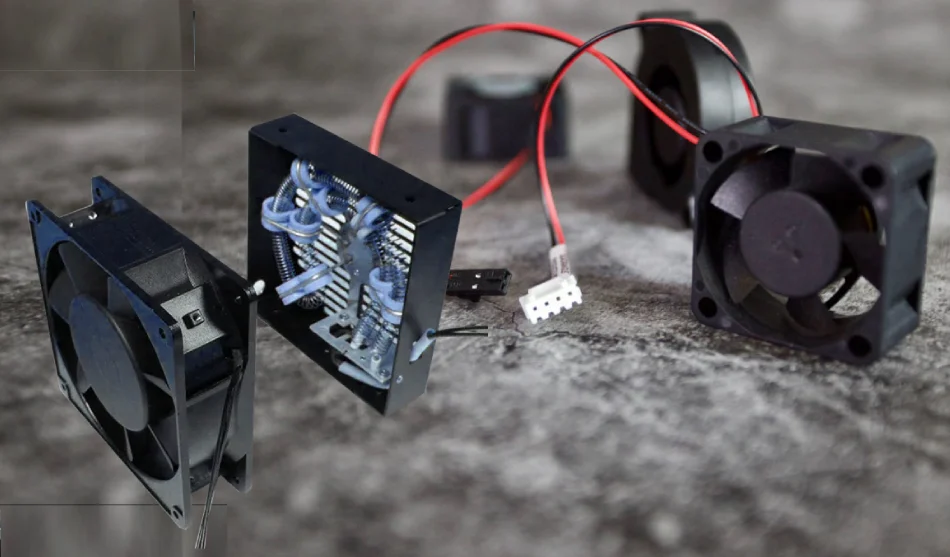
Many industries need AC fans that fit unique voltage or performance requirements. Custom AC fan voltage solutions give engineers the flexibility to match fans to their exact needs. Factories with advanced capabilities can deliver these solutions quickly and reliably.
Here’s a look at the key capabilities that set top factories apart:
| Capability | Description |
|---|---|
| Wide Voltage Range | Fans can operate from 500V up to 850V for high-voltage applications. |
| Direct HV Battery Connection | Fans connect directly to large high-voltage batteries, making system design simpler. |
| Brushless Motor Technology | Brushless, permanent magnet motors boost efficiency and extend fan life. |
| Rugged Construction | Die cast aluminum housings protect fans and improve heat transfer. |
| Push/Pull Configurations | Fans can reverse for cleaning or maintenance, which saves time. |
| Variable Speed Control | Fans run at any speed, so airflow and noise can be optimized. |
| Sealed & Submersible Design | Fans withstand submersion and pressure washing for long-term reliability. |
Factories that offer direct manufacturing can handle high-volume orders and provide full customization. They support OEM and ODM projects, adjusting voltage, size, and IP ratings as needed. Global certifications and 100% burn-in testing ensure every fan meets strict quality standards.
Engineering Support
Engineering support makes custom fan projects run smoothly from start to finish. Teams work with clients to design, test, and validate fans for any application.
Here’s how engineering support helps speed up projects:
| Engineering Support Services | Impact on Project Timelines |
|---|---|
| Control system design | Early design validation and quick changes through simulation and testing. |
| Power converter and inverter design | Ensures fans are easy to manufacture and meet all standards, reducing delays. |
| Mechanical and thermal packaging | Improves heat flow and reliability, which keeps fans running longer. |
| Design validation and process qualification | Checks that fans meet all performance and safety rules before production starts. |
| Flexible engagement models | Support can scale up or down, so projects get the right help at the right time. |
With strong engineering support, companies can move from prototype to production faster. They get fans that fit their needs and meet all safety and efficiency standards.
Note: Custom AC fan voltage solutions combine factory strength with expert engineering. This approach delivers reliable, high-performance cooling for any industrial challenge.
Choosing the Right AC Fan Voltage
Selecting the right ac fan voltage can feel tricky, but a few simple steps make the process easier. The right choice keeps equipment safe, efficient, and running smoothly. Here’s how to match voltage to your needs.
By Application
Start by thinking about where the fan will work. Small electronics and control panels often use lower voltages like 12V or 24V. These voltages keep things safe and are perfect for sensitive devices. Large machines, HVAC systems, and industrial cabinets usually need higher voltages such as 115V, 220V, or 240V. These fans move more air and handle bigger cooling jobs.
By Power Supply
Next, look at the available power supply. North America uses 110V, 115V, or 120V. Europe, Asia, and Australia often use 220V, 230V, or 240V. Pick a fan that matches the local grid. This makes installation simple and avoids the need for adapters or transformers.
Here’s a quick table to help:
| Region | Common Voltages |
|---|---|
| North America | 110V, 115V, 120V |
| Europe/Asia | 220V, 230V, 240V |
By Safety & Efficiency
Safety and efficiency matter. Lower voltages like 12V and 24V reduce the risk of electric shock. These work well in places where people might touch the fan. Higher voltages, such as 220V or 240V, use less current for the same power. This means less heat in the wires and better energy savings for big systems.
Note: Choosing the right ac fan voltage helps prevent accidents and keeps energy costs down.
By matching the fan voltage to the application, power supply, and safety needs, anyone can keep their equipment cool and reliable.
AC vs DC vs EC Fans
AC Fan Overview
AC fans use alternating current as their power source. They connect directly to the power grid, making installation simple. Most factories and commercial buildings rely on AC fans for ventilation and cooling. These fans usually operate at standard voltages like 110V, 220V, or 240V. AC fans have a straightforward design and stable speed. They cost less than other types and work well in places where reliability matters more than energy savings.
AC fans offer steady performance and easy maintenance. Many engineers choose them for HVAC systems and industrial ventilation because they handle tough environments.
Here’s a quick look at how AC fans compare to others:
| Fan Type | Power Source | Strengths | Limitations | Typical Applications |
|---|---|---|---|---|
| AC | AC power | Simple structure, low cost, stable speed | Higher power consumption, more noise | Industrial ventilation, HVAC systems |
DC & EC Comparison
DC fans run on direct current. They use lower voltages, often 12V or 24V, which makes them safer for electronics and small devices. DC fans are compact and energy-efficient. They produce less noise and allow for speed control, but they need a controller and can create more electromagnetic interference.
EC fans combine AC and DC technology. They use brushless motors and electronic control. EC fans work at a wide voltage range, often from 100V to 240V. They adjust speed easily and save energy. EC fans last longer and need less maintenance. Many companies use EC fans in air handling units and refrigeration because they offer precise control and high efficiency.
| Fan Type | Power Source | Strengths | Limitations | Typical Applications |
|---|---|---|---|---|
| DC | DC sources | Energy-efficient, compact, quieter | Requires controller, higher electromagnetic radiation | Electronic devices, power tools |
| EC | Combines AC/DC | High efficiency, long lifespan, precise control | Higher initial costs | Air handling units, refrigeration equipment |
EC fans help companies lower energy bills and reduce maintenance. They run quietly and adjust airflow as needed.
Let’s compare energy efficiency and performance:
| Feature | EC Fans | AC Fans |
|---|---|---|
| Energy Consumption | More energy-efficient | Consistent power draw |
| Noise Levels | Generally quieter | Can be noisier |
| Lifespan | Longer lifespan | Shorter lifespan |
| Maintenance | Lower maintenance needs | Higher maintenance |
AC fans suit basic cooling jobs. DC fans fit electronics and places needing quiet operation. EC fans shine in modern systems where energy savings and precise control matter most.
Common Voltage Selection Mistakes
Selecting the right voltage for an AC fan seems simple, but many engineers still make mistakes. These errors can lead to equipment failure, wasted energy, or even safety hazards. Let’s look at the most common pitfalls and how to avoid them.
Wrong Voltage
Choosing the wrong voltage stands as the most frequent mistake. Engineers sometimes pick a fan rated for a different voltage than the supply. This mismatch can cause insulation damage or burn out the motor almost instantly. They might also ignore voltage drop in long cable runs. When the voltage drops below the fan’s rating, the motor struggles and overheats.
Here are some typical errors:
- Direct voltage mismatch between fan and supply
- Ignoring voltage drop in long cables
- Incorrect star/delta wiring, leading to under-voltage and torque loss
- Neglecting three-phase voltage unbalance, which causes overheating and premature failure
- Using single-phase fans for high-power loads, resulting in excessive current draw
Engineers should always check the fan’s voltage rating and match it to the supply. They need to consider cable length and wiring configuration to prevent hidden problems.
Mistakes like these can cause severe current unbalance, hidden winding overheating, reduced torque, and even premature bearing failure. Equipment may run unevenly, vibrate more, and break down faster.
Frequency Issues
Frequency matters just as much as voltage. Many fans are designed for either 50Hz or 60Hz. If someone connects a fan to the wrong frequency, the motor speed changes. This can reduce airflow, increase noise, or cause the fan to overheat.
Common frequency mistakes include:
- Overlooking the supply frequency when selecting a fan
- Using adapters that don’t convert frequency, only voltage
- Installing fans in regions with different power standards without checking compatibility
Always check both voltage and frequency before installation. Using the wrong frequency can shorten the fan’s lifespan and lead to unexpected failures.
Engineers who pay attention to these details keep their equipment running smoothly. They avoid costly repairs and downtime by making smart choices from the start.
Industrial Applications by Voltage
Cabinets & Panels
AC fans play a big role in keeping electrical cabinets and control panels cool. Engineers often choose fans rated at 110V, 115V, or 120V for these jobs. These voltages match the power supply in North America, so installation goes smoothly. Equipment racks in data centers and telecom rooms also use these voltages.
- 110V–120V AC fans fit cabinet cooling and equipment racks.
- 24V AC fans work well in control panels for automation and robotics.
- 12V AC fans protect sensitive electronics in small enclosures.
Safety standards matter in these environments. NFPA 79 sets rules for industrial machinery, including cooling in control panels. UL 60947-4-1 covers standards for industrial control panels. These guidelines help keep workers safe and equipment running.
Cabinets and panels need reliable cooling. Choosing the right voltage keeps the system efficient and easy to maintain.
HVAC & Machinery
Factories and commercial buildings rely on AC fans to manage air in HVAC systems and machinery. Fans rated at 220V, 230V, or 240V are common in these setups. These voltages match power grids in Europe, Asia, and Australia. HVAC units, refrigeration systems, and imported machinery often use these fans.
- 220V–240V AC fans power HVAC systems and foreign machinery.
- 230V AC fans cool large industrial equipment in Europe.
- 240V AC fans handle heavy-duty jobs in the UK and Australia.
Refrigeration units and air handling systems need strong airflow. High-voltage fans deliver this power and keep energy use low. Engineers pick these voltages for long wiring runs and big spaces.
HVAC and machinery cooling depend on matching fan voltage to the local grid. This choice helps prevent downtime and keeps operations smooth.
Choosing the right AC fan voltage makes a big difference in industrial performance. Low voltages like 12V and 24V work best for control panels and sensitive electronics. Medium voltages such as 115V and 120V fit North American cabinets. High voltages—220V, 230V, and 240V—power heavy machinery and HVAC systems. Always match the fan to your application and local grid. For unique needs, manufacturers can help with custom solutions. The right voltage keeps equipment safe, efficient, and reliable.
FAQ
What does AC fan voltage mean?
AC fan voltage shows the electrical power needed for the fan to run. It must match the local power supply. Using the right voltage keeps the fan safe and working well.
Can I use a 220V AC fan in the US?
Most US power grids use 110V, 115V, or 120V. A 220V AC fan will not work safely without a transformer. Always match the fan voltage to the local grid.
Why does voltage matter for industrial fans?
Voltage affects how much air the fan moves, its energy use, and its lifespan. The right voltage helps the ac fan run efficiently and keeps equipment safe.
How do I choose the right AC fan voltage?
Check the equipment manual and local power supply. Pick a fan that matches both. For control panels, use 12V or 24V. For large machines, choose 220V, 230V, or 240V.